
By the end of this chapter, you will be able to:
Mastering these skills ensures you create safe, high-quality desserts that delight customers and keep your kitchen running smoothly!
Preparing hot desserts in professional kitchens involves handling various ingredients and equipment at elevated temperatures, which introduces specific safety risks. Chefs and cooks in Kenya’s hospitality and institutional food production sectors must apply knowledge of personal protective equipment (PPE) and occupational safety to prevent accidents and maintain hygiene. This chapter equips learners with essential skills to use PPE appropriately and adhere to health and safety standards while preparing hot desserts, ensuring a safe working environment and high-quality products.
In the food production environment, especially when preparing hot desserts, the use of Personal Protective Equipment (PPE) is critical to protect workers from burns, cuts, and contamination. Kenyan kitchens in hotels, hospitals, and educational institutions enforce PPE use to minimize injuries and maintain food safety standards. Understanding the types and correct uses of PPE ensures compliance with occupational safety laws such as the Occupational Safety and Health Act (OSHA) of Kenya.
PPE in hot dessert preparation includes various items designed to protect different parts of the body from heat, sharp tools, and contaminants:
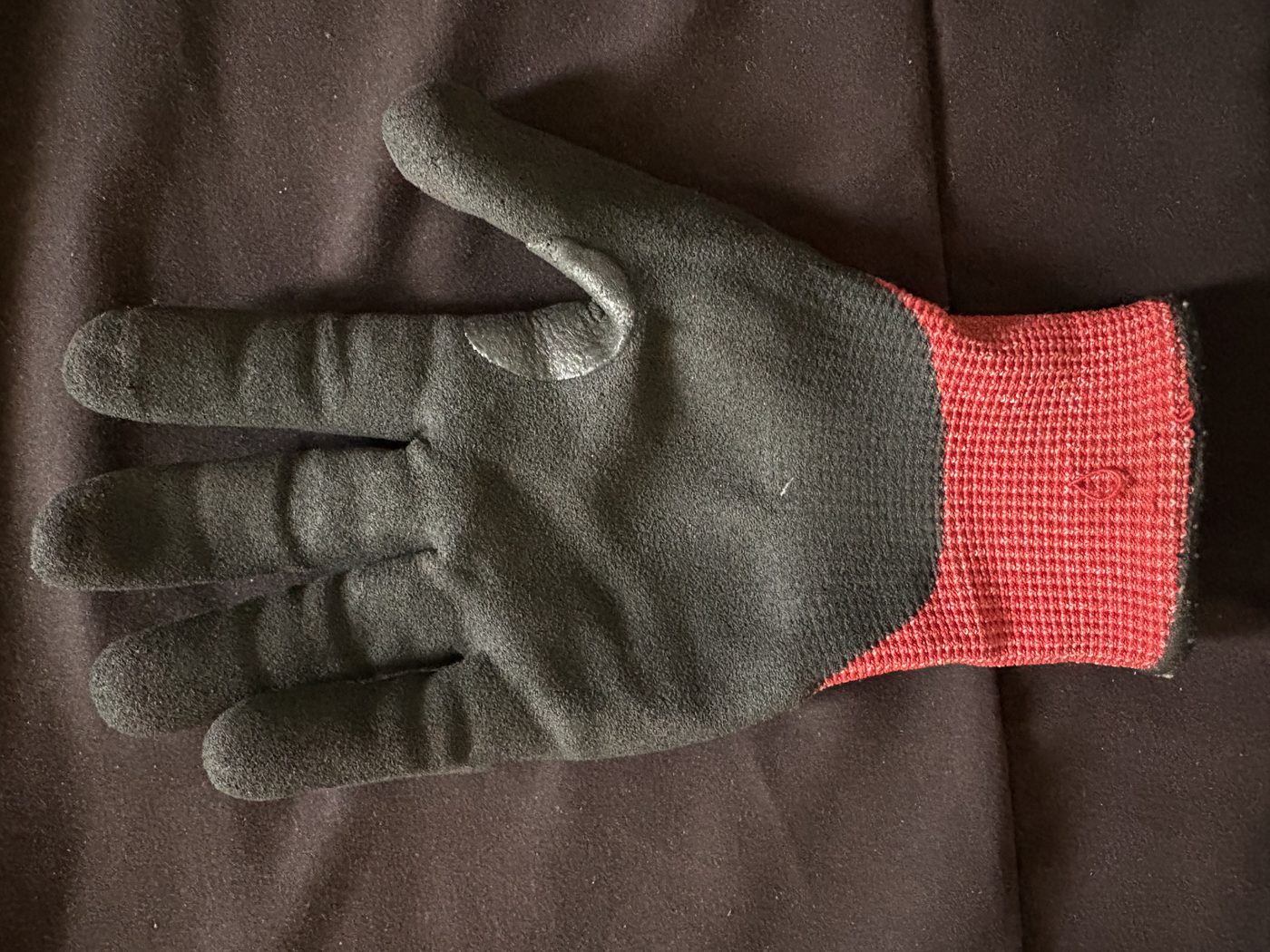
single heat-resistant glove with red cuff (Source: Wikipedia (Cut-resistant gloves))
The correct use of PPE in Kenyan kitchens is integral to both safety and food hygiene. For example, at a Nairobi hotel, chefs use heat-resistant gloves when removing hot custard dishes from ovens, reducing burn incidents. Aprons are used to shield clothing during the preparation of hot syrup-based desserts like Kenyan mandazi soaked in warm sugar syrup. Non-slip shoes are critical in busy hospital kitchens where water spills are frequent, preventing accidents.
Proper maintenance of PPE extends its lifespan and ensures it remains effective. Heat-resistant gloves should be regularly inspected for holes and replaced if damaged to avoid burns. Aprons must be washed after every use with hot water and detergent to remove food residues and prevent bacterial growth. Non-slip shoes should be cleaned and dried daily to maintain grip and prevent deterioration. Hairnets and masks are typically single-use or require daily laundering to maintain hygiene standards.
Choosing the right PPE depends on the specific hazards present in dessert preparation. Key factors include:
Create a free account to open more of this chapter.
Free: practical guides, quick cards, workplace scenarios and more.
Create a free accountThis chapter focused on the preparation of hot desserts, beginning with the identification and appropriate use of personal protective equipment to ensure safety in the kitchen environment. It emphasized the importance of occupational safety and health practices that protect workers from hazards during dessert preparation. The chapter detailed various cleaning tools, equipment, and materials essential for maintaining a hygienic workspace, alongside the specific kitchen tools and equipment required for making hot desserts. It covered the selection of ingredients, highlighting the significance of freshness and quality control in line with HACCP principles. Detailed procedures for preparing hot desserts were explained, supported by essential hygiene practices that include both personal and food hygiene. The production process was explored, including different types of hot desserts, production methods, and criteria for assessing the quality of the finished products. Finally, the chapter addressed the presentation of hot desserts and the necessary steps for cleaning tools, equipment, work surfaces, floors, and proper waste disposal to maintain a safe and clean kitchen environment.
Type: Individual
| Tools & Equipment | Materials |
|---|---|
| Mixing bowls | Eggs |
| Whisk | Caster sugar |
| Measuring jug | Wheat flour |
| Baking tray | Margarine |
| Oven mitts | Milk |
| Baking paper | Disposable gloves |
| Full kitchen uniform | |
| Hair net or chef hat | |
| Hand washing soap | |
| Clean kitchen cloths | |
| Food grade sanitizer spray |
| S/N | Item | Quantity |
|---|---|---|
| 1 | Full kitchen uniform (chef jacket, trousers, apron) | 1 set per Candidate |
| 2 | Disposable gloves | 1 pair per Candidate |
| 3 | Hair net or chef hat | 1 per Candidate |
| 4 | Closed flat safety shoes | 1 pair per Candidate |
| 5 | Hand washing soap | sufficient for all Candidates |
| 6 | Clean kitchen cloths | 2 per Candidate |
| 7 | Food grade sanitizer spray | sufficient for all Candidates |
| 8 | Ingredients for hot dessert preparation (eggs 2 pcs, caster sugar 100g, wheat flour 150g, margarine 50g, milk 125ml) | per Candidate |
| 9 | Equipment for hot dessert preparation (mixing bowls, whisk, measuring jug, baking tray, oven mitts, baking paper) | per Candidate |
| Items to be Evaluated | Marks Available | Marks Obtained | Comments |
|---|---|---|---|
| TASK 1: PPE and Hygiene Practices during Hot Dessert Preparation | |||
| Wears full kitchen uniform clean and pressed (Award 1 mark if uniform is clean, pressed and complete) | 1 | ||
| Wears hair net or chef hat correctly (Award 1 mark if hair is fully covered) | 1 | ||
| Wears disposable gloves properly before handling food (Award 1 mark if gloves are worn correctly and changed when necessary) | 1 | ||
| Wears closed flat safety shoes (Award 1 mark if shoes are clean, flat, closed and safe) | 1 | ||
| Has short clean nails with no nail polish (Award 1 mark if nails are short, clean and no varnish) | 1 | ||
| Maintains clean hands throughout the preparation (Award 1 mark if hands remain clean and washed as needed) | 1 | ||
| Avoids wearing jewelry and makeup (Award 1 mark if no jewelry or makeup is worn) | 1 | ||
| Uses clean and sanitized equipment and utensils (Award 1 mark if all equipment used is clean and sanitized) | 1 | ||
| Cleans and sanitizes work surfaces before and after use (Award 1 mark if surfaces are clean and dry before and after preparation) | 1 | ||
| Keeps food covered when not in use (Award 1 mark if food is covered appropriately) | 1 | ||
| Uses clean kitchen cloths for cleaning and wiping (Award 1 mark if clean cloths are used) | 1 | ||
| Disposes of waste properly during and after preparation (Award 1 mark if waste is disposed of hygienically and timely) | 1 | ||
| Demonstrates proper hand washing technique before and during preparation (Award 1 mark if hand washing steps are correctly demonstrated) | 1 | ||
| Handles ingredients hygienically during weighing and mixing (Award 1 mark if ingredients are handled hygienically) | 1 | ||
| Maintains personal hygiene mannerisms (no touching face, hair, sneezing into elbow) (Award 1 mark if no poor hygiene mannerisms observed) | 1 | ||
| Sub-Total | 15 | ||
| PRODUCT CHECKLIST | |||
| Demonstrated correct and consistent use of PPE throughout preparation (Award up to 3 marks based on correctness and consistency) | 3 | ||
| Maintained personal hygiene standards (clean hands, no jewelry, proper nails) (Award up to 3 marks based on observed personal hygiene) | 3 | ||
| Maintained food hygiene (clean equipment, covered food, proper ingredient handling) (Award up to 3 marks based on food hygiene adherence) | 3 | ||
| Maintained environmental hygiene (clean work surfaces, proper waste disposal) (Award up to 3 marks based on environmental hygiene) | 3 | ||
| Prepared Swiss roll batter hygienically as per recipe steps (whisking, folding, baking) (Award up to 5 marks for correct hygienic preparation steps) | 5 | ||
| Presented Swiss roll with no visible contamination or hygiene faults (Award up to 3 marks for hygienic presentation) | 3 | ||
| Sub-Total | 20 | ||
| GRAND TOTAL | 35 | ||
Type: Individual
| Tools & Equipment | Materials |
|---|---|
| Mixing bowls | Full kitchen uniform (chef's coat, apron, hat, closed shoes) |
| Whisk | Disposable gloves |
| Measuring scales | |
| Saucepan (2 liters capacity) | |
| Spatula | |
| Oven (electric or gas) | |
| Baking trays (30cm x 40cm) | |
| Greaseproof paper | |
| Measuring spoons | |
| Timer/watch |
| S/N | Item | Quantity |
|---|---|---|
| 1 | Mixing bowls | 1 set per candidate |
| 2 | Whisk | 1 per candidate |
| 3 | Measuring scales | 1 per candidate |
| 4 | Saucepan (2 liters capacity) | 1 per candidate |
| 5 | Spatula | 1 per candidate |
| 6 | Oven (electric or gas) | 1 shared per 4 candidates |
| 7 | Baking trays (30cm x 40cm) | 1 per candidate |
| 8 | Greaseproof paper | 1 sheet per candidate |
| 9 | Measuring spoons | 1 set per candidate |
| 10 | Timer/watch | 1 per candidate |
| 11 | Full kitchen uniform (chef's coat, apron, hat, closed shoes) | 1 set per candidate |
| 12 | Disposable gloves | 1 pair per candidate |
| Items to be Evaluated | Marks Available | Marks Obtained | Comments |
|---|---|---|---|
| TASK 1: Identification and Selection of Kitchen Tools and Equipment | |||
| Candidate wears full kitchen uniform correctly with no jewelry, clean nails, and hair covered (Award 1 mark for correct personal hygiene and PPE) | 1 | ||
| Candidate selects mixing bowls suitable for whisking and mixing ingredients (Award 1 mark for correctly selecting mixing bowls) | 1 | ||
| Candidate selects appropriate whisk for beating eggs and sugar (Award 1 mark for correct whisk selection) | 1 | ||
| Candidate selects accurate weighing scales and measuring spoons for ingredient measurement (Award 1 mark for selecting correct measuring tools) | 1 | ||
| Candidate selects a 2-liter saucepan for heating ingredients over stove (Award 1 mark for selecting appropriate saucepan) | 1 | ||
| Candidate selects a spatula for folding flour gently into mixture (Award 1 mark for selecting suitable spatula) | 1 | ||
| Candidate selects baking tray sized 30cm x 40cm and lines with greaseproof paper (Award 1 mark for selecting correct baking tray and lining) | 1 | ||
| Candidate selects timer or watch to monitor baking time (Award 1 mark for selecting timing device) | 1 | ||
| Candidate handles and assembles all selected equipment safely and hygienically (Award 2 marks for correct handling and assembling of tools and equipment) | 2 | ||
| Candidate collects and uses disposable gloves appropriately during preparation (Award 1 mark for glove use) | 1 | ||
| Candidate maintains cleanliness of work surface and equipment during selection (Award 1 mark for maintaining environmental hygiene) | 1 | ||
| Sub-Total | 12 | ||
| PRODUCT CHECKLIST | |||
| All required kitchen tools and equipment correctly identified and selected for Swiss roll preparation (Award 6 marks if all tools and equipment are correctly selected and assembled as per recipe requirements) | 6 | ||
| Sub-Total | 6 | ||
| GRAND TOTAL | 18 | ||
At the start of this chapter we promised you would be able to:
Tick each one you can genuinely do.
So, are you there yet?
You're competent when you can confidently do 50% or more of what this chapter promised.
Sign in to record how you're doing.