
By the end of this chapter, you will be able to:
Mastering these skills ensures you create delicious, safe, and high-quality desserts that impress customers and keep the kitchen running smoothly!
Proper use of personal protective equipment (PPE) is essential in food and beverage operations, particularly during the preparation of desserts and their accompanying sauces. In Kenya’s hospitality industry, adherence to PPE protocols safeguards employees against hazards such as burns, cuts, and chemical exposure while maintaining hygiene standards critical to food safety. Understanding the various types of PPE, their specific uses, and the importance of compliance is vital for kitchen staff and management to uphold occupational safety and health standards in establishments ranging from hotels to county government catering units.
Personal protective equipment (PPE) is the clothing and gear a cook wears to protect the body from kitchen hazards and to protect the food from the cook. When preparing sweet sauces, the main risks are burns from boiling sugar and hot custard, scalds from steam, cuts from knives and graters, slips on spilt syrup and contact with cleaning chemicals, while the food must be protected from hair, sweat and skin. Each item of PPE has a specific purpose, and it only works when it is the right type, the right size, clean and worn correctly. Example: the main kitchen of the county referral hospital in Lodwar issues each cook two full sets of whites so that a clean set is always available for the dessert and diet section.
Personal protective equipment (PPE) (Source: 5f700936fcc590f8)
Safety boots are closed, sturdy kitchen shoes or boots with non-slip rubber soles and, ideally, reinforced toe caps. They protect the feet from hot liquids such as caramel or syrup spilt from a pan, from dropped knives, pans and trays, and from slipping on wet or sticky floors, which is one of the most common causes of kitchen injury. Open shoes, sandals, canvas shoes and high heels are never worn in the kitchen.
The kitchen cloth (side cloth or rubber) is a thick, clean, dry cotton cloth carried by the cook, usually tucked into the apron string. It is used to hold hot pan handles, lift pans off the stove and wipe the rims of plates. It must always be dry, because a damp cloth conducts heat quickly and can cause a burn when lifting a pan of hot sauce. It is not used for wiping hands, sweat or work surfaces, and it is changed as soon as it becomes soiled.
The apron is worn over the jacket and trousers to protect the uniform and the body from splashes of hot sauce, syrup and fat. It is usually white cotton, reaching below the knees, and tied so that it can be removed quickly if hot liquid is spilt on it. Disposable plastic aprons are worn over the cotton apron for wet cleaning and for handling chemicals. Aprons are changed when soiled and are not worn outside the kitchen, for example to the toilet or the stores, so that they do not pick up contamination.
The chef's jacket is a double-breasted, long-sleeved jacket made of thick white cotton or a cotton blend. The double front gives two layers of cloth over the chest against heat and spills and can be reversed to hide stains during service. Long sleeves protect the arms from steam, splashes and hot oven shelves, and cotton absorbs sweat and does not melt onto the skin as synthetic fabrics can. White shows dirt at once, so the cook is reminded to change it.
The chef's hat (toque, skull cap or cap) covers the hair completely and stops loose hairs and dandruff from falling into sauces and desserts. It also absorbs sweat from the forehead. Long hair is tied back and a hairnet is worn under the hat where required. The hat is washable or disposable and is changed daily.
Chef's trousers are loose-fitting cotton trousers, often in a small black and white check pattern that hides minor stains. Their loose fit lets air circulate and allows hot liquid to run off rather than being held against the skin. Where a skirt is worn as part of the uniform, it is of the same heat-resistant cotton and long enough to protect the legs, with closed safety shoes. Trousers are worn without turn-ups, which can collect spills.
The neck tie (neckerchief) is a triangular cotton cloth folded and tied around the neck. It absorbs sweat so that it does not drip into food, protects the neck from splashes and helps identify the cook's grade where colours are used. It is changed daily with the rest of the uniform.
Kitchen gloves protect the hands, and the right type is chosen for the task.
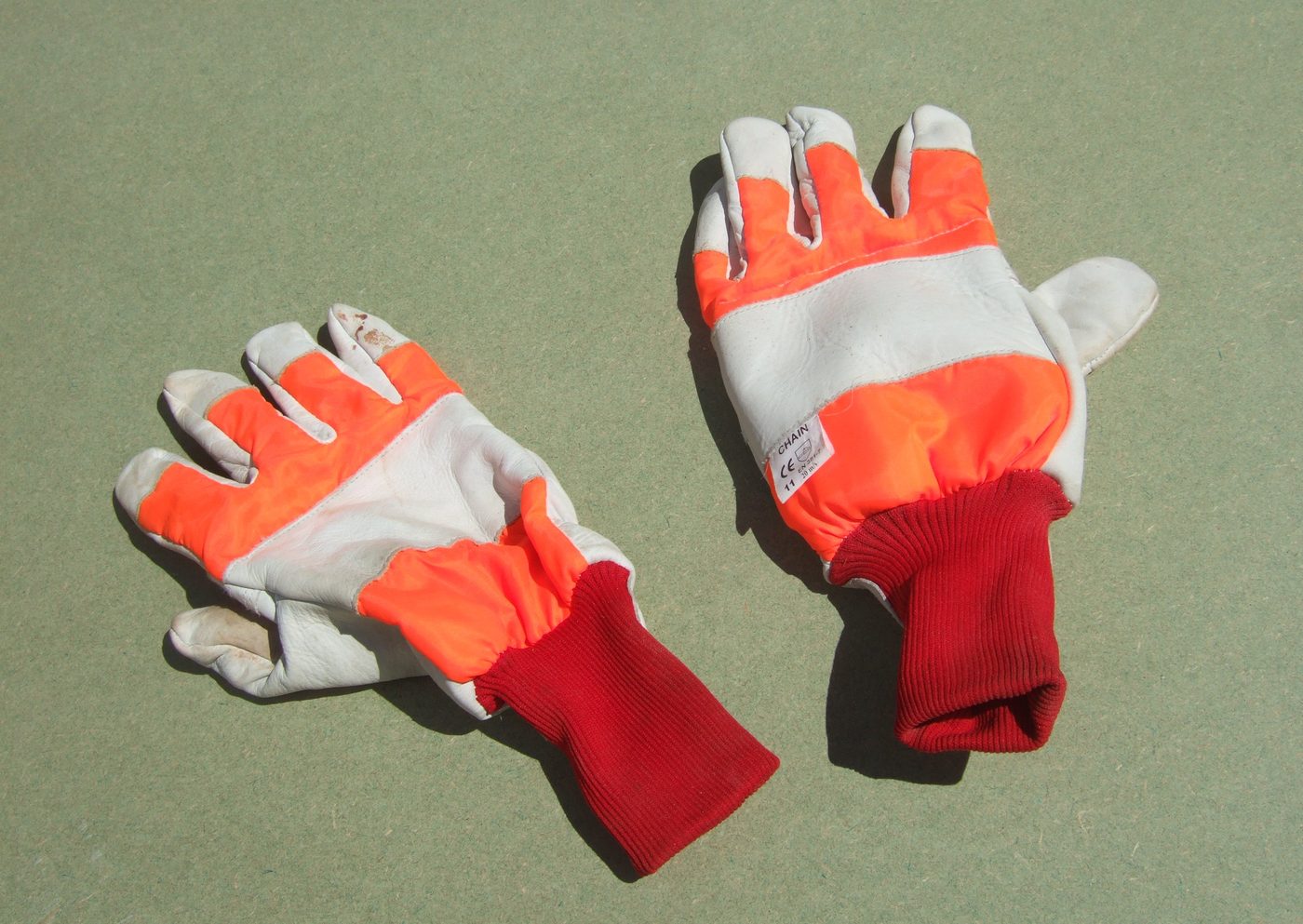
A pair of protective gloves (Source: Wikimedia Commons)
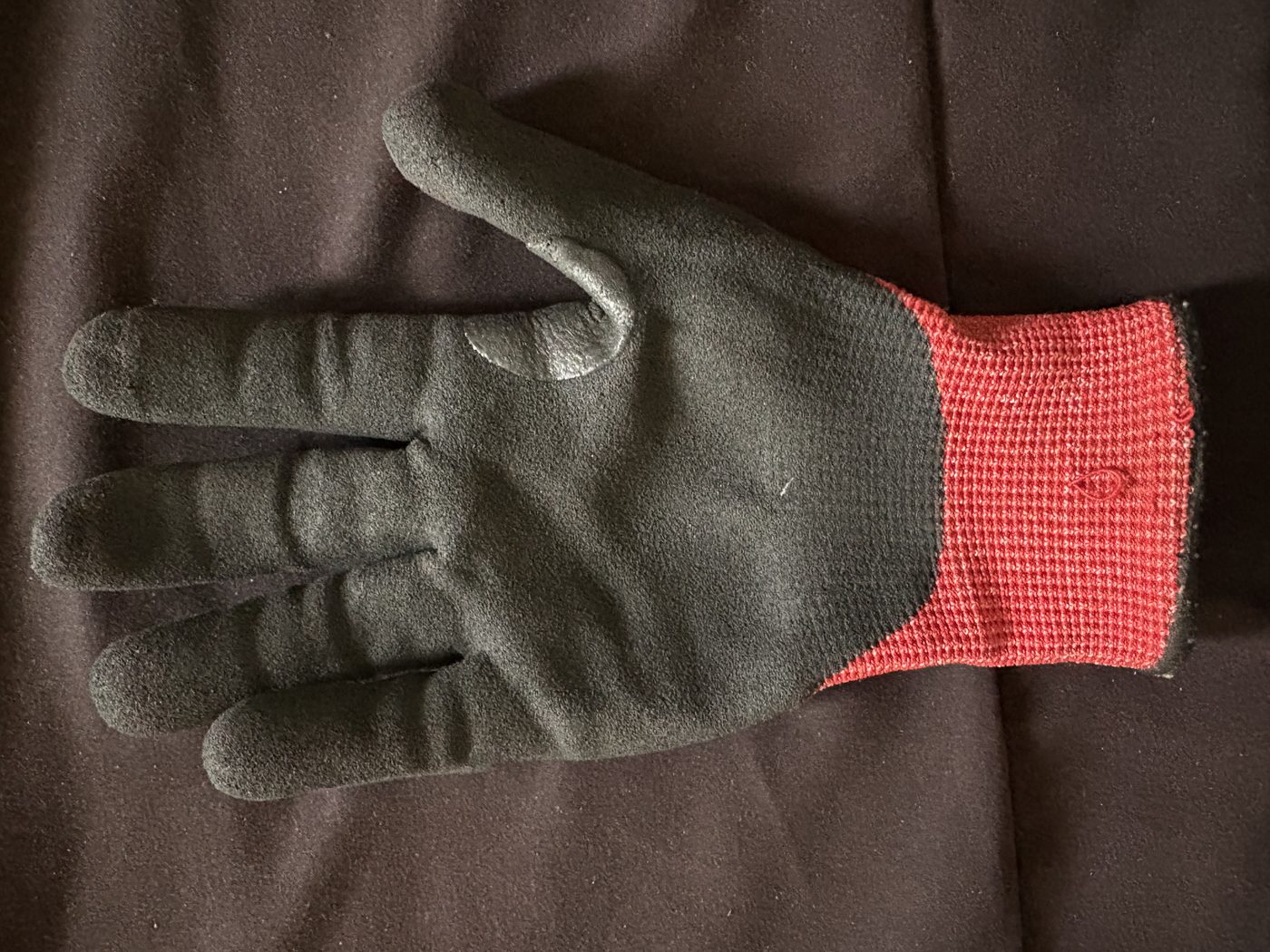
single heat-resistant glove with red cuff (Source: Wikipedia (Cut-resistant gloves))
A face mask covers the nose and mouth to prevent droplets from coughing, sneezing or talking from contaminating food, and to reduce inhaling fine powders such as icing sugar, cocoa and flour or fumes from cleaning chemicals. Masks are worn securely over both nose and mouth, changed when damp or after each shift and discarded in a lidded bin. Where strong chemicals are used, a mask suited to fumes is worn.
PPE is chosen after looking at the hazards of each job. For example, a cook making caramel needs a dry kitchen cloth, a heat-resistant glove and long sleeves, while a cook cleaning the sauce station with a chlorine solution needs rubber gloves, a plastic apron and, in a closed room, a mask.
Create a free account to open more of this chapter.
Free: practical guides, quick cards, workplace scenarios and more.
Create a free accountThis chapter covered the essential types and uses of personal protective equipment, emphasizing the importance of masks and third-party report assessments in maintaining safety. It explored occupational safety and health responsibilities related to employee management of personal protective equipment, including effective assessment methods. The cleaning of tools, equipment, and materials was highlighted as a critical step before and after sauce preparation. Detailed procedures for preparing various sweet sauces were presented, alongside strict hygiene practices focusing on both personal and food hygiene to prevent contamination. The production of sweet sauces was examined through different types, production methods, and quality assessment techniques to ensure consistency and taste. Guidance on the selection and presentation of sweet sauces was provided to enhance the final dessert experience. Furthermore, the chapter emphasized the thorough cleaning of tools, equipment, work surfaces, and floors to maintain a safe and sanitary environment. Lastly, proper waste disposal methods were discussed to uphold hygiene standards and environmental responsibility in dessert preparation areas.
Type: Individual
| Tools & Equipment | Materials |
|---|---|
| Disposable gloves | Lemon juice |
| Chef's apron | Sugar |
| Hair net | Water |
| Safety mask | Cornflour |
| Saucepan 1.5 liters | |
| Wooden spoon | |
| Measuring jug 500ml | |
| Whisk | |
| Heat resistant gloves | |
| Stove/hob |
| S/N | Item | Quantity |
|---|---|---|
| 1 | Disposable gloves | 1 pair per Candidate |
| 2 | Chef's apron | 1 per Candidate |
| 3 | Hair net | 1 per Candidate |
| 4 | Safety mask | 1 per Candidate |
| 5 | Saucepan 1.5 liters | 1 per Candidate |
| 6 | Wooden spoon | 1 per Candidate |
| 7 | Measuring jug 500ml | 1 per Candidate |
| 8 | Whisk | 1 per Candidate |
| 9 | Heat resistant gloves | 1 pair per Candidate |
| 10 | Stove/hob | 1 per Candidate |
| 11 | Lemon juice | 15 ml per Candidate |
| 12 | Sugar | 50 g per Candidate |
| 13 | Water | 200 ml per Candidate |
| 14 | Cornflour | 10 g per Candidate |
| Items to be Evaluated | Marks Available | Marks Obtained | Comments |
|---|---|---|---|
| TASK 1: PPE selection and donning | |||
| Selected appropriate PPE: disposable gloves, apron, hair net, mask, heat resistant gloves (Award 1 mark for each correct PPE selected, total 3 marks) | 3 | ||
| Correctly donned PPE in proper sequence without contamination (Award 3 marks for correct donning procedure) | 3 | ||
| Maintained PPE use throughout sauce preparation without removal or contamination (Award 2 marks for continuous correct PPE use) | 2 | ||
| Sub-Total | 8 | ||
| TASK 2: Safe handling and preparation of lemon sauce | |||
| Assembled all equipment and ingredients before starting (Award 1 mark for correct assembly) | 1 | ||
| Measured ingredients accurately as per recipe (Award 1 mark each for correct measurement of lemon juice and sugar) | 2 | ||
| Demonstrated safe handling of hot equipment using heat resistant gloves (Award 2 marks for safe handling of hot saucepan and stove use) | 2 | ||
| Prepared sauce by mixing sugar, cornflour, water and lemon juice correctly and cooking without spillage or burns (Award marks for correct mixing, cooking technique, and avoiding hazards) | 4 | ||
| Maintained clean and safe working environment during preparation (Award 2 marks for keeping work surface clean and disposing waste properly) | 2 | ||
| Sub-Total | 11 | ||
| PRODUCT CHECKLIST | |||
| Sauce consistency is smooth, without lumps or burnt spots (Award 3 marks for correct sauce texture and appearance) | 3 | ||
| Correct quantity of 250 ml prepared (Award 2 marks for correct portion size) | 2 | ||
| Sauce has balanced lemon flavor and sweetness (Award 3 marks for correct flavor profile) | 3 | ||
| Sub-Total | 8 | ||
| GRAND TOTAL | 27 | ||
Type: Individual
| Tools & Equipment | Materials |
|---|---|
| Mixing bowls | Detergent |
| Whisks | Sanitizer solution |
| Measuring spoons | Water supply |
| Sauce pans | PPE (apron, gloves, hairnet) |
| Spatulas | |
| Cutting boards | |
| Knives | |
| Dish cloths | |
| Drying rack |
| S/N | Item | Quantity |
|---|---|---|
| 1 | Mixing bowls | 2 pcs per Candidate |
| 2 | Whisks | 1 pc per Candidate |
| 3 | Measuring spoons | 1 set per Candidate |
| 4 | Sauce pans | 1 pc per Candidate |
| 5 | Spatulas | 1 pc per Candidate |
| 6 | Cutting boards | 1 pc per Candidate |
| 7 | Knives | 1 pc per Candidate |
| 8 | Dish cloths | 2 pcs per Candidate |
| 9 | Detergent | 100 ml per Candidate |
| 10 | Sanitizer solution | 200 ml per Candidate |
| 11 | Water supply | Adequate quantity per Candidate |
| 12 | Drying rack | 1 pc per Candidate |
| 13 | PPE (apron, gloves, hairnet) | 1 set per Candidate |
| Items to be Evaluated | Marks Available | Marks Obtained | Comments |
|---|---|---|---|
| TASK 1: Clean and Sanitize Tools, Equipment, and Materials | |||
| Wore appropriate PPE throughout the cleaning process (Award 2 marks for correct and consistent PPE use) | 2 | ||
| Disassembled equipment where necessary before cleaning (Award 1 mark for correctly disassembling tools/equipment) | 1 | ||
| Removed visible food residues from all tools and equipment (Award 2 marks for thorough removal of residues) | 2 | ||
| Washed all tools and equipment with detergent and clean water (Award 3 marks for proper washing technique) | 3 | ||
| Rinsed tools and equipment thoroughly to remove detergent (Award 2 marks for complete rinsing) | 2 | ||
| Sanitized all tools and equipment using the correct sanitizer solution (Award 3 marks for correct sanitizing procedure) | 3 | ||
| Dried tools and equipment using clean drying rack or cloths (Award 2 marks for proper drying methods) | 2 | ||
| Stored cleaned tools and equipment in designated clean areas (Award 2 marks for correct storage) | 2 | ||
| Disposed of waste water and used cleaning materials properly (Award 1 mark for proper waste disposal) | 1 | ||
| Sub-Total | 18 | ||
| PRODUCT CHECKLIST | |||
| All tools and equipment are visibly clean, dry, and free from food residues (Award 5 marks if all items are clean, dry, and properly stored) | 5 | ||
| Sub-Total | 5 | ||
| GRAND TOTAL | 23 | ||
At the start of this chapter we promised you would be able to:
Tick each one you can genuinely do.
So, are you there yet?
You're competent when you can confidently do 50% or more of what this chapter promised.
Sign in to record how you're doing.