
By the end of this chapter, you will be able to:
Mastering these skills will help you create high-quality styled trousers safely and professionally, making you a valuable asset in the garment industry.
Compiled by: Peter Ndungu
Producing styled trousers is a fundamental skill in fashion design, combining technical precision with creative expression. In Kenya's vibrant fashion industry, professionals must master the use of appropriate tools and equipment to achieve quality and efficiency. This chapter focuses on the essential garment making tools and equipment used specifically in trouser production, highlighting their specifications, uses, and maintenance within a typical Kenyan tailoring or fashion design studio.
Cutting tools are the first step in garment construction as they determine the accuracy of fabric pieces that will be assembled into a trouser. Precision in cutting influences the fit and overall appearance of the finished garment. Kenyan designers working in fashion schools or tailoring workshops use a variety of cutting tools tailored to different fabric types and production scales.
| Name | Specification | Use |
|---|---|---|
| Fabric Scissors | Sharp, ergonomic handles, 8-10 inches long | Cutting fabric layers cleanly without fraying |
| Rotary Cutter | Circular blade, 45 mm diameter, ergonomic grip | Cutting straight lines on multiple fabric layers |
| Tailor’s Chalk | White or coloured, non-permanent | Marking fabric for cutting and sewing guides |
| Pinking Shears | Serrated blades, 8 inches long | Cutting fabric edges to prevent fraying |
| Pattern Weights | Weighted metal or plastic, approx. 200g | Holding patterns in place during cutting |
| Name | Specification | Use |
|---|---|---|
| Lockstitch Machine | Single needle, straight stitch, adjustable speed | Main sewing operations for seams and hems |
| Overlock (Serger) | Multi-thread, 3-4 threads, high speed | Finishing raw edges with overlock stitch |
| Buttonhole Machine | Automated buttonhole stitching, adjustable size | Creating buttonholes on trouser waistbands |
| Flat-bed Machine | Flat sewing surface, high speed | Sewing flat seams and topstitching |
| Blind Stitch Machine | Special stitch for invisible hems | Hemming trousers with concealed stitches |
Accurate measurement and marking are prerequisites for a well-fitted trouser. Kenyan fashion professionals utilize specialized tools to transfer pattern details onto fabric with precision. These tools contribute to reducing errors and fabric wastage during production.
| Name | Specification | Use |
|---|---|---|
| Measuring Tape | Flexible, 150 cm length, fiberglass or cloth | Taking body measurements and measuring fabric |
| Tailor’s Square | Rigid, 30 cm x 30 cm, metal or plastic | Marking right angles and straight lines on fabric |
| Tracing Wheel | Spiked or smooth wheel, wooden or plastic handle | Transferring pattern markings onto fabric |
| Seam Gauge | Adjustable metal ruler, 15 cm length | Measuring small distances like hems and seam allowances |
| French Curve | Plastic or metal, curved ruler for shaping | Drawing curved lines such as crotch or pocket openings |
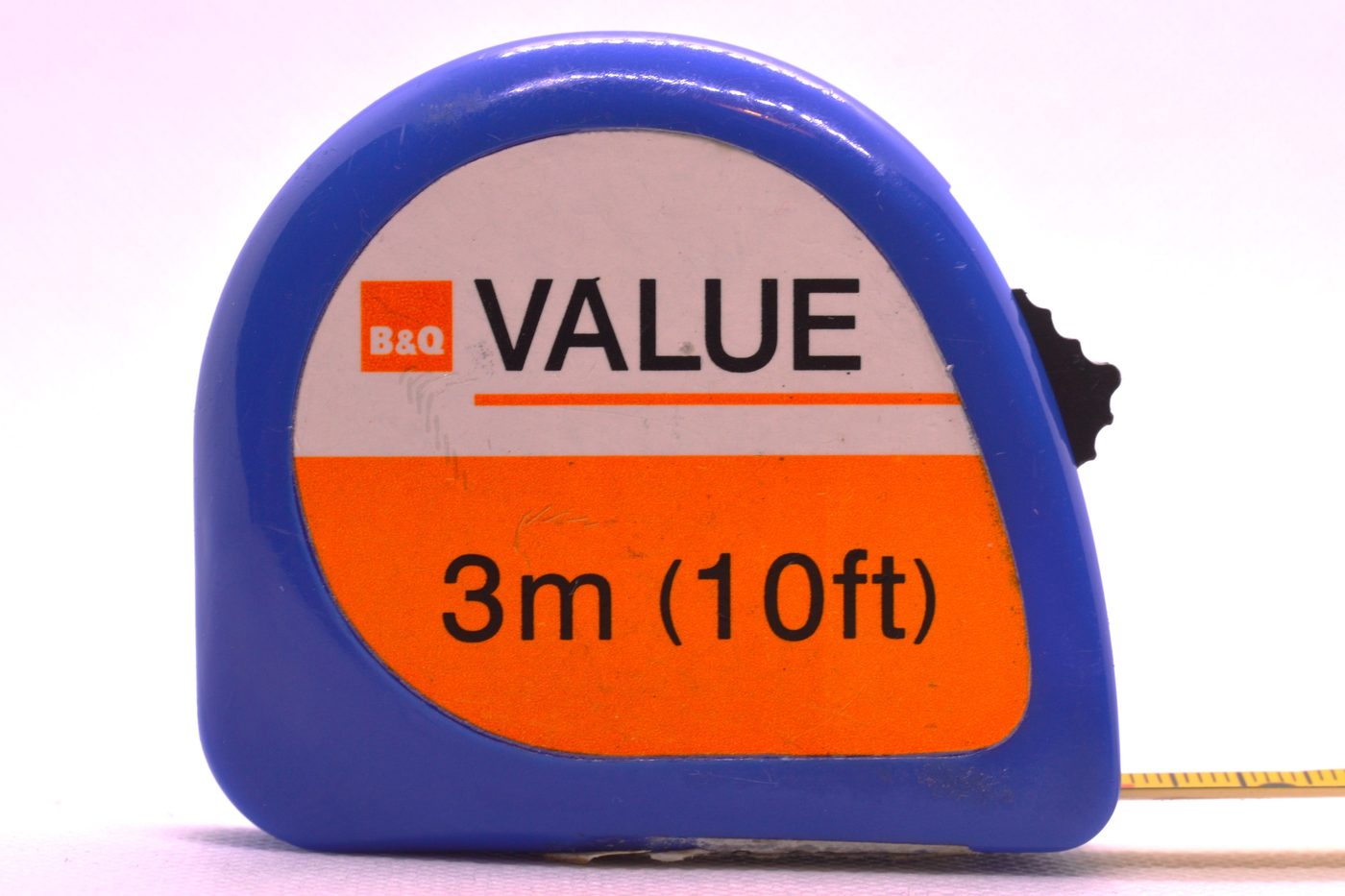
A 3m (10ft) measuring tape (Source: Wikimedia Commons)
Pressing is a critical stage in trouser production that shapes the garment and sets seams for a polished look. Kenyan fashion designers depend on appropriate pressing tools to produce crisp creases and smooth finishes that meet industry standards.
| Name | Specification | Use |
|---|---|---|
| Iron | Steam function, adjustable temperature | Pressing seams, creases, and hems |
| Tailor’s Ham | Firm, compact, oval-shaped cushion | Pressing curved areas like the crotch and darts |
| Sleeve Board | Narrow, padded board, 30 cm length | Pressing trouser legs and narrow areas |
| Press Cloth | Lightweight cotton fabric | Protecting delicate fabrics during ironing |
| Heat-resistant Gloves | Silicone or leather gloves | Protecting hands during pressing of hot areas |
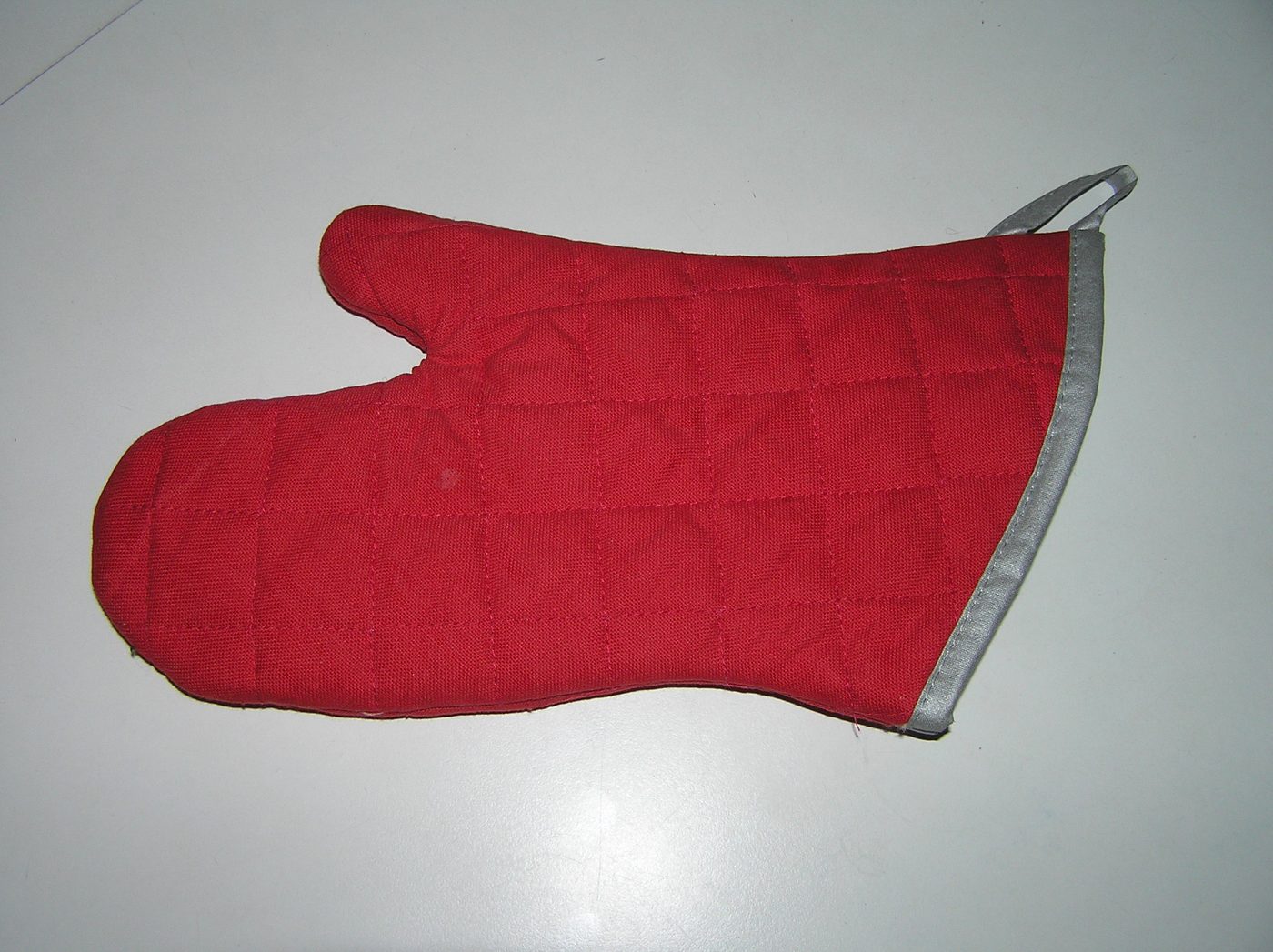
red heat-resistant glove for handling hot objects (Source: Wikimedia Commons)
Create a free account to open more of this chapter.
Free: practical guides, quick cards, workplace scenarios and more.
Create a free accountThis chapter covered the essential tools and equipment required in garment making, highlighting their specific roles in producing styled trousers. It examined how to interpret trouser designs accurately to ensure the final product meets the intended style and fit. The selection of appropriate fabric and accessories was discussed, emphasizing their impact on garment quality and appearance. Guidance was provided on laying garment pattern pieces efficiently on fabric to minimize waste and maintain precision. The process of cutting garment pieces was detailed, focusing on accuracy and safety. The chapter then explored garment assembly techniques, ensuring proper joining of components for durability and aesthetics. Finishing processes were described to enhance the garment’s appearance and functionality. Finally, the importance of effective garment display and maintaining housekeeping activities to ensure a clean and organized work environment was addressed.
Type: Individual
| Tools & Equipment | Materials |
|---|---|
| Meter rule | Sewing thread (matching colour) |
| French curve | |
| Tracing wheel | |
| Tailor's chalk | |
| Dressmaker's pins | |
| Scissors | |
| Hand sewing needles | |
| Tape measure | |
| Dust coat | |
| Flat comfortable closed shoes |
| S/N | Item | Quantity |
|---|---|---|
| 1 | Meter rule | 1 Pc per Candidate |
| 2 | French curve | 1 Pc per Candidate |
| 3 | Tracing wheel | 1 Pc per Candidate |
| 4 | Tailor's chalk (white and blue) | 2 Pcs per Candidate |
| 5 | Dressmaker's pins | 20 Pcs per Candidate |
| 6 | Scissors (fabric and thread cutter) | 1 Pc per Candidate |
| 7 | Hand sewing needles | 5 Pcs per Candidate |
| 8 | Sewing thread (matching colour) | 1 Spool per Candidate |
| 9 | Tape measure | 1 Pc per Candidate |
| 10 | Dust coat | 1 Set per Candidate |
| 11 | Flat comfortable closed shoes | 1 Pair per Candidate |
| 12 | Cutting table (well lit and ventilated workspace) | 1 Unit per Candidate |
| Items to be Evaluated | Marks Available | Marks Obtained | Comments |
|---|---|---|---|
| TASK 1: Identification and Preparation of Tools and Equipment | |||
| Identified and wore personal protective equipment: dust coat and flat comfortable closed shoes (Award 1 mark for each correctly identified and used PPE) | 2 | ||
| Observed occupational safety and health requirements: well-lit and well-ventilated working area (Award 2 marks for full compliance) | 2 | ||
| Identified and gathered drafting tools as per standard procedures: meter rule, French curve, tracing wheel, tailor's chalk (Award 1 mark for each correctly identified drafting tool) | 4 | ||
| Identified and gathered cutting tools and materials: dressmaker's pins, scissors, tailor's chalk (Award 1 mark for each correctly identified cutting tool/material) | 3 | ||
| Identified and gathered garment construction tools and materials: tape measure, hand sewing needles, sewing thread (Award 1 mark for each correctly identified construction tool/material) | 3 | ||
| Sub-Total | 14 | ||
| PRODUCT CHECKLIST | |||
| All tools and equipment correctly identified, prepared, and arranged ready for styled trouser production (Award up to 6 marks for completeness, readiness and correct preparation) | 6 | ||
| Sub-Total | 6 | ||
| GRAND TOTAL | 20 | ||
Type: Individual
| Tools & Equipment | Materials |
|---|---|
| Meter rule | Plain light weight fabric |
| French curve | Brown pattern paper |
| Tracing wheel | Fusible interfacing |
| Tailor's chalk | Buttons (1.5 cm diameter) |
| Tape measure | Sewing thread (matching fabric) |
| Dressmaker's pins | |
| Cutting shears | |
| Sewing needles | |
| Seam ripper | |
| Scissors |
| S/N | Item | Quantity |
|---|---|---|
| 1 | Plain light weight fabric | 120 cm per Candidate |
| 2 | Buttons (1.5 cm diameter) | 2 per Candidate |
| 3 | Fusible interfacing | 1/4 meter per Candidate |
| 4 | Sewing thread (matching fabric) | 1 spool per Candidate |
| 5 | Brown pattern paper | 3 meters per Candidate |
| 6 | Pattern drafting tools (meter rule, French curve, tracing wheel, tailor's chalk) | 1 set per Candidate |
| 7 | Sewing tools (scissors, pins, tape measure, hand sewing needles, seam ripper) | 1 set per Candidate |
| 8 | Cutting shears | 1 per Candidate |
| 9 | Personal protective clothing (dust coat, flat closed comfortable shoes) | 1 set per Candidate |
| Items to be Evaluated | Marks Available | Marks Obtained | Comments |
|---|---|---|---|
| TASK 1: Prepare and interpret trouser pattern layout | |||
| Identified and used personal protective equipment correctly (dust coat, flat closed shoes) (Award 1 mark for each PPE item correctly identified and used = 2 Marks) | 2 | ||
| Observed occupational safety and health requirements (well-lit, ventilated workspace) (Award maximum 2 marks for compliance with safety and health requirements) | 2 | ||
| Identified and gathered pattern drafting tools and materials as per SOP (meter rule, French curve, tracing wheel, tailor's chalk, brown paper) (Award 1/2 mark for each correctly identified drafting tool and material = 3 Marks) | 3 | ||
| Developed trouser pattern pieces correctly according to style and standard procedure (front leg, back leg, waistband, pocket pieces) (Award 1 mark for each correctly drafted pattern piece and 1 mark for each correct pattern instruction such as grain line, fold line, seam allowance, pattern name = 10 Marks) | 10 | ||
| Identified and gathered cutting tools and materials as per SOP (dressmaker's pins, tailor's chalk, cutting shears) (Award 1/2 mark for each correctly identified cutting tool or material = 2 Marks) | 2 | ||
| Cut pattern pieces accurately in accordance with garment style and layout (Award 1 mark for each correctly cut piece: front leg - 1, back leg - 1, waistband - 1, pocket pieces - 2, fly shield - 1, pocket lining - 2, belt loops - 4, zipper interfacing - 1 = 13 Marks) | 13 | ||
| Transferred pattern markings accurately to fabric pieces (dart points, pocket placement, seam lines) (Award 1 mark for each correct pattern marking transferred = 2 Marks) | 2 | ||
| Identified and gathered garment construction tools and materials (tape measure, hand sewing needles, sewing thread, pins, thread cutter, seam ripper) (Award 1/2 mark for each correctly identified construction tool or material = 3 Marks) | 3 | ||
| Stitched garment pieces as per styled trouser design and SOP (darts, side seams, inseams, waistband attachment, pocket stitching, fly front assembly) (Award 2 marks for each correct stitching procedure = 18 Marks) | 18 | ||
| Finished trouser garment as per design and workplace policy (button attachment, zipper insertion, hemming) (Award 1 mark for each correct finishing procedure = 2 Marks) | 2 | ||
| Packaged trouser correctly as per workplace policy (attached identification label firmly with garment details) (Award 1 mark for each correct packaging procedure = 2 Marks) | 2 | ||
| Demonstrated care and safe custody of tools and equipment after completion (Award 1 mark for proper care and storage of tools and equipment) | 1 | ||
| Sub-Total | 60 | ||
| PRODUCT CHECKLIST | |||
| Presentation: well labelled, no hanging threads, well pressed, well folded (Award 1 mark for each correct presentation aspect = 2 Marks) | 2 | ||
| Measurements within ±2 cm: Waist 810 mm, Full length 1050 mm, Inseam 770 mm, Cuff width 180 mm (Award 1/2 mark for each correct measurement = 2 Marks) | 2 | ||
| Front fly finished correctly with neat zipper insertion and interfacing (Award 1/2 mark for each correct finishing procedure = 2 Marks) | 2 | ||
| Darts: stitched with straight stitch, correct width and taper, pressed towards side seams, well pressed and flat (Award 1/2 mark for each correct dart procedure = 15 Marks) | 15 | ||
| Side and inseam joined with straight stitch, seam allowance even and neatened, well pressed (Award 2 marks for each correct seam joining and finishing procedure = 8 Marks) | 8 | ||
| Waistband attached evenly with correct interfacing and neat topstitching (Award 2 marks for correct waistband attachment and finishing = 6 Marks) | 6 | ||
| Pockets properly shaped, securely stitched and aligned with garment style (Award marks for correct pocket construction and attachment = 5 Marks) | 5 | ||
| Sub-Total | 40 | ||
| GRAND TOTAL | 100 | ||
At the start of this chapter we promised you would be able to:
Tick each one you can genuinely do.
So, are you there yet?
You're competent when you can confidently do 50% or more of what this chapter promised.
Sign in to record how you're doing.