
By the end of this chapter, you will be able to:
Mastering these skills will help you create stylish, high-quality garments that meet customer expectations and prepare you for success in the fashion industry.
Producing styled garments requires not only creative vision but also mastery of the tools and equipment that transform fabric into finished fashion pieces. In Kenya's dynamic fashion industry, professionals must be proficient with a variety of garment-making instruments to ensure precision, efficiency, and quality in production. This chapter focuses on the essential tools and equipment used in styled garment production, emphasizing their specifications, uses, and maintenance within the Kenyan fashion design context.
The process of garment production depends heavily on the availability and proper use of specialized tools and equipment. Kenyan fashion designers and tailors working in diverse settings such as boutique studios in Nairobi, garment manufacturing units in Athi River, or tailoring workshops in Kisumu rely on these instruments to achieve professional standards. Understanding the characteristics and functions of each tool enables practitioners to optimize workflow, reduce waste, and maintain garment quality.
A thorough knowledge of garment making tools begins with identifying the essential items, their specifications, and intended uses. Below is a table listing key tools commonly found in Kenyan fashion design workshops and their typical specifications.
| Name | Specification | Use |
|---|---|---|
| Dressmaker's Scissors | 8-inch stainless steel blades, sharp, ergonomic handle | Cutting fabric accurately and smoothly |
| Measuring Tape | Flexible fiberglass tape, 150 cm length, metric units | Taking body and fabric measurements |
| Tailor's Chalk | White or colored chalk, rectangular or triangular | Marking fabric for cutting or sewing |
| Sewing Machine | Electric, zigzag and straight stitch functions, adjustable speed | Stitching fabric pieces together |
| Pins and Needles | Stainless steel pins (30mm length), assorted hand sewing needles | Temporarily holding fabric; hand stitching |
| Seam Ripper | Small blade with pointed end | Removing stitches without damaging fabric |
Dressmaker’s scissors are designed for fabric cutting with precision, critical in avoiding jagged edges that compromise garment fit. Measuring tapes must be flexible and durable to measure curved body contours accurately, a common task when working on bespoke styled garments. Tailor’s chalk is indispensable for marking seam allowances and design details directly on fabric without causing permanent marks. The sewing machine, often the backbone of garment assembly, should be adaptable to different stitch types and fabric thicknesses, ensuring versatility in styled garment production. Pins and needles are basic yet essential for holding pieces before permanent stitching, while seam rippers allow correction of sewing errors efficiently.
Efficient garment production requires not only the right tools but also proper usage techniques to maximize their lifespan and effectiveness. Kenyan fashion professionals must develop skills that ensure safety and precision during garment making.
Attention to these handling practices ensures garment components are produced with precision and reduces the risk of errors or accidents in Kenyan workshops where resources must be optimized.
Proper maintenance of garment making tools is critical to sustaining their performance and extending their service life. In Kenya’s competitive fashion industry, maintaining tools also helps reduce operational costs and downtime.
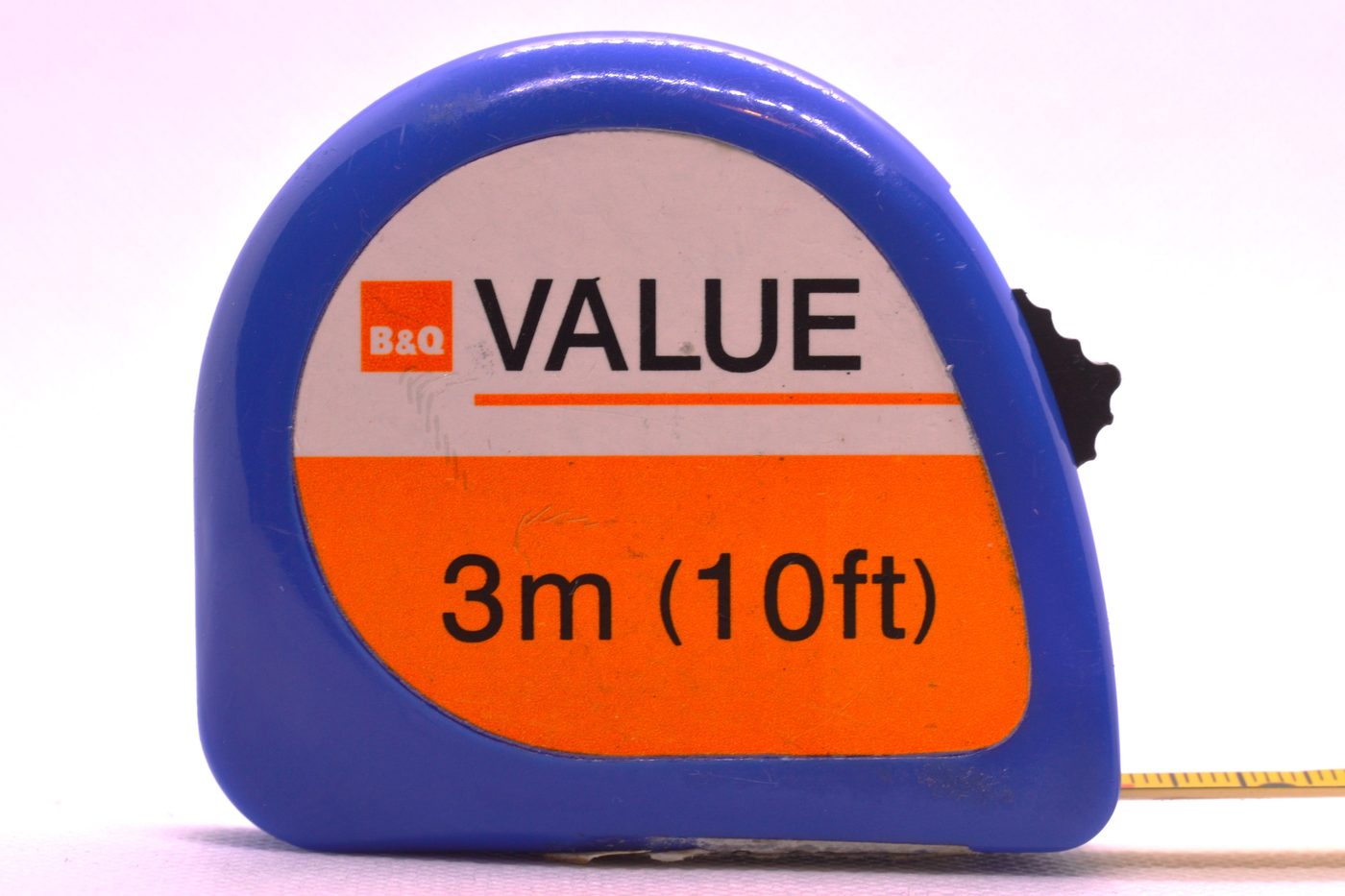
A measuring tape with metric and imperial units (Source: Wikimedia Commons)
Such maintenance routines are vital in Kenyan tailoring workshops and fashion studios where tool replacement may be costly or delayed.
Beyond basic tools, styled garment production sometimes requires specialized equipment that enhances design complexity and production efficiency. Kenyan fashion designers working in upscale studios or garment factories may utilize these advanced tools.
Use of these specialized tools requires additional skills and investment but significantly enhances the professionalism and marketability of styled garments produced by Kenyan fashion enterprises.
Create a free account to open more of this chapter.
Free: practical guides, quick cards, workplace scenarios and more.
Create a free accountThis chapter covers the essential tools and equipment used in garment making, highlighting their functions in producing styled shorts. It explains various methods for accurately transferring pattern marks onto fabric to ensure precision in garment construction. The interpretation of short design is discussed to guide the maker in understanding style elements and technical details. Fabric and accessory selection is emphasized as a critical step affecting the garment's appearance and functionality. Proper laying of garment design pattern pieces is detailed to optimize fabric use and maintain design integrity. The chapter then explores the cutting process, focusing on accuracy and efficiency to prepare fabric pieces for assembly. Construction techniques for styled shorts are presented, followed by garment finishing methods that enhance the final product's quality. Finally, it addresses effective display techniques for constructed shorts and outlines housekeeping activities necessary to maintain a safe and organized work environment.
Type: Individual
| Tools & Equipment | Materials |
|---|---|
| Meter rule | Sewing thread (matching color) |
| French curve | Dust coat |
| Tracing wheel | Flat comfortable closed shoes |
| Tailor's chalk | |
| Dressmaker's pins | |
| Tape measure | |
| Hand sewing needle | |
| Thread cutter/scissors | |
| Seam ripper | |
| Cutting shears |
| S/N | Item | Quantity |
|---|---|---|
| 1 | Meter rule | 1 per Candidate |
| 2 | French curve | 1 per Candidate |
| 3 | Tracing wheel | 1 per Candidate |
| 4 | Tailor's chalk | 1 piece per Candidate |
| 5 | Dressmaker's pins | 50 pieces per Candidate |
| 6 | Tape measure | 1 per Candidate |
| 7 | Hand sewing needle | 5 pieces per Candidate |
| 8 | Sewing thread (matching color) | 1 spool per Candidate |
| 9 | Thread cutter/scissors | 1 per Candidate |
| 10 | Seam ripper | 1 per Candidate |
| 11 | Cutting shears | 1 per Candidate |
| 12 | Dust coat | 1 set per Candidate |
| 13 | Flat comfortable closed shoes | 1 pair per Candidate |
| Items to be Evaluated | Marks Available | Marks Obtained | Comments |
|---|---|---|---|
| TASK 1: Identification and Preparation of Tools and Equipment | |||
| Identified and wore personal protective equipment (dust coat and flat comfortable closed shoes) (Award 1 mark for each correctly used PPE) | 2 | ||
| Observed occupational safety and health requirements (well-lit and well-ventilated workspace) (Award maximum 2 marks for appropriate OHS compliance) | 2 | ||
| Identified and gathered drafting tools: meter rule, French curve, tracing wheel, tailor's chalk (Award 0.75 mark for each correctly identified drafting tool) | 3 | ||
| Identified and gathered cutting tools: dressmaker's pins, cutting shears, tailor's chalk (Award 0.67 mark for each correctly identified cutting tool) | 2 | ||
| Identified and gathered garment construction tools and supplies: tape measure, hand sewing needle, sewing thread, thread cutter/scissors, seam ripper (Award 0.6 mark for each correctly identified construction tool) | 3 | ||
| Prepared tools and equipment in readiness for styled short production (Award 3 marks for complete and correct preparation as per SOP) | 3 | ||
| Maintained care and safe custody of tools and equipment during preparation (Award 1 mark for correct tool handling and storage) | 1 | ||
| Sub-Total | 16 | ||
| PRODUCT CHECKLIST | |||
| All required garment making tools and equipment correctly identified and prepared (Award 4 marks for complete and accurate preparation matching task requirements) | 4 | ||
| Personal protective equipment correctly identified and used (Award 2 marks for correct PPE use) | 2 | ||
| Work area set up complies with occupational safety and health standards (Award 2 marks for appropriate OHS setup) | 2 | ||
| Sub-Total | 8 | ||
| GRAND TOTAL | 24 | ||
Type: Individual
| Tools & Equipment | Materials |
|---|---|
| Meter rule | Plain light-weight cotton fabric |
| Tracing wheel | Pattern paper |
| Tailor's chalk | Sewing thread |
| Dressmaker's pins | |
| French curve |
| S/N | Item | Quantity |
|---|---|---|
| 1 | Plain light-weight cotton fabric | 120 cm per Candidate |
| 2 | Tailor's chalk | 1 Pc per Candidate |
| 3 | Tracing wheel | 1 Pc per Candidate |
| 4 | Dressmaker's pins | 1 Pack per Candidate |
| 5 | Pattern paper (brown paper) | 3 meters per Candidate |
| 6 | Meter rule (30 cm and 60 cm) | 1 Set per Candidate |
| 7 | French curve | 1 Pc per Candidate |
| 8 | Sewing thread (matching fabric) | 1 Spool per Candidate |
| 9 | Personal protective clothing (dust coat, flat closed shoes) | 1 Set per Candidate |
| Items to be Evaluated | Marks Available | Marks Obtained | Comments |
|---|---|---|---|
| TASK 1: Transfer Pattern Marks | |||
| Identified and used personal protective equipment correctly (dust coat, flat closed shoes) (Award 1 mark for each correct PPE item used) | 2 | ||
| Prepared well-lit and ventilated working area according to occupational safety standards (Award maximum 2 marks for compliance) | 2 | ||
| Identified and gathered all required pattern drafting and marking tools (meter rule, tracing wheel, tailor's chalk, dressmaker's pins, French curve) (Award 1/2 mark for each correctly identified tool) | 3 | ||
| Laid out fabric and pattern pieces correctly aligning grain lines (Award 3 marks for correct layout procedures) | 3 | ||
| Pinned pattern pieces securely to fabric without distortion (Award 2 marks for correct pinning technique) | 2 | ||
| Transferred all pattern markings accurately including seam lines, dart points, button and buttonhole positions, grain lines, and notches using appropriate methods (Award 1 mark for each correctly transferred marking) | 8 | ||
| Used tracing wheel and tailor's chalk correctly without damaging fabric (Award 3 marks for correct tool usage and care) | 3 | ||
| Checked transferred marks for accuracy and completeness before removing pattern paper (Award 2 marks for thorough checking) | 2 | ||
| Cleaned and stored tools safely after completion (Award 1 mark for safe custody of tools) | 1 | ||
| Sub-Total | 26 | ||
| PRODUCT CHECKLIST | |||
| Fabric pieces have all pattern marks transferred accurately matching dimensions: garment length 600 mm, waist circumference 800 mm (Award 2 marks for length accuracy within ±5 mm, 3 marks for correct waist circumference marks) | 5 | ||
| Seam lines, darts, button and buttonhole positions clearly visible and correctly positioned (Award 3 marks for clarity and correctness of markings) | 3 | ||
| Grain lines and notches correctly transferred and aligned (Award 3 marks for correct grain line and notch transfer) | 3 | ||
| No damage or unwanted marks on fabric surface (Award 3 marks for clean fabric surface after transfer) | 3 | ||
| Sub-Total | 14 | ||
| GRAND TOTAL | 40 | ||
At the start of this chapter we promised you would be able to:
Tick each one you can genuinely do.
So, are you there yet?
You're competent when you can confidently do 50% or more of what this chapter promised.
Sign in to record how you're doing.