Fashion Design  ·  Level 4
Styled Garments Production
Chapter 1: Produce styled skirt
📚 4 Topics
⚑ What you will be able to do

By the end of this chapter, you will be able to:

  • Wear the correct personal protective equipment safely and follow all safety procedures.
  • Keep your workspace clean and safe by carrying out housekeeping activities according to workplace rules.
  • Assemble all the garment-making tools and equipment correctly for the job.
  • Read and understand the skirt design accurately based on the design specifications.
  • Choose the right fabric and accessories that match the design requirements.
  • Lay out the pattern pieces on fabric precisely, following the pattern instructions.
  • Cut the garment pieces neatly and accurately according to the design.
  • Construct the skirt correctly by following the design specifications step-by-step.
  • Finish the skirt neatly to meet the job specifications.
  • Display the finished skirt properly, following workplace procedures.

Mastering these skills will help you create beautiful, professional skirts that meet customer expectations and stand out in the fashion industry!

Producing a styled skirt is a fundamental skill for fashion design professionals in Kenya, combining creativity with technical precision. This chapter focuses on the essential safety practices necessary during garment production, starting with the use of Personal Protective Equipment (PPE). Proper PPE use safeguards tailors and designers from common hazards in the workshop environment, ensuring both personal safety and uninterrupted workflow. Understanding and applying PPE principles is critical in settings such as garment factories, fashion studios, and tailoring workshops across Kenya.

1.1 Personal Protective Equipment

Personal Protective Equipment (PPE) plays a crucial role in protecting fashion design professionals from risks encountered during the production of styled skirts. In Kenya, where garment making often involves working with sharp tools, hot equipment, and chemicals like dyes or adhesives, PPE is not optional but mandatory for safe working conditions. Tailors and designers must be aware of the types of PPE available, their correct use, and maintenance to prevent injuries that could disrupt production schedules.

1.1.1 Types of Personal Protective Equipment in Skirt Production

In the context of styled skirt production, various PPE items are specifically designed to protect against the typical hazards present in tailoring workshops and garment factories.
Common PPE for Fashion Designers and Tailors

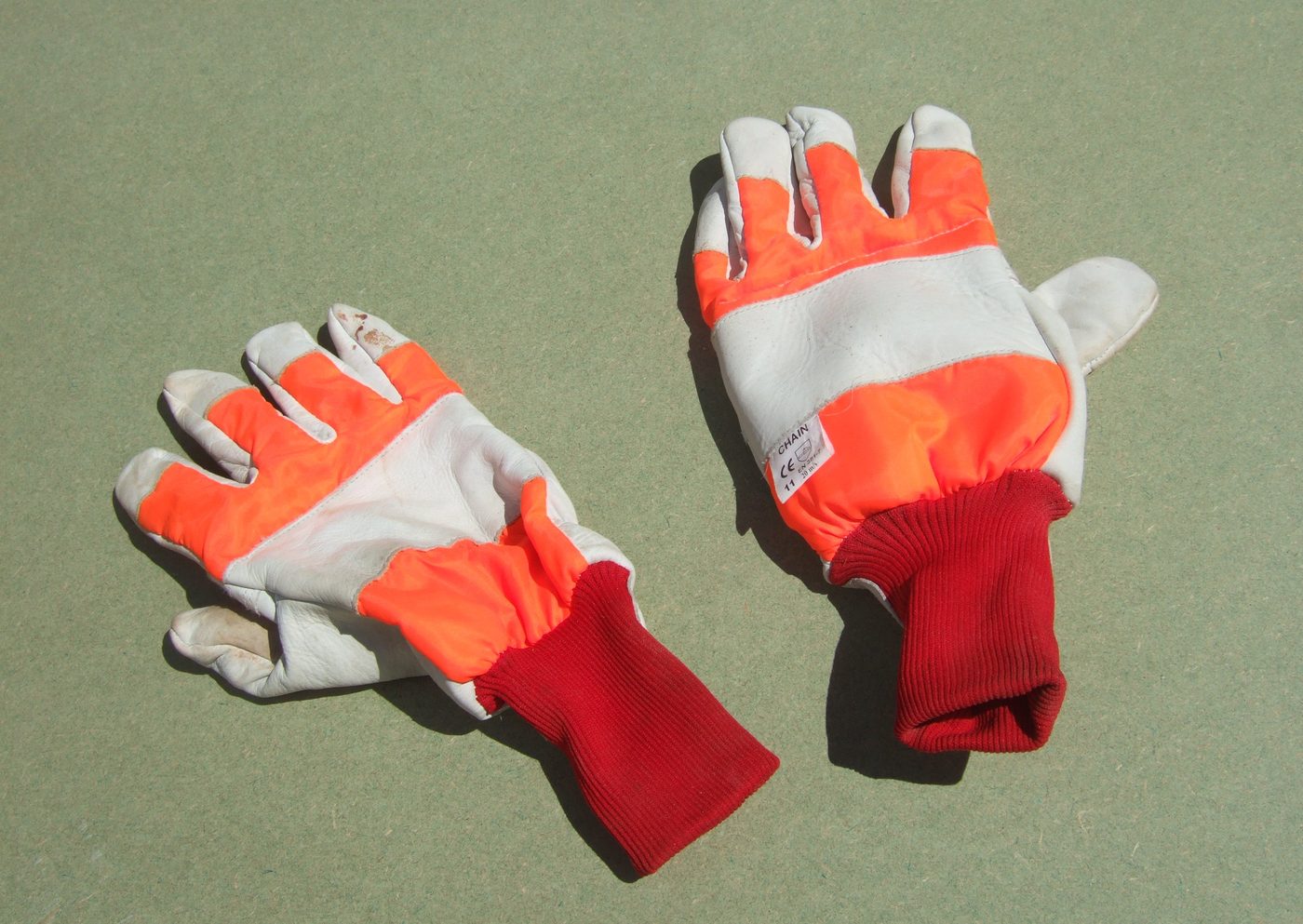
  • Protective Gloves: These shield hands from needle pricks, cuts from scissors, and irritation from chemicals used in fabric treatment. For example, at a Nairobi-based tailoring workshop, gloves reduce the risk of injury when handling pins and cutting tools.

A pair of protective gloves
A pair of protective gloves (Source: Wikimedia Commons)
  • Eye Protection: Safety glasses or goggles guard against flying fabric fibers, dust, and accidental splashes from textile chemicals. Staff at a textile printing firm in Mombasa use goggles during fabric dyeing to prevent eye damage.
  • Aprons: Aprons protect clothing and skin from stains and sharp objects. Tailors at a county government tailoring unit in Kisumu wear heavy-duty aprons to avoid fabric glue and thread entanglement.
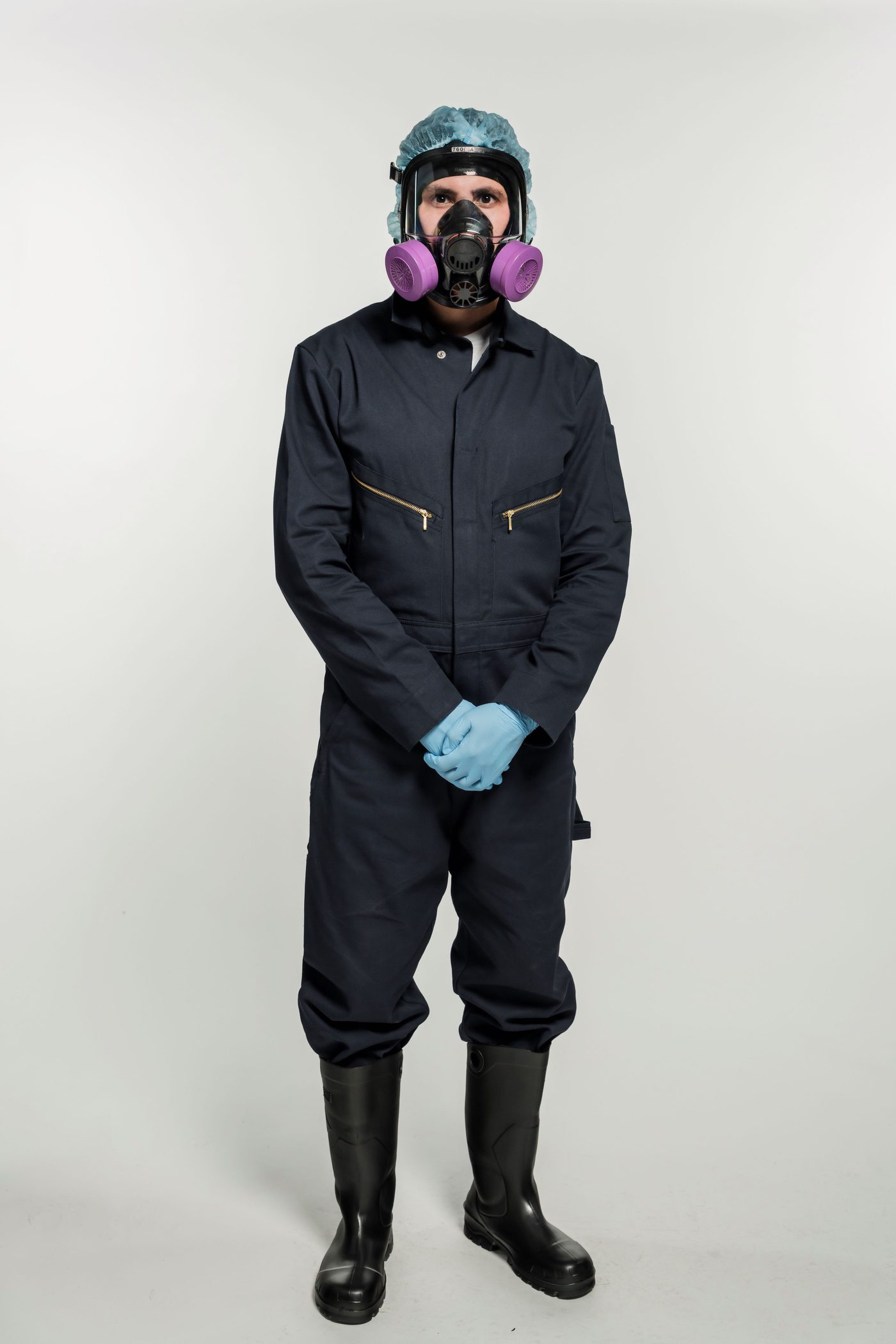
  • Face Masks: Masks filter out dust particles and fumes from adhesives or synthetic fabric treatments, reducing respiratory risks. Workers in garment factories in Eldoret use masks to limit inhalation of textile dust.

Person wearing a construction face mask with filters
Person wearing a construction face mask with filters (Source: Wikimedia Commons)

  • Footwear: Closed-toe shoes or safety boots protect feet from dropped scissors, pins, and heavy equipment. In a retail fashion outlet in Nakuru, staff wear sturdy footwear to prevent foot injuries during stock handling.

1.1.2 Importance of Proper PPE Use in Skirt Production

Correct use of PPE is essential not only for personal safety but also for maintaining productivity and quality in skirt manufacturing. Neglecting PPE can lead to accidents, which disrupt operations and increase costs.

Key Reasons for PPE Compliance

  • Preventing Physical Injuries: PPE like gloves and footwear reduce cuts and punctures, which are common in cutting and sewing activities.
  • Reducing Exposure to Harmful Substances: Masks and goggles limit contact with chemical dyes and adhesives, safeguarding respiratory and eye health.
  • Maintaining Hygiene: Aprons prevent contamination of fabric and finished skirts, ensuring product quality.
  • Enhancing Worker Confidence: When tailors feel safe, they focus better on detailed tasks such as stitching and finishing, improving workmanship.
  • Meeting Legal and Industry Standards: Compliance with Kenya’s Occupational Safety and Health Act protects workshops from penalties and fosters a culture of safety.

1.1.3 Correct Procedures for PPE Use in Garment Workshops

Understanding how to properly wear, use, and maintain PPE is as important as having it available. Incorrect use can reduce effectiveness and increase risk.

Steps for Effective PPE Use in Skirt Production

  1. Inspection Before Use: Check PPE for damage or dirt before each use to ensure full protection.
  2. Proper Fitting: Adjust gloves, masks, and goggles to fit snugly without restricting movement, enabling comfortable and safe operation.
  3. Using PPE Consistently: Wear PPE throughout all risky tasks such as cutting, sewing, and fabric treatment.
  4. Removing PPE Safely: Take off gloves and masks without touching contaminated surfaces, preventing cross-contamination.
  5. Cleaning and Storage: After use, clean reusable PPE according to manufacturer instructions and store in designated clean areas.
  6. Replacing Damaged PPE: Dispose of or replace PPE immediately if it is torn, worn out, or no longer effective.

1.1.4 Challenges in PPE Implementation and How to Overcome Them

While PPE is essential, some workshops and individual tailors face difficulties in consistent use and enforcement, which can compromise safety.

Challenges in PPE Use

  • Cost Constraints: Small-scale designers may find high-quality PPE expensive, leading to inadequate protection.
  • Lack of Awareness: Some workers underestimate risks or are unaware of correct PPE usage techniques.
  • Discomfort: PPE such as gloves or masks may feel restrictive or hot, discouraging continuous use during long shifts.
  • Inadequate Supply: Workshops may have insufficient PPE stock, forcing workers to share or skip protective gear.
  • Poor Enforcement: Absence of strict workplace policies and supervision can result in non-compliance.

Strategies to Improve PPE Compliance

  • Budget Allocation: Prioritize PPE purchase in workshop budgets, sourcing affordable yet effective options from local suppliers.
  • Training and Education: Conduct regular safety workshops emphasizing PPE importance and proper use, as done in university fashion departments in Nairobi.
  • Ergonomic PPE Selection: Choose breathable and well-fitted PPE to enhance comfort during extended use.
  • Inventory Management: Maintain adequate PPE stock and monitor usage to prevent shortages.
  • Policy Development: Establish clear safety protocols with consequences for non-compliance, supported by management commitment.

Practice Questions

  1. Explain five types of Personal Protective Equipment commonly used in styled skirt production and their specific functions. (10 marks)
  2. Discuss the importance of proper PPE use in garment workshops and how it impacts production quality. (10 marks)
  3. Outline the six steps involved in the correct use of PPE during skirt manufacturing. (12 marks)
  4. Identify four challenges faced in implementing PPE use in Kenyan tailoring workshops and propose solutions for each. (12 marks)
The rest of this chapter
🔒

Create a free account to open more of this chapter.

Free: practical guides, quick cards, workplace scenarios and more.

Create a free account
🔒1.2 Garment Making Tools and Equipment

In the Kenyan fashion design industry, the choice and use of appropriate garment making tools and equipment are essential for producing styled skirts that meet professional standards. Skilled fashion designers and garment makers rely on precise tools to ensure…

🔒1.3 Pattern Instruction

In the production of styled skirts, pattern instruction is a critical phase that bridges design conceptualization and garment construction. In Kenya’s vibrant fashion industry, especially among designers who produce tailored garments for local retail outlets a…

🔒1.4 Garment Pieces Cutting

Cutting garment pieces is a critical phase in the production of styled skirts, determining the final fit, appearance, and fabric utilization. In the Kenyan fashion industry, precision in cutting reduces material wastage and ensures consistency across batches,…

Chapter Summary

This chapter covered essential aspects of producing a styled skirt, beginning with the importance of using personal protective equipment to ensure safety throughout the garment production process. It then examined the various garment making tools and equipment required, highlighting their roles in creating precise and quality skirts. The discussion moved to pattern instruction, detailing how to interpret and apply patterns accurately to achieve the desired design and fit. Finally, the chapter addressed the cutting of garment pieces, emphasizing careful handling and precision to maintain fabric integrity and prepare for successful assembly. Together, these topics provide a comprehensive foundation for producing styled skirts efficiently and safely.

Self-Assessment

🔒 PDFDownload this self-assessment, with answers

A. Written Assessment

  1. What is the primary purpose of Personal Protective Equipment (PPE) in a fashion design workshop? (2 marks)
  2. Identify three essential tools used in cutting garment pieces and explain their specific uses. (3 marks)
🔒26 more in this section.

Chapter Examination Questions

🔒 PDFDownload these examination questions, with worked answers

SECTION A (40 Marks) - Answer ALL Questions

  1. Identify five types of personal protective equipment (PPE) used during skirt production and explain their importance in a Nairobi-based fashion workshop. (4 marks)
  2. Describe the function of a rotary cutter and contrast it with fabric scissors in garment making. (4 marks)
🔒18 more in this section.

Chapter Practical Activities

Practical 1: Interpret and prepare pattern instructions for styled skirt cutting

Fashion Design · Level 4
Styled Garments Production
PRACTICAL ASSESSMENT
TIME: 4 HOURS
⬇ PDFCandidate Instructions (Candidate Tool)

Type: Individual

INSTRUCTIONS TO CANDIDATE:
1.  You are required to perform the following task:
i.  Interpret and prepare pattern pieces for a styled skirt with waist circumference 72 cm and length 60 cm as per the provided pattern instructions.
2.  You have been provided with the following resources for the practical task:
Tools & EquipmentMaterials
Meter rulePlain medium weight cotton fabric
French curvePattern paper
Tracing wheelFusible interfacing
Tailor's chalkSewing thread to match fabric
Cutting shears
Dressmaker's pins
⬇ PDFResources Required (Cutting List)
S/NItemQuantity
1Plain medium weight cotton fabric100 cm per Candidate
2Pattern paper (brown paper)2 meters per Candidate
3Fusible interfacing0.25 meters per Candidate
4Dressmaker's pins1 packet per Candidate
5Tailor's chalk1 piece per Candidate
6Tracing wheel1 per Candidate
7Meter rule (150 cm)1 per Candidate
8French curve1 per Candidate
9Cutting shears1 per Candidate
10Sewing thread to match fabric1 spool per Candidate
11Personal protective clothing (dust coat, closed shoes)1 set per Candidate
⬇ PDFAssessor Guide
Items to be EvaluatedMarks AvailableMarks ObtainedComments
TASK 1: Preparation and Interpretation of Pattern Instructions
Identified and used personal protective equipment appropriately (dust coat, closed shoes)
(Award 1 mark for each correct PPE used)
2
Observed occupational safety and health requirements (well-lit and ventilated work area)
(Award maximum 2 marks for correct observation)
2
Identified and gathered pattern drafting tools and materials (meter rule, French curve, tracing wheel, tailor's chalk, pattern paper)
(Award 1/2 mark for each correctly identified tool/material)
3
Interpreted pattern instructions correctly including waistline, skirt length, darts, seam allowance, grain line, cutting line, and fold line
(Award 1 mark for each correct interpretation)
10
Prepared and laid out pattern pieces on fabric according to grain line and pattern instructions
(Award 1 mark for each correct pattern piece layout)
5
Identified and gathered cutting tools and materials (cutting shears, dressmaker's pins, tailor's chalk)
(Award 1/2 mark for each correctly identified tool/material)
2
Cut pattern pieces accurately following the pattern instructions (front skirt, back skirt, waistband, facing)
(Award 2.5 marks for each correctly cut piece)
10
Transferred all necessary pattern markings onto fabric pieces accurately (darts, grain line, notches, seam allowance)
(Award 1 mark for each correct marking transferred)
4
Sub-Total38
PRODUCT CHECKLIST
Pattern pieces prepared correctly with waist circumference 72 cm and skirt length 60 cm within ±2 cm tolerance
(Award 2 marks for each correct dimension)
4
Pattern pieces show accurate seam allowance, grain line, fold line and cutting line markings
(Award 2 marks for each correct marking)
4
Pattern pieces are cleanly cut with no jagged edges or distortions
(Award 4 marks for neat cutting and clean edges)
4
Sub-Total12
GRAND TOTAL50
ASSESSMENT OUTCOME:   ☐ Competent    ☐ Not Yet Competent (competent if at least 50%)

Practical 2: Prepare and organize garment making tools and equipment for styled skirt production

Fashion Design · Level 4
Styled Garments Production
PRACTICAL ASSESSMENT
TIME: 4 HOURS
⬇ PDFCandidate Instructions (Candidate Tool)

Type: Individual

INSTRUCTIONS TO CANDIDATE:
1.  You are required to perform the following task:
i.  Prepare and organize garment making tools and equipment necessary for producing a styled skirt measuring 70cm waist and 60cm length as per the provided workplace standards.
2.  You have been provided with the following resources for the practical task:
Tools & EquipmentMaterials
Dust coatSewing thread (to match fabric)
Flat comfortable closed shoes
Meter rule
French curve
Tracing wheel
Tailor's chalk
Dressmaker's pins
Tape measure
Hand sewing needle
Pins and pin cushion
Thread cutter/scissors
Seam ripper
⬇ PDFResources Required (Cutting List)
S/NItemQuantity
1Dust coat1 set per Candidate
2Flat comfortable closed shoes1 pair per Candidate
3Well-lit working area1 per Candidate
4Well-ventilated room1 per Candidate
5Meter rule1 per Candidate
6French curve1 per Candidate
7Tracing wheel1 per Candidate
8Tailor's chalk1 per Candidate
9Dressmaker's pins1 packet per Candidate
10Tape measure1 per Candidate
11Hand sewing needle1 packet per Candidate
12Sewing thread (to match fabric)1 spool per Candidate
13Pins and pin cushion1 set per Candidate
14Thread cutter/scissors1 per Candidate
15Seam ripper1 per Candidate
⬇ PDFAssessor Guide
Items to be EvaluatedMarks AvailableMarks ObtainedComments
TASK 1: Organize and prepare garment making tools and equipment
Identified and wore personal protective equipment: dust coat and flat comfortable closed shoes
(Award 1 mark for each correctly identified and worn PPE item)
2
Ensured working area is well-lit and well-ventilated according to occupational safety and health requirements
(Award full 2 marks if both conditions are met)
2
Identified and gathered drafting tools and equipment: meter rule, French curve, tracing wheel, tailor's chalk
(Award 1 mark for each correctly identified drafting tool)
4
Identified and gathered cutting tools and equipment: dressmaker's pins, tailor's chalk
(Award 1 mark for each correctly identified cutting tool)
2
Identified and gathered garment construction tools and materials: tape measure, hand sewing needle, sewing thread, pins and pin cushion, thread cutter/scissors, seam ripper
(Award 1 mark for each correctly identified construction tool or material)
6
Sub-Total16
PRODUCT CHECKLIST
All tools and equipment are arranged in an organized manner ready for skirt production
(Award 2 marks for neat arrangement and 2 marks for readiness of tools)
4
Tools and equipment are clean, functional, and safe to use
(Award 3 marks if all tools are clean, functional, and safe)
3
Demonstrated understanding of the purpose and correct use of each tool and equipment
(Award 1 mark for each correctly explained tool use)
5
Sub-Total12
GRAND TOTAL28
ASSESSMENT OUTCOME:   ☐ Competent    ☐ Not Yet Competent (competent if at least 50%)
🔒

Free: practical guides, quick cards, workplace scenarios and more.

Create a free account
🔒Select and wear appropriate personal protective equipment for styled skirt productionPractical 3
🔒Lay out skirt pattern on fabric for cuttingPractical 4
🔒Cut skirt garment pieces accuratelyPractical 5
🔒Mark Pattern Details on Fabric for Styled SkirtPractical 6
🔒Prepare fabric for cutting including spreading and aligning for styled skirt productionPractical 7
🔒Maintain and Handle Garment Making Tools Safely for Styled Skirt ProductionPractical 8
🔒Inspect fabric quality and suitability before cutting skirt piecesPractical 9
🔒Assemble skirt pieces for initial fittingPractical 10
Flashcards 20 cards Study deck ▾
Question
1

↻ Tap card to reveal answer
🔒

18 more in this section.

Create a free account
Test Yourself 17 questions Start quiz ▾
0%
0 / 2
🔒

15 more in this section.

Create a free account
Am I competent?

At the start of this chapter we promised you would be able to:

  • Wear the correct personal protective equipment safely and follow all safety procedures.
  • Keep your workspace clean and safe by carrying out housekeeping activities according to workplace rules.
  • Assemble all the garment-making tools and equipment correctly for the job.
  • Read and understand the skirt design accurately based on the design specifications.
  • Choose the right fabric and accessories that match the design requirements.
  • Lay out the pattern pieces on fabric precisely, following the pattern instructions.
  • Cut the garment pieces neatly and accurately according to the design.
  • Construct the skirt correctly by following the design specifications step-by-step.
  • Finish the skirt neatly to meet the job specifications.
  • Display the finished skirt properly, following workplace procedures.

Tick each one you can genuinely do.

So, are you there yet?

You're competent when you can confidently do 50% or more of what this chapter promised.

Sign in to record how you're doing.