
By the end of this chapter, you will be able to:
Mastering these skills ensures you can carry out professional, safe, and high-quality electrical installations that meet industry standards and protect the environment.
Electrical installation is a critical skill for electronics engineering professionals, involving the correct and safe connection of electrical systems to ensure reliable power distribution and device operation. In Kenya, where both urban and rural areas are rapidly expanding their electrical infrastructure, mastery of installation techniques for single phase and three phase systems is essential. This chapter explores the practical aspects of electrical installation, focusing on domestic settings and the proper selection and joining of cables, which are fundamental to maintaining system integrity and safety.
Single phase and three phase electrical installations form the backbone of power supply systems in residential, commercial, and industrial settings. Understanding the differences, applications, and wiring requirements of these systems is vital for electronics engineers working in Kenya’s diverse environments, from urban homes in Nairobi to agricultural processing plants in counties like Meru.
Single phase installations are commonly used in domestic and light commercial buildings, providing power for lighting, small appliances, and basic electrical equipment. This type of installation involves a single alternating current (AC) waveform and is simpler in design compared to three phase systems.
Three phase electrical installations are predominant in commercial, industrial, and some large residential complexes due to their efficiency in transmitting power and operating heavy machinery. These systems consist of three AC waveforms, each 120 degrees out of phase, delivering constant power and enabling the use of three phase motors and equipment.
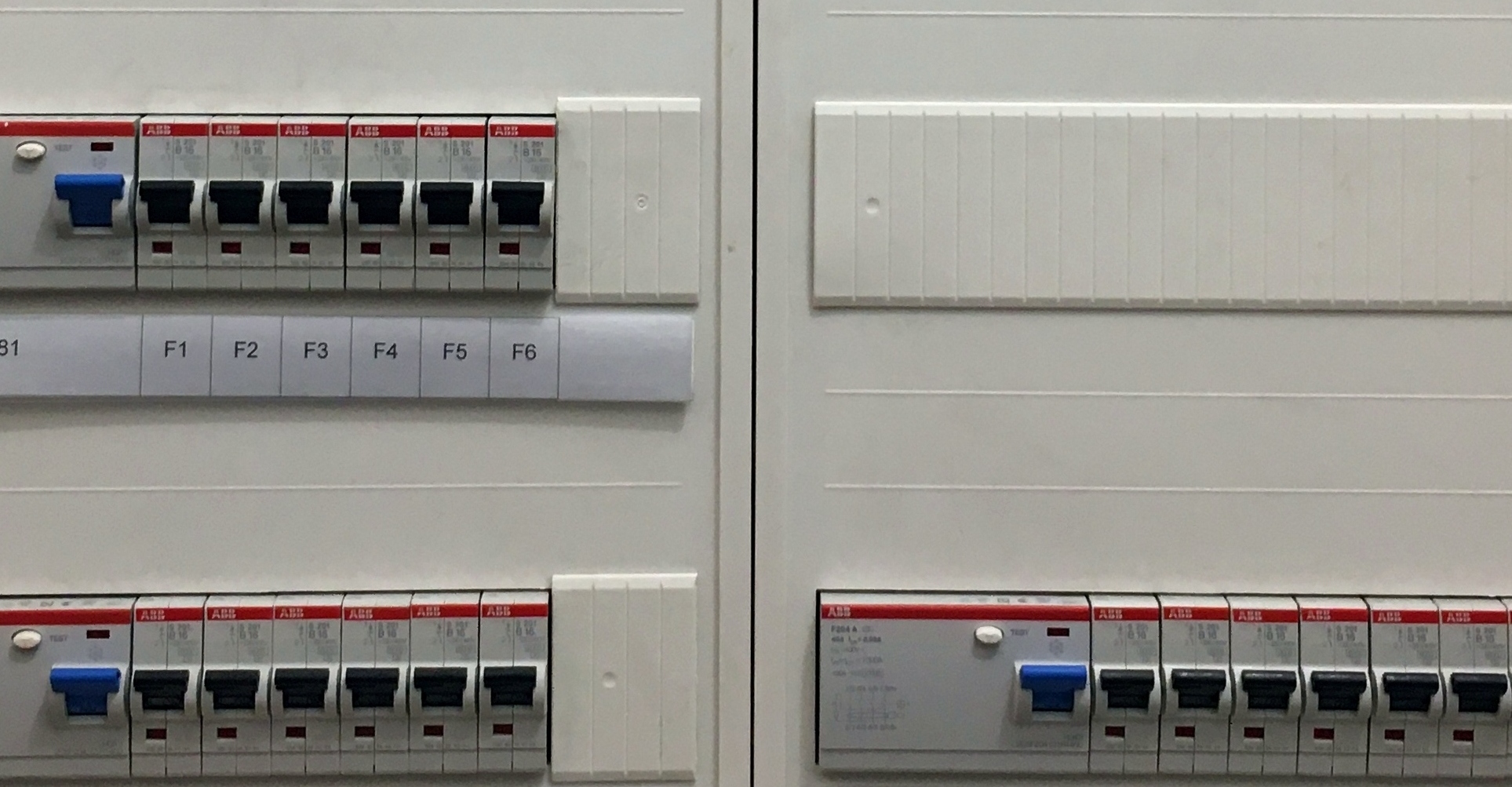
Electrical distribution board with circuit breakers (Source: Wikimedia Commons)
Domestic electrical installations focus on ensuring safe, efficient, and code-compliant wiring within residential buildings. Kenya’s Building Code and the Energy Act set standards that guide installation practices to protect inhabitants and electrical infrastructure.
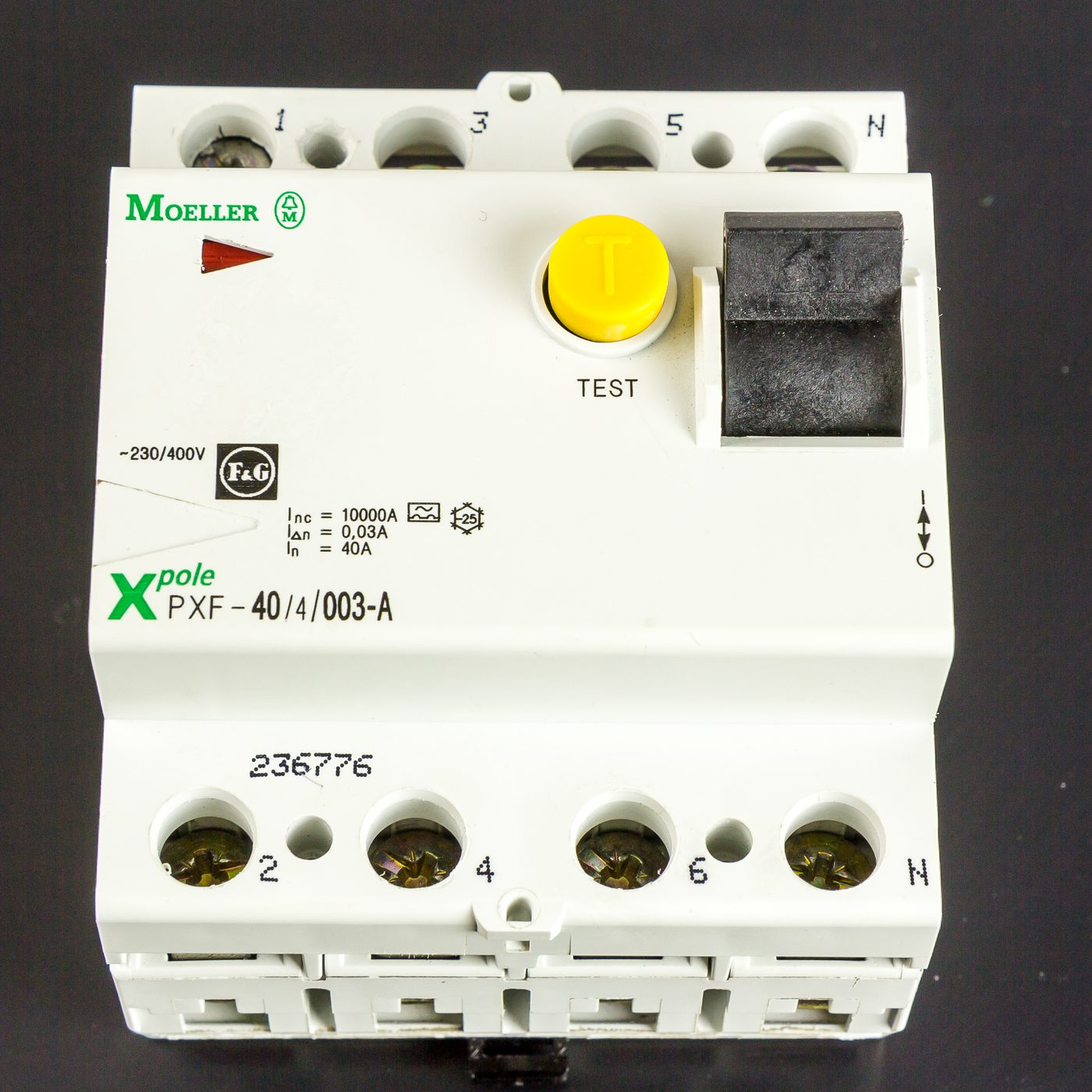
Residual current device with test button (Source: Wikimedia Commons)
Understanding the operational differences and application contexts of single phase and three phase systems is crucial for electronics engineers tasked with designing and maintaining installations in Kenya.
| Attribute | Single Phase | Three Phase |
|---|---|---|
| Number of Phases | One | Three |
| Voltage Level | 220V-240V | 380V-415V |
| Load Capacity | Low to moderate | High |
| Typical Usage | Domestic, small commercial | Industrial, large commercial |
| Power Delivery | Pulsating | Continuous |
| Equipment Compatibility | Household appliances | Motors, heavy machinery |
Create a free account to open more of this chapter.
Free: practical guides, quick cards, workplace scenarios and more.
Create a free accountThis chapter covered the key aspects of performing electrical installations, starting with the differences between single phase and three phase systems, including the specific requirements for domestic installations. It examined various types of cables and the importance of proper cable joints to ensure safety and reliability. The discussion then moved to wiring systems and accessories, detailing the types such as conduits, cable trays, and cable ducts, along with their appropriate applications. Lighting circuits were explained with emphasis on one way, two way, and intermediate switching, as well as looping methods at ceiling roses, joint boxes, and switches. Power circuits were explored through examples including radial and ring circuits, water heating, electric cooker circuits, and various alarm systems like call, bell, intruder, and fire alarms. The chapter also highlighted the necessity of correct cable labelling for maintenance and safety purposes. Finally, it addressed proper disposal methods for waste materials generated during electrical installation work to maintain a safe and clean working environment.
Type: Individual
| Tools & Equipment | Materials |
|---|---|
| Wire stripper | 1.5 mm2 PVC Single core cable |
| Screwdriver set | 2.5 mm2 PVC Single core cable |
| Pliers | 4-way consumer control unit |
| Cable cutter | Double pole switch (63A) |
| Voltage tester | Circuit breaker (6A) |
| Spirit level | Circuit breaker (32A) |
| Measuring tape | Rail |
| Hammer | Shallow Patrice box |
| Deep Patrice box | |
| Twin deep Patrice box | |
| 2-gang two-way switch | |
| 1-gang two-way switch | |
| Socket outlets | |
| Cooker connector | |
| Lamp holder | |
| Fluorescent fitting (2 ft) | |
| Incandescent lamp | |
| Fluorescent lamp |
| S/N | Item | Quantity |
|---|---|---|
| 1 | 1.5 mm2 PVC Single core cable | 3.0 m per Candidate |
| 2 | 2.5 mm2 PVC Single core cable | 1.5 m per Candidate |
| 3 | 4-way consumer control unit | 1 pc per Candidate |
| 4 | Double pole switch (63A) | 1 pc per Candidate |
| 5 | Circuit breaker (6A) | 1 pc per Candidate |
| 6 | Circuit breaker (32A) | 2 pcs per Candidate |
| 7 | Rail | 1 pc per Candidate |
| 8 | Shallow Patrice box | 2 pcs per Candidate |
| 9 | Deep Patrice box | 3 pcs per Candidate |
| 10 | Twin deep Patrice box | 1 pc per Candidate |
| 11 | 2-gang two-way switch | 1 pc per Candidate |
| 12 | 1-gang two-way switch | 1 pc per Candidate |
| 13 | Socket outlets | 2 pcs per Candidate |
| 14 | Cooker connector | 1 pc per Candidate |
| 15 | Lamp holder | 2 pcs per Candidate |
| 16 | Fluorescent fitting (2 ft) | 1 pc per Candidate |
| 17 | Incandescent lamp | 2 pcs per Candidate |
| 18 | Fluorescent lamp | 1 pc per Candidate |
| Items to be Evaluated | Marks Available | Marks Obtained | Comments |
|---|---|---|---|
| TASK 1: Installation Process | |||
| Wore Personal Protective Equipment (PPE) including dust coat and gloves (Award 1 or 0) | 1 | ||
| Applied good housekeeping practice by ensuring clean and safe working area before and during installation (Award 1 or 0) | 1 | ||
| Observed correct wiring colour code throughout the installation (Award 2 or 0) | 2 | ||
| Used appropriate tools correctly for each installation task (Award 2 or 0) | 2 | ||
| Drew a wiring diagram matching the layout drawing including switches, sockets, and lighting circuits (Award up to 3 marks for completeness and correctness) | 3 | ||
| Installed and wired the consumer control unit and circuit breakers as per standard practice (Award 3 or 0) | 3 | ||
| Fixed sheathed cables flat and neat on surface with horizontal and vertical runs (Award 3 or 0) | 3 | ||
| Spaced cable clips uniformly at recommended intervals (Award 1 or 0) | 1 | ||
| Terminated cables correctly at consumer unit, switches, and sockets (no nicks, proper twisting and folding) (Award 3 or 0) | 3 | ||
| Performed continuity and insulation resistance tests and recorded results (Award 3 or 0) | 3 | ||
| Sub-Total | 22 | ||
| PRODUCT CHECKLIST | |||
| Finished wiring installation matches layout drawing dimensions 6000mm x 4000mm with correct positioning of switches, sockets, and light fittings (Award 5 or 0) | 5 | ||
| Wiring runs are neat, cables are fixed firmly and horizontally/vertically aligned (Award 4 or 0) | 4 | ||
| Switches and sockets are securely fixed at correct heights and orientations (Award 3 or 0) | 3 | ||
| Circuit operates correctly with all lights and sockets functional during testing (Award 6 or 0) | 6 | ||
| Sub-Total | 18 | ||
| GRAND TOTAL | 40 | ||
Type: Individual
| Tools & Equipment | Materials |
|---|---|
| Insulated screwdriver | 3-phase distribution board |
| Wire stripper | 3-phase isolator switch (63A) |
| Measuring tape | 2.5 mm2 PVC insulated single core cables (Red, Yellow, Blue, Green/Yellow Earth) |
| Hammer | 2.5 mm2 PVC sheathed cable TWE |
| PVC conduit bender | 4-way consumer control unit |
| Pliers | Circuit breakers (32A and 6A) |
| Multimeter | PVC conduit 20mm diameter |
| Cable cutter | PVC conduit clips 20mm |
| Screws 3/4 inch | |
| Consumer unit rail | |
| Cable ties | |
| Insulation tape | |
| Personal Protective Equipment |
| S/N | Item | Quantity |
|---|---|---|
| 1 | 3-phase distribution board | 1 Pc per Candidate |
| 2 | 3-phase isolator switch (63A) | 1 Pc per Candidate |
| 3 | 2.5 mm2 PVC insulated single core cable, Red | 2 m per Candidate |
| 4 | 2.5 mm2 PVC insulated single core cable, Yellow | 2 m per Candidate |
| 5 | 2.5 mm2 PVC insulated single core cable, Blue | 2 m per Candidate |
| 6 | 2.5 mm2 PVC insulated single core cable, Green/Yellow (Earth) | 1.5 m per Candidate |
| 7 | 2.5 mm2 PVC sheathed cable TWE | 3 m per Candidate |
| 8 | 4-way consumer control unit | 1 Pc per Candidate |
| 9 | Circuit breaker (32A) | 3 Pcs per Candidate |
| 10 | Circuit breaker (6A) | 1 Pc per Candidate |
| 11 | PVC conduit 20mm diameter | 3 m per Candidate |
| 12 | PVC conduit clips 20mm | 10 Pcs per Candidate |
| 13 | Screws 3/4 inch | 20 Pcs per Candidate |
| 14 | Consumer unit rail | 1 Pc per Candidate |
| 15 | Cable ties | 10 Pcs per Candidate |
| 16 | Insulation tape | 1 Roll per Candidate |
| 17 | Personal Protective Equipment (dust coat, gloves, safety boots) | 1 Set per Candidate |
| Items to be Evaluated | Marks Available | Marks Obtained | Comments |
|---|---|---|---|
| TASK 1: Installation of three-phase radial wiring system | |||
| Wore Personal Protective Equipment (dust coat, gloves, safety boots) (Award 1 for correct use of PPE) | 1 | ||
| Applied good housekeeping practice ensuring clean working area before and after work (Award 1 if area is clean and safe) | 1 | ||
| Identified and verified all electrical components and tools before starting installation (Award 1 mark per correct identification x 2) | 2 | ||
| Drew wiring schematic diagram matching the provided layout (Award marks based on correctness and completeness of diagram) | 4 | ||
| Installed and fixed distribution board and consumer control unit firmly and level (Award 2 if fixed securely and level) | 2 | ||
| Ran PVC conduit horizontally and vertically with proper bends and fixed conduit clips uniformly at 300mm intervals (2 marks for correct conduit runs, 1 mark for uniform clip spacing) | 3 | ||
| Installed and connected cables observing correct colour coding for three-phase and earth wires (Award 1 mark per correct phase and earth wiring x 3) | 3 | ||
| Terminated cables correctly in distribution board and consumer unit without damaging conductors (Award 3 for neat and secure terminations) | 3 | ||
| Connected circuit breakers and isolator switch as per wiring diagram (Award 3 if connections are correct and secure) | 3 | ||
| Performed continuity and insulation resistance tests on cables and recorded results (Award 3 for correct testing and recording) | 3 | ||
| Demonstrated correct operation of the installed three-phase circuit (Award 3 for safe and functional circuit operation) | 3 | ||
| Sub-Total | 28 | ||
| PRODUCT CHECKLIST | |||
| Finished installation matches schematic diagram and layout dimensions (6m x 3m), correct cable colour coding, neat and secure cable terminations, conduit runs horizontal and vertical, uniform clip spacing at 300mm, distribution board and consumer control unit firmly fixed and level (Award marks based on accuracy, neatness, and compliance with dimensions and colour code) | 12 | ||
| Sub-Total | 12 | ||
| GRAND TOTAL | 40 | ||
At the start of this chapter we promised you would be able to:
Tick each one you can genuinely do.
So, are you there yet?
You're competent when you can confidently do 50% or more of what this chapter promised.
Sign in to record how you're doing.