
Compiled by: Samuel Wachira
Construction timber and timber products play a vital role in the Kenyan civil engineering industry, particularly in formwork, scaffolding, roofing, and finishing works. Understanding the properties, processing, and classification of timber ensures that engineers and construction professionals select appropriate materials that meet strength, durability, and environmental requirements. This chapter explores the conversion of timber from raw logs to usable construction materials, highlighting species selection, classification, tree growth characteristics, and processing techniques such as seasoning.
The process of timber conversion is fundamental in transforming raw logs into construction-grade timber with desired dimensions and properties. In Kenya’s construction sector, proper timber conversion ensures optimal material utilization, reduces waste, and improves the quality and longevity of timber structures. Knowledge of timber species, classification, and the biological structure of wood helps professionals make informed decisions about timber suitability for specific uses.
Timber conversion refers to the series of processes involved in converting felled trees into usable timber products for construction and other applications. This includes debarking, sawing, seasoning, and grading. In Kenya, where timber remains a critical resource for rural housing, temporary structures, and certain permanent constructions, understanding conversion techniques affects both economic viability and structural safety. Timber conversion also determines how well the timber responds to environmental factors such as moisture, pests, and mechanical stress.
The timber conversion process begins with harvesting mature trees, followed by primary processing into logs and then secondary processing into boards, planks, and other products. The conversion method impacts timber quality, affecting properties such as strength, shrinkage, and durability. For example, in a county government office construction project, selecting well-converted timber reduces maintenance costs and enhances safety.
Timber species selection is crucial because different species exhibit varied mechanical properties, durability, and workability. Kenya’s diverse climate and forest resources provide a range of indigenous and exotic timber species used in construction. Familiarity with these species allows engineers to choose timber that meets structural requirements and environmental conditions.
Kenya’s indigenous species include Milicia excelsa (mvule), Podocarpus (yellowwood), and Croton megalocarpus. These species are valued for their natural durability and strength. For instance, mvule timber is commonly used in roofing and flooring due to its resistance to termites and good load-bearing capacity.
Exotic species such as eucalyptus and pine have been widely planted in Kenyan plantations. Eucalyptus timber is used for temporary construction and scaffolding because of its rapid growth and availability, although it is less durable than some indigenous species. Pine is often preferred for furniture and joinery due to its uniform texture.
Timber classification organizes wood into categories based on physical and mechanical properties, durability, and intended use. This classification guides engineers in selecting timber that suits specific construction functions.
Hardwood: Derived from broad-leaved trees, hardwoods are dense and strong. Examples include mvule and camphor.
Softwood: From conifers like pine, softwoods are lighter and easier to work with but generally less durable.
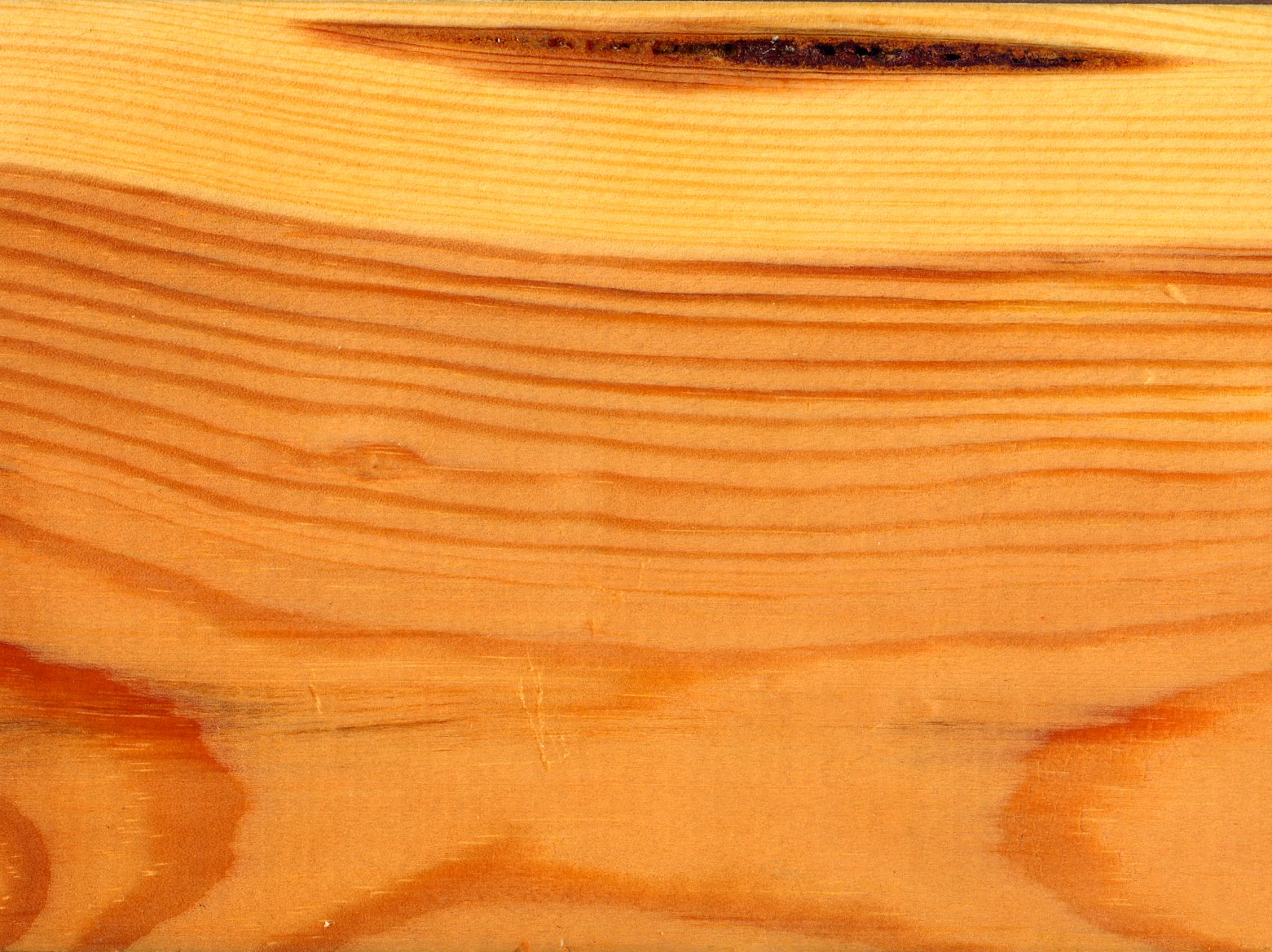
Close-up of softwood grain pattern (Source: Wikipedia (Softwood))
Understanding how trees grow and their internal structure is essential for predicting timber behavior during processing and in service. The cellular arrangement affects strength, flexibility, and response to moisture changes.
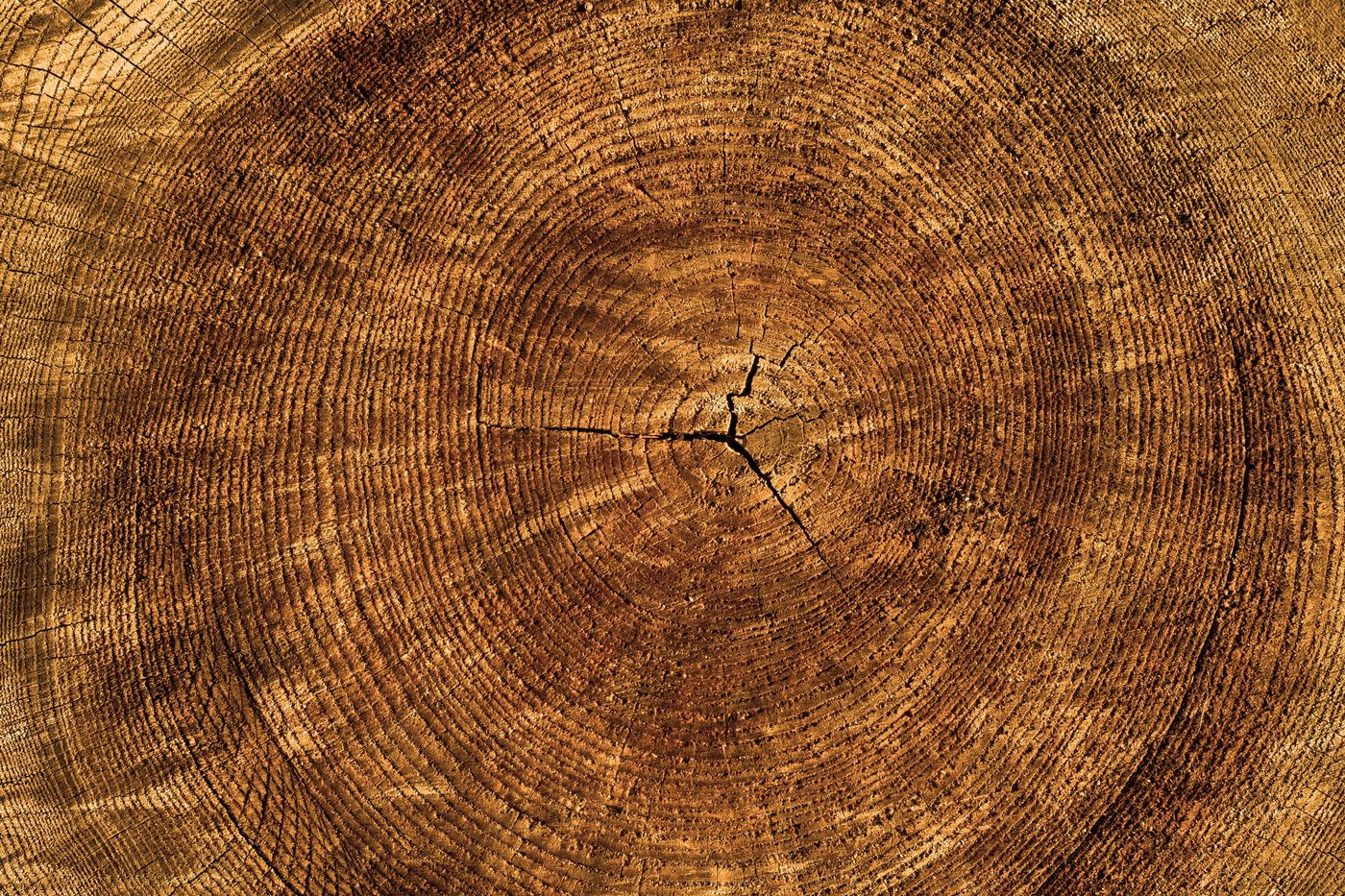
Annual rings in a tree cross-section (Source: Wikimedia Commons)
Conversion and seasoning are key processes that prepare timber for construction by improving its dimensional stability, strength, and durability. Proper conversion methods reduce defects and wastage, while seasoning controls moisture content to prevent decay and deformation.
Create a free account to open more of this chapter.
Free: practical guides, quick cards, workplace scenarios and more.
Create a free accountThis chapter explored the comprehensive process of timber conversion, beginning with an overview of timber species and their classification based on growth modes and cellular structure. It detailed how timber is converted and seasoned to enhance its suitability for construction purposes. The discussion then shifted to timber preservation, covering various preservation methods, the importance of protecting timber, and the factors influencing its durability and performance. The chapter also addressed the practical applications of preserved timber along with the relevant regulations and standards that govern timber preservation. Further, it examined different timber products, distinguishing between solid wood and composite materials, and highlighted their physical, mechanical, and strength properties. Additional focus was given to the thermal and acoustic insulation capabilities of timber, as well as its moisture behaviour. Finally, the chapter concluded by illustrating the diverse applications of timber and timber products in the construction industry.
Type: Individual
| Tools & Equipment | Materials |
|---|---|
| Moisture meter | Timber sample A (Eucalyptus species) |
| Magnifying glass | Timber sample B (Pine species) |
| Marking pen | Timber sample C (Cypress species) |
| Ruler (300mm steel) | |
| Notebook and pen | |
| PPE (Overall, Safety boots, Gloves) |
| S/N | Item | Quantity |
|---|---|---|
| 1 | Timber sample A (Eucalyptus species) | 1 pc per Candidate |
| 2 | Timber sample B (Pine species) | 1 pc per Candidate |
| 3 | Timber sample C (Cypress species) | 1 pc per Candidate |
| 4 | Moisture meter | 1 pc per 5 Candidates |
| 5 | Magnifying glass | 1 pc per Candidate |
| 6 | Marking pen | 1 pc per Candidate |
| 7 | Ruler (300mm steel) | 1 pc per Candidate |
| 8 | Notebook and pen | 1 set per Candidate |
| 9 | PPE (Overall, Safety boots, Gloves) | 1 set per Candidate |
| Items to be Evaluated | Marks Available | Marks Obtained | Comments |
|---|---|---|---|
| TASK 1: Identification and Classification of Timber Samples | |||
| Wore PPE (Overall, Safety boots, Gloves) (Award 3 marks or zero) | 3 | ||
| Collected all necessary tools and materials (Award 2 marks or zero) | 2 | ||
| Used moisture meter correctly to measure moisture content of each timber sample (Award 2 marks per sample for correct use) | 6 | ||
| Observed and recorded physical characteristics (color, grain, texture) of each timber sample using magnifying glass and ruler (Award 2 marks per sample for correct observation and recording) | 6 | ||
| Classified each timber sample correctly as hardwood or softwood based on characteristics (Award 2 marks per sample for correct classification) | 6 | ||
| Cleaned and returned tools and materials properly (Award 2 marks or zero) | 2 | ||
| Sub-Total | 25 | ||
| PRODUCT CHECKLIST | |||
| Accurate identification of timber species for all three samples (Award 2 marks per sample or zero) | 6 | ||
| Correct classification of timber samples (hardwood or softwood) (Award 2 marks per sample or zero) | 6 | ||
| Recorded moisture content within ±2% accuracy for all samples (Award 2 marks per sample or zero) | 6 | ||
| Neat and complete documentation of observations and classification (Award 5 marks or zero) | 5 | ||
| Sub-Total | 23 | ||
| GRAND TOTAL | 48 | ||
Type: Individual
| Tools & Equipment | Materials |
|---|---|
| Hand lens | Timber cross section samples |
| Microscope | |
| Dissecting needle | |
| Ruler | |
| Notebook and pen | |
| PPE (overall, gloves, safety boots) |
| S/N | Item | Quantity |
|---|---|---|
| 1 | Timber cross section samples | 2 pcs per Candidate |
| 2 | Hand lens (10x magnification) | 1 pc per Candidate |
| 3 | Microscope | 1 pc per 5 Candidates |
| 4 | Dissecting needle | 1 pc per Candidate |
| 5 | Ruler (metric) | 1 pc per Candidate |
| 6 | Notebook and pen | 1 set per Candidate |
| 7 | PPE (overall, gloves, safety boots) | 1 set per Candidate |
| Items to be Evaluated | Marks Available | Marks Obtained | Comments |
|---|---|---|---|
| TASK 1: Preparation and Safety | |||
| Wore PPE (overall, gloves, safety boots) (Award 3 marks or zero) | 3 | ||
| Collected all necessary tools and materials (Award 2 marks or zero) | 2 | ||
| Set up workspace maintaining environmental safety (Award 1 mark or zero) | 1 | ||
| Sub-Total | 6 | ||
| TASK 2: Identification and Explanation | |||
| Identified and described mode of growth (primary and secondary growth) from cross sections (Award 6 marks or zero) | 6 | ||
| Explained the visible growth rings and their significance (Award 4 marks or zero) | 4 | ||
| Described the cellular structure (xylem, phloem, cambium) using microscope and hand lens observations (Award 6 marks or zero) | 6 | ||
| Drew and labeled a diagram of the cellular structure in the notebook (Award 4 marks or zero) | 4 | ||
| Sub-Total | 20 | ||
| TASK 3: Reporting and Cleanup | |||
| Presented clear oral explanation of findings (Award 4 marks or zero) | 4 | ||
| Properly cleaned and stored tools and materials (Award 2 marks or zero) | 2 | ||
| Cleared working area and disposed of waste appropriately (Award 2 marks or zero) | 2 | ||
| Sub-Total | 8 | ||
| PRODUCT CHECKLIST | |||
| Timber cross section explanation matches growth mode and cellular structure accurately (Award 10 marks or zero) | 10 | ||
| Diagram is correctly drawn and labeled with key cellular parts (Award 6 marks or zero) | 6 | ||
| Oral explanation is clear, coherent and technically correct (Award 5 marks or zero) | 5 | ||
| Sub-Total | 21 | ||
| GRAND TOTAL | 55 | ||