
Compiled by: Beatrice Aoko
Carrying out site levelling is a critical preliminary activity in building construction that ensures a stable and accurate foundation for all subsequent works. Precise levelling prevents structural defects and water drainage problems that can be costly to rectify. In Kenya, where varied terrain and soil types present unique challenges, understanding and using the right levelling tools and equipment is essential for Building Technology professionals to guarantee quality outcomes on site.
Levelling tools used in building sites vary in complexity and precision, suited to different stages and scopes of work. Understanding the types of levelling tools allows technicians to select the most appropriate instruments for their specific tasks.
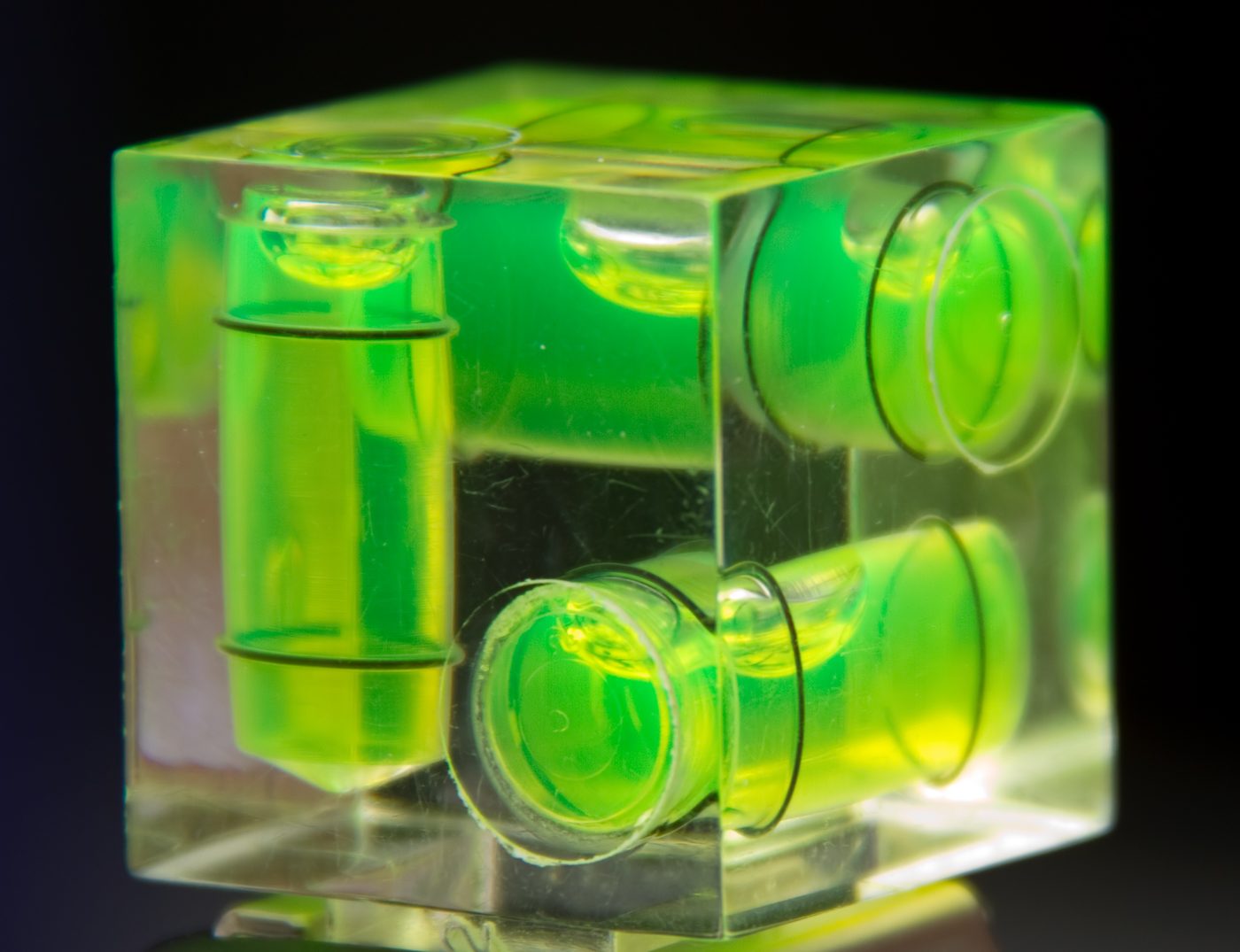
Close-up of a spirit level vial block (Source: Wikimedia Commons)
Dumpy Level: A more advanced optical instrument mounted on a tripod, allowing surveyors to establish a horizontal line of sight. County government offices in Kisumu use dumpy levels extensively for site layout and foundation levelling.
Laser Level: Employs a laser beam to project a level line over long distances, enabling faster and more accurate levelling on large sites such as university campuses and hospitals. This tool is gaining popularity in modern Kenyan construction for its efficiency.
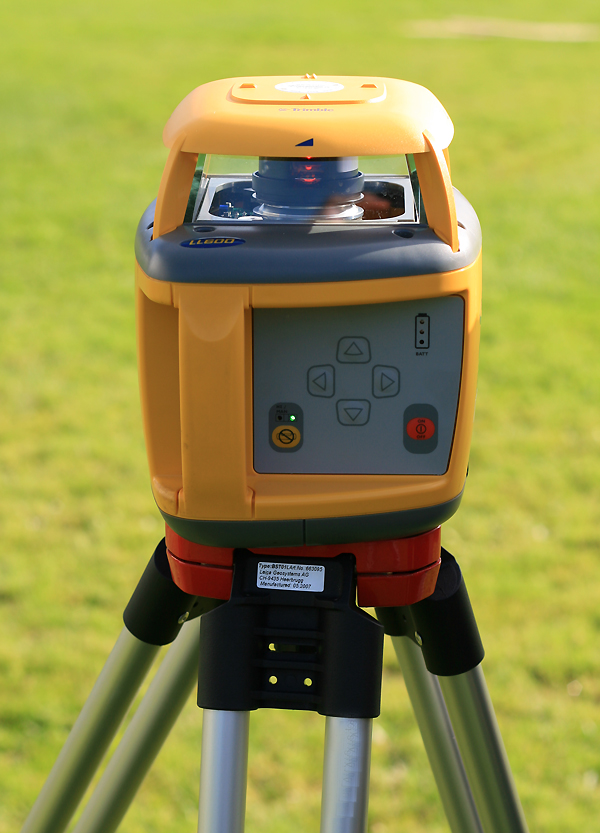
Rotary laser level on tripod (Source: Wikimedia Commons)
Water Level: A simple device using a transparent hose filled with water to establish the same height at two points. It is particularly useful in remote areas or uneven terrain where other instruments may be unavailable.
Automatic Level (Self-leveling Level): An optical instrument with an internal compensator that automatically maintains a horizontal line of sight, improving speed and accuracy. Used in complex building projects like multi-storey hotels in Mombasa.
| Name | Specification | Use |
|---|---|---|
| Spirit Level | Lengths vary from 200mm to 1200mm; contains sealed vial with alcohol or other liquid | Checks horizontal/vertical alignment in small-scale masonry or carpentry |
| Dumpy Level | Optical magnification 20x-30x; mounted on tripod; precision up to 2mm per km | Measures height differences and establishes horizontal planes on site |
| Laser Level | Range up to 500m; accuracy ±1mm; battery powered | Projects level line on large sites for quick levelling |
| Water Level | Transparent plastic or rubber hose, 10m or longer | Transfers level points over distance using water column equilibrium |
| Automatic Level | Magnification 24x; internal compensator; tripod mounted | Provides quick, accurate horizontal sighting with minimal manual adjustment |
Spirit Level: Handle with care to avoid damaging the vial; clean the surface regularly to ensure bubble visibility; store flat to prevent bending.
Dumpy Level: Set up on a stable tripod; calibrate before use to maintain accuracy; protect optics from dust and moisture by covering when idle.
Laser Level: Charge batteries fully before use; calibrate periodically as per manufacturer instructions; avoid direct exposure of laser beam to eyes and keep lens clean.
Water Level: Ensure hose is free of air bubbles for accurate readings; clean and drain after use to prevent algae growth; store coiled to avoid kinks.
Automatic Level: Check compensator function regularly; keep instrument horizontal during setup; transport in protective case to avoid shocks.
A clear understanding of how levelling tools function enhances their effective use on site. Each instrument applies physical or optical principles to determine horizontal reference planes.
Spirit Level: Operates on the principle of buoyancy and gravity where the air bubble moves to the highest point in the vial, indicating level when centered.
Dumpy Level: Uses a telescope with a spirit level attached; the line of sight is adjusted until the bubble centers, establishing a horizontal line for measurements.
Laser Level: Emits a laser beam that is perfectly horizontal due to internal leveling mechanisms; the beam serves as a reference line visible on surfaces or through a detector.
Water Level: Based on hydrostatic equilibrium, water in connected tubes seeks the same level, allowing transfer of height from one point to another regardless of intervening terrain.
Automatic Level: Contains an internal compensator with a pendulum or prism that automatically adjusts the line of sight to horizontal, minimizing operator error.
Choosing the right levelling tool depends on project scale, terrain, accuracy requirements, and available resources. Building professionals in Kenya must weigh several factors to optimize site levelling.
Accuracy Needed: For high-precision works like foundation setting in hospitals, automatic or laser levels are preferred; spirit levels suffice for minor alignments.
Site Size and Terrain: Large or uneven sites, such as county government construction zones, benefit from laser levels or dumpy levels for efficient coverage.
Budget Constraints: Spirit levels and water levels are cost-effective options for small-scale projects or rural sites with limited funding.
Availability of Skilled Personnel: Complex instruments require trained operators; simpler tools can be used by general site staff in agricultural processing facilities.
Environmental Conditions: Dusty or humid environments necessitate robust and weather-resistant equipment; water levels are less affected by dust but require careful handling.
Create a free account to open more of this chapter.
Free: practical guides, quick cards, workplace scenarios and more.
Create a free accountThis chapter focused on the essential tools and equipment used in site levelling, highlighting their specific functions and importance in achieving accurate measurements. It then discussed the process of fixing a temporary benchmark, explaining how it serves as a reference point for all levelling activities on a construction site. The chapter emphasized the need for precision when establishing this benchmark to ensure consistency throughout the project. Finally, detailed levelling procedures were outlined, describing the step-by-step methods for conducting levelling work effectively. These procedures included setting up instruments, taking readings, and recording data to maintain accuracy. Overall, the chapter provided a comprehensive understanding of the practical steps and equipment necessary for successful site levelling in building construction.
Type: Individual
| Tools & Equipment | Materials |
|---|---|
| Dumpy level | Field book |
| Tripod stand | Pencil |
| Levelling staff | Eraser |
| Plumb bob | Calculator |
| Measuring tape | |
| Builders line | |
| Field book | |
| Pencil | |
| Eraser | |
| Calculator |
| S/N | Item | Quantity |
|---|---|---|
| 1 | Dumpy level | 1 Pc per Candidate |
| 2 | Levelling staff | 1 Pc per Candidate |
| 3 | Tripod stand | 1 Pc per Candidate |
| 4 | Plumb bob | 1 Pc per Candidate |
| 5 | Measuring tape (10 meters or more) | 1 Pc per Candidate |
| 6 | Builders line | 1 Pc per Candidate |
| 7 | Field book | 1 Pc per Candidate |
| 8 | Pencil | 1 Pc per Candidate |
| 9 | Eraser | 1 Pc per Candidate |
| 10 | Calculator | 1 Pc per Candidate |
| Items to be Evaluated | Marks Available | Marks Obtained | Comments |
|---|---|---|---|
| TASK 1: Identification and preparation of levelling tools | |||
| Wore Personal Protective Equipment (safety boots, dust coat/overall, helmet) (Award 1 mark for each PPE donned as per workplace procedures) | 3 | ||
| Selected appropriate levelling tools and equipment from the provided resources (Award 4 marks for correct selection of all required tools) | 4 | ||
| Inspected the dumpy level and tripod stand for damage and cleanliness (Award 3 marks for thorough inspection and reporting) | 3 | ||
| Set up the tripod stand at a convenient height with the center mounting plate plumb above the benchmark (Award 4 marks for correct setup of tripod stand) | 4 | ||
| Mounted the dumpy level on the tripod and secured it with the mounting knob (Award 2 marks for proper mounting and securing) | 2 | ||
| Leveled the dumpy level by adjusting tripod legs and foot screws correctly (Award 5 marks for precise leveling technique) | 5 | ||
| Focused the telescope eyepiece and leveling staff for clear crosshairs and image (Award 3 marks for correct focusing) | 3 | ||
| Checked the levelling staff for vertical alignment using the plumb bob (Award 2 marks for proper staff positioning and plumb check) | 2 | ||
| Recorded initial inspection and setup details in the field book (Award 2 marks for accurate and neat recording) | 2 | ||
| Ensured all tools and equipment are ready and in good working condition for site levelling (Award 2 marks for confirmation and readiness) | 2 | ||
| Sub-Total | 30 | ||
| PRODUCT CHECKLIST | |||
| Levelling tools correctly identified and assembled as per standard procedures (Award 10 marks for complete and correct preparation of all tools and equipment) | 10 | ||
| Sub-Total | 10 | ||
| GRAND TOTAL | 40 | ||
Type: Individual
| Tools & Equipment | Materials |
|---|---|
| Tripod Stand | Graph Paper |
| Dumpy Level | Personal Protective Equipment (Safety Boots, Dust Coat) |
| Levelling Staff | |
| Plumb Bob | |
| Measuring Tape | |
| Pegs | |
| Field Book | |
| Pencil | |
| Eraser | |
| Calculator |
| S/N | Item | Quantity |
|---|---|---|
| 1 | Tripod Stand | 1 Pc per Candidate |
| 2 | Dumpy Level | 1 Pc per Candidate |
| 3 | Levelling Staff | 1 Pc per Candidate |
| 4 | Plumb Bob | 1 Pc per Candidate |
| 5 | Measuring Tape (10 meters) | 1 Pc per Candidate |
| 6 | Pegs | 10 Pcs per Candidate |
| 7 | Field Book | 1 Pc per Candidate |
| 8 | Pencil | 1 Pc per Candidate |
| 9 | Eraser | 1 Pc per Candidate |
| 10 | Calculator | 1 Pc per Candidate |
| 11 | Graph Paper | 1 Sheet per Candidate |
| 12 | Personal Protective Equipment (Safety Boots, Dust Coat) | 1 Set per Candidate |
| Items to be Evaluated | Marks Available | Marks Obtained | Comments |
|---|---|---|---|
| TASK 1: Fix Temporary Benchmark | |||
| Wore Personal Protective Equipment (Safety boots, Dust coat) (Award 1 mark for each PPE donned as per workplace procedures) | 2 | ||
| Located a suitable fixed and stable point on site for the benchmark (Award 3 marks for correct identification and justification of the point) | 3 | ||
| Set up the tripod stand at convenient height with the mounting plate hole plumb above the benchmark point (Award 4 marks for correct tripod setup and plumb alignment) | 4 | ||
| Drove tripod legs firmly into the ground using the leg brackets (Award 2 marks for proper securing of tripod legs) | 2 | ||
| Mounted the dumpy level on the tripod and secured it with the mounting knob (Award 1 mark for correct mounting) | 1 | ||
| Leveled the dumpy level by adjusting tripod legs and leveling screws (Award 3 marks for proper leveling procedure) | 3 | ||
| Adjusted the vertical plummet to center over the benchmark (Award 1 mark for correct vertical plummet adjustment) | 1 | ||
| Turned the telescope so it lies parallel with a line of two-foot screws (Award 1 mark for correct telescope alignment) | 1 | ||
| Turned two-foot screws simultaneously in opposite directions to level the instrument (Award 1 mark for correct simultaneous turning) | 1 | ||
| Turned the third foot screw to center the bubble in the tube (Award 1 mark for bubble centering) | 1 | ||
| Focused the telescope eyepiece so crosshairs appear sharply in focus (Award 1 mark for clear crosshairs focus) | 1 | ||
| Focused the telescope with the focusing knob to get a sharp image of the levelling staff (Award 1 mark for clear staff image) | 1 | ||
| Helper held the levelling staff vertically on the benchmark point (Award 2 marks for correct staff positioning) | 2 | ||
| Read and recorded the staff reading accurately in the field book (Award 2 marks for accurate reading and record) | 2 | ||
| Calculated the reduced level of the benchmark using height of instrument method (Award 5 marks for correct calculation and recording) | 5 | ||
| Removed all equipment and cleaned the working area after task completion (Award 2 marks for proper cleanup and packing) | 2 | ||
| Sub-Total | 32 | ||
| PRODUCT CHECKLIST | |||
| Temporary benchmark fixed at a stable point with correct elevation recorded (Award 5 marks if benchmark is correctly fixed and elevation is accurately calculated) | 5 | ||
| Dumpy level setup is stable, correctly leveled and plumbed (Award 4 marks for stable and accurate setup) | 4 | ||
| Field book records are neat, legible, and complete (Award 3 marks for neat and complete recording) | 3 | ||
| Calculations of reduced levels are accurate and clearly presented (Award 4 marks for correct and clear calculations) | 4 | ||
| Sub-Total | 16 | ||
| GRAND TOTAL | 48 | ||