
By the end of this chapter, you will be able to:
Mastering these skills helps you build strong, safe walls and keeps you protected on the job site!
Compiled by: Beatrice Aoko
Lay superstructure walls form the vertical framework that supports the upper floors and roof of a building, playing a crucial role in ensuring structural stability and durability. In Kenya’s building industry, mastery of wall construction is essential for building technologists, particularly when working on residential, commercial, and institutional projects. This chapter focuses on the personal protective equipment (PPE) necessary for safe wall construction and the specialized tools and equipment required to execute wall laying efficiently and to the highest standards.
The use of Personal Protective Equipment (PPE) in construction sites cannot be overstated, especially during superstructure wall laying where risks such as falling debris, dust inhalation, and physical injuries are prevalent. Kenya’s Occupational Safety and Health Act mandates the use of appropriate PPE to protect workers and reduce accident rates. Building technologists must ensure that all workers on site are equipped with the right PPE to maintain a safe working environment and comply with legal requirements.
Different stages and tasks in wall construction require specific types of PPE to address the various hazards present. Understanding these types aids in selecting the correct equipment for each worker’s role.
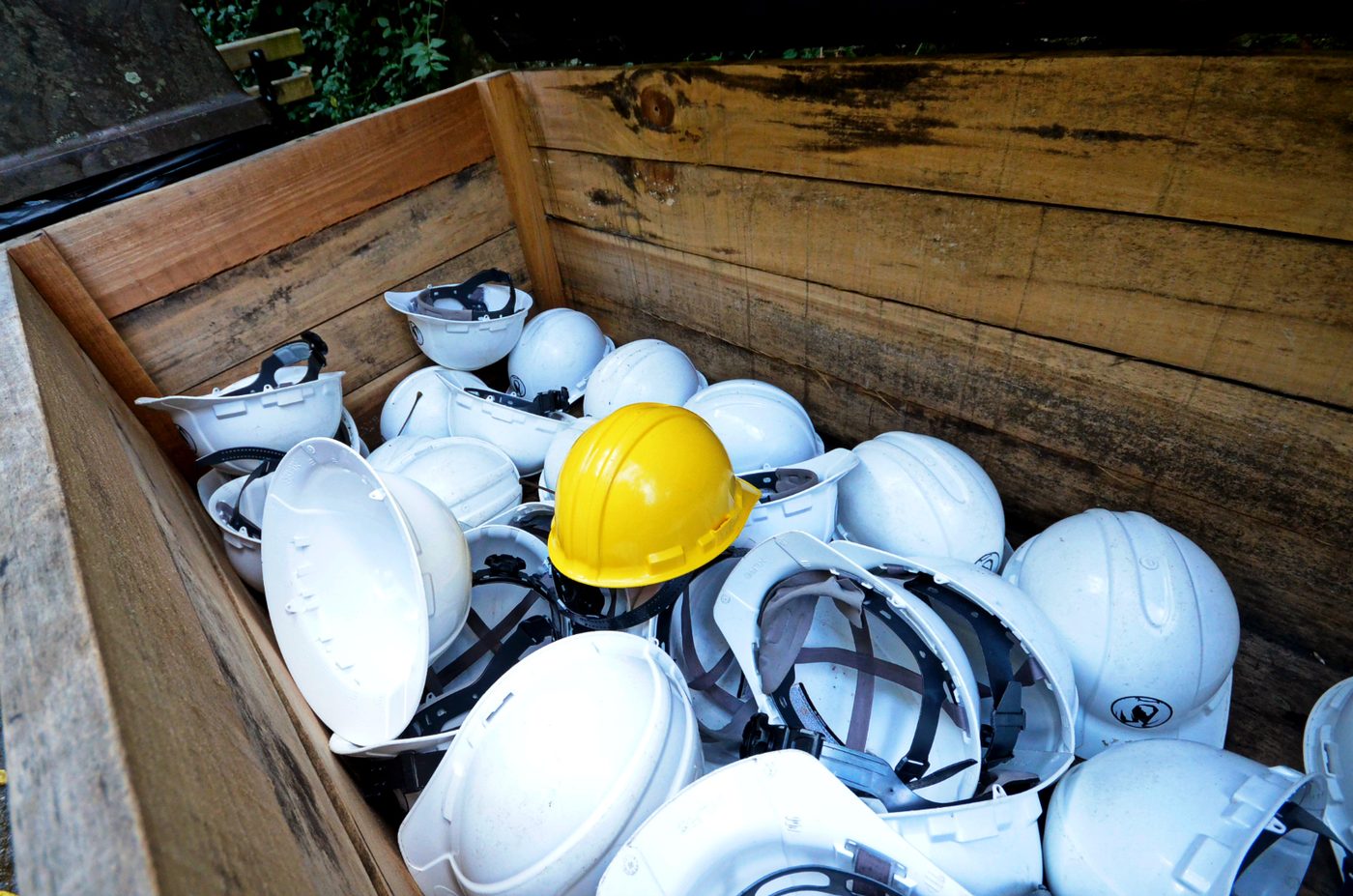
Yellow and white hard hats in a wooden crate (Source: Wikimedia Commons)
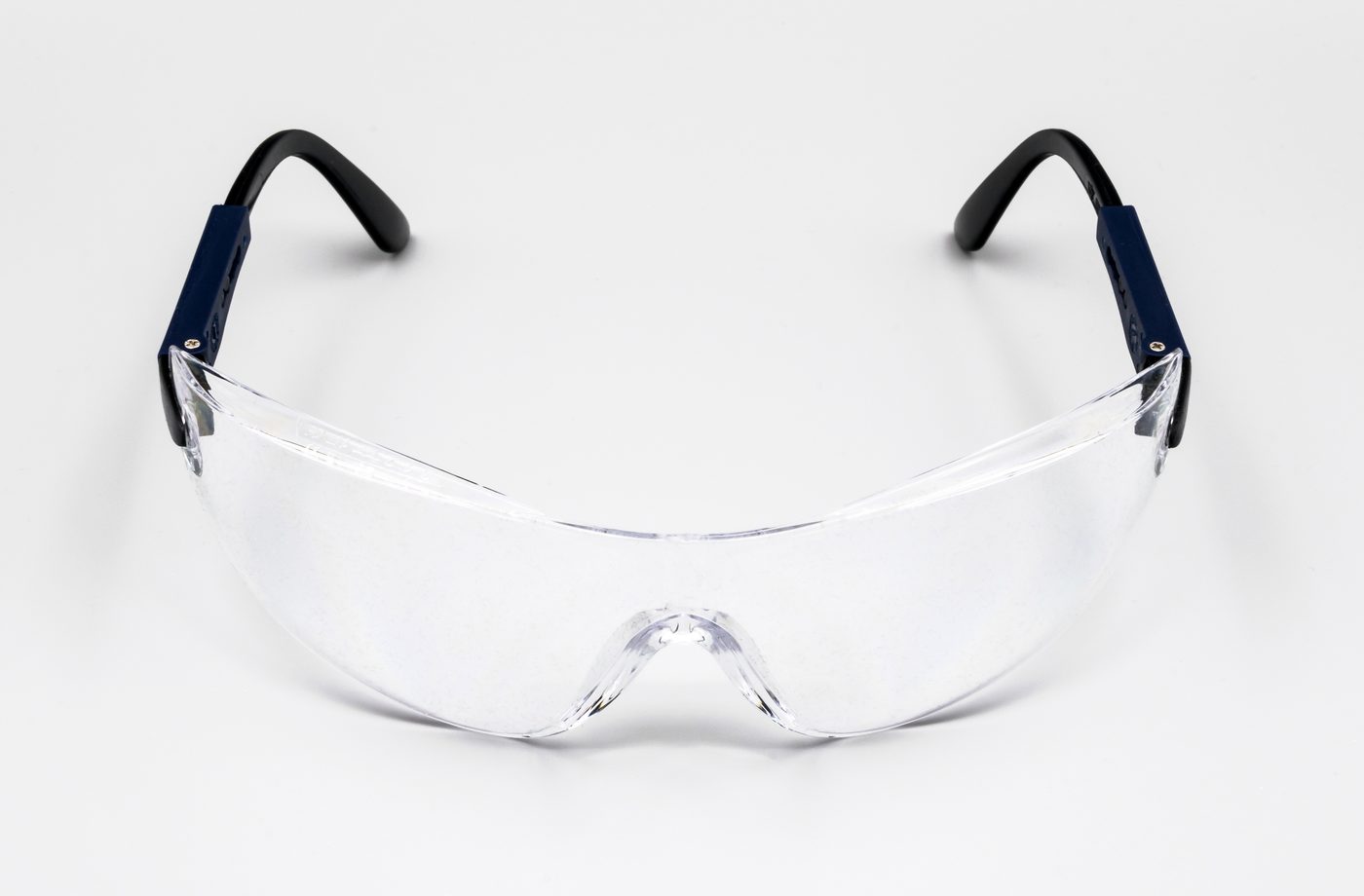
Clear safety goggles for eye protection (Source: Wikimedia Commons)
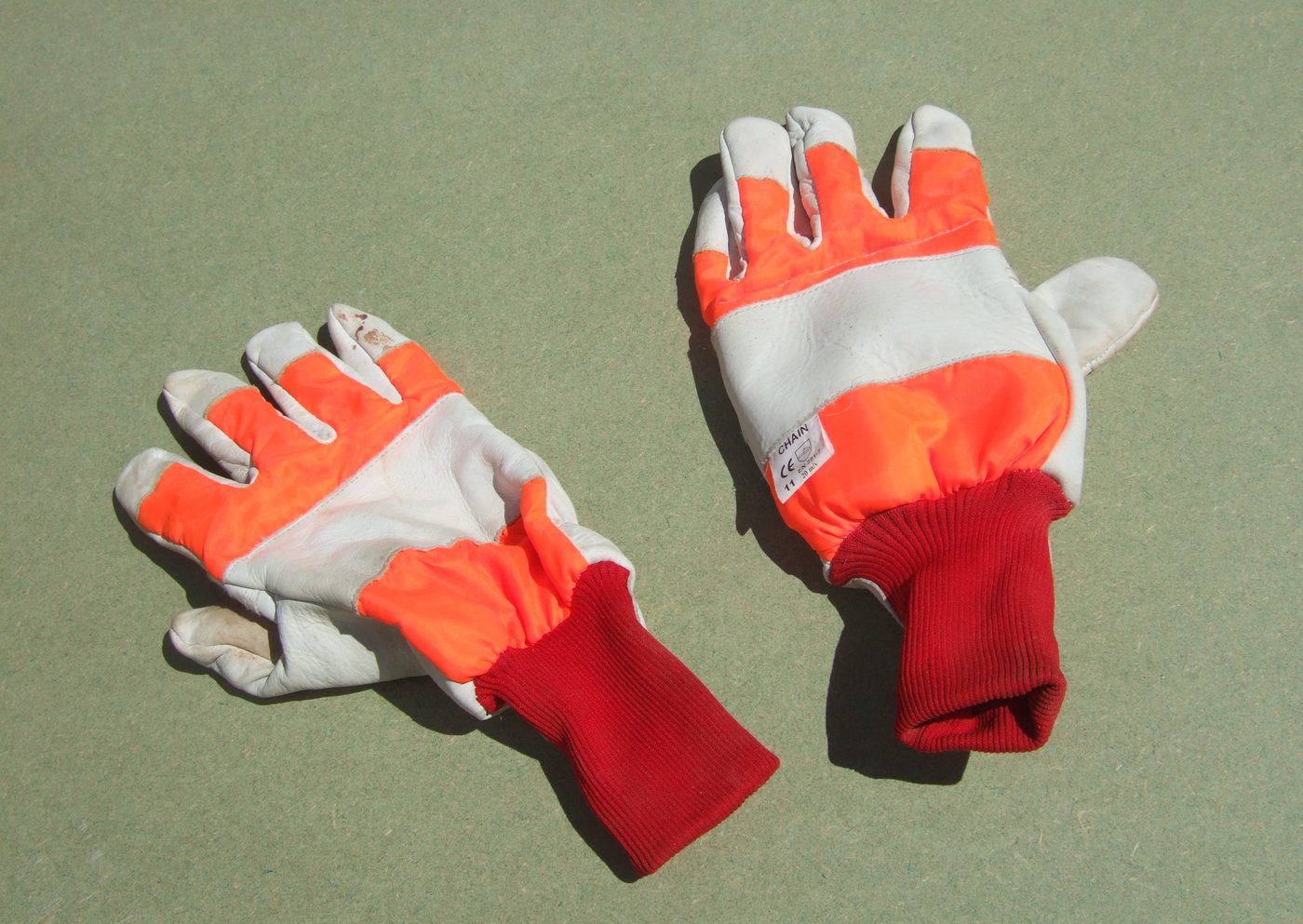
Pair of work gloves with orange and white colors (Source: Wikimedia Commons)
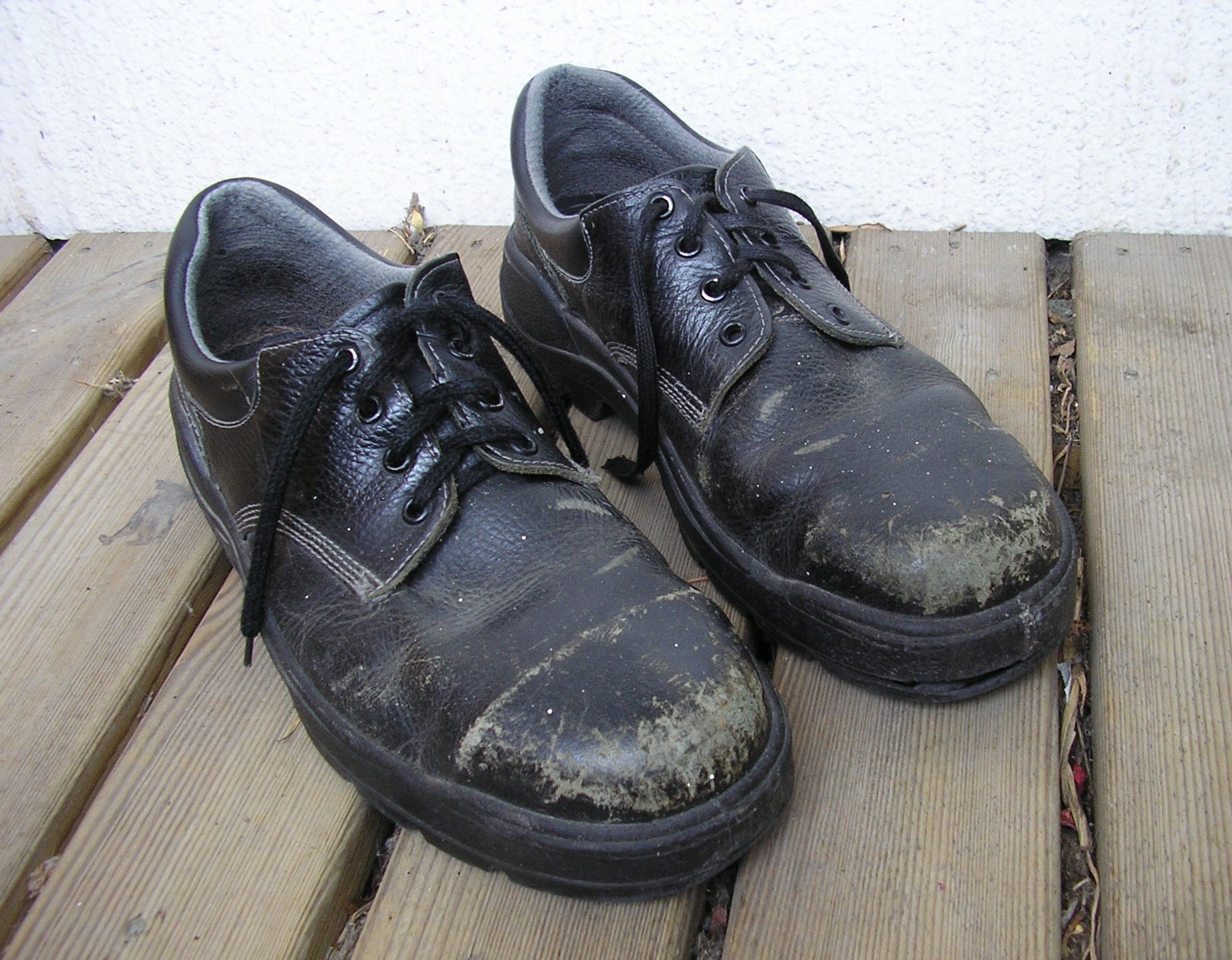
Worn black steel-toe boots on wooden floor (Source: Wikipedia (Steel-toe boot))
The effectiveness of PPE depends on its correct usage and maintenance on site. Building supervisors must enforce procedures that ensure PPE is worn consistently and appropriately.
Create a free account to open more of this chapter.
Free: practical guides, quick cards, workplace scenarios and more.
Create a free accountThis chapter covered the essential aspects of laying superstructure walls, beginning with the different types of personal protective equipment necessary for safe construction work. It then examined the variety of wall construction tools and equipment, highlighting their specific uses and the importance of accurate usage reports. The construction of various wall types was explored, including external, partitioning, and cavity walls, each with distinct structural roles. Key walling materials such as cement, fine aggregate, walling units, hoop iron, and water were discussed for their properties and contributions to wall integrity. The process of screeding was explained as a method to achieve a level surface, while the function and application of damp proof courses were outlined to prevent moisture ingress. The chapter also addressed the proper erection of construction walls and the management of waste materials with an emphasis on reuse to promote sustainability. Finally, it emphasized the importance of creating wall openings for doors and windows and the curing process necessary to ensure the durability and strength of the superstructure walls.
Type: Individual
| Tools & Equipment | Materials |
|---|---|
| Wheelbarrow | Portland cement |
| Spade | River sand |
| Mixing pan | Water |
| Measuring bucket (10 litres) | |
| Trowel |
| S/N | Item | Quantity |
|---|---|---|
| 1 | Portland cement | 1 bag per 3 Candidates |
| 2 | River sand | 2 Wheelbarrows per Candidate |
| 3 | Water | 10 litres per Candidate |
| 4 | Wheelbarrow | 1 Pc per 5 Candidates |
| 5 | Spade | 1 Pc per 3 Candidates |
| 6 | Mixing pan | 1 Pc per Candidate |
| 7 | Measuring bucket (10 litres) | 1 Pc per Candidate |
| 8 | Trowel | 1 Pc per Candidate |
| 9 | Dust coat | 1 Pc per Candidate |
| 10 | Safety boots | 1 Pair per Candidate |
| 11 | Helmet | 1 Pc per Candidate |
| Items to be Evaluated | Marks Available | Marks Obtained | Comments |
|---|---|---|---|
| TASK 1: Preparation and Mixing of Cement Mortar | |||
| Donning of personal protective equipment (dust coat, helmet, safety boots) (Award 1 mark each for wearing dust coat, helmet, safety boots) | 3 | ||
| Measuring cement and sand in correct 1:4 proportion (Award 3 marks for correct batching of cement and sand proportions, zero if incorrect) | 3 | ||
| Mixing dry cement and sand thoroughly until uniform color (Award 4 marks for thorough and uniform mixing of dry materials) | 4 | ||
| Adding water gradually to achieve workable consistency (Award 3 marks for correct water addition and workable mortar consistency) | 3 | ||
| Mixing mortar to homogenous and workable state (Award 3 marks for proper mixing ensuring no dry lumps or excessive water) | 3 | ||
| Cleaning tools and working area after mixing (Award 2 marks for cleaning tools and working area) | 2 | ||
| Estimating yield to produce approximately 50 litres of mortar (Award 2 marks for correct volume estimation and batching) | 2 | ||
| Using tools correctly and safely during mixing (Award 2 marks for proper and safe use of tools during mixing) | 2 | ||
| Sub-Total | 22 | ||
| PRODUCT CHECKLIST | |||
| Mortar mix proportion correct at 1:4 (cement to sand) (Award 5 marks for correct mortar mix proportion as per task instruction) | 5 | ||
| Mortar consistency workable (not too dry or wet) (Award 5 marks for mortar consistency suitable for walling) | 5 | ||
| Mortar yield approximately 50 litres (Award 4 marks for producing correct volume of mortar) | 4 | ||
| Clean tools and tidy working area after mixing (Award 4 marks for clean tools and tidy workspace) | 4 | ||
| Correct use of PPE throughout the task (Award 5 marks for consistent PPE use during the task) | 5 | ||
| Sub-Total | 23 | ||
| GRAND TOTAL | 45 | ||
Type: Individual
| Tools & Equipment | Materials |
|---|---|
| Mason hammer | Masonry blocks 225mm x 400mm |
| Builders' line | Hoop iron 16 gauge |
| Mason square | Damp Proof Course (DPC) sheets |
| Trowel | River sand |
| Straight edge | Lime |
| Wooden float | |
| Wheel barrow | |
| Spade | |
| Plumb bob | |
| Spirit level |
| S/N | Item | Quantity |
|---|---|---|
| 1 | Masonry blocks 225mm x 400mm | 35 Pcs per Candidate |
| 2 | Hoop iron 16 gauge | 2 m per Candidate |
| 3 | Damp Proof Course (DPC) sheets | 1 sheet per Candidate |
| 4 | River sand | 2 Wheelbarrows per Candidate |
| 5 | Lime | 1 kg per Candidate |
| 6 | Mason hammer | 1 Pc Per 5 Candidates |
| 7 | Builders' line | 1 Pc per Candidate |
| 8 | Mason square | 1 Pc Per 5 Candidates |
| 9 | Trowel | 1 Pc per Candidate |
| 10 | Straight edge | 1 Pc Per 5 Candidates |
| 11 | Wooden float | 1 Pc per Candidate |
| 12 | Wheel barrow | 1 Pc Per 5 Candidates |
| 13 | Spade | 1 Pc per 3 Candidates |
| 14 | Plumb bob | 1 Pc Per 5 Candidates |
| 15 | Spirit level | 1 Pc Per 5 Candidates |
| Items to be Evaluated | Marks Available | Marks Obtained | Comments |
|---|---|---|---|
| TASK 1: Identification and selection of walling units and materials | |||
| Donning personal protective equipment (dustcoat, helmet, safety boots) (Award 1 mark for each PPE worn or zero) | 3 | ||
| Correctly identifying masonry blocks 225mm x 400mm (Award 3 marks or zero) | 3 | ||
| Selecting appropriate quantity and gauge of hoop iron for wall reinforcement (Award 3 marks or zero) | 3 | ||
| Selecting suitable screed materials (river sand and lime) for mortar preparation (Award 3 marks or zero) | 3 | ||
| Selecting and explaining the use of DPC sheets for damp proofing (Award 3 marks or zero) | 3 | ||
| Handling and organizing materials and tools as per standard construction practice (Award 2 marks or zero) | 2 | ||
| Sub-Total | 17 | ||
| PRODUCT CHECKLIST | |||
| Correct identification and selection of masonry blocks 225mm x 400mm (Award 4 marks for correct selection or zero) | 4 | ||
| Correct selection and measurement of hoop iron 16 gauge, 2 m length (Award 3 marks for correct measurement and gauge or zero) | 3 | ||
| Correct selection of screed materials in correct quantities (Award 3 marks for correct quantity and materials or zero) | 3 | ||
| Correct selection and sizing of DPC sheets (Award 3 marks for correct DPC selection or zero) | 3 | ||
| Compliance with specified wall dimensions: length 1700mm, height 1000mm, thickness 225mm (Award 1 mark each for length, height, thickness and 2 marks for overall dimensional compliance) | 5 | ||
| Material suitability and quality for superstructure wall construction (Award 5 marks for full compliance or zero) | 5 | ||
| Sub-Total | 23 | ||
| GRAND TOTAL | 40 | ||
At the start of this chapter we promised you would be able to:
Tick each one you can genuinely do.
So, are you there yet?
You're competent when you can confidently do 50% or more of what this chapter promised.
Sign in to record how you're doing.