Operating tillage machinery is a core skill for animal production professionals engaged in preparing land for fodder cultivation or pasture establishment. Proper use of tillage equipment enhances soil structure, promotes healthy plant growth, and ultimately supports sustainable livestock feeding systems. In Kenya, where mixed farming is prevalent, understanding tillage machinery operation reduces labour intensity and improves farm productivity. This chapter covers key safety practices and operational techniques for common tillage implements used in animal production contexts.
2.1 Personal protective equipment
The operation of tillage machinery involves several hazards including mechanical injuries, noise exposure, dust inhalation, and contact with chemicals such as lubricants or pesticides. Personal protective equipment (PPE) plays a critical role in safeguarding operators against these risks. On farms where mechanisation is increasing, adherence to PPE protocols is essential for maintaining health and ensuring continuous productivity.
PPE for tillage machinery operators must address the particular risks of soil preparation: flying soil and stones, heavy implements, engine noise, dust and fuel or oil contact. No single item covers all of these, so operators wear a combination of items chosen for the task, whether ploughing a paddock, harrowing a fodder plot or servicing an implement.
Goggles
Goggles protect the eyes from soil particles, dust, stones and splashes of oil or fuel thrown up during tillage and during maintenance work. Eye injuries are easily caused by a single flying particle, and dusty or windy conditions make them more likely when preparing a pasture seedbed. Safety goggles or glasses should be worn by every operator and by anyone working close to the implement.
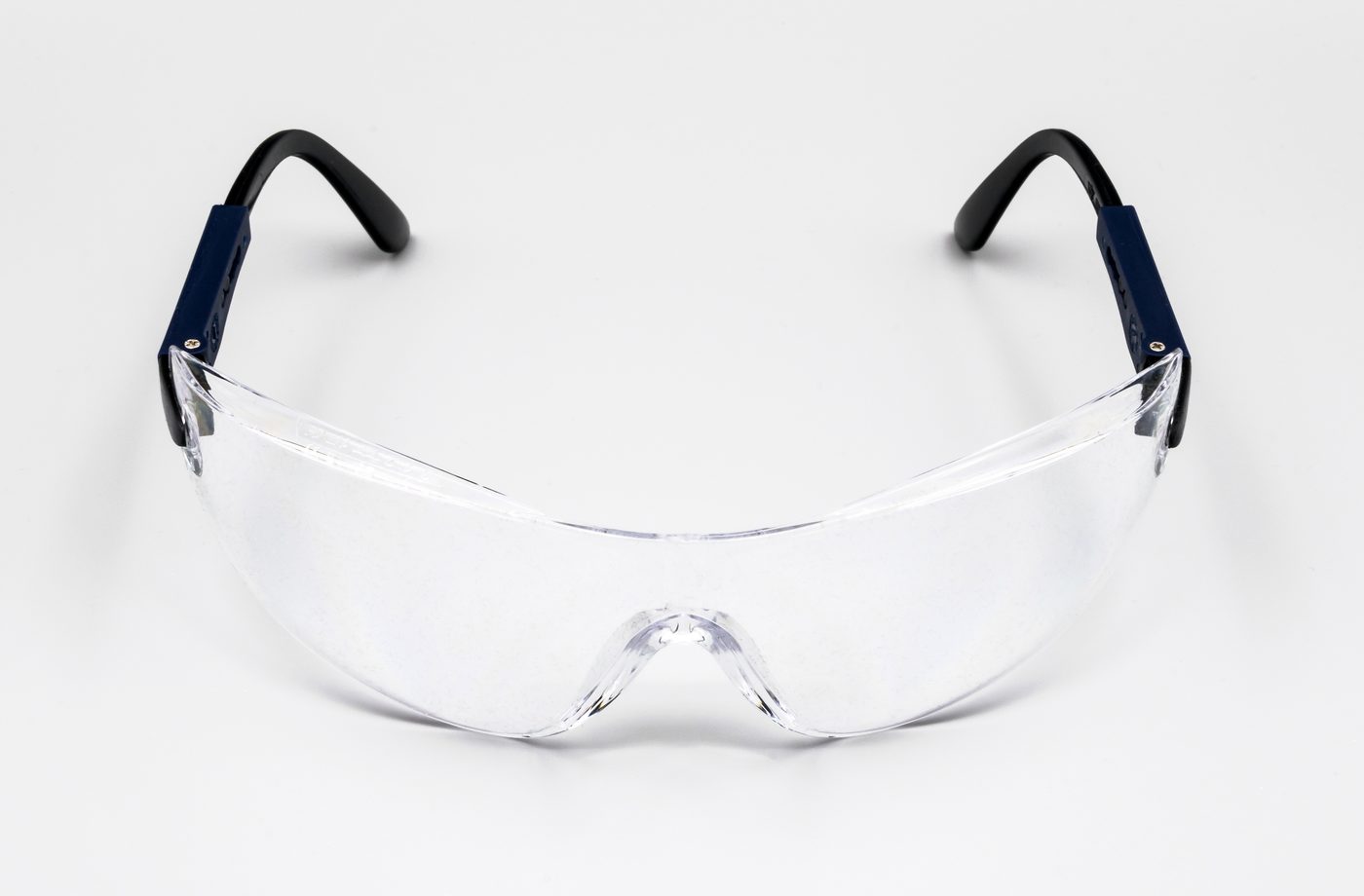
clear safety glasses for eye protection (Source: Wikimedia Commons)
Features to look for when selecting and using goggles:
- Impact resistance: Lenses should be made of tough material that does not shatter when struck by a stone or clod.
- Snug fit: Goggles should sit close to the face without gaps through which dust can enter.
- Clear vision: Scratched or heavily soiled lenses reduce visibility and should be cleaned or replaced.
- Anti-fog design: Ventilated or coated lenses prevent misting in hot, humid conditions.
- Compatibility: Goggles should fit over prescription glasses or be replaced with prescription safety eyewear where needed.
Ear muffs
Tractor engines, transmissions and implements working in hard soil produce continuous noise that can damage hearing over months and years. Ear muffs cover the whole outer ear and reduce the sound reaching the eardrum, which protects operators on long tillage shifts and in noisy places such as commercial feedlots. Hearing loss develops gradually and painlessly, so protection must be worn before any damage is noticed.
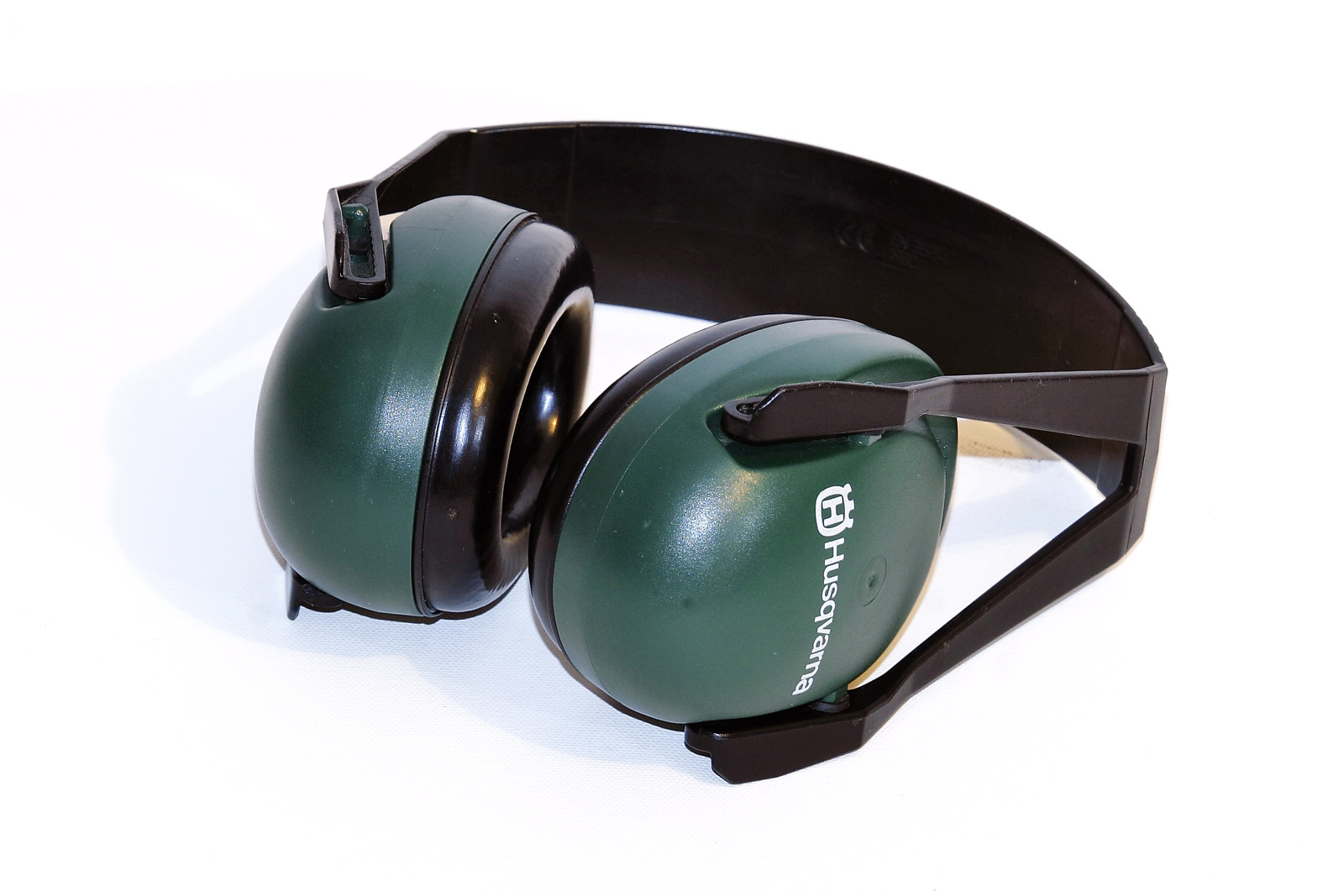
Green Husqvarna hearing protection earmuffs (Source: Wikimedia Commons)
Points to remember when using ear muffs:
- Wear them for the whole shift: Removing them even briefly in a noisy area reduces the protection received.
- Check the cushions: Cracked or hardened ear cushions let noise leak in and should be replaced.
- Ensure a good seal: Hair, caps or spectacle arms under the cushions break the seal and reduce protection.
- Adjust the headband: The band should hold the cups firmly over the ears without causing pain.
- Alternatives: Earplugs can be used where muffs are uncomfortable, provided they are inserted correctly and kept clean.
Safety boots
Safety boots protect the feet from crushing by heavy implement parts, from falling tools and from sharp objects in the soil. Steel-toed boots with a thick non-slip sole also give a firm grip on clutch and brake pedals and on wet or uneven ground. Example: on a dairy farm, operators wear them when hitching ploughs and harrows to the tractor, and when changing discs or tines.
Features of suitable safety boots:
- Reinforced toe cap: Steel or equivalent toe caps resist crushing from heavy parts.
- Non-slip sole: A deep tread reduces slipping on muddy fields and metal footsteps.
- Ankle support: High-cut boots protect the ankle on rough ground and when stepping on and off the tractor.
- Puncture resistance: A strong sole guards against nails, stubble and sharp metal pieces.
- Correct size and fit: Boots that are too loose or too tight cause blisters and tripping, so they should fit with working socks.
Nose mask
A nose mask, also called a dust mask or respirator, covers the nose and mouth and filters the air breathed in. During tillage, especially in dry areas, large amounts of dust are lifted by the implements and settle in the lungs if unprotected. Masks also reduce inhalation of exhaust fumes and of pesticide or fertiliser residues that may be present on the soil or on stored implements.
Points on selecting and using nose masks:
- Suitable filter: A simple dust mask is enough for dry soil dust, while chemical residues need a respirator with the correct filter.
- Tight fit: The mask must seal against the face, as gaps let unfiltered air enter.
- Facial hair: Beards and stubble prevent a good seal, so clean-shaven skin at the mask edge gives better protection.
- Replace when clogged: A mask that is dirty, damp or hard to breathe through no longer works properly.
- Not shared: Each operator should have their own mask for hygiene.
Gloves
Gloves shield the hands from cuts, abrasions, blisters, hot engine parts and contact with oil, grease and fuel. Hands are used constantly during hitching, adjusting and cleaning, so they are among the most commonly injured parts of the body. Durable leather or coated fabric gloves suit most handling work, while chemical-resistant gloves suit oil changes and any work involving pesticides.
Guidelines for choosing and wearing gloves:
- Match the glove to the task: Leather gloves suit handling sharp discs and tines, and nitrile or similar gloves suit oils and chemicals.
- Correct size: Gloves that are too large can catch in moving parts, while tight ones restrict movement.
- Keep cuffs clear of rotating parts: Loose cuffs must not hang close to a running power take-off shaft or belt.
- Check for holes: Torn or worn-through gloves allow contact with sharp edges and chemicals.
- Remove safely: Gloves contaminated with oil or chemicals are peeled off inside out and hands are washed afterwards.
Overall
An overall is a one-piece garment that covers the body and protects the skin and everyday clothing from dirt, grease, oil and soil. It should be close-fitting enough not to snag on levers, the power take-off shaft or the implement, but loose enough to allow free movement when climbing onto the tractor. For tillage operators it is the basic work garment worn under or with other PPE.
Points on selecting and using an overall:
- Strong fabric: Hard-wearing cotton or cotton blends resist tearing and abrasion.
- No loose parts: Torn cuffs, dangling belts and loose strings can be caught by rotating shafts and must be fastened or repaired.
- Full coverage: Long sleeves and legs protect the skin from sun, scratches and splashes of oil or fuel.
- Comfort in heat: Light-coloured, breathable fabric reduces heat stress on hot days.
- Regular washing: An overall soaked in fuel or oil is a fire and skin hazard and must be changed and washed promptly.
Dust coat
A dust coat is a light, long coat worn over normal clothing to keep dust, soil and light splashes off the body. It is useful for short jobs such as inspecting an implement, supervising field preparation or working in the store or workshop where a full overall is not needed. Because it opens at the front and is loosely cut, it is less suited to operating moving machinery than an overall.
Points on using a dust coat:
- Light protection only: It keeps dust off clothes but gives limited protection against heavy oil, fuel or sharp edges.
- Keep it fastened: Open flaps can swing into moving parts, so buttons or ties should be secured.
- Suitable length: It should be long enough to cover clothes but not so long that it drags or trips the wearer.
- Keep away from rotating parts: It should not be worn near an exposed power take-off shaft when the engine is running.
- Wash regularly: Dusty or soiled coats spread dirt and chemical residues and should be laundered often.
Importance of personal protective equipment in animal production
Using PPE supports compliance with occupational safety and health legislation and is a vital practice for maintaining operator health and farm efficiency. Benefits include:
- Reduction of injury rates: PPE lowers the incidence of cuts, bruises and fractures, allowing operators to work longer without health-related absences.
- Prevention of long-term health issues: Regular use of hearing protection and dust masks prevents chronic conditions such as hearing loss and respiratory diseases common among farmers.
- Compliance with safety regulations: Farms that enforce PPE use avoid legal penalties and demonstrate commitment to employee welfare, boosting their reputation.
- Enhancement of worker confidence: Operators who feel protected are more focused and productive during tillage tasks.
- Minimisation of contamination risks: Gloves and masks reduce direct contact with soil-borne pathogens that can affect both humans and livestock.
Proper use and maintenance of personal protective equipment
Correct use and upkeep of PPE maximise its protective function and extend its service life. Key practices include:
- Regular inspection: Operators should check PPE before each use for tears, cracks or wear that compromise protection.
- Cleaning after use: Gloves, goggles and masks must be cleaned according to manufacturer instructions to remove dirt, chemicals and sweat.
- Proper storage: PPE should be stored in clean, dry places away from sunlight and chemicals to prevent degradation.
- Replacement when damaged: Any PPE showing signs of damage or loss of functionality must be replaced immediately.
- Training on correct use: Workers should receive instruction on how to wear, adjust and remove PPE safely to avoid contamination or injury.
Challenges in PPE use and how to address them
Despite its importance, PPE use can be inconsistent due to discomfort, cost or lack of awareness. Addressing these challenges involves the following.
Challenges:
- Heat and discomfort: PPE can cause sweating and restrict movement, discouraging use during hot days.
- Cost constraints: Smallholder farmers may find it expensive to acquire quality PPE for all workers.
- Lack of training: Without proper instruction, operators may misuse or neglect PPE.
- Perceived low risk: Familiarity with machinery can lead to complacency and underestimation of hazards.
- Maintenance neglect: Dirty or damaged PPE reduces protection but may go unnoticed.
Solutions:
- Selecting appropriate PPE: Use lightweight, breathable materials designed for tropical climates to improve comfort.
- Subsidies or cooperative purchasing: Group buying through farmer cooperatives can lower PPE costs.
- Regular training sessions: Agricultural extension officers or the farm's safety supervisor can organise workshops on PPE importance and correct use.
- Safety culture promotion: Farm managers should lead by example and enforce PPE policies consistently.
- Scheduled maintenance checks: Implementing routine PPE inspections ensures timely cleaning and replacement.
The rest of this chapter
🔒Create a free account to open more of this chapter.
Free: practical guides, quick cards, workplace scenarios and more.
Create a free account 🔒2.2 Operation of tillage machinery
Tillage machinery is essential for preparing land to grow fodder crops and pastures critical to animal production. Proper operation ensures efficient soil turnover, weed control, and seedbed preparation. In Kenya’s diverse agro-ecological zones, selecting and…
🔒2.3 Maintenance of tillage machinery
Maintenance of tillage machinery is a critical aspect of farm machinery operation, especially in the context of animal production farms in Kenya where soil preparation directly impacts pasture quality and fodder crop yields. Proper maintenance ensures that til…
🔒2.4 Storage of tillage machinery
Proper storage of tillage machinery is a vital component of machinery management in animal production farms across Kenya. In regions with heavy seasonal rains such as Kisumu and Bungoma, correct storage prevents rust, corrosion, and mechanical damage that can…
Chapter Summary
This chapter covered essential aspects of operating tillage machinery with a focus on safety, efficiency, and equipment care. It began by emphasizing the importance of personal protective equipment to safeguard operators from potential hazards during machinery use. The operation section detailed the functions and handling of common tillage tools including ploughs, spring tine harrows, and tillers, highlighting their roles in soil preparation. Maintenance practices were discussed to ensure machinery remains in optimal working condition, preventing breakdowns and extending lifespan. Proper storage methods were also examined to protect equipment from environmental damage and deterioration when not in use. Together, these topics provide a comprehensive understanding necessary for effective and safe tillage machinery operation on the farm.
Self-Assessment
🔒 PDFDownload this self-assessment, with answers
A. Written Assessment
- What is the primary purpose of personal protective equipment (PPE) when operating tillage machinery? (2 marks)
- Identify four types of PPE commonly used in tillage machinery operation. (4 marks)
🔒20 more in this section.
Chapter Examination Questions
🔒 PDFDownload these examination questions, with worked answers
SECTION A (40 Marks) - Answer ALL Questions
- Identify five essential personal protective equipment (PPE) items used when operating tillage machinery on a dairy farm, and explain their purpose. (4 marks)
- Explain the main operational difference between a mouldboard plough and a spring tine harrow in preparing soil for pasture establishment. (4 marks)
🔒18 more in this section.
