Planning the construction of children’s garments requires a thorough understanding of the safety measures necessary during the process. In the Kenyan fashion industry, especially for professionals designing children’s wear, ensuring the use of appropriate Personal Protective Equipment (PPE) is vital to safeguard health and maintain productivity. This chapter introduces the essential PPEs relevant to garment construction, highlighting their role in protecting designers, tailors, and production staff from hazards encountered in the workplace.
1.1 PPEs
In garment construction workshops and studios across Kenya, from Nairobi-based fashion houses to county-level tailoring cooperatives, workers face various physical risks. Proper PPE use minimizes exposure to injuries from cutting tools, sewing machines, chemicals, and dust. Fashion designers and production managers must understand the types of PPE required and their correct application to foster a safe working environment compliant with Kenyan occupational health standards.
Types of PPE Used in Children’s Garment Construction
The PPE required in children’s garment construction addresses hazards such as sharp instruments, fabric dust, and chemical exposure from dyes and adhesives. Selecting appropriate PPE depends on the specific task within the production line.
Gloves
- Protection from cuts and punctures: Gloves made of leather or cut-resistant material shield hands from sharp scissors and needles.
- Chemical resistance: Nitrile gloves protect against dyes and adhesives that may cause skin irritation or allergic reactions.
- Dexterity: Gloves must allow sufficient finger movement for precise tasks like hand stitching or button sewing.
- Comfort for prolonged use: Breathable materials prevent sweating and discomfort during extended working hours.
- Disposable vs reusable: Disposable gloves are suitable for short tasks involving chemicals, while reusable gloves serve well for general handling and cutting.
Eye Protection
- Safety goggles: These protect eyes from flying fabric fibers and accidental splashes of dyes or adhesives.
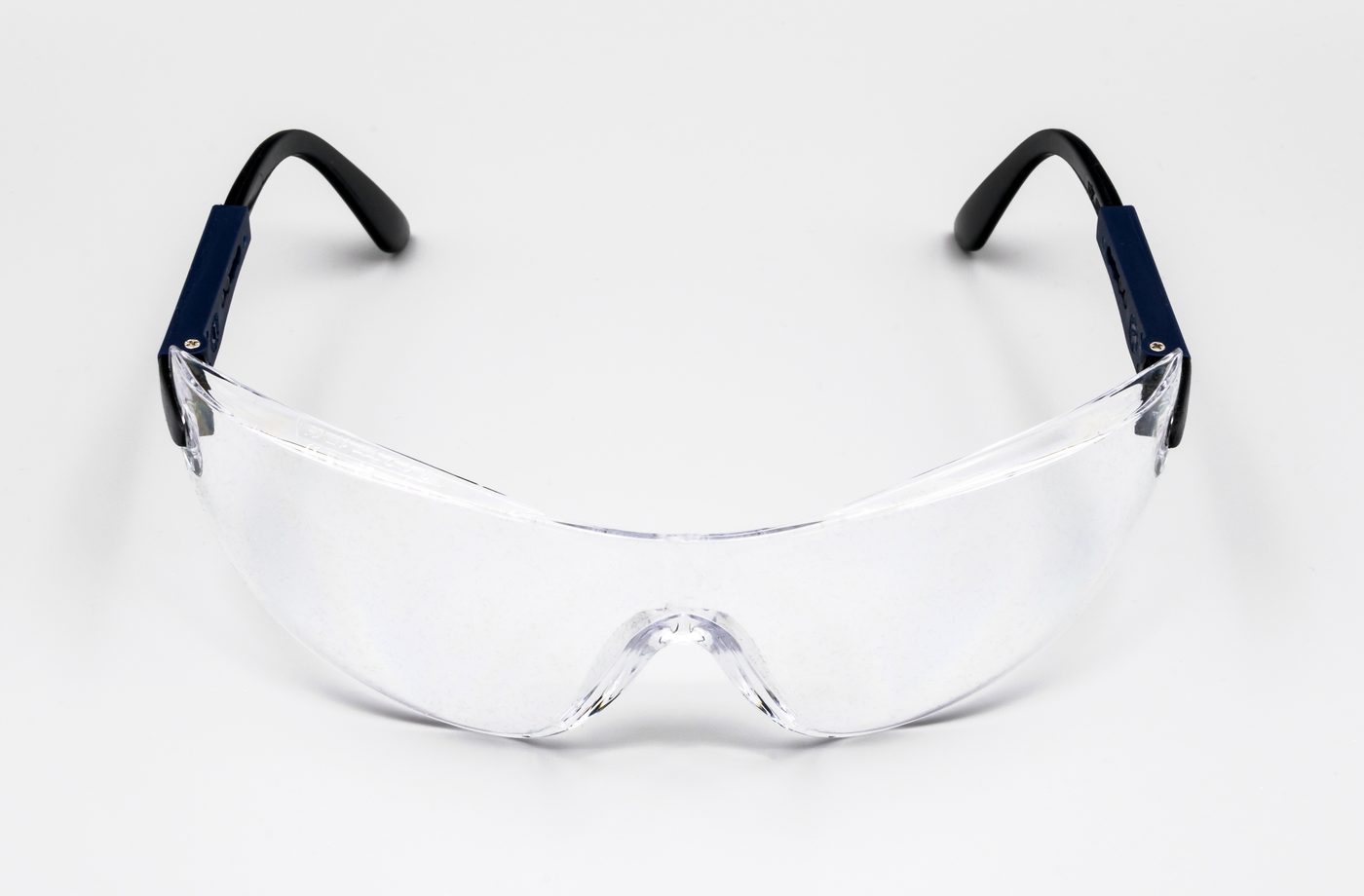
Clear safety goggles for eye protection (Source: Wikimedia Commons)
- Impact resistance: Goggles made from polycarbonate provide durability against mechanical impacts.
- Anti-fog properties: Essential in humid environments to maintain clear vision.
- Comfort fit: Adjustable straps ensure secure wear during machine operation.
- Compatibility with prescription glasses: Important for workers requiring vision correction.
Respiratory Protection
- Dust masks: Protect against inhalation of fabric fibers and dust generated during cutting and sanding.
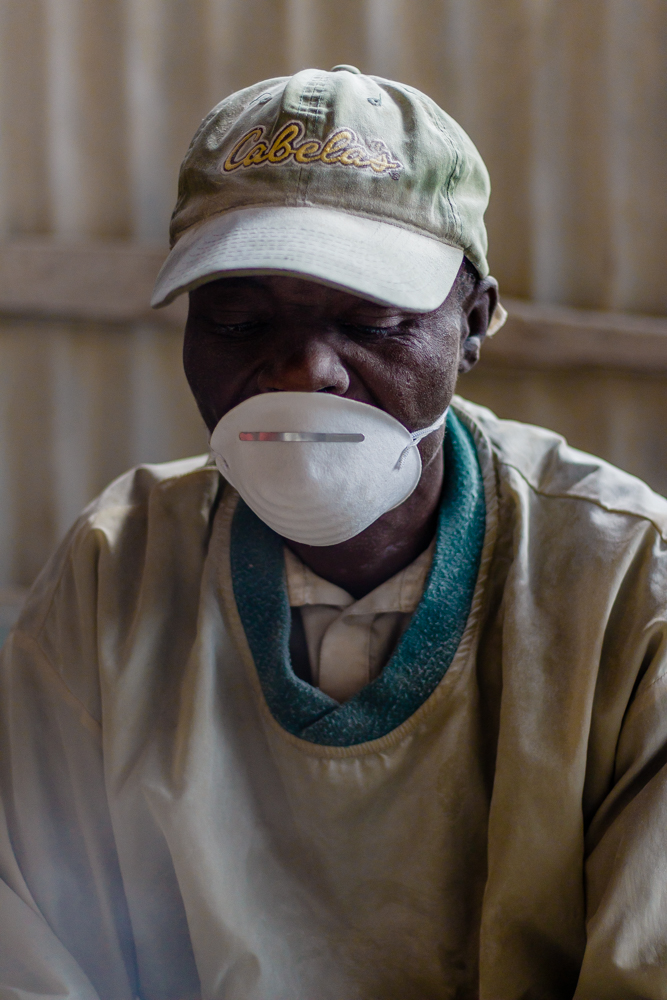
Person wearing a dust mask (Source: Wikimedia Commons)
- Filter efficiency: Masks with particulate filters (e.g., N95) offer better protection in dusty environments.
- Comfort and breathability: Lightweight masks reduce fatigue during long shifts.
- Chemical fume masks: Necessary when working with solvent-based adhesives or dyes.
- Proper fitting: Masks must fit snugly to prevent leakage around the edges.
Protective Clothing
- Aprons: Shield clothing from stains caused by dyes and adhesives.
- Long-sleeved garments: Protect skin from irritants and minor abrasions.
- Durability: Fabrics resistant to tearing ensure longevity in a production environment.
- Ease of cleaning: Materials that withstand frequent washing maintain hygiene.
- Visibility: Bright colors or reflective elements increase safety in busy workshops.
Footwear
- Closed-toe shoes: Prevent foot injuries from dropped tools or heavy materials.
- Slip resistance: Essential on workshop floors that may have fabric scraps or spills.
- Comfort: Ergonomic designs reduce fatigue during prolonged standing.
- Durability: Quality materials extend the lifespan of safety footwear.
- Compliance: Meeting Kenyan occupational safety standards ensures worker protection.
Importance of PPE in Protecting Workers in Children’s Wear Production
PPE plays a critical role in maintaining the health and safety of workers involved in constructing children’s garments. Without proper protection, injuries and illnesses can disrupt production schedules and increase costs.
Injury Prevention
- Reduction of cuts and punctures: Gloves minimize hand injuries from sharp tools, reducing downtime due to medical treatment.
- Eye protection prevents accidents: Goggles shield eyes from flying debris, preventing vision loss or infections.
A pair of safety glasses (Source: RCTDS301_Drainage_system)
- Respiratory safety: Masks help avoid respiratory conditions caused by inhaling dust and chemical fumes.
- Skin protection: Protective clothing prevents dermatitis and allergic reactions from prolonged chemical exposure.
- Foot injury prevention: Safety shoes reduce accidents from heavy materials or equipment.
Compliance with Safety Regulations
- Legal adherence: Use of PPE ensures compliance with Kenya’s Occupational Safety and Health Act, avoiding penalties.
- Workplace audits: PPE use facilitates positive inspections by regulatory bodies like NEMA or county health officers.
- Insurance benefits: Proper PPE reduces workplace accidents, lowering insurance premiums for businesses.
- Enhancing company reputation: Demonstrating commitment to safety attracts clients and skilled workers.
- Employee morale: Workers feel valued and motivated when their safety is prioritized.
Maintaining Productivity
- Minimizing absenteeism: Reduced injuries lead to fewer sick days and consistent workforce availability.
- Enhancing focus: Workers equipped with PPE can perform tasks confidently without fear of harm.
- Reducing errors: Safe environments contribute to better concentration and fewer mistakes in garment construction.
- Efficiency in production: Less downtime due to accidents increases throughput in garment manufacturing.
- Quality assurance: Healthy workers maintain high standards necessary for children’s wear, which demands precision and safety.
Selection and Proper Use of PPE in the Workshop
Choosing the right PPE and ensuring it is used correctly is essential for effective protection in garment construction settings.
Assessment of Hazards
- Identify risks: Evaluate tasks such as cutting, sewing, and dyeing to determine specific hazards.
- Match PPE to risks: Select gloves, masks, or eye protection appropriate to each identified hazard.
- Consult safety standards: Refer to Kenyan occupational safety guidelines for recommended PPE.
- Worker input: Engage tailors and designers in selecting comfortable and practical PPE.
- Regular review: Update PPE choices as new materials or processes are introduced.
Training on PPE Use
- Instruction on donning and doffing: Teach correct methods to put on and remove PPE to avoid contamination.
- Maintenance guidance: Train workers to clean, store, and inspect PPE regularly.
- Fit testing: Ensure masks and goggles fit individual workers properly.
- Awareness of limitations: Inform users about the protection level and when to replace PPE.
- Emergency procedures: Prepare staff to respond if PPE fails or is compromised.
Ensuring Compliance
- Supervision: Managers monitor PPE use during production activities.
- Enforcement: Establish policies with consequences for non-compliance.
- Provision of PPE: Employers must supply quality PPE at no cost to workers.
- Record-keeping: Maintain logs of PPE issuance and training sessions.
- Feedback mechanisms: Encourage workers to report PPE issues or discomfort.
Maintenance and Storage of PPE in Garment Construction Environments
Proper care of PPE extends its usability and ensures continued protection for workers.
Cleaning Procedures
- Gloves: Wash reusable gloves with mild detergent and air dry; dispose of single-use gloves after use.
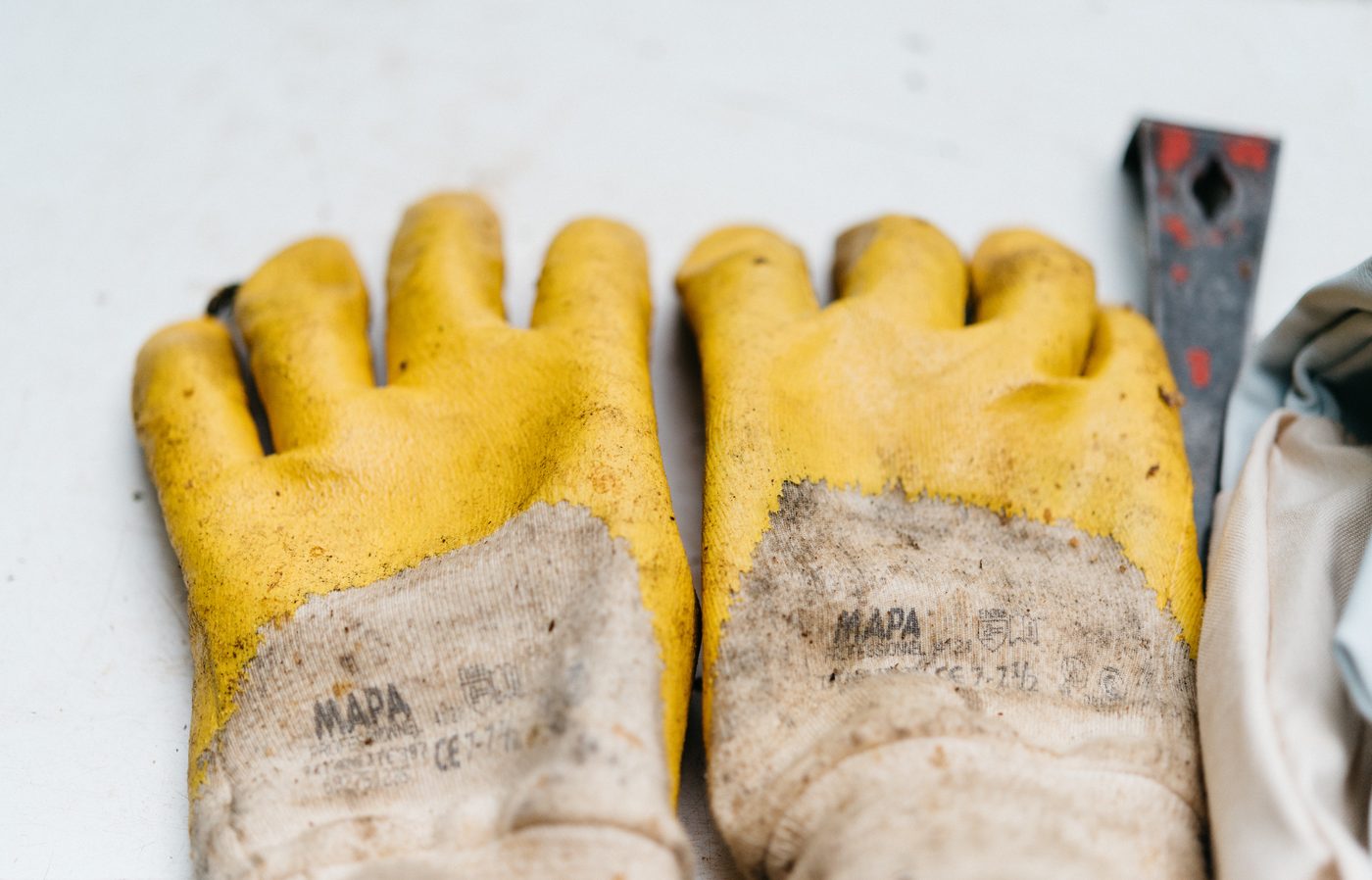
Pair of yellow work gloves used in carpentry (Source: Wikimedia Commons)
- Goggles: Clean lenses with appropriate solutions to maintain clarity and prevent scratches.
- Masks: Replace disposable masks regularly; clean reusable respirators as per manufacturer guidelines.
- Protective clothing: Launder aprons and garments frequently to remove contaminants.
- Footwear: Wipe and air out safety shoes to prevent odor and material degradation.
Storage Conditions
- Dry environment: Store PPE in areas free from moisture to prevent mold and damage.
- Away from sunlight: Prolonged UV exposure can weaken materials like gloves and masks.
- Organized storage: Use labeled containers or shelves to avoid cross-contamination.
- Accessible location: Ensure PPE is easily reachable to encourage consistent use.
- Inspection before storage: Check PPE for damage or wear before storing to identify replacements needed.
Replacement and Disposal
- Regular inspection: Identify worn or damaged PPE that no longer provides adequate protection.
- Scheduled replacement: Follow manufacturer recommendations on PPE lifespan.
- Safe disposal: Dispose of contaminated or single-use PPE according to health and safety regulations.
- Recycling programs: Where possible, participate in recycling initiatives for materials like plastics.
- Record management: Document disposal and replacement activities for accountability.
1.1.1 Types of PPEs
In the Kenyan fashion design industry, particularly when constructing children’s wear, the use of Personal Protective Equipment (PPE) is essential to safeguard designers, tailors, and production staff from occupational hazards. PPE helps reduce exposure to risks such as sharp tools, fabric dust, chemical dyes, and machinery-related injuries. Awareness of the different types of PPE available and their appropriate application ensures a safer working environment, which is crucial in institutions like garment factories in Nairobi or tailoring workshops serving local schools and children’s boutiques.
Protective Clothing in Children’s Garment Construction
Protective clothing is fundamental for fashion designers and garment workers to prevent injuries related to sharp instruments and contact with hazardous materials. In children’s wear production, this PPE shields workers from cuts, abrasions, and chemical exposure during fabric handling and finishing processes.
Types and Characteristics of Protective Clothing
- Aprons: Aprons made from durable materials such as leather or thick cotton protect the torso and legs from fabric dust, dye splashes, and accidental cuts from scissors or rotary cutters. Their ease of removal allows quick response in case of contamination.
- Sleeve Guards: These protect the arms from needle pricks and fabric abrasions, especially during sewing and embroidery tasks. Sleeve guards are commonly used in workshops producing school uniforms and casual children’s wear.
-
Lab Coats: Lightweight lab coats are worn to prevent contamination of clothing and skin from dyes and adhesives used in fabric treatments. They are reusable and washable, making them cost-effective for small tailoring cooperatives.
-
Protective Gloves: Gloves made from nitrile or cotton protect hands from chemical dyes and sharp tools. In children’s garment production, gloves help maintain hygiene standards, particularly when handling delicate fabrics like lace or silk.
-
Protective Footwear: Closed-toe shoes with non-slip soles prevent injuries from dropped sharp tools and slippery workshop floors. Footwear is critical in busy production units such as those supplying county government uniform contracts.
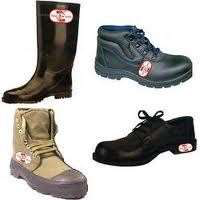
Four types of safety footwear commonly used in construction and engine (Source: PLUMB 5 LEARNING GUIDE-1 (1))
Eye and Face Protection for Garment Workers
Eye and face protection PPE is vital in preventing injuries caused by flying fabric particles, dust, or chemical splashes during garment finishing processes. In Kenya, workshops producing children’s wear often involve fabric cutting and chemical treatments where such PPE is necessary.
Types and Uses of Eye and Face Protection
- Safety Goggles: Goggles with side shields provide full eye protection against dust and liquid splashes. Tailors working with dyes or adhesives benefit from these to avoid eye irritation.
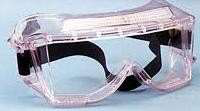
A pair of clear safety goggles designed to protect the eyes during con (Source: PLUMB 5 LEARNING GUIDE-1 (1))
- Face Shields: Face shields cover the entire face and are used during heavy-duty tasks like fabric cutting with electric cutters or when spraying finishing chemicals. They offer an extra layer of protection in industrial-scale children’s garment factories.
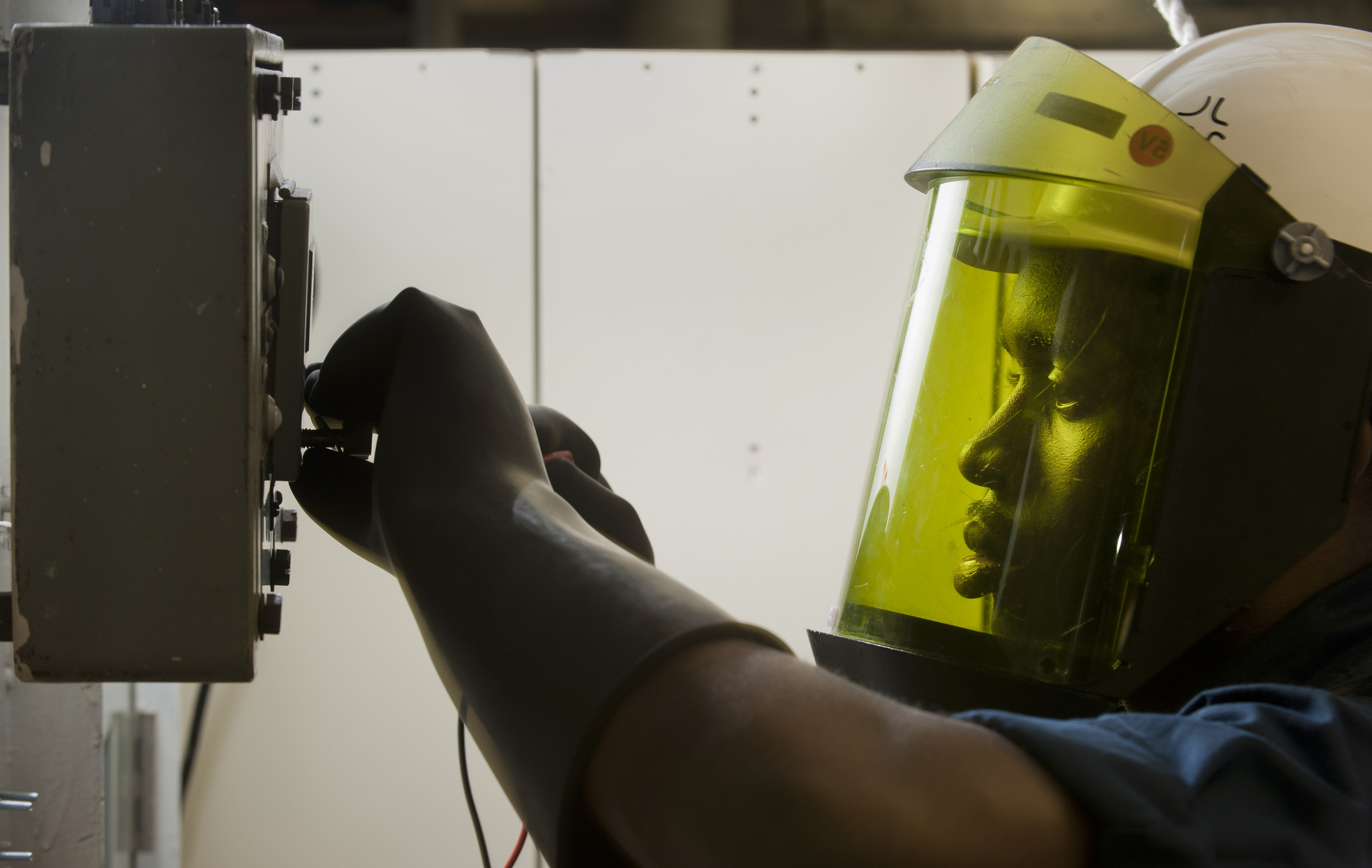
Person wearing a yellow face shield (Source: Wikipedia (Face shield))
- Sunglasses with UV Protection: For designers working outdoors during fabric sourcing or quality inspections, UV-protective sunglasses reduce eye strain and shield from harmful sun rays.
- Dust Masks with Eye Guards: These combine respiratory and eye protection, useful in dusty environments such as fabric warehouses where children’s wear materials are stored.
- Disposable Face Masks: Primarily used to prevent inhalation of fine particles and maintain hygiene during garment handling, especially in boutique settings focused on children’s fashion.
Respiratory Protection in Children’s Wear Production
Respiratory PPE prevents inhalation of harmful dust, fumes, and chemical vapors encountered during children’s garment construction. In Kenya’s textile workshops, exposure to dust from synthetic fabrics and vapors from fabric treatments necessitates respiratory protection.
Types and Features of Respiratory PPE
- N95 Respirators: These masks filter out at least 95% of airborne particles and are suitable for workers exposed to fabric dust and fine fibers during cutting and sewing.
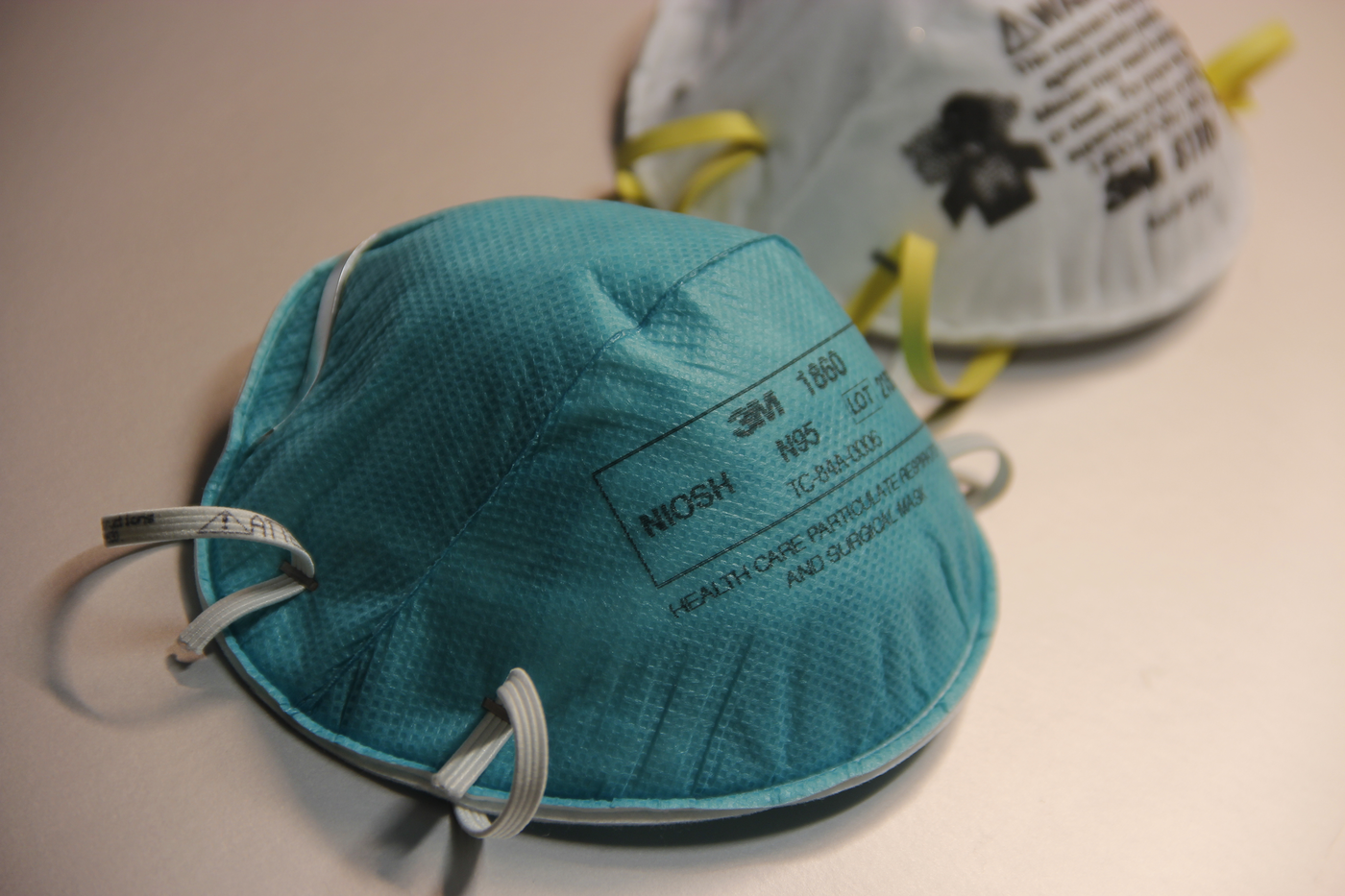
Two N95 respirator masks (Source: Wikimedia Commons)
-
Half-Face Respirators: Equipped with replaceable filters, these respirators protect against chemical fumes from dyes and adhesives used in children’s garment finishing. They are common in medium-scale production units.
-
Full-Face Respirators: Providing both respiratory and face protection, these are used in large factories where strong chemical solvents are applied to fabrics.
-
Disposable Dust Masks: Lightweight and affordable, these masks are used in smaller tailoring shops where dust exposure is intermittent.
- Powered Air-Purifying Respirators (PAPR): These use a battery-powered blower to provide filtered air, suitable for prolonged exposure in industrial garment manufacturing plants.
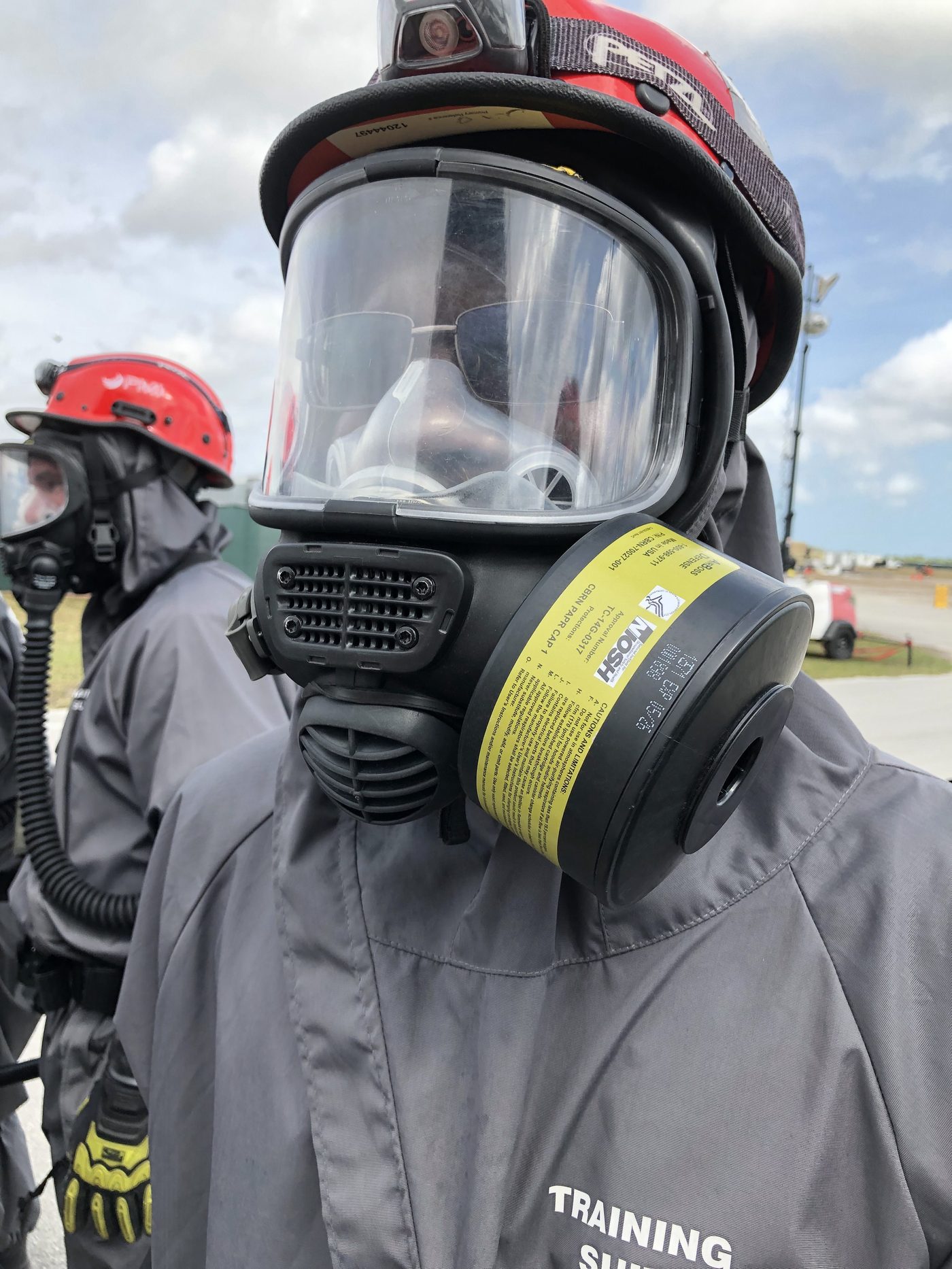
Person wearing powered air-purifying respirator (Source: Wikimedia Commons)
Hand and Foot Protection for Safety and Hygiene
Hands and feet are most vulnerable during garment construction due to handling sharp tools and moving heavy materials. Proper PPE for these body parts reduces accident risks and maintains hygiene standards, crucial in children’s wear production where fabric cleanliness is paramount.
Common Hand and Foot PPE
- Cut-Resistant Gloves: Made from materials like Kevlar, these gloves protect tailors from needle punctures and cuts from scissors and cutting tools during children’s clothing assembly.
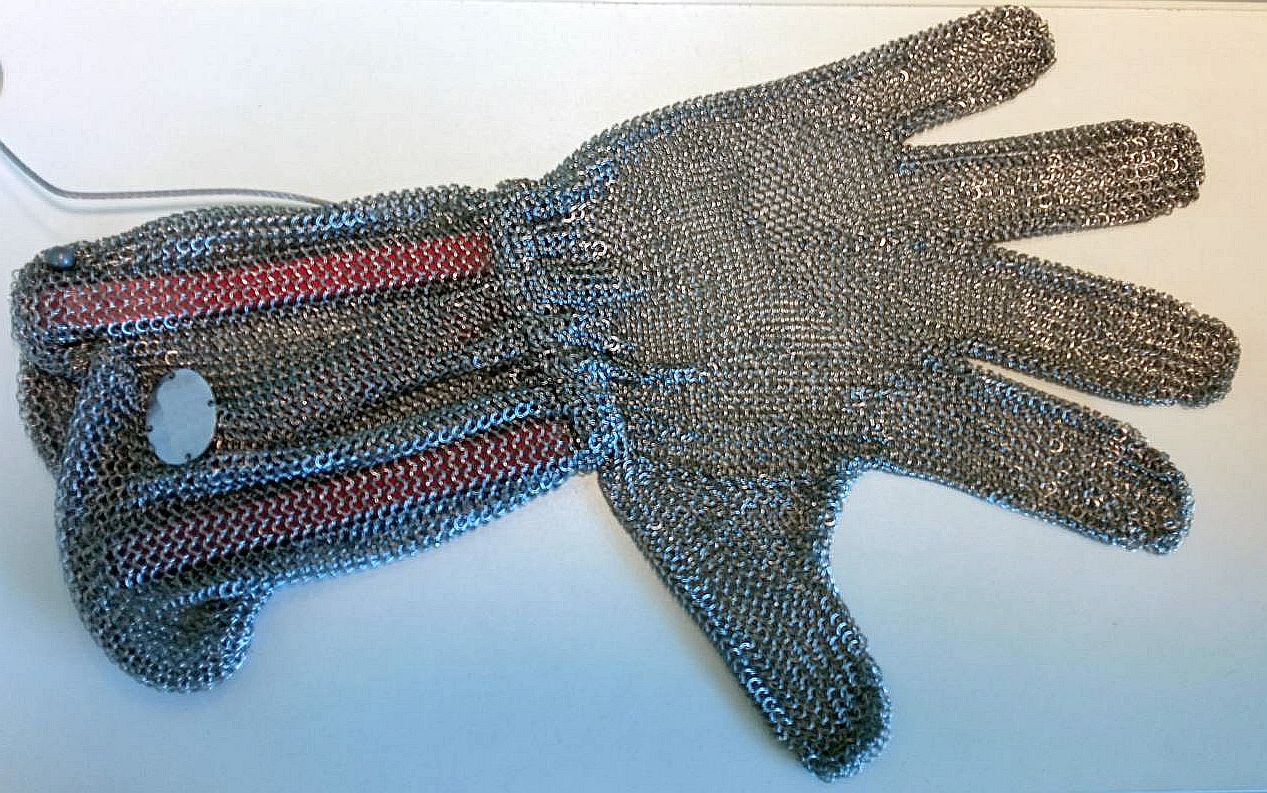
Metal mesh cut-resistant glove (Source: Wikimedia Commons)
-
Chemical-Resistant Gloves: Used when handling dyes and adhesives, these gloves prevent skin irritation and chemical burns.
-
Anti-Slip Shoes: Footwear with anti-slip soles reduces the risk of falls in workshops where fabric scraps and liquids may spill.
- Steel-Toe Boots: In larger garment factories, steel-toe boots protect feet from heavy falling objects like fabric rolls or equipment.
- Disposable Gloves: Used in boutique settings to maintain hygiene when handling finished children’s garments and delicate materials.
Dust coat
In the Kenyan children’s wear industry, the dust coat is a fundamental garment that balances practicality with style. Often used in schools, hospitals, and casual settings, dust coats protect children's clothing from dirt and wear during play or learning activities. For fashion designers, understanding the construction and design of dust coats for children is crucial to meet both functional and aesthetic needs that appeal to parents and institutions.
Meaning and Purpose of the Dust Coat
The dust coat is a lightweight, protective garment designed primarily to shield the underlying clothing from dust, dirt, and stains. It is commonly used by children in environments where clothes are prone to getting dirty, such as schools and play areas. The purpose extends beyond protection to include comfort and ease of movement, which are critical in children’s apparel.
Meaning of Dust Coat
- Protective Outerwear: The dust coat serves as a barrier against dust and spills, keeping children’s regular clothes clean and presentable.
- Lightweight Fabric Use: Typically made from breathable materials like cotton or polyester blends, it ensures children remain comfortable even after prolonged wear.
- Simple Design: The garment usually features minimal embellishments to facilitate easy washing and durability.
- Universal Fit: Dust coats are often designed to fit loosely, accommodating growth and allowing layering over school uniforms or casual clothes.
- Gender-neutral Styles: Many dust coats are designed to be unisex, simplifying procurement for institutions like schools.
Purpose of Dust Coat
- Hygiene Maintenance: In hospital settings, such as maternal and child health clinics, dust coats help maintain hygiene by preventing contamination of clothes.
- Cost Efficiency: By protecting children’s clothes, dust coats reduce the frequency of washing and prolong the life of more expensive garments.
- Uniformity: In schools, dust coats promote uniformity among pupils, reducing social pressure related to clothing and fostering equality.
- Ease of Identification: Brightly colored or uniquely patterned dust coats can help teachers and caregivers identify children quickly in group settings.
- Safety: Reflective strips or bright colors on dust coats enhance visibility during outdoor activities, improving child safety.
Purpose of Dust Coat
The purpose of a dust coat in children’s wear extends beyond simple protection. It addresses hygiene, cost, uniformity, identification, and safety in various Kenyan contexts:
- Hygiene Maintenance: In hospital settings, such as maternal and child health clinics at Kenyatta National Hospital, dust coats help maintain hygiene by preventing contamination of clothes, which is essential for infection control.
- Cost Efficiency: By protecting children’s clothes from stains and dirt, dust coats reduce the frequency of washing and prolong the life of more expensive garments. This is particularly important for families in urban and rural Kenya where laundry resources may be limited.
- Uniformity: In schools, dust coats promote uniformity among pupils, reducing social pressure related to clothing and fostering equality. Many Nairobi county schools require dust coats as part of the school dress code.
- Ease of Identification: Brightly colored or uniquely patterned dust coats can help teachers and caregivers identify children quickly in group settings, such as during school trips or playground activities.
- Safety: Reflective strips or bright colors on dust coats enhance visibility during outdoor activities, improving child safety. For example, schools in Kisumu often specify dust coats with reflective elements for pupils who walk to school.
Design Considerations for Children’s Dust Coats
Designing dust coats for children requires attention to several factors that ensure the garment is both practical and appealing. The designer must consider the child's comfort, ease of use, and the garment’s durability given the active lifestyles of children.
Fabric Selection
- Durability: Fabrics must withstand frequent washing and rough use without losing shape or color. Cotton blends are preferred for their strength and softness.
- Breathability: Materials should allow air circulation to prevent overheating, especially in Kenya’s warm climate.
- Stain Resistance: Fabrics treated to repel stains help maintain the dust coat’s appearance over time.
- Ease of Cleaning: Machine-washable textiles reduce maintenance effort for parents and institutions.
- Non-toxic: All fabrics must be safe for children-free from harmful dyes or chemicals.
Functional Features
- Adjustable Closures: Buttons, snaps, or Velcro allow for easy dressing and accommodate growth.
- Pockets: Inclusion of pockets provides convenience for carrying small items like handkerchiefs or stationery.
- Sleeve Design: Long sleeves with elastic or cuffed ends prevent dirt from reaching the inner clothes and allow unrestricted arm movement.
- Length: The coat should be long enough to protect clothes but short enough to avoid tripping hazards.
- Ventilation Elements: Features such as back pleats or vents increase comfort during extended wear.
Construction Techniques for Dust Coats
The construction of children’s dust coats involves specific tailoring methods to ensure the garment is comfortable, durable, and suitable for mass production, especially in school or hospital settings.
Pattern Making
- Loose Fit Patterns: Patterns should allow extra ease for movement and layering of clothes underneath.
- Simple Seams: Minimized seam lines reduce bulk and irritation on sensitive skin.
- Standard Sizing: Developing size ranges that accommodate common age groups in Kenyan schools improves accessibility.
- Incorporation of Growth Allowance: Patterns should consider potential growth spurts to extend the garment’s usable life.
- Ease of Manufacture: Designs should be optimized for efficient cutting and sewing to reduce production costs.
Sewing and Finishing
- Reinforced Seams: Areas prone to stress, such as underarms and pockets, require double stitching for durability.
- Neat Hemming: Clean hems prevent fraying and maintain garment shape after numerous washes.
- Secure Attachments: Buttons and snaps must be firmly sewn to withstand active use.
- Smooth Inner Seams: To avoid discomfort, seams inside the garment should be flat-felled or overlocked.
- Quality Control: Each dust coat undergoes inspection to ensure consistent sizing and finishing standards.
Challenges and Solutions in Dust Coat Production
Producing children’s dust coats in Kenya faces challenges related to material availability, cost constraints, and meeting safety standards. Addressing these challenges is essential for designers and manufacturers to deliver quality products.
Challenges in Production
- Material Sourcing: Limited access to high-quality, affordable fabrics can compromise the garment’s durability and comfort.
- Cost Management: Balancing quality with affordability is critical, particularly for bulk orders by public schools or hospitals.
- Sizing Variability: Children’s rapid growth demands flexible sizing solutions, complicating inventory management.
- Safety Compliance: Ensuring all materials and accessories meet safety regulations for children’s wear requires rigorous quality checks.
- Consumer Preferences: Diverse preferences in style and color can complicate standardization for institutional buyers.
Solutions to Production Challenges
- Local Fabric Development: Partnering with Kenyan textile mills to produce suitable fabrics reduces cost and improves supply reliability.
- Modular Design: Creating dust coats with adjustable features extends usability across different age groups.
- Bulk Procurement: Schools and hospitals can negotiate bulk purchases to lower unit costs.
- Regular Quality Audits: Implementing strict quality control protocols ensures compliance with safety standards.
- Market Research: Engaging with parents and institutions to understand preferences guides design decisions and inventory planning.
Safety shoes
Safety shoes form an essential part of personal protective equipment (PPE) in the fashion design industry, particularly during the construction of children’s garments. In Kenya, fashion design professionals working in busy workshops or production units often face risks such as sharp tools, heavy materials, and accidental drops that can cause foot injuries. Ensuring the use of appropriate safety shoes protects workers from punctures, slips, cuts, and crushing injuries, contributing to a safer and more productive workplace. This section explores the characteristics, types, selection criteria, and maintenance of safety shoes suitable for children’s garment construction environments.
Characteristics of Safety Shoes
Safety shoes must possess specific features tailored to protect the wearer’s feet from the unique hazards encountered in garment construction workshops. Their design balances protection, comfort, and durability to support long hours of standing and movement common in tailoring and sewing processes.
Characteristics of Safety Shoes
- Toe Protection: Safety shoes include reinforced toe caps, commonly made of steel, composite materials, or aluminum, to shield toes from heavy falling objects or accidental impacts common in cutting and pressing areas.
- Slip Resistance: The soles are designed with tread patterns and rubber compounds that provide high traction on slippery surfaces, reducing the risk of falls on fabric scraps or spilled liquids in production spaces.
- Puncture Resistance: The midsole often incorporates a puncture-resistant plate that prevents sharp objects like needles, pins, or cutting blades from penetrating the sole and injuring the foot.
- Electrical Hazard Protection: In workshops where sewing machines and electrical pressing irons are used, safety shoes may offer insulation against electrical shocks, safeguarding tailors and designers.
- Comfort and Ergonomics: Since workers stand for extended periods, safety shoes include cushioned insoles, breathable materials, and ergonomic designs to prevent fatigue and foot strain, enhancing productivity.
Types of Safety Shoes for Fashion Workshops
The selection of safety shoes depends on the specific risks present in the children’s wear construction environment. Various types offer different levels of protection and comfort, making it essential for designers and workshop managers to understand the options available.
Types of Safety Shoes
- Steel Toe Boots: These provide robust protection against heavy impacts and are suitable for workshops handling bulky materials or equipment storage areas where accidental dropping is a risk.
- Composite Toe Shoes: Made from non-metal materials, these shoes are lighter and do not conduct electricity, ideal for tailors working near electrical equipment or in environments with metal detectors.
- Slip-Resistant Shoes: Designed specifically for wet or oily workshop floors, these shoes enhance grip and prevent slips, which is crucial in busy sewing rooms where spilled water or starch is common.
- Puncture-Resistant Shoes: Equipped with plates to prevent sharp objects from penetrating, these shoes suit environments where needles and pins are frequently dropped, such as cutting tables or fabric preparation zones.
- Lightweight Safety Sneakers: These combine protection with flexibility and breathability, suitable for designers who require mobility and comfort during long hours of sketching, pattern making, and sewing.
Criteria for Selecting Safety Shoes in Children’s Garment Construction
Choosing the right safety shoes involves evaluating several factors to ensure they meet the specific needs of the fashion design environment while also considering comfort and cost-effectiveness. Proper selection contributes to overall workplace safety and employee satisfaction.
Criteria for Selecting Safety Shoes
- Risk Assessment of Workshop Activities: Identify the primary hazards, such as heavy materials, sharp tools, or slippery floors, to determine the level of protection required, for example, steel toe for impact hazards or slip-resistant soles for wet floors.
- Material Durability and Quality: Shoes should be made from high-quality leather or synthetic materials that withstand wear and tear in a busy workshop, ensuring longevity and sustained protection.
- Comfort and Fit: Proper fitting shoes with adequate cushioning and ventilation prevent foot fatigue and skin irritation, which is essential for tailors who spend long hours standing or moving.
- Compliance with Safety Standards: Shoes should meet Kenyan or international safety standards such as ISO or ASTM to guarantee tested protection levels, which is important for liability and workplace safety policies.
- Cost and Availability: Consider the budget constraints and availability of safety shoes locally, ensuring a balance between affordability and adequate protection, especially for small-scale fashion businesses and cooperatives.
Maintenance and Care of Safety Shoes
Maintaining safety shoes in good condition extends their protective properties and ensures continued comfort for the wearer. Proper care routines also prevent premature wear, reducing replacement costs in fashion workshops.
Maintenance and Care of Safety Shoes
- Regular Cleaning: Remove dirt and fabric dust daily using a soft brush or damp cloth to prevent material degradation and maintain shoe appearance, which is important in professional settings like boutique fashion studios.
- Proper Drying: Allow shoes to air dry naturally after exposure to moisture, avoiding direct heat sources that can crack leather or warp soles, preserving shoe integrity.
- Inspection for Damage: Frequently check for sole wear, loose stitching, or compromised toe caps to identify when repairs or replacements are necessary, preventing accidents in busy tailoring units.
- Use of Shoe Polish and Conditioners: Apply appropriate polish or leather conditioners periodically to keep leather supple and water-resistant, enhancing durability and professional appearance.
- Storage Practices: Store safety shoes in a cool, dry place away from direct sunlight and chemicals to prevent material damage, which supports long-term usability in workshops and design offices.
Face mask
Face masks have become an essential component of children’s wear, particularly in response to public health concerns such as the COVID-19 pandemic. In Kenya, fashion designers are increasingly integrating face masks into children’s garment collections, balancing safety requirements with comfort, style, and cultural preferences. Designing children’s face masks requires careful consideration of fabric choice, sizing, breathability, and aesthetic appeal to ensure children feel comfortable and confident wearing them in schools, hospitals, and public spaces.
Design Considerations for Children’s Face Masks
Designing face masks for children involves unique challenges compared to adult masks. The mask must fit securely yet comfortably on smaller facial structures, allowing for ease of breathing and communication. Designers must also consider the preferences of children, which often include bright colors, playful patterns, and familiar characters, to encourage consistent use.
Key design considerations include:
-
Size and Fit: Children’s face masks must be proportioned to fit smaller faces snugly without gaps to ensure effective protection. Adjustable ear loops or ties help accommodate different face shapes and sizes.
-
Breathability: Selecting lightweight, breathable fabrics is critical to prevent discomfort and skin irritation, especially in Kenya’s warm climate.
-
Safety and Comfort: Masks should avoid components that might cause choking hazards, such as small detachable parts, and use soft, hypoallergenic materials to protect sensitive skin.
-
Aesthetic Appeal: Incorporating vibrant patterns, animal prints, or cartoon characters encourages children to wear masks willingly, reducing resistance in environments like schools.
-
Durability: Masks must withstand repeated washing without losing shape or protective qualities, important for frequent use in settings like hospitals and daycare centers.
Materials Suitable for Children’s Face Masks
Material selection is fundamental in the construction of children’s face masks, impacting both effectiveness and comfort. Kenyan designers often source local cottons and blends to balance cost, availability, and performance, while international standards inform material safety.
Characteristics of suitable materials:
-
Cotton Fabric: 100% cotton is soft, breathable, and washable, making it ideal for children’s masks. It also allows for vibrant prints to appeal to children.
-
Non-Woven Filter Layers: Incorporating a non-woven polypropylene layer between cotton layers enhances filtration efficiency without compromising breathability.
-
Elastic Bands or Adjustable Straps: Soft, stretchable elastic or adjustable fabric straps reduce ear discomfort and allow for size customization.
-
Moisture-Wicking Properties: Fabrics that wick moisture away from the skin keep children comfortable during extended wear, especially in hot climates.
-
Hypoallergenic Textiles: Using materials free from dyes or chemicals that could irritate sensitive skin is crucial to prevent allergic reactions.
Construction Techniques for Children’s Face Masks
The construction of children’s face masks requires precision to ensure functionality and durability while maintaining comfort. Kenyan fashion workshops and small-scale manufacturers apply both traditional sewing techniques and modern methods to produce masks efficiently.
Steps and techniques include:
-
Pattern Drafting: Accurate patterns are drafted based on children's facial measurements, including allowances for seams and filters.
-
Cutting Fabric: Fabrics are cut with precision to maintain consistency across masks; multiple layers are cut simultaneously for efficiency.
-
Layering: Masks typically consist of two or three layers, a cotton outer layer, a filter layer, and a soft inner lining to protect the skin.
-
Sewing Seams: Strong, even seams are sewn using overlock or straight stitching to secure layers, preventing fraying and maintaining shape after washes.
-
Inserting Filters: If designed with filter pockets, careful stitching creates compartments to insert disposable or reusable filters.
-
Adding Straps: Ear loops or ties are attached securely with reinforced stitching; adjustable features like toggles or knots may be added for fit customization.
Challenges and Solutions in Producing Children’s Face Masks in Kenya
Producing children’s face masks in Kenya presents challenges related to material availability, cost constraints, and ensuring compliance with safety standards. Designers and manufacturers employ innovative solutions to address these obstacles while meeting market demand.
Challenges faced:
-
Material Shortages: Limited access to specialized filter materials can compromise mask effectiveness.
-
Cost Constraints: Balancing affordability with quality is critical, especially for low-income families relying on reusable masks.
-
Size Variability: Children’s faces vary widely in size and shape, complicating standardized production.
-
Cultural Acceptance: Some communities may resist mask use due to discomfort or misconceptions.
-
Quality Control: Ensuring consistent production standards across small-scale workshops is difficult.
Practical solutions:
-
Local Sourcing: Utilizing locally produced cotton and elastic reduces reliance on imports and lowers costs.
-
Modular Designs: Creating masks with replaceable filter pockets extends usability and reduces expenses.
-
Adjustable Features: Incorporating adjustable straps addresses size variation effectively.
-
Community Education: Partnering with schools and health centers to promote mask benefits improves acceptance.
-
Training Programs: Providing technical training for small manufacturers enhances quality and compliance.
Thimble
In the context of children's wear construction, the thimble is a critical tool that enhances the safety and efficiency of hand sewing tasks. Kenyan fashion designers specializing in children's garments frequently rely on the thimble to protect their fingers while stitching delicate and often intricate seams. Given the smaller sizes and detailed finishes required in children's wear, the thimble ensures precision without compromising the safety of the tailor or designer. Its use is common in tailoring workshops, fashion schools, and small-scale garment manufacturing units across Nairobi, Mombasa, and other urban centers.
Definition and Purpose of a Thimble
A thimble is a small protective cap, traditionally made of metal or plastic, worn on the finger to prevent injury during hand sewing. It serves multiple purposes that are especially relevant when constructing children's clothing, which often requires fine hand stitching for embellishments, hems, and buttonholes.
Definition
- The thimble fits snugly over the middle or index finger, providing a hard surface against which the needle can be pushed without risk of puncture.
- It is typically shaped like a small cup with a closed end and a textured surface to grip the needle effectively.
- Thimbles are available in various materials including stainless steel, brass, leather, and silicone, each offering different levels of comfort and durability.
- In Kenyan tailoring workshops, metal thimbles are preferred for their longevity, while beginners may opt for plastic or rubber types for ease of use.
- The design of the thimble has evolved to include ergonomic features that reduce finger fatigue during prolonged sewing sessions.
Purpose
- Protects the finger from needle pricks, reducing injury risks during repetitive hand sewing tasks common in children's garment construction.
- Enhances control over the needle, enabling precise stitching essential for small garment sizes and delicate fabrics.
- Facilitates pushing the needle through thick or multiple fabric layers, such as interfacings and linings used in children's jackets or school uniforms.
- Supports consistent stitch tension by allowing the tailor to exert controlled pressure without discomfort.
- Increases sewing speed and efficiency by minimizing finger pain, leading to improved productivity in tailoring units within Nairobi’s garment industry.
Types of Thimbles and Their Suitability for Children’s Wear
Different types of thimbles are designed to cater to varied sewing tasks. Selecting the appropriate thimble is important for Kenyan fashion designers working on children’s garments, as fabric types and sewing techniques differ significantly.
Metal Thimbles
- Made from stainless steel or brass, metal thimbles provide robust protection and durability.
- Preferred for heavy-duty sewing tasks, such as stitching denim overalls or school uniforms.
- The textured surface offers excellent needle grip, reducing slippage during hand stitching.
- They may feel cold or rigid initially but become comfortable with use.
- Kenyan tailors in professional workshops often favor metal thimbles for their longevity and reliability.
Plastic and Rubber Thimbles
- Lightweight and flexible, these thimbles are suited for beginners or delicate fabrics.
- Ideal for sewing soft materials like cotton and jersey often used in children’s casual wear.
- Provide moderate finger protection but wear out faster compared to metal versions.
- Available in various sizes and colors to improve comfort and appeal.
- Used commonly in fashion training institutions such as Kenya Textile Training Institute (KTTI).
Leather Thimbles
- Offer a balance between comfort and protection, with a soft interior and durable exterior.
- Suitable for prolonged sewing sessions, reducing finger fatigue during detailed embroidery or applique work on children’s garments.
- Less common in Kenya but gaining popularity among bespoke designers focusing on handmade children’s wear.
- Provide flexibility and breathability, improving finger movement.
- Require careful maintenance to avoid wear and tear.
Ergonomic and Adjustable Thimbles
- Designed with features like finger grooves or adjustable straps for a custom fit.
- Enhance comfort during long sewing sessions, particularly when working on intricate children’s clothing designs.
- Facilitate better needle control and reduce hand strain.
- Available in limited quantities in Kenyan markets but can be sourced from specialized sewing suppliers in Nairobi.
- Recommended for designers who engage in frequent hand sewing or detailed embellishment work.
Proper Use and Maintenance of a Thimble in Children’s Garment Construction
Effective use and care of the thimble enhance its lifespan and performance, contributing to the quality and safety of children’s garment production in Kenyan tailoring workshops.
Usage Guidelines
- The thimble should fit snugly on the middle or index finger without causing discomfort or restricting blood flow.
- Position the thimble so that the closed end covers the fingertip, providing maximum protection.
- Use the textured surface to push the needle through fabric, especially when working with multiple fabric layers or thick seams.
- Avoid forcing the needle excessively to prevent damage to both the fabric and the thimble.
- Practice hand positioning to maintain control and avoid unnecessary finger strain during repetitive stitching.
Maintenance Practices
- Clean metal thimbles regularly with a soft cloth to remove dirt, oils, and residue from fabric dyes or adhesives.
- Store thimbles in a dry place to prevent rust, particularly for metal types used in humid Kenyan coastal regions.
- Inspect for dents or cracks periodically, as damaged thimbles can cause discomfort or injury.
- Replace worn or damaged thimbles promptly to maintain sewing efficiency and safety.
- For leather thimbles, apply conditioning leather oils occasionally to preserve flexibility and prevent cracking.
Impact of Using a Thimble on Quality and Efficiency in Children’s Wear Production
The thimble plays a vital role in ensuring that children's garments are constructed with precision and durability while protecting the tailor's health and productivity.
Quality Enhancement
- Prevents accidental needle damage to delicate fabrics, preserving the integrity of children's wear materials such as fine cotton and voile.
- Enables consistent stitch length and tension, critical for neat seams and professional finishes.
- Supports detailed hand embellishments like embroidery and appliques, which are common in Kenyan children’s fashion designs.
- Reduces the likelihood of seam puckering or fabric distortion caused by uneven stitching pressure.
- Facilitates the creation of durable buttonholes and hems, ensuring garments withstand frequent washing and active use.
Efficiency Improvement
- Minimizes finger injuries, allowing tailors to work longer hours without discomfort.
- Speeds up hand sewing by providing a firm surface to push needles, especially through thick fabric layers like linings and interfacing.
- Reduces fatigue in the fingers and hands, maintaining steady sewing performance.
- Lowers the risk of needle breakage, which can cause delays and additional costs in production.
- Enhances overall workflow in tailoring units, contributing to timely completion of children’s wear orders for retail outlets and schools.
Practice Questions
-
Explain five types of PPE used in children’s garment construction and their specific protective functions. (10 marks)
-
Discuss the importance of PPE in ensuring safety and productivity in a children’s wear production workshop. (10 marks)
-
Describe the key considerations when selecting and training workers on the use of PPE in a garment construction environment. (10 marks)
-
Outline the procedures for proper maintenance and storage of PPE in a children’s garment manufacturing setting. (10 marks)
- Explain five types of protective clothing used in children’s garment construction and their specific uses. (10 marks)
- Describe the different types of eye and face protection PPE relevant to garment workers and their importance in children’s wear production. (10 marks)
- Discuss the various respiratory protection devices used in the textile industry and how they protect workers in children’s garment manufacturing. (10 marks)
- Identify and explain five types of hand and foot PPE used in children’s wear workshops and their role in safety and hygiene. (10 marks)
- Explain the dual role of dust coats in Kenyan children’s wear and provide five reasons why they are essential in school environments. (10 marks)
- Discuss at least five critical design considerations when planning a dust coat for children and how these affect the garment’s usability. (10 marks)
- Outline the key construction techniques used in producing children’s dust coats and explain why each is important. (10 marks)
- Identify five challenges faced in the production of dust coats in Kenya and propose practical solutions for each. (10 marks)
- Explain five key characteristics that safety shoes must have to protect workers in a children’s garment construction workshop. (10 marks)
- Discuss the different types of safety shoes suitable for fashion design professionals and identify which type would be best for a workshop with frequent needle and pin hazards. (10 marks)
- Outline six criteria to consider when selecting safety shoes for a fashion design workshop focusing on children’s wear. (12 marks)
- Describe the maintenance procedures necessary to ensure safety shoes remain effective and comfortable in a fashion industry setting. (10 marks)
-
Explain five critical design considerations when creating face masks for children and discuss how each affects the mask's effectiveness and comfort. (10 marks)
-
Identify and describe five types of materials suitable for children’s face masks, including their properties and relevance to the Kenyan climate. (10 marks)
-
Outline the six main steps involved in the construction of a children’s face mask, explaining the purpose of each step. (12 marks)
-
Discuss five common challenges faced by Kenyan designers and manufacturers in producing children’s face masks and propose practical solutions for each. (12 marks)
-
Explain the main purposes of a thimble in the construction of children’s garments. (10 marks)
-
Discuss five types of thimbles and their suitability for different fabrics commonly used in Kenyan children’s wear. (15 marks)
-
Describe six steps a tailor should follow to use a thimble effectively when hand sewing children’s clothing. (12 marks)
-
Identify five maintenance practices necessary to prolong the life of a thimble in a busy tailoring workshop. (10 marks)
-
Analyze the impact of using a thimble on the quality and efficiency of children’s garment production in Kenya. (13 marks)
The rest of this chapter
🔒Create a free account to open more of this chapter.
Free: practical guides, quick cards, workplace scenarios and more.
Create a free account 🔒1.2 Clothing construction tools and equipment
In the Kenyan fashion design industry, particularly in children’s wear, the selection and proper use of construction tools and equipment are essential. These tools not only influence the quality of the garment but also affect production efficiency and safety i…
🔒1.3 Clothing construction materials and supplies
In designing and constructing children’s wear in Kenya, the choice of materials and supplies plays a crucial role in ensuring comfort, durability, and aesthetic appeal. Children’s garments require fabrics and notions that accommodate sensitive skin, frequent w…
🔒1.4 Children’s Garment Designs
Children’s garment design is a specialized area within fashion design that requires understanding the unique requirements of children’s clothing in terms of comfort, safety, and style. In Kenya, the children’s wear market is growing rapidly-driven by increasin…
Chapter Summary
This chapter provided a comprehensive overview of planning children’s garment construction, beginning with the importance of personal protective equipment including dust coats, safety shoes, face masks, and thimbles to ensure safety during garment making. It then explored various clothing construction tools and equipment, categorizing them into measuring, finishing, basic sewing, cutting, marking, and drawing tools, as well as larger equipment such as cutting and display devices, cameras, and sewing machines. The chapter emphasized factors to consider when selecting these tools and equipment, alongside proper care, maintenance, and storage practices to prolong their usability. Attention was given to clothing construction materials and supplies, detailing a wide range of items such as assorted belts, bows, buttons, embroidery threads, beads, papers, and drawing instruments, as well as essential fabrics, interlinings, interfacing, lace, linings, ribbons, sewing threads, stiffeners, and underlinings. Finally, the chapter reviewed common children’s garment designs including skirts, blouses, dresses, shirts, coats, trousers, and rompers, highlighting the foundational elements involved in their construction. This holistic approach equips students with the knowledge needed to plan and execute children’s garment projects effectively and safely.
Self-Assessment
🔒 PDFDownload this self-assessment, with answers
A. Written Assessment
- What is the primary purpose of wearing a dust coat in a children’s garment construction workshop? (2 marks)
- Identify three types of cutting tools used in children’s wear construction and explain their specific uses. (6 marks)
🔒20 more in this section.
Chapter Examination Questions
🔒 PDFDownload these examination questions, with worked answers
SECTION A (40 Marks) - Answer ALL Questions
- Explain the importance of wearing a dust coat during children’s garment construction in a Nairobi-based fashion design workshop. (4 marks)
- Identify four types of personal protective equipment (PPE) used in clothing construction and briefly describe their function. (4 marks)
🔒18 more in this section.
Chapter Practical Activities
Practical 1: Identify and Demonstrate Use of PPEs in Children’s Garment Construction
Fashion Design · Level 6
Children’s Wear
PRACTICAL ASSESSMENT
TIME: 3 HOURS
⬇ PDFCandidate Instructions (Candidate Tool)
Type: Individual
INSTRUCTIONS TO CANDIDATE:
1. You are required to perform the following task:
i. Identify and demonstrate correct use of PPEs including dust coat, safety shoes, face mask, and thimble before starting construction of a children’s garment of size chest 54 cm and full length 56 cm.
2. You have been provided with the following resources for the practical task:
| Tools & Equipment | Materials |
|---|
| Dust coat | Plain medium weight fabric |
| Safety shoes (flat closed shoes) | Brown paper |
| Face mask | Personal Protective Equipment (PPE) kit |
| Thimble | |
| Working surface | |
| Sewing machine | |
| Drafting tools | |
| Sewing tools | |
⬇ PDFResources Required (Cutting List)
| S/N | Item | Quantity |
|---|
| 1 | Dust coat | 1 Pc per Candidate |
| 2 | Safety shoes (flat closed shoes) | 1 Pair per Candidate |
| 3 | Face mask | 1 Pc per Candidate |
| 4 | Thimble | 1 Pc per Candidate |
| 5 | Personal Protective Equipment (PPE) kit | 1 Set per Candidate |
| 6 | Working surface | 1 Pc per Candidate |
| 7 | Sewing machine | 1 Pc per Candidate |
| 8 | Drafting tools | 1 Set per Candidate |
| 9 | Sewing tools | 1 Set per Candidate |
| 10 | Plain medium weight fabric | 1 meter per Candidate |
| 11 | Brown paper | 1 Sheet per Candidate |
⬇ PDFAssessor Guide
| Items to be Evaluated | Marks Available | Marks Obtained | Comments |
|---|
| TASK 1: Identify and Use PPEs |
Wore dust coat correctly
(Award 1 mark if worn correctly, else 0) | 1 | | |
Wore safety shoes (flat closed shoes)
(Award 1 mark if worn correctly, else 0) | 1 | | |
Wore face mask properly covering nose and mouth
(Award 1 mark if worn properly, else 0) | 1 | | |
Used thimble correctly during hand sewing
(Award 1 mark if used correctly, else 0) | 1 | | |
Observed occupational safety and health requirements: working area well lit
(Award 1 mark if area well lit, else 0) | 1 | | |
Observed occupational safety and health requirements: adequate ventilation ensured
(Award 1 mark if ventilation adequate, else 0) | 1 | | |
Checked PPEs for serviceability before use
(Award 1 mark if PPEs checked and serviceable, else 0) | 1 | | |
| Sub-Total | 7 | | |
| PRODUCT CHECKLIST |
Correct identification and appropriate use of all required PPEs
(Award 1 mark each for dust coat, safety shoes, face mask/thimble used appropriately) | 3 | | |
Work area is well lit and ventilated according to safety standards
(Award 1 mark each for lighting and ventilation) | 2 | | |
PPEs are clean, intact, and worn correctly without compromising garment construction
(Award 1 mark each for cleanliness, condition, correct wearing) | 3 | | |
Demonstrated correct handling and use of thimble during hand sewing tasks
(Award 2 marks if demonstrated correctly, else 0) | 2 | | |
| Sub-Total | 10 | | |
| GRAND TOTAL | 17 | | |
ASSESSMENT OUTCOME: ☐ Competent ☐ Not Yet Competent (competent if at least 50%)
Practical 2: Select and use basic sewing tools for children’s garment construction
Fashion Design · Level 6
Children’s Wear
PRACTICAL ASSESSMENT
TIME: 4 HOURS
⬇ PDFCandidate Instructions (Candidate Tool)
Type: Individual
INSTRUCTIONS TO CANDIDATE:
1. You are required to perform the following task:
i. Select and demonstrate the use of basic sewing tools including dress maker’s pins and thimble for constructing a children’s garment measuring approximately 1000mm by 1200mm fabric size as per the provided sample pattern.
2. You have been provided with the following resources for the practical task:
| Tools & Equipment | Materials |
|---|
| Dust coat | Plain medium weight cotton fabric (100 cm by 120 cm) |
| Thimble | Sewing thread matching fabric |
| Flat closed shoes | Contrasting sewing thread |
| Sewing needles assorted sizes | Brown paper (pattern paper) |
| Dress maker’s pins | Large envelope (A3 size) |
| Thread snips | |
| Measuring tape 150 cm | |
| Seam ripper | |
| Tailor’s chalk | |
| Sewing machine | |
| Iron and ironing board | |
| Drafting tools | |
| Pressing tools | |
| Working surface | |
⬇ PDFResources Required (Cutting List)
| S/N | Item | Quantity |
|---|
| 1 | Dust coat | 1 Pc per Candidate |
| 2 | Thimble | 1 Pc per Candidate |
| 3 | Flat closed shoes | 1 Pair per Candidate |
| 4 | Sewing needles assorted sizes | 1 Set per Candidate |
| 5 | Dress maker’s pins | 50 Pcs per Candidate |
| 6 | Thread snips | 1 Pc per Candidate |
| 7 | Measuring tape 150 cm | 1 Pc per Candidate |
| 8 | Seam ripper | 1 Pc per Candidate |
| 9 | Tailor’s chalk | 1 Pc per Candidate |
| 10 | Sewing machine | 1 Pc per Candidate |
| 11 | Iron and ironing board | 1 Set per Candidate |
| 12 | Plain medium weight cotton fabric (100 cm by 120 cm) | 1 Pc per Candidate |
| 13 | Sewing thread matching fabric | 1 Spool per Candidate |
| 14 | Contrasting sewing thread | 1 Spool per Candidate |
| 15 | Brown paper (pattern paper) | 1 Sheet per Candidate |
| 16 | Large envelope (A3 size) | 1 Pc per Candidate |
| 17 | Working surface (table) | 1 Pc per Candidate |
| 18 | Drafting tools (ruler, curve, pencil) | 1 Set per Candidate |
| 19 | Pressing tools (pressing cloth, sleeve board) | 1 Set per Candidate |
⬇ PDFAssessor Guide
| Items to be Evaluated | Marks Available | Marks Obtained | Comments |
|---|
| TASK 1: Use of Personal Protective Equipment (PPE) |
Wore dust coat
(Award 1 mark if candidate wears dust coat correctly) | 1 | | |
Wore thimble
(Award 1 mark if candidate wears thimble correctly on finger) | 1 | | |
Wore flat closed shoes
(Award 1 mark if candidate wears appropriate shoes) | 1 | | |
| Sub-Total | 3 | | |
| TASK 2: Observance of Occupational Safety and Health Requirements |
Ensured the working area is well lit
(Award 1 mark if lighting is adequate) | 1 | | |
Ensured adequate ventilation in the working area
(Award 1 mark if room is well ventilated) | 1 | | |
| Sub-Total | 2 | | |
| TASK 3: Identification and Selection of Tools, Materials and Equipment |
Identified and selected sewing needles
(Award 1 mark for correct identification) | 1 | | |
Identified and selected dress maker’s pins
(Award 1 mark for correct selection) | 1 | | |
Identified and selected thimble
(Award 1 mark for correct selection) | 1 | | |
Identified and selected measuring tape
(Award 1 mark for correct selection) | 1 | | |
Identified and selected thread snips
(Award 1 mark for correct selection) | 1 | | |
Identified and selected seam ripper
(Award 1 mark for correct selection) | 1 | | |
Identified and selected tailor’s chalk
(Award 1 mark for correct selection) | 1 | | |
Identified and selected sewing machine
(Award 1 mark for correct selection) | 1 | | |
| Sub-Total | 8 | | |
| TASK 4: Demonstration of Tool Usage |
Demonstrated correct use of dress maker’s pins to hold fabric pieces
(Award 2 marks for proper pinning technique and safety) | 2 | | |
Demonstrated correct use of thimble while hand sewing
(Award 2 marks for correct placement and use to protect finger) | 2 | | |
Demonstrated threading the sewing machine correctly
(Award 1 mark for correct threading) | 1 | | |
Demonstrated correct use of measuring tape for fabric measurement
(Award 1 mark for accurate measurement technique) | 1 | | |
Demonstrated use of tailor’s chalk to mark fabric
(Award 1 mark for clear marking) | 1 | | |
Demonstrated safe use of thread snips and seam ripper
(Award 1 mark for safe handling and correct use) | 1 | | |
| Sub-Total | 8 | | |
| PRODUCT CHECKLIST |
Selected tools and materials match the task requirements
(Award 3 marks if all tools and materials are correctly selected and appropriate) | 3 | | |
Tools used correctly and safely during demonstration
(Award 3 marks for correct and safe demonstration of tool use) | 3 | | |
Work area is clean and organized after task completion
(Award 2 marks for tidiness and organization) | 2 | | |
Garment fabric measured and marked accurately with tailor’s chalk
(Award 2 marks for accuracy in measurement and marking) | 2 | | |
| Sub-Total | 10 | | |
| GRAND TOTAL | 31 | | |
ASSESSMENT OUTCOME: ☐ Competent ☐ Not Yet Competent (competent if at least 50%)
🔒Measure and mark fabric accurately for children’s garment layoutPractical 3
🔒Mark fabric for children’s garment using appropriate marking toolsPractical 4
🔒Cut fabric for children's garment constructionPractical 5
🔒Operate sewing machine to assemble a children’s garment dungaree 56cm full lengthPractical 6
🔒Apply finishing techniques using appropriate finishing tools on children's garment edgesPractical 7
🔒Selection of materials and supplies for a children's cotton dress 1000mm lengthPractical 8
🔒Attach Assorted Accessories to Enhance a Children's Garment DesignPractical 9
🔒Draw working layout for a children's garment of size 5 yearsPractical 10
🔒Plan and construct a children's skirt garment 56cm full lengthPractical 11
🔒Plan and Prepare a Children’s Blouse Garment ConstructionPractical 12
🔒Plan and prepare a children's dress garment construction 56cm full lengthPractical 13
🔒Plan and prepare a children's coat garment constructionPractical 14
🔒Plan and Prepare Children's Romper Garment ConstructionPractical 15
