
Fabric decoration is a critical skill in fashion design, directly influencing garment aesthetics and market appeal. Mastery of decoration techniques, such as embroidery, printing, and embellishment, requires not only creativity but also attention to safety and quality standards. In the Kenyan fashion industry, where designers frequently work with diverse materials and chemical agents, adherence to health and safety protocols ensures sustainable production environments. This chapter focuses on essential workplace safety, beginning with the use of personal protective equipment (PPE) during fabric decoration processes.
Personal protective equipment is vital in safeguarding fashion designers and artisans from hazards encountered during fabric decoration. In Kenya's vibrant garment sector, including informal workshops and established studios, PPE prevents injuries from chemicals, sharp tools, and machinery. Understanding the types, correct usage, and maintenance of PPE promotes a safe working environment, reduces health risks, and supports compliance with occupational safety regulations such as those enforced by the Directorate of Occupational Safety and Health Services (DOSHS).
In fabric decoration, different PPE categories protect against specific risks associated with handling dyes, adhesives, heat sources, and sharp instruments. Selecting appropriate PPE depends on the decoration method and the hazards present in the workplace. The following are key PPE types commonly used by fashion designers during fabric decoration:
Protect hands from chemical exposure, cuts, and punctures. Nitrile or latex gloves shield the skin when handling dyes and adhesives, while thicker leather gloves guard against sharp tools during embroidery or beading.
Prevent eye injuries from splashes of dyes, solvents, or flying debris during cutting and embossing. Goggles with side shields offer comprehensive protection, essential in workshops where spray or powder techniques are used.
Filter airborne particles and fumes from spray paints, fixatives, or chemical vapors. In enclosed spaces, respirators with appropriate filters reduce inhalation risks, critical in small-scale Kenyan studios using solvent-based inks.
Shield clothing and skin from spills and stains during fabric treatment. Waterproof or chemical-resistant aprons are preferred when working with liquid dyes or adhesives to maintain hygiene and prevent skin irritation.
Used in environments with loud machinery such as heat press machines or industrial sewing equipment to prevent hearing damage, though less common in smaller fashion workshops.
Proper use and correct fitting of PPE are crucial for effective protection. Ill-fitting or incorrectly worn equipment can fail to prevent injuries or cause discomfort, leading to non-compliance. In Kenyan fashion studios and training institutions, ensuring PPE fits well and is worn consistently enhances safety standards and worker confidence.
Should fit snugly without restricting movement or causing excessive sweating. Hands must be dry before wearing gloves to prevent dermatitis. Gloves must be replaced when torn or contaminated.
Must form a tight seal around the eyes without gaps. Adjustable straps help achieve a secure fit. Goggles should be cleaned regularly to maintain clear vision and prevent fogging.
Must be selected based on the hazard type (e.g., particulate vs. chemical vapors) and fit tightly to the face to prevent leaks. Users should perform a fit test before use. Masks with valves are unsuitable in sterile environments.
Should cover the torso fully and be secured properly to avoid exposure. Aprons must be removed carefully to prevent contaminating clothing. Regular washing is necessary to maintain effectiveness.
Earplugs or earmuffs must fit snugly over or inside the ear canal to reduce noise levels adequately. Proper training in insertion and removal ensures comfort and protection.
Maintaining PPE in good condition extends its usability and ensures ongoing protection. In Kenyan fashion workshops, where resources may be limited, proper care of PPE is essential to avoid frequent replacements and additional costs.
Gloves, goggles, and aprons should be cleaned after each use according to manufacturer instructions to remove contaminants. For example, goggles can be washed with mild soap and water and dried with a soft cloth.
Regular inspection for cracks, tears, or wear is necessary before each use. Damaged PPE must be discarded immediately to prevent compromised protection.
PPE should be stored in clean, dry areas away from direct sunlight, chemicals, or sharp objects. For instance, gloves can be kept in sealed containers to prevent dust accumulation.
Establish schedules for replacing disposable items like gloves and masks after single use or when visibly soiled. Reusable PPE should have a documented lifespan and be replaced accordingly.
Users must be trained on proper cleaning and storage procedures to maximize PPE lifespan and effectiveness.
Adherence to occupational safety standards ensures that PPE usage aligns with Kenyan legal requirements and industry best practices. Compliance safeguards workers, enhances employer reputation, and minimizes legal liabilities in the fashion sector.
The Occupational Safety and Health Act (OSHA) of Kenya mandates employers to provide appropriate PPE and training to employees exposed to workplace hazards. This applies to fashion workshops handling hazardous chemicals or machinery.
Employers must conduct risk assessments to identify hazards and supply suitable PPE at no cost to employees. Regular safety audits and PPE usage monitoring are essential.
Workers must use PPE correctly and report deficiencies. Engagement in safety training sessions fosters a culture of compliance.
Maintaining records of PPE issuance, training, and incidents supports regulatory inspections and continuous improvement.
Following standards from bodies such as the Kenya Bureau of Standards (KEBS) ensures PPE quality and compatibility with fashion industry needs.
In Kenyan fashion design, aprons serve both functional and decorative roles, often reflecting cultural motifs and contemporary style trends. Aprons are widely used in hospitality, catering, and artisan workshops, where their design must balance utility with aesthetic appeal. The production of decorated aprons provides an excellent opportunity for fashion designers to showcase creativity while addressing practical needs. This section explores the various aspects of apron decoration relevant to fashion professionals working in Kenya.
The design and fabric choice for aprons directly affect their durability, comfort, and visual appeal. In the Kenyan context, where aprons may be used in diverse settings from hotel kitchens in Mombasa to urban craft markets in Nairobi, selecting appropriate materials and designs is essential.
Cotton: Highly breathable and absorbent, cotton aprons are ideal for daily use in kitchens and workshops.
Polyester-Cotton Blend: Offers wrinkle resistance and durability, suitable for commercial use in hotels and restaurants.
Decoration transforms basic aprons into distinctive fashion items, increasing their market value and appeal. Kenyan designers often combine traditional artistry with modern methods to produce unique apron designs.
The final appearance and functionality of an apron depend significantly on the quality of attachments and finishing touches. These details also influence the ease of maintenance and wearer satisfaction.
In the Kenyan fashion design industry, particularly for professionals involved in fabric decoration and garment finishing, dust coats play a critical role in protecting decorated fabrics and finished products from contamination. Dust coats are commonly used in production workshops, retail outlets, and during transportation to maintain the pristine condition of fabrics that have undergone intricate decoration processes such as embroidery, beading, or painting. Understanding the materials, construction, and application of dust coats is essential for fashion designers and producers aiming to uphold quality standards in decorated fabric production.
A dust coat is a protective garment or covering designed to shield fabrics and finished garments from dust, dirt, and other environmental contaminants during storage, handling, and transportation. In the context of decorated fabrics, dust coats prevent particles from settling on delicate surfaces where decorations can be damaged or stained, preserving the aesthetic and structural integrity of fashion products.
The effectiveness of a dust coat depends largely on the choice of materials and how it is constructed. Fashion design professionals in Kenya must select materials that balance protection, breathability, and ease of use to suit the local climate and production environments.
Proper application and maintenance of dust coats are crucial to maximizing their protective benefits in fabric decoration production. Designers and production managers in Kenya must ensure that dust coats are used consistently and cared for to extend their lifespan and effectiveness.
While dust coats are essential in protecting decorated fabrics, Kenyan fashion design workshops and retail outlets face some challenges in their use. Understanding these challenges and implementing practical solutions ensures that dust coats fulfill their protective role effectively.
Face masks have become a critical accessory in fashion design, particularly in the wake of global health challenges such as the COVID-19 pandemic. In Kenya, fashion designers have embraced face masks not only as protective gear but also as a medium for artistic expression and branding. The production of decorated face masks requires a blend of technical skill, creativity, and understanding of fabric properties to ensure both functionality and aesthetic appeal. This section explores key aspects of face mask production in the context of fabric decoration.
Designing face masks involves balancing protective effectiveness with style, which is essential for market acceptance among Kenyan consumers who value both safety and fashion. The design must accommodate different face shapes, allow comfortable breathing, and integrate decoration without compromising the mask’s primary function.
Fit and Comfort: A well-designed mask should contour the face snugly without causing discomfort. Adjustable ear loops or ties help accommodate different face sizes, which is important for retail outlets in Nairobi and Mombasa where diverse clientele demand personalized fits.
Fabric Selection: The choice of fabric affects both protection and decoration. Cotton is commonly used for its breathability and ease of embellishment, while synthetic blends offer durability. Kenyan designers often select fabrics that can withstand repeated washing without fading.
Decoration Placement: Embellishments such as embroidery, appliqué, or fabric painting must be positioned to avoid interfering with the mask’s filtration areas. Decorative elements are usually placed on the outer surface, ensuring the inner layer remains smooth and comfortable.
Breathability and Filtration: Design must maintain adequate airflow. Layers and decorations should not obstruct breathability, which is crucial for users in hot climates like Nairobi or Kisumu.
Style Trends and Cultural Elements: Incorporating Kenyan cultural motifs or contemporary fashion trends increases appeal. For example, Maasai beadwork-inspired patterns or kitenge fabric appliqué are popular decorative features that connect with local identity.
Applying decoration to face masks requires techniques that are compatible with the mask’s structure and intended use. Kenyan fashion designers employ various methods that enhance visual appeal while preserving functionality.
Embroidery: Machine or hand embroidery adds texture and intricate designs. It is ideal for small motifs and logos, such as those used by hotel staff uniforms in Nairobi to promote brand identity.
Appliqué: This involves sewing pieces of fabric onto the mask surface to create patterns. Appliqué allows the use of vibrant kitenge or shuka fabrics, providing a cultural touch to the masks.
Fabric Painting and Printing: Techniques like screen printing or fabric paint application enable mass production of decorated masks with consistent patterns. Retail businesses in Kenya frequently use this method for branded promotional masks.
Beading and Sequins: Adding beads or sequins offers a glamorous look, suitable for fashion events or special occasions. However, these decorations must be securely attached to avoid detachment during use.
Heat Transfer Vinyl (HTV): HTV allows the application of logos or text using heat press machines. This method is popular among SACCOs or corporate offices wanting branded face masks for staff.
Selecting the right materials and equipment is crucial to produce high-quality decorated face masks that meet both aesthetic and functional requirements. The equipment must be compatible with the fabric type and decoration technique to ensure durability.
| Name | Specification | Use |
|---|---|---|
| Embroidery Machine | Multi-needle, computerized | For detailed embroidery patterns |
| Heat Press Machine | Temperature control 0-250°C, 15x15cm | For applying heat transfer vinyl |
| Fabric Paints | Non-toxic, washable, suitable for cotton | For hand or screen painting |
| Sewing Machine | Adjustable speed, zigzag and straight stitch | For appliqué and general assembly |
| Beading Needle | Fine, flexible | For attaching beads and sequins |
Usage and Maintenance
Ensuring quality and safety in the production of decorated face masks is essential to meet health standards and customer expectations. Kenyan fashion designers must implement rigorous checks throughout the decoration process.
In the fabric decoration process within the fashion design industry, safety shoes play a critical role in protecting workers from potential hazards. Kenyan fashion production environments, such as textile workshops and design studios, often involve handling sharp tools, heavy materials, and chemical substances. Wearing appropriate safety footwear reduces the risk of injuries, ensuring a safer workplace and compliance with occupational safety standards. Understanding the types, specifications, and proper use of safety shoes is essential for professionals engaged in fabric decoration.
Different types of safety shoes are designed to protect against specific workplace hazards common in fabric decoration environments. Choosing the right type depends on the nature of tasks, such as cutting, dyeing, or handling heavy materials, and the associated risks.
Steel Toe Cap Shoes: These shoes feature a reinforced steel toe to protect the feet from heavy falling objects or compression. Tailors and fabric decorators working with heavy rolls of fabric or machinery benefit from this protection, especially in busy workshops.
Composite Toe Shoes: Made from non-metal materials like Kevlar or carbon fiber, composite toe shoes provide protection similar to steel toe caps but are lighter and do not conduct electricity. They are ideal for fashion designers working near electrical equipment or in environments with metal detectors.
Slip-Resistant Shoes: These shoes have soles designed to prevent slipping on wet or oily surfaces, common in dyeing or fabric treatment areas. Slip resistance reduces accidents in studios where spills of water, dyes, or oils might occur.
Puncture-Resistant Shoes: Equipped with soles reinforced to resist penetration by sharp objects such as needles, pins, or broken glass, puncture-resistant shoes protect workers who handle sharp tools frequently during embroidery or fabric cutting.
Electrical Hazard Shoes: These provide insulation against electrical shocks and are suitable for decorators working near electrical installations or machinery. Electrical hazard-rated shoes reduce the risk of accidents in studios with complex equipment setups.
Safety shoes must meet certain specifications to ensure adequate protection and comfort for users in fabric decoration settings. Kenyan fashion workshops follow national and international standards to safeguard workers while maintaining ergonomic considerations.
| Name | Specification | Use |
|---|---|---|
| Steel Toe Cap Shoes | EN ISO 20345 standard, steel toe protection up to 200 joules | Protects toes from impact and compression |
| Composite Toe Shoes | EN ISO 20345, non-metallic toe cap, lightweight | Electrical insulation and impact protection |
| Slip-Resistant Shoes | Slip resistance rating SRC or higher | Prevents slips on wet or oily surfaces |
| Puncture-Resistant Shoes | Midsole plate of steel or composite material, penetration resistance ≥1100 N | Guards against sharp object penetration |
| Electrical Hazard Shoes | Insulation resistance ≥1000 V | Protects against electrical hazards |
Correct use and regular maintenance of safety shoes extend their protective capabilities and ensure comfort for fashion industry workers. Kenyan fabric decorators must adopt best practices to maximize the benefits of safety footwear.
Adhering to safety protocols regarding footwear is a legal and ethical responsibility in Kenya’s fashion industry. Compliance with occupational safety laws protects workers and enhances productivity by reducing injury-related downtime.
Gloves are essential accessories in the production of decorated fabrics, serving both protective and aesthetic functions. In Kenya’s fashion design industry, gloves are used not only to protect hands from dyes, chemicals, or sharp tools during fabric decoration but also as part of the garment design itself. Understanding the types, materials, and application techniques for gloves enhances both the safety and creativity of fashion designers working with delicate or hazardous materials.
Different glove types are selected based on the specific needs of fabric decoration processes, balancing protection, dexterity, and comfort. Fashion designers in Kenya, especially those working in studios or small-scale workshops, must choose appropriate gloves to prevent damage to fabrics and avoid skin contact with potentially harmful substances.
Cotton Gloves: These are lightweight and breathable, ideal for handling delicate fabrics like silk or lace during embroidery or applique to prevent oils and dirt from transferring. They provide minimal protection against chemicals but are preferred for precision work.
Latex Gloves: Made from natural rubber, latex gloves offer excellent flexibility and tactile sensitivity, making them suitable for dyeing processes or applying fabric paints. They provide good protection against water-based substances but may cause allergic reactions in some users.
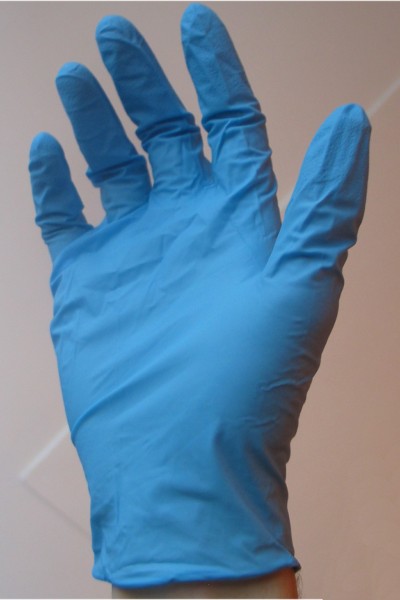
Blue nitrile glove on a hand (Source: Wikimedia Commons)
Selecting gloves with the right material and specifications ensures safety and efficiency in fabric decoration. Kenyan fashion designers must consider factors such as chemical resistance, comfort, and tactile sensitivity when choosing gloves.
| Name | Specification | Use |
|---|---|---|
| Cotton Gloves | 100% cotton, breathable, lightweight | Handling delicate fabrics, embroidery |
| Latex Gloves | Natural rubber, powder-free | Dye application, fabric painting |
| Nitrile Gloves | Synthetic rubber, chemical resistant | Handling solvents, adhesives |
| PVC Gloves | Polyvinyl chloride, thick, durable | Screen printing, batik wax application |
| Leather Gloves | Treated leather, tough, thick | Cutting, embossing, heavy-duty handling |
Gloves play a critical role in protecting the hands of fashion designers and artisans from hazards encountered during fabric decoration. In Kenya, where many designers work with natural dyes, chemicals, and sharp tools, gloves reduce health risks and improve work quality.
Proper application and maintenance of gloves are vital to maximize their protective function and prolong their usability. Fashion designers in Kenya must adopt best practices to ensure gloves serve their purpose effectively without compromising comfort or dexterity.
| Name | Specification | Use |
|---|---|---|
| Cotton Gloves | 100% cotton, breathable, lightweight | Handling delicate fabrics, embroidery |
| Latex Gloves | Natural rubber, powder-free | Dye application, fabric painting |
| Nitrile Gloves | Synthetic rubber, chemical resistant | Handling solvents, adhesives |
| PVC Gloves | Polyvinyl chloride, thick, durable | Screen printing, batik wax application |
| Leather Gloves | Treated leather, tough, thick | Cutting, embossing, heavy-duty handling |
Explain five key design considerations for producing decorated face masks suitable for the Kenyan market. (10 marks)
Describe six techniques used in decorating fabric face masks and discuss their suitability for different types of fabric. (12 marks)
List and explain five quality control measures necessary to ensure the safety and durability of decorated face masks. (10 marks)
Identify the equipment required for face mask decoration and explain how to maintain them effectively. (8 marks)
Create a free account to open more of this chapter.
Free: practical guides, quick cards, workplace scenarios and more.
Create a free accountThis chapter covered the essential personal protective equipment required for safe fabric decoration, including aprons, dust coats, face masks, safety shoes, and gloves, each safeguarding workers from specific hazards during the process. It then detailed the preparation of decoration ingredients necessary to achieve quality results. Proper fabric preparation was explained, highlighting the importance of stain removal, crease removal, and fabric wetting to ensure optimal decoration surfaces. Techniques such as bleaching and scouring were emphasized for cleaning and preparing fabric fibers before decoration. The chapter concluded with practical methods of fabric decoration, focusing on tie and dye and printing techniques, which add color and design to textiles effectively. Understanding and applying these steps ensures both safety and high-quality finished products in fabric decoration.
Type: Individual
| Tools & Equipment | Materials |
|---|---|
| Dust coat | |
| Flat closed safety shoes | |
| Face mask | |
| Protective gloves | |
| Apron |
| S/N | Item | Quantity |
|---|---|---|
| 1 | Dust coat | 1 Pc per Candidate |
| 2 | Flat closed safety shoes | 1 Pair per Candidate |
| 3 | Face mask | 1 Pc per Candidate |
| 4 | Protective gloves | 1 Pair per Candidate |
| 5 | Apron | 1 Pc per Candidate |
| Items to be Evaluated | Marks Available | Marks Obtained | Comments |
|---|---|---|---|
| TASK 1: Identification and Proper Use of Personal Protective Equipment | |||
| Identified and selected dust coat (Award 1 mark for correct selection and use) | 1 | ||
| Identified and selected flat closed safety shoes (Award 1 mark for correct selection and use) | 1 | ||
| Identified and selected face mask (Award 1 mark for correct selection and use) | 1 | ||
| Identified and selected protective gloves (Award 1 mark for correct selection and use) | 1 | ||
| Identified and selected apron (Award 1 mark for correct selection and use) | 1 | ||
| Wore all PPE correctly before starting fabric decoration (Award 2 marks for proper wearing and fit) | 2 | ||
| Observed occupational safety and health requirements (well-lit and well-ventilated working area) (Award 1 mark each for well-lit and well-ventilated room) | 2 | ||
| Sub-Total | 9 | ||
| PRODUCT CHECKLIST | |||
| Properly worn personal protective equipment with all items correctly fitted and secured (Award up to 6 marks based on correctness, neatness, and safety compliance) | 6 | ||
| Sub-Total | 6 | ||
| GRAND TOTAL | 15 | ||
Type: Individual
| Tools & Equipment | Materials |
|---|---|
| Personal protective equipment (dust coat, gloves, nose mask) | Sodium hydrosulphite powder |
| Table spoon | Sodium hydroxide pellets |
| Artist brushes | Paraffin wax |
| Measuring cylinder (100 ml capacity) | Beeswax |
| Mixing basins (plastic, 1 litre capacity) | Manila paper (50cm by 50cm) |
| Heat source (gas stove or electric hotplate) | Old newspapers |
| Duct tape | Cotton fabric (plain white, 50cm by 50cm) |
| Pencil |
| S/N | Item | Quantity |
|---|---|---|
| 1 | Personal protective equipment (dust coat, gloves, nose mask) | 1 set per Candidate |
| 2 | Sodium hydrosulphite powder | 50 grams per Candidate |
| 3 | Sodium hydroxide pellets | 30 grams per Candidate |
| 4 | Paraffin wax | 100 grams per Candidate |
| 5 | Beeswax | 50 grams per Candidate |
| 6 | Manila paper (50cm by 50cm) | 2 sheets per Candidate |
| 7 | Table spoon | 1 per Candidate |
| 8 | Artist brushes | 2 per Candidate |
| 9 | Old newspapers | 5 sheets per Candidate |
| 10 | Measuring cylinder (100 ml capacity) | 1 per Candidate |
| 11 | Heat source (gas stove or electric hotplate) | 1 per 3 Candidates |
| 12 | Mixing basins (plastic, 1 litre capacity) | 1 per Candidate |
| 13 | Cotton fabric (plain white, 50cm by 50cm) | 1 piece per Candidate |
| 14 | Duct tape | 1 roll per 5 Candidates |
| 15 | Pencil | 1 per Candidate |
| Items to be Evaluated | Marks Available | Marks Obtained | Comments |
|---|---|---|---|
| TASK 1: Identification and Use of Personal Protective Equipment | |||
| Identified and wore dust coat (Award 1 mark for wearing dust coat correctly) | 1 | ||
| Used gloves appropriately (Award 1 mark for using gloves correctly) | 1 | ||
| Wore nose mask correctly (Award 1 mark for wearing nose mask correctly) | 1 | ||
| Sub-Total | 3 | ||
| TASK 2: Preparation of Sodium Hydrosulphite and Sodium Hydroxide Solutions | |||
| Measured 50 grams of sodium hydrosulphite accurately (Award 2 marks for correct measurement and handling) | 2 | ||
| Measured 30 grams of sodium hydroxide pellets accurately (Award 2 marks for correct measurement and handling) | 2 | ||
| Dissolved chemicals in clean water following safety procedures (Award 3 marks for correct mixing and safety adherence) | 3 | ||
| Sub-Total | 7 | ||
| TASK 3: Preparation of Wax Mixture for Fabric Decoration | |||
| Measured 100 grams paraffin wax and 50 grams beeswax (Award 2 marks for accurate measurement) | 2 | ||
| Melted wax mixture safely using heat source (Award 3 marks for safe and correct melting procedure) | 3 | ||
| Prepared wax mixture ready for application (Award 2 marks for readiness and correct consistency) | 2 | ||
| Sub-Total | 7 | ||
| TASK 4: Preparation of Working Surface and Materials | |||
| Prepared manila paper stencil according to instructions (Award 2 marks for neatness and accuracy) | 2 | ||
| Prepared cotton fabric by ironing and laying flat (Award 2 marks for fabric readiness) | 2 | ||
| Organized tools and materials on working surface (Award 2 marks for neat and accessible organization) | 2 | ||
| Sub-Total | 6 | ||
| PRODUCT CHECKLIST | |||
| Accurate preparation of 500 ml batik dye solution with correct chemical proportions (Award 5 marks for correct volume and chemical ratios) | 5 | ||
| Wax mixture melted to correct consistency suitable for fabric application (Award 5 marks for correct wax texture and readiness) | 5 | ||
| Prepared stencil and fabric ready for decoration with no defects (Award 5 marks for neatness and preparation quality) | 5 | ||
| Sub-Total | 15 | ||
| GRAND TOTAL | 38 | ||