
Fabric decoration is an essential skill for fashion design professionals in Kenya, where creativity and craftsmanship define market competitiveness. Techniques such as batik and embroidery transform plain textiles into unique fashion statements, enhancing garment appeal and value. However, these processes involve handling various chemicals, dyes, and sharp tools, making safety a critical concern. This chapter focuses on the personal protective equipment (PPE) necessary to ensure safe and efficient fabric decoration practices in professional fashion environments.
The use of personal protective equipment (PPE) is a fundamental aspect of workplace safety in fabric decoration, particularly in batik and embroidery. In Kenyan fashion studios and textile workshops, proper PPE protects designers and artisans from hazards such as chemical exposure, needle injuries, and repetitive strain. Understanding the types, selection criteria, and maintenance of PPE is crucial for sustaining health and productivity.
Identifying appropriate PPE for batik and embroidery activities is vital to minimize risks associated with these crafts. The nature of tasks, from applying hot wax in batik to handling embroidery needles and threads, demands specific protective gear.
Gloves: Essential for protecting hands from hot wax in batik and from needle pricks during embroidery. Nitrile gloves are preferred for chemical resistance, while cotton gloves may be used for delicate handwork.
Aprons: Used to shield clothing and skin from stains caused by dyes, wax, and embroidery threads. Heavy-duty cotton or waterproof aprons are common in busy workshops.
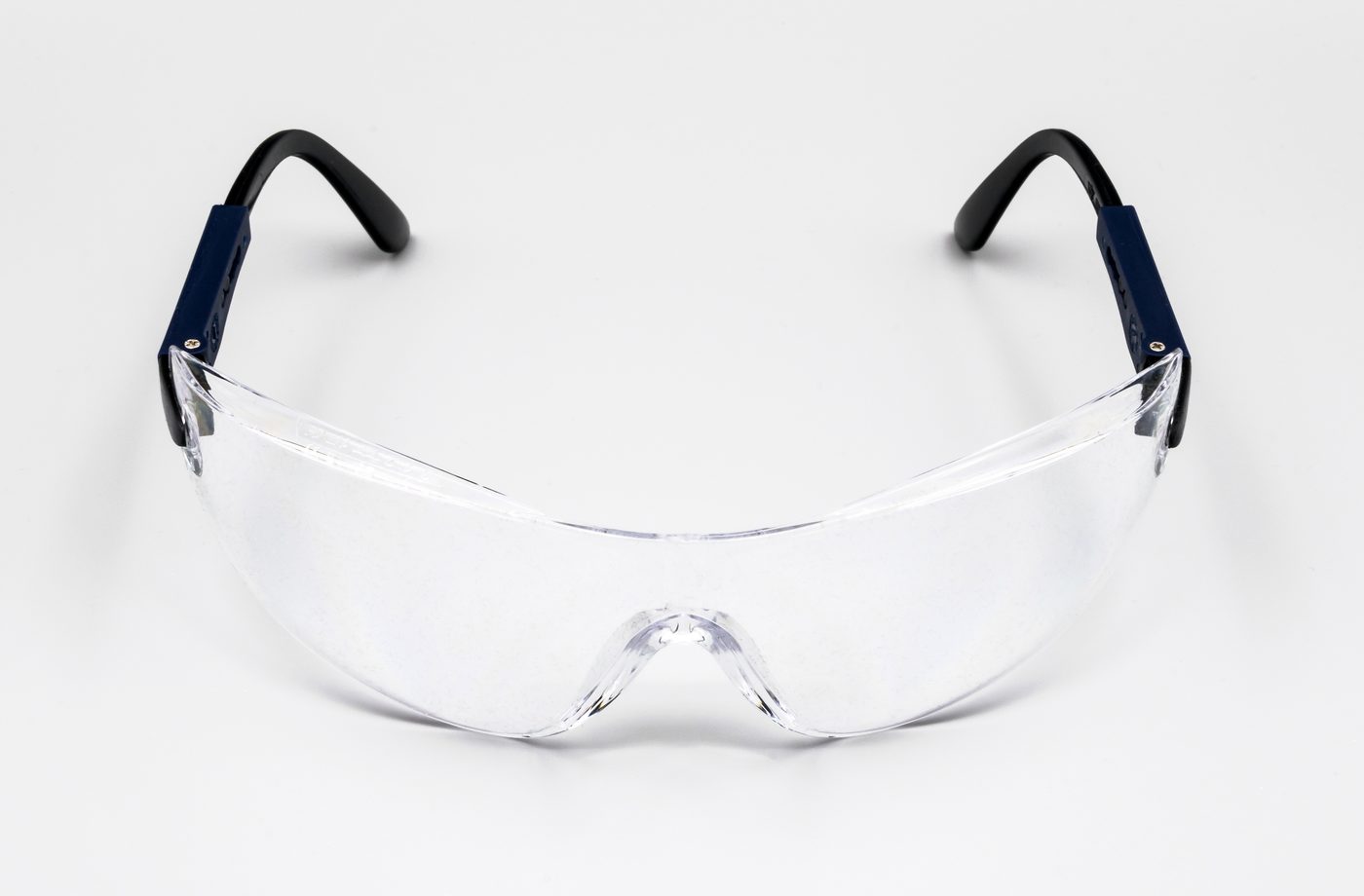
clear safety glasses for eye protection (Source: Wikimedia Commons)
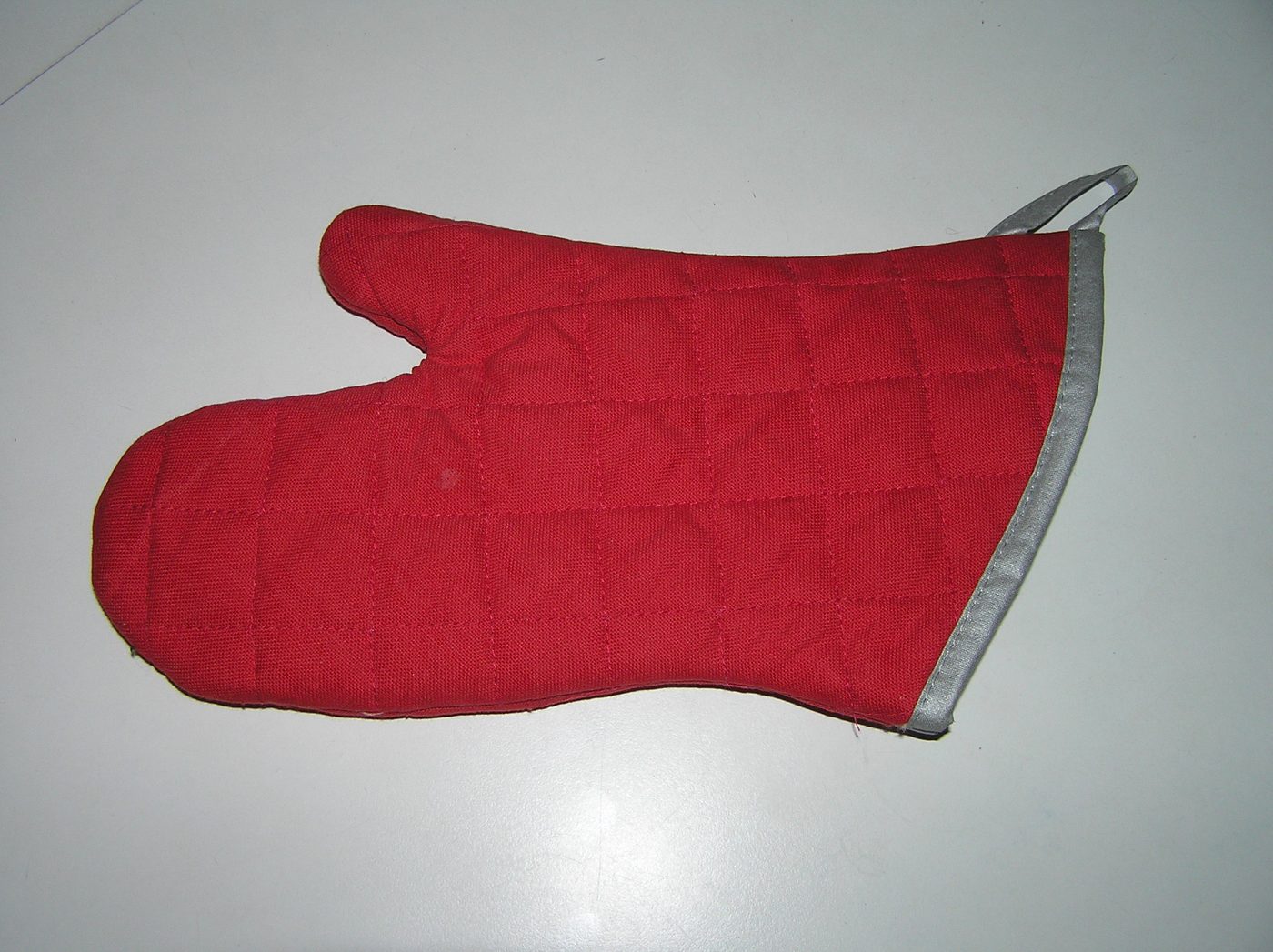
red heat-resistant glove for handling hot objects (Source: Wikimedia Commons)
Choosing the right PPE involves assessing the specific hazards present in batik and embroidery processes and matching equipment to those risks. In Kenyan fashion workshops, cost, availability, and comfort also influence PPE selection.
Even the best PPE fails if not used or maintained correctly. Kenyan fashion designers and artisans must be trained on proper PPE protocols to maximize protection and equipment lifespan.
The consistent use of PPE in batik and embroidery significantly reduces occupational hazards, contributing to a safer and more productive working environment in Kenyan fashion industries.
Create a free account to open more of this chapter.
Free: practical guides, quick cards, workplace scenarios and more.
Create a free accountThis chapter explored the essential personal protective equipment required for safe handling during fabric decoration, emphasizing the importance of safeguarding oneself from potential hazards. It then covered the crucial steps involved in fabric preparation, including cleaning and ironing to ensure the fabric is ready for decoration processes. Various methods of fabric decoration were examined, highlighting techniques such as batik and embroidery that enhance the aesthetic appeal of textiles. The chapter also addressed the accurate cutting of garment pattern pieces, a fundamental skill that ensures pieces fit together correctly during garment construction. Together, these topics provide a comprehensive understanding of the practical and safety considerations necessary to carry out effective fabric decoration. The knowledge gained supports both creative expression and technical precision in textile work.
Type: Individual
| Tools & Equipment | Materials |
|---|---|
| Iron box | Plain cotton fabric (1000mm x 350mm) |
| Plastic basin or bucket | Detergent |
| Drying line or drying rack | Water |
| Personal Protective Equipment (Dust coat/Apron, Nose mask, Hand gloves, Closed shoes) |
| S/N | Item | Quantity |
|---|---|---|
| 1 | Plain cotton fabric (1000mm x 350mm) | 1 Pc per Candidate |
| 2 | Detergent (liquid or powder) | 100 ml per Candidate |
| 3 | Water (clean, for washing) | As required per Candidate |
| 4 | Iron box | 1 Pc per Candidate |
| 5 | Drying line or drying rack | 1 Pc per Candidate |
| 6 | Plastic basin or bucket | 1 Pc per Candidate |
| 7 | Personal Protective Equipment (Dust coat/Apron, Nose mask, Hand gloves, Closed shoes) | 1 Set per Candidate |
| Items to be Evaluated | Marks Available | Marks Obtained | Comments |
|---|---|---|---|
| TASK 1: Fabric Preparation | |||
| Identified and wore appropriate personal protective equipment (Dust coat/Apron, Nose mask, Hand gloves, Closed shoes) (Award 1 mark for each correctly identified and used PPE) | 4 | ||
| Prepared washing area ensuring sufficient water and detergent availability (Award 2 marks for proper preparation of washing area) | 2 | ||
| Washed the fabric thoroughly removing dirt and stains (Award 3 marks for thorough washing as per procedure) | 3 | ||
| Rinsed the fabric properly to remove detergent residues (Award 2 marks for proper rinsing) | 2 | ||
| Dried the fabric adequately using a drying line or rack under shade (Award 3 marks for proper drying technique) | 3 | ||
| Ironed the fabric evenly without damaging it (Award 4 marks for proper ironing technique and fabric readiness) | 4 | ||
| Sub-Total | 18 | ||
| PRODUCT CHECKLIST | |||
| Fabric is clean, free from stains and detergent residues (Award 2 marks for cleanliness) | 2 | ||
| Fabric is dry, flat, and wrinkle-free after drying and ironing (Award 3 marks for drying and ironing quality) | 3 | ||
| Fabric dimensions maintained approximately 1000mm by 350mm without distortion (Award 2 marks for dimension and shape retention) | 2 | ||
| Sub-Total | 7 | ||
| GRAND TOTAL | 25 | ||
Type: Individual
| Tools & Equipment | Materials |
|---|---|
| Tjanting tool | Plain cotton fabric |
| Sisal brushes | Paraffin wax |
| Iron box | Bee wax |
| Plastic basin | VAT dyes |
| Sufuria | Brown papers or Newspapers |
| Measuring jar | Detergent |
| Tablespoon | Sodium hydrosulphite |
| Stirring rod | Caustic soda |
| Stencil knife | Manilla paper |
| Masking tape | Carbon paper |
| A4 envelope | |
| Personal Protective Equipment |
| S/N | Item | Quantity |
|---|---|---|
| 1 | Plain cotton fabric (approx. 100 cm long x 35 cm wide) | 1 piece per candidate |
| 2 | Paraffin wax | 100 g per candidate |
| 3 | Bee wax | 100 g per candidate |
| 4 | VAT dyes | 50 g per candidate |
| 5 | Brown papers or Newspapers | 4 sheets per candidate |
| 6 | Detergent | 150 ml per candidate |
| 7 | Sodium hydrosulphite (Hydros) | 50 g per candidate |
| 8 | Caustic soda (sodium hydroxide) | 50 g per candidate |
| 9 | Manilla paper | 1 sheet per candidate |
| 10 | Carbon paper | 1 sheet per candidate |
| 11 | Masking tape (small) | 1 piece per candidate |
| 12 | A4 envelope | 1 piece per candidate |
| 13 | Tjanting tool | 1 piece per candidate |
| 14 | Sisal brushes | 1 piece per candidate |
| 15 | Iron box | 1 piece per 10 candidates |
| 16 | Plastic basin/small bucket | 1 piece per candidate |
| 17 | Sufuria or metallic saucepan | 1 piece per 10 candidates |
| 18 | Measuring jar | 1 piece per 10 candidates |
| 19 | Tablespoon/measuring cups | 3 pieces per 10 candidates |
| 20 | Stirring rod | 1 piece per 10 candidates |
| 21 | Heat source (jiko/gas stove) | 1 piece per 10 candidates |
| 22 | Personal Protective Equipment (dust coat, nose mask, gloves, flat closed shoes) | 1 set per candidate |
| Items to be Evaluated | Marks Available | Marks Obtained | Comments |
|---|---|---|---|
| TASK 1: Preparation and PPE | |||
| Identified and correctly wore personal protective equipment (dust coat, gloves, nose mask, flat closed shoes) (Award 1 mark each for correct PPE usage) | 4 | ||
| Ensured work area was well ventilated and well lit for safe handling of hot wax and chemicals (Award 3 marks for observing OSH requirements) | 3 | ||
| Sub-Total | 7 | ||
| TASK 2: Preparation of motif and stencil | |||
| Identified and obtained required tools and materials for batik wax application (Award 0.5 marks each for correct tools and materials) | 4 | ||
| Prepared motif on manilla paper accurately with clear tracing using carbon paper and pencil (Award 3 marks for clear and accurate motif preparation) | 3 | ||
| Cut stencil carefully and shaped it appropriately to fit fabric dimensions (Award 3 marks for neat stencil cutting and safety observance) | 3 | ||
| Sub-Total | 10 | ||
| TASK 3: Fabric preparation and wax application | |||
| Ironed the fabric thoroughly before decoration (Award 1 mark for properly ironed fabric) | 1 | ||
| Placed fabric flat and positioned stencil correctly on fabric (Award 2 marks for correct positioning and securing of stencil) | 2 | ||
| Placed brown paper or newspapers underneath fabric before waxing (Award 1 mark for proper protective layering) | 1 | ||
| Melted wax safely and applied hot wax accurately on the cut-out stencil areas using tjanting or sisal brush (Award 5 marks for correct wax melting and application technique) | 5 | ||
| Prepared dye solution with correct chemical measures and procedure (Award 3 marks for proper dye solution preparation) | 3 | ||
| Dipped waxed fabric into dye bath for 15-20 minutes and handled dyeing process correctly (Award 3 marks for proper dyeing and timing) | 3 | ||
| Cracked wax by dipping fabric in cold water and handled oxidation and rinsing as per procedure (Award 3 marks for correct cracking, oxidizing and rinsing) | 3 | ||
| Sub-Total | 18 | ||
| TASK 4: Finishing and packaging | |||
| Dewaxed fabric by pressing between newspapers or brown paper and ironed on wrong side with warm iron (Award 2 marks for correct dewaxing and finishing) | 2 | ||
| Finished edges neatly and professionally (Award 1 mark for neat finishing) | 1 | ||
| Packaged decorated fabric in A4 envelope properly (Award 2 marks for proper packaging) | 2 | ||
| Cleared workstation by disposing chemical wastes safely and cleaned tools and work area (Award 2 marks for proper cleanup) | 2 | ||
| Sub-Total | 7 | ||
| PRODUCT CHECKLIST | |||
| Finished batik fabric matches specified dimensions (1000mm x 350mm) and pattern clarity (Award 2 marks for correct dimensions and clear pattern) | 2 | ||
| Even colour distribution with good colour intensity and visible crackle effect (Award 2 marks for colour quality and crackle effect) | 2 | ||
| Design is crisp without smudges or blurs, showing creativity and neatness (Award 2 marks for design clarity and creativity) | 2 | ||
| Fabric is well pressed, neatly folded, and presented cleanly in envelope (Award 2 marks for presentation quality) | 2 | ||
| Sub-Total | 8 | ||
| GRAND TOTAL | 50 | ||