
By the end of this chapter, you will be able to:
Mastering these skills helps you work safely and confidently, creating beautiful fabric decorations that meet professional standards.
Fabric decoration is a vital aspect of fashion design, adding aesthetic value and uniqueness to textile products. In Kenya, where cultural motifs and contemporary styles blend, fabric decoration techniques such as batik and embroidery are widely practiced to create distinctive fashion statements. Effective planning for fabric decoration ensures the desired quality, safety, and efficiency in production. This chapter focuses on the essential preparatory steps, beginning with the use of personal protective equipment (PPE), which safeguards artisans during the decoration process.
Personal protective equipment (PPE) plays a crucial role in safeguarding fashion designers and fabric decorators from hazards associated with the materials and tools used in batik and embroidery. In Kenyan workshops and studios, proper PPE use enhances occupational safety, minimizes health risks, and promotes compliance with workplace safety regulations. Understanding the types, correct usage, and maintenance of PPE is foundational to professional fabric decoration planning.
The selection of appropriate PPE depends on the specific hazards present during batik and embroidery activities. In Kenyan fashion design environments, the following PPE types are commonly employed:
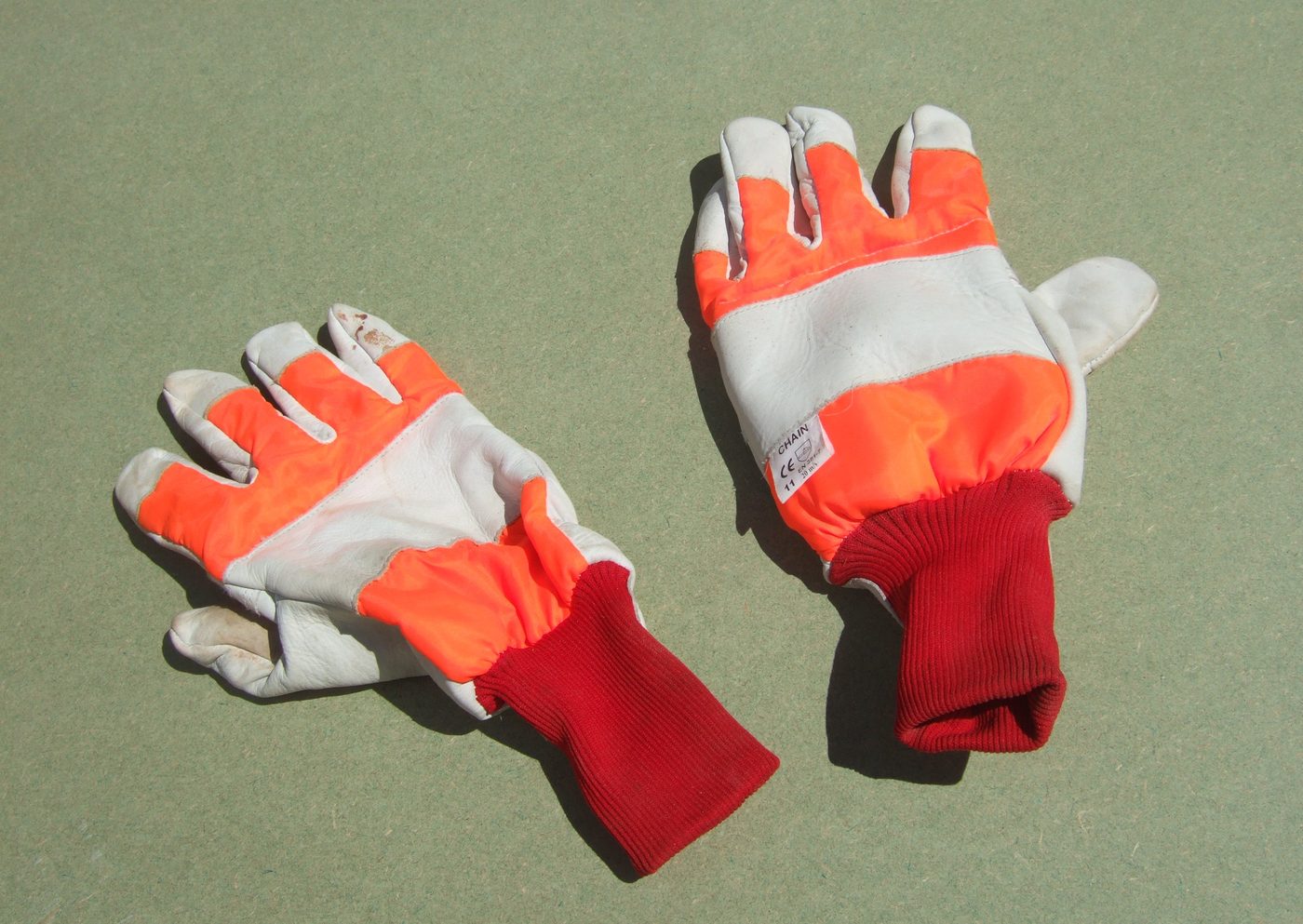
A pair of protective gloves (Source: Wikimedia Commons)
Each type of PPE is selected based on the specific task and hazard assessment to ensure comprehensive protection in Kenyan fashion studios and production units.
Proper use and fitting of PPE are essential to maximize protection and avoid creating new hazards. In practice, Kenyan fabric decorators must adhere to the following principles:
Training on correct PPE use should be integrated into workshop inductions at institutions such as universities and fashion training centers to ensure all decorators practice safety consistently.
Maintaining PPE in good condition extends its protective function and ensures the safety of fabric decorators. In Kenyan fashion design settings, the following practices are recommended:
Proper storage of PPE in clean, dry areas away from direct sunlight or chemicals prevents premature deterioration and contamination.
Compliance with occupational safety laws ensures that fashion design workplaces meet minimum safety standards protecting workers. The Kenyan Occupational Safety and Health Act (OSHA) mandates employers to provide suitable PPE and enforce its use. Key regulatory points include:
Explain five types of personal protective equipment essential for fabric decoration and their specific uses. (10 marks)
Describe six steps Kenyan fabric decorators should follow to ensure correct fitting and use of PPE. (12 marks)
Discuss five maintenance practices necessary to keep PPE effective in a fashion design workshop. (10 marks)
Outline five legal requirements related to PPE use under Kenyan occupational safety laws. (10 marks)
Create a free account to open more of this chapter.
Free: practical guides, quick cards, workplace scenarios and more.
Create a free accountThis chapter explored the essential personal protective equipment necessary for safe fabric decoration work, emphasizing the importance of safeguarding oneself during various processes. It then examined the range of embroidery tools and equipment, highlighting their specific functions in creating detailed fabric designs. The chapter also detailed the proper use, care, and storage of fabric decoration tools and equipment to maintain their effectiveness and longevity. Attention was given to the different materials and supplies required for fabric decoration, explaining how they influence the quality and appearance of the finished product. Furthermore, the chapter discussed fabric decoration designs, focusing on how creativity and planning contribute to successful decorative outcomes. Finally, it covered clothing construction tools and equipment, underscoring their role in assembling decorated fabrics into finished garments. Together, these topics provide a comprehensive understanding of planning and executing fabric decoration projects professionally and efficiently.
Which of the following is NOT considered appropriate personal protective equipment (PPE) when carrying out fabric decoration?
a) Gloves
b) Safety goggles
c) Ear plugs
d) Apron
(2 marks)
List four essential embroidery tools used in fabric decoration and briefly describe the purpose of each. (4 marks)
Type: Individual
| Tools & Equipment | Materials |
|---|---|
| Embroidery needles | Dust coat |
| Embroidery hoops | Flat closed shoes |
| Tailor's chalk | Nose mask |
| Scissors (fabric and thread) | Hand gloves |
| Measuring tape | |
| Thimble | |
| Pins and pin cushion | |
| Iron box | |
| Ironing board | |
| Plastic basin | |
| Storage box for tools |
| S/N | Item | Quantity |
|---|---|---|
| 1 | Embroidery needles | 3 Pcs per Candidate |
| 2 | Embroidery hoops | 1 Pc per Candidate |
| 3 | Tailor's chalk | 1 Pc per Candidate |
| 4 | Scissors (fabric and thread) | 2 Pcs per Candidate |
| 5 | Measuring tape | 1 Pc per Candidate |
| 6 | Thimble | 1 Pc per Candidate |
| 7 | Pins and pin cushion | 20 Pcs pins + 1 Pc cushion per Candidate |
| 8 | Iron box | 1 Pc per 5 Candidates |
| 9 | Ironing board | 1 Pc per 5 Candidates |
| 10 | Dust coat | 1 Pc per Candidate |
| 11 | Flat closed shoes | 1 Pair per Candidate |
| 12 | Nose mask | 1 Pc per Candidate |
| 13 | Hand gloves | 1 Pair per Candidate |
| 14 | Plastic basin | 1 Pc per Candidate |
| 15 | Storage box for tools | 1 Pc per Candidate |
| Items to be Evaluated | Marks Available | Marks Obtained | Comments |
|---|---|---|---|
| TASK 1: Identification and Use of Personal Protective Equipment (PPE) | |||
| Identified and wore dust coat appropriately (Award 1 mark if worn correctly) | 1 | ||
| Wore flat closed shoes (Award 1 mark if worn correctly) | 1 | ||
| Wore nose mask (Award 1 mark if worn correctly) | 1 | ||
| Wore hand gloves (Award 1 mark if worn correctly) | 1 | ||
| Sub-Total | 4 | ||
| TASK 2: Inspection and Preparation of Embroidery Tools and Equipment | |||
| Identified all required embroidery tools as per list (Award 1/2 mark for each correct tool identified) | 2 | ||
| Inspected tools for defects or damage (Award 2 marks if all tools inspected properly) | 2 | ||
| Prepared embroidery needles by threading and placing in pin cushion (Award 1 mark if done correctly) | 1 | ||
| Set up embroidery hoop and checked fabric fit (Award 1 mark if hoop set properly) | 1 | ||
| Used tailor's chalk to mark fabric correctly (Award 1 mark if marking is clear and appropriate) | 1 | ||
| Sub-Total | 7 | ||
| TASK 3: Inspection and Preparation of Clothing Construction Tools and Equipment | |||
| Identified all clothing construction tools as per list (Award 1/2 mark for each correct tool identified) | 2 | ||
| Checked scissors for sharpness and cleanliness (Award 1 mark if scissors inspected properly) | 1 | ||
| Checked measuring tape for accuracy and condition (Award 1 mark if tape inspected properly) | 1 | ||
| Prepared iron box and ironing board for use (Award 1 mark if iron and board are ready and safe to use) | 1 | ||
| Demonstrated proper care by cleaning and storing tools in storage box (Award 2 marks if tools cleaned and stored neatly) | 2 | ||
| Sub-Total | 7 | ||
| TASK 4: Observance of Occupational Safety and Health (OSH) Requirements | |||
| Ensured work area was well-lit (Award 1 mark if lighting adequate) | 1 | ||
| Ensured work area was well-ventilated (Award 1 mark if ventilation adequate) | 1 | ||
| Handled tools safely and avoided hazards (Award 2 marks for consistent safe handling) | 2 | ||
| Sub-Total | 4 | ||
| PRODUCT CHECKLIST | |||
| All embroidery and clothing construction tools identified and prepared correctly (Award 3 marks if all tools are correct and ready for use) | 3 | ||
| Tools cleaned and stored properly in the storage box (Award 2 marks if tools stored neatly and correctly) | 2 | ||
| PPE used correctly and maintained throughout the task (Award 2 marks if PPE usage is consistent and correct) | 2 | ||
| Sub-Total | 7 | ||
| GRAND TOTAL | 29 | ||
Type: Individual
| Tools & Equipment | Materials |
|---|---|
| Tjanting tool | Plain cotton fabric 100 cm x 35 cm |
| Sisal brushes | Paraffin wax |
| Iron box | Bee wax |
| Plastic basin | VAT dyes |
| Sufuria or saucepan | Brown paper or Newspapers |
| Measuring jar | Detergent |
| Tablespoon/measuring cups | Sodium hydrosulphite |
| Stirring rod | Caustic soda |
| Stencil knife | Manilla paper |
| Carbon paper | |
| Tailor's chalk | |
| Pencil | |
| Masking tape | |
| A4 Envelope | |
| Personal Protective Equipment (Dust coat, Nose mask, Hand gloves, Flat closed shoes) |
| S/N | Item | Quantity |
|---|---|---|
| 1 | Plain cotton fabric 100 cm long x 35 cm wide | 1 piece per Candidate |
| 2 | Paraffin wax | 150 grams per Candidate |
| 3 | Bee wax | 150 grams per Candidate |
| 4 | VAT dyes | 100 grams per Candidate |
| 5 | Brown paper or Newspapers | 4 pieces per Candidate |
| 6 | Detergent (liquid or bar soap) | 100 ml per Candidate |
| 7 | Sodium hydrosulphite (Hydro's) | 100 grams per Candidate |
| 8 | Caustic soda (sodium hydroxide) | 100 grams per Candidate |
| 9 | Manilla paper or thin straw board | 1 piece per Candidate |
| 10 | Carbon paper | 1 piece per Candidate |
| 11 | Tailor's chalk | 1 piece per Candidate |
| 12 | Pencil | 1 piece per Candidate |
| 13 | Masking tape (small) | 1 piece per Candidate |
| 14 | A4 Envelope | 1 piece per Candidate |
| 15 | Tjanting tool | 1 piece per Candidate |
| 16 | Sisal brushes | 1 piece per Candidate |
| 17 | Iron box | 1 piece per 10 Candidates |
| 18 | Plastic basin or small bucket | 1 piece per Candidate |
| 19 | Sufuria or saucepan (metallic tin) | 1 piece per 10 Candidates |
| 20 | Measuring jar | 1 piece per Candidate |
| 21 | Tablespoon/measuring cups | 3 pieces per Candidate |
| 22 | Stirring rod | 1 piece per Candidate |
| 23 | Stencil knife | 1 piece per Candidate |
| 24 | Personal Protective Equipment (Dust coat, Nose mask, Hand gloves, Flat closed shoes) | 1 set per Candidate |
| Items to be Evaluated | Marks Available | Marks Obtained | Comments |
|---|---|---|---|
| TASK 1: Identification and preparation of materials and supplies | |||
| Identified and wore appropriate personal protective equipment (dust coat, nose mask, hand gloves, flat closed shoes) (Award 1 mark each for correct PPE use) | 4 | ||
| Ensured work area is well ventilated and well lit according to occupational safety and health requirements (Award 1.5 marks each for ventilation and lighting) | 3 | ||
| Identified and obtained all required tools and equipment according to standard operating procedures (Award 0.5 mark for each correctly identified tool/equipment) | 5 | ||
| Identified and obtained all required materials and supplies for batik decoration correctly (Award 0.5 mark for each correctly identified material/supply) | 5 | ||
| Prepared the fabric by ironing and setting it ready for decoration (Award 2 marks for correct fabric preparation) | 2 | ||
| Prepared motif and stencil using manilla paper and carbon paper, ensuring accurate tracing and cutting (Award 2 marks for accurate motif preparation and stencil cutting) | 2 | ||
| Prepared wax mixture correctly and melted wax safely according to safety standards (Award 3 marks for correct wax preparation and safety observance) | 3 | ||
| Sub-Total | 24 | ||
| PRODUCT CHECKLIST | |||
| Materials and supplies are correctly selected, sufficient, and prepared as per the task instruction and SOPs (Award up to 6 marks for completeness, correctness and readiness of materials and supplies) | 6 | ||
| Fabric is properly prepared for decoration (ironed, clean, wrinkle-free) (Award 4 marks for fabric preparation quality) | 4 | ||
| Motif and stencil are accurately prepared with clear tracing and clean cutting (Award 5 marks for precision and neatness of motif and stencil) | 5 | ||
| Wax mixture is correctly prepared and safely handled (Award 5 marks for wax preparation and safety compliance) | 5 | ||
| Sub-Total | 20 | ||
| GRAND TOTAL | 44 | ||
At the start of this chapter we promised you would be able to:
Tick each one you can genuinely do.
So, are you there yet?
You're competent when you can confidently do 50% or more of what this chapter promised.
Sign in to record how you're doing.