Fashion Design  ·  Level 4
Basic Gents' Garments Construction
Chapter 2: Develop freehand garment pattern pieces
📚 2 Topics
⚑ What you will be able to do

By the end of this chapter, you will be able to:

  • Identify and gather all the necessary tools and equipment for freehand pattern drafting.
  • Draft basic freehand garment patterns accurately according to job requirements.
  • Develop basic freehand garment pattern pieces correctly to meet design specifications.

Mastering these skills will help you create custom garment patterns confidently, setting a strong foundation for quality tailoring in your trade.

Compiled by: John Karanja

Pattern development is a foundational skill for fashion designers specializing in gents' garments. Mastery of freehand drafting enables designers to translate garment measurements and design ideas directly onto paper without relying solely on pre-existing templates or computerized systems. This skill is particularly valuable in Kenya’s dynamic fashion industry, where bespoke tailoring and custom designs are in high demand across Nairobi’s retail boutiques and upcountry tailoring shops. Learning to use the correct tools and equipment efficiently ensures accuracy, speed, and professionalism in creating garment patterns that fit well and reflect current fashion trends.

2.1 Drafting basic free hand patterns

Freehand drafting tools and equipment

In the Kenyan fashion design context, selecting the right tools for freehand drafting is crucial for producing precise patterns that meet client specifications and industry standards. Tailors and designers working in garment factories or bespoke tailoring studios in counties like Kiambu and Mombasa rely on these tools daily to draft patterns for shirts, trousers, and jackets. Proper knowledge of these implements not only improves the quality of work but also enhances productivity and reduces material wastage.

Essential Tools for Freehand Drafting

Freehand drafting requires a set of specialized tools designed to aid in drawing straight and curved lines, measuring accurately, and marking fabric or paper. Each tool serves a distinct purpose but collectively forms the backbone of effective pattern making.

Name Specification Use
Tailor’s Chalk Triangular shape, white or coloured Marking fabric without permanent damage
L-Square Ruler Metal or plastic, 60 cm length Drawing perpendicular and straight lines
French Curve Plastic, flexible or rigid Drawing smooth curves for armholes and necks
Measuring Tape Flexible, 150 cm length Taking body and fabric measurements
Pattern Paper Large sheets, 90-120 gsm weight Drafting garment patterns
  • Tailor’s Chalk is indispensable for marking pattern outlines and adjustment points on fabric during cutting and fitting, enabling clear visibility without leaving permanent marks.
  • L-Square Ruler helps in creating precise right angles, essential when drafting bodice blocks or trouser waistlines to maintain garment symmetry.
  • French Curve is used to draft and refine curved lines such as armholes, necklines, and sleeve caps, ensuring a smooth, natural shape that fits the human body.
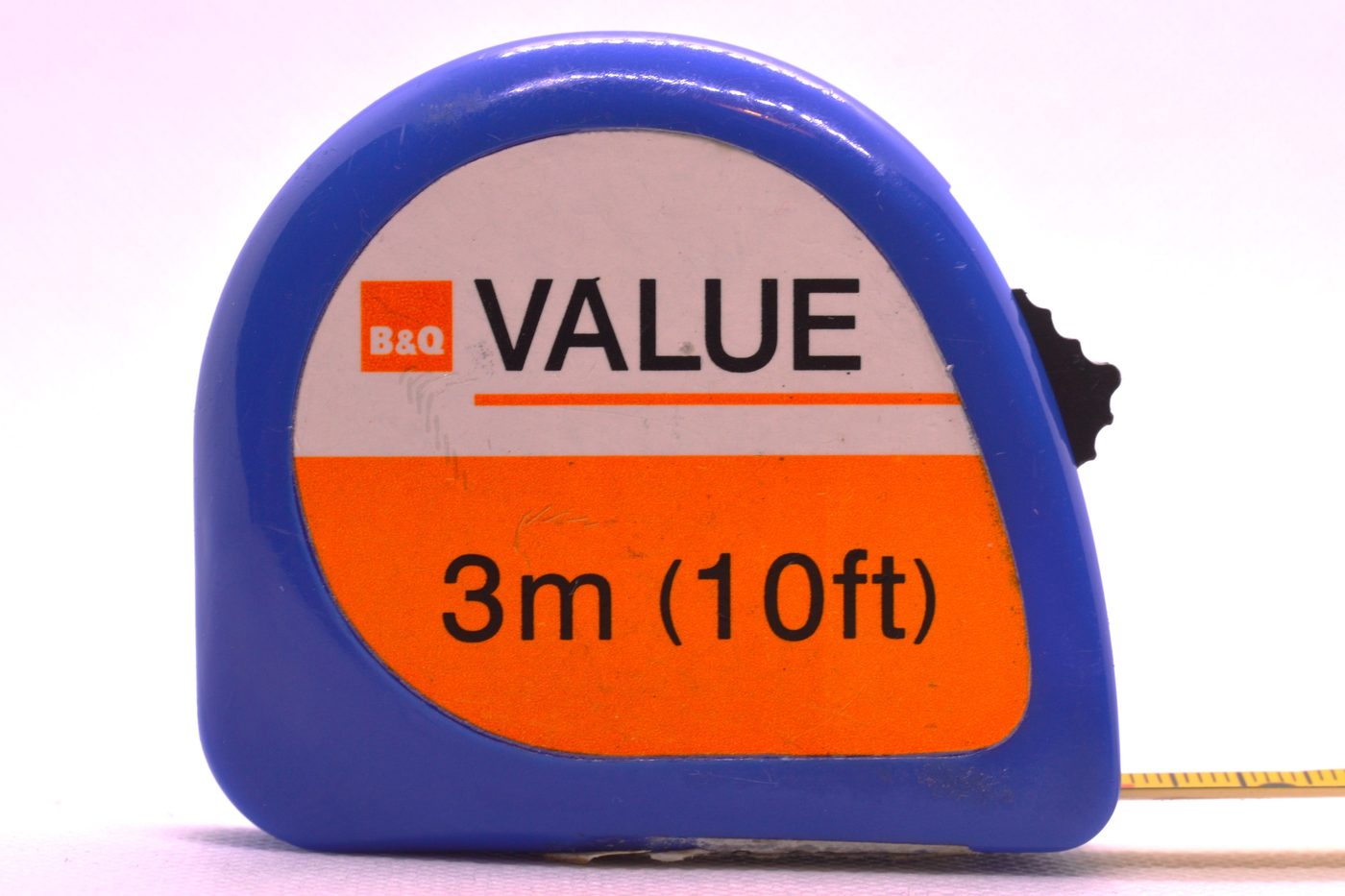
  • Measuring Tape is flexible and can contour the body, allowing accurate measurement of chest circumference, waist, hips, and other dimensions critical for pattern accuracy.

A 3m (10ft) measuring tape
A 3m (10ft) measuring tape (Source: Wikimedia Commons)

  • Pattern Paper provides a stable surface to transfer measurements and design lines; its weight supports multiple adjustments and is durable enough for repeated use.
Usage and Handling of Drafting Tools

Proper handling of drafting tools influences the quality of the pattern pieces produced. In Kenyan tailoring workshops, correct usage minimizes errors and material wastage, which is vital given the cost of quality fabrics.

  • Use the tailor’s chalk by lightly drawing on fabric to avoid permanent stains; keep the chalk sharp for precise lines.
  • Hold the L-square ruler firmly against the edge of the paper or fabric to maintain a stable guide for straight lines and right angles.
  • When using the French curve, align the curve carefully to the desired points on the pattern to achieve smooth transitions without sharp breaks.
  • Ensure the measuring tape lies flat on the body without twisting to capture true measurements, especially when measuring clients for custom gents' shirts or trousers.
  • Lay the pattern paper on a flat surface free from dust or moisture to prevent smudging and tearing during drafting.
Maintenance and Care of Freehand Drafting Equipment

Maintaining drafting tools extends their lifespan and preserves their accuracy, which is essential for professional pattern makers in Kenya’s fashion industry to maintain consistent quality.

  • Regularly sharpen tailor’s chalk with a fine file or sandpaper to maintain a crisp marking edge.
  • Clean the L-square ruler after use to remove chalk dust or ink residues that could affect measurements.
  • Store the French curve in a protective case to avoid warping or cracking, especially when made of plastic.
  • Keep the measuring tape away from moisture and avoid folding it sharply to prevent kinks that can distort measurements.
  • Roll or fold pattern paper carefully to prevent creases; store it flat in a dry area to avoid damage from humidity common in coastal regions like Mombasa.
Technological Alternatives and Integration with Traditional Tools

While freehand drafting is a traditional skill, many Kenyan fashion designers increasingly combine it with digital tools for enhanced precision and efficiency. However, understanding manual drafting tools remains essential for initial concept development and quick adjustments.

  • Digital pattern-making software like CAD complements freehand drafting by allowing designers to digitize hand-drawn patterns for easier modification and storage.
  • Some tailors use laser measuring devices for fast and accurate body measurements, which then inform freehand drafting.
  • Despite technological advances, many small-scale tailors in Nairobi’s Gikomba market rely on manual tools due to cost and accessibility.
  • Training institutions such as the Kenya Textile Training Institute emphasize mastering both manual and digital techniques to prepare students for diverse industry demands.

Practice Questions

  1. Identify and describe five essential freehand drafting tools used in gents' garment construction, explaining their specific uses. (10 marks)
  2. Explain how proper handling of the French curve and L-square ruler affects the accuracy of garment patterns. (8 marks)
  3. Discuss maintenance practices that help extend the lifespan of measuring tapes and pattern paper in a tailoring workshop. (7 marks)
  4. Compare the benefits of manual freehand drafting tools with digital pattern-making technologies in the context of Kenyan fashion design. (10 marks)
The rest of this chapter
🔒

Create a free account to open more of this chapter.

Free: practical guides, quick cards, workplace scenarios and more.

Create a free account
🔒2.2 Development of Basic Freehand Pattern Pieces

Developing basic freehand pattern pieces is a fundamental skill for fashion designers working in Kenya’s garment industry, especially in bespoke tailoring and small-scale production of gents' wear. Freehand pattern making allows designers to create custom-fitt…

Chapter Summary

This chapter explored the essential tools and equipment required for freehand garment drafting, emphasizing their roles in achieving precision and efficiency. It then detailed the process of drafting basic freehand patterns, highlighting the importance of accurate measurements and smooth lines to create well-fitting garment templates. The focus shifted to the development of basic freehand pattern pieces, explaining how to translate initial drafts into usable components for garment construction. Techniques for modifying and adjusting patterns to accommodate different sizes and styles were also covered. Throughout the chapter, the integration of theoretical knowledge with practical skills was underscored to ensure students can confidently produce foundational pattern pieces. Mastery of these elements forms the cornerstone for more advanced garment construction tasks in subsequent units.

Self-Assessment

🔒 PDFDownload this self-assessment, with answers

A. Written Assessment

  1. Which of the following tools is essential for measuring body dimensions accurately in freehand pattern drafting?
    a) French curve
    b) Tape measure
    c) Tailor’s chalk
    d) Pattern notcher
    (2 marks)

  2. Explain the primary purpose of a French curve in freehand garment pattern drafting. (3 marks)

🔒20 more in this section.

Chapter Examination Questions

🔒 PDFDownload these examination questions, with worked answers

SECTION A (40 Marks) - Answer ALL Questions

  1. Identify five essential tools used in freehand drafting of gents' garments and explain their specific function in pattern development. (4 marks)
  2. Describe the importance of a French curve in drafting collar patterns for men’s shirts. (4 marks)
🔒18 more in this section.
Flashcards 20 cards Study deck ▾
Question
1

↻ Tap card to reveal answer
🔒

18 more in this section.

Create a free account
Test Yourself 19 questions Start quiz ▾
0%
0 / 2
🔒

17 more in this section.

Create a free account
Am I competent?

At the start of this chapter we promised you would be able to:

  • Identify and gather all the necessary tools and equipment for freehand pattern drafting.
  • Draft basic freehand garment patterns accurately according to job requirements.
  • Develop basic freehand garment pattern pieces correctly to meet design specifications.

Tick each one you can genuinely do.

So, are you there yet?

You're competent when you can confidently do 50% or more of what this chapter promised.

Sign in to record how you're doing.