Security risk monitoring is a critical function within cooperative societies in Kenya, ensuring that assets, data, and personnel remain protected against evolving threats. Effective mitigation measures form the backbone of this monitoring process, reducing the likelihood and impact of security breaches. This chapter explores key mitigation strategies relevant to cooperative management professionals, focusing on data protection, insurance covers, physical security, and the role of security guards. Understanding and implementing these measures helps cooperatives safeguard their operations and maintain member confidence.
5.1 Mitigation measures
Mitigation measures within cooperatives encompass a range of strategies designed to reduce exposure to security risks and manage potential losses. These measures are tailored to the unique operational environment of cooperatives, which often handle sensitive member information, financial transactions, and physical assets. Kenyan cooperatives face challenges such as cyber threats, theft, and fraud, making it essential to adopt comprehensive mitigation approaches.
5.1.1 Data protection
Data protection is fundamental for cooperatives because member information and financial records are highly sensitive. The integrity and confidentiality of this data must be preserved to avoid fraud, identity theft, and regulatory penalties under laws such as Kenya’s Data Protection Act 2019.
Legal Framework and Compliance
Cooperatives must comply with national and sector-specific data protection laws to avoid sanctions and reputational damage.
- Data Protection Act 2019: This law mandates cooperatives to implement adequate safeguards for personal data, including obtaining consent before data collection and ensuring secure storage.
- Industry regulations: Financial cooperatives face additional compliance requirements from bodies like the Sacco Societies Regulatory Authority (SASRA).
- Data breach notification: Cooperatives are required to notify affected members and regulators promptly in case of data breaches.
- Employee training: Staff must be trained regularly on data protection principles and confidentiality obligations.
- Data protection officer (DPO): Larger cooperatives should designate a DPO to oversee compliance and risk management.
Compliance in Practice
While understanding the legal framework is essential, cooperatives must also implement practical steps to ensure ongoing compliance with data protection laws.
- Internal Audits: Regular internal audits help cooperatives such as Harambee SACCO identify gaps in their data protection practices and demonstrate compliance to regulators like the Office of the Data Protection Commissioner.
- Documentation of Processing Activities: Maintaining up-to-date records of all data processing activities, as required by the Data Protection Act 2019, enables transparency and accountability during inspections or investigations.
- Member Consent Management: Cooperatives must establish systems to track and manage member consents for data collection and use, ensuring that no data is processed without proper authorization, as seen in Chuna SACCO's digital consent management platform.
- Third-Party Due Diligence: When outsourcing services such as IT support or cloud storage, cooperatives must vet vendors for compliance with Kenyan data protection standards, as demonstrated by Kenya Police SACCO's selection of ISO 27001-certified providers.
- Incident Reporting and Remediation: In the event of a data breach, cooperatives must follow established reporting protocols and take corrective actions, including notifying affected members and the Data Commissioner, as outlined in the Data Protection Act.
Technological Safeguards
Implementing technological controls is critical in protecting cooperative data from unauthorized access and cyber-attacks.
- Encryption: Encrypting stored and transmitted data ensures that intercepted information remains unreadable to attackers.
- Firewalls and antivirus software: These tools prevent unauthorized network access and mitigate malware threats.
- Access controls: Role-based access limits data visibility to only authorized personnel, reducing insider risk.
- Regular software updates: Patching vulnerabilities in operating systems and applications prevents exploitation by hackers.
- Backup systems: Periodic secure backups protect data integrity and enable recovery after loss or ransomware attacks.
Administrative Measures
Administrative controls complement technology by establishing policies and procedures that govern data handling.
- Data classification policies: Identifying data sensitivity levels guides protection priorities.
- Data retention schedules: Defining how long data is stored prevents unnecessary risk exposure.
- Incident response plans: Clear procedures for responding to data breaches minimize damage.
- User awareness campaigns: Educating members and staff about phishing and social engineering reduces human error.
- Audit trails: Maintaining logs of data access supports accountability and forensic investigations.
Physical Security of Data Storage
Physical measures protect the hardware and storage media containing cooperative data.
5.1.2 Insurance covers
Insurance forms an essential risk transfer mechanism for cooperatives, protecting them financially against losses from security incidents. Selecting appropriate insurance covers is crucial for mitigating the financial impact of theft, fraud, damage, or liability claims.
Types of Insurance Relevant to Cooperatives
Cooperatives should consider multiple insurance policies tailored to their risk profile.
- Property insurance: Covers damage or loss of physical assets such as buildings, furniture, and equipment.
- Fidelity guarantee insurance: Protects against financial losses caused by dishonest employees or officials.
- Cyber insurance: Provides coverage for data breaches, cyber extortion, and related costs.
- Public liability insurance: Covers claims arising from injury or damage caused to third parties on cooperative premises.
- Business interruption insurance: Compensates for income losses due to events that disrupt cooperative operations.
Evaluating Insurance Needs
Proper assessment of insurance needs involves analyzing the cooperative’s risk exposure and financial capacity.
- Risk identification: Mapping potential security risks such as burglary, fraud, or cyber-attacks.
- Asset valuation: Accurately valuing physical and intangible assets to determine coverage limits.
- Cost-benefit analysis: Balancing premium costs against the level of protection offered.
- Policy exclusions: Understanding what is not covered to avoid surprises during claims.
- Regulatory requirements: Ensuring compliance with any mandatory insurance stipulated by cooperative authorities.
Claims Process and Documentation
Efficient claims management is vital to realize the benefits of insurance covers.
- Prompt notification: Reporting incidents to insurers immediately after occurrence.
- Evidence collection: Gathering police reports, photographs, and inventory records to support claims.
- Claim forms: Completing insurer documentation accurately to avoid delays.
- Follow-up procedures: Maintaining communication with the insurer to track claim progress.
- Dispute resolution: Understanding mechanisms for resolving claim disagreements, such as arbitration.
Cost Control and Premium Management
Managing insurance expenses is key for cooperatives operating on limited budgets.
- Risk reduction measures: Implementing security controls can lower premiums by reducing risk.
- Policy bundling: Combining multiple covers under one insurer may attract discounts.
- Regular review: Periodically reassessing insurance needs to avoid under or over-insurance.
- Negotiation with insurers: Seeking better terms based on claims history and cooperative size.
- Avoiding fraudulent claims: Maintaining ethical standards to preserve insurer trust and premium stability.
5.1.3 Physical security measures
Physical security measures protect cooperative premises, assets, and personnel from unauthorized access, theft, and vandalism. These measures are foundational in maintaining a secure environment conducive to cooperative activities.
Access Control Systems
Controlling entry to cooperative facilities prevents unauthorized persons from gaining access.
- Electronic access cards: These provide secure and trackable entry for staff and authorized visitors.
- Biometric systems: Fingerprint or facial recognition enhances security by verifying identities.
- Visitor management: Registration and identification of visitors ensure accountability.
- Perimeter fencing: Physical barriers deter casual intruders.
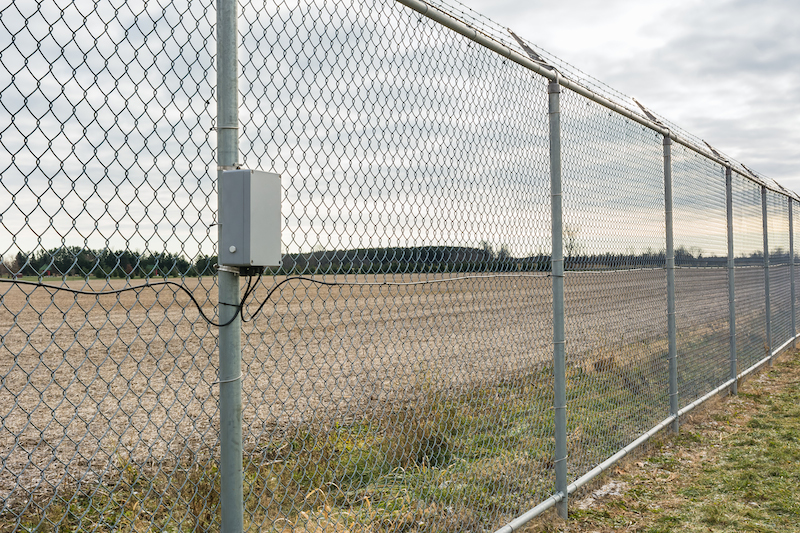
Perimeter fencing with electrical enclosure (Source: Wikimedia Commons)
- Locking mechanisms: High-quality locks and secure doors reduce forced entry risks.
Surveillance and Monitoring
Continuous monitoring of cooperative premises deters crime and facilitates incident detection.
Environmental Design
The physical layout and maintenance of cooperative premises influence security effectiveness.
- Clear sightlines: Designing spaces to minimize blind spots reduces opportunities for crime.
- Landscaping: Proper trimming of bushes and trees prevents concealment of intruders.
- Secure parking areas: Well-lit and monitored parking reduces vehicle theft and vandalism.
- Maintenance: Prompt repair of broken windows, doors, and fences maintains security integrity.
- Signage: Warning signs indicating security measures act as deterrents.
Asset Protection
Protecting physical assets within cooperative premises safeguards investments and member resources.
- Secure storage rooms: Restricted access to cash, documents, and equipment reduces theft risk.
- Inventory controls: Regular stocktaking and tagging prevent misappropriation.
- Safes and vaults: Resistant storage protects valuables from theft and fire.
- Equipment locks: Securing laptops, printers, and other devices prevents unauthorized removal.
- Emergency preparedness: Fire extinguishers and evacuation plans protect assets and personnel during crises.
5.1.4 Security guards
Security guards play a crucial role in deterring criminal activities and responding to security incidents within cooperatives. Their presence offers both preventive and reactive security functions.
Roles and Responsibilities
Security personnel undertake a variety of tasks to maintain cooperative security.
- Access control enforcement: Checking identification and managing entry points.
- Patrolling premises: Regular rounds to detect suspicious activities or breaches.
- Incident response: Acting promptly during emergencies such as theft or fire.
- Reporting: Documenting security events and anomalies for management review.
- Customer service: Assisting members and visitors while enforcing security protocols.
Selection and Training
Recruiting and training competent security guards is vital for effective security operations.
- Background checks: Verifying criminal records and employment history to ensure integrity.
- Skill assessment: Evaluating physical fitness, communication, and problem-solving abilities.
- Initial training: Covering security principles, emergency procedures, and customer relations.
- Continuous development: Providing refresher courses and updates on new security threats.
- Ethical standards: Emphasizing confidentiality and professionalism in handling cooperative matters.
Deployment Strategies
Optimizing the deployment of security guards maximizes their effectiveness.
- Shift scheduling: Ensuring 24/7 coverage in cooperatives with extended operating hours.
- Strategic positioning: Assigning guards to high-risk areas such as cash handling points and entrances.
- Coordination with technology: Integrating guard patrols with surveillance systems for comprehensive monitoring.
- Emergency drills: Regular practice of response procedures involving security staff.
- Communication tools: Equipping guards with radios or mobile devices for rapid coordination.
Performance Monitoring and Accountability
Maintaining high standards among security guards requires systematic oversight.
- Supervisory inspections: Routine checks by security managers to ensure compliance with duties.
- Performance appraisals: Evaluating guard effectiveness based on incident handling and conduct.
- Incident investigations: Reviewing security breaches to identify guard lapses or training needs.
- Reward and discipline: Recognizing exemplary service and addressing misconduct promptly.
- Feedback mechanisms: Encouraging cooperative members to report security concerns related to guards.
Practice Questions
- Explain the key components of data protection that cooperatives in Kenya must implement to comply with the Data Protection Act 2019. (10 marks)
- Discuss five types of insurance covers relevant to cooperative societies and their significance in mitigating security risks. (10 marks)
- Describe four physical security measures that can be implemented in a cooperative office to protect assets and personnel. (8 marks)
- Outline six steps involved in selecting and training security guards for a cooperative. (12 marks)
The rest of this chapter
🔒Create a free account to open more of this chapter.
Free: practical guides, quick cards, workplace scenarios and more.
Create a free account 🔒5.2 Risk mitigation measures analysis
In cooperative management, assessing the effectiveness and appropriateness of risk mitigation measures is critical to safeguarding members’ resources and maintaining trust. Kenyan cooperatives face diverse security threats ranging from fraud, mismanagement, cy…
🔒5.3 Mitigation measures selection
Selecting appropriate risk mitigation measures is a critical step in cooperative security management that directly influences the protection of members’ assets and the sustainability of the organization. Kenyan cooperatives must carefully choose measures that…
🔒5.4 Adoption of Selected Mitigation Measures
Adopting mitigation measures is a critical step for cooperatives to reduce or eliminate security risks that threaten their operations and assets. In Kenya, cooperative societies face diverse security challenges ranging from fraud, theft, cyber-attacks, to phys…
🔒5.5 Control of Adopted Mitigation Measures
Controlling mitigation measures ensures that they remain effective over time and adapt to evolving security risks. In the cooperative context, control mechanisms safeguard investments in security and maintain member confidence by demonstrating proactive risk m…
🔒5.6 Barriers to Effective Risk Mitigation
In the cooperative sector in Kenya, mitigating security risks is vital for safeguarding members' assets and maintaining trust. However, cooperatives often face significant barriers that hinder the effectiveness of their risk mitigation efforts. These obstacles…
Chapter Summary
This chapter explores various mitigation measures essential for monitoring security risks within cooperative societies, beginning with data protection strategies that safeguard sensitive information from unauthorized access. It then examines the role of insurance covers in transferring financial risks and the importance of physical security measures such as access controls and surveillance systems to prevent unauthorized entry. The use of security guards as a deterrent and response mechanism is also discussed. A thorough analysis of risk mitigation measures follows, evaluating their effectiveness and suitability for different cooperative environments. The chapter further addresses the criteria for selecting appropriate mitigation measures tailored to specific security challenges. It then outlines the process for adopting these selected measures, ensuring proper implementation and integration into existing systems. Controlling the adopted measures involves continuous monitoring and adjustment to maintain their effectiveness. Finally, the chapter identifies common barriers to effective risk mitigation, including resource constraints and organizational resistance, highlighting the need for strategic management to overcome these challenges.
Self-Assessment
🔒 PDFDownload this self-assessment, with answers
A. Written Assessment
- What is the primary purpose of data protection in cooperative societies? (2 marks)
- Identify three types of insurance covers relevant to cooperatives and explain their importance. (4 marks)
🔒20 more in this section.
Chapter Examination Questions
🔒 PDFDownload these examination questions, with worked answers
SECTION A (40 Marks) - Answer ALL Questions
- Explain how data protection measures can reduce security risks in a cooperative society such as Mwalimu SACCO. (4 marks)
- Identify four types of insurance covers that a cooperative society should consider to mitigate operational risks. (4 marks)
🔒18 more in this section.
