Security in cooperative societies is crucial for safeguarding assets, ensuring member confidence, and maintaining uninterrupted operations. Supervising security gadgets effectively helps prevent theft, vandalism, and other security breaches that can threaten the society’s stability. In Kenya, where cooperative societies often manage significant financial and physical resources, the proper installation and management of security devices such as CCTV systems, security lighting, and fire alarms are essential components of a comprehensive security strategy. This chapter focuses on the professional oversight required to ensure these gadgets function optimally within cooperative settings.
4.1 Security Gadgets Installation
Installing security gadgets in cooperative societies requires a combination of technical knowledge, awareness of security risks, and an understanding of the cooperative’s operational environment. Proper installation maximizes the effectiveness of these devices in deterring crime and ensuring safety. The following sections explore the key types of security gadgets commonly used in Kenyan cooperatives: CCTV systems, security lights, and fire alarms.
4.1.1 CCTV
Components of CCTV Systems
Understanding the essential components of CCTV systems is vital for effective supervision of their installation. These components work together to provide comprehensive surveillance coverage.
-
Cameras: Capture video footage of targeted areas, available in various types such as dome, bullet, and PTZ (pan-tilt-zoom) cameras, each suited to different surveillance needs.
-
Digital Video Recorder (DVR) / Network Video Recorder (NVR): Devices that record and store footage for later review and evidence.
- Monitors: Screens where live or recorded footage is displayed for security personnel.
- Cabling and Connectivity: Includes coaxial or Ethernet cables that connect cameras to the recording and monitoring devices, ensuring data transmission.
- Power Supply Units: Provide consistent power to cameras and other system components, sometimes backed by uninterruptible power supplies (UPS) to maintain operation during outages.
Installation Considerations for CCTV
The placement and technical setup of CCTV cameras determine their effectiveness in securing cooperative premises. Supervisors must evaluate several factors for optimal installation.
- Coverage Area: Cameras should cover all vulnerable entry points, cash handling areas, and asset storage rooms to prevent blind spots.
- Camera Resolution: High-resolution cameras improve image clarity, aiding in accurate identification of individuals.
- Lighting Conditions: Installation must consider lighting, using infrared or low-light cameras in poorly lit areas to maintain visibility.
- Weather Protection: Outdoor cameras require weatherproof casings to withstand rain, dust, and heat typical in Kenyan climates.
- Compliance with Privacy Laws: Placement must respect privacy rights, avoiding monitoring of private spaces such as restrooms or member meeting rooms.
Maintenance and Troubleshooting of CCTV Systems
Regular maintenance ensures continuous operation and reliability of CCTV systems. Supervisors play a key role in establishing maintenance schedules and responding to technical faults.
- Routine Cleaning: Cameras and lenses should be cleaned regularly to prevent image distortion caused by dust or debris.
- System Updates: Firmware and software updates for DVRs/NVRs improve performance and security against cyber threats.
- Cable Inspection: Checking cables for wear or damage prevents signal loss or system downtime.
- Backup Testing: Ensuring recorded footage is properly backed up and retrievable in case of incidents.
- Fault Diagnosis: Prompt identification and repair of issues such as camera failure, recording errors, or power interruptions.
Legal and Ethical Implications of CCTV Usage
Supervisors must understand the legal framework governing CCTV to ensure the society’s adherence to national laws and ethical standards.
- Data Protection Compliance: CCTV footage must be handled in line with Kenya’s Data Protection Act, safeguarding member privacy.
- Signage Requirement: Clear notices should inform members and visitors of surveillance to maintain transparency.
- Footage Retention Policies: Establishing how long recordings are stored before secure deletion to prevent misuse.
- Access Control: Limiting access to footage to authorized personnel to reduce risk of data breaches.
- Use of Footage: Ensuring recorded images are used solely for security purposes and not for unauthorized surveillance.
Practice Questions
- Describe the key components of a CCTV system and explain their roles in cooperative society security. (10 marks)
- What factors should be considered when deciding the placement of CCTV cameras in a cooperative office? (10 marks)
- Explain the legal obligations a cooperative must observe when using CCTV for surveillance. (10 marks)
4.1.2 Security Lights
Security lighting is a fundamental deterrent against unauthorized access and criminal activity in cooperative premises. Proper lighting installation enhances visibility, reduces hiding spots, and improves safety for members and staff during night hours. Supervising security light installation requires technical knowledge of lighting types, positioning, and energy efficiency.
Types of Security Lights
Different types of security lighting serve varied purposes in enhancing cooperative security, each with specific features and installation requirements.
-
Floodlights: Provide broad, intense illumination over large open areas such as parking lots or compound perimeters.
-
Motion Sensor Lights: Activate only when movement is detected, conserving energy while alerting security personnel to unusual activity.
-
Solar-Powered Lights: Utilize solar panels to charge batteries during daylight, suitable for areas with unreliable electricity supply.
-
LED Lights: Offer long-lasting and energy-efficient lighting with high brightness, increasingly preferred in security applications.
-
Emergency Lights: Automatically switch on during power outages, ensuring continuous illumination for safe evacuation and security monitoring.
Installation Best Practices for Security Lights
The effectiveness of security lighting depends on strategic placement and correct installation practices tailored to the cooperative’s layout.
- Coverage Planning: Lights should be positioned to cover all entry points, walkways, and vulnerable external walls without creating shadows.
- Height and Angle: Mounting height and angle affect the spread and intensity of light; higher placement reduces tampering risk but may lessen brightness.
- Wiring Safety: Electrical connections must comply with Kenyan electrical standards to prevent hazards such as short circuits or fires.
- Integration with Other Systems: Security lights can be connected with alarm systems or CCTV to activate lighting upon detection of intrusion.
- Energy Management: Incorporating timers or light sensors ensures lights operate only when needed, reducing electricity costs.
Maintenance and Energy Efficiency of Security Lights
Ensuring security lights remain functional and cost-effective involves routine maintenance and adopting energy-saving technologies.
- Regular Bulb Replacement: Preventing outages by timely replacing burnt-out bulbs.
- Cleaning Fixtures: Removing dust and insects from light covers to maintain maximum illumination.
- Checking Sensors: Ensuring motion sensors or light detectors respond accurately to environmental conditions.
- Use of LED Technology: Encouraging the transition to LED lights for their durability and low power consumption.
- Monitoring Power Supply: Inspecting wiring and electrical panels to avoid power fluctuations that can damage lighting systems.
Impact of Security Lighting on Member Safety and Crime Prevention
Properly managed security lighting plays a significant role in creating a safe environment that supports cooperative operations and member trust.
- Crime Deterrence: Well-lit areas reduce opportunities for theft, vandalism, and unauthorized access.
- Enhanced Surveillance: Lighting improves the quality of CCTV footage and aids security personnel in monitoring premises.
- Member Confidence: Visible security measures reassure members about the safety of their investments and personal wellbeing.
- Accident Prevention: Illuminated walkways and entrances minimize risks of trips and falls, especially during night-time.
- Community Relations: Cooperatives that maintain secure premises contribute positively to neighborhood safety perceptions.
Practice Questions
- Compare and contrast the features of floodlights and motion sensor lights in cooperative security. (10 marks)
- Outline the key considerations when installing security lights around cooperative premises. (10 marks)
- Discuss how security lighting influences crime prevention and member safety in cooperatives. (10 marks)
4.1.3 Fire Alarms
Fire alarms are critical safety devices that provide early warning of fire outbreaks, enabling prompt response to protect lives and property within cooperative societies. Effective supervision of fire alarm installation ensures these systems comply with safety standards and function reliably in emergencies. This section addresses the components, installation procedures, maintenance, and regulatory compliance related to fire alarms in cooperatives.
Components of Fire Alarm Systems
A fire alarm system consists of interconnected devices that detect fire indicators and alert occupants and emergency responders.
- Smoke Detectors: Sensors that detect smoke particles, often the earliest sign of fire.
- Heat Detectors: Respond to rapid temperature increases or fixed high temperatures indicative of fire.
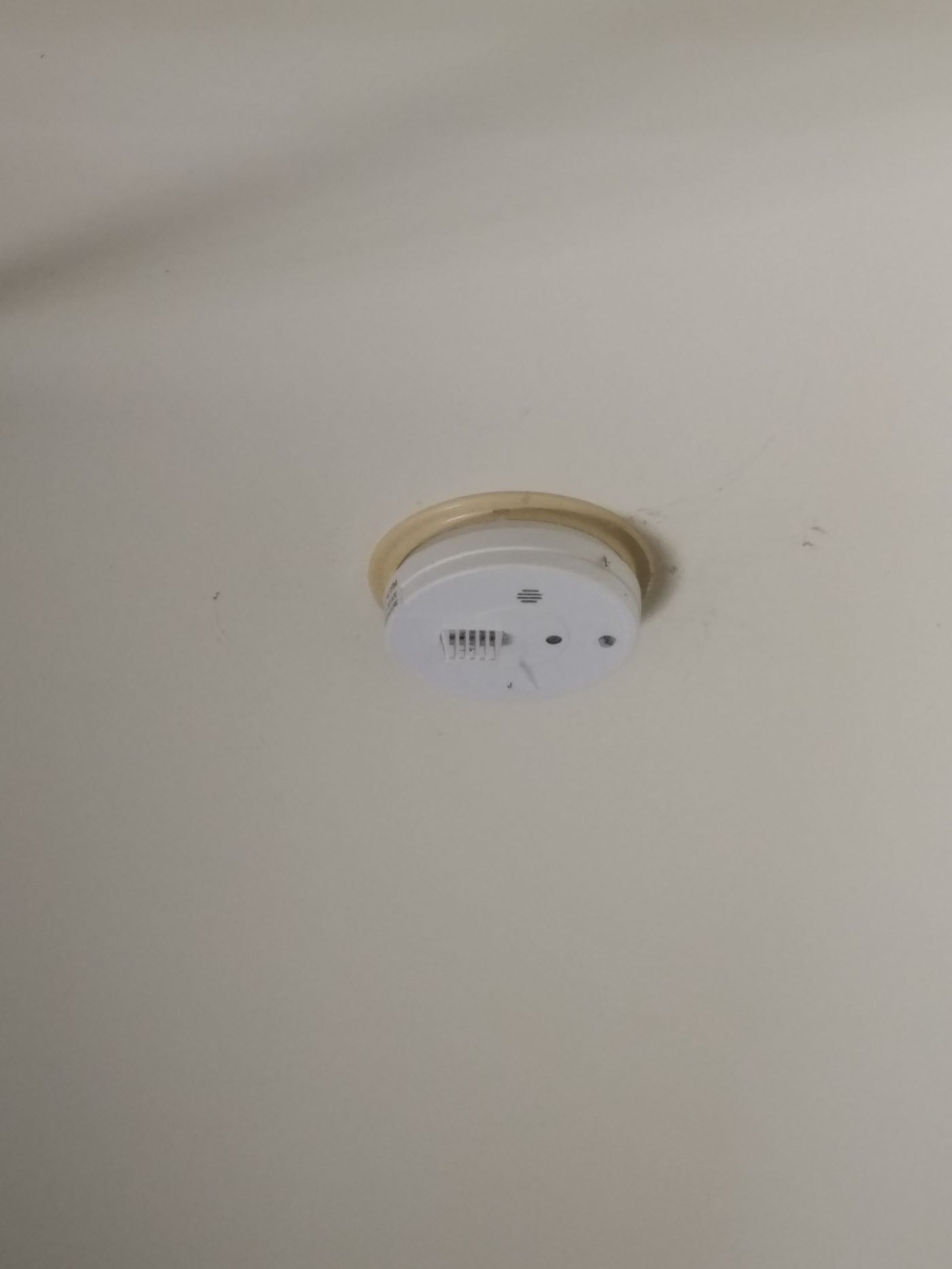
Ceiling-mounted heat detector device (Source: Wikipedia (Heat detector))
- Manual Call Points: Allow occupants to manually trigger the alarm when fire or smoke is observed.
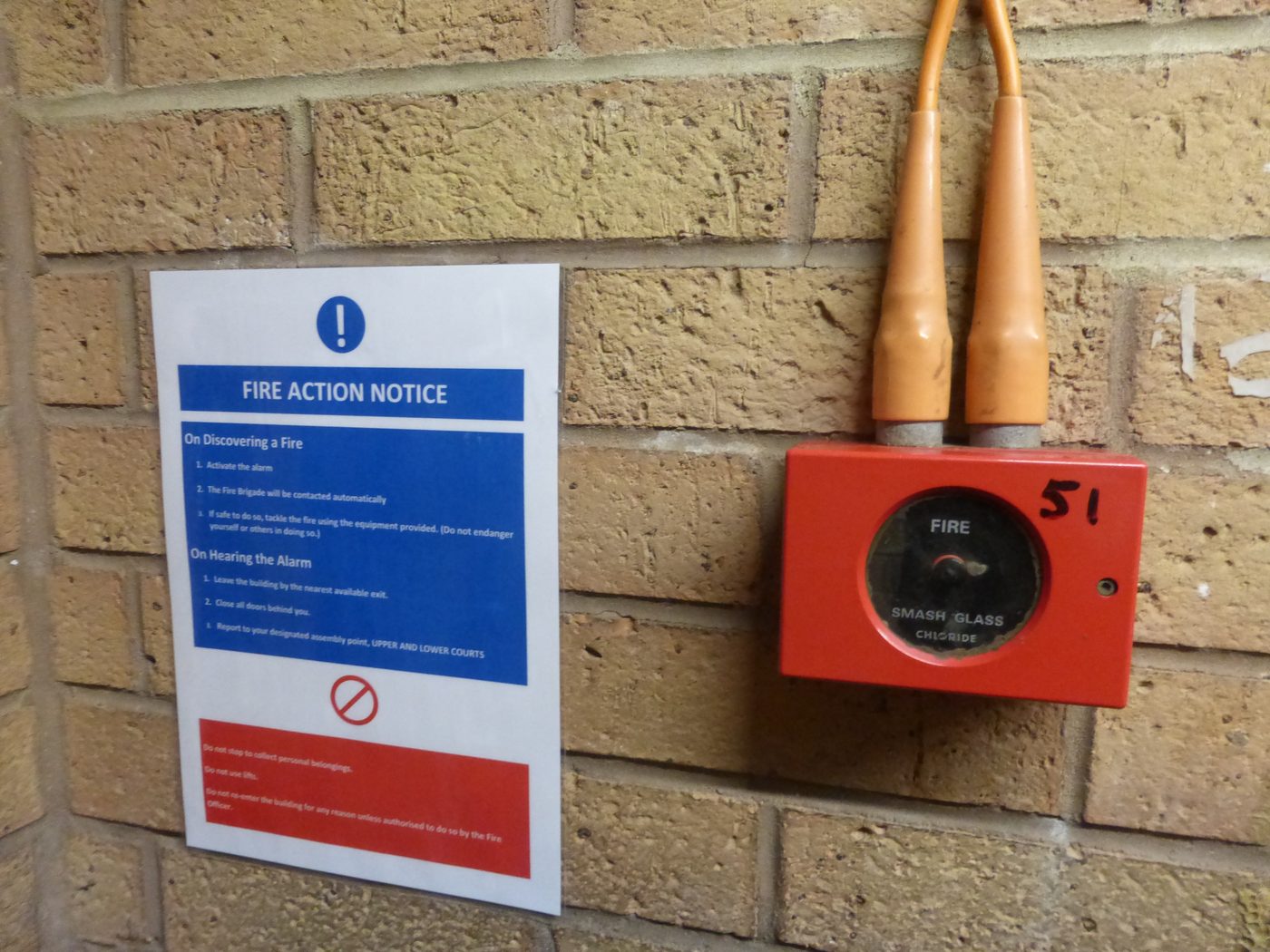
Red manual call point on wall with fire action notice (Source: Wikimedia Commons)
- Alarm Sounders and Visual Indicators: Emit loud sounds and flashing lights to alert occupants of danger.
- Control Panel: Central unit that monitors inputs from detectors and manages alarm activation and system status.
Installation Procedures for Fire Alarms
Installing fire alarm systems requires adherence to technical standards and an understanding of building layout to ensure comprehensive coverage.
- Risk Assessment: Identifying fire hazards and vulnerable areas within the cooperative premises to determine detector placement.
- Detector Placement: Installing smoke and heat detectors in locations such as offices, storage rooms, electrical panels, and corridors.
- Wiring and Power Supply: Ensuring reliable electrical connections and backup power sources to maintain system operation during outages.
- Alarm Positioning: Locating sounders and visual indicators in areas accessible and audible to all occupants.
- System Testing: Conducting comprehensive tests after installation to verify detector sensitivity and alarm functionality.
Maintenance and Testing of Fire Alarms
Routine inspection and testing are essential to maintain fire alarm readiness and compliance with safety regulations.
- Scheduled Testing: Monthly or quarterly testing of detectors and alarms to confirm operational status.
- Battery Checks and Replacement: Ensuring backup batteries are charged and replaced as needed to avoid system failure.
- Cleaning Detectors: Removing dust and debris that can impair sensor sensitivity.
- System Upgrades: Updating components to meet evolving safety standards and improve reliability.
- Record Keeping: Documenting maintenance activities and test results to support audits and insurance requirements.
Compliance with Fire Safety Regulations
Supervisors must ensure cooperative societies meet national fire safety requirements to protect members and avoid legal penalties.
- Adherence to the Fire Risk Reduction Rules, 2007: Following guidelines set by the Kenyan government on fire safety measures in public and private buildings.
- Obtaining Fire Safety Certificates: Ensuring the cooperative’s premises are inspected and certified by the local fire authority.
- Training and Drills: Organizing fire safety training and evacuation drills for members and staff to enhance preparedness.
- Integration with Emergency Services: Coordinating with local fire departments for rapid response in case of fire incidents.
- Installation of Fire Extinguishers and Exit Signage: Complementing fire alarm systems with physical firefighting equipment and clear evacuation routes.
Practice Questions
- Identify the main components of a fire alarm system and explain their functions. (10 marks)
- Describe the key steps involved in installing a fire alarm system in a cooperative office. (10 marks)
- Explain the importance of compliance with fire safety regulations for cooperative societies. (10 marks)
The rest of this chapter
🔒Create a free account to open more of this chapter.
Free: practical guides, quick cards, workplace scenarios and more.
Create a free account 🔒4.2 Security Gadgets Inspection
In cooperative societies across Kenya, security gadgets form the frontline defense against theft, fraud, and unauthorized access to assets. Supervising cooperative security gadgets requires systematic inspection routines to ensure these devices operate at peak…
🔒4.3 Faulty Security Gadgets Identification
Faulty security gadgets compromise the integrity of a cooperative’s security framework and expose assets to risk. Identifying faults promptly allows for timely repairs or replacements, ensuring uninterrupted protection. In the Kenyan cooperative context, manag…
🔒4.4 Repair and maintenance faulty security gadgets
In cooperative societies across Kenya, security gadgets such as CCTV cameras, alarm systems, and access control devices are critical for safeguarding assets, members’ information, and premises. Faulty security equipment can compromise the entire security frame…
🔒4.5 Obsolete security gadgets update
Security technology evolves rapidly, and cooperative societies must keep pace to maintain effective protection. Obsolete security gadgets not only reduce operational efficiency but also expose cooperatives to security breaches due to outdated features or incom…
Chapter Summary
This chapter focused on the supervision of cooperative security gadgets, beginning with the installation of essential devices such as CCTV cameras, security lights, and fire alarms, each playing a critical role in safeguarding cooperative assets and members. It then detailed the importance of regular inspection to ensure these gadgets function correctly and provide continuous protection. Identifying faulty security gadgets was emphasized as a key responsibility to prevent security breaches and operational failures. The chapter also covered methods for repairing and maintaining defective equipment, highlighting the need for timely interventions to extend gadget lifespan and reliability. Finally, it discussed the necessity of updating obsolete security gadgets to keep pace with technological advances and evolving security threats, ensuring that cooperatives maintain effective and modern security systems.
Self-Assessment
🔒 PDFDownload this self-assessment, with answers
A. Written Assessment
- Define the primary purpose of installing CCTV cameras in a cooperative society’s premises. (2 marks)
- List three key features that a security light system should have to be effective in a cooperative environment. (3 marks)
🔒20 more in this section.
Chapter Examination Questions
🔒 PDFDownload these examination questions, with worked answers
SECTION A (40 Marks) - Answer ALL Questions
- Explain the importance of installing CCTV cameras in a cooperative society’s premises. (4 marks)
- Identify four types of security lights commonly used in cooperatives and state one advantage of each. (4 marks)
🔒18 more in this section.
