
By the end of this chapter, you will be able to:
Mastering these skills will help you build strong, safe, and comfortable structures for goats, which is essential for successful goat farming.
Compiled by: James Ogutu
Constructing appropriate goat housing structures is a fundamental aspect of effective goat production in Kenya. Properly designed goat structures protect animals from environmental hazards, improve health management, and facilitate efficient feeding and breeding practices. This chapter explores the essential tools, equipment, and materials required to build durable and functional goat shelters suitable for diverse Kenyan farming conditions.
A goat house, kid pen or handling yard is only as good as the tools used to build it and the materials it is made from. Goats climb, jump, push and chew, so their structures need firm posts, tight joints, smooth surfaces without sharp edges and a floor that stays dry. This topic describes the tools, the equipment and the materials a technician uses to construct goat structures, and the care each one needs.
Tools are hand-held implements used for measuring, cutting, fixing and finishing. A goat shelter, a raised slatted floor, a feeding rack or a gate can be built with a small set of hand tools, which is why smallholder farmers rely on them.
The hammer drives nails into timber for the roof frame, wall boards and slats, and its claw pulls out bent nails. For a goat house a medium claw hammer is enough. Nails are driven so that their heads lie flush with the wood and no sharp points stick out where goats could be hurt.
Screw drivers fix screws in hinges, latches, feeder brackets and door fittings. Screws hold better than nails in gates that goats push and rub against. A flat-tipped screw driver fits slotted screws and a cross-tipped one fits cross-head screws, and using the wrong type damages the screw head.
The tape measure gives the lengths and widths of floors, walls and roof members. It is used to check the planned floor area for the number of goats, and the height of the fence and the slats. Measurements are checked twice before cutting, since a wrong cut wastes timber.
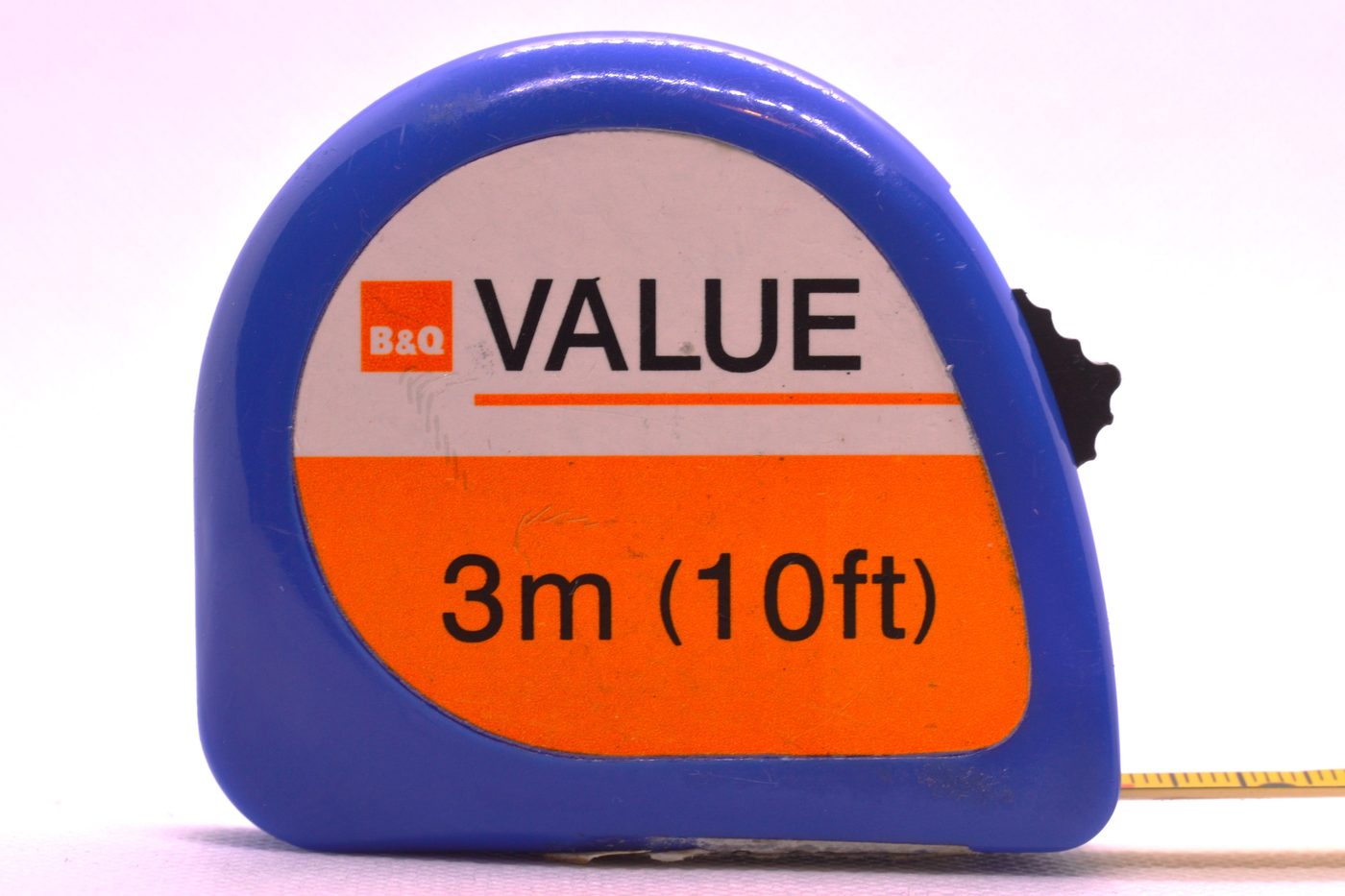
A 3m (10ft) measuring tape (Source: Wikimedia Commons)
A spirit level shows when a surface is level or a post is upright. It is used on foundations, on the raised floor frame and on the feeding trough so that feed does not collect at one end, and on posts that the animals will lean on.
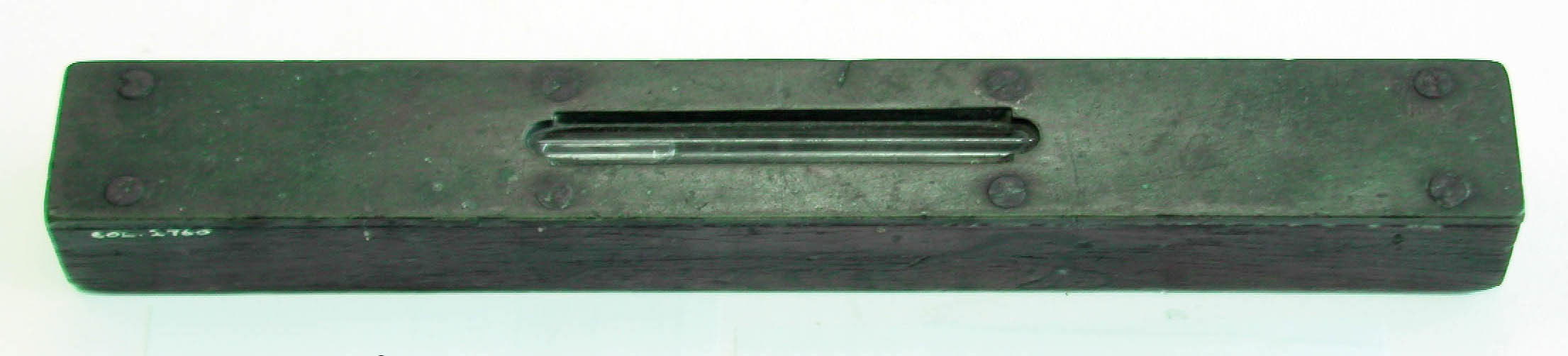
A traditional spirit level tool (Source: Wikimedia Commons)
A saw cuts poles, planks and boards to size. A handsaw is widely used for small structures and is chosen according to the material, with finer teeth for cutting planks. Cuts are made along a marked line, and rough edges are smoothed afterwards so that they do not injure the goats.
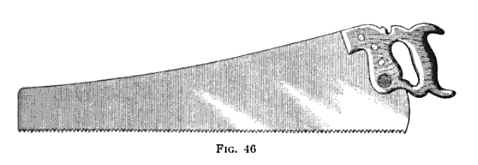
Traditional handsaw with wooden handle (Source: Wikimedia Commons)
A drill makes holes in timber and metal for bolts, screws and wire. A hand brace or an electric drill is used to bolt the frame of a raised floor or to fix roof sheets with bolts. Where electricity is not available, a hand drill or a cordless drill is used.
Pliers grip, bend and cut wire and nails. They are used to tie and tighten wire mesh onto fence posts, to cut binding wire and to bend over wire ends so that none protrudes into the goat pen.
A chisel shapes joints and cuts recesses in timber. It is used to make notches where the cross-members of a frame meet the posts and to fit hinges and latches, so that the parts fit tightly and cannot be pushed apart by goats.
A smallholder building a small goat shed for a few animals can manage with manual tools. A larger commercial unit may add power tools such as an electric drill and a circular saw. Where electricity is not available, manual tools remain practical and cheaper. A sound choice balances cost, durability and local availability.
Equipment means the larger machines and powered devices used to do heavy or repetitive work. For a small goat house much of it is not needed, but for a large commercial goat unit it can save time and labour. Heavy machines are hired only when the job needs them.
| Name | Specification | Use |
|---|---|---|
| Bulldozer | Crawler tractor fitted with a push blade | Clearing bush, removing topsoil and levelling the site |
| Crane | Mobile or truck-mounted lifting machine | Lifting precast slabs, steel trusses and water tanks |
| Dump truck | Tipping body, hired with a driver | Carrying sand, ballast, quarry dust and stones to the site |
| Mixer | Drum mixer, small units of about 100 litres | Mixing cement, sand and ballast for foundations and floors |
| Forklift | Powered lifting truck with forks | Carrying stacked blocks, cement bags and roofing sheets |
| Wheelbarrow | Single wheel, steel frame | Moving materials short distances on site |
| Plate compactor | Petrol-powered vibrating plate | Compacting soil and gravel to make a firm base |
| Circular saw | Powered saw with an 180 mm blade | Cutting timber and boards quickly |
A bulldozer is used on large or rough sites to clear bush and level the ground before building a goat house or a yard. It pushes soil with its blade to shape terraces and drainage lines. It is hired by the hour, so the work is planned so that all the clearing is finished in one visit.
A crane lifts heavy items to where they are needed, such as steel roof trusses, precast concrete slabs and water storage tanks. It is rarely needed for goat houses except on very large units, and it must be operated by a trained operator, with the load kept clear of people.
A dump truck carries bulk materials such as sand, quarry dust, ballast and stones to the building site and tips them near where they will be used. This saves much time compared with moving the same loads by wheelbarrow, and it is chosen when large quantities of materials are needed.
A concrete mixer blends cement, sand, ballast and water in a rotating drum into uniform concrete. It is used to make foundations, floors and troughs. The drum is washed out immediately after use to prevent cement from hardening inside it.
A forklift raises loads stacked on pallets, for example concrete blocks, cement bags and bundles of roofing sheets, and carries them to where they are needed or onto a lorry. It is used at building supply yards and on large construction sites, and is operated by trained staff.
Materials are the substances from which the structure is built. Goat shelters need materials that are strong enough to resist pushing and climbing, that drain well and that do not hold moisture, because damp floors and walls lead to foot rot and pneumonia.
Cement is the binder in concrete, mortar and plaster. Bags of cement are stored off the ground in a dry place and used in the order in which they were bought, since damp cement forms lumps and loses its strength. Cement is used for foundations, floors, troughs and walls.
Sand is the fine aggregate mixed with cement for mortar and concrete. It must be clean and free from clay, soil and salt, because these weaken the mix. Sand for plastering is finer than sand for concrete.
Blocks are used for walls and foundation walls of permanent goat houses. Concrete and stone blocks are strong, resist termites and rain and are easy to wash. Blocks are laid in mortar in staggered courses so that joints do not line up. Blocks must be hard and square, and should not crumble when handled.
Quarry dust is the fine crushed rock left from quarrying. It is used to replace part of the sand in mortar, in block making, and as a compacted base under floors, where it drains well and gives a firm surface. It must be clean and dry, and it is not used where fine, smooth plaster is needed.
Describe five essential tools used in constructing goat structures and explain their specific functions in the building process. (10 marks)
Explain the factors a farmer should consider when selecting equipment for goat housing construction on a medium-scale farm. (10 marks)
Discuss five types of materials commonly used in goat shelter construction in Kenya, highlighting their advantages and limitations. (10 marks)
Outline the maintenance practices necessary for ensuring the longevity and safety of construction tools and equipment. (10 marks)
Create a free account to open more of this chapter.
Free: practical guides, quick cards, workplace scenarios and more.
Create a free accountThis chapter covered the essential tools, equipment, and materials required for constructing goat structures, highlighting the distinctions between each and their appropriate uses. It emphasized the importance of selecting a suitable site for the goat structure, considering factors such as drainage, accessibility, and protection from harsh weather. The process of constructing goat structures was detailed, including foundational work, framing, roofing, and finishing to ensure durability and comfort for the animals. Proper maintenance practices were discussed to prolong the lifespan of the structures and prevent damage from environmental and animal-related factors. The chapter also addressed the importance of keeping accurate records for both construction and maintenance activities to support effective management and planning. Finally, waste management techniques were explored to maintain hygiene and reduce environmental impact within the goat production environment.
At the start of this chapter we promised you would be able to:
Tick each one you can genuinely do.
So, are you there yet?
You're competent when you can confidently do 50% or more of what this chapter promised.
Sign in to record how you're doing.