Follow all safety procedures carefully while working to keep yourself and others safe.
Interpret working drawings accurately to understand exactly what the job requires.
Correctly assemble TIG welding machines, tools, and equipment needed for the job.
Prepare welding materials properly to meet the specific job requirements.
Set TIG welding parameters accurately to ensure the best welding quality.
Perform TIG welding on metallic materials up to 10 mm thick safely and correctly.
Confidently weld in flat, horizontal, and vertical positions with precision.
Mastering these skills will help you become a skilled TIG welder, ready to produce strong, high-quality welds in real-world jobs.
Tungsten Inert Gas (TIG) welding is a precision welding process widely used in Kenya's manufacturing, automotive, and fabrication sectors due to its ability to produce high-quality, clean welds on a variety of metals including stainless steel and aluminium. Mastery of TIG welding techniques is essential for professionals aiming to meet the exacting standards required in industries such as medical equipment fabrication, aerospace component production, and automotive repair workshops. This chapter focuses on the critical occupational health and safety standards that govern TIG welding operations, ensuring that welders protect themselves and their colleagues while delivering exceptional workmanship.
2.1 Occupational Health and Safety Standards
Occupational health and safety (OHS) standards are crucial in TIG welding to prevent work-related injuries and illnesses. Kenyan welding workshops and industrial sites enforce these standards to comply with the Occupational Safety and Health Act (OSHA) 2007 and regulations by the Directorate of Occupational Safety and Health Services (DOSHS). Understanding and applying OHS standards reduces hazards from electric shock, ultraviolet radiation, fumes, and hot metals that are common in TIG welding environments.
2.1.1 Personal Protective Welding Equipment
Personal protective equipment (PPE) is the frontline defense against the diverse hazards encountered during TIG welding. Welders in Kenya’s industrial and fabrication sectors must equip themselves appropriately to comply with safety regulations and protect their health.
Components of Personal Protective Equipment
Welding Helmet with Auto-Darkening Filter: Protects the eyes and face from intense ultraviolet and infrared radiation, sparks, and spatter. Auto-darkening helmets adjust lens shade automatically, enhancing visibility and reducing eye strain during welding.
Welding Gloves: Made of heat-resistant leather, gloves protect hands from burns, electric shock, and sharp metal edges. Properly fitting gloves ensure dexterity while handling the tungsten electrode and filler rods.
Protective Clothing: Flame-resistant jackets or aprons made from leather or treated cotton prevent burns from sparks and hot metal. Covering all exposed skin is vital to prevent arc flash injuries.
Respiratory Protection: Depending on ventilation, respirators or masks filter hazardous welding fumes and gases, especially when welding stainless steel or galvanized materials which emit toxic fumes.
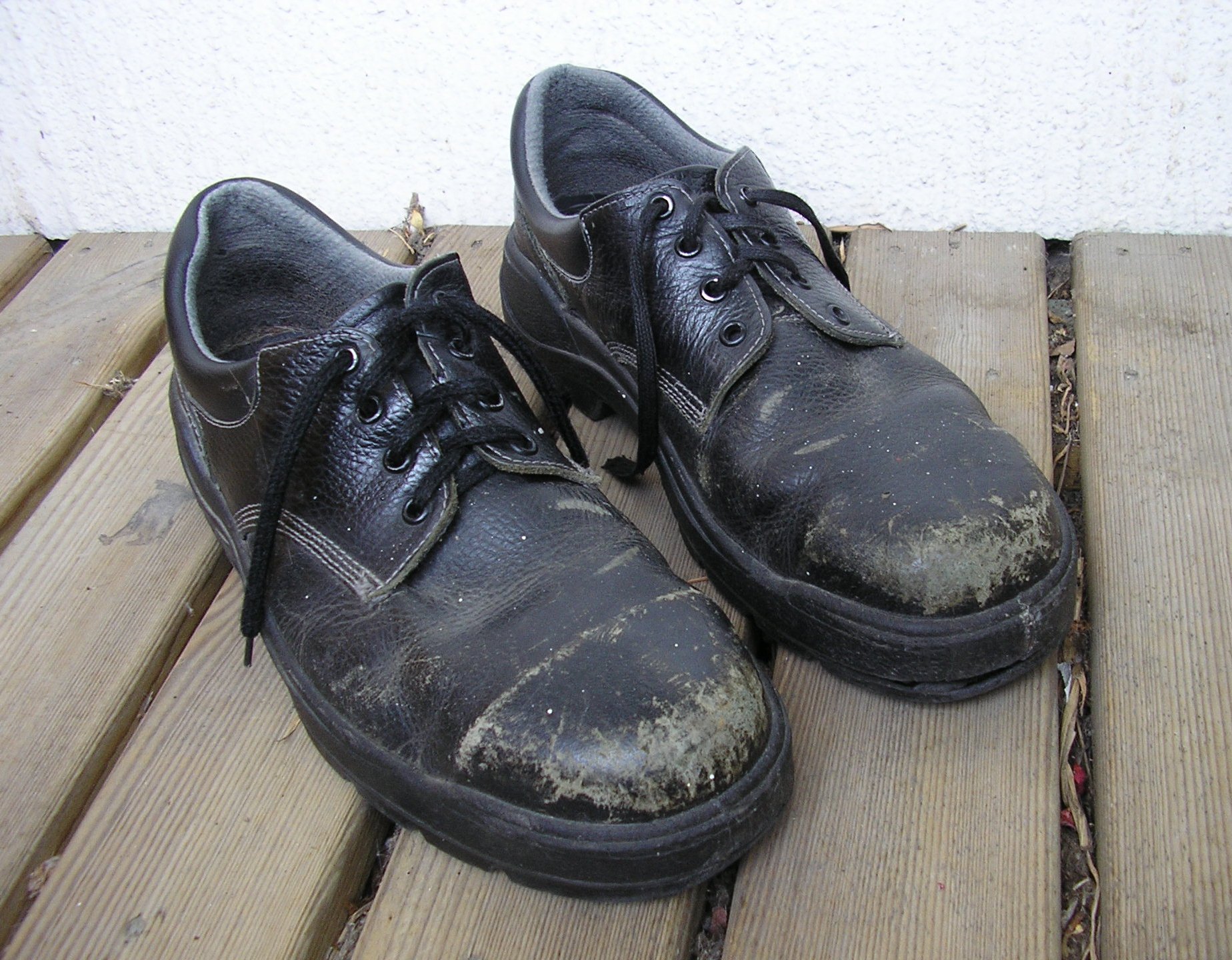
Safety Boots: Steel-toe boots protect feet from heavy falling objects and hot metal while providing electrical insulation in some designs.
worn black safety boots on wooden floor (Source: Wikipedia (Steel-toe boot))
Importance of PPE Compliance
Welders at Nairobi County's metal fabrication workshops who consistently use PPE report fewer incidents of burns and eye damage, highlighting PPE’s role in maintaining workforce health and productivity. Employers must enforce PPE usage through training and supervision to comply with Kenyan occupational safety laws.
2.1.2 Workshop Safety
A safe workshop environment is foundational to preventing accidents and ensuring smooth TIG welding operations. Safety management within Kenyan welding workshops involves infrastructure design, hazard control, and emergency preparedness.
Essential Elements of Workshop Safety
Ventilation Systems: Effective extraction and ventilation remove harmful welding fumes and gases, maintaining air quality. Workshops in Nairobi’s industrial zones install local exhaust ventilation near welding stations to comply with health standards.
Fire Prevention Measures: Welding areas must be free from flammable materials, with fire extinguishers and blankets readily accessible. Regular fire drills and training prepare staff for prompt response.
Clear Signage and Markings: Warning signs indicating welding zones, high voltage areas, and PPE requirements guide personnel and visitors to maintain safe distances and precautions.
Housekeeping Practices: Keeping the workshop clean and organized reduces tripping hazards and fire risks. Scrap metals, cables, and tools must be stored properly after use.
Emergency Exits and First Aid Facilities: Clearly marked emergency exits and accessible first aid kits ensure quick evacuation and response to injuries.
2.1.3 Workplace Procedures
Workplace procedures standardize welding activities to ensure safety and quality. Kenyan welding firms develop and enforce procedures aligned with OSHA requirements and industry best practices.
Key Welding Workplace Procedures
Pre-Operation Checks: Inspecting welding machines, gas cylinders, and PPE before starting work prevents equipment failure and accidents.
Lockout/Tagout Practices: Ensuring welding equipment is isolated from power sources during maintenance protects technicians from electric shock.
Safe Gas Cylinder Handling: Storing cylinders upright, securing them properly, and checking for leaks prevent explosions and gas exposure.
Work Permit Systems: Authorizing welding activities through permits controls hazardous operations, especially in confined spaces or near flammable materials.
Incident Reporting and Investigation: Prompt reporting of accidents or near misses enables corrective actions, improving overall workplace safety.
2.1.4 Welding Hazards
TIG welding exposes workers to multiple hazards that can cause acute injuries or long-term health effects. Awareness and management of these hazards are essential for Kenyan welders to maintain safe working conditions.
Common TIG Welding Hazards
Electric Shock: TIG welding uses high voltage and current; improper handling of cables or equipment can cause fatal shocks.
Ultraviolet and Infrared Radiation: The welding arc emits intense radiation that can cause "arc eye" or retinal burns without proper eye protection.
Fumes and Gases: Welding stainless steel or coated metals produces hazardous fumes containing chromium, nickel, and zinc oxides which can cause respiratory diseases.
Fire and Explosion Risks: Sparks and molten metal can ignite flammable materials nearby, especially in workshops handling fuel or solvents.
Noise Exposure: Welding operations and associated machinery generate noise levels that can lead to hearing loss without protection.
2.1.5 Safe Handling of Equipment
Proper handling and maintenance of TIG welding equipment prolongs its lifespan and safeguards the welder from accidents. Kenyan welding workshops emphasize equipment care as part of their OHS compliance.
Guidelines for Equipment Handling
Correct Setup of Welding Machines: Ensuring correct polarity, amperage, and gas flow settings prevents equipment damage and poor weld quality.
Regular Inspection and Maintenance: Checking cables, torches, regulators, and gas hoses for wear or damage avoids breakdowns and hazards.
Safe Storage of Consumables: Tungsten electrodes and filler rods must be stored dry and protected from contamination to maintain weld integrity.
Handling Gas Cylinders Safely: Transporting cylinders with trolleys and using protective caps prevents physical damage and leaks.
Proper Shutdown Procedures: Turning off power and gas supplies after welding prevents unintended ignition or electric hazards.
Practice Questions
Describe five essential components of personal protective equipment used in TIG welding and explain their importance. (10 marks)
Explain how proper workshop ventilation contributes to safety in TIG welding operations. (8 marks)
Outline six key workplace procedures that enhance safety during TIG welding activities. (12 marks)
Identify and explain five common hazards associated with TIG welding and suggest control measures for each. (15 marks)
Discuss the safe handling practices for TIG welding equipment, including gas cylinders, in a welding workshop. (10 marks)
The rest of this chapter
🔒
Create a free account to open more of this chapter.
Free: practical guides, quick cards, workplace scenarios and more.
In the context of Tungsten Inert Gas (TIG) welding, good housekeeping is essential to maintain a safe and efficient work environment. Welding workshops in Kenya, such as those serving the manufacturing sector or county government maintenance yards, rely heavil…
🔒2.3 Interpretation of Working Drawing
Welding symbols and notations on working drawings convey essential information about the type, size, and location of welds. These symbols follow standards such as AWS A2.4 or ISO 2553, which Kenyan welders must master to avoid costly errors. - Fillet Weld Symb…
🔒2.4 TIG welding equipment and accessories
Tungsten Inert Gas (TIG) welding requires specialized equipment and accessories to ensure precision, quality, and safety. In Kenya, welding professionals working in fabrication workshops, automotive repair shops, and manufacturing plants must understand the va…
🔒2.5 Welding material preparation (up to 10 mm thickness)
Good welds begin long before the arc is struck. Material preparation is the work of measuring, marking out, cutting and preparing the edges of plates and pipes so that the parts fit together accurately and the weld metal can fuse cleanly through the full joint…
🔒2.6 TIG welding parameters
TIG (Tungsten Inert Gas) welding gives clean, accurate welds only when the machine is set to suit the metal, its thickness, the joint and the welding position. The main settings are welding current, arc force, arc voltage and shielding gas pressure and flow. A…
🔒2.7 MIG welding tools
Metal inert gas (MIG) welding feeds a continuous wire electrode through a gun while a shielding gas protects the molten pool. The process is fast and productive, but it depends on more than the welding machine itself. Supporting tools keep the workshop safe, h…
🔒2.8 TIG Welding Process
Tungsten Inert Gas (TIG) welding is highly valued in Kenya's welding industry for its precision and ability to produce high-quality welds on a variety of metals. This process is especially important in sectors such as automotive repair, fabrication workshops,…
🔒2.9 Metallic Materials (up to 10 mm thickness)
Working with metallic materials up to 10 mm thick is common in many welding projects in Kenya, including fabrication of gates, furniture, and light structural components. Understanding the properties and welding considerations for these metals ensures the prod…
🔒2.10 Welding Positions
In the Kenyan welding industry, mastering welding positions is critical for producing strong, defect-free joints, especially in TIG welding where precision is paramount. Welding positions determine how the welder approaches the joint and controls the weld pool…
🔒2.11 Types of Joints
In TIG welding, the type of joint selected determines not only the mechanical strength but also the accessibility and quality of the weld. Welding professionals in Kenya must understand joint types to ensure compliance with fabrication standards and achieve op…
🔒2.12 Weld defects
In Kenya's welding industry, especially in sectors such as fabrication for county government infrastructure and manufacturing at firms like Bidco Africa, weld defects represent a serious quality concern. Defects compromise the strength, durability, and safety…
🔒2.13 Finishing processes
Finishing processes are vital to enhance the mechanical properties, appearance, and corrosion resistance of TIG welds on metallic plates and pipes. In Kenya's manufacturing and construction sectors, such as in Nairobi's precision engineering workshops or count…
Chapter Summary
This chapter on carrying out Tungsten Inert Gas (TIG) welding emphasizes the importance of adhering to occupational health and safety standards, including the use of personal protective equipment, maintaining workshop safety, following workplace procedures, identifying welding hazards, and ensuring safe handling of equipment. Effective housekeeping practices such as cleaning and waste management are necessary to maintain a safe and organized work environment. Understanding and interpreting working drawings, including symbols, notations, abbreviations, and parts lists, is essential for accurate welding preparation. The chapter details TIG welding equipment and accessories, their types, uses, and proper care to ensure optimal performance. Preparation of welding materials up to 10 mm thickness involves precise measuring, marking out, cutting, and edge preparation to achieve quality welds. Key TIG welding parameters such as current, arc force, voltage, and gas pressure must be correctly set for successful welding operations. The chapter also covers essential MIG welding tools, their types, and maintenance. It describes the TIG welding process, its procedures, and applications, alongside the types of metallic materials commonly welded, including plates and pipes. Various welding positions and joint types are explained with their specific applications, while common weld defects, their causes, and prevention methods are thoroughly discussed. Finally, finishing processes like polishing, grinding, blueing, varnishing, oil blacking, deburring, and painting are outlined, concluding with practical TIG welding of metallic plates and pipes in the flat position.
Chapter Examination Questions
🔒 PDFDownload these examination questions, with worked answers
SECTION A (40 Marks) - Answer ALL Questions
Describe five types of personal protective equipment essential for TIG welding and explain their specific protective functions. (4 marks)
Explain four key workshop safety measures that must be observed in a welding workshop to prevent accidents. (4 marks)
TASK 1: Personal Protective Equipment (PPE) Compliance
Wears welding helmet with proper TIG shade lens (Award 1 mark for correct and proper use, zero if not)
1
Wears leather welding gloves correctly (Award 1 mark for correct and proper use, zero if not)
1
Wears leather apron for protection (Award 1 mark for correct and proper use, zero if not)
1
Wears safety boots properly (Award 1 mark for correct and proper use, zero if not)
1
Sub-Total
4
TASK 2: Hazard Identification
Inspects welding area for electrical hazards (Award 2 marks for identifying all relevant electrical hazards, zero if incomplete)
2
Inspects for fire hazards including flammable materials near welding zone (Award 2 marks for thorough inspection and identification, zero if incomplete)
2
Inspects for gas cylinder storage and valve safety (Award 2 marks for correct identification of gas cylinder hazards, zero if incomplete)
2
Inspects ventilation adequacy in welding area (Award 2 marks for identifying ventilation issues, zero if incomplete)
2
Sub-Total
8
TASK 3: Hazard Control Implementation
Positions fire resistant welding curtains correctly around welding zone (Award 2 marks for correct positioning and securing of curtains, zero if incomplete)
2
Secures gas cylinder valve and regulator properly after inspection (Award 2 marks for proper valve and regulator control, zero if incomplete)
2
Ensures fire extinguisher is accessible and functional (Award 2 marks for confirming extinguisher condition and accessibility, zero if incomplete)
2
Removes or isolates flammable materials from welding area (Award 2 marks for effective removal/isolation, zero if incomplete)
2
Sub-Total
8
TASK 4: Documentation and Reporting
Completes welding area hazard checklist form accurately (Award 3 marks for complete and accurate documentation, zero if incomplete)
3
Reports identified hazards and controls to supervisor clearly (Award 2 marks for clear and professional reporting, zero if incomplete)
2
Sub-Total
5
PRODUCT CHECKLIST
Welding area meets occupational health and safety standards with no visible hazards (Award 5 marks for full compliance to safety standards, zero if hazards remain)
5
Sub-Total
5
GRAND TOTAL
30
ASSESSMENT OUTCOME: ☐ Competent ☐ Not Yet Competent (competent if at least 50%)
Practical 2: Safe Handling and Maintenance of TIG Welding Equipment
1. You are required to perform the following task:
i. Demonstrate safe handling, cleaning, and maintenance of a TIG welding torch assembly and inert gas cylinder including tungsten electrodes and filler rods as per workshop standards.
2. You have been provided with the following resources for the practical task:
Wore welding helmet with TIG filter correctly (Award 1 mark for correct use)
1
Wore leather welding gloves correctly (Award 1 mark for correct use)
1
Wore leather apron correctly (Award 1 mark for correct use)
1
Wore safety boots correctly (Award 1 mark for correct use)
1
Sub-Total
4
TASK 2: Equipment Setup and Shutdown
Checked inert gas cylinder valve is closed before handling (Award 1 mark for correct procedure)
1
Secured inert gas cylinder upright with chain (Award 1 mark for correct securing)
1
Connected regulator correctly and adjusted pressure to 8-12 bar (Award 1 mark for correct connection and adjustment)
1
Turned off welding machine after use (Award 1 mark for correct shutdown)
1
Closed inert gas cylinder valve after welding (Award 1 mark for correct closure)
1
Turned off regulator and released pressure (Award 1 mark for correct regulator shutdown)
1
Sub-Total
6
TASK 3: Torch Maintenance
Removed and inspected tungsten electrode for contamination (Award 1 mark for correct removal and inspection)
1
Cleaned tungsten electrode by grinding or filing (Award 1 mark for proper cleaning)
1
Reinstalled tungsten electrode correctly in torch holder (Award 1 mark for correct installation)
1
Cleaned torch nozzle using nozzle cleaner (Award 1 mark for thorough cleaning)
1
Checked torch cable and connections for damage (Award 1 mark for proper inspection)
1
Secured torch and electrode safely after maintenance (Award 1 mark for safe storage)
1
Sub-Total
6
TASK 4: Handling and Care of Filler Rods
Handled filler rods with clean gloves to avoid contamination (Award 1 mark for proper handling)
1
Stored filler rods in clean, dry container after use (Award 1 mark for proper storage)
1
Selected correct filler rod size and type for TIG welding (Award 1 mark for correct selection)
1
Sub-Total
3
PRODUCT CHECKLIST
All equipment handled and maintained according to safety and workshop standards (Award up to 5 marks for overall quality, safety, and completeness of maintenance)
5
Sub-Total
5
GRAND TOTAL
24
ASSESSMENT OUTCOME: ☐ Competent ☐ Not Yet Competent (competent if at least 50%)
🔒
Free: practical guides, quick cards, workplace scenarios and more.