Safety in bakery plant and equipment management is a critical aspect that transcends all professional fields in Kenya. Whether in a county referral hospital’s kitchen, a university cafeteria, or a retail bakery in Nairobi, maintaining safety standards protects workers, customers, and the environment. This chapter explores the essential requirements that ensure safety in bakery operations, emphasizing compliance with legal frameworks, risk management, and practical safety measures. Understanding these requirements equips diploma students to implement effective safety protocols in diverse workplaces.
4.1 Requirements
Safety requirements in bakery plants involve a comprehensive approach to protect personnel, equipment, and the environment from hazards associated with bakery operations. These requirements are shaped by Kenyan occupational safety laws, industry best practices, and the specific risks posed by bakery equipment such as ovens, mixers, proofers, and packaging machines. Ensuring compliance with these requirements reduces accidents, improves productivity, and fosters a culture of safety in institutions ranging from county government offices to cooperative societies.
4.1.1 Legal and Regulatory Frameworks Governing Bakery Safety
The foundation of bakery safety in Kenya lies in adherence to legal and regulatory frameworks designed to safeguard workers and consumers. These frameworks provide clear guidelines and standards that all bakery operations must follow.
Legal Requirements
- Occupational Safety and Health Act (OSHA) 2007: This act mandates employers to provide a safe working environment, including proper training and provision of protective equipment. For example, a county hospital bakery must ensure that all staff handling ovens and mixers are trained on safe operation.
- Food, Drugs and Chemical Substances Act: This law governs hygiene and safety standards for food production, requiring bakeries to maintain clean facilities to prevent contamination.
- Public Health Act: This act includes provisions for sanitation and safety in food handling areas, critical for bakeries in hotels and schools.
- Environmental Management and Coordination Act (EMCA): Ensures that bakery waste disposal does not harm the environment, applicable to retail bakeries and large institutional kitchens alike.
- Kenya Bureau of Standards (KEBS) Regulations: These set equipment safety and quality standards that bakery machinery must meet to be certified for use.
Regulatory Compliance
- Regular safety audits and inspections by OSHA and KEBS ensure that bakery plants conform to safety requirements.
- Compliance with fire safety regulations, including installation of fire extinguishers and clear emergency exits, is mandatory in all bakery operations.
- Reporting of workplace accidents to the Directorate of Occupational Safety and Health Services (DOSHS) is required to monitor and prevent future incidents.
4.1.2 Risk Assessment and Hazard Identification in Bakery Operations
Risk assessment is a systematic process to identify potential hazards in bakery plants and evaluate the risks they pose to workers and equipment. This process is vital in all Kenyan workplaces, from university kitchens to agricultural cooperatives processing bakery products.
Risk assessment begins with hazard identification, which considers all bakery processes and equipment.
Common Hazards in Bakery Plants
- Mechanical hazards: Moving parts of mixers, slicers, and conveyors can cause cuts, entanglement, or crush injuries.
- Thermal hazards: Hot surfaces of ovens and steam from proofers pose burn risks.
- Electrical hazards: Faulty wiring or improper grounding of electrical bakery equipment can lead to shocks or fires.
- Chemical hazards: Use of cleaning agents and preservatives can expose workers to harmful substances.
- Ergonomic hazards: Repetitive motions and heavy lifting can cause musculoskeletal injuries.
Risk Evaluation
- Likelihood of occurrence and severity of potential injuries are assessed to prioritize safety measures.
- For instance, a bakery in a county government office may find that burns from ovens are a high-risk hazard requiring immediate mitigation.
- Risk assessments are regularly updated to incorporate changes in equipment or processes.
4.1.3 Safety Equipment and Protective Measures in Bakery Plants
Effective safety requires the use of appropriate equipment and protective measures tailored to bakery environments. These measures protect workers from identified hazards and ensure operational safety.
Personal Protective Equipment (PPE)
- Heat-resistant gloves: Protect hands when handling hot trays and oven racks.

single heat-resistant glove with red cuff (Source: Wikipedia (Cut-resistant gloves))
- Non-slip footwear: Prevent slips and falls on flour-dusted or wet floors common in bakery settings.
- Protective aprons: Shield workers from hot liquids and flour dust.
- Face masks and hairnets: Maintain hygiene and prevent contamination.
- Eye protection: Guards against splashes from cleaning chemicals or flour dust.
Safety Devices on Equipment
- Emergency stop buttons: Installed on mixers and slicers to halt operations immediately during emergencies.
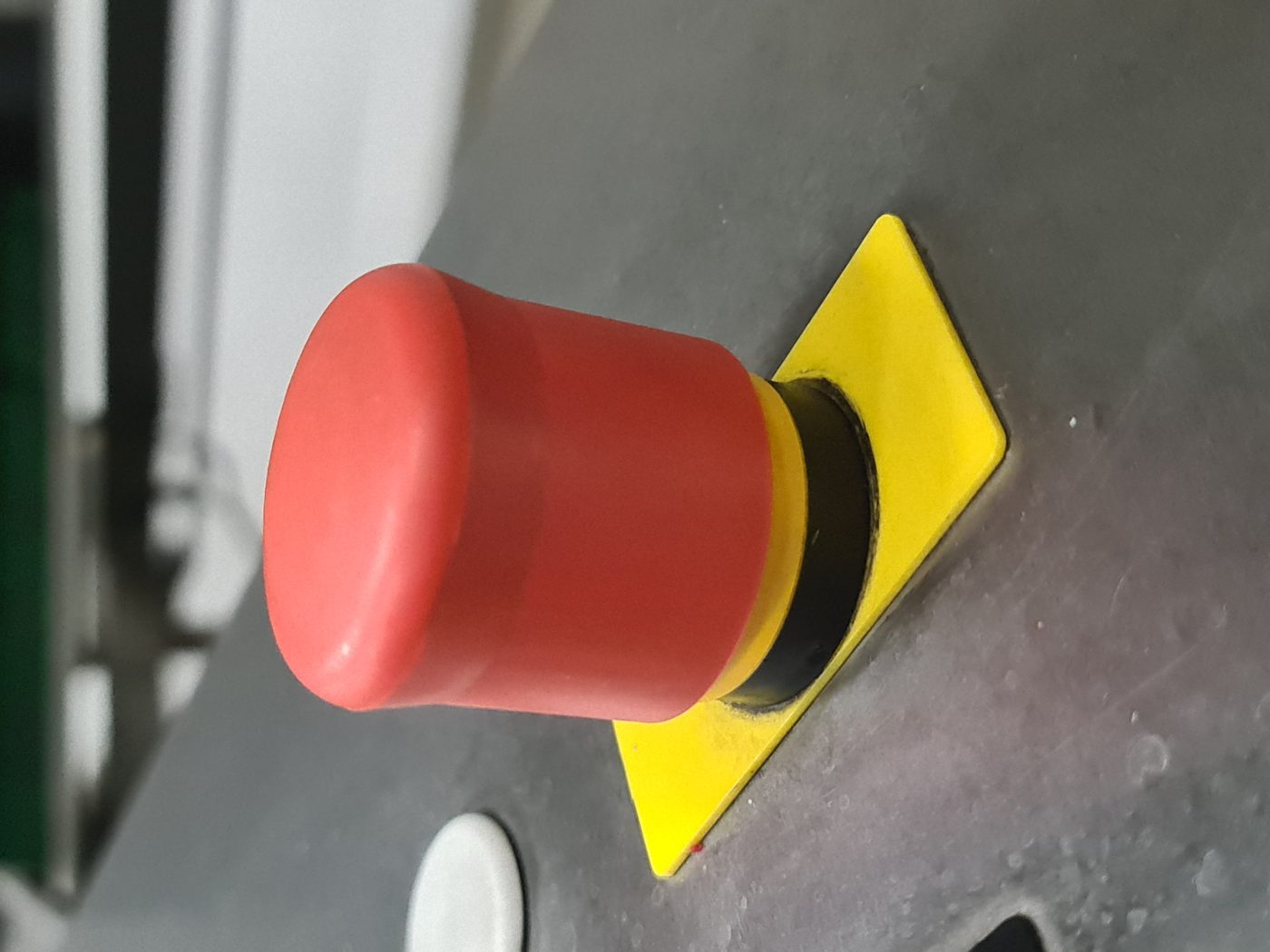
Red emergency stop button on machine panel (Source: Wikimedia Commons)
- Guards and shields: Cover moving parts to prevent accidental contact.
- Temperature controls and alarms: Prevent overheating of ovens and alert staff to malfunction.
- Proper ventilation systems: Reduce airborne flour dust, which can cause respiratory issues.
Example: A retail bakery in Mombasa installed emergency stop switches on all mixers and trained staff on their use, reducing the incidence of hand injuries.
4.1.4 Training and Safety Culture Development
The most well-equipped bakery plant can still be unsafe without a strong safety culture and well-trained staff. Training programs and continuous safety awareness are essential to embed safety practices into everyday work.
Components of Effective Safety Training
- Hazard recognition: Workers learn to identify potential risks specific to bakery equipment and processes.
- Proper equipment use: Hands-on training on operating ovens, mixers, and packaging machines safely.
- Emergency procedures: Instruction on fire drills, first aid, and evacuation plans.
- Use of PPE: Training on when and how to correctly use protective gear.
- Reporting and feedback: Encouraging workers to report unsafe conditions and participate in safety meetings.
Building a Safety Culture
- Management commitment to safety creates a positive environment where workers feel responsible and empowered.
- Regular safety meetings and updates maintain awareness and address emerging risks.
- Recognition programs for safe practices motivate staff to adhere to safety standards.
- Inclusion of safety performance in employee evaluations emphasizes its importance.
Example: At a university bakery in Kisumu, monthly safety workshops reduced accidents by 40% within a year by fostering open communication and continuous learning.
Practice Questions
- Explain five key legal requirements that govern safety in bakery plants in Kenya. (10 marks)
- Identify and describe six common hazards found in bakery operations and how risk assessment helps in managing them. (12 marks)
- Discuss the role of personal protective equipment in bakery safety and provide examples of at least five types used. (10 marks)
- Outline six steps involved in developing a strong safety culture within a bakery plant. (12 marks)
The rest of this chapter
🔒Create a free account to open more of this chapter.
Free: practical guides, quick cards, workplace scenarios and more.
Create a free account 🔒4.2 Precautions
In bakery plant and equipment operations, safety precautions are essential to protect workers, maintain equipment integrity, and ensure product quality. Kenyan workplaces such as county referral hospitals, universities, retail bakeries, and hotels face daily r…
🔒4.3 Fire Safety
Fire safety is a critical aspect of workplace health and safety in any professional environment in Kenya. Whether in a county referral hospital, a university laboratory, a retail supermarket, or a hotel kitchen, understanding fire risks and being prepared to p…
🔒4.4 First Aid
First aid knowledge is crucial in bakery plants and equipment environments because accidents such as burns, cuts, and slips are common. In Kenyan workplaces like county referral hospitals, hotels, and retail outlets, immediate first aid response can prevent mi…
🔒4.5 Legislation
In Kenya, the safety of workers and the public in workplaces such as bakery plants is governed by a comprehensive legal framework. This legislation ensures that employers provide safe working environments and that employees follow safety protocols to prevent a…
Chapter Summary
This chapter explored the essential safety requirements necessary for operating bakery plants and equipment, emphasizing the need for proper training, protective gear, and regular maintenance to prevent accidents. It detailed various precautions that workers must observe to minimize risks, including safe handling of machinery and adherence to hygiene standards. Fire safety was addressed with a focus on prevention measures, the correct use of fire extinguishers, and evacuation procedures to protect personnel and property. The chapter also highlighted the importance of first aid readiness, outlining basic treatment methods for common injuries and the need for accessible first aid kits. Finally, it reviewed relevant legislation governing workplace safety in the bakery industry, underscoring employers’ and employees’ responsibilities to comply with national safety laws and regulations. Together, these topics provide a comprehensive framework for maintaining a safe working environment in bakery operations.
Self-Assessment
🔒 PDFDownload this self-assessment, with answers
A. Written Assessment
- What are the key safety requirements for operating bakery plant equipment? (3 marks)
- Identify four common precautions that should be taken to prevent accidents in a bakery plant. (4 marks)
🔒20 more in this section.
Chapter Examination Questions
🔒 PDFDownload these examination questions, with worked answers
SECTION A (40 Marks) - Answer ALL Questions
- Identify five key safety requirements that must be observed when operating bakery plant equipment in a county referral hospital. (4 marks)
- Explain four precautions that bakery workers should take to prevent accidents when handling hot ovens in a hotel kitchen. (4 marks)
🔒18 more in this section.
