
By the end of this chapter, you will be able to:
Mastering these skills will help you create precise patterns that meet industry standards and set you up for success in the fashion and garment trade.
Compiled by: Joan Cherono
Pattern construction is a fundamental skill for fashion designers, enabling them to translate creative ideas into tangible garment shapes. In Kenya’s dynamic fashion industry, mastery of pattern drafting tools and equipment is essential for producing well-fitted, market-ready clothing that meets local and international standards. This chapter focuses on the essential instruments and devices that facilitate accurate pattern construction, ensuring efficiency and precision in design processes across various Kenyan fashion enterprises, from boutique studios in Nairobi to garment manufacturers in Mombasa.
Pattern drafting requires specialized tools that support measurement accuracy, shape definition, and cutting precision. These tools vary from basic manual instruments to advanced mechanical devices, each playing a critical role in the pattern-making workflow. Kenyan fashion professionals rely on these tools to maintain quality and consistency, whether working on custom designs for clients at a boutique or preparing bulk patterns for apparel production in garment factories.
| Name | Specification | Use |
|---|---|---|
| Measuring Tape | Flexible, 150 cm length, fiberglass | Measuring body dimensions and fabric length |
| L-Square | 60 cm length, transparent plastic | Drawing straight lines and right angles |
| French Curve | Plastic, 30 cm length | Drawing smooth curved lines like armholes |
| Hip Curve | Plastic, 50 cm length | Shaping hip and waist curves |
| Pattern Master | Rigid plastic, 30 cm length | Drawing smooth curves and straight lines |
| Dressmaker’s Chalk | White or colored, triangular shape | Marking fabric without permanent damage |
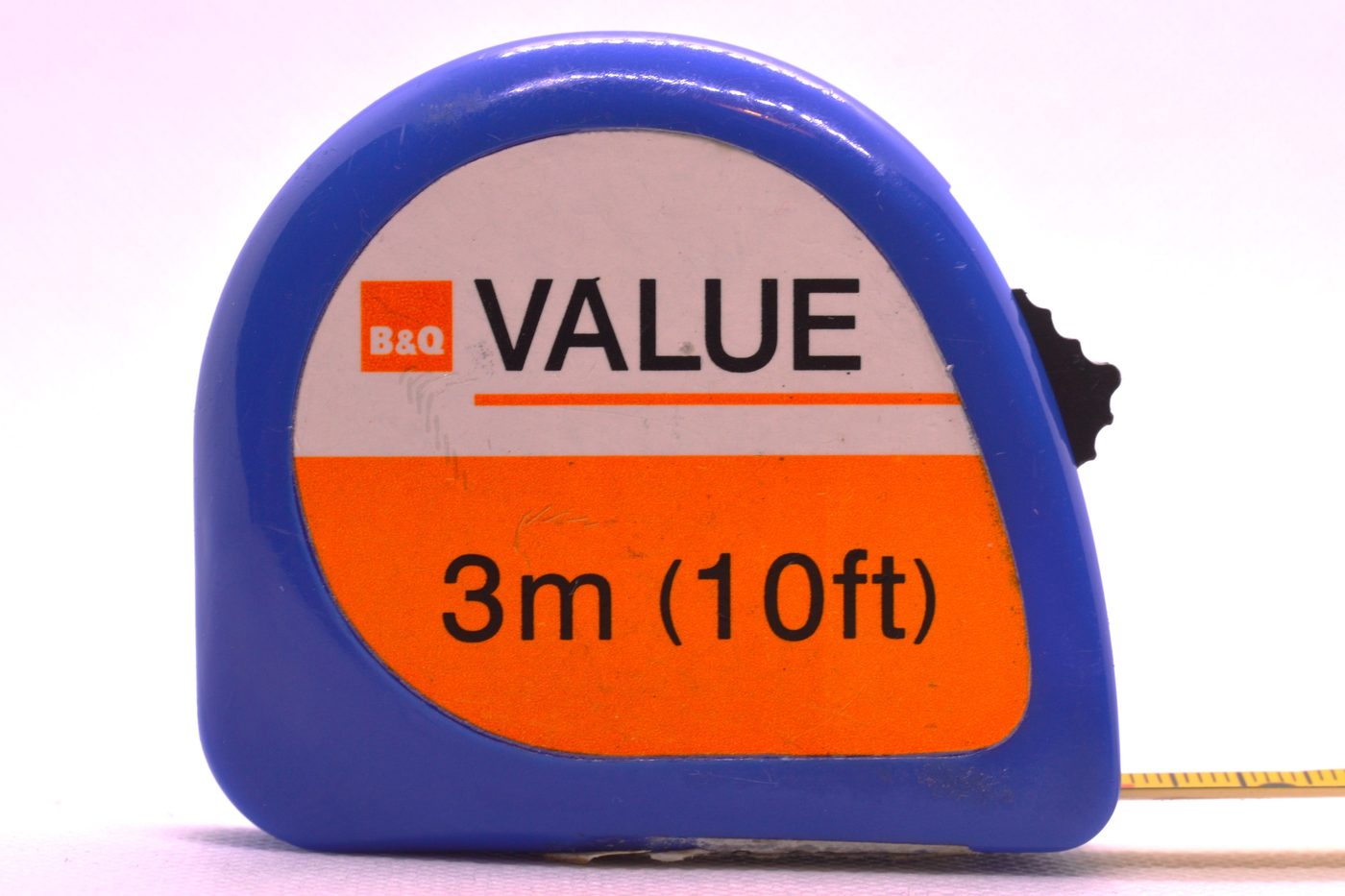
A 3m (10ft) measuring tape (Source: Wikimedia Commons)
Cutting and marking tools are vital for transferring patterns onto fabric and ensuring clean, accurate cuts that preserve the intended design shape. The quality and condition of these tools directly impact the final garment’s finish and fit.
| Name | Specification | Use |
|---|---|---|
| Fabric Scissors | 25 cm blade, sharp stainless steel | Cutting fabric smoothly without fraying |
| Rotary Cutter | Circular blade, 45 mm diameter | Cutting fabric in straight or curved lines |
| Tracing Wheel | Serrated or smooth wheel | Transferring pattern markings onto fabric |
| Tailor’s Chalk | Colored, triangular or rectangular | Temporary fabric marking |
| Pins | Steel, 3 cm length | Holding fabric layers and patterns together |
Precision is paramount in pattern construction, and specialized measuring devices enhance accuracy beyond basic tape measures. These tools are particularly important in Kenyan fashion firms that produce tailored garments requiring exact fit.
| Name | Specification | Use |
|---|---|---|
| Hip Curve Ruler | Transparent plastic, 50 cm length | Measuring and drafting hip curves |
| Curve Ruler | Flexible plastic, 30 cm length | Drawing variable curves with smooth transitions |
| Caliper | Stainless steel, 15 cm length | Measuring small distances and seam allowances |
| Square Ruler | Metal or plastic, 30 cm length | Ensuring right angles and straight lines |
| Pattern Notcher | Metal, plier type | Creating small notches for alignment markers |
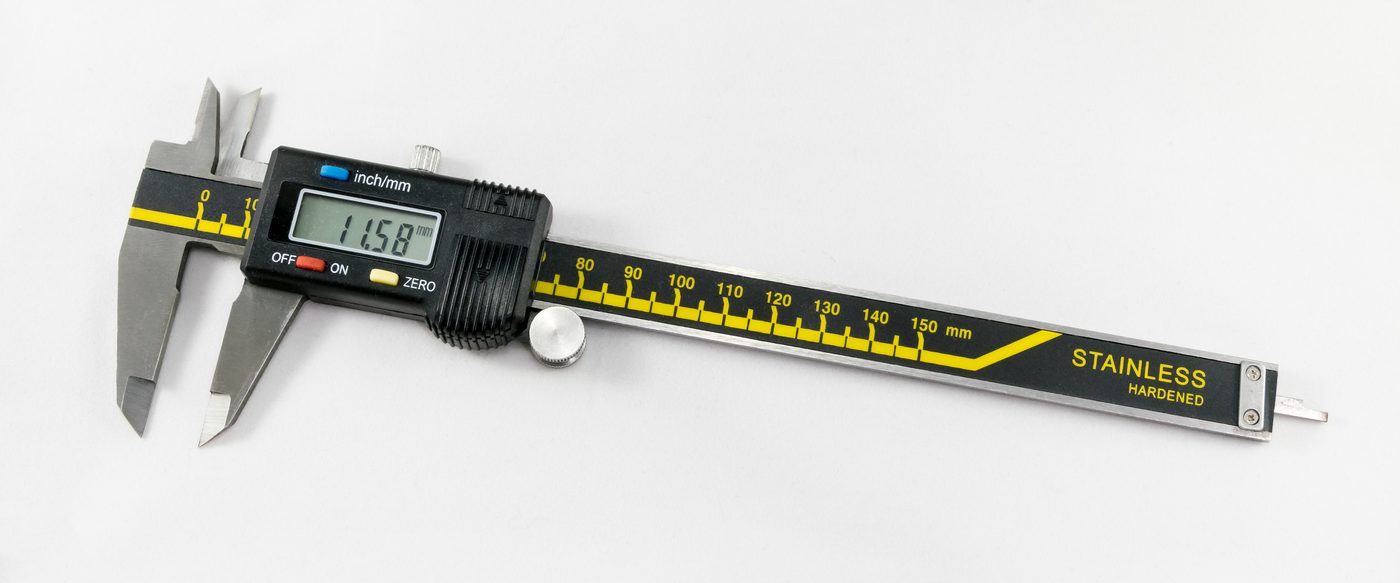
Digital caliper for precise measurements (Source: Wikimedia Commons)
Beyond hand tools, equipment such as pattern paper, cutting tables, and storage systems enhance workflow efficiency and professionalism in Kenyan fashion design environments. These resources support large-scale or detailed pattern work.
| Name | Specification | Use |
|---|---|---|
| Pattern Paper | 90 cm width, semi-transparent roll | Drafting and tracing patterns |
| Cutting Table | 2 m x 1 m, smooth surface | Providing stable surface for cutting |
| Pattern Weights | Metal or plastic, 500 g each | Holding pattern paper or fabric flat |
| Tape Measure Holder | Wall-mounted, plastic or metal | Organizing measuring tapes |
| Pattern Storage Tubes | Cardboard or plastic, 1 m length | Protecting and storing patterns |
Create a free account to open more of this chapter.
Free: practical guides, quick cards, workplace scenarios and more.
Create a free accountThis chapter provided a comprehensive overview of the essential tools and equipment used in pattern drafting, highlighting their specific functions in garment construction. It emphasized the importance of proper use, care, and storage of these tools to maintain their precision and longevity. The discussion then moved to the various materials and supplies required for effective pattern construction, including paper types and marking instruments. An in-depth exploration of standard body measurements was presented, detailing how these measurements serve as the foundation for creating accurate patterns. Finally, the chapter covered the identification and interpretation of size chart measurements, enabling the development of patterns that correspond to standardized sizing systems. Together, these topics establish a solid framework for understanding the principles and practicalities of plan pattern construction in the garment industry.
Type: Individual
| Tools & Equipment | Materials |
|---|---|
| Tailor's chalk | Carbon paper |
| Measuring tape (150 cm) | Pattern drafting paper (manilla paper) |
| French curve ruler | Personal Protective Equipment (dust coat, flat closed shoes) |
| Hip curve ruler | |
| L-square ruler | |
| Pattern notcher | |
| Tracing wheel | |
| Scissors (fabric and paper) | |
| Pencil (HB) | |
| Eraser | |
| Masking tape |
| S/N | Item | Quantity |
|---|---|---|
| 1 | Tailor's chalk | 1 Pc per Candidate |
| 2 | Measuring tape (150 cm) | 1 Pc per Candidate |
| 3 | French curve ruler | 1 Pc per Candidate |
| 4 | Hip curve ruler | 1 Pc per Candidate |
| 5 | L-square ruler | 1 Pc per Candidate |
| 6 | Pattern notcher | 1 Pc per Candidate |
| 7 | Tracing wheel | 1 Pc per Candidate |
| 8 | Carbon paper | 1 Sheet per Candidate |
| 9 | Pattern drafting paper (manilla paper) | 1 Sheet approx 70cm x 100cm per Candidate |
| 10 | Scissors (fabric and paper) | 1 Pair each per Candidate |
| 11 | Pencil (HB) | 1 Pc per Candidate |
| 12 | Eraser | 1 Pc per Candidate |
| 13 | Masking tape | 1 Small roll per Candidate |
| 14 | Personal Protective Equipment (dust coat, flat closed shoes) | 1 Set per Candidate |
| Items to be Evaluated | Marks Available | Marks Obtained | Comments |
|---|---|---|---|
| TASK 1: Identification and selection of pattern drafting tools | |||
| Wore appropriate personal protective equipment (dust coat, flat closed shoes) (Award 2 marks for correct and appropriate PPE usage) | 2 | ||
| Identified all required pattern drafting tools correctly (Tailor's chalk, measuring tape, French curve, hip curve, L-square, pattern notcher, tracing wheel, scissors, pencil, eraser, masking tape) (Award 0.5 marks for each correct tool identified) | 6 | ||
| Selected appropriate tools correctly for drafting a bodice block (Award 1 mark each for correctly selecting 4 key tools for drafting bodice block) | 4 | ||
| Explained the correct use of each selected pattern drafting tool clearly and accurately (Award 2 marks each for explanation of 4 selected tools) | 8 | ||
| Handled tools safely and appropriately during selection and explanation (Award 2 marks for safe handling and adherence to safety procedures) | 2 | ||
| Sub-Total | 22 | ||
| PRODUCT CHECKLIST | |||
| Correct identification and labeling of all pattern drafting tools on checklist (Award 1 mark each for 6 key tools correctly identified and labeled) | 6 | ||
| Clear, concise, and accurate explanation notes provided for each tool (Award 2 marks each for clear explanation of 3 most important tools) | 6 | ||
| Tools selected correspond correctly to the drafting of a basic bodice block (500mm x 700mm) (Award 6 marks if all selected tools are appropriate and sufficient for the task) | 6 | ||
| Sub-Total | 18 | ||
| GRAND TOTAL | 40 | ||
Type: Individual
| Tools & Equipment | Materials |
|---|---|
| Tailor's chalk | Tailor's chalk |
| Carbon paper | Carbon paper |
| Manilla paper | Manilla paper |
| Pattern master ruler (60 cm) | Pencil (HB) |
| French curve ruler | Eraser |
| Set square (30 cm) | |
| Scissors (sharp pattern cutting scissors) | |
| Pencil (HB) | |
| Eraser | |
| Measuring tape (150 cm) | |
| Storage box | |
| Lint-free cleaning cloth |
| S/N | Item | Quantity |
|---|---|---|
| 1 | Tailor's chalk | 1 Pc per Candidate |
| 2 | Carbon paper | 1 Pc per Candidate |
| 3 | Manilla paper | 1 Sheet per Candidate |
| 4 | Pattern master ruler (60 cm) | 1 Pc per Candidate |
| 5 | French curve ruler | 1 Pc per Candidate |
| 6 | Set square (30 cm) | 1 Pc per Candidate |
| 7 | Scissors (sharp pattern cutting scissors) | 1 Pc per Candidate |
| 8 | Pencil (HB) | 2 Pcs per Candidate |
| 9 | Eraser | 1 Pc per Candidate |
| 10 | Measuring tape (150 cm) | 1 Pc per Candidate |
| 11 | Storage box | 1 Pc per Candidate |
| 12 | Lint-free cleaning cloth | 1 Pc per Candidate |
| Items to be Evaluated | Marks Available | Marks Obtained | Comments |
|---|---|---|---|
| TASK 1: Use of Pattern Drafting Tools | |||
| Identified and wore appropriate PPE (dust coat, flat closed shoes) (Award 2 marks for correct PPE use) | 2 | ||
| Selected correct pattern drafting tools as per task requirements (Award 1 mark each for selecting 3 or more correct tools) | 3 | ||
| Demonstrated correct use of tailor's chalk and pencil in marking patterns (Award 2 marks each for correct technique with chalk and pencil) | 4 | ||
| Used rulers (pattern master, French curve, set square) correctly for straight and curved lines (Award 1 mark each for proper use of each ruler) | 5 | ||
| Demonstrated correct use of carbon paper for transferring pattern marks (Award 3 marks for correct layering, pressure, and neat transfer) | 3 | ||
| Handled scissors correctly to cut manilla paper without damage (Award 3 marks for safe and precise cutting technique) | 3 | ||
| Sub-Total | 20 | ||
| TASK 2: Cleaning, Maintenance and Storage of Tools | |||
| Cleaned drafting tools using lint-free cloth to remove chalk and dust residues (Award 4 marks for thorough and careful cleaning) | 4 | ||
| Checked tools for damage or wear and reported any faults (Award 3 marks for correctly identifying and reporting issues) | 3 | ||
| Applied any required maintenance such as sharpening scissors or smoothing ruler edges (Award 4 marks for proper maintenance actions) | 4 | ||
| Stored all tools neatly in the storage box in an organized manner (Award 4 marks for proper and safe storage) | 4 | ||
| Maintained a clean and safe workstation throughout the task (Award 3 marks for hygiene and safety observance) | 3 | ||
| Sub-Total | 18 | ||
| PRODUCT CHECKLIST | |||
| Tools are clean, maintained, free from damage, and stored correctly in the storage box (Award 7 marks for fully meeting all criteria) | 7 | ||
| Pattern marks on manilla paper are clear, accurate, and neat demonstrating correct use of tools (Award 5 marks for neat and accurate pattern markings) | 5 | ||
| Carbon paper transfer is clear and without smudges (Award 5 marks for clean and precise transfer) | 5 | ||
| Scissors cuts are clean with no jagged edges or tears on manilla paper (Award 3 marks for clean and precise cutting) | 3 | ||
| Sub-Total | 20 | ||
| GRAND TOTAL | 58 | ||
At the start of this chapter we promised you would be able to:
Tick each one you can genuinely do.
So, are you there yet?
You're competent when you can confidently do 50% or more of what this chapter promised.
Sign in to record how you're doing.