
By the end of this chapter, you will be able to:
Mastering these skills ensures you create beautiful, safe, and well-made garments that meet professional standards in the fashion industry!
Compiled by: Joan Cherono
The design and construction of ladies' wear demand meticulous planning to ensure safety, efficiency, and quality in the workspace. In Kenya's fashion industry, where small workshops and larger design studios coexist, adherence to health and safety protocols is critical. Personal Protective Equipment (PPE) plays a vital role in protecting fashion designers and garment constructors from occupational hazards such as needle pricks, fabric dust, chemical exposure, and machine-related injuries. Understanding and properly using PPE is essential to maintain a safe working environment and uphold professional standards in ladies' wear production.
The variety of PPE used in ladies' wear garment construction corresponds to the range of physical and chemical hazards present in the workspace. Each type serves a specific protective function that addresses particular risks encountered during design and production processes.
Protective Gloves: These prevent cuts, punctures, and chemical exposure when handling sharp tools like scissors or applying dyes. For instance, tailors at a Nairobi-based tailoring workshop wear nitrile gloves during fabric treatment to avoid skin irritation from chemicals.
Eye Protection: Safety goggles or glasses shield eyes from flying fabric particles, pins, or splashes of dye. At a garment factory in Kisumu, workers use goggles during fabric cutting to avoid eye injuries from airborne fibers.
A pair of safety glasses (Source: RCTDS301_Drainage_system)
Protective Clothing: Aprons or smocks protect personal clothing from stains and reduce contamination risks. Designers at a fashion school in Mombasa wear cotton aprons to maintain hygiene and safeguard against fabric dust.
Face Masks: Masks help prevent inhalation of dust, fibers, and chemical fumes. Employees at a textile printing company in Eldoret use surgical masks while working with synthetic fabrics that release fine particles.
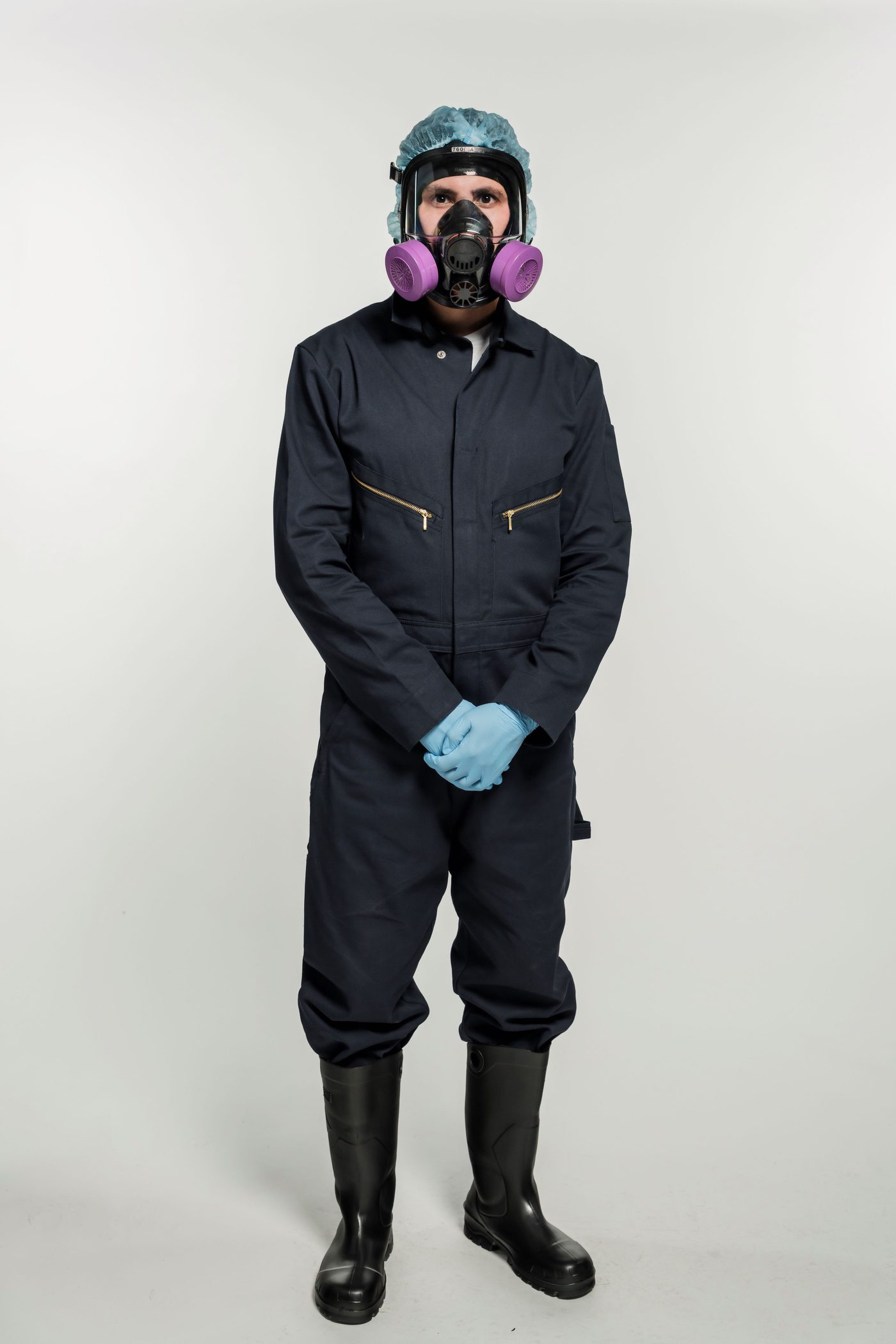
Person wearing a construction face mask with filters (Source: Wikimedia Commons)
Proper PPE use is fundamental to ensuring worker safety and maintaining productivity in ladies' wear production environments. The Kenyan fashion industry, which includes both small-scale designers and large manufacturers, benefits from PPE adherence through reduced absenteeism and improved morale.
Prevention of Injuries: PPE minimizes risks of cuts, punctures, and eye damage caused by sharp tools and machinery commonly used in garment construction.
Health Protection: Masks and gloves prevent respiratory and skin problems associated with exposure to fabric dust and chemical dyes, which are prevalent in textile processing.
Compliance with Regulations: Use of PPE aligns with Kenya’s Occupational Safety and Health Act (OSHA), helping businesses avoid legal penalties and enhance their reputation.
Enhanced Productivity: Workers who feel safe and protected are more focused and efficient, leading to timely completion of garment orders.
Cost Reduction: Preventing accidents reduces medical expenses and compensation claims, which can be significant for small fashion enterprises.
Choosing the right PPE and maintaining it in good condition are crucial for effective protection during ladies’ garment construction. Kenyan fashion studios and workshops must consider the nature of tasks and hazards when selecting PPE to ensure comfort and functionality.
Task-Specific Protection: Gloves for cutting require cut-resistant materials, while those used for chemical handling need chemical-resistant properties.
Comfort and Fit: PPE must fit well to avoid hindering movement or causing discomfort, which can lead to non-compliance. For example, tailors in Nairobi prefer lightweight gloves that allow dexterity when sewing.
Durability: Materials used should withstand frequent use and cleaning without losing protective qualities.
Compliance Standards: PPE should meet Kenyan or international safety standards to guarantee effectiveness.
Regular Cleaning: PPE such as gloves and aprons must be cleaned after each use to remove contaminants and maintain hygiene.
Inspection: Before use, PPE should be checked for damages like tears or cracks that compromise protection.
Proper Storage: Store PPE in clean, dry areas away from direct sunlight to prolong lifespan.
Replacement: Damaged or worn-out PPE must be replaced promptly to ensure continuous safety.
Ensuring that all personnel involved in ladies’ wear design and construction understand and consistently use PPE requires structured training and enforcement mechanisms. Kenyan garment producers benefit from adopting clear policies and continuous education on PPE.
Risk Awareness: Educate workers on hazards related to their specific tasks and how PPE mitigates these risks.
Correct Usage: Demonstrate proper methods of donning, wearing, and removing PPE to avoid contamination or injury.
Care and Maintenance: Teach procedures for cleaning and storing PPE to maintain its protective function.
Emergency Procedures: Train staff on actions to take if PPE fails or accidents occur during garment construction.
Clear Policies: Establish workplace rules mandating PPE use during specified tasks, communicated through signage and meetings.
Supervision: Assign safety officers or supervisors to monitor compliance and provide immediate corrective feedback.
Incentives and Penalties: Implement reward systems for consistent PPE use and disciplinary measures for non-compliance.
Regular Audits: Conduct periodic safety audits to assess PPE usage and identify areas for improvement.
Explain five types of Personal Protective Equipment commonly used in ladies’ wear garment construction and their specific protective functions. (10 marks)
Discuss the importance of using PPE in a ladies’ wear workshop and how it benefits both workers and employers. (10 marks)
Describe the key factors to consider when selecting and maintaining PPE in a fashion design studio. (10 marks)
Outline six steps involved in training workers on the correct use and enforcement of PPE in garment production settings. (10 marks)
Create a free account to open more of this chapter.
Free: practical guides, quick cards, workplace scenarios and more.
Create a free accountThis chapter covered essential personal protective equipment (PPE) required in garment construction to ensure safety and hygiene during the design and sewing processes. It then explored the various tools and equipment used in clothing construction, highlighting their specific functions and importance in achieving quality workmanship. The discussion progressed to the materials and supplies necessary for garment making, emphasizing the selection of appropriate fabrics, threads, and accessories to suit different design requirements. A detailed analysis of ladies' garment designs followed, focusing on understanding style elements, silhouette, and garment features that influence construction methods. The chapter integrated these components to provide a comprehensive approach to planning and executing ladies' wear projects effectively. Understanding each aspect equips students with the knowledge to produce well-crafted garments that meet both aesthetic and functional standards. This foundation is crucial for success in the fashion and textile industry, particularly in tailoring ladies' clothing.
Which of the following is NOT considered personal protective equipment (PPE) in a garment construction workshop? (2 marks)
a) Sewing machine needle guard
b) Fabric scissors
c) Dust mask
d) Safety gloves
Explain why it is important to use the correct sewing machine needle type when constructing ladies' garments. (3 marks)
Type: Individual
| Tools & Equipment | Materials |
|---|---|
| Tailor's pencil | Printed ladies garment design sheets |
| Measuring tape 150 cm | Tracing paper A3 size |
| Ruler 30 cm | Notebook |
| Pen | |
| Personal Protective Equipment (Dust coat, closed shoes) |
| S/N | Item | Quantity |
|---|---|---|
| 1 | Printed ladies garment design sheets | 3 pcs per Candidate |
| 2 | Tracing paper A3 size | 2 sheets per Candidate |
| 3 | Tailor's pencil | 1 pc per Candidate |
| 4 | Measuring tape 150 cm | 1 pc per Candidate |
| 5 | Ruler 30 cm | 1 pc per Candidate |
| 6 | Notebook | 1 pc per Candidate |
| 7 | Pen | 1 pc per Candidate |
| 8 | Personal Protective Equipment (Dust coat, closed shoes) | 1 set per Candidate |
| Items to be Evaluated | Marks Available | Marks Obtained | Comments |
|---|---|---|---|
| TASK 1: Preparation and Safety | |||
| Wore appropriate PPE (dust coat and closed shoes) (Award 1 mark each for dust coat, closed shoes, and proper wearing) | 3 | ||
| Ensured well-lit and ventilated working environment (Award 2 marks for ensuring both lighting and ventilation) | 2 | ||
| Sub-Total | 5 | ||
| TASK 2: Gathering Tools and Materials | |||
| Collected all required tools and materials as per cutting list (Award 1 mark each for tailor's pencil, measuring tape, ruler, tracing paper, and design sheets) | 5 | ||
| Sub-Total | 5 | ||
| TASK 3: Analysis of Ladies' Garment Designs | |||
| Identified and documented style elements such as neckline, sleeve type, silhouette, and embellishments (Award 2 marks each for correctly identifying neckline, sleeve type, silhouette, embellishments, and fabric suggestions) | 10 | ||
| Interpreted construction requirements including seam types, darts, pleats, and closures (Award 2 marks each for correctly identifying seam types, darts, pleats, closures, and finishing techniques) | 10 | ||
| Sub-Total | 20 | ||
| TASK 4: Documentation and Presentation | |||
| Recorded findings clearly and accurately in the notebook (Award 5 marks for clear, legible, and complete documentation) | 5 | ||
| Presented traced design elements on tracing paper neatly (Award 5 marks for neatness, accuracy, and completeness of traced elements) | 5 | ||
| Sub-Total | 10 | ||
| TASK 5: Clean Up and Reporting | |||
| Tidy workspace and returned tools and materials appropriately (Award 3 marks for cleaning and organizing workspace properly) | 3 | ||
| Reported any issues or difficulties encountered to assessor (Award 2 marks for timely and clear reporting) | 2 | ||
| Sub-Total | 5 | ||
| PRODUCT CHECKLIST | |||
| Complete and accurate analysis report covering all required style and construction elements (Award 10 marks for correctness, completeness, and clarity) | 10 | ||
| Tracing paper showing clearly identified and labeled garment design elements (Award 5 marks for neatness, accuracy, and labeling) | 5 | ||
| Sub-Total | 15 | ||
| GRAND TOTAL | 60 | ||
Type: Individual
| Tools & Equipment | Materials |
|---|---|
| Scissors | Plain cotton fabric 100cm x 50cm |
| Measuring tape 150cm | Polyester sewing thread small cone |
| Tailor’s chalk | Interfacing fabric 30cm x 30cm |
| Pins packet | Matching buttons 12mm diameter |
| Sewing machine needle size 90/14 | Personal Protective Equipment (dust coat, flat closed shoes) |
| S/N | Item | Quantity |
|---|---|---|
| 1 | Plain cotton fabric 100cm x 50cm | 1 piece per Candidate |
| 2 | Polyester sewing thread small cone | 1 cone per Candidate |
| 3 | Matching buttons 12mm diameter | 6 pieces per Candidate |
| 4 | Interfacing fabric 30cm x 30cm | 1 piece per Candidate |
| 5 | Sewing machine needle size 90/14 | 1 piece per Candidate |
| 6 | Tailor’s chalk | 1 piece per Candidate |
| 7 | Measuring tape 150cm | 1 piece per Candidate |
| 8 | Scissors | 1 pair per Candidate |
| 9 | Pins packet | 1 packet per Candidate |
| 10 | A4 envelope | 1 piece per Candidate |
| 11 | Personal Protective Equipment (dust coat, flat closed shoes) | 1 set per Candidate |
| Items to be Evaluated | Marks Available | Marks Obtained | Comments |
|---|---|---|---|
| TASK 1: Preparation and Identification of Materials | |||
| Identified and wore appropriate personal protective equipment (dust coat, flat closed shoes). (Award 1 mark each for correctly identified and worn PPE items) | 4 | ||
| Observed occupational safety and health requirements by ensuring a clean, well-lit, and organized workspace. (Award 1 mark each for clean area, good lighting, and organized tools) | 3 | ||
| Correctly identified the plain cotton fabric suitable for ladies' blouse construction. (Award 3 marks for correct fabric type and size) | 3 | ||
| Selected appropriate polyester sewing thread matching the fabric. (Award 3 marks for correct thread type and color matching) | 3 | ||
| Chosen suitable interfacing fabric for collar and cuff support. (Award 3 marks for correct interfacing type and size) | 3 | ||
| Selected correct size and number of matching buttons. (Award 2 marks for correct button size and quantity) | 2 | ||
| Gathered and prepared sewing supplies and tools: needle, measuring tape, pins, tailor’s chalk, scissors. (Award 1 mark each for each tool/supply correctly gathered) | 4 | ||
| Sub-Total | 22 | ||
| TASK 2: Verification and Documentation | |||
| Verified compatibility of sewing machine needle with fabric type. (Award 3 marks for correct needle size and type) | 3 | ||
| Checked fabric for defects such as stains, holes, or uneven texture. (Award 3 marks for thorough inspection and identification) | 3 | ||
| Documented selected materials and supplies accurately in the log sheet with date and signature. (Award 5 marks for complete and accurate documentation) | 5 | ||
| Sub-Total | 11 | ||
| PRODUCT CHECKLIST | |||
| Selected fabric is plain cotton measuring approximately 100cm x 50cm, free from defects. (Award 4 marks for correct fabric type, size, and quality) | 4 | ||
| Thread is polyester, matching fabric color and suitable for garment construction. (Award 3 marks for appropriate thread selection) | 3 | ||
| Interfacing fabric is suitable for collar and cuff support and measures approximately 30cm x 30cm. (Award 3 marks for correct interfacing selection and size) | 3 | ||
| Buttons are matching color, size 12mm diameter, total six pieces. (Award 2 marks for correct button selection) | 2 | ||
| All selected tools and supplies are appropriate and ready for garment construction. (Award 3 marks for completeness and appropriateness of tools and supplies) | 3 | ||
| Sub-Total | 15 | ||
| GRAND TOTAL | 48 | ||
At the start of this chapter we promised you would be able to:
Tick each one you can genuinely do.
So, are you there yet?
You're competent when you can confidently do 50% or more of what this chapter promised.
Sign in to record how you're doing.