Costing sanitary appliances requires a thorough understanding of the materials and supplies involved in installation and maintenance. Professionals working in construction, facility management, and maintenance across various Kenyan sectors, such as county referral hospitals, universities, and retail businesses, must accurately estimate material requirements and costs to ensure project success and sustainability. This chapter explores the key materials and supplies used in sanitary appliance work, providing detailed insights into their types, functions, and cost considerations.
2.1 Materials and Supplies
In sanitary appliance installations, the choice and quality of materials directly affect durability, safety, and functionality. Materials such as screws, dowels, cement, sand, pipes, traps, PTFE tape, hemp, jointing paste, and fittings form the backbone of any plumbing or sanitary system. Each material has specific properties and applications that influence overall project costs and maintenance needs. Understanding these materials helps professionals from diverse sectors, including hotels, SACCO offices, and agricultural cooperatives, to plan budgets effectively and avoid costly replacements.
2.1.1 Screws
Screws are fundamental fastening components used in securing sanitary appliances to walls, floors, and other structures. Their selection depends on the type of appliance, the substrate material, and environmental conditions.
Types of Screws Used in Sanitary Work
- Wood Screws: Designed for fixing fixtures into wooden frames, these screws have coarse threads to grip wood fibers securely. For example, in school restroom renovations, wood screws fasten wooden mounting blocks for washbasins.
- Masonry Screws: These screws are hardened and threaded to drill into concrete or brick, often used when mounting to tiled surfaces in county government offices.
- Sheet Metal Screws: Thin and sharp, they are used to attach metal brackets that support sanitary pipes in retail business premises.
- Self-Tapping Screws: These screws create their own thread in metal or plastic, useful when installing plastic cisterns in hotel bathrooms.
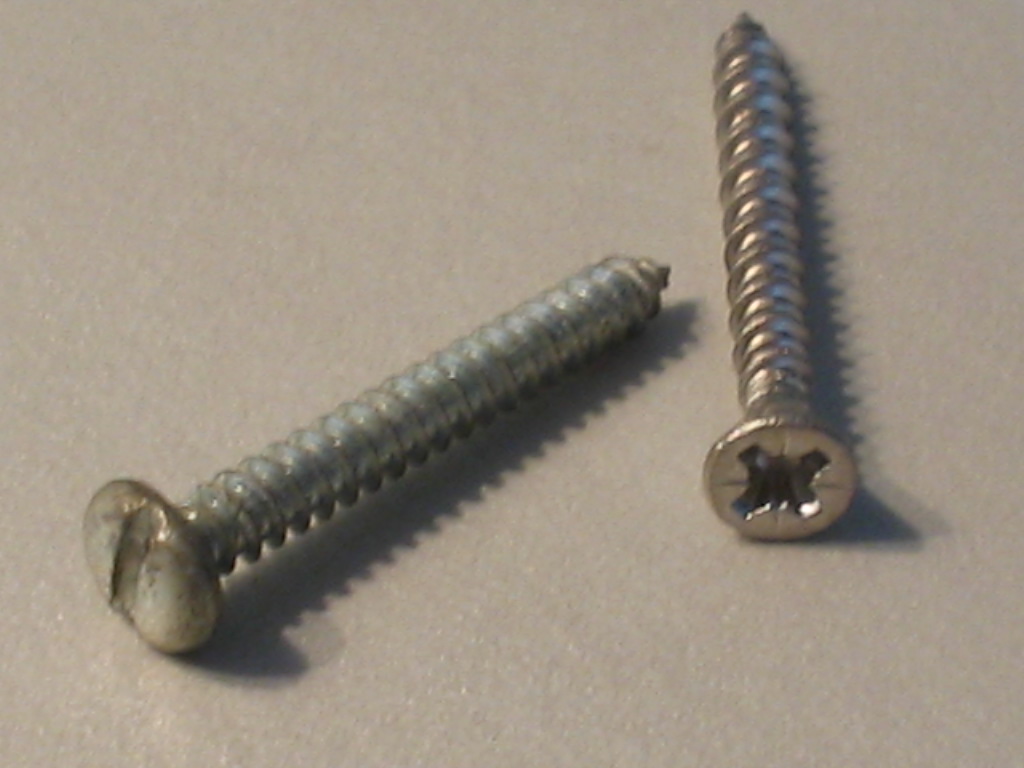
Two self-tapping screws on a surface (Source: Wikipedia (Self-tapping screw))
- Stainless Steel Screws: Resistant to corrosion and rust, ideal for humid environments such as hospital wards where sanitation is critical.

Package of stainless steel screws (Source: Wikimedia Commons)
Material and Coating Considerations
- Screws may be made from carbon steel, stainless steel, or brass, each offering different corrosion resistance levels.
- Coatings such as zinc plating or galvanization protect screws from rust, essential in wet areas like university dormitory bathrooms.
- Choosing the right coating extends the lifespan of the fixture and reduces maintenance costs.
Cost Factors Affecting Screws
- Size and length: Larger screws cost more due to increased material use.
- Material quality: Stainless steel screws command higher prices but offer better durability.
- Quantity purchased: Bulk buying for large projects, e.g., a county hospital renovation, can reduce unit costs.
- Brand reputation and supplier reliability influence pricing and availability.
Usage and Maintenance
- Correct screw selection prevents loosening and damage to appliances.
- Periodic inspection in commercial kitchens ensures screws have not corroded, preventing fixture failure.
- Lubricating screws during installation can ease tightening and reduce wear.
2.1.2 Dowels
Dowels act as anchors for screws in materials that cannot hold screws alone, such as drywall or hollow bricks. They distribute load and increase fastening strength.
Types of Dowels
- Plastic Expansion Dowels: Common in lightweight walls, they expand when a screw is inserted, securing the fixture.
- Nylon Dowels: Resistant to moisture and chemicals, suitable for wet environments like hospital restrooms.
-
Metal Anchors: Provide heavy-duty support for large sanitary appliances in university laboratory wash areas.
-
Toggle Bolts: Used in hollow walls where extra grip is required, e.g., installing handwash basins in county offices.
-
Concrete Screw Anchors: Designed for solid concrete, used in retail shop restroom installations.
Installation Techniques
- Proper hole size drilling is critical to ensure dowel effectiveness.
- Cleaning the hole of dust improves adhesion and holding power.
- Inserting dowels flush with the surface prevents damage to tiles or wall finishes.
Costing Considerations
- Material type affects unit cost: metal anchors are pricier than plastic.
- Bulk purchase discounts apply in large projects such as school sanitation upgrades.
- Dowels come in various sizes; larger diameters cost more but provide better support.
Performance and Durability
- Dowels in damp environments must resist corrosion and swelling.
- Nylon dowels maintain grip even with temperature fluctuations common in Nairobi’s climate.
- Dowels failing under load cause fixture instability and potential safety hazards.
2.1.3 Cement
Cement is a binding material used to fix sanitary appliances, seal joints, and create support structures. Its quality and type influence the strength and longevity of installations.
Types of Cement Relevant to Sanitary Work
-
Ordinary Portland Cement (OPC): Widely used for general fixing, e.g., securing floor traps in hotel kitchens.
-
Rapid Hardening Cement: Used where quick setting is required, such as emergency repairs in county hospitals.
- White Cement: Preferred for aesthetic finishes in visible sanitary installations at university washrooms.
- Sulphate Resisting Cement: Suitable for areas exposed to chemical waste, for instance, pharmaceutical labs in medical training colleges.
- Hydrophobic Cement: Used in damp environments to prevent water ingress, applicable in farm processing facilities.
Factors Affecting Cement Cost
- Cement grade and type influence price; specialized cements cost more.
- Local availability and supplier logistics impact cost, especially in remote agricultural areas.
- Bulk procurement for large-scale projects, such as county government sanitation upgrades, reduces unit cost.
Application and Mixing
- Proper water-to-cement ratio ensures optimal strength; excess water weakens the mix.
- Cement must be mixed with sand and sometimes gravel to create mortar or concrete for fixing appliances.
- Mixing consistency affects adherence and durability of the sanitary fixture.
Storage and Handling
- Cement must be stored in dry conditions to avoid moisture absorption.
- Expired or damp cement loses binding properties, leading to weak installations.
- Safe handling reduces health risks from cement dust exposure.
2.1.4 Sand
Sand is a key aggregate in mortar and concrete mixes used for fixing and bedding sanitary appliances. Its quality affects the strength and finish of the installation.
Types of Sand Used
- Sharp Sand: Coarse and angular, provides strength in concrete mixes for floor traps in retail outlets.
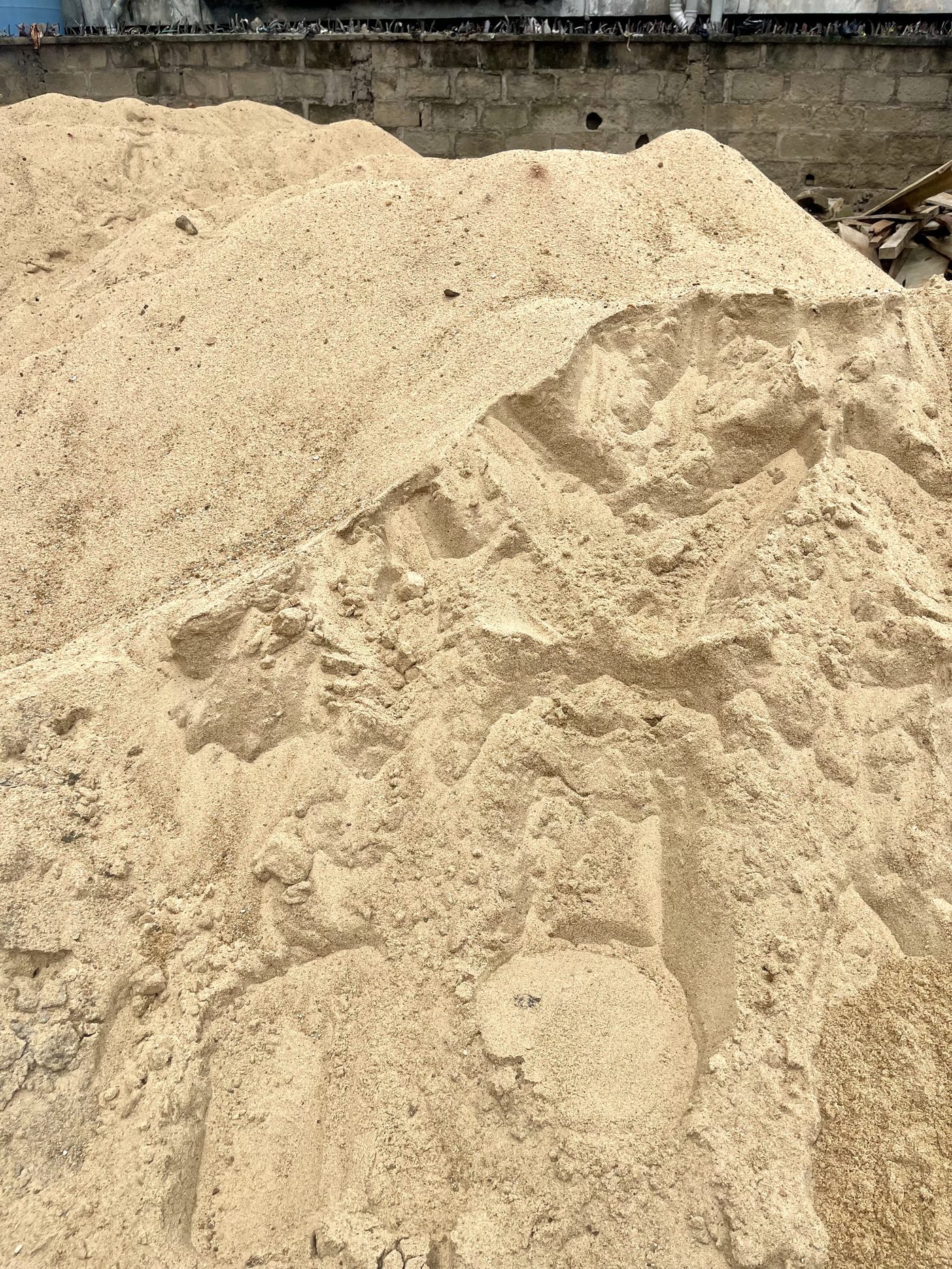
Pile of sharp sand for construction (Source: Wikimedia Commons)
- Mason Sand: Fine and rounded, used in plastering walls around sanitary appliances in county offices.
- Pit Sand: Locally sourced, often used in general construction but may require washing to remove impurities.
- River Sand: Preferred for its cleanliness and smooth texture, used in high-quality finishing in hotel bathrooms.
- Manufactured Sand: Produced by crushing rocks, an alternative in areas where natural sand is scarce.
Quality Parameters
- Sand must be free from clay, silt, and organic matter to ensure strong bonding.
- Grain size distribution affects workability and strength of mortar.
- Sand moisture content influences water demand in mixes.
Cost Influences
- Proximity to sand sources affects transport costs, significant in remote farm cooperatives.
- Sand quality certification can raise prices but ensures compliance with building standards.
- Seasonal availability impacts prices, especially during rainy seasons.
Preparation and Use
- Washing sand removes impurities that weaken mortar.
- Proper grading ensures uniform mix consistency.
- Sand should be stored off the ground and covered to prevent contamination.
2.1.5 Pipes
Pipes form the essential conduits for water supply and waste disposal in sanitary installations. Their material, diameter, and quality affect functionality and cost.
Common Pipe Materials
- PVC Pipes: Lightweight and corrosion-resistant, widely used in university dormitories for water supply.

Stacks of pvc pipes outside a factory (Source: Wikimedia Commons)
- Galvanized Steel Pipes: Durable but prone to rust, used in some older county government buildings.
- Copper Pipes: Offer longevity and resistance to bacteria, preferred in hospital wards.
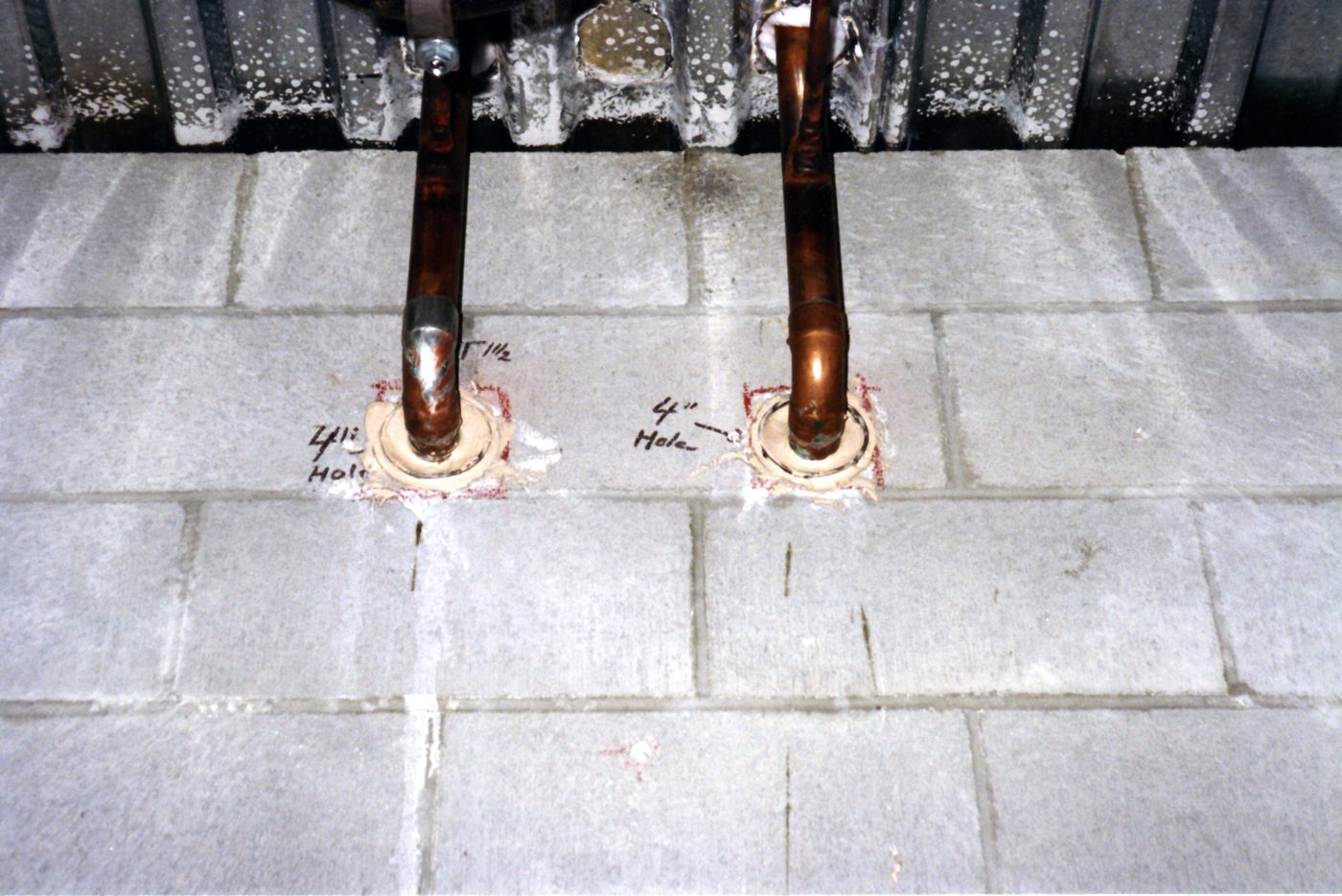
Copper pipes installed through wall holes (Source: Wikimedia Commons)
-
Cast Iron Pipes: Heavy-duty and soundproof, used in commercial buildings like banks for waste disposal.
-
PEX Pipes: Flexible and easy to install, gaining popularity in modern hotel plumbing systems.
Pipe Sizing and Standards
- Correct pipe diameter ensures adequate flow rates and prevents blockages.
- Kenyan Bureau of Standards (KEBS) specifies pipe dimensions and pressure ratings.
- Oversizing pipes increases cost unnecessarily, while undersizing leads to poor performance.
Cost Components
- Material type significantly affects price; copper pipes are costlier than PVC.
- Length and diameter of pipes influence total cost.
- Additional costs include delivery and custom fittings for irregular layouts.
Installation and Maintenance
- Proper jointing techniques prevent leaks and water loss.
- Routine inspections in facilities like county referral hospitals detect corrosion or damage early.
- Using pipe insulation reduces heat loss in hot water systems at agricultural processing plants.
2.1.6 Traps
Traps prevent foul gases from entering occupied spaces by maintaining a water seal in drainage systems. Their design and material affect performance and cost.
Types of Traps
- P-Trap: Common in washbasins, creates a water seal preventing sewer gases.
- S-Trap: Used in floor drains, effective where pipe layout permits.
- Bottle Trap: Compact design, suitable for tight spaces in hotel restrooms.
- Bell Trap: Used in floor traps, simple design but prone to drying out.
- Grease Trap: Installed in commercial kitchens to trap fats and oils, protecting drainage systems in restaurants.
Materials Used
- Plastic traps are lightweight and rust-resistant, common in new constructions.
- Cast iron traps offer durability and sound insulation, preferred in older buildings.
- Stainless steel traps resist corrosion in harsh environments like slaughterhouses.
Costing Factors
- Trap size and complexity affect price.
- Material choice influences durability and maintenance costs.
- Specialized traps, such as grease traps, have higher upfront costs but reduce downstream plumbing expenses.
Installation Considerations
- Correct trap installation angle and depth are critical to maintain water seal.
- Regular cleaning prevents blockages and foul odors in facilities like county offices.
- Traps must be accessible for maintenance without disrupting operations.
2.1.7 PTFE Tape
PTFE tape, also known as plumber’s tape, is a sealing material used on threaded pipe joints to prevent leaks. It is inexpensive but plays a critical role in ensuring system integrity.
Properties of PTFE Tape
- Made from polytetrafluoroethylene, it is chemically inert and temperature resistant.
- Provides lubrication to ease joint assembly.
- Fills minor gaps in threads, enhancing seal tightness.
Application Techniques
- Wrapping direction must follow thread rotation to avoid unwrapping during tightening.
- Multiple wraps increase sealing effectiveness but excessive use can cause joint misalignment.
- Used widely in hospital laboratories for water and gas pipe connections.
Cost and Availability
- PTFE tape is low-cost and widely available in hardware stores across Kenya.
- Bulk purchase reduces unit price for large construction projects.
- Quality varies; thicker tape provides better sealing but costs more.
Limitations and Alternatives
- Not suitable for compression or flanged joints.
- Alternatives include jointing paste and hemp for certain applications.
- PTFE tape cannot compensate for damaged threads; proper pipe preparation is essential.
2.1.8 Hemp
Hemp fiber is a traditional sealing material used on pipe threads to improve watertightness. Though less common today, it remains useful in certain plumbing repairs.
Characteristics of Hemp in Plumbing
- Natural fiber that swells when wet, improving joint tightness.
- Biodegradable and environmentally friendly.
- Requires jointing paste to hold in place and enhance sealing.
Usage Contexts
- Used in older buildings undergoing maintenance, such as county government offices.
- Suitable for metal pipe threads where PTFE tape may not adhere well.
- Applied manually by skilled plumbers familiar with traditional methods.
Cost Factors
- Hemp is inexpensive but requires additional jointing paste.
- Availability depends on local suppliers, sometimes sourced from agricultural cooperatives.
- Labor-intensive application increases overall cost.
Limitations and Handling
- Less durable than synthetic seals; requires periodic inspection.
- Can cause clogging if fibers break off inside pipes.
- Proper storage prevents moisture absorption and degradation.
2.1.9 Jointing Paste
Jointing paste is a thick, adhesive sealant used to secure pipe threads and fittings. It complements materials like hemp and enhances leak prevention.
Composition and Properties
- Made from a mixture of oils, resins, and fillers.
- Provides waterproof sealing and resists chemical attack.
- Remains pliable to allow for pipe movement without cracking.
Applications
- Used with hemp to seal metal pipe threads in county hospital water systems.
- Applied on compression joints and valves to prevent leaks.
- Suitable for both potable water and waste systems.
Cost Considerations
- Jointing paste is moderately priced, with higher-quality brands costing more.
- Bulk procurement by institutions like universities lowers unit cost.
- Shelf life varies; expired paste loses effectiveness.
Storage and Safety
- Must be stored in airtight containers to prevent drying.
- Handling requires gloves to avoid skin irritation.
- Disposal must follow environmental regulations, relevant for organizations like NEMA.
2.1.10 Fittings
Fittings connect pipes and appliances, directing flow and allowing for changes in direction or size. Their variety and quality influence installation complexity and cost.
Types of Fittings
- Elbows: Change pipe direction, essential in complex layouts such as university laboratories.
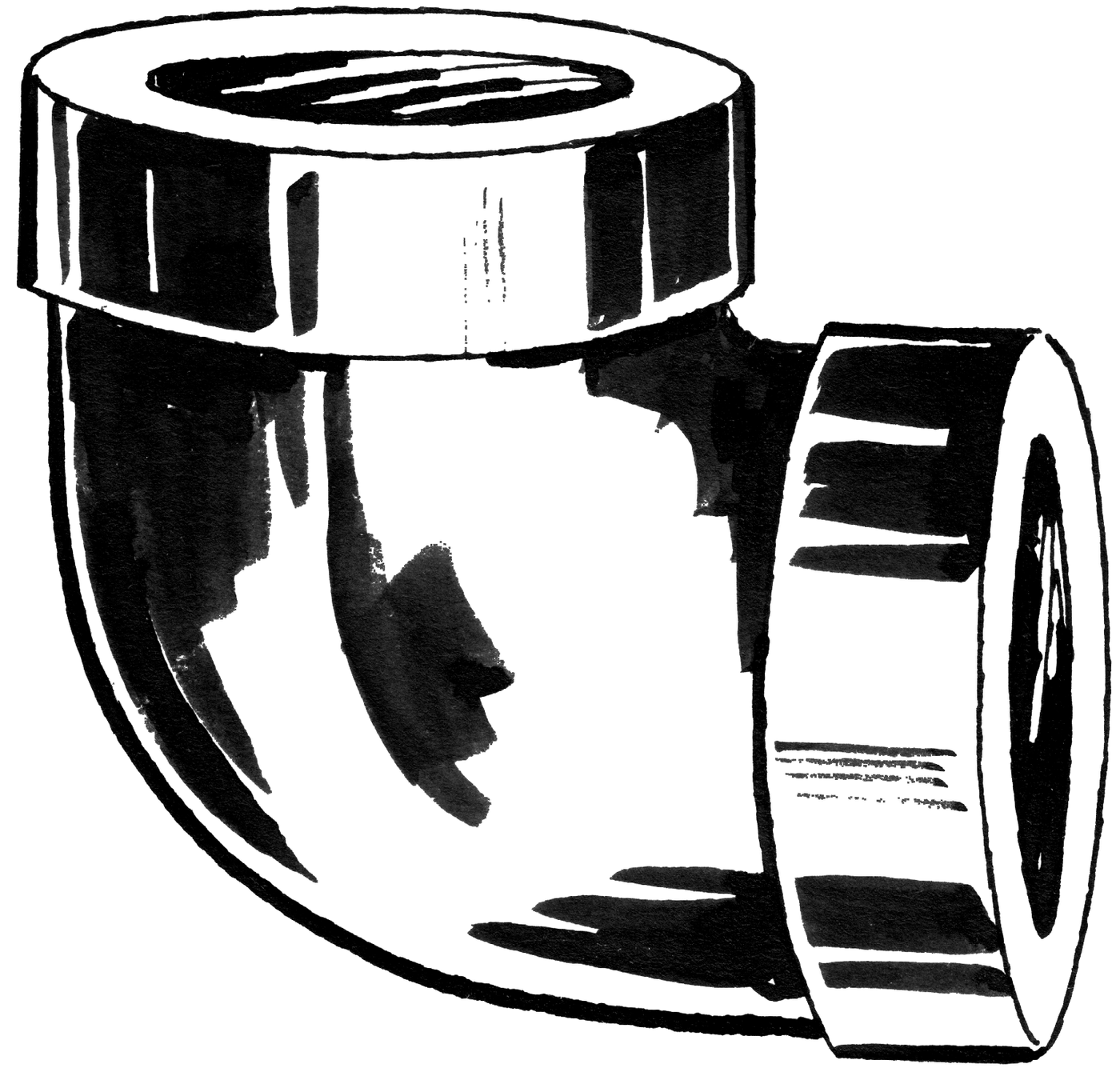
Plumbing elbow fitting illustration (Source: Wikimedia Commons)
- Tees: Allow branching of pipes, used in hospital plumbing to supply multiple wards.
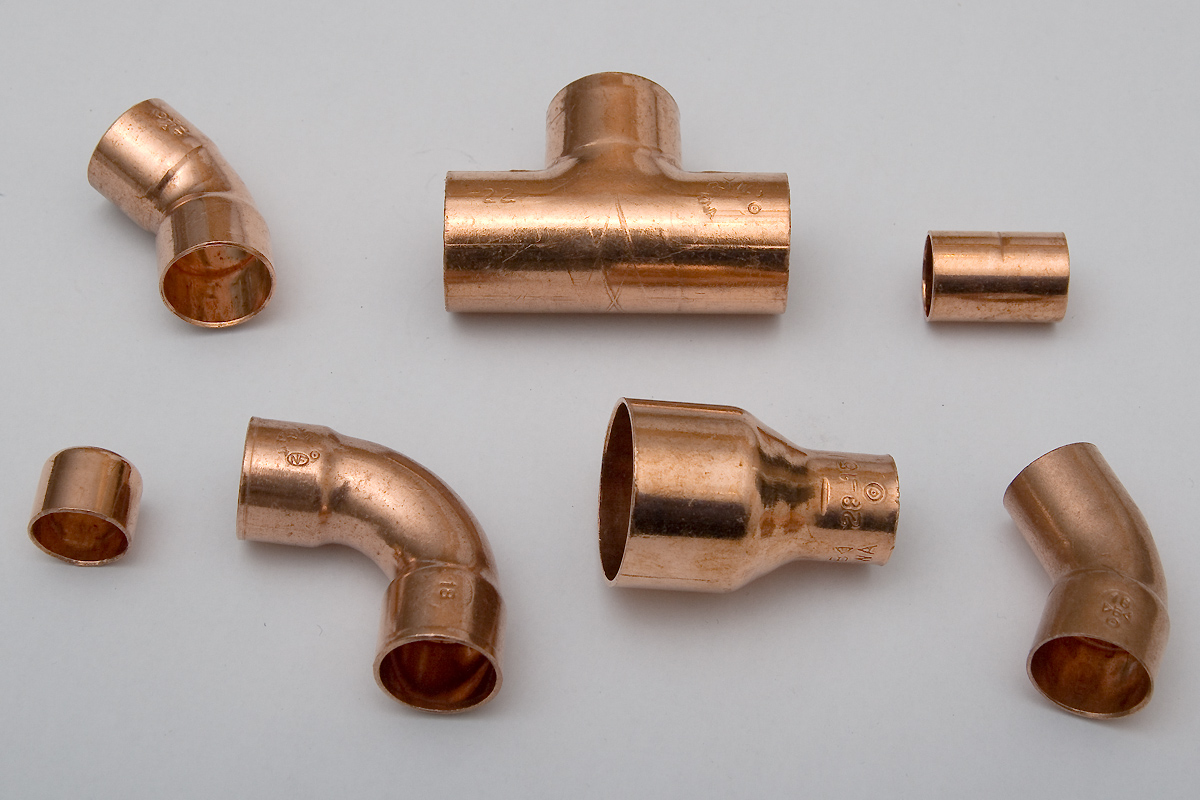
Copper plumbing tee fitting in center (Source: Wikimedia Commons)
- Reducers: Connect pipes of different diameters, common in agricultural irrigation systems.
-
Couplings: Join two pipes in a straight line, facilitating repairs in retail store restrooms.
-
Valves: Control water flow, critical in hotels for maintenance and water conservation.
Materials Used
- Plastic fittings are corrosion-resistant and lightweight, ideal for modern office buildings.
- Brass fittings offer durability and are used in high-pressure systems in county water offices.
- Stainless steel fittings provide longevity in harsh environments like food processing plants.
Cost Drivers
- Material type significantly affects price; brass and stainless steel fittings are more expensive.
- Size and complexity of fitting influence cost.
- Special coatings or certifications for potable water increase price.
Installation and Maintenance
- Proper fitting selection ensures leak-free joints.
- Regular inspections prevent wear-related leaks in facilities such as SACCO offices.
- Compatibility with pipe material avoids galvanic corrosion and premature failure.
Practice Questions
-
Explain the different types of screws used in sanitary appliance installations and discuss their suitability for various materials. (10 marks)
-
Describe the role of dowels in sanitary installations and outline the factors that affect their cost. (8 marks)
-
Discuss the types of cement used in sanitary work and explain how cement quality influences project costs. (10 marks)
-
Compare and contrast the types of pipes commonly used in sanitary systems, highlighting their cost implications. (12 marks)
-
Outline the properties and application techniques of PTFE tape in plumbing. Why is it preferred over other sealing materials in certain situations? (10 marks)
The rest of this chapter
🔒Create a free account to open more of this chapter.
Free: practical guides, quick cards, workplace scenarios and more.
Create a free account 🔒2.2 Material schedule
In the context of costing sanitary appliances in Kenya, a material schedule is a fundamental document that lists all the materials required for a project, including their specifications and quantities. This schedule provides a clear and organized overview for…
🔒2.3 Materials quantification
Accurate materials quantification is essential for costing sanitary appliances to ensure that procurement matches project requirements without excess or shortfall. In Kenyan institutions such as universities or retail businesses, precise quantification prevent…
🔒2.4 Cost Estimation
Cost estimation is a fundamental aspect of planning and managing sanitary appliance projects within various Kenyan sectors. Whether a county hospital upgrading its water closet installations or a university refurbishing its washroom facilities, accurate cost e…
Chapter Summary
This chapter examined the various materials and supplies essential for sanitary appliance installation, including screws, dowels, cement, sand, pipes, traps, PTFE tape, hemp, jointing paste, and fittings, each playing a critical role in ensuring durable and effective plumbing systems. It highlighted the importance of preparing a detailed material schedule to organize and track the required supplies accurately. The process of materials quantification was explored, emphasizing the need to calculate precise quantities to avoid wastage and control costs. The chapter concluded by addressing cost estimation techniques, which involve assessing the total expenses based on the materials and quantities needed to complete sanitary appliance projects efficiently and within budget. Understanding these components is vital for effective project planning and resource management in construction and plumbing works.
Self-Assessment
🔒 PDFDownload this self-assessment, with answers
A. Written Assessment
- Which material is commonly used to seal threaded pipe joints and prevent leaks in sanitary installations? (2 marks)
- Describe the primary function of dowels in sanitary appliance installations. (3 marks)
🔒20 more in this section.
Chapter Examination Questions
🔒 PDFDownload these examination questions, with worked answers
SECTION A (40 Marks) - Answer ALL Questions
- Define the role of PTFE tape in sanitary appliance installations and explain why it is preferred in plumbing works at a county hospital. (4 marks)
- Describe the purpose of dowels when fixing sanitary appliances in a university dormitory setting. (4 marks)
🔒18 more in this section.
