
By the end of this chapter, you will be able to:
These skills will help you work confidently and safely while installing water storage tanks, ensuring a strong and reliable water system for any project.
Compiled by: Joseph Njoroge
Water storage tanks are critical components in plumbing systems, especially in Kenya where water supply can be intermittent or unreliable. Proper installation of these tanks ensures adequate water availability for domestic, commercial, and institutional use, supporting sanitation, hygiene, and operational continuity. This chapter focuses on essential terms and concepts related to water storage tank installation as well as the personal protective equipment (PPE) that plumbing professionals must use to maintain safety on site.
Understanding the terminology and core concepts related to water storage tanks is fundamental for plumbing professionals. These terms provide a common language for communication, design, installation, and maintenance of water storage systems, which are vital in sectors such as county government offices, hospitals, and hospitality where water demand is high.
A water storage tank is a container for storing water for domestic, commercial, or industrial use. It serves as a buffer to hold water during supply interruptions or to manage fluctuating water demand. Tanks vary in size, material, and design depending on the intended use and site conditions. For instance, at a hotel in Mombasa, a large polyethylene tank may be installed to ensure continuous water supply despite frequent municipal interruptions.
Elevated plastic water storage tanks supported on a metal frame struct (Source: PLUMB 5 LEARNING GUIDE-1 (1))
Water tanks come in various types, each suited for specific applications and environments. Understanding these types helps plumbers select the appropriate tank for a given project.

Blue plastic water storage tanks (Source: Wikimedia Commons)
Galvanized Steel Tanks: Durable and strong, suitable for larger installations but prone to corrosion if not properly maintained.
Concrete Tanks: Often used in large-scale or underground storage, concrete tanks offer durability but require skilled installation.
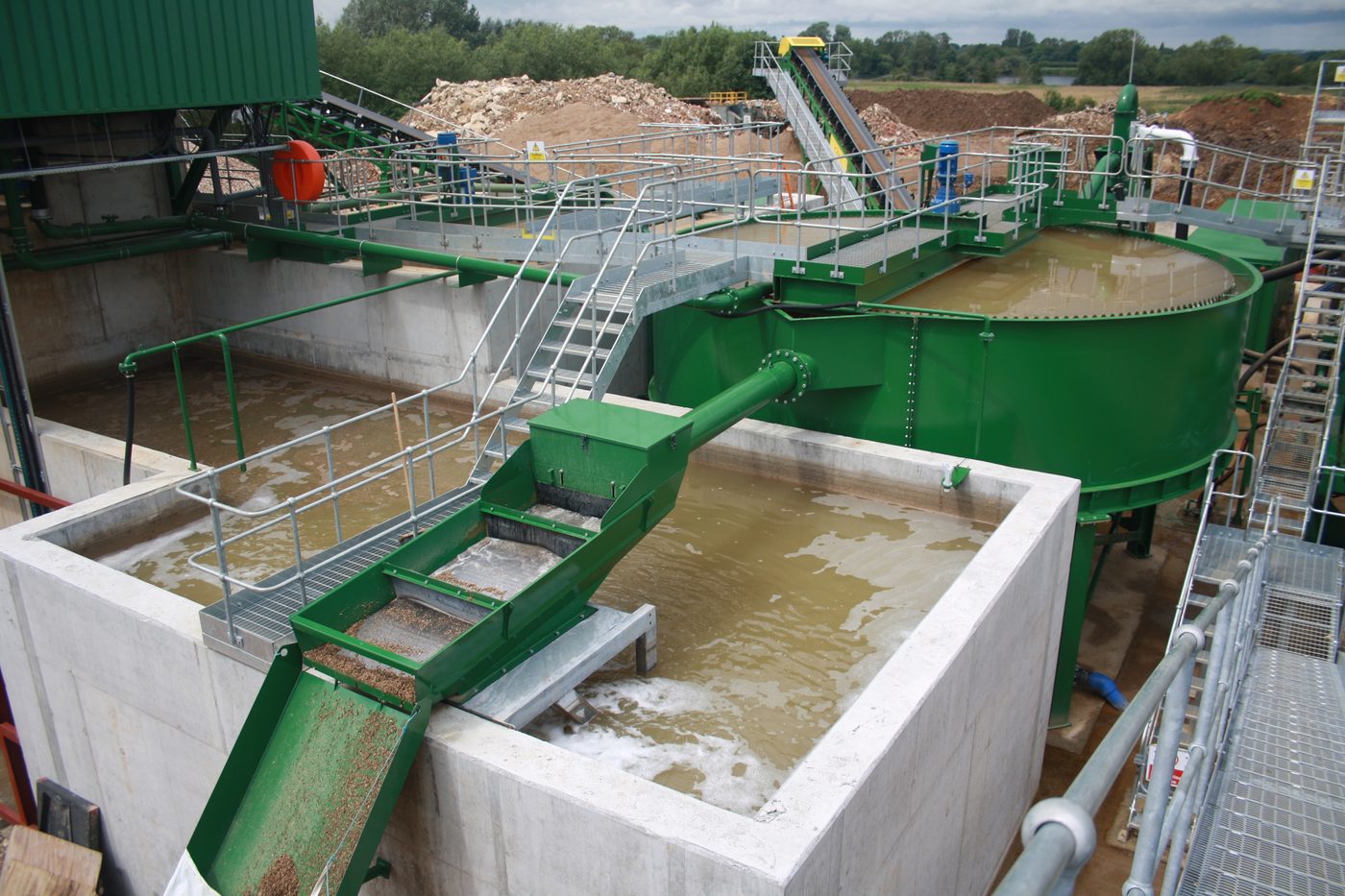
Concrete tanks in a water treatment facility (Source: Wikimedia Commons)
Stainless Steel Tanks: Resistant to corrosion and contamination, ideal for potable water storage in hospitals or food processing facilities.
Fiberglass Tanks: Lightweight and corrosion-resistant, used in specialized industrial applications where chemical resistance is required.
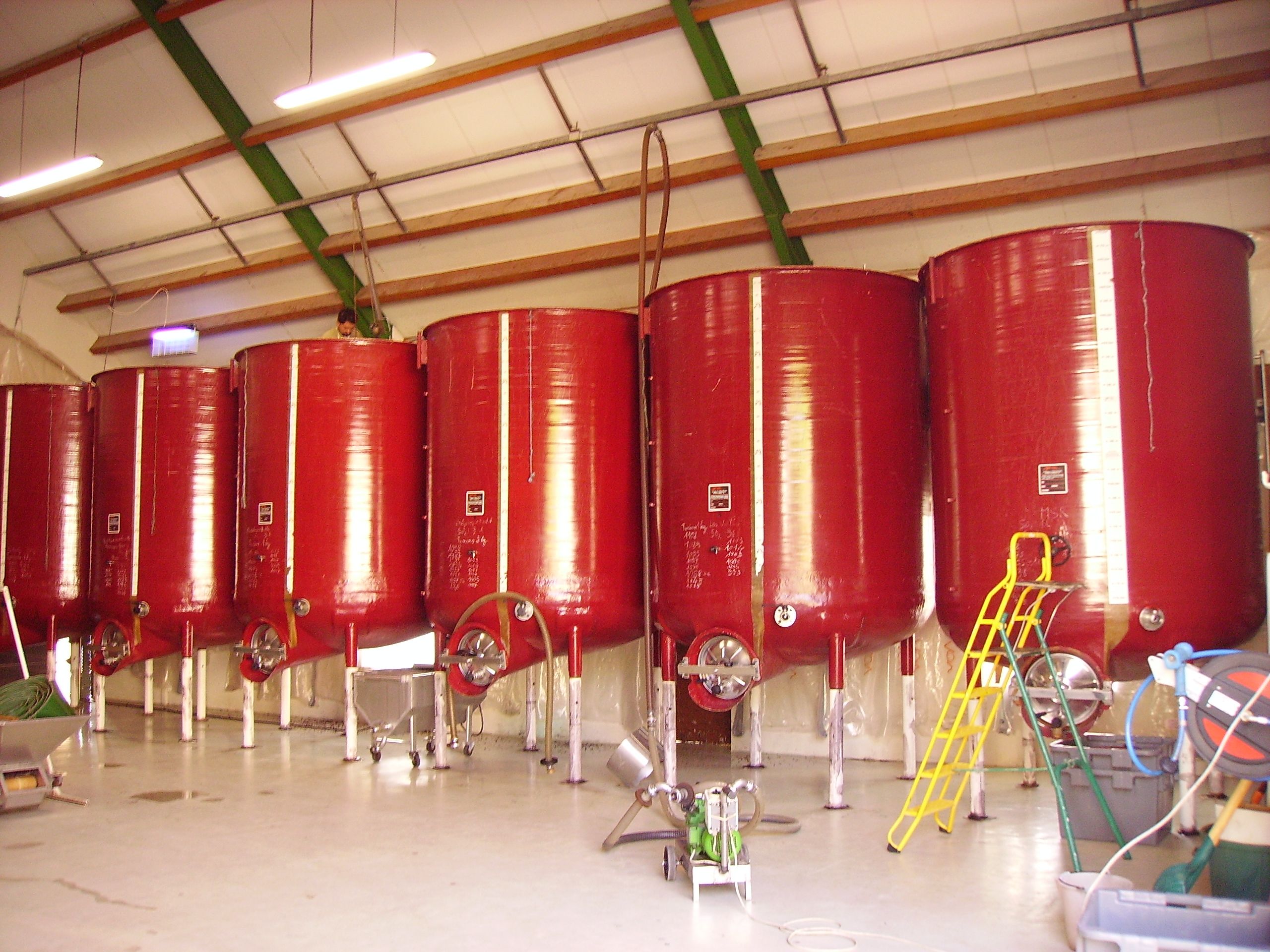
Red fiberglass tanks in an industrial setting (Source: Wikimedia Commons)
Correct sizing of water tanks is essential to meet the water demand without wastage or shortages. Capacity is usually measured in litres or cubic meters and depends on factors such as the number of users, daily water consumption, and supply reliability. For example, a SACCO office in Kisumu serving 500 members may require a 10,000-litre tank to ensure continuous supply during outages.
Site selection for tank installation must consider ground stability, accessibility for maintenance, and proximity to water sources or points of use. The surface must be level and strong enough to support the tank’s weight when full. For instance, in a county hospital, tanks are often installed on elevated platforms to facilitate gravity-fed water distribution.
Proper plumbing connections are crucial for the tank’s functionality and longevity. These include inlet and outlet pipes, overflow pipes, vent pipes, and drainage outlets. Valves and filters may also be fitted to control flow and maintain water quality. In a retail business setting, these connections ensure efficient water delivery and prevent contamination.
Create a free account to open more of this chapter.
Free: practical guides, quick cards, workplace scenarios and more.
Create a free accountThis chapter introduced essential terms and concepts related to water storage tank installation, emphasizing the importance of understanding the technical vocabulary for effective communication and execution. It highlighted the necessary personal protective equipment to ensure safety during installation activities. A comprehensive overview of the tools and equipment used was provided, detailing the function and application of items such as pipe wrenches, pipe cutters, hacksaws, and PPR pipe welding machines. Auxiliary fittings were discussed as critical components that facilitate proper connections and system integrity. The chapter examined the significance of selecting an appropriate storage location for tanks to optimize functionality and accessibility. Various methods for mounting storage tanks were explored, alongside different types of storage systems tailored to specific needs. The positioning of tank connections including inlets, outlets, and overflow points was explained to ensure efficient water flow and prevent spillage. Pumping systems were classified into direct and indirect types, with an explanation of their operation within zoned systems. The chapter concluded with practical guidance on the installation process and procedures for conducting functionality tests to verify the system’s performance.
Type: Individual
| Tools & Equipment | Materials |
|---|---|
| Pen | Water storage system terminology handout |
| Water storage system types reference sheet | |
| Answer sheet |
| S/N | Item | Quantity |
|---|---|---|
| 1 | Water storage system terminology handout | 1 per Candidate |
| 2 | Water storage system types reference sheet | 1 per Candidate |
| 3 | Pen | 1 per Candidate |
| 4 | Answer sheet | 1 per Candidate |
| Items to be Evaluated | Marks Available | Marks Obtained | Comments |
|---|---|---|---|
| TASK 1: Identify and explain water storage system terms | |||
| Used personal protective equipment in line with occupational safety and health requirements (Award 1 mark if PPE worn correctly, otherwise zero) | 1 | ||
| Identified 10 water storage system terms correctly (Award 1 mark per correct term identified, zero for incorrect) | 10 | ||
| Provided clear and accurate explanations for each term (Award 1 mark per correct explanation, zero if explanation is incorrect or missing) | 10 | ||
| Sub-Total | 21 | ||
| TASK 2: Describe types of water storage tanks | |||
| Described 4 types of water storage tanks used in Kenya (Award 2 marks per correctly described type, zero otherwise) | 8 | ||
| Explained advantages and disadvantages of each tank type (Award 2 marks per tank type for accurate explanation, zero otherwise) | 8 | ||
| Sub-Total | 16 | ||
| PRODUCT CHECKLIST | |||
| Completeness and clarity of written explanations and descriptions (Award up to 3 marks for overall quality, clarity, and completeness) | 3 | ||
| Sub-Total | 3 | ||
| GRAND TOTAL | 40 | ||
Type: Individual
| Tools & Equipment | Materials |
|---|---|
| Pipe wrench | 20mm GI pipe |
| Pipe cutter | Thread seal tape |
| Measuring tape | 20mm GI elbow |
| Marker pen | 20mm GI union |
| 20mm GI wall clips | |
| Personal Protective Equipment (PPE) |
| S/N | Item | Quantity |
|---|---|---|
| 1 | Pipe wrench | 1 Pc per Candidate |
| 2 | Pipe cutter | 1 Pc per Candidate |
| 3 | 20mm (3/4") GI pipe | 3.0 m per Candidate |
| 4 | Thread seal tape | 2 pieces per Candidate |
| 5 | 20mm GI elbow | 2 Pcs per Candidate |
| 6 | 20mm GI union | 1 Pc per Candidate |
| 7 | 20mm GI wall clips | 3 Pcs per Candidate |
| 8 | Measuring tape | 1 Pc per Candidate |
| 9 | Marker pen | 1 Pc per Candidate |
| 10 | Personal Protective Equipment (PPE) full gear | 1 set per Candidate |
| Items to be Evaluated | Marks Available | Marks Obtained | Comments |
|---|---|---|---|
| TASK 1: Selection and use of pipe wrench and pipe cutter | |||
| Used personal protective equipment in line with occupational safety and health requirements (Award 2 marks for full PPE use or zero) | 2 | ||
| Selected appropriate pipe wrench for tightening 20mm GI pipes (Award 2 marks for correct tool selection or zero) | 2 | ||
| Selected appropriate pipe cutter for cutting 20mm GI pipes (Award 2 marks for correct tool selection or zero) | 2 | ||
| Measured and marked the 20mm GI pipe accurately to 3 meters (Award 3 marks for accurate measurement and marking or zero) | 3 | ||
| Cut the 20mm GI pipe cleanly and squarely using the pipe cutter (Award 4 marks for clean and square cut or zero) | 4 | ||
| Applied thread seal tape correctly on pipe threads before tightening (Award 2 marks for correct application or zero) | 2 | ||
| Tightened the pipe fittings using pipe wrench without damaging threads or pipe (Award 3 marks for proper tightening or zero) | 3 | ||
| Sub-Total | 18 | ||
| PRODUCT CHECKLIST | |||
| Pipe cut length equals 3000 mm with square, clean edges (Award 3 marks for correct length and cut quality or zero) | 3 | ||
| Pipe fittings are tight, leak-proof and correctly aligned (Award 4 marks for firm joints and alignment or zero) | 4 | ||
| Pipe installation matches working drawing specifications (Award 3 marks for compliance with drawing or zero) | 3 | ||
| Sub-Total | 10 | ||
| GRAND TOTAL | 28 | ||
At the start of this chapter we promised you would be able to:
Tick each one you can genuinely do.
So, are you there yet?
You're competent when you can confidently do 50% or more of what this chapter promised.
Sign in to record how you're doing.