Above ground drainage system installation is a critical phase in plumbing that requires strict adherence to safety standards to protect workers and ensure the longevity of the system. In the Kenyan construction and plumbing sectors, workplace accidents are a significant concern, making the use of personal protective equipment (PPE) and compliance with workshop standard operating procedures (SOPs) essential. This chapter focuses on the safety measures and PPE necessary for plumbing professionals involved in installing above ground drainage systems, providing practical insights relevant to various Kenyan settings such as county government offices, hospitals, and retail businesses.
1.1 Safety Measures and Personal Protective Equipment
Safety measures and PPE form the foundation of a secure working environment in plumbing. Given the risks of cuts, falls, exposure to harmful substances, and heavy lifting during above ground drainage installation, Kenyan plumbers must prioritize protective gear and follow established safety protocols. This approach not only prevents injuries but also promotes efficiency and professionalism on site.
1.1.1 Hardhat/Helmet
The hardhat is a vital piece of PPE designed to protect the head from impact injuries, falling objects, and electrical hazards. In above ground drainage work, plumbers often operate under scaffolding or in areas where materials and tools are lifted overhead, increasing the risk of head injuries.
Importance of Hardhats in Plumbing
- Protection from Falling Objects: Hardhats shield the skull from tools or debris accidentally dropped during installation, which is common in multi-story construction sites or hospital renovations.
- Impact Resistance: The durable outer shell absorbs and disperses impact forces, reducing the severity of head trauma.
- Electrical Hazard Protection: Certain hardhats are rated to insulate against electrical shocks, crucial when working near energized conduits or wiring in commercial buildings.
- Visibility Enhancement: Many hardhats come in bright colors, improving worker visibility in busy environments such as retail business premises or county government offices.
- Compliance with Safety Regulations: Wearing hardhats complies with Kenyan OSHA standards and company safety policies, avoiding legal and financial penalties.
Proper Use and Maintenance
- Fit the hardhat snugly with adjustable suspension to prevent it from falling off during work.
- Inspect for cracks, dents, or wear before each use; replace immediately if damaged.
- Clean with mild soap and water to maintain visibility of safety labels and color.
- Avoid painting or applying stickers that may weaken the shell or obscure hazard ratings.
- Store in a cool, dry place away from direct sunlight to prevent material degradation.
1.1.2 Safety Gloves
Safety gloves protect plumbers’ hands from cuts, abrasions, chemical exposure, and infections when handling pipes, fittings, and adhesives during drainage installation.
Types and Selection of Safety Gloves
-
Cut-Resistant Gloves: Made from materials like Kevlar or reinforced fabrics, these gloves prevent sharp edges of metal pipes or tools from causing injuries.
-
Chemical-Resistant Gloves: Nitrile or neoprene gloves protect against solvents, adhesives, and cleaning agents commonly used in plumbing.
-
Rubber Gloves: Used for wet conditions to provide grip and prevent skin irritation from prolonged water contact.
-
Thermal Gloves: Insulated gloves protect hands when working with hot water pipes or in cold environments.
-
Disposable Gloves: Ideal for short-term tasks requiring hygiene, such as inspecting drainage outlets in hospitals or food processing plants.

Hand wearing a clear disposable glove (Source: Wikimedia Commons)
Best Practices for Glove Use
- Choose gloves appropriate to the task to balance protection and dexterity.
- Regularly inspect gloves for tears, punctures, or chemical damage and replace as needed.
- Clean reusable gloves according to manufacturer instructions to prevent contamination.
- Remove gloves properly to avoid contact with contaminants on the surface.
- Train workers on correct glove use and disposal, especially in sensitive environments like clinics or schools.
1.1.3 Dustcoat / Overall
Dustcoats or overalls serve as protective clothing that shields workers’ skin and personal clothing from dirt, dust, chemicals, and minor abrasions during plumbing activities.
Role of Dustcoats and Overalls in Plumbing
- Barrier against Contaminants: Prevents contact with soil, cement dust, and pipe sealants, reducing skin irritation and contamination risks.
- Enhanced Safety: High-visibility dustcoats improve worker identification on busy sites such as county offices or retail outlets.
- Durability and Comfort: Designed for tough environments, overalls withstand wear and tear while allowing movement necessary for plumbing tasks.
- Professional Appearance: Wearing dustcoats projects professionalism, building client confidence in institutions like universities or hotels.
- Weather Protection: Overalls provide an additional layer against wind, rain, or cold, important for outdoor drainage installations.
Maintenance and Use Guidelines
- Select dustcoats made from breathable, flame-retardant materials for comfort and safety.
- Launder regularly to remove hazardous substances and maintain hygiene.
- Repair minor tears promptly to preserve protective function.
- Use appropriate sizing to avoid entanglement with machinery or tools.
- Store separately from personal clothing to prevent cross-contamination.
1.1.4 Safety Shoes / Boots
Safety footwear protects plumbers’ feet from injuries caused by heavy falling objects, sharp debris, electrical hazards, and slippery surfaces during drainage system installation.
Characteristics of Effective Safety Shoes
-
Steel Toe Caps: Provide robust protection against impact and compression from heavy pipes or tools.
-
Slip-Resistant Soles: Essential for maintaining footing on wet or oily surfaces common in plumbing sites.
- Puncture-Resistant Midsoles: Prevent injuries from nails, metal shards, or broken tiles on floors.
- Electrical Hazard Protection: Non-conductive soles reduce risk of electric shock when working near live wiring.
- Water Resistance: Keeps feet dry and comfortable in wet environments typical in drainage work.
Usage and Care
- Ensure proper fit to prevent blisters and provide ankle support.
- Inspect soles and uppers regularly for wear and replace when protection is compromised.
- Clean to remove mud, oil, or chemicals that can degrade materials or reduce slip resistance.
- Use in conjunction with other PPE for comprehensive safety.
- Rotate footwear to prolong lifespan and maintain hygiene.
1.1.5 Safety Goggles / Face Mask
Eye and respiratory protection are crucial for plumbers installing above ground drainage systems due to exposure to dust, chemical fumes, and flying debris.
Importance of Eye and Respiratory Protection
- Safety Goggles: Shield eyes from cement dust, pipe shavings, and splashes of adhesives or solvents that can cause irritation or injury.
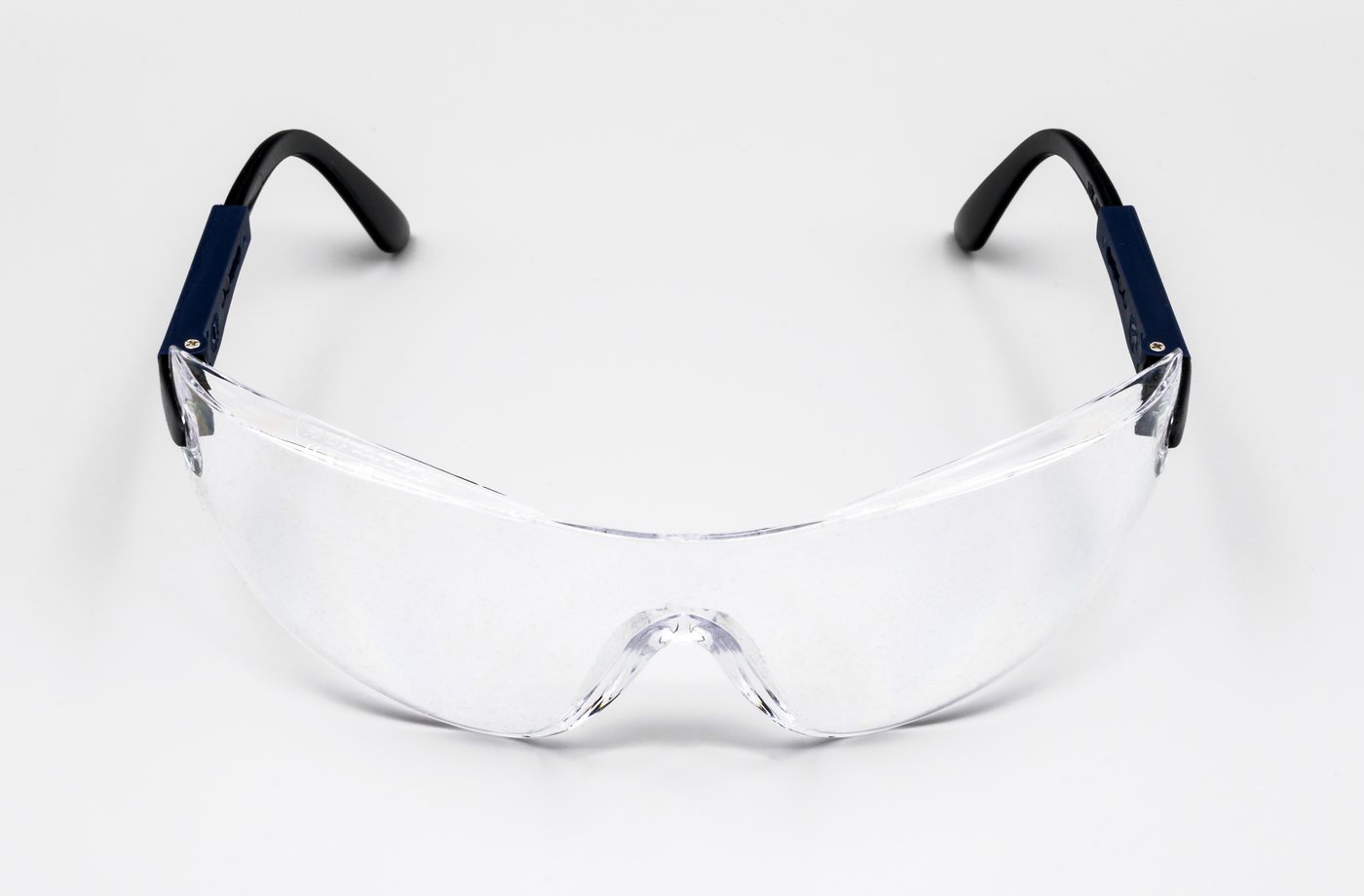
Clear safety goggles for eye protection (Source: Wikimedia Commons)
-
Face Masks: Filter out harmful dust particles and chemical vapors, protecting the respiratory system during cutting, grinding, or solvent application.
-
Fog Resistance: Quality goggles reduce fogging, ensuring clear vision in humid or dusty conditions.
- Comfort and Fit: Adjustable straps and cushioned seals enhance prolonged use without discomfort.
- Compliance with Standards: Use of certified goggles and masks aligns with OSHA and KEBS regulations, ensuring legal compliance.
Selection and Maintenance Tips
- Choose goggles with impact-resistant lenses and side shields for maximum protection.
- Select face masks rated for the specific contaminants encountered, such as N95 or chemical cartridge respirators.
- Clean and disinfect after each use to prevent eye infections and maintain hygiene.
- Replace disposable masks regularly and store reusable masks in clean, dry containers.
- Train workers on correct donning, doffing, and disposal procedures to maximize effectiveness.
1.1.6 Workshop SOPs, Rules and Regulations
Standard Operating Procedures (SOPs), rules, and regulations form the backbone of safety culture in plumbing workshops and installation sites, ensuring systematic risk management.
Components of Effective Workshop SOPs
- Risk Assessment Protocols: Identification and mitigation of hazards specific to above ground drainage installation.
- PPE Usage Rules: Clear guidelines on mandatory protective gear for different tasks and site conditions.
- Tool and Equipment Handling Procedures: Instructions on safe use, maintenance, and storage to prevent accidents.
- Emergency Response Plans: Defined actions for incidents such as spills, injuries, or fires to minimize harm.
- Training and Compliance Monitoring: Regular induction and refresher training for workers, coupled with supervision and enforcement.
Importance of Adhering to Rules and Regulations
- Legal Compliance: Ensures adherence to Kenyan occupational health and safety laws, avoiding penalties.
- Accident Reduction: Systematic procedures reduce the frequency and severity of workplace incidents.
- Quality Assurance: Safe work environments contribute to higher quality installations and client satisfaction.
- Worker Morale and Productivity: Clear rules foster a culture of safety, improving worker confidence and efficiency.
- Reputation Management: Compliance enhances the reputation of plumbing firms among clients such as hospitals and educational institutions.
Practice Questions
- Explain five reasons why hardhats are essential PPE for plumbers installing above ground drainage systems. (10 marks)
- Describe the types of safety gloves suitable for plumbing work and their specific protective functions. (10 marks)
- Discuss the key components that should be included in workshop SOPs to ensure safety during drainage installation. (10 marks)
- Outline six maintenance practices for safety shoes used in plumbing installations. (12 marks)
- Identify five hazards that safety goggles and face masks protect against in above ground drainage system installation. (10 marks)
Safety Measures for Above Ground Drainage Installation
In addition to using personal protective equipment, plumbers must implement a range of safety measures to minimize risks during above ground drainage system installation. These measures are essential for compliance with Kenyan safety regulations and to protect all personnel on site.
- Site Hazard Identification: Before commencing work, conduct a thorough site assessment to identify potential hazards such as unstable scaffolding, exposed wiring, or slippery surfaces. For example, at Kenyatta National Hospital, hazard identification is a mandatory step before any plumbing work begins.
- Clear Site Signage: Place visible warning signs and barriers around work areas to alert other workers and visitors to ongoing drainage installation activities. In Nairobi County government offices, safety signage is required by workplace policy to prevent unauthorized access to hazardous zones.
- Safe Tool and Equipment Handling: Ensure all workers are trained in the correct use and maintenance of tools and machinery. For instance, at a retail construction site in Mombasa, only certified personnel are permitted to operate power tools such as drilling machines.
- Emergency Preparedness: Maintain accessible first aid kits, fire extinguishers, and clearly marked emergency exits. Regular safety drills are conducted in institutions like Moi University to prepare workers for incidents such as chemical spills or injuries.
- Good Housekeeping Practices: Keep the work area organized and free of debris to reduce tripping hazards and facilitate efficient workflow. In busy hospital renovations, daily cleaning schedules are enforced to maintain a safe environment for both workers and patients.
The rest of this chapter
🔒Create a free account to open more of this chapter.
Free: practical guides, quick cards, workplace scenarios and more.
Create a free account 🔒1.2 Types of above ground drainage materials /accessories preparations
Above ground drainage systems require a variety of materials and accessories to ensure efficient wastewater removal and system durability. In Kenya, plumbing professionals must select materials that comply with local standards, are cost-effective, and suit the…
🔒1.3 Types of Drainage Tools and Equipment
In the installation of above ground drainage systems, the correct selection and use of tools and equipment is fundamental to ensuring efficiency, safety, and quality workmanship. Plumbing professionals in Kenya encounter diverse site conditions that demand pre…
🔒1.4 Setting out drainage pipework
Setting out drainage pipework is a critical phase in the installation of above ground drainage systems. This process involves determining the precise locations and alignments of pipes to ensure effective flow and compliance with design specifications. In Kenya…
🔒1.5 Installation of drainage pipework
The installation of drainage pipework in an above-ground system is a critical stage in plumbing that ensures efficient wastewater disposal and prevents health hazards. In Kenya, proper installation is essential in institutions such as county hospitals and scho…
🔒1.6 Drainage Systems Functionality Test
Testing above ground drainage systems after installation is critical to ensure the system operates efficiently, prevents leaks, and avoids blockages or backflows. In Kenya’s varied climatic conditions, where heavy rains can overwhelm poorly installed drainage,…
🔒1.7 Housekeeping
In plumbing projects involving above ground drainage system installation, effective housekeeping is essential to maintain a safe, efficient, and productive work environment. In Kenya, where site conditions can vary widely from urban commercial buildings to rur…
Chapter Summary
This chapter covered essential safety measures and the use of personal protective equipment such as hardhats, gloves, dustcoats, safety shoes, and goggles, alongside adherence to workshop rules and regulations. It detailed the various types of above ground drainage materials and accessories including waste pipes, fittings, bends, tees, couplings, adapters, hangers, supports, and fixtures like sinks, W/C pans, cisterns, bathtubs, showers, and floor drains. The chapter also described the tools and equipment required for drainage installation, ranging from hacksaws and trowels to spirit levels, drilling machines, plumbing snakes, and sump pumps. It explained the process of setting out drainage pipework through careful positioning and marking to ensure accuracy. The installation phase involved steps such as fixing hangers and supports, cutting pipes, assembling fittings, securing pipes, checking alignment and slope, sealing joints, and installing fixtures properly. Testing the functionality of the drainage system was emphasized through visual inspections, water flow, pressure, air, backflow, sump pump, fixture tests, flow rate measurement, and odor checks. Finally, the importance of housekeeping was highlighted, focusing on the care, maintenance, and proper storage of materials and tools to sustain system performance and safety.
Self-Assessment
🔒 PDFDownload this self-assessment, with answers
A. Written Assessment
- Which personal protective equipment is essential to protect your head during above ground drainage installation? (2 marks)
- Name three types of fittings used in above ground drainage systems and describe their function. (3 marks)
🔒20 more in this section.
Chapter Examination Questions
🔒 PDFDownload these examination questions, with worked answers
SECTION A (40 Marks) - Answer ALL Questions
- Explain the importance of wearing a hardhat during the installation of above ground drainage systems on a construction site in Nairobi. (4 marks)
- Describe the role of safety gloves in protecting plumbing professionals when handling waste pipes and fittings. (4 marks)
🔒18 more in this section.
Chapter Practical Activities
Practical 1: Identify and Prepare Above Ground Drainage Pipes and Fittings for Installation
Plumbing · Level 5
Drainage System Installation I
PRACTICAL ASSESSMENT
TIME: 4 HOURS
⬇ PDFCandidate Instructions (Candidate Tool)
Type: Individual
INSTRUCTIONS TO CANDIDATE:
1. You are required to perform the following task:
i. Select, identify, and prepare above ground PVC drainage pipes and fittings including cutting, marking, and dry assembly for a pipe run of 3m length and 110mm diameter.
2. You have been provided with the following resources for the practical task:
| Tools & Equipment | Materials |
|---|
| Measuring Tape | PVC Waste Pipe 110mm diameter |
| Hacksaw | PVC Waste Pipe 75mm diameter |
| Marker Pen | PVC 110mm Magic Bend |
| Gloves | PVC 110mm Y-Junction |
| Safety Goggles | PVC 110mm Coupling |
| PVC 110mm Inspection Tee |
| PVC 110mm Cross Tee |
| PVC 110mm Adapter |
| PVC 110mm Wall Clips |
| PVC Solvent Cement |
⬇ PDFResources Required (Cutting List)
| S/N | Item | Quantity |
|---|
| 1 | PVC Waste Pipe 110mm diameter | 3 lengths per Candidate |
| 2 | PVC Waste Pipe 75mm diameter | 2 lengths per Candidate |
| 3 | PVC 110mm Magic Bend | 2 pieces per Candidate |
| 4 | PVC 110mm Y-Junction | 1 piece per Candidate |
| 5 | PVC 110mm Coupling | 4 pieces per Candidate |
| 6 | PVC 110mm Inspection Tee | 1 piece per Candidate |
| 7 | PVC 110mm Cross Tee | 1 piece per Candidate |
| 8 | PVC 110mm Adapter (Boss to Spigot) | 2 pieces per Candidate |
| 9 | PVC 110mm Wall Clips | 6 pieces per Candidate |
| 10 | PVC Solvent Cement | 1 can per 3 Candidates |
| 11 | Measuring Tape 5m | 1 per Candidate |
| 12 | Hacksaw | 1 per Candidate |
| 13 | Marker Pen | 1 per Candidate |
| 14 | Gloves | 1 pair per Candidate |
| 15 | Safety Goggles | 1 pair per Candidate |
⬇ PDFAssessor Guide
| Items to be Evaluated | Marks Available | Marks Obtained | Comments |
|---|
| TASK 1: Preparation and Identification of Above Ground Drainage Materials |
Donning of PPEs including gloves and safety goggles
(Award 1 mark each or zero x 2 = 2 Marks) | 2 | | |
Identified all required pipes and fittings as per the working drawing
(Award 1 mark for each fitting/pipe correctly identified x3 = 3 Marks) | 3 | | |
Measured and marked pipes accurately to specified lengths
(Award 1 mark for each correct measurement and marking x4 = 4 Marks) | 4 | | |
Cut pipes cleanly and squarely using hacksaw
(Award 1 mark for each correctly cut pipe x4 = 4 Marks) | 4 | | |
Dry assembled pipes and fittings correctly according to the layout
(Award 1 mark for each correctly fitted joint x5 = 5 Marks) | 5 | | |
Checked alignment and fit of fittings such as magic bends, tees, and couplings
(Award 1 mark each for correct alignment of magic bend, tee and coupling x3 = 3 Marks} | 3 | | |
Stored tools and materials properly after preparation
(Award 2 marks or zero) | 2 | | |
Conducted housekeeping and cleaned work area as per workplace procedures
(Award 2 marks or zero) | 2 | | |
| Sub-Total | 25 | | |
| PRODUCT CHECKLIST |
Pipes cut to correct lengths (3m total length for main run, 110mm diameter)
(Award 3 marks or zero) | 3 | | |
Fittings correctly identified and assembled without forced joints
(Award 3 marks or zero) | 3 | | |
Dry assembly shows correct alignment and orientation as per drawing
(Award 2 marks or zero) | 2 | | |
Pipes and fittings free from cracks, chips, or damage
(Award 2 marks or zero) | 2 | | |
Work area left clean and tools stored according to workplace policy
(Award 2 marks or zero) | 2 | | |
| Sub-Total | 12 | | |
| GRAND TOTAL | 37 | | |
ASSESSMENT OUTCOME: ☐ Competent ☐ Not Yet Competent (competent if at least 50%)
Practical 2: Install Pipe Hangers and Supports for Above Ground Drainage Pipe Run 3000mm Long
Plumbing · Level 5
Drainage System Installation I
PRACTICAL ASSESSMENT
TIME: 4 HOURS
⬇ PDFCandidate Instructions (Candidate Tool)
Type: Individual
INSTRUCTIONS TO CANDIDATE:
1. You are required to perform the following task:
i. Install pipe hangers, clamps, and wall brackets to securely support a 3000mm long, 110mm diameter above ground drainage pipe.
2. You have been provided with the following resources for the practical task:
| Tools & Equipment | Materials |
|---|
| Spirit Level | Pipe Hangers |
| Tape Measure | Wall Brackets |
| Drill Machine | Pipe Clamps |
| Hammer | Steel Nails |
| Screwdriver | Screws |
| Timber Support Blocks |
| PVC Drainage Pipe 110mm Diameter |
⬇ PDFResources Required (Cutting List)
| S/N | Item | Quantity |
|---|
| 1 | Pipe Hangers | 6 Pcs per Candidate |
| 2 | Wall Brackets | 4 Pcs per Candidate |
| 3 | Pipe Clamps | 6 Pcs per Candidate |
| 4 | Steel Nails | 20 Pcs per Candidate |
| 5 | Screws | 20 Pcs per Candidate |
| 6 | Timber Support Blocks | 4 Pcs per Candidate |
| 7 | PVC Drainage Pipe 110mm Diameter | 3 meters per Candidate |
| 8 | Spirit Level | 1 Pc per Candidate |
| 9 | Tape Measure | 1 Pc per Candidate |
| 10 | Drill Machine | 1 Pc per Candidate |
| 11 | Hammer | 1 Pc per Candidate |
| 12 | Screwdriver | 1 Pc per Candidate |
⬇ PDFAssessor Guide
| Items to be Evaluated | Marks Available | Marks Obtained | Comments |
|---|
| TASK 1: Install Pipe Hangers and Supports |
Donning appropriate PPE: safety boots and helmet
(Award 1 mark for each PPE item worn or zero) | 2 | | |
Identified and assembled all necessary tools and materials
(Award 1 mark or zero) | 1 | | |
Marked out hanger and support positions along the pipe run as per working drawing
(Award 3 marks or zero) | 3 | | |
Measured and confirmed pipe length and diameter before installation
(Award 2 marks or zero) | 2 | | |
Installed timber support blocks on wall securely
(Award 3 marks or zero) | 3 | | |
Fixed pipe hangers and clamps at correct spacing (max 600mm centers) and aligned horizontally
(Award 1 mark for each correctly positioned hanger or zero) | 6 | | |
Installed wall brackets firmly and fixed pipe clamps tightly without damaging pipe
(Award 3 marks or zero) | 3 | | |
Used spirit level to ensure pipe is level and plumb where required
(Award 3 marks or zero) | 3 | | |
Ensured all fixings are secure and pipe is stable without movement
(Award 3 marks or zero) | 3 | | |
Stored tools and leftover materials according to workplace policy
(Award 2 marks or zero) | 2 | | |
Conducted housekeeping and cleaned work area after installation
(Award 2 marks or zero) | 2 | | |
| Sub-Total | 30 | | |
| PRODUCT CHECKLIST |
Pipe hangers and supports installed at correct spacing of approx. 600mm centers over 3000mm pipe length
(Award 3 marks or zero) | 3 | | |
Pipe securely fixed without sagging or movement
(Award 3 marks or zero) | 3 | | |
Pipe run is level and plumb as per working drawing
(Award 4 marks or zero) | 4 | | |
Supports and fixings aligned horizontally and plumb
(Award 3 marks or zero) | 3 | | |
No damage to pipe or supports during installation
(Award 2 marks or zero) | 2 | | |
| Sub-Total | 15 | | |
| GRAND TOTAL | 45 | | |
ASSESSMENT OUTCOME: ☐ Competent ☐ Not Yet Competent (competent if at least 50%)
🔒Set out above ground drainage pipework layoutPractical 3
🔒Cut and assemble an above ground drainage pipe section 2000mm longPractical 4
🔒Fix above ground drainage pipes ensuring correct alignment and slopePractical 5
🔒Seal Joints and Connections in Above Ground Drainage SystemPractical 6
🔒Installation of Above Ground Drainage FixturesPractical 7
🔒Perform visual inspection and housekeeping of installed above ground drainage systemPractical 8
🔒Conduct water flow and drainage fixture tests for above ground drainage systemPractical 9
🔒Perform Pressure and Air Tests on Above Ground Drainage SystemPractical 10
🔒Conduct backflow prevention and sump pump operational tests on above ground drainage systemPractical 11
🔒Measure flow rate and inspect odors in above ground drainage systemPractical 12
🔒Use drainage tools and equipment effectively to install an above ground drainage pipe run 2000mm longPractical 13
🔒Apply Workshop Safety Measures and SOPs during Drainage InstallationPractical 14
🔒Store and maintain drainage materials and tools after installationPractical 15
