Magnetism and electromagnetism form critical foundations in electronics engineering, influencing the design and operation of many devices and systems. Understanding magnetic properties of materials guides engineers in selecting suitable components for transformers, inductors, sensors, and actuators commonly used in Kenya’s electronics industry. This chapter explores the nature of magnetic and non-magnetic materials, enabling learners to apply these concepts effectively when working with electromagnetic devices in various sectors including manufacturing, telecommunications, and medical equipment servicing.
3.1 Magnetic and Non-Magnetic Materials
Magnetic properties of materials determine their behavior in magnetic fields, which is essential knowledge for electronics engineers when designing circuits involving inductors, transformers, and magnetic storage devices. In Kenya, electronics professionals often encounter a range of materials with diverse magnetic characteristics, requiring a clear understanding to optimize performance and reliability of equipment. This section clarifies the classification of materials based on their magnetic response and explains their practical relevance.
3.1.1 Classification of Materials by Magnetic Properties
Materials are classified as magnetic or non-magnetic based on their ability to be magnetized or respond to a magnetic field. This classification affects how engineers select materials for components like cores in transformers or shielding in sensitive electronic devices.
Magnetic Materials
Magnetic materials exhibit strong interactions with magnetic fields, often becoming permanent magnets or showing significant induced magnetism. These materials contain unpaired electrons whose spins align to produce a net magnetic moment.
- Ferromagnetic materials such as iron and cobalt have domains where magnetic moments align spontaneously, resulting in strong permanent magnetism. In Kenyan electronics workshops, iron cores are widely used in transformers to enhance magnetic flux.
- Ferrimagnetic materials like magnetite have magnetic moments in opposing directions, but unequal magnitudes produce net magnetism. These are common in magnetic storage media and sensors.
- Paramagnetic materials including aluminium and platinum have unpaired electrons but only weakly align with external magnetic fields, losing magnetism once the field is removed. These materials have limited use in magnetic components.
- Antiferromagnetic materials have adjacent atomic moments aligned oppositely and cancel out overall magnetism, used in specialized sensors and spintronic devices.
- Soft magnetic materials such as silicon steel easily magnetize and demagnetize, ideal for transformer cores where low hysteresis loss is critical for efficient energy transfer.
Non-Magnetic Materials
Non-magnetic materials do not exhibit measurable magnetism in ordinary magnetic fields and are unaffected by magnetic forces. These materials are essential for structural and insulation purposes in electronics without interfering with magnetic circuits.
- Diamagnetic materials like copper and bismuth create an induced magnetic field in opposition to an external field but with very weak intensity. They are often used in shielding to reduce magnetic interference.
- Non-magnetic metals such as aluminium and brass do not retain magnetism and are used in electronic enclosures to avoid disturbance of magnetic fields.
- Insulating materials including plastics and ceramics are non-magnetic and provide electrical insulation without magnetic effects, commonly used in circuit boards and component housings.
- Non-ferrous metals are typically non-magnetic and preferred in applications requiring corrosion resistance and minimal magnetic interaction.
- Composite materials engineered with non-magnetic constituents are used in modern electronics to combine mechanical strength with magnetic neutrality.
3.1.2 Magnetic Permeability and Its Role in Material Selection
Magnetic permeability is a measure of how easily a material supports the formation of a magnetic field within itself, influencing the efficiency of magnetic components in electronic circuits.
- Relative permeability compares a material's permeability to that of free space, indicating how much it enhances magnetic flux. For example, transformer cores made from silicon steel have very high relative permeability, improving inductance.
- High permeability materials concentrate magnetic lines of force, reducing energy loss and improving device performance in inductors and transformers used in Kenyan power supplies.
- Low permeability materials are preferred where magnetic interference must be minimized, such as in sensor housings or shielding electronic components.
- Permeability varies with frequency, affecting material choice in high-frequency electronics such as communication devices operating in Nairobi’s telecom sector.
- Permeability influences core saturation, a critical factor in designing transformers that avoid distortion and overheating under load.
3.1.3 Effects of Temperature on Magnetic Properties
Temperature changes impact magnetic behavior significantly, affecting device reliability and efficiency in varying environmental conditions across Kenya.
- Curie temperature is the point above which ferromagnetic materials lose their permanent magnetism and become paramagnetic, important for transformers operating in hot climates.
- Thermal agitation disrupts magnetic domain alignment, reducing magnetization at elevated temperatures, a consideration in electronics exposed to engine heat or outdoor environments.
- Magnetoresistance effects in certain materials change resistance with temperature and magnetic field, exploited in sensors used in automotive electronics.
- Temperature cycling can cause mechanical stress and magnetic property degradation, relevant in quality control of magnetic components in Nairobi’s manufacturing plants.
- Cryogenic temperatures enhance some magnetic properties, relevant in research and development of superconducting magnets used in medical imaging equipment in Kenyan hospitals.
3.1.4 Applications and Practical Considerations in Electronics Engineering
Understanding the magnetic characteristics of materials informs the design and maintenance of electronic devices critical to Kenya’s industries.
- Transformer cores use soft ferromagnetic materials to maximize efficiency in electrical power distribution systems serving county governments.
- Magnetic sensors exploit ferrimagnetic and paramagnetic materials to detect position, speed, or current in automated manufacturing lines.
- Electromagnetic shielding employs diamagnetic and non-magnetic metals to protect sensitive electronic circuits in banking institutions from interference.
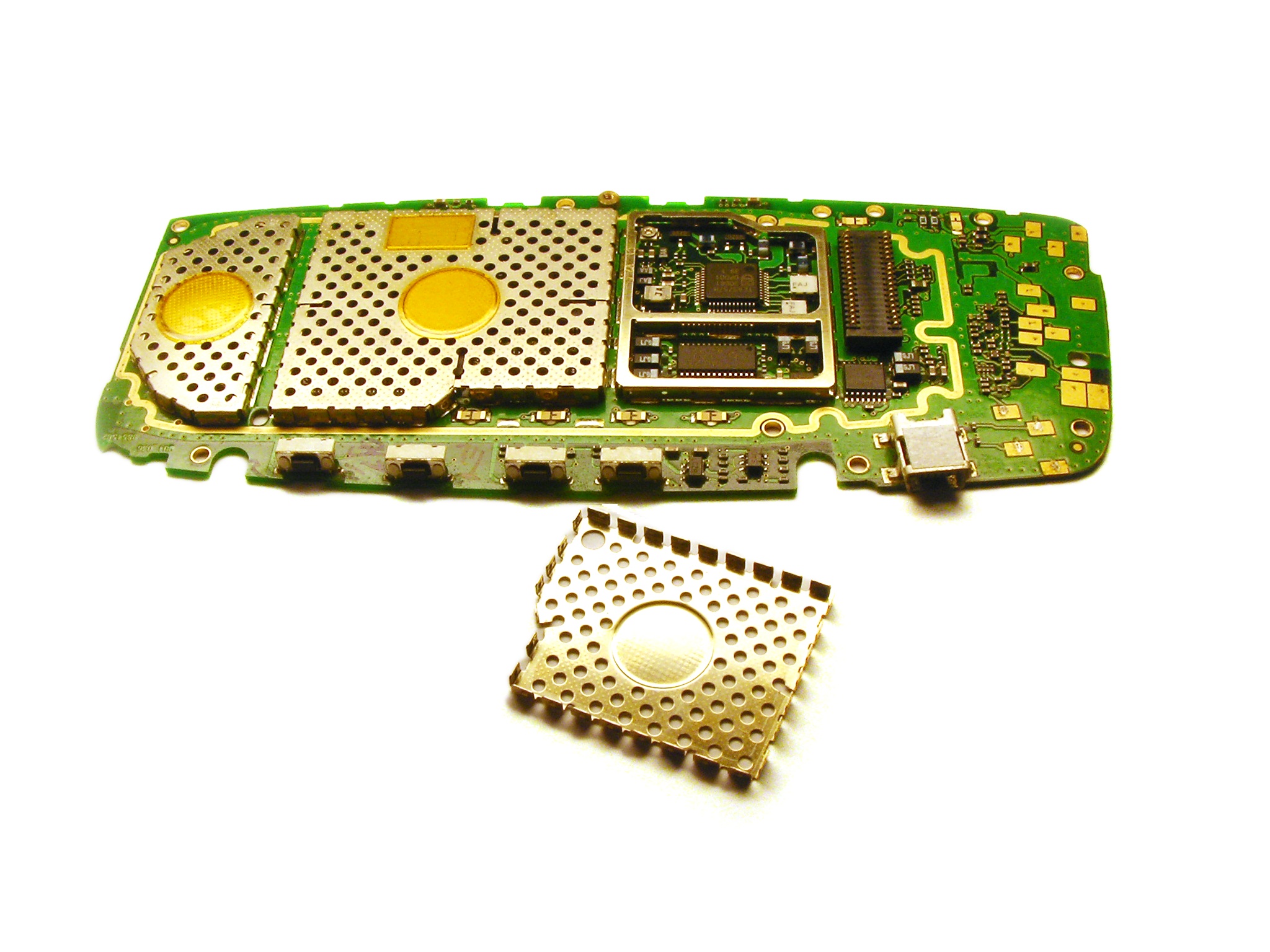
Electromagnetic shielding on electronic circuit board (Source: Wikipedia (Electromagnetic shielding))
- Magnetic storage devices rely on ferrimagnetic materials for data retention in computers and mobile devices widely used in Kenyan universities.
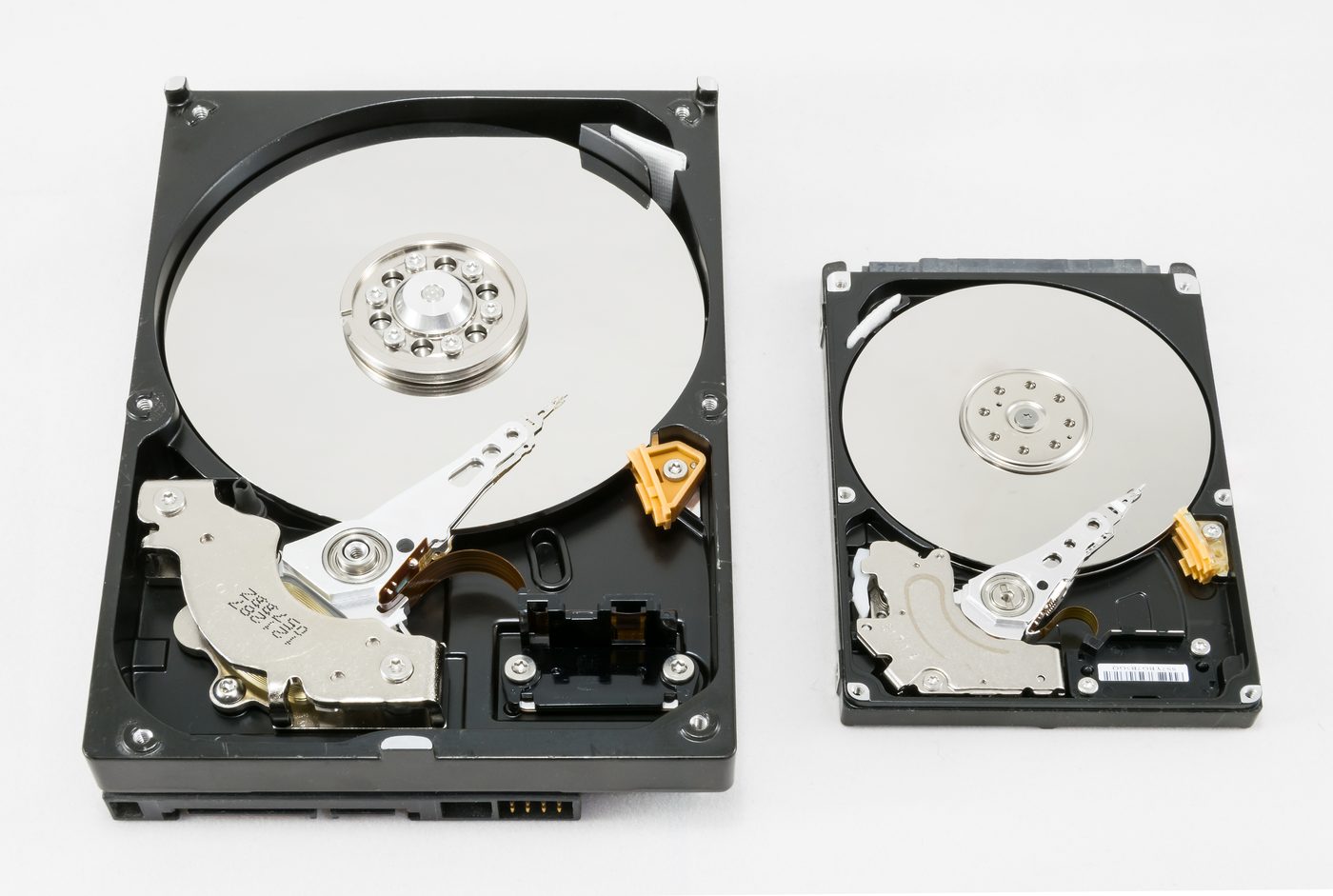
Two opened hard disk drives showing magnetic platters (Source: Wikimedia Commons)
- Inductors and chokes incorporate materials with appropriate permeability to filter noise in communication equipment operating in Nairobi’s telecom networks.
Practice Questions
- Explain the difference between ferromagnetic and paramagnetic materials, including how their atomic structures influence their magnetic behavior. (10 marks)
- Describe the significance of magnetic permeability in selecting materials for transformer cores used in Kenya’s electrical distribution systems. (8 marks)
- Discuss how temperature affects the magnetic properties of materials and why this is important in the design of electronic components for use in Kenya’s varying climate zones. (12 marks)
- Identify five applications of magnetic and non-magnetic materials in electronics engineering and explain the rationale for choosing each material type. (15 marks)
The rest of this chapter
🔒Create a free account to open more of this chapter.
Free: practical guides, quick cards, workplace scenarios and more.
Create a free account 🔒3.2 Concepts of Magnetic Fields and Field Distribution
In Electronics Engineering, understanding magnetic fields and their distribution is essential for designing and analyzing devices such as transformers, inductors, and electric motors. In Kenya, electronics professionals working in industries like manufacturing…
🔒3.3 Concepts of Electromagnetism
The principles of electromagnetism are fundamental to electronics engineering, especially in designing and analyzing devices that rely on magnetic fields generated by electric currents. In Kenya's electronics industry, understanding these concepts enables engi…
🔒3.4 Laws of Electromagnetic Induction
In electronics engineering, understanding the laws of electromagnetic induction is crucial for designing and analyzing devices such as transformers, inductors, and electric generators. These laws explain how electric currents can be induced by changing magneti…
🔒3.5 Concepts of Self and Mutual Induction
In electronics engineering, understanding the principles of self and mutual induction is fundamental to the design and operation of inductive components such as transformers, inductors, and coils. These concepts underpin many devices used in signal processing,…
Chapter Summary
This chapter explored the distinction between magnetic and non-magnetic materials, emphasizing how their atomic structures influence magnetic behavior. It then examined magnetic fields, detailing how they form around magnets and the patterns of their distribution in space. The discussion progressed to electromagnetism, explaining how electric currents generate magnetic fields and the practical applications of this relationship. Fundamental laws of electromagnetic induction were covered, highlighting how changing magnetic fields induce electromotive forces in conductors. Finally, the concepts of self and mutual induction were introduced, illustrating how coils interact with their own magnetic fields and with each other to produce induced voltages. Together, these topics provide a foundational understanding of magnetism and electromagnetism essential for electrical engineering applications.
Self-Assessment
🔒 PDFDownload this self-assessment, with answers
A. Written Assessment
-
Which of the following materials is classified as magnetic?
a) Copper
b) Aluminum
c) Iron
d) Plastic
(2 marks)
-
Explain how magnetic field lines are distributed around a bar magnet. (3 marks)
🔒20 more in this section.
Chapter Examination Questions
🔒 PDFDownload these examination questions, with worked answers
SECTION A (40 Marks) - Answer ALL Questions
- Identify five common magnetic materials used in electronics engineering and explain why each is preferred in specific applications such as transformers or inductors. (4 marks)
- Differentiate between magnetic and non-magnetic materials with reference to their atomic structure and give two examples of each relevant to electronic components. (4 marks)
🔒18 more in this section.
Chapter Practical Activities
Practical 1: Identify and Test Magnetic and Non-Magnetic Materials
Electronics Engineering · Level 6
Electrical Principles I
PRACTICAL ASSESSMENT
TIME: 4 HOURS
⬇ PDFCandidate Instructions (Candidate Tool)
Type: Individual
INSTRUCTIONS TO CANDIDATE:
1. You are required to perform the following task:
i. Identify and classify magnetic and non-magnetic materials from test samples measuring approximately 100mm x 50mm as per the provided list.
2. You have been provided with the following resources for the practical task:
| Tools & Equipment | Materials |
|---|
| Bar magnet | Iron nail 50mm |
| Multimeter with gauss meter function | Copper sheet 100mm x 50mm x 1mm |
| Permanent marker pen | Aluminium plate 100mm x 50mm x 1mm |
| Steel washer 30mm diameter |
| Plastic ruler 150mm |
⬇ PDFResources Required (Cutting List)
| S/N | Item | Quantity |
|---|
| 1 | Bar magnet | 1 Pc per Candidate |
| 2 | Iron nail 50mm | 2 Pcs per Candidate |
| 3 | Copper sheet 100mm x 50mm x 1mm | 1 Pc per Candidate |
| 4 | Aluminium plate 100mm x 50mm x 1mm | 1 Pc per Candidate |
| 5 | Steel washer 30mm diameter | 2 Pcs per Candidate |
| 6 | Plastic ruler 150mm | 1 Pc per Candidate |
| 7 | Multimeter with gauss meter function | 1 Pc per 5 Candidates |
| 8 | Personal Protective Equipment (Dustcoat/Overall, Gloves) | 1 Set per Candidate |
| 9 | Permanent marker pen | 1 Pc per Candidate |
⬇ PDFAssessor Guide
| Items to be Evaluated | Marks Available | Marks Obtained | Comments |
|---|
| TASK 1: MATERIAL TESTING AND IDENTIFICATION |
Wore Personal Protective Equipment (Dustcoat/Overall and Gloves)
(Award 1 for correct PPE use, 0 if not) | 1 | | |
Used bar magnet correctly to test each material sample
(Award 1 mark per correctly tested sample out of 3) | 3 | | |
Used multimeter gauss meter function properly to measure magnetic flux density
(Award 1 mark per correct measurement on 3 different samples) | 3 | | |
Marked each sample clearly as magnetic or non-magnetic with permanent marker
(Award 1 mark each for clear and correct labeling of magnetic and non-magnetic samples) | 2 | | |
Applied good housekeeping practice by cleaning work area after testing
(Award 1 if work area left clean and organized) | 1 | | |
| Sub-Total | 10 | | |
| PRODUCT CHECKLIST |
Correct classification of all 5 material samples as magnetic or non-magnetic
(Award 1 mark per correctly classified sample) | 5 | | |
Recorded magnetic flux density values accurately for magnetic samples within ±5% tolerance
(Award 3 marks if all magnetic samples have recorded values within tolerance, else 0) | 3 | | |
Samples labeled neatly and legibly with correct identification
(Award 2 marks for neat and legible labeling) | 2 | | |
| Sub-Total | 10 | | |
| GRAND TOTAL | 20 | | |
ASSESSMENT OUTCOME: ☐ Competent ☐ Not Yet Competent (competent if at least 50%)
Practical 2: Demonstrate Magnetic Field Patterns Around a Bar Magnet
Electronics Engineering · Level 6
Electrical Principles I
PRACTICAL ASSESSMENT
TIME: 4 HOURS
⬇ PDFCandidate Instructions (Candidate Tool)
Type: Individual
INSTRUCTIONS TO CANDIDATE:
1. You are required to perform the following task:
i. Demonstrate magnetic field patterns by arranging iron filings around a 150mm long bar magnet on an A3 paper as per the provided setup.
2. You have been provided with the following resources for the practical task:
| Tools & Equipment | Materials |
|---|
| Ruler | Bar magnet 150 mm length |
| Pencil | Iron filings fine grade |
| Plastic tray | White drawing paper A3 size |
| Safety goggles |
| Dust coat/Overall |
⬇ PDFResources Required (Cutting List)
| S/N | Item | Quantity |
|---|
| 1 | Bar magnet, 150 mm length | 1 pc per Candidate |
| 2 | Iron filings, fine grade | 50 g per Candidate |
| 3 | White drawing paper, A3 size | 2 sheets per Candidate |
| 4 | Plastic tray, 300 mm x 300 mm | 1 pc per Candidate |
| 5 | Ruler, 300 mm | 1 pc per Candidate |
| 6 | Pencil, HB | 1 pc per Candidate |
| 7 | Safety goggles | 1 pair per Candidate |
| 8 | Dust coat/Overall | 1 per Candidate |
⬇ PDFAssessor Guide
| Items to be Evaluated | Marks Available | Marks Obtained | Comments |
|---|
| TASK 1: Preparation and Safety |
Wore Personal Protective Equipment (Dust coat/Overall and Safety goggles)
(Award 2 marks if both worn, else 0) | 2 | | |
Ensured clean and safe working area before starting
(Award 1 mark for clean and organized area) | 1 | | |
Handled iron filings carefully to avoid spillage
(Award 1 mark for careful handling) | 1 | | |
Used ruler and pencil correctly to mark reference points on paper
(Award 1 mark for correct usage) | 1 | | |
Placed bar magnet centrally on white A3 paper within plastic tray
(Award 1 mark for correct placement) | 1 | | |
Sprinkled iron filings evenly around the bar magnet without disturbing setup
(Award 2 marks for even and careful sprinkling) | 2 | | |
Observed and recorded magnetic field lines clearly formed by iron filings
(Award 2 marks for clear observation and recording) | 2 | | |
Cleaned up iron filings and working area after demonstration
(Award 1 mark for good housekeeping) | 1 | | |
| Sub-Total | 11 | | |
| PRODUCT CHECKLIST |
Magnetic field pattern clearly visible and symmetrical around bar magnet
(Award 5 marks for clear, symmetrical field lines pattern) | 5 | | |
Iron filings arranged showing distinct field lines from North to South poles
(Award 4 marks for correct field line distribution) | 4 | | |
Drawing sheet clean with no excessive spillage or smudging
(Award 2 marks for neat final presentation) | 2 | | |
Bar magnet positioned correctly at center of drawing sheet within plastic tray
(Award 3 marks for correct positioning as per instruction) | 3 | | |
| Sub-Total | 14 | | |
| GRAND TOTAL | 25 | | |
ASSESSMENT OUTCOME: ☐ Competent ☐ Not Yet Competent (competent if at least 50%)
🔒Construct and Test an Electromagnet Coil 150mm x 40mmPractical 3
🔒Demonstrate Electromagnetic Induction Using a Coil and MagnetPractical 4
🔒Demonstrate self-induction in a coil 150mm diameter, 200 turnsPractical 5
🔒Demonstrate Mutual Induction Between Two CoilsPractical 6
🔒Drawing and Interpretation of Magnetic Field Lines for Bar and Horseshoe MagnetsPractical 7
🔒Design and Construct a Simple Galvanometer Coil and Needle Assembly 150mm x 150mm BasePractical 8
🔒Measure and compare induced emf at different magnet movement speedsPractical 9
🔒Calculate and Verify Inductance of a Coil Using Self-Induction SetupPractical 10
