Electronics engineering professionals in Kenya rely heavily on precise technical drawings to communicate complex circuit layouts, component placements, and system designs. Preparing the appropriate drawing equipment and materials is fundamental to producing high-quality, accurate drawings essential for manufacturing, troubleshooting, and maintenance tasks. This chapter focuses on identifying key drawing tools and maintaining them effectively to ensure consistent performance in professional environments such as electronics workshops, research labs, and technical training institutions.
1.1 Identification and Care of Drawing Equipment
Drawing equipment forms the backbone of technical drawing practice in electronics engineering. Understanding the types, specifications, and proper care of these tools improves drawing accuracy and tool longevity, reducing costs and enhancing productivity in workplaces like electronics manufacturing firms and service centres.
1.1.1 Drawing Boards
Drawing boards provide the stable, flat surface necessary for accurate technical drawings. In electronics engineering, where detailed circuit diagrams and layouts are common, the quality and maintenance of the drawing board directly affect the clarity and precision of the final output.
| Name |
Specification |
Use |
| Drawing Board |
Size: Commonly 600 mm x 450 mm or larger; Material: Smooth wood or plastic surface; Thickness: 15-20 mm |
Provides a flat, stable surface for placing drawing sheets during technical drawing |
Construction and Material Types
-
Wooden Boards: Made from plywood or hardboard, these provide a sturdy platform with a slightly textured surface that holds paper firmly.
-
Plastic Boards: Lightweight and resistant to moisture, plastic boards offer smooth surfaces ideal for ink and pencil.
- Aluminium Boards: Used in advanced settings, aluminium boards provide durability and resistance to warping.
- Surface Finish: A smooth, matte finish reduces glare and prevents paper slipping.
- Size Variability: Boards come in standard sizes; larger boards accommodate bigger drawings common in printed circuit board (PCB) layouts.
Usage Guidelines
- Place the drawing board on a firm, level table to prevent movement.
- Secure drawing sheets with clips or tape to avoid shifting during work.
- Use a parallel motion ruler or T-square in conjunction with the board for straight lines.
- Maintain a comfortable working angle by adjusting the board tilt if adjustable stands are available.
- Avoid placing heavy objects on the board to prevent dents or warping.
Maintenance and Care
- Clean the surface regularly with a soft cloth to remove graphite, ink, or dust particles.
- Avoid exposure to moisture to prevent swelling or warping, especially for wooden boards.
- Store the board flat or hanging vertically to maintain shape.
- Repair minor surface scratches with fine sandpaper, followed by smooth polishing.
- Inspect clips and fasteners regularly and replace if worn out.
Impact on Drawing Quality
- A stable board prevents paper movement, ensuring precision in line work.
- Smooth surfaces reduce friction, allowing better pencil and pen control.
- Proper board size accommodates detailed electronics schematics without crowding.
- Well-maintained boards contribute to consistent drawing standards across projects.
- Boards with poor surface quality can lead to smudging or inaccurate line thickness.
1.1.2 T and Set Squares
T-squares and set squares are essential for creating accurate horizontal, vertical, and angled lines in electronics drawings. Their precision ensures components like resistors, capacitors, and integrated circuits are correctly aligned in schematic diagrams.
| Name |
Specification |
Use |
| T-square |
Length: 450-600 mm; Material: Plastic or wood with metal edge; Edge: Smooth, straight and rigid |
Drawing horizontal lines and guiding set squares |
| Set Square |
Angles: 30°, 45°, 60°; Material: Transparent plastic or acrylic; Edges: Straight, smooth |
Drawing vertical and angled lines accurately |
Types and Characteristics
- Standard T-square: Used to draw horizontal lines; typically has a wooden or plastic blade with a rigid metal edge.
- Adjustable T-square: Allows blade angle adjustment for inclined lines; useful in complex electronics layouts.
- 30°/60° Set Square: Provides accurate drawing of 30° and 60° angles, common in circuit board design.
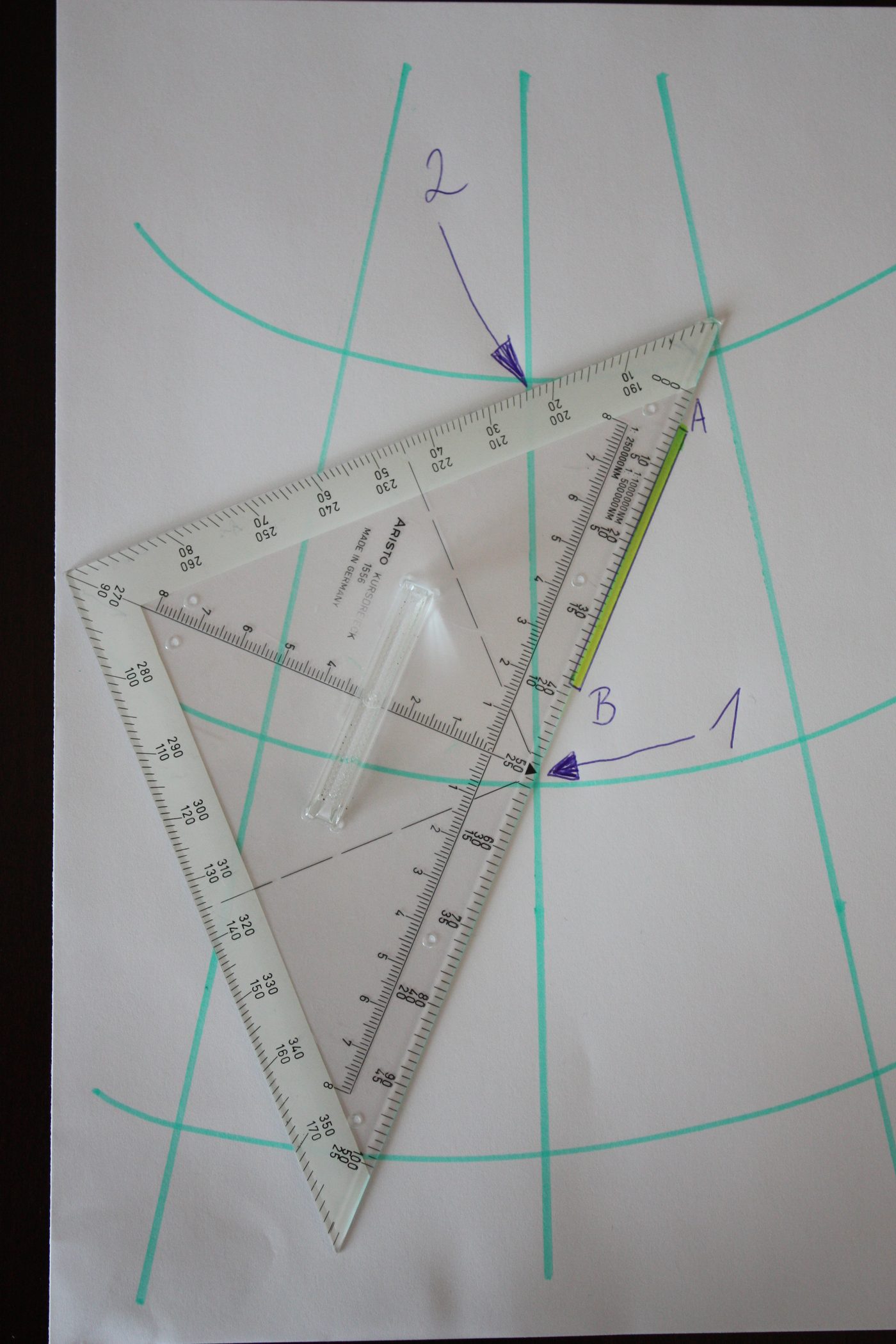
30°/60° set square on paper (Source: Wikimedia Commons)
- 45° Set Square: Used frequently for isometric projections and diagonal lines.
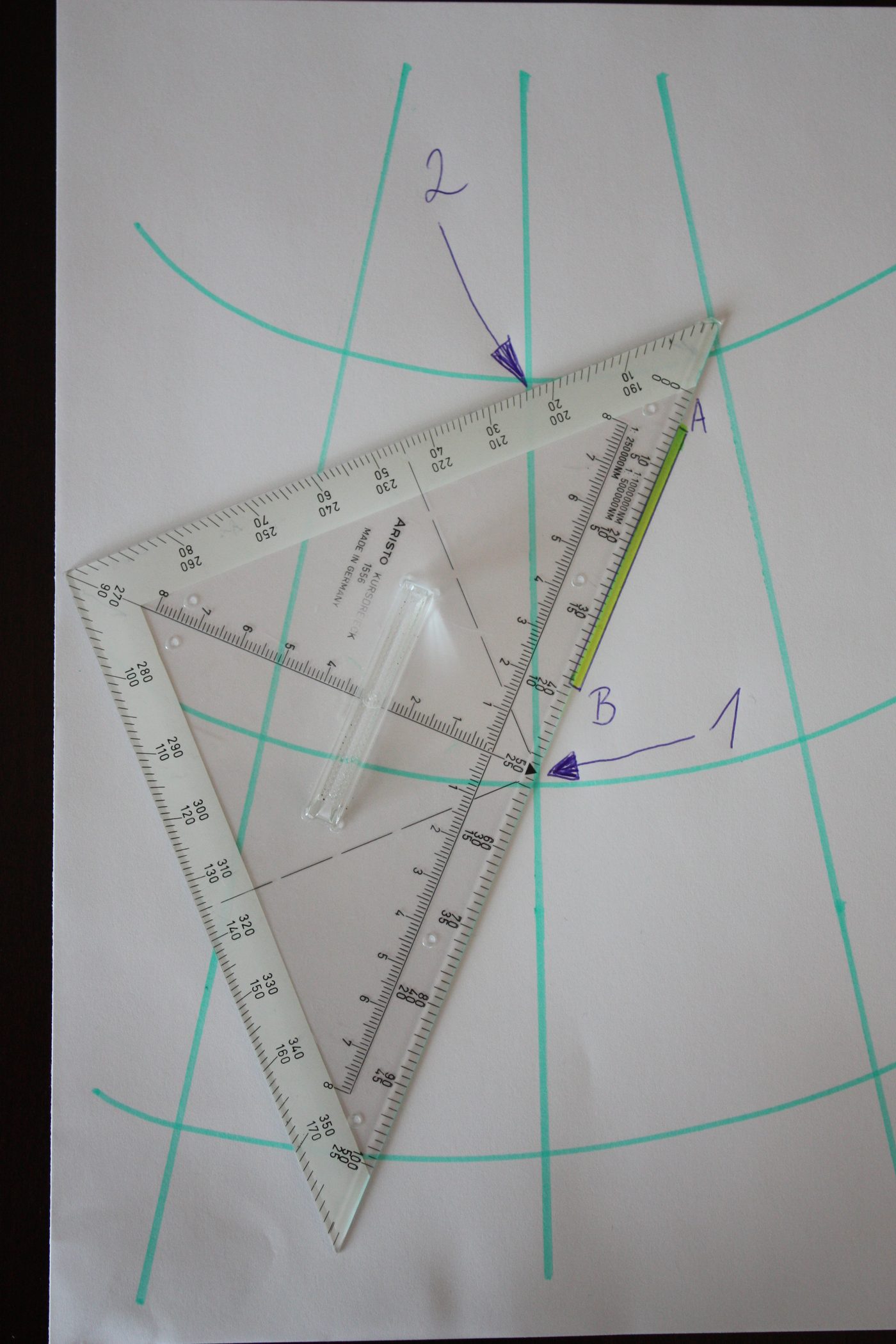
45° set square on graph paper (Source: Wikimedia Commons)
- Transparent Material: Enables clear visibility of the drawing underneath, ensuring precision.
Proper Handling and Usage
- Always place the T-square firmly against the drawing board edge to ensure straight horizontal lines.
- Use the T-square as a guide to position set squares for vertical and angled lines.
- Apply gentle, consistent pressure to avoid shifting while drawing.
- Regularly check edges for nicks or damage that could compromise line accuracy.
- Store the tools flat or hung vertically to maintain shape and straightness.
Maintenance and Care
- Clean edges with a soft cloth to remove graphite and ink residue.
- Avoid dropping or bending the tools to prevent warping.
- Store in protective cases or tool rolls to prevent damage.
- Inspect regularly for chipped or worn edges and replace if necessary.
- Keep away from direct sunlight and heat to prevent plastic deformation.
Importance in Electronics Engineering Drawings
- Ensures components and wiring are laid out with precise alignment.
- Facilitates the creation of standard projection views in circuit schematics.
- Helps maintain consistent scale and proportion in drawings.
- Enhances readability and professionalism of technical documents.
- Reduces errors during fabrication or assembly due to accurate representation.
1.1.3 Drawing Set
A complete drawing set for electronics engineering includes a variety of tools that allow detailed and precise representation of electronic components and circuits. The set must be carefully selected and maintained to support diverse drawing tasks from schematic diagrams to PCB layouts.
| Name |
Specification |
Use |
| Drawing Set |
Includes pencils (HB, 2H), erasers, compasses, dividers, protractors, and lettering guides |
Facilitates precise drawing, measurement, and annotation of technical diagrams |
Components of a Drawing Set
- Pencils: Different hardness grades (HB for general drawing, 2H for fine lines) allow varied line thickness and clarity.
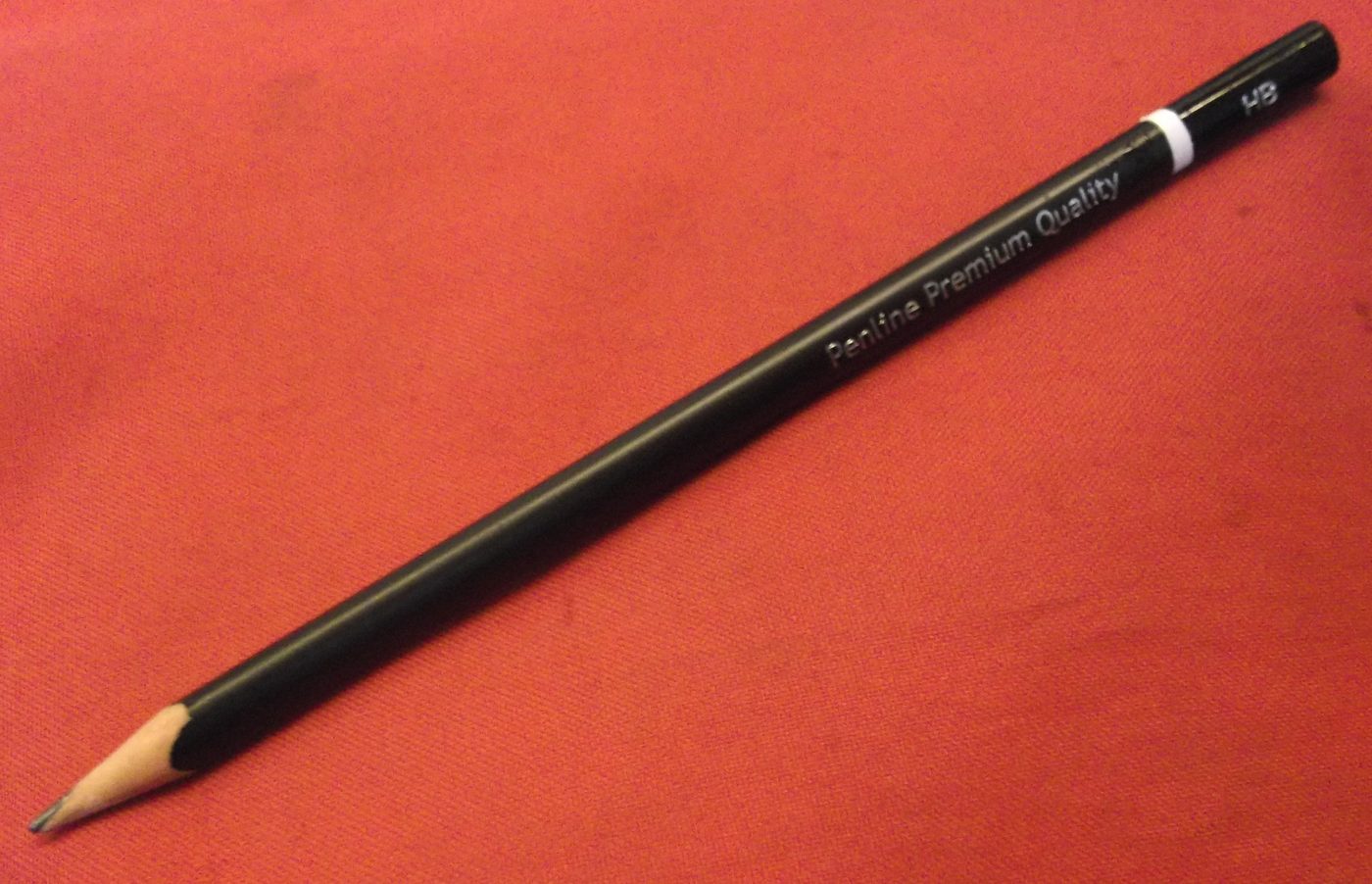
A single black pencil on red surface (Source: Wikimedia Commons)
- Erasers: Soft rubber or vinyl erasers for clean removal of pencil marks without damaging paper.
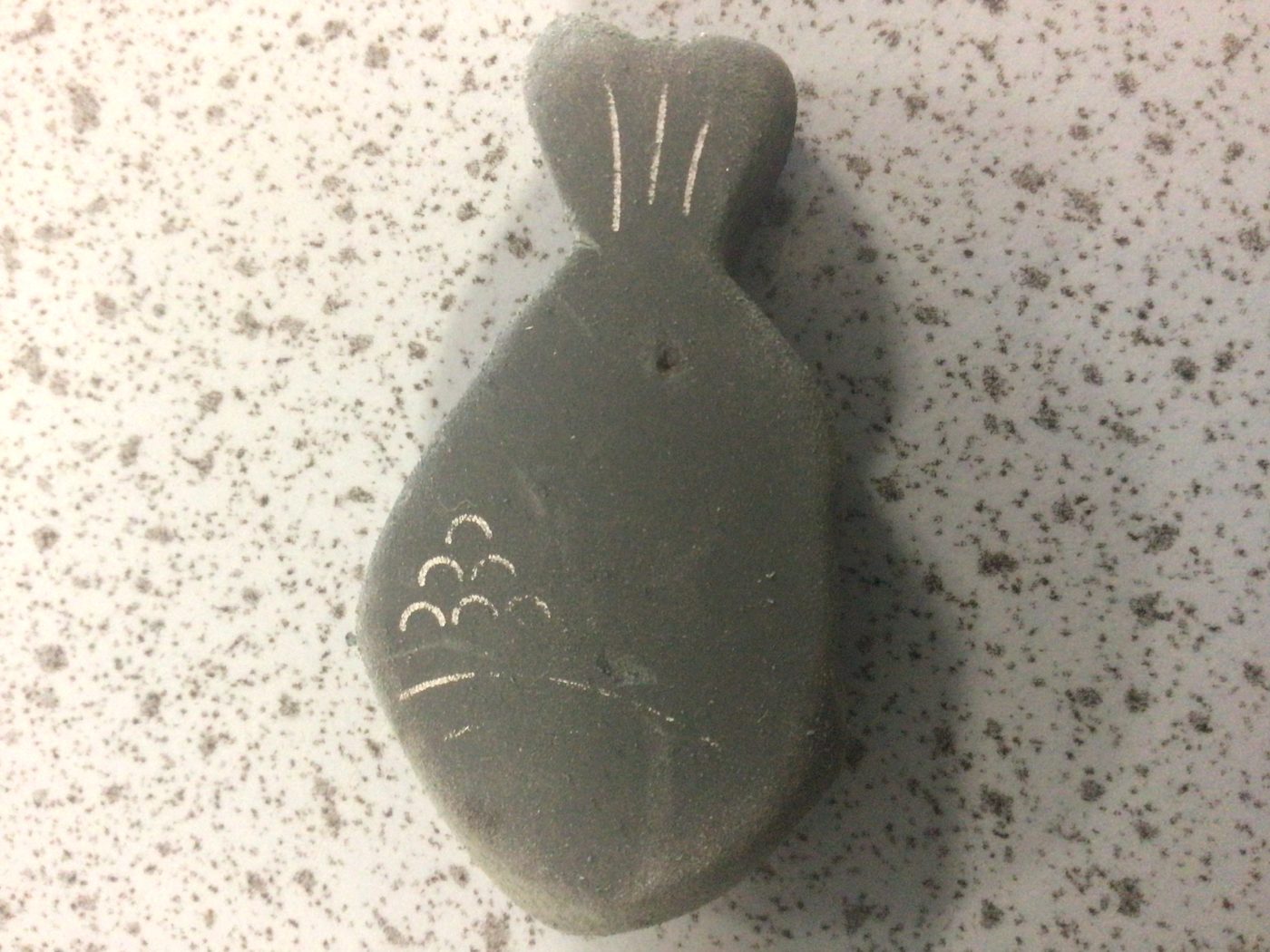
Fish-shaped eraser on speckled surface (Source: Wikimedia Commons)
- Compasses: For drawing circles and arcs, essential in representing round components like coils or connectors.
-
Dividers: Used for transferring measurements accurately between drawing sections.
-
Protractors: For measuring and drawing precise angles, critical in circuit layout.
-
Lettering Guides: Assist in standardizing text size and style for annotations and labels.
Usage Procedures
- Select the appropriate pencil grade for the drawing stage; use harder pencils for construction lines and softer for final details.
- Use the compass to draw circles by fixing one leg at the center point and rotating the pencil leg around it steadily.
- Employ dividers to measure distances on the drawing and transfer them accurately.
- Apply the protractor to mark angles by aligning its baseline with the reference line and marking the desired degree.
- Utilize lettering guides to maintain uniform text height and spacing during annotations.
- Erase construction lines carefully after finalizing the drawing to maintain clarity.
Care and Maintenance
- Sharpen pencils regularly to maintain fine points; use a sharpener that does not break the lead.
- Clean compasses and dividers after use to remove graphite dust and prevent rust.
- Store erasers in clean, dry containers to avoid contamination.
- Handle protractors and lettering guides gently to prevent cracks or distortion.
- Organize all tools in a dedicated case to avoid loss and damage.
Role in Producing Quality Electronics Drawings
- Enables precise representation of circuit dimensions and component placement.
- Supports clear communication of technical specifications and annotations.
- Facilitates adherence to drawing standards required by Kenyan industrial and educational institutions.
- Enhances efficiency by providing specialized tools tailored to electronics drawing needs.
- Reduces rework and errors in production due to accurate and legible drawings.
Practice Questions
- Describe the key specifications of a drawing board suitable for electronics engineering and explain how to maintain it for long-term use. (10 marks)
- Explain the differences between a T-square and set squares and their specific roles in preparing electronic circuit diagrams. (10 marks)
- List the components of a drawing set used in electronics engineering and discuss the care procedures necessary to maintain these tools. (10 marks)
- Outline the step-by-step procedure to use a compass for drawing a circle representing a coil in an electronics schematic. (10 marks)
The rest of this chapter
🔒Create a free account to open more of this chapter.
Free: practical guides, quick cards, workplace scenarios and more.
Create a free account 🔒1.2 Identification and care of drawing materials
In electronics engineering, precision in technical drawing is critical for designing and interpreting circuit diagrams, PCB layouts, and component schematics. Proper identification and care of drawing materials ensure the longevity of tools and the accuracy of…
🔒1.3 Reference to manufacturer's instructions and workplace procedures on use and maintenance of drawing equipment and materials
In Electronics Engineering environments across Kenya, the correct use and maintenance of technical drawing equipment is essential for producing precise and reliable circuit diagrams, PCB layouts, and system schematics. Manufacturers provide specific instructio…
Chapter Summary
This chapter focused on the proper preparation of drawing equipment and materials essential for technical drawing. It began with identification and care of key drawing equipment such as drawing boards, T squares, set squares, and complete drawing sets, emphasizing their correct handling and maintenance to ensure accuracy and longevity. The discussion then moved to drawing materials, covering different types of drawing papers, pencils, erasers, masking tapes, and paper clips, highlighting how to select and care for these materials to maintain quality and usability. Attention was given to understanding and following the manufacturer’s instructions to maximize the lifespan and performance of both equipment and materials. Additionally, the chapter stressed the importance of adhering to workplace procedures for safe and efficient use of drawing tools. Proper maintenance practices were underscored as vital to preventing damage and ensuring consistent drawing standards. Overall, the chapter provided a comprehensive guide to preparing and maintaining all necessary resources for effective technical drawing.
Self-Assessment
🔒 PDFDownload this self-assessment, with answers
A. Written Assessment
- What is the primary purpose of a drawing board in electronics engineering technical drawing? (2 marks)
- Identify two types of set squares commonly used in technical drawing and their typical angles. (3 marks)
🔒20 more in this section.
Chapter Examination Questions
🔒 PDFDownload these examination questions, with worked answers
SECTION A (40 Marks) - Answer ALL Questions
- Explain the main features of a drawing board that make it suitable for electronics engineering technical drawings. (4 marks)
- Describe the proper care and storage methods for T-squares used in preparing circuit diagrams. (4 marks)
🔒28 more in this section.
Chapter Practical Activities
Practical 1: Identify and Care for Drawing Boards
Electronics Engineering · Level 5
Technical Drawing
PRACTICAL ASSESSMENT
TIME: 4 HOURS
⬇ PDFCandidate Instructions (Candidate Tool)
Type: Individual
INSTRUCTIONS TO CANDIDATE:
1. You are required to perform the following task:
i. Inspect, clean, and properly store a 600mm x 450mm drawing board according to care instructions.
2. You have been provided with the following resources for the practical task:
| Tools & Equipment | Materials |
|---|
| Drawing board (600mm x 450mm) | Mild detergent solution |
| Soft lint-free cloth | Wood polish (for wooden drawing boards only) |
| Cleaning brush with soft bristles | |
| Protective gloves | |
⬇ PDFResources Required (Cutting List)
| S/N | Item | Quantity |
|---|
| 1 | Drawing board (600mm x 450mm) | 1 Pc per Candidate |
| 2 | Soft lint-free cloth | 1 Pc per Candidate |
| 3 | Mild detergent solution | Enough for cleaning per Candidate |
| 4 | Cleaning brush with soft bristles | 1 Pc per Candidate |
| 5 | Wood polish (for wooden drawing boards only) | Enough per Candidate |
| 6 | Protective gloves | 1 Pair per Candidate |
| 7 | Storage rack or wall hooks for drawing boards | Shared per Workshop |
⬇ PDFAssessor Guide
| Items to be Evaluated | Marks Available | Marks Obtained | Comments |
|---|
| TASK 1: Identification, Cleaning and Storage of Drawing Board |
Wore Personal Protective Equipment (gloves)
(Award 1 or 0) | 1 | | |
Ensured work area was clean before starting
(Award 1 or 0) | 1 | | |
Inspected the drawing board for damages (scratches, warping, loose clamps)
(Award 1 mark each for identifying 3 key defects or none) | 3 | | |
Cleaned the drawing board surface using mild detergent and soft cloth correctly
(Award 3 or 0) | 3 | | |
Used brush to remove dust and debris from corners and clamps
(Award 2 or 0) | 2 | | |
Applied wood polish evenly on wooden drawing boards (if applicable)
(Award 2 or 0) | 2 | | |
Properly stored the drawing board on a rack or wall hook in an upright position
(Award 3 or 0) | 3 | | |
| Sub-Total | 15 | | |
| PRODUCT CHECKLIST |
Drawing board is clean, free from dust and stains
(Award 3 or 0) | 3 | | |
No visible damages or defects left unreported
(Award 3 or 0) | 3 | | |
Drawing board is stored upright without warping or damage
(Award 4 or 0) | 4 | | |
| Sub-Total | 10 | | |
| GRAND TOTAL | 25 | | |
ASSESSMENT OUTCOME: ☐ Competent ☐ Not Yet Competent (competent if at least 50%)
Practical 2: Use and Maintain T and Set Squares for Technical Drawing
Electronics Engineering · Level 5
Technical Drawing
PRACTICAL ASSESSMENT
TIME: 4 HOURS
⬇ PDFCandidate Instructions (Candidate Tool)
Type: Individual
INSTRUCTIONS TO CANDIDATE:
1. You are required to perform the following task:
i. Use T-square 600mm and set squares (45° and 60°/30°) to draw a rectangle 200mm by 150mm on A2 drawing paper and maintain the tools as instructed.
2. You have been provided with the following resources for the practical task:
| Tools & Equipment | Materials |
|---|
| T-square 600mm | Drawing paper A2 size |
| Set squares (45° and 60°/30°) | |
| Drawing board (A2 size) | |
| Pencil HB | |
| Eraser | |
| Sharpener | |
| Cleaning cloth | |
⬇ PDFResources Required (Cutting List)
| S/N | Item | Quantity |
|---|
| 1 | T-square 600mm | 1 Pc per Candidate |
| 2 | Set squares (45° and 60°/30°) | 1 Set per Candidate |
| 3 | Drawing board (A2 size) | 1 Pc per Candidate |
| 4 | Drawing paper A2 size | 2 Sheets per Candidate |
| 5 | Pencil HB | 2 Pcs per Candidate |
| 6 | Eraser | 1 Pc per Candidate |
| 7 | Sharpener | 1 Pc per Candidate |
| 8 | Cleaning cloth | 1 Pc per Candidate |
| 9 | Personal Protective Equipment (dustcoat/overall) | 1 Set per Candidate |
⬇ PDFAssessor Guide
| Items to be Evaluated | Marks Available | Marks Obtained | Comments |
|---|
| TASK 1: Preparation and Use of T and Set Squares |
Wore Personal Protective Equipment (dustcoat/overall)
(Award 1 or 0) | 1 | | |
Ensured clean and organized working area before starting
(Award 1 or 0) | 1 | | |
Correctly identified and selected T-square and set squares
(Award 2 or 0) | 2 | | |
Properly positioned the T-square on the drawing board
(Award 2 or 0) | 2 | | |
Accurately used set squares to draw perpendicular and angled lines
(Award 3 or 0) | 3 | | |
Drew a rectangle measuring exactly 200mm by 150mm
(Award 4 or 0) | 4 | | |
Maintained tools by cleaning and storing correctly after use
(Award 2 or 0) | 2 | | |
| Sub-Total | 15 | | |
| PRODUCT CHECKLIST |
Rectangle drawn is dimensionally accurate (200mm x 150mm) within ±1mm tolerance
(Award 3 or 0) | 3 | | |
Lines are straight, clean, and correctly angled (90°, 45°, 60°/30°)
(Award 3 or 0) | 3 | | |
Tools are clean, free from damage, and properly stored
(Award 4 or 0) | 4 | | |
| Sub-Total | 10 | | |
| GRAND TOTAL | 25 | | |
ASSESSMENT OUTCOME: ☐ Competent ☐ Not Yet Competent (competent if at least 50%)
🔒Assemble and Maintain a Complete Technical Drawing SetPractical 3
🔒Select and care for drawing papersPractical 4
🔒Select and Maintain Pencils for Technical DrawingPractical 5
🔒Use and care for erasers in technical drawing workPractical 6
🔒Apply and Maintain Masking Tape on Drawing SurfacesPractical 7
🔒Use and maintain paper clips to organize technical drawing sheetsPractical 8
🔒Operate and Maintain Drawing Equipment as per Manufacturer's InstructionsPractical 9
🔒Maintain and Handle Drawing Materials Following Workplace ProceduresPractical 10
🔒Prepare Drawing Equipment and Materials for Technical DrawingPractical 11
