
Compiled by: Paul Nganga
Solar photovoltaic (PV) systems are increasingly vital across Kenya’s diverse professional sectors, providing sustainable energy solutions that reduce reliance on grid electricity and fossil fuels. Whether powering a county referral hospital, a university campus, a retail business, or a farm cooperative, understanding the components of a solar PV system is essential for effective installation and maintenance. This chapter introduces the main components involved in solar PV systems, focusing on solar panels, charge controllers, and cables, each critical to system performance and longevity.
Solar PV systems convert sunlight into usable electrical energy through interconnected components. Mastery of these components’ functions, specifications, and installation requirements equips TVET diploma graduates to support Kenya’s growing demand for renewable energy in various sectors.
Solar panels form the core of any photovoltaic system by capturing solar radiation and converting it into direct current (DC) electricity. Their design, efficiency, and durability directly influence the system’s output and suitability for different environments such as schools, hotels, or county government offices.
Solar panels are categorized based on the semiconductor material and construction technology, each suited for specific applications and budgets.
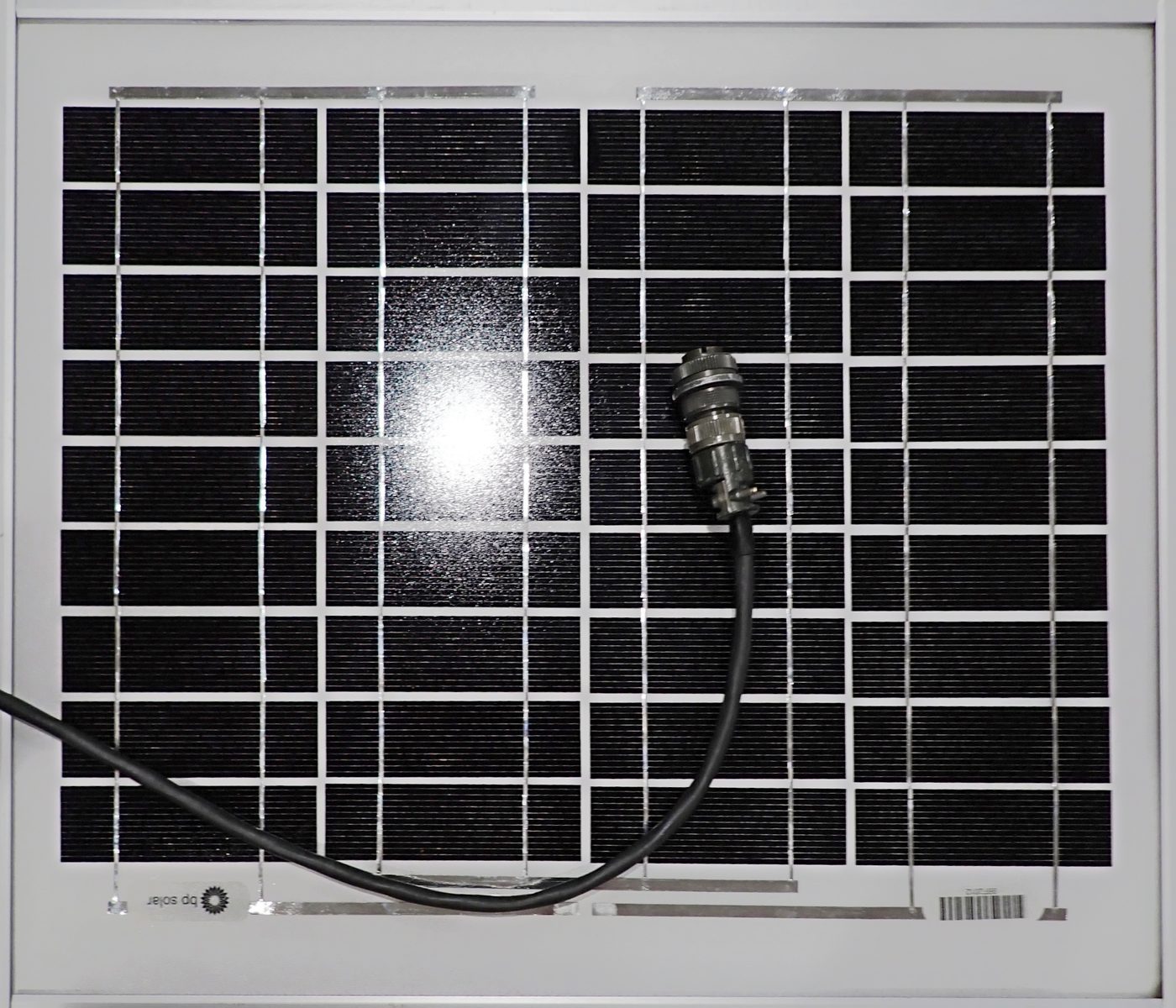
Monocrystalline solar panel with connector cable (Source: Wikimedia Commons)
Polycrystalline Panels: Composed of multiple silicon crystals, they are less efficient but more affordable. Suitable for large-scale installations like university campuses or farms with ample roof or land space.
Thin-Film Panels: These are lightweight and flexible, using materials such as cadmium telluride or amorphous silicon. Their lower efficiency makes them ideal for portable or curved surfaces in mobile health clinics or temporary setups.
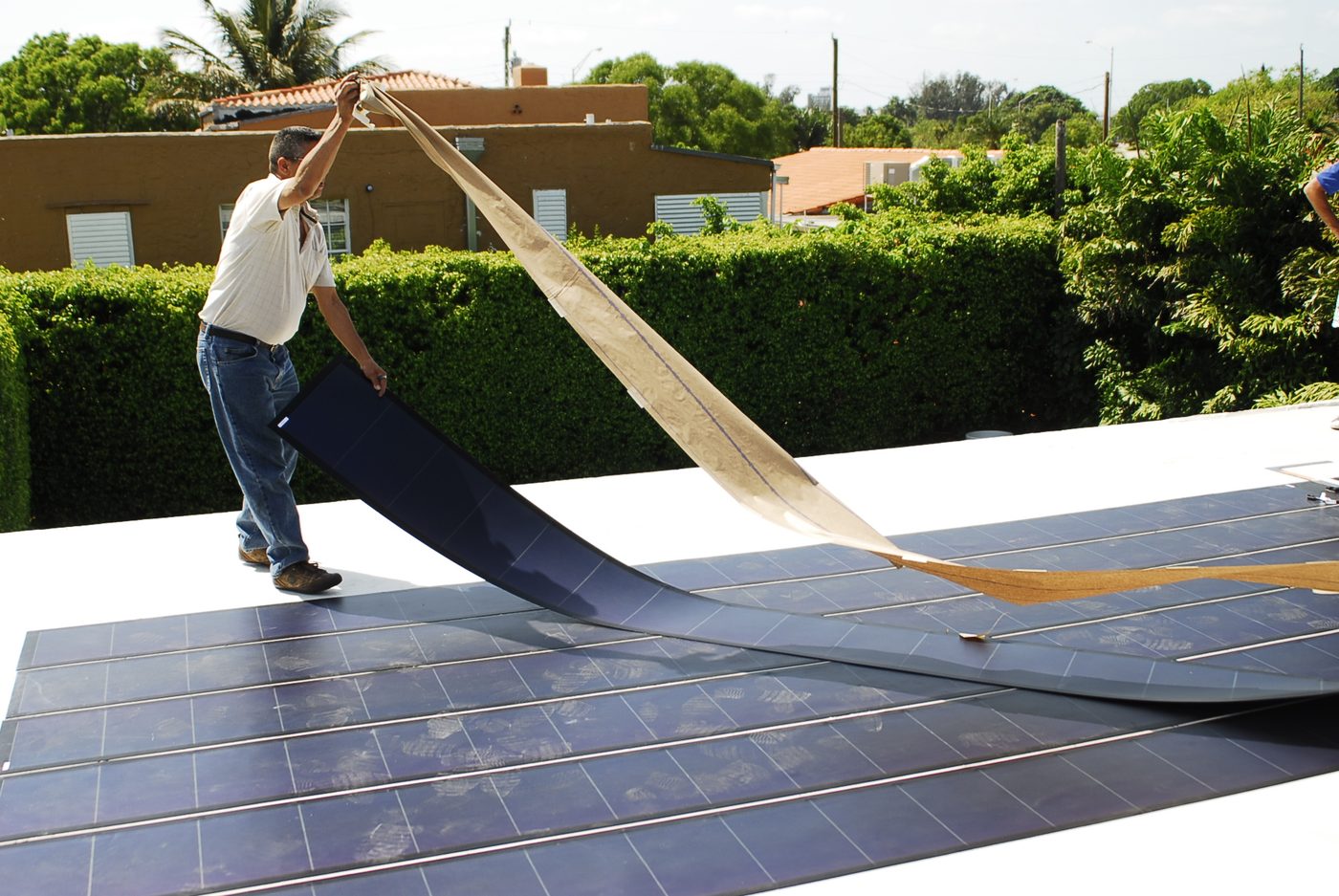
Flexible thin-film solar panels being installed (Source: Wikimedia Commons)
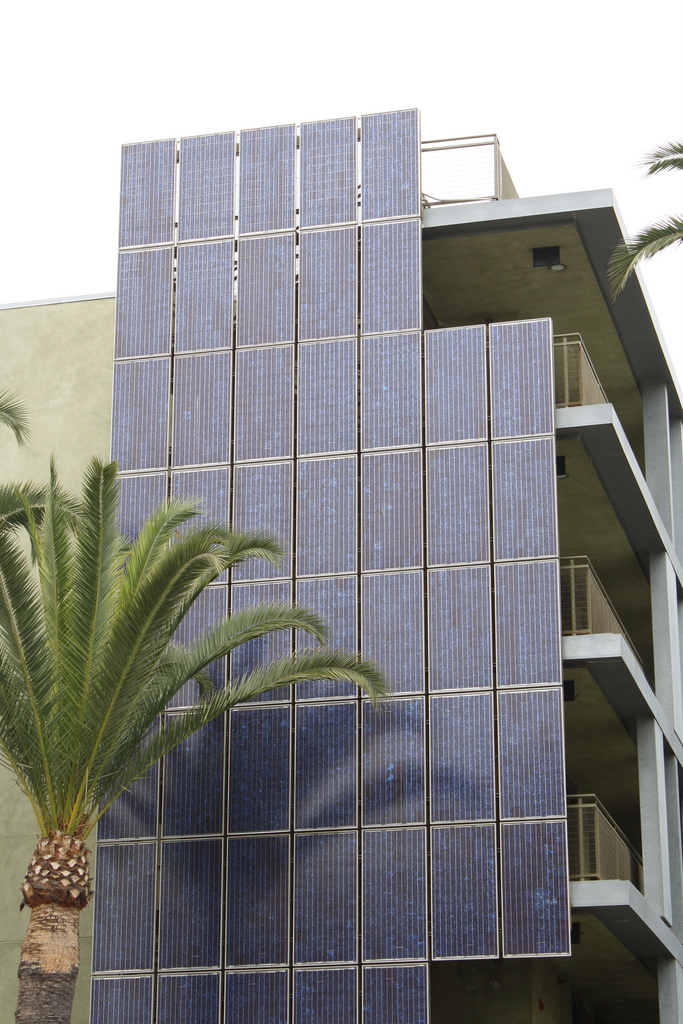
Building facade with integrated photovoltaic panels (Source: Wikimedia Commons)
| Name | Specification | Use |
|---|---|---|
| Power Rating | 100W to 400W per panel | Determines energy output capacity |
| Voltage | Typically 12V or 24V | Matches system design voltage |
| Efficiency | 15% to 22% | Percentage of sunlight converted |
| Dimensions | Vary by model, approx. 1m x 1.6m | Affects installation space |
| Durability | Weatherproof, resistant to hail | Ensures longevity in outdoor use |
Proper installation maximizes energy capture and system lifespan. For example, a county hospital in Kisumu must consider panel tilt angle and orientation to optimize solar exposure throughout the year.
Maintaining panels ensures sustained performance, especially in dusty or rainy regions like Machakos or Nakuru.
The charge controller regulates the voltage and current from solar panels to batteries, preventing overcharging and deep discharging, which are critical for battery longevity and system reliability in settings such as schools or retail outlets.
Charge controllers vary in complexity and functionality, tailored to different system sizes and battery types.
Charge controllers ensure battery health by managing the energy flow from solar panels.
Choosing the right controller depends on system requirements and environmental conditions.
Regular checks prevent system downtime in critical facilities like hospitals or hotels.
Cables transmit electrical energy between solar panels, charge controllers, batteries, and loads. Their quality and correct sizing affect system efficiency and safety in all professional environments from SACCO offices to agricultural cooperatives.
Different cable types serve specific functions based on current capacity, insulation, and installation environment.
Photovoltaic (PV) Wire: UV-resistant with double insulation, suitable for outdoor solar panel wiring.
Copper Conductors: Preferred for high conductivity and flexibility.
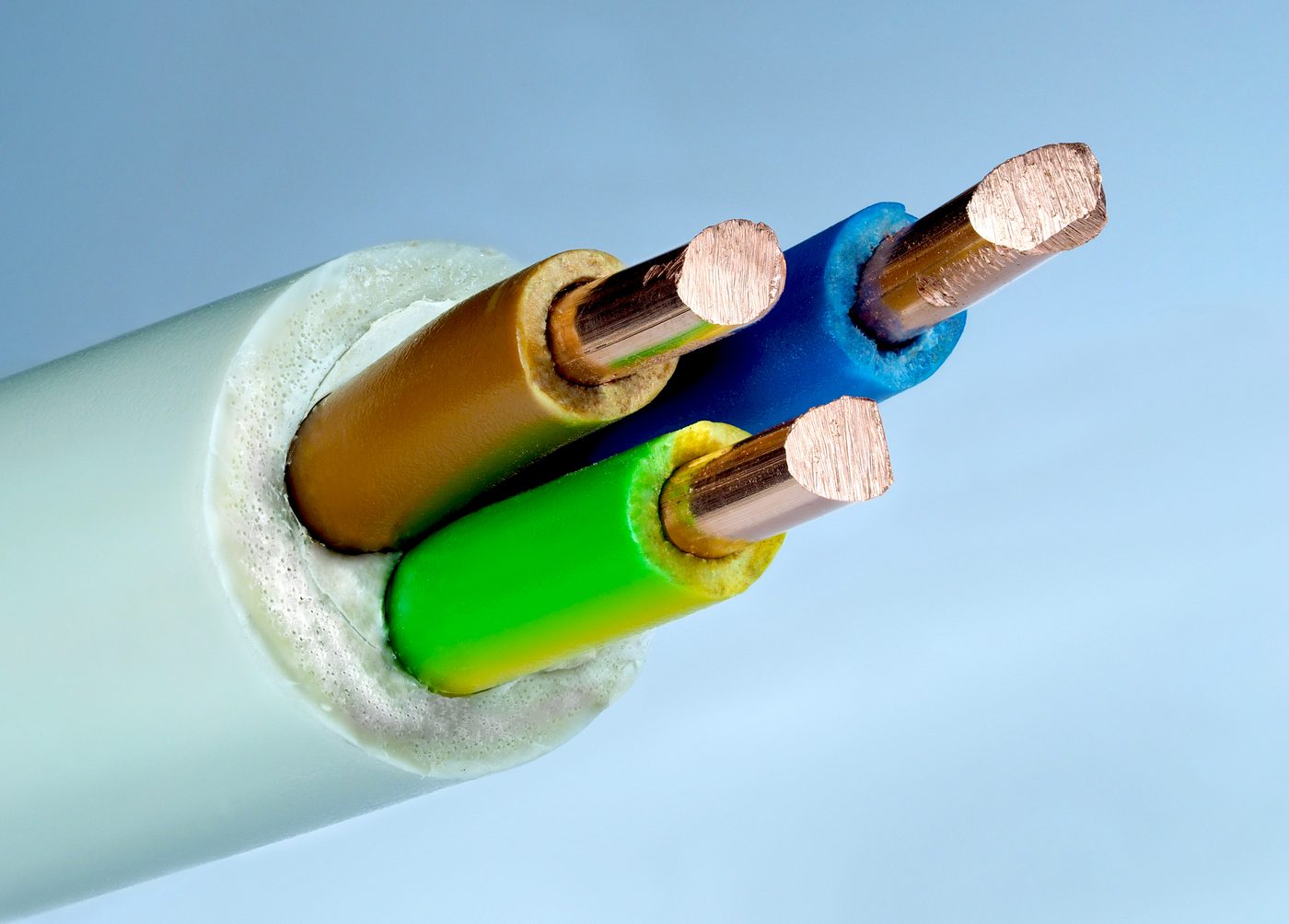
Copper conductors inside insulated electrical cable (Source: Wikimedia Commons)
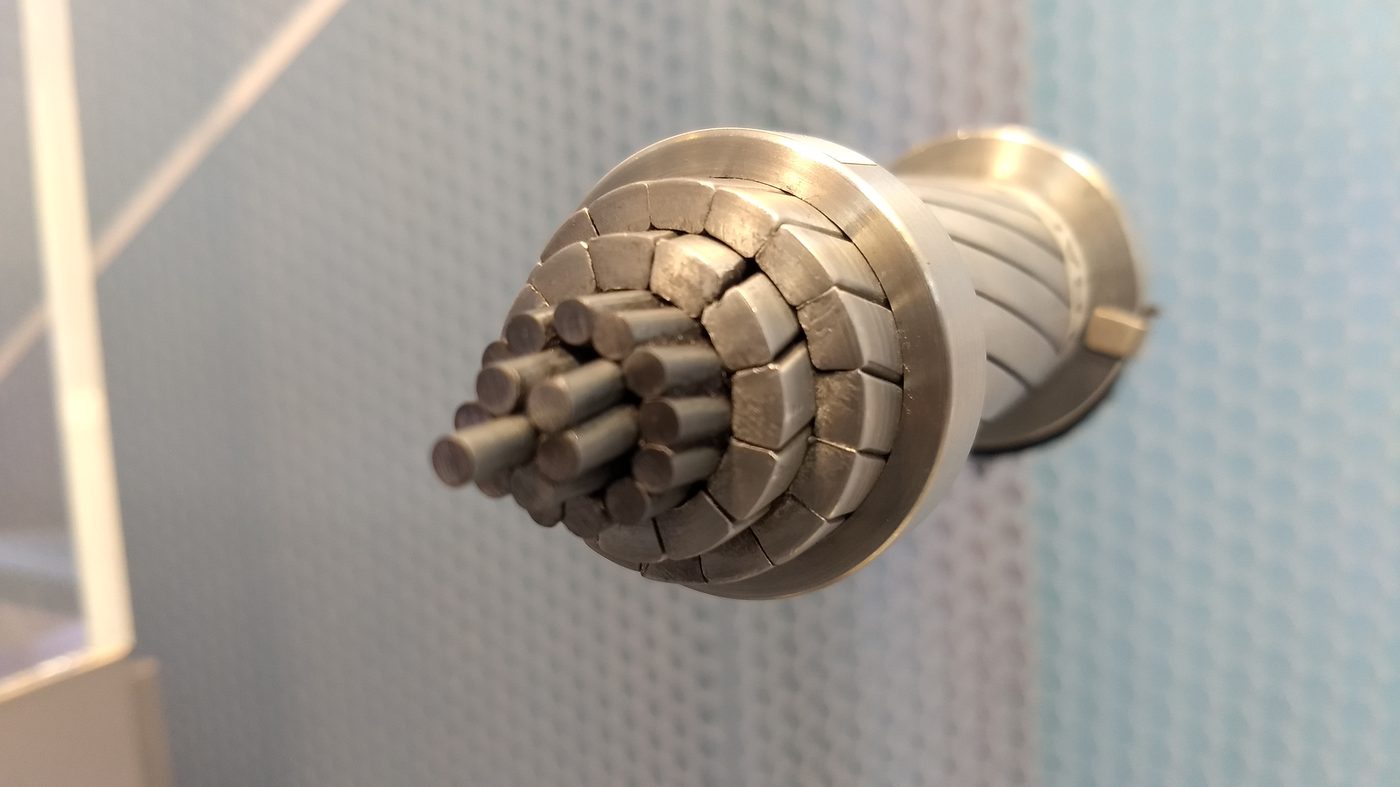
cross-section of aluminum conductor cable (Source: Wikimedia Commons)
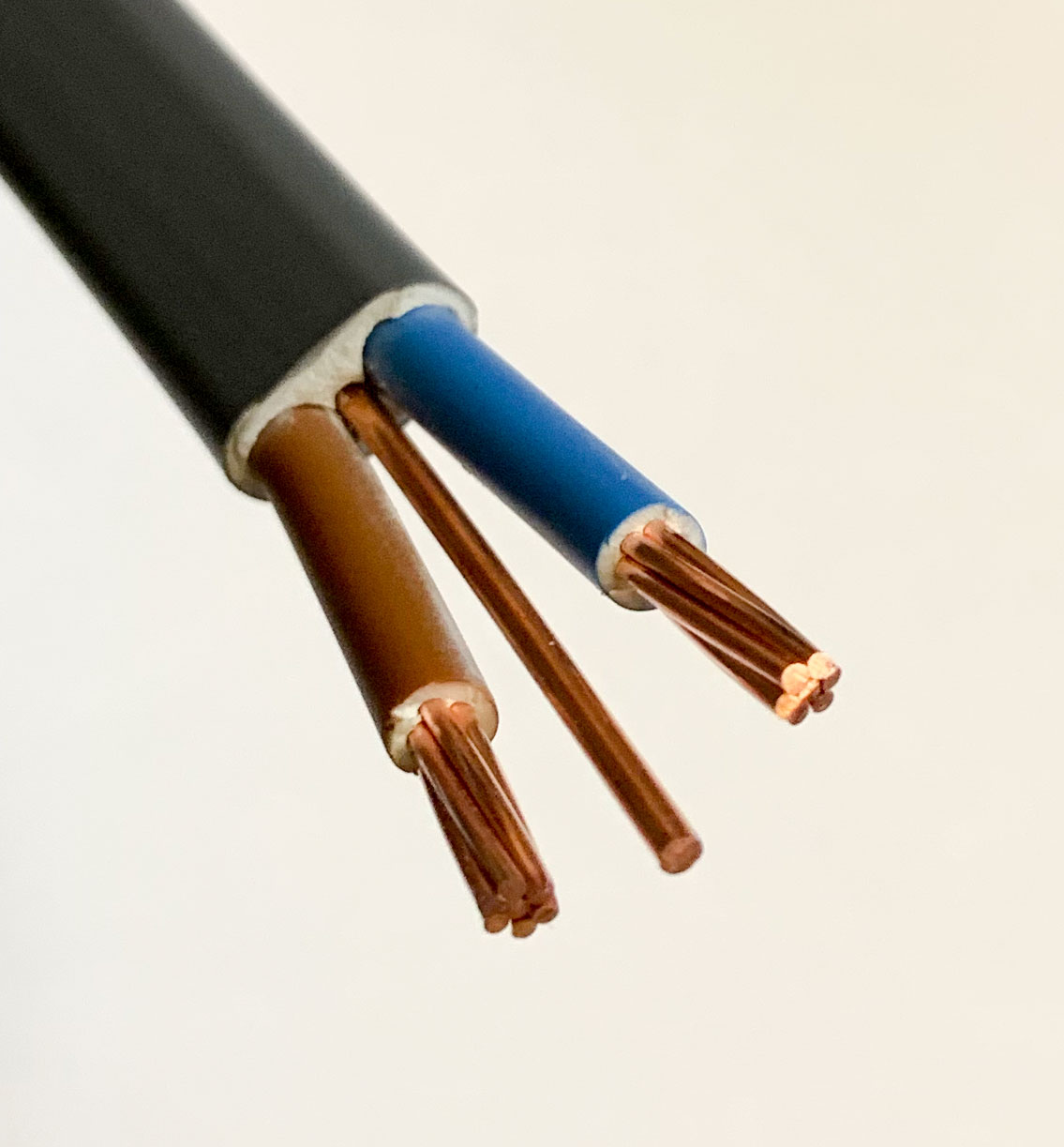
Close-up of twin core electrical cable (Source: Wikipedia (Twin and earth))
Correct cable sizing prevents excessive voltage drop, which reduces system output and may damage components. For example, a retail business in Eldoret must ensure cable runs are optimized to maintain voltage within acceptable limits.
Proper cable installation safeguards system functionality and user safety.
Routine maintenance reduces fire risks and system faults in environments like county government offices or hotels.
Create a free account to open more of this chapter.
Free: practical guides, quick cards, workplace scenarios and more.
Create a free accountThis chapter provided a detailed overview of the components that make up a solar photovoltaic system, beginning with solar panels, their various types, and the different methods used to connect them. It also covered the importance of solar panel mounting structures and proper positioning to maximize energy capture. The discussion then moved to key system elements such as charger controllers, inverters, and solar batteries, explaining their types and operating principles. Attention was given to the role of cables in ensuring efficient and safe electrical connections within the system. The chapter further explored how solar PV systems can be integrated with other power sources to enhance reliability and performance. Proper care and maintenance practices for solar PV components were emphasized to ensure longevity and optimal functionality. Finally, the preparation of as-built drawings was highlighted as an essential step for documentation and future reference during system operation and maintenance.
Type: Individual
| Tools & Equipment | Materials |
|---|---|
| Screwdriver | Installation board |
| Wire stripper | Solar panel 40W |
| Pliers | Energy meter single-phase smart bidirectional |
| Measuring tape | DC disconnect switch 32A |
| Multimeter | AC disconnect switch 32A |
| Hammer | Changeover switch 32A |
| Inverter 600W | |
| 4-way Consumer control unit with circuit breakers | |
| Deep pattress PVC | |
| Shallow pattress PVC | |
| End box PVC | |
| Cable 1.5 mm2 single core | |
| Cable 2.5 mm2 single core | |
| Cable 4.0 mm2 single core | |
| Wood screws assorted | |
| Lamp holder straight batten | |
| Bulb incandescent | |
| Socket outlets switched single | |
| Switches 2-way one gang | |
| Switches one way one gang |
| S/N | Item | Quantity |
|---|---|---|
| 1 | Installation board | 1 Pc per Candidate |
| 2 | Solar panel 40W | 1 Pc per Candidate |
| 3 | Energy meter single-phase smart bidirectional | 1 Pc per Candidate |
| 4 | DC disconnect switch 32A | 1 Pc per Candidate |
| 5 | AC disconnect switch 32A | 1 Pc per Candidate |
| 6 | Changeover switch 32A | 1 Pc per Candidate |
| 7 | Inverter 600W | 1 Pc per Candidate |
| 8 | 4-way Consumer control unit with circuit breakers | 1 Pc per Candidate |
| 9 | Deep pattress PVC | 2 Pcs per Candidate |
| 10 | Shallow pattress PVC | 2 Pcs per Candidate |
| 11 | End box PVC | 1 Pc per Candidate |
| 12 | Cable 1.5 mm2 single core | 5 m per Candidate |
| 13 | Cable 2.5 mm2 single core | 10 m per Candidate |
| 14 | Cable 4.0 mm2 single core | 5 m per Candidate |
| 15 | Wood screws assorted | 1 bag per 3 Candidates |
| 16 | Lamp holder straight batten | 2 Pcs per Candidate |
| 17 | Bulb incandescent | 2 Pcs per Candidate |
| 18 | Socket outlets switched single | 2 Pcs per Candidate |
| 19 | Switches 2-way one gang | 1 Pc per Candidate |
| 20 | Switches one way one gang | 2 Pcs per Candidate |
| Items to be Evaluated | Marks Available | Marks Obtained | Comments |
|---|---|---|---|
| TASK 1: Safety and preparation | |||
| Wore safety clothing including safety boots and gloves (Award 1 or 0) | 1 | ||
| Demonstrated correct use of hand tools and measuring instruments (Award 1 or 0) | 1 | ||
| Performed proper housekeeping during and after assembly (Award 1 mark for neat workspace and 1 mark for waste disposal) | 2 | ||
| Sub-Total | 4 | ||
| TASK 2: Identification and wiring diagram | |||
| Correctly identified solar charge controller, solar panels, battery, DC loads in wiring diagram (Award 1 mark for each correctly identified component) | 4 | ||
| Sub-Total | 4 | ||
| TASK 3: Component sizing | |||
| Calculated daily energy demand accurately (Award 3 marks for correct calculation) | 3 | ||
| Sized solar array appropriately for demand (Award 3 marks for correct array size) | 3 | ||
| Sized battery capacity correctly (Award 3 marks for correct battery size) | 3 | ||
| Selected charge controller with correct current rating (Award 3 marks for correct controller rating) | 3 | ||
| Sub-Total | 12 | ||
| TASK 4: Wiring diagram and layout | |||
| Drew wiring diagram including lighting circuits (Award 3 marks for complete and correct lighting circuit diagram) | 3 | ||
| Sub-Total | 3 | ||
| TASK 5: Assembly and installation | |||
| Measured installation board and components within ±2mm accuracy (Award 2 marks for accurate measurements) | 2 | ||
| Fixed components firmly and level on the board (Award 1 mark each for 4 components fixed correctly) | 4 | ||
| Ran trunking straight and flat on surface with vertical alignment (Award 2 marks for neat trunk runs) | 2 | ||
| Cable bends made at 90º flat and smooth (Award 2 marks for proper cable bends) | 2 | ||
| Sub-Total | 10 | ||
| TASK 6: Electrical connections and testing | |||
| Connected circuit correctly at intake, CCU, and other key points (4 correct connections) (Award 1 mark for each correct connection) | 4 | ||
| Performed earth test successfully (Award 1 or 0) | 1 | ||
| Verified correct operation of system including grid-tied supply (Award 2 marks for correct operation) | 2 | ||
| Sub-Total | 7 | ||
| PRODUCT CHECKLIST | |||
| Finished assembly matches layout diagram dimensions 600mm x 900mm (Award 3 marks for correct dimensions) | 3 | ||
| Components are fixed firmly, level, and aligned (Award 3 marks for firm and level fixing) | 3 | ||
| Wiring neatness, correct routing, and secure connections (Award 4 marks for neat and secure wiring) | 4 | ||
| System powers correctly with no faults on test (Award 6 marks for full functional operation) | 6 | ||
| Sub-Total | 16 | ||
| GRAND TOTAL | 56 | ||
Type: Individual
| Tools & Equipment | Materials |
|---|---|
| Cordless drill with bits | Wooden mounting board |
| Screwdriver set | 40W Solar panel |
| Measuring tape | 100W Solar panel |
| Spirit level | Mounting brackets |
| Assorted wood screws | |
| Cable ties | |
| 1.5 mm2 single core cable |
| S/N | Item | Quantity |
|---|---|---|
| 1 | Wooden mounting board | 1 Pc per Candidate |
| 2 | 40W Solar panel | 1 Pc per Candidate |
| 3 | 100W Solar panel | 1 Pc per Candidate |
| 4 | Mounting brackets | 4 Pcs per Candidate |
| 5 | Assorted wood screws | 1 Set per Candidate |
| 6 | Cable ties | 1 Pack per Candidate |
| 7 | 1.5 mm2 single core cable | 2 meters per Candidate |
| 8 | Cordless drill with bits | 1 Pc per Candidate |
| 9 | Screwdriver set | 1 Set per Candidate |
| 10 | Measuring tape | 1 Pc per Candidate |
| 11 | Spirit level | 1 Pc per Candidate |
| 12 | Safety boots | 1 Pair per Candidate |
| 13 | Safety gloves | 1 Pair per Candidate |
| 14 | Safety goggles | 1 Pc per Candidate |
| Items to be Evaluated | Marks Available | Marks Obtained | Comments |
|---|---|---|---|
| TASK 1: Installation Process | |||
| Wore safety clothing (boots, gloves, goggles) (Award 1 mark each for boots and gloves/goggles worn correctly) | 2 | ||
| Used measuring tape to mark panel positions accurately (Award 2 marks if measurements within ±5mm tolerance) | 2 | ||
| Used spirit level to ensure mounting board is level (Award 1 mark if spirit level used correctly) | 1 | ||
| Fixed mounting brackets firmly and in correct positions (Award 1 mark per correctly fixed bracket, total 3 marks) | 3 | ||
| Secured both solar panels firmly on mounting board using appropriate screws (Award 2 marks per panel fixed securely) | 4 | ||
| Routed cables neatly and secured with cable ties (Award 2 marks for neat and secure cable management) | 2 | ||
| Performed housekeeping by clearing workspace of debris and tools (Award 2 marks for good housekeeping) | 2 | ||
| Demonstrated safe use of hand tools (drill, screwdriver) (Award 2 marks for correct and safe tool use) | 2 | ||
| Sub-Total | 18 | ||
| PRODUCT CHECKLIST | |||
| Mounting board dimensions 1200mm x 800mm within ±5mm tolerance (Award 2 marks if dimensions accurate) | 2 | ||
| Solar panels positioned as per drawing with correct spacing (Award 3 marks if panels placed correctly) | 3 | ||
| Panels fixed firmly and level on mounting board (Award 3 marks if panels are secure and level) | 3 | ||
| Cable routing neat, cables not kinked or excessively bent (Award 2 marks for neat cable installation) | 2 | ||
| Final installation stable, no loose parts or unsafe fixings (Award 2 marks if installation is stable and safe) | 2 | ||
| Sub-Total | 12 | ||
| GRAND TOTAL | 30 | ||