
By the end of this chapter, you will be able to:
Mastering these skills will help you understand and work confidently with hydraulic machines, an essential part of many real-world engineering and industrial tasks.
Compiled by: John Ronoh
Hydraulic machines are fundamental to civil engineering projects in Kenya, especially in water supply, irrigation, and construction activities involving fluid transport and pressure management. Mastery of pump types and their operational principles enables engineers to design efficient systems that meet the demands of urban water distribution, agricultural irrigation, and flood control. This chapter explores the classification and functioning of pumps, equipping civil engineers with the knowledge to select appropriate machinery for diverse hydraulic applications.
Pumps convert mechanical energy into hydraulic energy to move fluids, often water, from one location to another. In the Kenyan civil engineering context, pumps are crucial for municipal water supply systems, dam water release, and construction dewatering. The main pump categories are centrifugal pumps, positive displacement pumps, and special purpose pumps, each suited to distinct operational conditions defined by flow rate, pressure, and fluid characteristics.
Centrifugal pumps are the most widely used type of pump in civil engineering due to their simplicity, high flow capacity, and adaptability to varying flow conditions. These pumps operate by imparting kinetic energy to the fluid through a rotating impeller, which increases fluid velocity and pressure. Nairobi Water and Sewerage Company commonly employs centrifugal pumps in urban water distribution networks to maintain continuous supply under varying demand.
Centrifugal pumps function by converting rotational mechanical energy from a motor into fluid kinetic energy. The impeller rotates within a casing, drawing fluid into the eye of the impeller and accelerating it radially outward by centrifugal force. The fluid's velocity increases as it moves through the impeller vanes and is converted into pressure energy in the volute casing, enabling the fluid to overcome system resistance and elevation.
Key components of centrifugal pumps include:
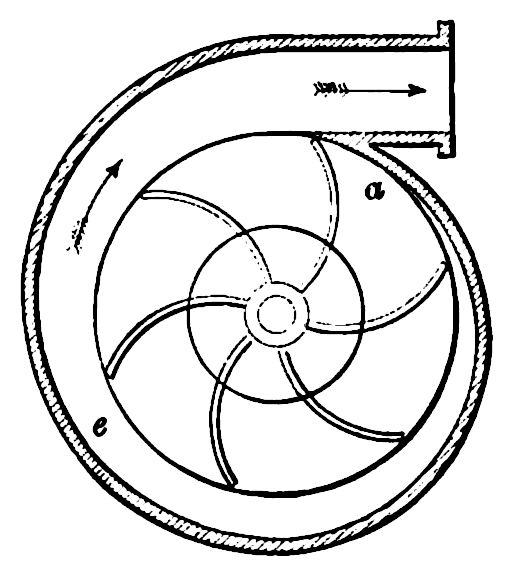
Cross-section of an impeller in a pump casing (Source: Wikimedia Commons)
Shaft: Transmits power from the motor to the impeller, supported by bearings.
Seal or Packing: Prevents fluid leakage along the shaft.
Robust materials such as cast iron or stainless steel are selected based on fluid corrosiveness and operating pressures.
Centrifugal pumps exhibit characteristic curves showing relationships between head, flow rate, power consumption, and efficiency. They operate efficiently over a broad range of flow rates but are sensitive to changes in system pressure and flow resistance. The pump's best efficiency point (BEP) is critical for minimizing energy consumption and wear; operating near BEP extends pump life and reduces maintenance costs.
In Kenya, centrifugal pumps are extensively used in:
Their ability to handle large volumes at moderate pressures makes them ideal for these roles.
Positive displacement pumps move fluids by trapping a fixed volume and forcing it through the discharge pipe, making them suitable for high-pressure, low-flow applications where fluid viscosity may vary. Kenyan construction firms use these pumps for concrete slurry transfer and chemical dosing in water treatment.
Positive displacement pumps operate by mechanically enclosing a volume of fluid and moving it from the inlet to the outlet without significant change in velocity. Unlike centrifugal pumps, the flow rate is constant regardless of system pressure, making them effective where precise fluid delivery is required.
Common types include:
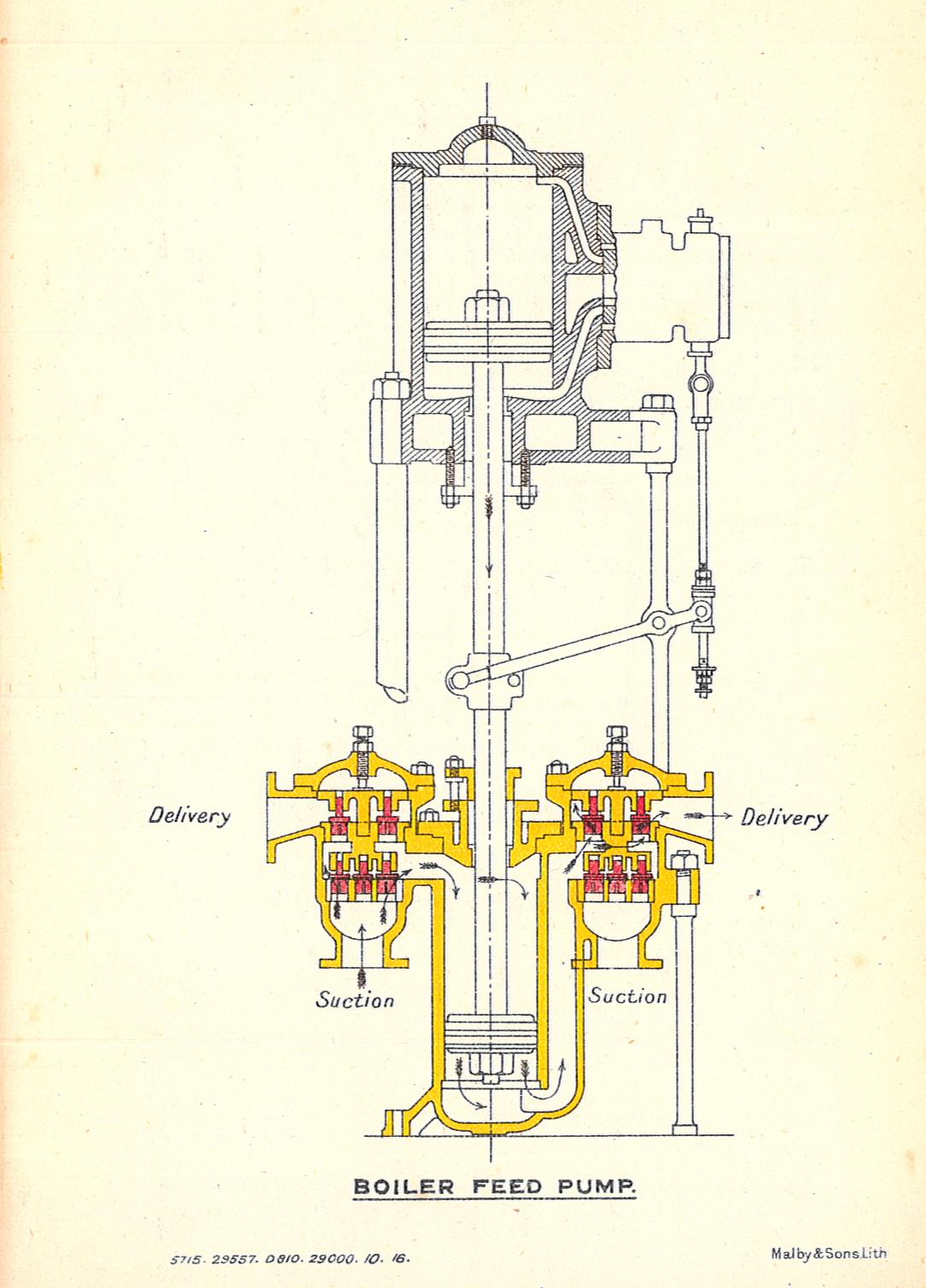
Diagram of a reciprocating boiler feed pump (Source: Wikimedia Commons)
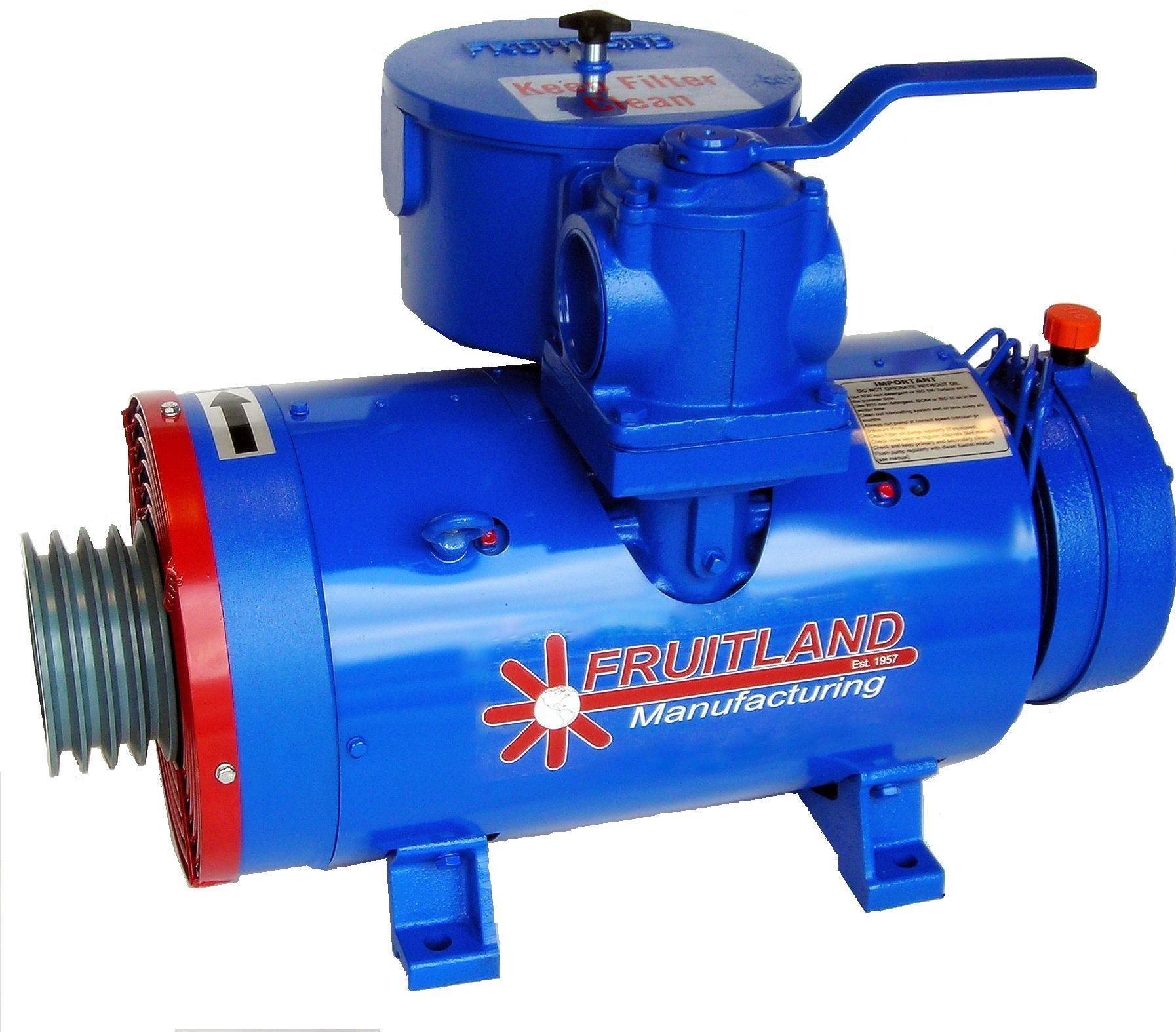
Industrial rotary pump for fluid transfer (Source: Wikimedia Commons)
Each type has construction and operational nuances tailored to specific fluid characteristics.
Positive displacement pumps offer:
However, they generally have lower flow capacities and higher maintenance demands due to moving seals and close clearances.
These pumps are used in:
Their reliable, metered fluid delivery is critical in process control and material handling.
Special purpose pumps are designed for unique applications where standard centrifugal or positive displacement pumps are inadequate. These pumps often address specific challenges in civil engineering projects such as handling solids, corrosive fluids, or providing high-pressure output.
Submersible pumps are hermetically sealed units designed to operate fully submerged in fluid. They are widely used in Kenyan urban drainage systems and borehole water abstraction because they prevent pump cavitation and reduce noise pollution.
Vacuum pumps remove air or gas molecules to create low-pressure environments. In civil engineering, they are employed in soil stabilization and dewatering projects where lowering groundwater pressure is necessary to maintain excavation safety.
Multistage pumps consist of multiple impellers mounted on a single shaft, enabling them to generate high pressure by progressively increasing fluid head. These are essential in high-rise building water supply systems and long-distance pipeline pumping in Kenya, where elevation and friction losses are significant.
Fire pumps provide high-pressure water flow for fire protection systems in public buildings and industrial facilities. Compliance with Kenya's fire safety regulations requires reliable pumps capable of delivering water at specified pressures during emergencies.
Create a free account to open more of this chapter.
Free: practical guides, quick cards, workplace scenarios and more.
Create a free accountThis chapter explored the various types of pumps, including centrifugal pumps, positive displacement pumps, and special purpose pumps, highlighting their distinct designs and applications. It examined the fundamental working principles of pumps, focusing on how energy is converted to move fluids, the development of head to overcome resistance, discharge characteristics that define flow behavior, and factors influencing pump efficiency. The discussion then shifted to turbines, covering hydraulic turbines that harness water energy, gas turbines that utilize combustion gases, and steam turbines powered by steam pressure. The chapter concluded with an analysis of turbine working principles, explaining how turbines convert fluid energy into mechanical work. Together, these topics provide a comprehensive understanding of hydraulic machines and their operational concepts essential for practical applications in various industries.
Type: Individual
| Tools & Equipment | Materials |
|---|---|
| Tape Measure | Centrifugal Pump Model |
| Notebook and Pen | Reciprocating Pump Model |
| Gear Pump Model | |
| Diaphragm Pump Model |
| S/N | Item | Quantity |
|---|---|---|
| 1 | Centrifugal Pump Model | 1 Pc per Candidate |
| 2 | Reciprocating Pump Model | 1 Pc per Candidate |
| 3 | Gear Pump Model | 1 Pc per Candidate |
| 4 | Diaphragm Pump Model | 1 Pc per Candidate |
| 5 | Safety Gloves | 1 Pair per Candidate |
| 6 | Protective Overall | 1 Pc per Candidate |
| 7 | Safety Boots | 1 Pair per Candidate |
| 8 | Notebook and Pen | 1 Set per Candidate |
| 9 | Tape Measure | 1 Pc per Candidate |
| Items to be Evaluated | Marks Available | Marks Obtained | Comments |
|---|---|---|---|
| TASK 1: Preparation and Safety | |||
| Wore PPE (Overall, Safety boots, Gloves) (Award 3 marks or zero) | 3 | ||
| Collected all necessary tools and pump models (Award 2 marks or zero) | 2 | ||
| Sub-Total | 5 | ||
| TASK 2: Identification and Classification of Pumps | |||
| Measured key dimensions of each pump accurately (Award 1 mark per pump for correct measurement, 4 pumps total) | 4 | ||
| Described the design features of each pump clearly (Award 2 marks per pump for accurate description) | 8 | ||
| Classified each pump according to its application correctly (Award 2 marks per pump for correct classification) | 8 | ||
| Sub-Total | 20 | ||
| TASK 3: Reporting | |||
| Recorded findings clearly and legibly in notebook (Award 4 marks or zero) | 4 | ||
| Presented a summary comparing the pumps (Award 3 marks or zero) | 3 | ||
| Sub-Total | 7 | ||
| PRODUCT CHECKLIST | |||
| Accurate and complete identification and classification report with measurements (Award 18 marks or zero) | 18 | ||
| Sub-Total | 18 | ||
| GRAND TOTAL | 50 | ||
Type: Individual
| Tools & Equipment | Materials |
|---|---|
| Wrenches | Centrifugal pump assembly |
| Screwdrivers | Electric motor |
| Allen keys | Flexible coupling |
| Hammer | Pump base plate |
| Measuring tape | Lubricating oil |
| Water supply hose | |
| PPEs | |
| Notebook and pen |
| S/N | Item | Quantity |
|---|---|---|
| 1 | Centrifugal pump assembly (500mm length x 300mm width x 400mm height) | 1 Pc per Candidate |
| 2 | Electric motor (3 HP, 230V) | 1 Pc per Candidate |
| 3 | Flexible coupling | 1 Pc per Candidate |
| 4 | Pump base plate | 1 Pc per Candidate |
| 5 | Wrenches (Adjustable spanner, Ring spanner set) | 1 Set per 3 Candidates |
| 6 | Screwdrivers (Flathead and Phillips) | 1 Set per 3 Candidates |
| 7 | Allen keys set | 1 Set per 5 Candidates |
| 8 | Hammer | 1 Pc per 5 Candidates |
| 9 | Measuring tape (2m) | 1 Pc per Candidate |
| 10 | PPEs (Safety boots, Overall, Gloves) | 1 Set per Candidate |
| 11 | Lubricating oil (1 litre) | 0.5 litre per Candidate |
| 12 | Water supply hose (25mm diameter, 3m length) | 1 Pc per Candidate |
| 13 | Notebook and pen | 1 Pc per Candidate |
| Items to be Evaluated | Marks Available | Marks Obtained | Comments |
|---|---|---|---|
| TASK 1: Assemble the centrifugal pump | |||
| Wore PPE (Safety boots, Overall, Gloves) (Award 3 marks or zero) | 3 | ||
| Collected all necessary tools and materials (Award 2 marks or zero) | 2 | ||
| Mounted pump on base plate and secured properly (Award 5 marks or zero) | 5 | ||
| Aligned electric motor and pump shaft using flexible coupling (Award 5 marks or zero) | 5 | ||
| Tightened all bolts and nuts to secure assembly (Award 4 marks or zero) | 4 | ||
| Applied lubricating oil to bearings and coupling (Award 3 marks or zero) | 3 | ||
| Connected water supply hose correctly to pump inlet and outlet (Award 3 marks or zero) | 3 | ||
| Sub-Total | 25 | ||
| TASK 2: Operate the centrifugal pump | |||
| Checked pump and motor for safety before operation (Award 2 marks or zero) | 2 | ||
| Started the electric motor and observed pump operation (Award 3 marks or zero) | 3 | ||
| Demonstrated understanding of pump working principles during operation (Award 5 marks or zero) | 5 | ||
| Measured and recorded pump discharge pressure and flow rate (Award 5 marks or zero) | 5 | ||
| Stopped the pump safely after operation (Award 2 marks or zero) | 2 | ||
| Sub-Total | 17 | ||
| PRODUCT CHECKLIST | |||
| Pump assembled correctly as per drawing dimensions (500mm length x 300mm width x 400mm height) (Award 5 marks or zero) | 5 | ||
| Pump operates smoothly without unusual noise or vibration (Award 5 marks or zero) | 5 | ||
| Pump delivers expected flow rate and pressure within 10% tolerance (Award 8 marks or zero) | 8 | ||
| Sub-Total | 18 | ||
| GRAND TOTAL | 60 | ||
At the start of this chapter we promised you would be able to:
Tick each one you can genuinely do.
So, are you there yet?
You're competent when you can confidently do 50% or more of what this chapter promised.
Sign in to record how you're doing.