
Compiled by: Samuel Wachira
Construction plastics and rubber products form an essential part of modern civil engineering materials, offering versatile solutions for insulation, sealing, piping, and structural components. In Kenya, the growing infrastructure sector increasingly relies on these materials to improve durability, reduce maintenance costs, and adapt to environmental challenges such as moisture and chemical exposure. Understanding the selection criteria, types, and properties of plastics and rubber is critical for engineers to specify the right materials that meet performance and sustainability requirements in projects ranging from water supply systems to building envelopes.
The selection of plastics and rubber products in civil engineering demands a thorough understanding of their chemical composition, mechanical properties, and environmental behavior. This knowledge enables professionals to match materials to specific applications such as waterproofing membranes, expansion joints, or protective coatings. Kenyan projects frequently face unique conditions such as high UV exposure, fluctuating temperatures, and variable soil chemistry, which influence material choice. Engineers must balance cost-effectiveness with performance longevity and environmental impact when specifying these materials.
The terms “plastics” and “rubber” often appear interchangeably in construction, yet they represent distinct categories of polymer materials with different characteristics and uses. Plastics are synthetic materials made from polymers that can be molded or shaped when heated and retain their form upon cooling. Rubber, by contrast, is an elastic polymer capable of significant deformation and recovery, often used where flexibility and resilience are required.
Elastomer: A polymer with elastic properties, capable of significant deformation and recovery.
Composite Materials: Materials made by combining plastics or rubber with other substances to enhance properties for specific construction purposes.
Plastics used in civil engineering vary widely in composition and performance. Selecting the correct type depends on factors such as mechanical strength, chemical resistance, temperature stability, and cost. Kenyan construction projects apply different plastics for piping, insulation, and structural components, each type offering unique advantages.
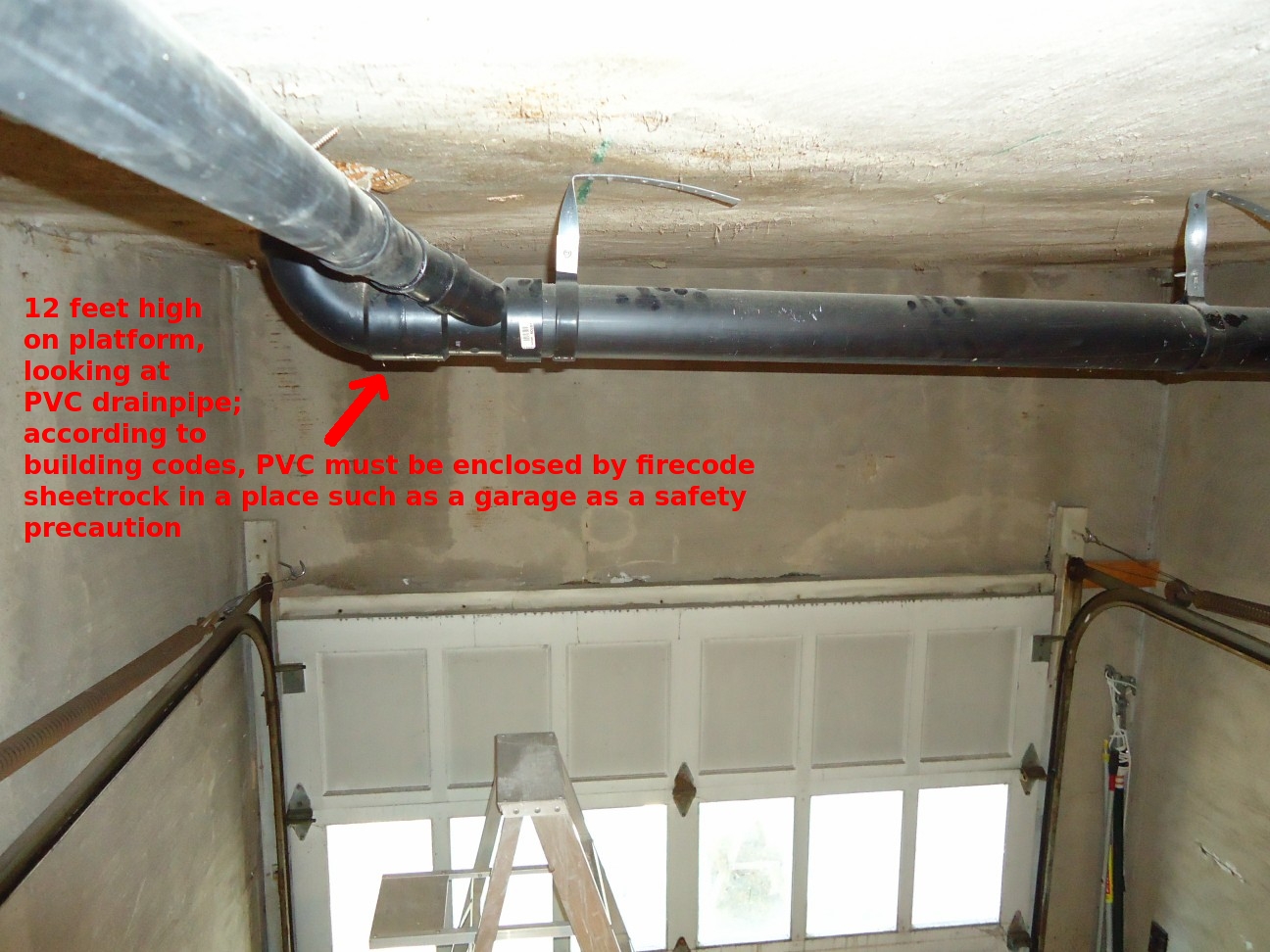
PVC drainpipe installed in a garage ceiling (Source: Wikimedia Commons)
Polyethylene (PE): PE, especially high-density polyethylene (HDPE), is favored for underground drainage and sewer piping because of its flexibility and resistance to corrosion and abrasion.
Polypropylene (PP): PP offers higher temperature resistance than PE and is used in chemical drainage systems where exposure to aggressive substances occurs.
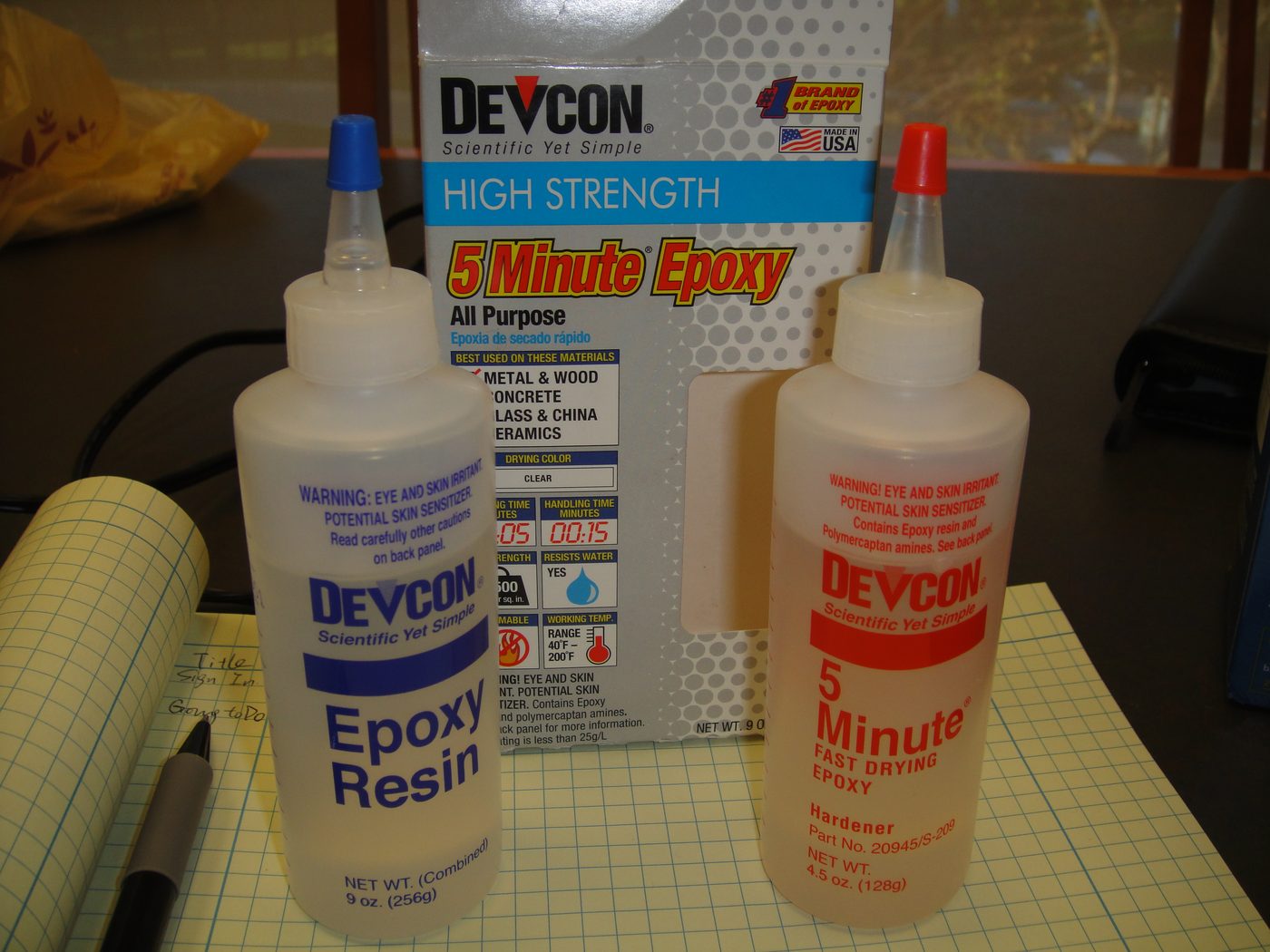
Bottles of Devcon epoxy resin and hardener (Source: Wikimedia Commons)
The principal constituents of plastics are the ingredients mixed together to make a plastic material with the required properties, and they consist of a base polymer, called the resin or binder, plus additives such as plasticisers, fillers, stabilisers, pigments and curing agents. The resin gives the plastic its basic character, while the additives adjust flexibility, strength, colour, resistance to sunlight and heat, fire behaviour and cost. The same base polymer can therefore produce very different products, for example rigid PVC for water pipes and flexible PVC for cable insulation and floor coverings, depending on the additives used. Example: a manufacturer supplying water tanks to a county water project in Garissa added extra UV stabilisers to its polyethylene so that the tanks would not become brittle in the intense sunlight.
| Constituent | Function | Examples |
|---|---|---|
| Resin (binder) | The base polymer that binds all ingredients and gives the plastic its main properties | PVC, polyethylene, polypropylene, epoxy, polyester |
| Plasticisers | Make the plastic softer, more flexible and easier to process | Phthalate and non-phthalate plasticisers in flexible PVC |
| Fillers | Reduce cost and improve properties such as hardness, stiffness or heat resistance | Calcium carbonate, talc, wood flour, mica |
| Reinforcements | Greatly increase strength and stiffness | Glass fibres, carbon fibres |
| Stabilisers | Protect the plastic from degradation by heat and ultraviolet light | Heat stabilisers, UV stabilisers, carbon black |
| Pigments and dyes | Give colour and can improve UV resistance | Titanium dioxide, carbon black, organic dyes |
| Catalysts, accelerators and hardeners | Start and control the curing of thermosetting plastics | Hardeners for epoxy, catalysts for polyester resin |
| Lubricants | Help the plastic flow during processing and release from moulds | Waxes and stearates |
| Flame retardants | Reduce flammability and slow the spread of fire | Halogen-free and other flame-retardant additives |
| Blowing agents | Produce gas bubbles to form foams | Agents used to make expanded polystyrene and polyurethane foam |
Methods of obtaining shapes of plastics are the manufacturing processes used to form raw plastic, usually in the form of powder, granules or liquid resin, into finished products such as pipes, sheets, tanks, fittings and panels. Thermoplastics are generally heated until soft, shaped and then cooled, while thermosets are shaped and then cured by heat or chemical reaction so that they set permanently. The choice of method depends on the shape, size, quantity and type of plastic, and it affects the cost, quality and properties of the product. Example: a plastics factory in Athi River produces PVC water pipes by extrusion, plumbing fittings by injection moulding and water tanks by rotational moulding, each method suited to the product's shape.
| Method | How it works | Typical construction products |
|---|---|---|
| Extrusion | Melted plastic is forced continuously through a shaped die and cooled | Pipes, conduits, window profiles, sheets, cable insulation |
| Injection moulding | Melted plastic is injected under pressure into a closed mould and cooled | Pipe fittings, switches, sockets, fasteners |
| Blow moulding | A hot tube of plastic is inflated with air inside a mould | Bottles and small containers |
| Rotational moulding | Plastic powder in a heated mould is rotated so it coats the inside evenly | Water tanks, septic tanks, large hollow items |
| Compression moulding | Material is placed in an open heated mould and pressed into shape | Thermosetting electrical components, panels |
| Calendering | Plastic is passed between heated rollers to form thin sheets or films | Flexible PVC sheets, floor coverings, membranes |
| Thermoforming (vacuum forming) | A heated sheet is pulled over a mould by vacuum | Roof lights, panels, trays |
| Casting and laminating | Liquid resin is poured into moulds or applied with glass fibre in layers | FRP tanks, panels, troughs and decorative items |
| Foaming | A blowing agent expands the plastic into a cellular foam | Polystyrene insulation boards, polyurethane foam |
The properties of plastics are the physical, mechanical, thermal, chemical and electrical characteristics that determine how they behave in use, and they vary widely between different plastics and grades. In general, plastics are light, corrosion resistant, good insulators and easy to shape, but they are weaker and less stiff than metals, expand considerably with temperature, may soften or burn in fire and can degrade under prolonged sunlight unless stabilised. Understanding these properties helps engineers use plastics where they perform well and avoid failures such as sagging pipes, cracked tanks or leaking joints. Example: the plumber installing exposed PVC drainage pipes on the outside of a hospital in Garissa provided expansion joints and painted the pipes to protect them from heat and sunlight, preventing the distortion seen on an older building.
| Plastic | Density (g/cm³) | Maximum service temperature (approximate) | Main features |
|---|---|---|---|
| PVC (rigid) | about 1.4 | about 60 °C | Rigid, durable, cheap, good chemical resistance |
| HDPE | about 0.95 | about 60 °C to 80 °C | Tough, flexible, very good chemical resistance |
| Polypropylene (PP) | about 0.9 | about 90 °C to 100 °C | Good heat resistance, used for hot water pipes |
| Polystyrene (PS) | about 1.05 (solid) | about 70 °C | Rigid, brittle; very light as foam insulation |
| Acrylic (PMMA) | about 1.18 | about 80 °C | Clear, weather resistant, used for glazing |
| Glass-reinforced polyester (FRP) | about 1.5 to 2.0 | about 80 °C to 120 °C | Strong, stiff, corrosion resistant |
A 6 m length of PVC pipe is installed at 20 °C and later reaches 50 °C in the sun. The coefficient of linear expansion of PVC is 70 × 10⁻⁶ per °C. Calculate the increase in length.
ΔL = α × L × ΔT
ΔL = 70 × 10⁻⁶ × 6,000 × (50 - 20)
ΔL = 70 × 10⁻⁶ × 6,000 × 30
ΔL = 12.6 mm
The pipe must have expansion joints or flexible supports to accommodate this movement.
Selection criteria for plastics are the requirements a plastic product must meet for its particular use, including strength, chemical and UV resistance, temperature range, fire behaviour, compliance with standards, ease of installation and cost. Choosing the wrong plastic leads to early failures, such as pipes bursting under pressure, tanks cracking in the sun or floor coatings wearing away. Engineers therefore compare the service conditions with the properties and certified grades of available products before specifying them. Example: a dairy processing plant in Githunguri selected polypropylene pipes for its hot water lines and HDPE for its cold effluent drains, because ordinary PVC would have softened at the hot water temperatures.
Rubber products in civil engineering serve critical roles in sealing, vibration damping, and waterproofing. The choice between natural and synthetic rubber depends on the required durability, environmental exposure, and mechanical properties. Kenyan infrastructure projects often utilize rubber for expansion joints in bridges, roofing membranes, and gaskets in water treatment plants.
The properties of rubber are the characteristics that make it unique among construction materials, above all its elasticity, the ability to stretch to several times its length and return to its original shape. Rubber is also waterproof, resilient, a good electrical insulator, resistant to abrasion and able to absorb shocks and vibration, but different types vary greatly in their resistance to sunlight, ozone, oils, heat and chemicals. Raw rubber is soft and sticky, so it is vulcanised by heating with sulphur or other agents, which cross-links its molecules and gives it strength, elasticity and durability, and its hardness is commonly measured on the Shore A scale. Example: a contractor replacing the expansion joint seals on a bridge in Kisumu chose neoprene seals because natural rubber seals installed earlier had cracked from exposure to sunlight and ozone.
| Rubber | Weather and ozone resistance | Oil resistance | Typical temperature range | Typical uses |
|---|---|---|---|---|
| Natural rubber (NR) | Poor | Poor | about -50 °C to 80 °C | Bearings, mounts, belts, shock absorbers |
| SBR | Fair | Poor | about -40 °C to 100 °C | Flooring, membranes, tyres |
| Nitrile (NBR) | Fair | Excellent | about -30 °C to 100 °C | Oil and fuel seals, gaskets, hoses |
| Neoprene (CR) | Very good | Good | about -40 °C to 100 °C | Bridge bearings, expansion joint seals, gaskets |
| EPDM | Excellent | Poor | about -50 °C to 150 °C | Roofing membranes, window and door seals, pipe seals |
| Silicone | Excellent | Fair | about -60 °C to 200 °C | Sealants, high-temperature seals |
| Butyl (IIR) | Very good | Poor | about -40 °C to 120 °C | Pond liners, membranes, inner tubes |
The uses of rubbers in construction take advantage of their elasticity, waterproofness and ability to absorb movement and vibration, allowing structures and services to move, seal and cushion without damage. Rubber components are often small, such as gaskets and seals, but critical, because their failure can cause leaks, noise, vibration damage or structural problems. They are found in bridges, buildings, water supply and drainage systems, roads, machinery and safety equipment. Example: a modern hotel in Nanyuki installed its standby generator and pumps on rubber anti-vibration mounts, preventing noise and vibration from disturbing guests in nearby rooms.
Selection criteria for rubber are the conditions and requirements used to choose the right type and grade of rubber for a particular application, such as the environment it will be exposed to, the loads and movements it must accommodate, the fluids it will contact and the required service life. Because rubbers differ greatly in resistance to sunlight, oils, chemicals and temperature, a wrong choice can cause seals to swell, crack or harden within a short time. Selection therefore matches the service conditions with the properties of rubber types, and checks hardness, standards and approvals, especially for drinking water. Example: a water treatment works in Kisii specified EPDM gaskets approved for potable water for its treated water pipelines, and nitrile seals for pumps handling oily wastewater.
Create a free account to open more of this chapter.
Free: practical guides, quick cards, workplace scenarios and more.
Create a free accountThis chapter explored the selection and application of construction plastics and rubber products, beginning with clear definitions and the classification of plastics and rubbers. It detailed the principal constituents of plastics, the various methods used to shape them, and their key properties, followed by the criteria that guide their selection for construction purposes. The types of rubber were examined next, with emphasis on their properties, common uses, and factors influencing their choice in building projects. The chapter then examined the mechanical, thermal, and chemical properties that affect the performance of both plastics and rubber products in construction environments. Finally, it described specific products such as PVC pipes, polythene sheeting, acrylic sheets, rubber roofing materials, and rubber expansion joints, highlighting their roles and suitability in different construction applications. This comprehensive approach provided a solid foundation for understanding how to apply these materials effectively in the built environment.
Type: Individual
| Tools & Equipment | Materials |
|---|---|
| PPEs (Overall, Safety boots, Gloves) | Plastic Material Data Sheets |
| Plastic Sample Cards | |
| Notebook and Pen | |
| Tape Measure | |
| Calculator |
| S/N | Item | Quantity |
|---|---|---|
| 1 | PPEs (Overall, Safety boots, Gloves) | 1 set per Candidate |
| 2 | Plastic Sample Cards (PVC, HDPE, LDPE, PP, PS, Acrylic, Nylon) | 1 set per Candidate |
| 3 | Plastic Material Data Sheets | 1 set per Candidate |
| 4 | Notebook and Pen | 1 set per Candidate |
| 5 | Tape Measure (5m) | 1 Pc per Candidate |
| 6 | Calculator | 1 Pc per Candidate |
| Items to be Evaluated | Marks Available | Marks Obtained | Comments |
|---|---|---|---|
| TASK 1: Preparation and Safety | |||
| Wore PPEs (Overall, Safety boots, Gloves) (Award 3 marks or zero) | 3 | ||
| Collected all necessary tools and materials (Award 2 marks or zero) | 2 | ||
| Sub-Total | 5 | ||
| TASK 2: Identification and Selection of Plastics | |||
| Identified types of plastics from sample cards (PVC, HDPE, LDPE, PP, PS, Acrylic, Nylon) (Award 5 marks or zero) | 5 | ||
| Described selection criteria (durability, cost, UV resistance, chemical resistance, flexibility, strength) (Award 6 marks or zero) | 6 | ||
| Measured dimensions correctly using tape measure for window frame and pipe (Award 3 marks or zero) | 3 | ||
| Selected appropriate plastic types for window frame and water pipe based on criteria (Award 6 marks or zero) | 6 | ||
| Sub-Total | 20 | ||
| TASK 3: Reporting and Presentation | |||
| Prepared a clear report summarizing selected plastics and justification (Award 5 marks or zero) | 5 | ||
| Presented selection results clearly and logically (Award 4 marks or zero) | 4 | ||
| Properly maintained tools and cleaned working area (Award 3 marks or zero) | 3 | ||
| Sub-Total | 12 | ||
| PRODUCT CHECKLIST | |||
| Correct selection of plastic material for window frame (e.g. PVC or Acrylic) matching functional requirements (Award 6 marks or zero) | 6 | ||
| Correct selection of plastic material for water pipe (e.g. HDPE or PP) matching durability and chemical resistance (Award 6 marks or zero) | 6 | ||
| Accurate measurements recorded (Window frame 1500mm x 1000mm x 500mm; Pipe length 2000mm) (Award 4 marks or zero) | 4 | ||
| Sub-Total | 16 | ||
| GRAND TOTAL | 53 | ||
Type: Individual
| Tools & Equipment | Materials |
|---|---|
| Measuring tape | Natural Rubber (NR) |
| Notebook and Pen | Styrene-Butadiene Rubber (SBR) |
| PPEs (Safety boots, Overall, Gloves) | Nitrile Rubber (NBR) |
| Ethylene Propylene Diene Monomer (EPDM) | |
| Neoprene Rubber (CR) | |
| Reference datasheets of rubber properties |
| S/N | Item | Quantity |
|---|---|---|
| 1 | PPEs (Safety boots, Overall, Gloves) | 1 set per Candidate |
| 2 | Sample sheets of Natural Rubber (NR) | 3 sheets per Candidate |
| 3 | Sample sheets of Styrene-Butadiene Rubber (SBR) | 3 sheets per Candidate |
| 4 | Sample sheets of Nitrile Rubber (NBR) | 3 sheets per Candidate |
| 5 | Sample sheets of Ethylene Propylene Diene Monomer (EPDM) | 3 sheets per Candidate |
| 6 | Sample sheets of Neoprene Rubber (CR) | 3 sheets per Candidate |
| 7 | Reference datasheets of rubber properties | 1 set per Candidate |
| 8 | Notebook and Pen | 1 set per Candidate |
| 9 | Measuring tape | 1 per Candidate |
| Items to be Evaluated | Marks Available | Marks Obtained | Comments |
|---|---|---|---|
| TASK 1: Identification and Selection of Rubber Materials | |||
| Wore PPEs (Safety boots, Overall, Gloves) (Award 3 marks or zero) | 3 | ||
| Collected all necessary rubber samples and datasheets (Award 2 marks or zero) | 2 | ||
| Measured rubber sheets correctly (300mm x 300mm) (Award 3 marks or zero) | 3 | ||
| Identified types of rubber materials correctly (Award 5 marks or zero) | 5 | ||
| Selected appropriate rubber types for given construction applications (Award 7 marks or zero) | 7 | ||
| Justified selection based on rubber properties and uses (Award 8 marks or zero) | 8 | ||
| Maintained a clean and safe working environment (Award 2 marks or zero) | 2 | ||
| Sub-Total | 30 | ||
| PRODUCT CHECKLIST | |||
| Written report with correct identification and justification of rubber materials (Award 10 marks or zero) | 10 | ||
| Rubber samples measured accurately to 300mm x 300mm with ±2mm tolerance (Award 5 marks or zero) | 5 | ||
| Correct matching of rubber types to construction applications (Award 5 marks or zero) | 5 | ||
| Sub-Total | 20 | ||
| GRAND TOTAL | 50 | ||