Organizing for material testing is a critical phase in any civil engineering project, particularly in Kenya where site conditions vary widely across regions. Proper organization ensures that material testing is conducted efficiently, accurately, and within the project’s time and budget constraints. This chapter focuses on the preliminary site investigation, which forms the foundation for all subsequent testing activities by providing essential data on site conditions. Understanding how to conduct, manage, and utilize site investigations allows civil engineers to make informed decisions that influence project safety, durability, and cost-effectiveness.
1.1 Preliminary Site Investigation
Preliminary site investigation involves gathering initial information about the physical, geological, and environmental conditions of a proposed construction site. In Kenya, where diverse soil types and climatic conditions prevail, this process is vital to avoid costly design errors and construction delays. The investigation informs the selection of appropriate materials and testing methods, ensuring that the foundation and structure will perform as intended. This section explores the purpose, methods, stages, and tools used in site investigations.
1.1.1 Purpose and Importance
Preliminary site investigation serves as the first step in understanding the site’s characteristics before detailed design and construction commence. Its purpose and importance extend beyond mere data collection to risk mitigation and resource optimization.
Purpose of Preliminary Site Investigation
The core purposes of preliminary site investigation include:
- Establishing Site Suitability: Determining whether the location can safely support the proposed structure by assessing soil bearing capacity, groundwater conditions, and topography.
- Identifying Potential Hazards: Detecting risks such as soil erosion, flooding, or contamination that could impact construction or long-term stability.
- Guiding Design Decisions: Providing input for foundation design, structural load calculations, and material selection based on site conditions.
- Estimating Project Costs and Timelines: Anticipating challenges that could increase costs or cause delays during construction.
- Complying with Regulatory Requirements: Ensuring adherence to Kenyan building codes and environmental regulations enforced by bodies like NEMA.
Importance of Preliminary Site Investigation
The significance of this investigation is underscored by its impact on project success:
- Preventing Structural Failures: Early detection of unsuitable soil or unstable ground conditions helps avoid foundation settlement or collapse.
- Optimizing Material Usage: Accurate site data reduces over-design and wastage of construction materials, enhancing sustainability.
- Enhancing Safety: Identifying hazards before construction protects workers and the public.
- Facilitating Efficient Planning: Detailed site knowledge enables better scheduling and allocation of resources.
- Supporting Legal and Contractual Compliance: Proper documentation of site conditions protects stakeholders from disputes and claims.
Importance of Preliminary Site Investigation
The importance of preliminary site investigation in Kenyan civil engineering projects is reflected in several key outcomes:
- Minimizing Construction Risks: By identifying problematic soil types, such as expansive black cotton soils common in Kisumu, engineers can design appropriate foundations, reducing the risk of future structural failure.
- Cost Control: Early detection of adverse site conditions, like high water tables in Mombasa, allows for accurate budgeting and prevents unexpected expenses during construction.
- Regulatory Approval: Thorough site investigations ensure compliance with statutory requirements from agencies such as the National Environment Management Authority (NEMA), facilitating smoother project approvals.
- Resource Optimization: With accurate site data, material quantities can be precisely estimated, reducing wastage and ensuring efficient use of resources, as seen in public housing projects managed by the National Housing Corporation.
- Stakeholder Confidence: Comprehensive investigations and transparent reporting build trust among clients, contractors, and regulatory bodies, supporting successful project delivery.
1.1.2 Methods of Investigation
Selecting appropriate investigation methods depends on the project scope, site accessibility, and available resources. In Kenya, a combination of traditional and modern techniques is often employed to gather comprehensive data.
Desk Study and Review of Existing Data
This non-invasive method involves collecting and analyzing existing information such as geological maps, aerial photographs, previous site reports, and environmental records.
- Cost-Effective Initial Assessment: Helps identify obvious constraints without fieldwork.
- Guides Field Investigation: Focuses subsequent efforts on critical areas.
- Utilizes National Resources: Leverages data from institutions like the Ministry of Environment and Geological Survey of Kenya.
- Informs Risk Evaluation: Highlights historical issues such as flooding or landslides.
- Supports Regulatory Compliance: Provides baseline data required by authorities.
Site Reconnaissance and Visual Inspection
Field visits by engineers and geologists to observe topography, vegetation, drainage patterns, and signs of instability.
- Identifies Surface Conditions: Detects cracks, erosion, or waterlogging.
- Assesses Access and Logistics: Determines feasibility of equipment mobilization.
- Records Environmental Features: Notes protected areas or cultural sites.
- Prepares for Sampling: Pinpoints locations for soil and rock sampling.
- Engages Local Knowledge: Incorporates insights from community members.
Geotechnical Field Testing
Direct tests performed on soil and rock in situ to measure physical properties.
- Standard Penetration Test (SPT): Measures soil resistance to penetration, indicating density and strength.
- Cone Penetration Test (CPT): Provides continuous soil profile with resistance data.
- Trial Pits and Boreholes: Allow visual inspection and sampling at various depths.
- Groundwater Monitoring: Measures water table depth and fluctuations.
- Geophysical Surveys: Use seismic or electrical methods to map subsurface features.
Laboratory Testing
Samples obtained from the field are analyzed to determine mechanical and chemical properties.
- Particle Size Distribution: Assesses soil gradation.
- Atterberg Limits: Defines plasticity characteristics.
- Compaction Tests: Establish optimal moisture and density.
- Chemical Analysis: Detects contaminants or corrosive elements.
- Strength Tests: Includes unconfined compression and triaxial shear tests.
1.1.3 Stages of Site Investigation
Site investigation is a phased process, each stage building on the previous to refine understanding and inform design.
Stage 1: Reconnaissance Survey
Initial walkover or drive-by inspection to gather general information about the site.
- Prepares for Detailed Study: Identifies obvious constraints or features.
- Engages Stakeholders: Includes site owners and local authorities.
- Documents Initial Observations: Photographs and notes on terrain and vegetation.
- Estimates Investigation Scope: Adjusts resources and methods.
- Confirms Access and Safety: Ensures site is safe for personnel and equipment.
Stage 2: Preliminary Investigation
Involves desk study, sampling, and basic field tests to collect representative data.
- Conducts Boreholes and Trial Pits: Samples soil stratigraphy.
- Performs Field Tests: Basic strength and moisture assessments.
- Collects Groundwater Data: Measures water levels and quality.
- Prepares Preliminary Report: Summarizes findings and recommendations.
- Identifies Need for Further Tests: Flags areas requiring detailed analysis.
Stage 3: Detailed Investigation
Focused study where complex tests and multiple samples are taken for design purposes.
- Extensive Borehole Drilling: Provides comprehensive subsurface profiles.
- Advanced Laboratory Testing: Determines engineering properties.
- Monitoring and Instrumentation: Tracks ground movement or water fluctuations over time.
- Risk Assessment: Evaluates potential construction challenges.
- Final Site Investigation Report: Provides data for design and construction planning.
Stage 4: Post-Investigation Review
Analysis of investigation outcomes with design and construction teams.
- Verifies Data Accuracy: Cross-checks with field observations.
- Incorporates Findings into Design: Adjusts foundation and material specifications.
- Prepares Contingency Plans: Plans for unforeseen site conditions.
- Updates Project Schedule and Budget: Reflects investigation results.
- Communicates with Regulatory Bodies: Ensures compliance and approvals.
1.1.4 Site Assessment Tools
Effective site investigations require specialized tools and equipment tailored to the Kenyan civil engineering environment.
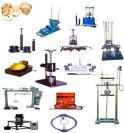
Various types of construction and engineering testing equipment used i (Source: Road_Construction_Materials_ (1))
| Name |
Specification |
Use |
| Standard Penetration Test (SPT) Equipment |
Hammer weight: 63.5 kg, Fall height: 760 mm, Split spoon sampler |
Measures soil resistance and obtains samples |
| Borehole Drilling Rig |
Rotary or percussion drilling with depth up to 50 m |
Extracts soil and rock samples from various depths |
| Cone Penetration Test (CPT) Device |
Cone diameter: 35.7 mm, Penetration rate: 2 cm/s |
Provides continuous soil profile data |
| GPS Survey Equipment |
Accuracy ±1 m or better |
Locates sampling points and maps site |
| Groundwater Monitoring Wells |
PVC casing, depth varies according to groundwater table |
Records water table fluctuations |
- SPT equipment is widely used on construction sites across Kenya for its reliability in determining soil bearing capacity.
- Borehole rigs enable deep sampling necessary for large infrastructure projects such as bridges and multistory buildings.
- CPT devices offer rapid profiling, useful in urban areas where time constraints exist.
- GPS equipment ensures precise positioning of samples, crucial for reproducibility and reporting.
- Monitoring wells help in understanding seasonal water table changes affecting foundation design.
Practice Questions
- Explain five key purposes of preliminary site investigation in civil engineering projects. (10 marks)
- Discuss the methods commonly used in site investigation and highlight their advantages in the Kenyan construction context. (15 marks)
- Describe the four main stages of site investigation, emphasizing the activities involved in each stage. (12 marks)
- Identify and explain the function of five essential tools used during site assessment in civil engineering projects. (13 marks)
The rest of this chapter
🔒Create a free account to open more of this chapter.
Free: practical guides, quick cards, workplace scenarios and more.
Create a free account 🔒1.2 Types of Material Tests
Material testing is a fundamental aspect of civil engineering projects in Kenya, ensuring that construction materials meet the necessary standards for safety, durability, and performance. Different types of tests provide comprehensive information about the pro…
🔒1.3 Material Laboratory Personnel
In the Kenyan civil engineering sector, material testing laboratories play a critical role in ensuring construction materials meet required standards. The effectiveness of these laboratories depends largely on the personnel who conduct the tests, manage qualit…
🔒1.4 Laboratory equipment maintenance
Laboratory equipment maintenance is critical to ensuring accurate and reliable test results in civil engineering material testing. In Kenyan civil engineering practices, whether at county government laboratories or private testing facilities servicing construc…
🔒1.5 Testing equipment
Testing equipment forms the backbone of material evaluation in civil engineering, providing quantitative data to assess compliance with design specifications and standards. Kenyan civil engineering laboratories rely on a range of testing devices calibrated to…
Chapter Summary
This chapter explored the essential steps involved in organizing for material testing, beginning with preliminary site investigation which establishes the foundation for accurate testing by assessing site conditions through various methods and stages using specialized tools. It then examined different types of material tests including mechanical, chemical, and non-destructive testing, each crucial for evaluating specific material properties. The chapter highlighted the importance of competent laboratory personnel, detailing their roles, required qualifications, and adherence to safety protocols to ensure reliable results and workplace safety. Attention was given to laboratory equipment maintenance, emphasizing the types of equipment commonly used and the routine procedures necessary to keep them functioning optimally. Finally, the chapter reviewed the various testing equipment, describing their types and specific uses within the material testing process. Together, these topics provide a comprehensive framework for preparing and conducting effective material testing in professional settings.
Self-Assessment
🔒 PDFDownload this self-assessment, with answers
A. Written Assessment
- What is the primary purpose of a preliminary site investigation in civil engineering projects? (2 marks)
- Identify three common methods used during site investigation and briefly describe each. (3 marks)
🔒20 more in this section.
Chapter Examination Questions
🔒 PDFDownload these examination questions, with worked answers
SECTION A (40 Marks) - Answer ALL Questions
- Explain the purpose of preliminary site investigation in a road construction project managed by KeNHA. (4 marks)
- Identify and describe two methods commonly used for site investigation in foundation design. (4 marks)
🔒18 more in this section.
Chapter Practical Activities
Practical 1: Conduct Preliminary Site Investigation for Material Testing
Civil Engineering · Level 6
Materials Testing Preparation
PRACTICAL ASSESSMENT
TIME: 4 HOURS
⬇ PDFCandidate Instructions (Candidate Tool)
Type: Individual
INSTRUCTIONS TO CANDIDATE:
1. You are required to perform the following task:
i. Conduct a preliminary site investigation by collecting soil samples and recording site data over a 20 m by 20 m area.
2. You have been provided with the following resources for the practical task:
| Tools & Equipment | Materials |
|---|
| PPEs (Helmet, Safety boots, Overall, Gloves) | Soil sampling bags |
| Tape measure 30 m | |
| Hand auger | |
| Spade | |
| Notebook and pen | |
| Camera (digital) | |
| GPS device | |
| Marker pens | |
⬇ PDFResources Required (Cutting List)
| S/N | Item | Quantity |
|---|
| 1 | PPEs (Helmet, Safety boots, Overall, Gloves) | 1 set per Candidate |
| 2 | Tape measure 30 m | 1 Pc per Candidate |
| 3 | Hand auger | 1 Pc per 3 Candidates |
| 4 | Spade | 1 Pc per Candidate |
| 5 | Soil sampling bags | 5 Pcs per Candidate |
| 6 | Notebook and pen | 1 set per Candidate |
| 7 | Camera (digital) | 1 Pc per Candidate |
| 8 | GPS device | 1 Pc per Candidate |
| 9 | Marker pens | 2 Pcs per Candidate |
⬇ PDFAssessor Guide
| Items to be Evaluated | Marks Available | Marks Obtained | Comments |
|---|
| TASK 1: Preparation and Safety Compliance |
Wore PPEs correctly (Helmet, Safety boots, Overall, Gloves)
(Award 3 marks or zero) | 3 | | |
Checked and prepared all required tools and materials
(Award 2 marks or zero) | 2 | | |
Ensured safe access and environmental safety at site
(Award 2 marks or zero) | 2 | | |
| Sub-Total | 7 | | |
| TASK 2: Site Survey and Data Collection |
Measured and marked out a 20 m by 20 m investigation area using tape measure and markers
(Award 4 marks or zero) | 4 | | |
Recorded GPS coordinates of site location accurately
(Award 3 marks or zero) | 3 | | |
Took clear and relevant photographs of the site conditions
(Award 3 marks or zero) | 3 | | |
| Sub-Total | 10 | | |
| TASK 3: Soil Sampling |
Used hand auger and spade to collect soil samples at three designated points within the site
(Award 6 marks or zero) | 6 | | |
Properly placed soil samples in labeled sampling bags
(Award 4 marks or zero) | 4 | | |
Recorded sample depth and description accurately in notebook
(Award 3 marks or zero) | 3 | | |
| Sub-Total | 13 | | |
| TASK 4: Site Cleanup and Reporting |
Cleared site of debris and tools after investigation
(Award 3 marks or zero) | 3 | | |
Prepared a preliminary site investigation report summarizing observations and data collected
(Award 5 marks or zero) | 5 | | |
| Sub-Total | 8 | | |
| PRODUCT CHECKLIST |
Investigation area correctly marked out with dimensions 20 m x 20 m
(Award 5 marks or zero) | 5 | | |
Soil samples properly labeled, sealed, and representative of site
(Award 5 marks or zero) | 5 | | |
Accurate and comprehensive site investigation report
(Award 5 marks or zero) | 5 | | |
| Sub-Total | 15 | | |
| GRAND TOTAL | 53 | | |
ASSESSMENT OUTCOME: ☐ Competent ☐ Not Yet Competent (competent if at least 50%)
Practical 2: Perform sequential stages of site investigation for material testing
Civil Engineering · Level 6
Materials Testing Preparation
PRACTICAL ASSESSMENT
TIME: 5 HOURS
⬇ PDFCandidate Instructions (Candidate Tool)
Type: Individual
INSTRUCTIONS TO CANDIDATE:
1. You are required to perform the following task:
i. Perform site investigation including soil sampling and penetration tests at three locations within a 20m x 20m site area.
2. You have been provided with the following resources for the practical task:
| Tools & Equipment | Materials |
|---|
| PPEs (Safety boots, Overall, Helmet, Gloves) | |
| Hand auger | |
| Spade | |
| Tape measure 30 m | |
| Soil sampling tubes | |
| Penetrometer | |
| Water spray bottle | |
| Notebook and pen | |
⬇ PDFResources Required (Cutting List)
| S/N | Item | Quantity |
|---|
| 1 | PPEs (Safety boots, Overall, Helmet, Gloves) | 1 set per Candidate |
| 2 | Hand auger | 1 pc per Candidate |
| 3 | Spade | 1 pc per Candidate |
| 4 | Tape measure 30 m | 1 pc per Candidate |
| 5 | Soil sampling tubes | 3 pcs per Candidate |
| 6 | Penetrometer | 1 pc per Candidate |
| 7 | Notebook and pen | 1 set per Candidate |
| 8 | Camera (optional) | 1 pc per Candidate |
| 9 | Water spray bottle | 1 pc per Candidate |
⬇ PDFAssessor Guide
| Items to be Evaluated | Marks Available | Marks Obtained | Comments |
|---|
| TASK 1: Preparation and Safety |
Wore PPEs (Safety boots, Overall, Helmet, Gloves) correctly
(Award 4 marks or zero) | 4 | | |
Selected and arranged tools and equipment safely and correctly
(Award 2 marks or zero) | 2 | | |
Ensured site safety and environmental precautions before starting work
(Award 2 marks or zero) | 2 | | |
| Sub-Total | 8 | | |
| TASK 2: Site Assessment and Sampling |
Marked and measured three sampling locations within 20m x 20m site accurately using tape measure
(Award 4 marks or zero) | 4 | | |
Used hand auger and spade to collect soil samples at each location to a depth of 1.5 meters
(Award 2 marks per location x3=6 marks) | 6 | | |
Collected undisturbed soil samples in soil sampling tubes correctly and labelled them
(Award 1 mark per sample x3=3 marks) | 3 | | |
Conducted penetration tests at each location using penetrometer correctly
(Award 2 marks per location x3=6 marks) | 6 | | |
Recorded all observations and measurements accurately in the notebook
(Award 3 marks or zero) | 3 | | |
| Sub-Total | 22 | | |
| TASK 3: Site Clean-up and Tool Maintenance |
Cleaned and stored tools and equipment properly after use
(Award 3 marks or zero) | 3 | | |
Cleared site of debris and returned area to safe condition
(Award 3 marks or zero) | 3 | | |
| Sub-Total | 6 | | |
| PRODUCT CHECKLIST |
Site investigation report with accurate location measurements (20,000 mm x 20,000 mm) and sampling depths (1500 mm)
(Award 5 marks for correct measurements and documentation or zero) | 5 | | |
Properly labelled and intact soil samples from three locations
(Award 4 marks or zero) | 4 | | |
Complete and legible penetration test results recorded
(Award 4 marks or zero) | 4 | | |
| Sub-Total | 13 | | |
| GRAND TOTAL | 49 | | |
ASSESSMENT OUTCOME: ☐ Competent ☐ Not Yet Competent (competent if at least 50%)
🔒Identify and Classify Types of Material Tests with Sample TestingPractical 3
🔒Perform mechanical tensile and hardness tests on metal samplesPractical 4
🔒Conduct chemical tests to determine material composition of a metal samplePractical 5
🔒Perform Ultrasonic and Magnetic Particle Testing on Steel Plate 300mm x 300mmPractical 6
🔒Organize and Assign Roles for Material Testing Laboratory PersonnelPractical 7
🔒Verification of Qualifications and Certifications for Laboratory PersonnelPractical 8
🔒Implement Laboratory Safety Protocols and Training for Material TestingPractical 9
🔒Identification and Categorization of Laboratory Equipment for Material TestingPractical 10
🔒Perform Routine Maintenance on a Universal Testing MachinePractical 11
🔒Select and Use Testing Equipment for Concrete Slump Test 150mm x 150mm x 300mmPractical 12
🔒Prepare a Site Investigation Report for Proposed Building FoundationPractical 13
🔒Develop a comprehensive testing plan for assorted material samplesPractical 14
🔒Set up a laboratory testing station layout for materials testingPractical 15
