
By the end of this chapter, you will be able to:
Mastering these skills will help you build strong, reliable frames that stand the test of time in real construction projects.
Compiled by: Michael Macharia
Applying fixings and reinforcements is a critical skill in carpentry and joinery, especially when constructing door and window frames that must withstand daily use and environmental stresses. Kenyan carpenters working in diverse settings such as county government offices, hotels, and retail businesses must select appropriate fixings and reinforcements to ensure durability and safety. This chapter focuses on identifying suitable fixings based on the frame material and structure, as well as selecting reinforcements like brackets, braces, and corner blocks that enhance frame stability and longevity.
The strength and longevity of door and window frames depend largely on the choice and application of fixings and reinforcements. Selecting the right fasteners and reinforcement components requires understanding the type of frame material, the expected load, and environmental conditions. In Kenya, where variations in climate and resource availability influence construction practices, carpenters must be adept at choosing fixings and reinforcements that deliver optimal performance in both residential and commercial buildings.
Identifying suitable fixings for door and window frames involves analyzing the frame material, load requirements, and environmental factors. Fixings secure the frame components and attach the frame to the surrounding structure, so their strength and compatibility with the materials are essential. Kenyan carpenters often work with timber from indigenous species like cypress and eucalyptus, as well as aluminum and PVC in modern installations, necessitating different fixing choices.
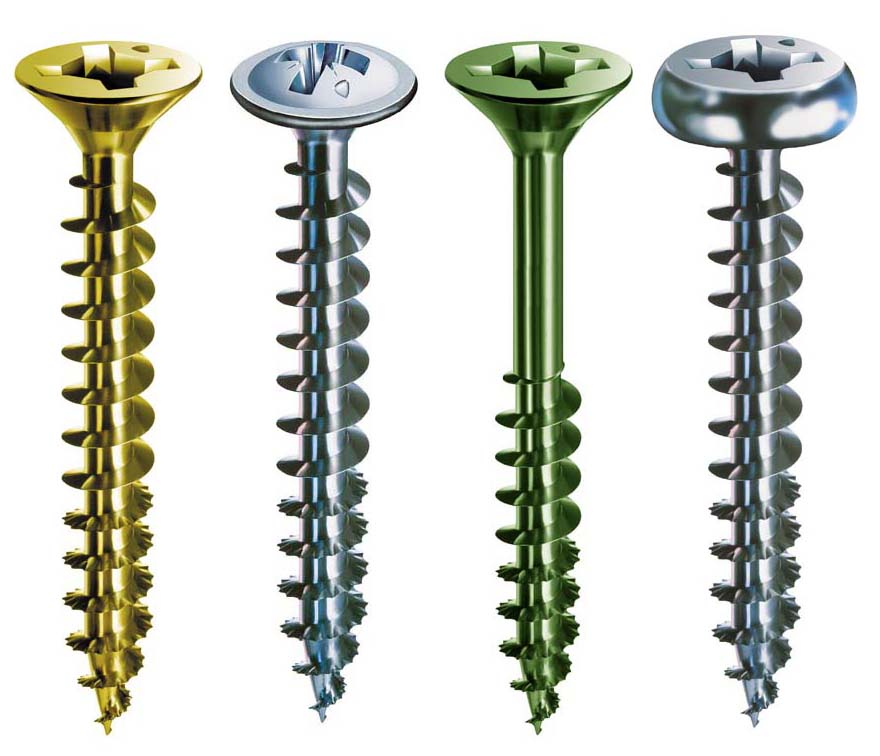
Four different types of screws (Source: Wikimedia Commons)
Bolts: Bolts offer the highest strength among fixings and are suitable for heavy-duty frames or where frames must be anchored to concrete or masonry. They are common in commercial buildings where security and durability are priorities.
Anchors: Anchors are used to fix frames into masonry or concrete walls, providing a secure connection where screws or nails alone would fail. Chemical anchors with epoxy resins are increasingly used in high-end projects in Nairobi for enhanced strength.
Staples: Staples are used mainly in light joinery tasks or to fix thin materials like window glazing beads. They are less common in door frame construction but still relevant for certain applications.
Choosing the appropriate fasteners for door and window frames requires a detailed understanding of the frame's material properties and structural demands. Kenyan carpenters often encounter hardwood frames, softwood frames, and non-wood frames such as aluminum or PVC, each demanding different fastener choices to ensure secure installation.
Timber door and window frames are prevalent in residential and institutional buildings across Kenya. The choice of fasteners depends on whether the timber is hardwood or softwood.
Hardwood Frames: Hardwoods such as mahogany or indigenous cypress are dense and require high-quality screws with sharp threads and strong cores to penetrate without splitting. Stainless steel or brass screws are ideal to resist corrosion. Bolts may be used for heavy or security doors.
Softwood Frames: Softwoods like pine or eucalyptus are easier to penetrate, allowing the use of galvanized nails or screws. Nails are often preferred for speed, but screws offer better holding power where durability is critical.
Modern buildings increasingly use aluminum and PVC frames, especially in urban areas like Nairobi and Eldoret. These materials require specialized fasteners.
Aluminum Frames: Fasteners must be corrosion-resistant to prevent galvanic reactions. Stainless steel or brass screws with rubber washers that provide weatherproof seals are common. Self-tapping screws designed for metal are preferred.
PVC Frames: Plastic frames require screws with wide threads to grip firmly without cracking the material. Plastic anchors or expansion plugs are used when fixing PVC frames into masonry.
Reinforcements play a vital role in enhancing the stability and durability of door and window frames. They provide additional strength at critical joints and help resist forces such as wind pressure, usage wear, and structural movement. In Kenya, reinforcements are particularly important in areas prone to seismic activity or where frames are subject to heavy usage, such as schools and hospitals.
Brackets: Metal brackets, often made of galvanized steel or stainless steel, strengthen the joints between vertical and horizontal frame members. They are commonly used in commercial buildings like banks to ensure frames remain square and resist twisting.
Braces: Diagonal braces provide lateral stability to frames, preventing racking or distortion. Timber braces are often embedded within the frame or attached externally in large window assemblies.
Corner Blocks: These are triangular wooden or metal blocks fixed inside frame corners to reinforce joints and maintain frame squareness. In schools, where frames are subject to heavy use, corner blocks help prolong frame life.
Create a free account to open more of this chapter.
Free: practical guides, quick cards, workplace scenarios and more.
Create a free accountThis chapter covers the application of fixings and reinforcements in door and window frames, starting with the identification of appropriate fasteners such as screws, nails, bolts, and anchors based on the frame material and structure. It then addresses the selection of reinforcements including brackets, braces, and corner blocks to enhance frame stability. The installation process involves positioning and drilling pilot holes where necessary, followed by inserting and tightening fasteners to secure the frames firmly while checking for any movement or misalignment. Reinforcing structural stability is achieved by adding braces or support plates and using adhesives or bonding agents to strengthen joints and connections. The chapter concludes with inspection and testing procedures to verify that all fixings are tight and secure, ensure proper weight distribution and load-bearing capacity, and confirm smooth operation of doors and windows. This comprehensive approach ensures durable and stable door and window installations.
Type: Individual
| Tools & Equipment | Materials |
|---|---|
| Tape measure | Wood screws 3.5mm x 50mm |
| Screwdriver set | Nails 2 inch |
| Claw hammer | Coach bolts M8 x 60mm |
| Marking pencil | Wall plugs (plastic anchors) 10mm |
| Metal frame screws 4mm x 38mm | |
| PPE (Safety boots, gloves, goggles) |
| S/N | Item | Quantity |
|---|---|---|
| 1 | Wood screws 3.5mm x 50mm | 20 Pcs per Candidate |
| 2 | Nails 2 inch | 30 Pcs per Candidate |
| 3 | Coach bolts M8 x 60mm | 10 Pcs per Candidate |
| 4 | Wall plugs (plastic anchors) 10mm | 15 Pcs per Candidate |
| 5 | Metal frame screws 4mm x 38mm | 20 Pcs per Candidate |
| 6 | Tape measure | 1 Pc per Candidate |
| 7 | Screwdriver set | 1 Set per Candidate |
| 8 | Claw hammer | 1 Pc per Candidate |
| 9 | PPE (Safety boots, gloves, goggles) | 1 Set per Candidate |
| 10 | Marking pencil | 1 Pc per Candidate |
| Items to be Evaluated | Marks Available | Marks Obtained | Comments |
|---|---|---|---|
| TASK 1: PPE and Tools Preparation | |||
| Wore all required PPE (Safety boots, gloves, goggles) (Award 1 mark for each PPE item worn correctly or 0) | 3 | ||
| Assembled all necessary tools and materials before starting (Award 2 marks if all tools and materials gathered or 0) | 2 | ||
| Sub-Total | 5 | ||
| TASK 2: Identification and Selection of Fixings | |||
| Identified suitable fixings for timber frame (wood screws and nails) (Award 3 marks for correct identification or 0) | 3 | ||
| Identified suitable fixings for metal frame (metal screws and coach bolts) (Award 3 marks for correct identification or 0) | 3 | ||
| Selected appropriate wall plugs for masonry fixing (Award 2 marks for correct selection or 0) | 2 | ||
| Marked fixing points accurately on frames (Award 2 marks for accurate marking or 0) | 2 | ||
| Demonstrated understanding of fixing application for each material (Award 3 marks for clear demonstration or 0) | 3 | ||
| Sub-Total | 13 | ||
| TASK 3: Workplace Housekeeping | |||
| Collected and stored tools properly after task completion (Award 1 mark for proper housekeeping or 0) | 1 | ||
| Cleaned work area and disposed of waste materials appropriately (Award 1 mark for proper cleaning or 0) | 1 | ||
| Sub-Total | 2 | ||
| PRODUCT CHECKLIST | |||
| Correct identification of fixings for timber frame (wood screws and nails) (Award 3 marks for correct fixings or 0) | 3 | ||
| Correct identification of fixings for metal frame (metal screws and coach bolts) (Award 3 marks for correct fixings or 0) | 3 | ||
| Appropriate selection of wall plugs for masonry fixing (Award 2 marks for correct selection or 0) | 2 | ||
| Accurate marking of fixing points on frames (Award 2 marks for accurate marking or 0) | 2 | ||
| Demonstrated understanding of fixing application and suitability (Award 3 marks for clear understanding or 0) | 3 | ||
| Sub-Total | 13 | ||
| GRAND TOTAL | 33 | ||
Type: Individual
| Tools & Equipment | Materials |
|---|---|
| Claw hammer | Steel angle brackets 100mm x 100mm x 3mm |
| Screwdriver set | Timber corner blocks 150mm x 150mm x 20mm |
| Tape measure 7.5m | Metal braces 300mm x 25mm x 3mm |
| Spirit level 600mm | Wood screws 50mm |
| Pencil | Nails 3 inch |
| S/N | Item | Quantity |
|---|---|---|
| 1 | Steel angle brackets 100mm x 100mm x 3mm | 4 Pcs per Candidate |
| 2 | Timber corner blocks 150mm x 150mm x 20mm | 4 Pcs per Candidate |
| 3 | Metal braces 300mm x 25mm x 3mm | 2 Pcs per Candidate |
| 4 | Wood screws 50mm | 20 Pcs per Candidate |
| 5 | Nails 3 inch | 20 Pcs per Candidate |
| 6 | Safety boots | 1 Pair per Candidate |
| 7 | Overall | 1 Pc per Candidate |
| 8 | Leather gloves | 1 Pair per Candidate |
| 9 | Claw hammer | 1 Pc per Candidate |
| 10 | Screwdriver set | 1 Set per Candidate |
| 11 | Tape measure 7.5m | 1 Pc per Candidate |
| 12 | Spirit level 600mm | 1 Pc per Candidate |
| 13 | Pencil | 1 Pc per Candidate |
| Items to be Evaluated | Marks Available | Marks Obtained | Comments |
|---|---|---|---|
| TASK 1: Select and fix reinforcements to door frame | |||
| Wore Personal Protective Equipment (safety boots, overall, leather gloves) (Award 1 mark for each PPE worn as per workplace safety procedures or 0) | 3 | ||
| Assembled required tools and materials (Award 1 mark each for tools and materials assembled or 0) | 2 | ||
| Measured and marked reinforcement fixing points accurately on the door frame (Award 3 marks for correct measurement and marking or 0) | 3 | ||
| Selected appropriate reinforcement components (brackets, braces, corner blocks) based on frame requirements (Award 3 marks for correct selection or 0) | 3 | ||
| Fixed steel angle brackets correctly with screws (Award 4 marks for correct fixing or 0) | 4 | ||
| Fixed timber corner blocks securely with nails (Award 3 marks for secure fixing or 0) | 3 | ||
| Fixed metal braces properly aligned and secured (Award 3 marks for proper fixing or 0) | 3 | ||
| Checked and ensured all fixings are tight and secure (Award 2 marks for tight fixings or 0) | 2 | ||
| Cleaned and performed workplace housekeeping after task completion (Award 2 marks for collecting tools and cleaning workplace or 0) | 2 | ||
| Sub-Total | 25 | ||
| PRODUCT CHECKLIST | |||
| Reinforcements fixed to door frame as per drawing and specifications (Award 5 marks for correct placement and alignment of reinforcements or 0) | 5 | ||
| Fixings are tight with no loose screws or nails (Award 3 marks for tight fixings or 0) | 3 | ||
| Door frame retains squareness and structural rigidity after reinforcement (Award 4 marks for squareness and rigidity or 0) | 4 | ||
| General appearance is neat and professional (Award 3 marks for neat and professional finish or 0) | 3 | ||
| Dimensions of door frame with reinforcements remain 2100mm height and 900mm width (Award 5 marks for correct dimensions or 0) | 5 | ||
| Sub-Total | 20 | ||
| GRAND TOTAL | 45 | ||
At the start of this chapter we promised you would be able to:
Tick each one you can genuinely do.
So, are you there yet?
You're competent when you can confidently do 50% or more of what this chapter promised.
Sign in to record how you're doing.