
By the end of this chapter, you will be able to:
Mastering these skills will help you build strong, safe, and durable building foundations that stand the test of time.
Compiled by: Rose Apiyo
Construction of the over-site concrete (OSC) layer is a critical phase in building substructure works. This layer provides a stable, clean, and level surface above the foundation and below the floor finishes, protecting the substructure from moisture ingress and mechanical damage. In various Kenyan sectors, such as county hospitals, universities, banks, and retail businesses, proper OSC installation ensures durability and hygiene, supporting the overall building performance. This chapter focuses on the essential personal protective equipment (PPE) and tools required for safe and effective execution of OSC works.
Personal protective equipment (PPE) is fundamental for safeguarding workers involved in laying over-site concrete. Given the physical and chemical hazards present on construction sites in Kenya, such as exposure to cement dust, sharp tools, and heavy materials, PPE usage is not only a regulatory requirement but a practical necessity. Different sectors, including county government offices and farms developing new structures, emphasize PPE adherence to minimize workplace injuries and maintain health standards.
Several types of PPE are mandatory or highly recommended when laying OSC to protect against common hazards:
Construction workers wearing safety helmets guiding the pouring of con (Source: substructure-1)
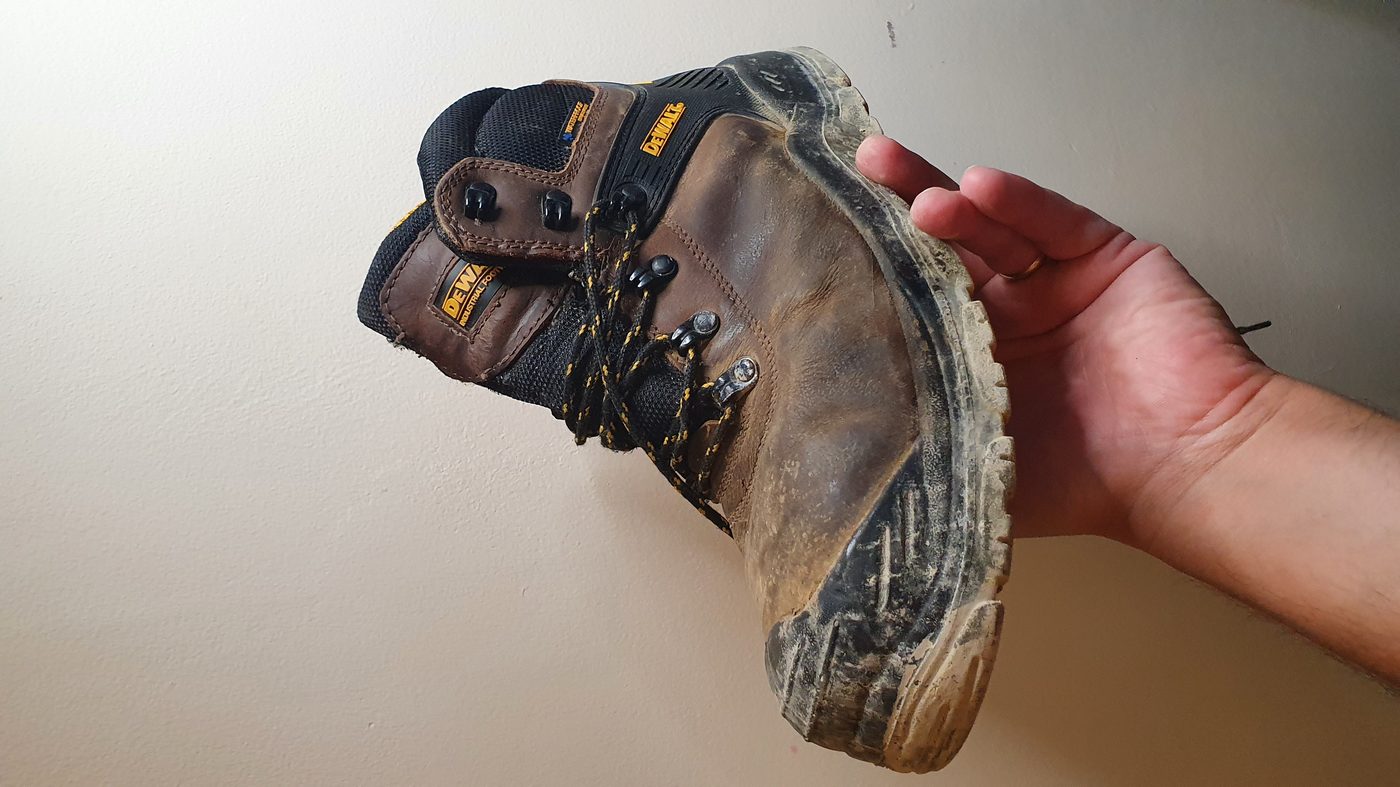
A single safety boot for industrial use (Source: Wikimedia Commons)

Pair of yellow work gloves used in carpentry (Source: Wikimedia Commons)
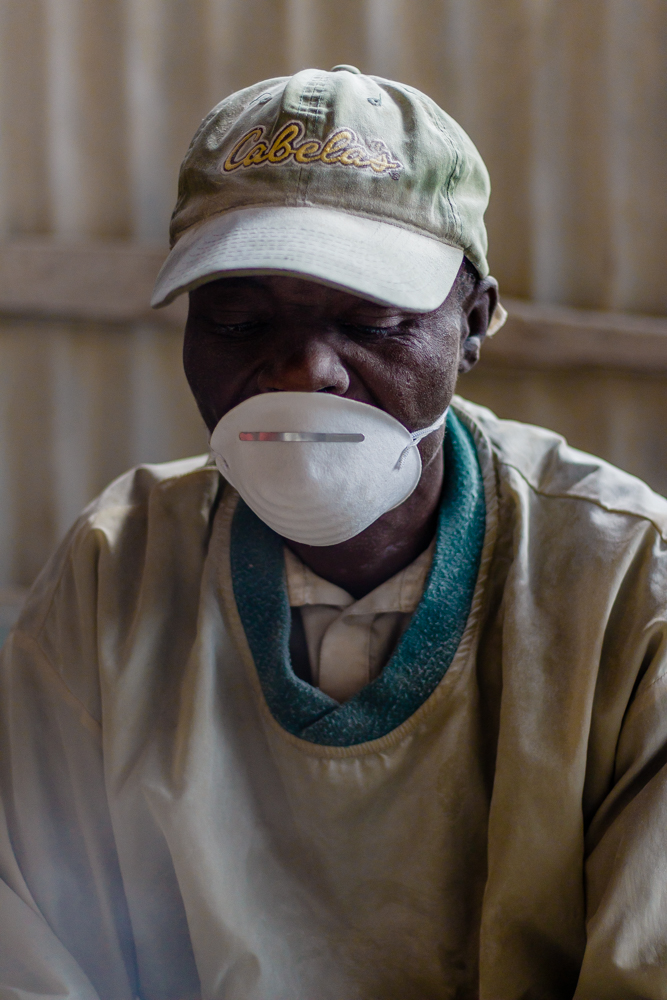
Person wearing a dust mask (Source: Wikimedia Commons)
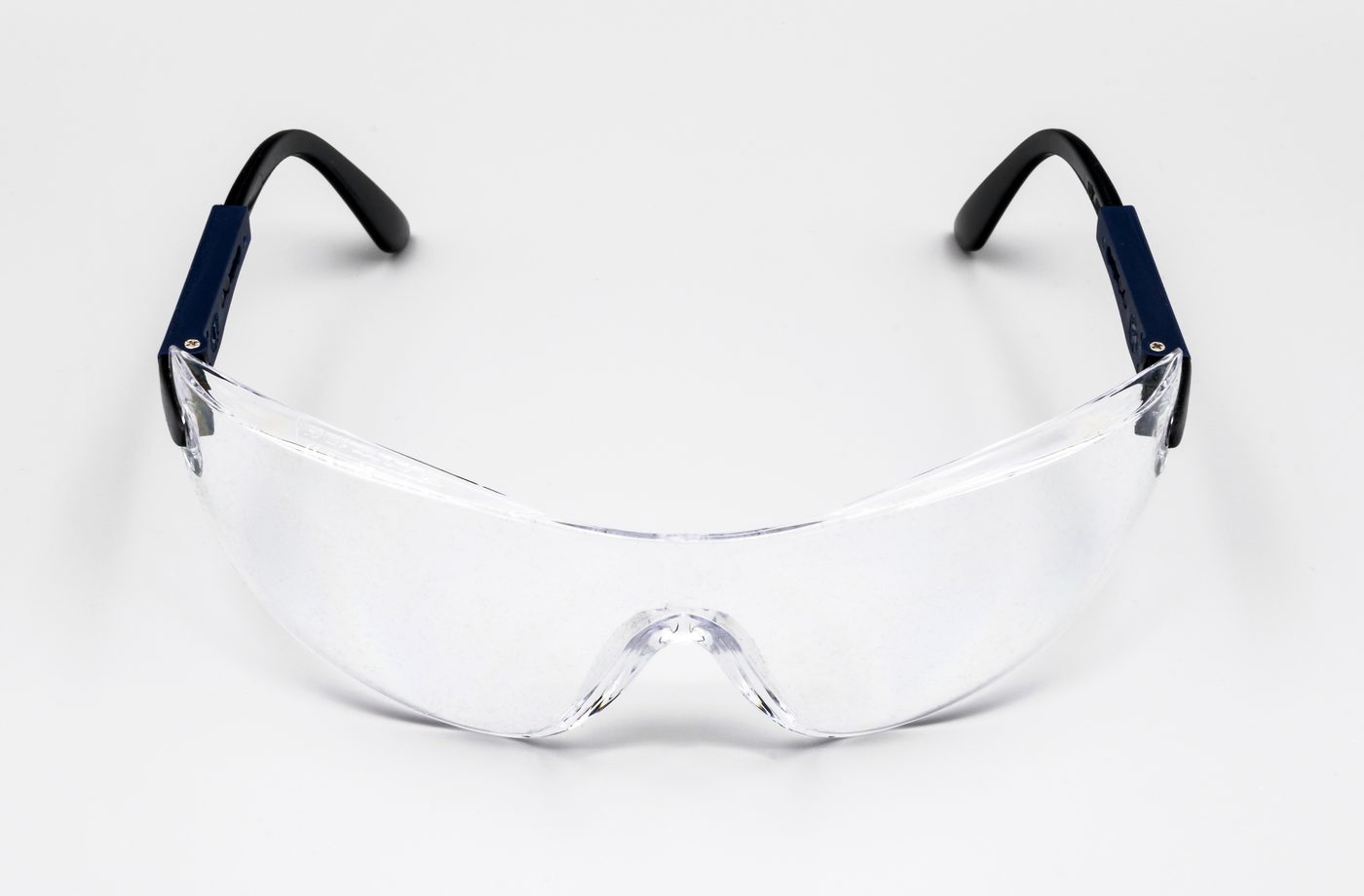
Clear protective eyewear for safety (Source: Wikimedia Commons)
Correct and consistent use of PPE reduces accidents and occupational illnesses, which can lead to costly downtime or legal liabilities. At a county referral hospital construction site in Kisumu, workers wearing gloves and masks while mixing concrete reported fewer skin irritations and respiratory complaints, demonstrating the health benefits of PPE. Moreover, PPE fosters a culture of safety that enhances productivity and morale.
Choosing the right PPE involves considering the specific hazards encountered during OSC works, worker comfort, and compliance with Kenyan occupational safety standards:
Proper care extends the lifespan and effectiveness of PPE, ensuring ongoing protection:
Create a free account to open more of this chapter.
Free: practical guides, quick cards, workplace scenarios and more.
Create a free accountThis chapter covers the essential aspects of laying out construction over-site concrete, beginning with the importance of using appropriate personal protective equipment to ensure worker safety. It then discusses the various tools and equipment necessary for efficient and accurate execution of the works. The chapter provides a detailed overview of ground construction materials such as hard-core, blinding, damp-proof membranes, and reinforcing steel mesh (BRC), explaining their roles in the substructure. The functional requirements of oversite concrete emphasize durability and protection against moisture and pests. Procedures for laying hard-core and erecting formwork are described, highlighting the sequence and critical steps for quality outcomes. Blinding materials and their application are examined alongside termite control measures that safeguard the structure. The chapter also details the materials and methods for laying damp-proof membranes and BRC mesh, ensuring structural integrity. Finally, it addresses the composition of over-site concrete, including cement, fine and coarse aggregates, and water, followed by the casting and curing processes that are vital for achieving a strong and lasting concrete slab.
Type: Individual
| Tools & Equipment | Materials |
|---|---|
| Tape measure | Hard-core material (broken stones 40-50mm size) |
| Spade | Lime powder |
| Wheelbarrow | |
| Rammer/Mechanical compactor | |
| Builders line | |
| Pegs |
| S/N | Item | Quantity |
|---|---|---|
| 1 | Tape measure | 1 Pc per Candidate |
| 2 | Spade | 1 Pc per Candidate |
| 3 | Wheelbarrow | 1 Pc per 3 Candidates |
| 4 | Rammer/Mechanical compactor | 1 Pc per 3 Candidates |
| 5 | Builders line | 10 Metres per Candidate |
| 6 | Pegs | 8 Pcs per Candidate |
| 7 | Lime powder | 1 Kg per 5 Candidates |
| 8 | Hard-core material (broken stones 40-50mm size) | 0.1 m3 per Candidate |
| 9 | Safety helmet | 1 Pc per Candidate |
| 10 | Dust coat/Overall | 1 Pc per Candidate |
| 11 | Safety boots | 1 Pair per Candidate |
| 12 | Gloves | 1 Pair per Candidate |
| Items to be Evaluated | Marks Available | Marks Obtained | Comments |
|---|---|---|---|
| TASK 1: Preparation and Laying of Hard-core | |||
| Wore correct PPE: Helmet, Dust coat, Safety boots, Gloves (Award 1 mark for each correctly donned PPE) | 4 | ||
| Interpreted working drawing correctly and identified site dimensions (Award 2 marks for correct interpretation) | 2 | ||
| Assembled correct tools and equipment: Tape measure, Spade, Wheelbarrow, Rammer, Builders line, Pegs (Award 0.5 marks for each correct tool used) | 3 | ||
| Set out the 600mm by 1200mm area using builders line and pegs (Award 3 marks for correct length and 3 marks for correct width set out) | 6 | ||
| Marked out the area on ground using lime powder (Award 3 marks for clear and accurate marking) | 3 | ||
| Spread hard-core material evenly to 150mm thickness within marked area (Award 5 marks for even spreading and correct thickness) | 5 | ||
| Compacted hard-core using rammer/mechanical compactor thoroughly (Award 5 marks for complete and uniform compaction) | 5 | ||
| Cleaned tools and working area after task completion (Award 2 marks for proper cleaning) | 2 | ||
| Completed work within allocated time and to safety standards (Award 2 marks for timely and safe completion) | 2 | ||
| Sub-Total | 32 | ||
| PRODUCT CHECKLIST | |||
| Hard-core base layer dimensions: Length 600mm (Award 3 marks for correct length within ±10mm) | 3 | ||
| Hard-core base layer dimensions: Width 1200mm (Award 3 marks for correct width within ±10mm) | 3 | ||
| Hard-core base layer thickness: 150mm (Award 4 marks for consistent thickness ±5mm) | 4 | ||
| Surface levelness and compacted uniformly (Award 5 marks for uniform level and compaction) | 5 | ||
| Area correctly marked and edged with lime lines (Award 3 marks for clear and accurate lime marking) | 3 | ||
| Site and tools cleaned and free from debris (Award 2 marks for cleanliness) | 2 | ||
| Sub-Total | 20 | ||
| GRAND TOTAL | 52 | ||
Type: Individual
| Tools & Equipment | Materials |
|---|---|
| Tape measure | Hardcore |
| Spirit level | Cement |
| Mason's trowel | Clean sand |
| Wheelbarrow | Water |
| Shovel/Spade | |
| Steel float | |
| Water container |
| S/N | Item | Quantity |
|---|---|---|
| 1 | Tape measure | 1 Pc per Candidate |
| 2 | Spirit level | 1 Pc per Candidate |
| 3 | Mason's trowel | 1 Pc per Candidate |
| 4 | Wheelbarrow | 1 Pc per 3 Candidates |
| 5 | Shovel/Spade | 1 Pc per Candidate |
| 6 | Steel float | 1 Pc per Candidate |
| 7 | Water container | 1 Pc per 5 Candidates |
| 8 | Hardcore | 0.05 m3 per Candidate |
| 9 | Cement (Portland) | 20 kg per Candidate |
| 10 | Clean sand | 0.03 m3 per Candidate |
| 11 | Safety boots | 1 Pair per Candidate |
| 12 | Dust coat/Overall | 1 Pc per Candidate |
| 13 | Safety helmet | 1 Pc per Candidate |
| 14 | Gloves | 1 Pair per Candidate |
| Items to be Evaluated | Marks Available | Marks Obtained | Comments |
|---|---|---|---|
| TASK 1: Preparation and laying of blinding concrete | |||
| Wore correct PPEs (safety boots, dust coat/overall, helmet, gloves) (Award 1 mark for each correctly worn PPE) | 4 | ||
| Prepared the hardcore base by leveling and compacting (Award 3 marks for proper preparation and compaction) | 3 | ||
| Measured and marked area 1200mm x 600mm on hardcore (Award 2 marks for each correct dimension) | 4 | ||
| Mixed concrete to ratio 1:3:6 (cement:sand:hardcore) correctly (Award 2 marks for batching, 2 marks for mixing, 1 mark for correct water content) | 5 | ||
| Laid concrete uniformly to 50mm thickness (Award 4 marks for uniform thickness and coverage) | 4 | ||
| Levelled and finished blinding concrete using steel float (Award 4 marks for smooth, level finish) | 4 | ||
| Cleaned tools and working area after completion (Award 2 marks for thorough cleaning) | 2 | ||
| Checked and confirmed blinding concrete thickness and area dimensions (Award 2 marks for thickness, 2 marks for area dimensions) | 4 | ||
| Ensured no segregation or honeycombing on surface (Award 4 marks for good concrete surface quality) | 4 | ||
| Sub-Total | 34 | ||
| PRODUCT CHECKLIST | |||
| Blinding concrete layer dimensions 1200mm x 600mm x 50mm thickness (Award 2 marks for each dimension within tolerance ±10mm) | 6 | ||
| Surface levelness and smooth finish verified (Award 5 marks for a uniform and smooth surface finish) | 5 | ||
| Concrete surface free from segregation, honeycombing, and debris (Award 5 marks for clean and defect-free surface) | 5 | ||
| Blinding concrete properly bonded to hardcore base (Award 4 marks for good bonding without loose particles) | 4 | ||
| Sub-Total | 20 | ||
| GRAND TOTAL | 54 | ||
At the start of this chapter we promised you would be able to:
Tick each one you can genuinely do.
So, are you there yet?
You're competent when you can confidently do 50% or more of what this chapter promised.
Sign in to record how you're doing.