
By the end of this chapter, you will be able to:
Mastering these skills ensures you build strong, safe foundations that support lasting structures in your trade.
Compiled by: Rose Apiyo
Laying foundation concrete is a critical phase in any construction project, forming the base that supports the entire structure. In Kenya, whether constructing a county hospital, a university lecture hall, or a retail shop in Nairobi, the quality and safety of foundation work determine the durability and safety of the building. This chapter addresses essential aspects of laying foundation concrete, focusing on personal protective equipment (PPE) and the key material, cement. Understanding the correct classes of PPE and the properties of cement ensures construction workers operate safely and produce strong, reliable foundations.
Personal protective equipment (PPE) is the clothing and gear a worker wears to reduce exposure to hazards that remain after site controls such as barricades, shoring and machine guards are in place. Foundation concrete work exposes workers to wet cement, which is strongly alkaline and burns skin, cement dust, sharp reinforcement bar ends, heavy loads, deep trenches, noise and vibration from mixers and pokers. The Occupational Safety and Health Act, 2007 requires the employer to provide suitable PPE free of charge and the worker to wear it, and the contractor's site safety officer checks it daily.
Example: before the foundation pour for a maternity wing in Ol Kalou, the site foreman stops two labourers working in canvas shoes and issues them gumboots before they enter the wet concrete.
Safety helmets (hard hats) protect the head from falling objects such as stones, tools and bars dropping into the trench, and from knocks against formwork and starter bars. They are worn by everyone on site, including visitors. Helmets with chin straps are used where workers bend over trenches or climb in and out of excavations, so the helmet does not fall off.
Construction workers wearing safety helmets guiding the pouring of con (Source: substructure-1)
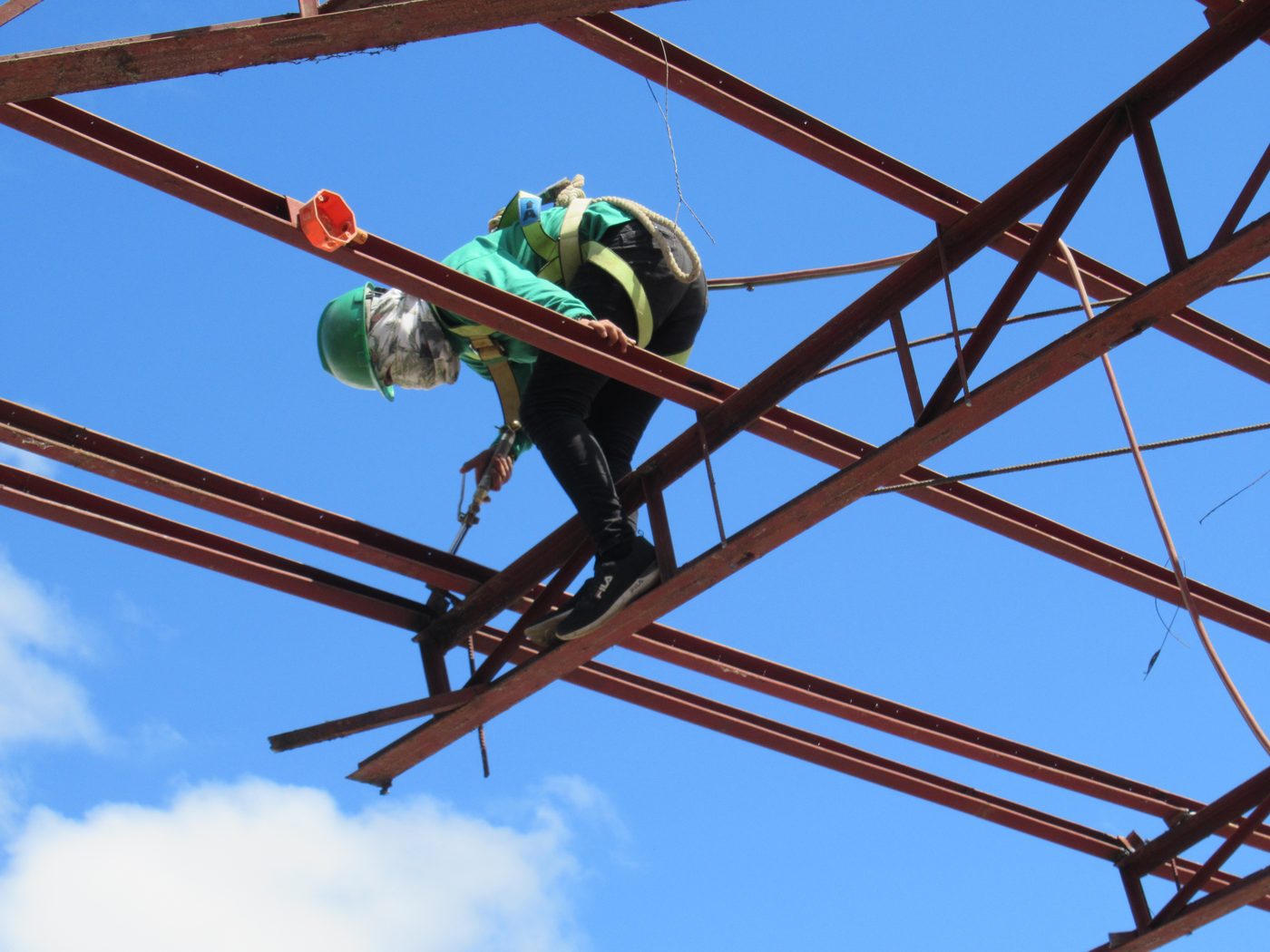
Worker wearing impact-resistant helmet on steel structure (Source: Wikimedia Commons)
Wet cement and concrete cause chemical burns and dermatitis, while rebar ends, tying wire and rough aggregate cut and scratch the hands.
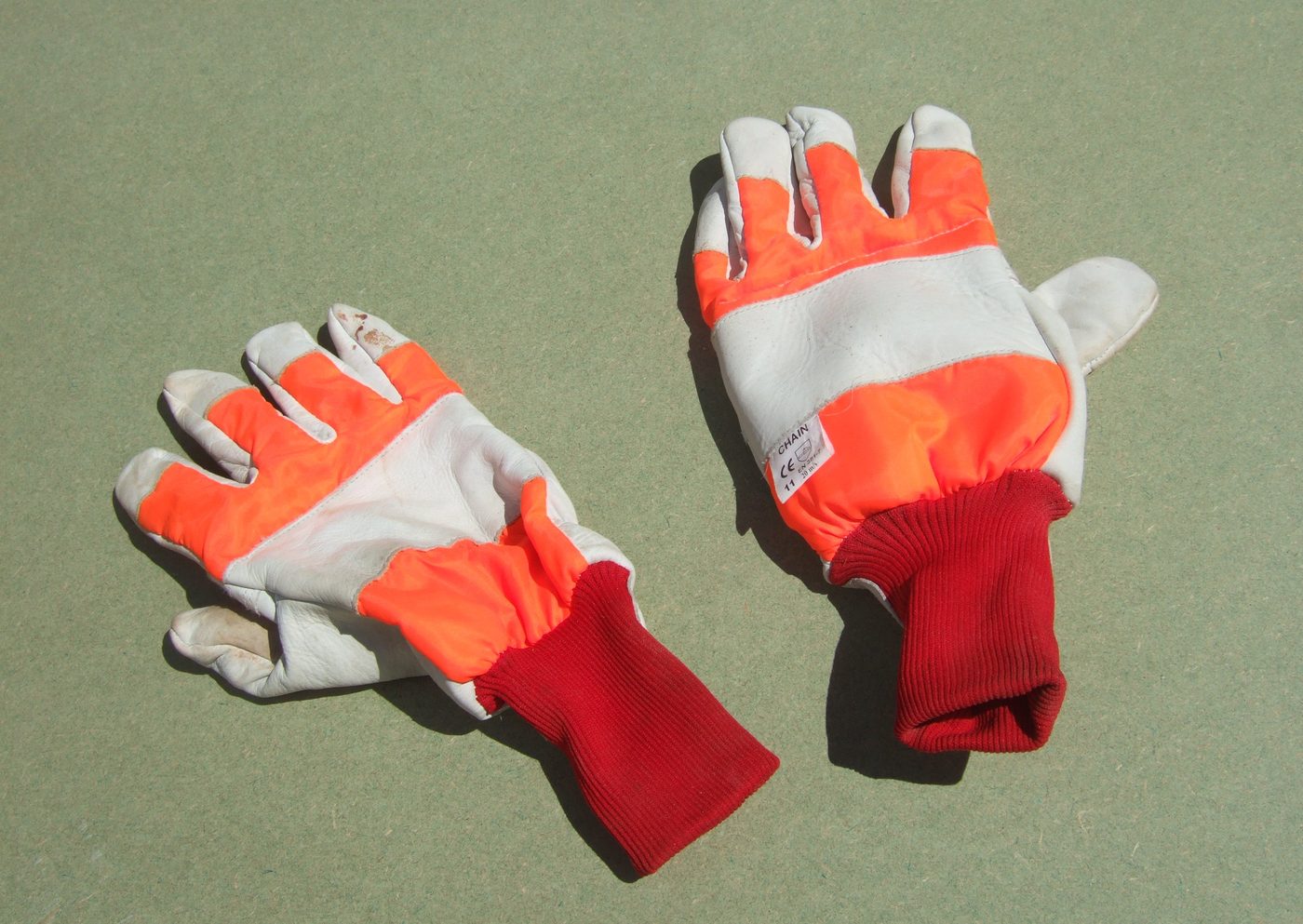
A pair of protective gloves (Source: Wikimedia Commons)
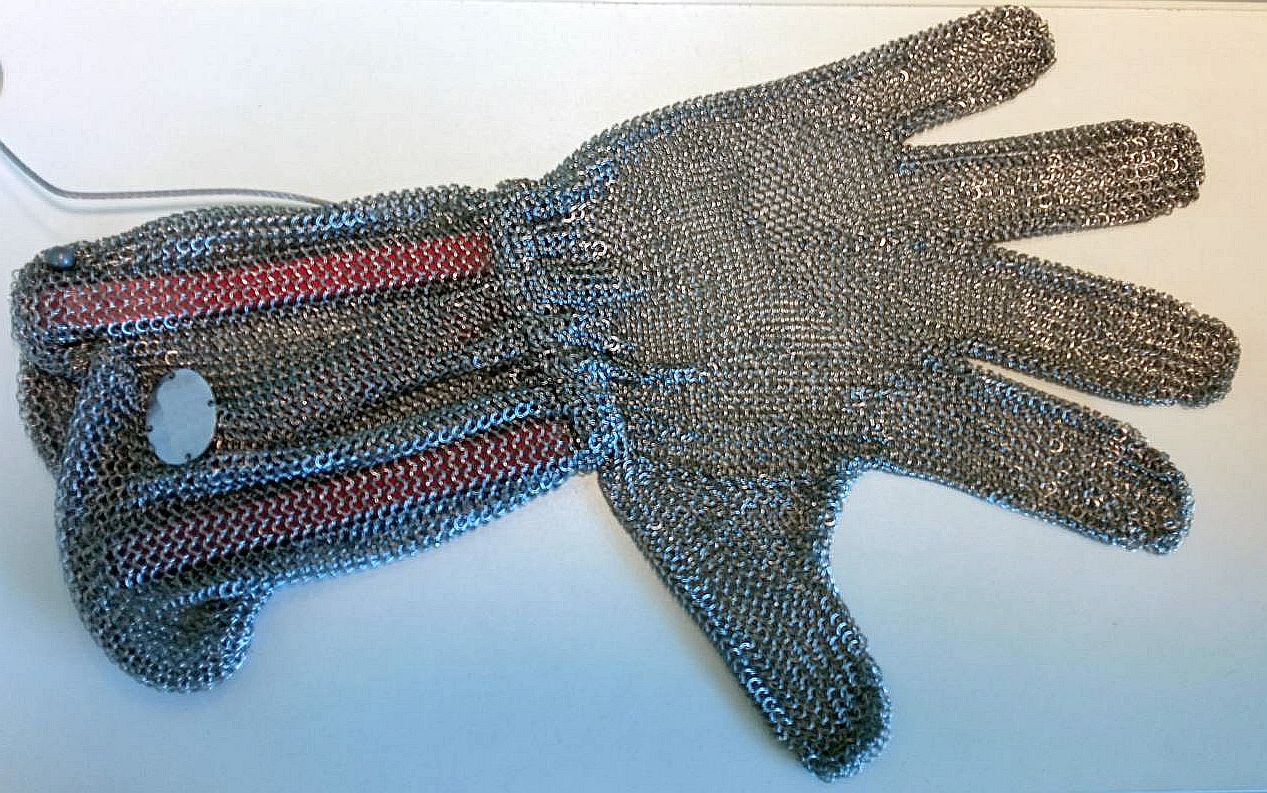
Metal mesh cut-resistant glove (Source: Wikimedia Commons)
Feet are at risk from dropped bars and blocks, nails in formwork, and prolonged contact with wet concrete.
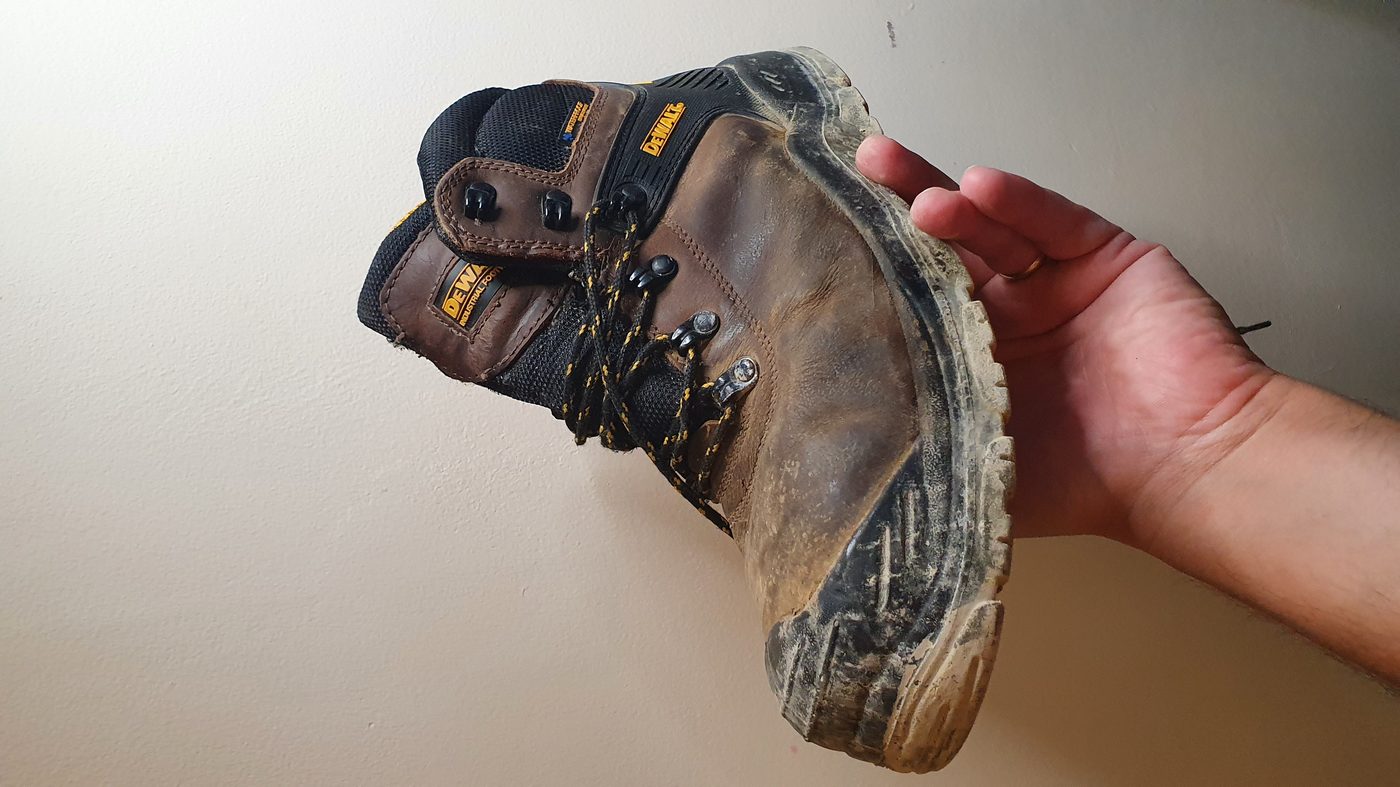
A single safety boot for industrial use (Source: Wikimedia Commons)
Cement splashes during mixing and placing, and chips fly when cutting bars or breaking out old concrete. Safety goggles or spectacles with side shields are worn for mixing, placing and cutting, and a face shield is added when using an angle grinder or disc cutter on reinforcement.
Cement dust, released when bags are opened and emptied into the mixer, irritates the nose, throat and lungs, and dry cutting of concrete releases silica dust.
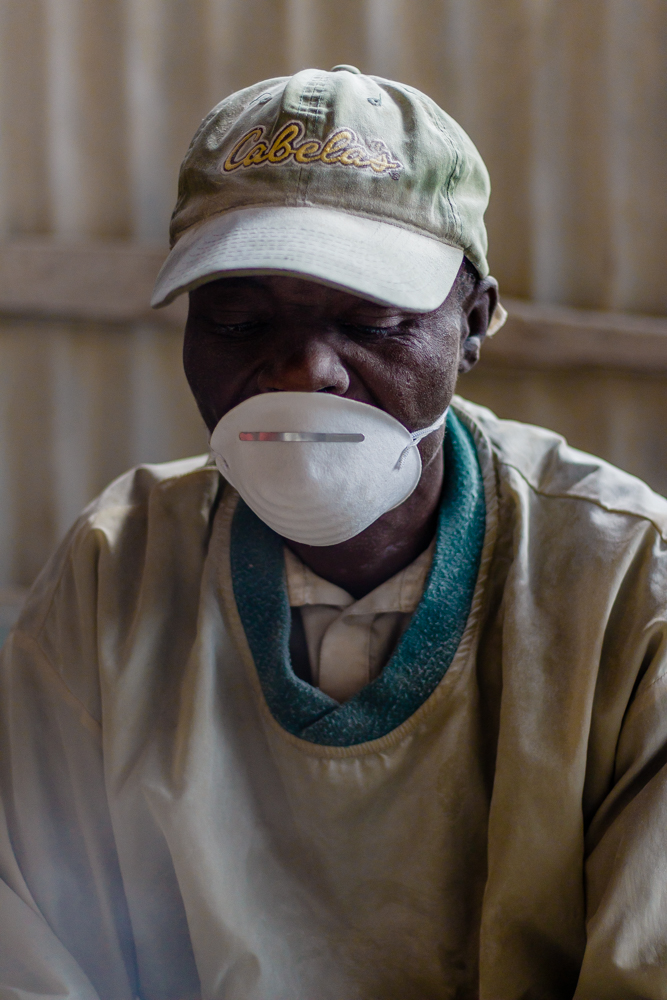
Person wearing a dust mask (Source: Wikimedia Commons)
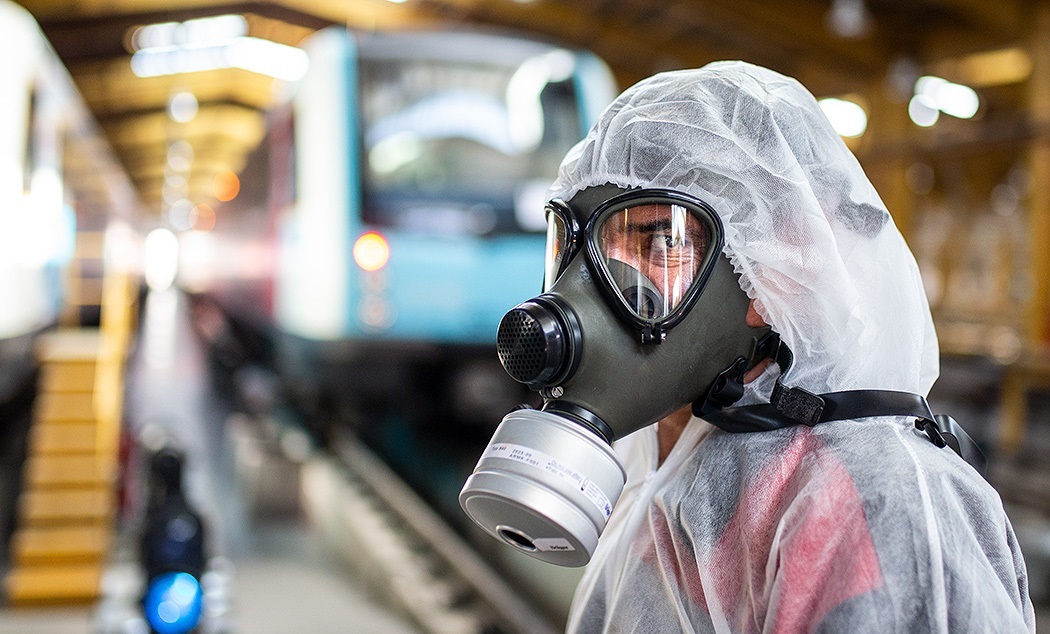
Person wearing a full-face respirator mask (Source: Wikimedia Commons)
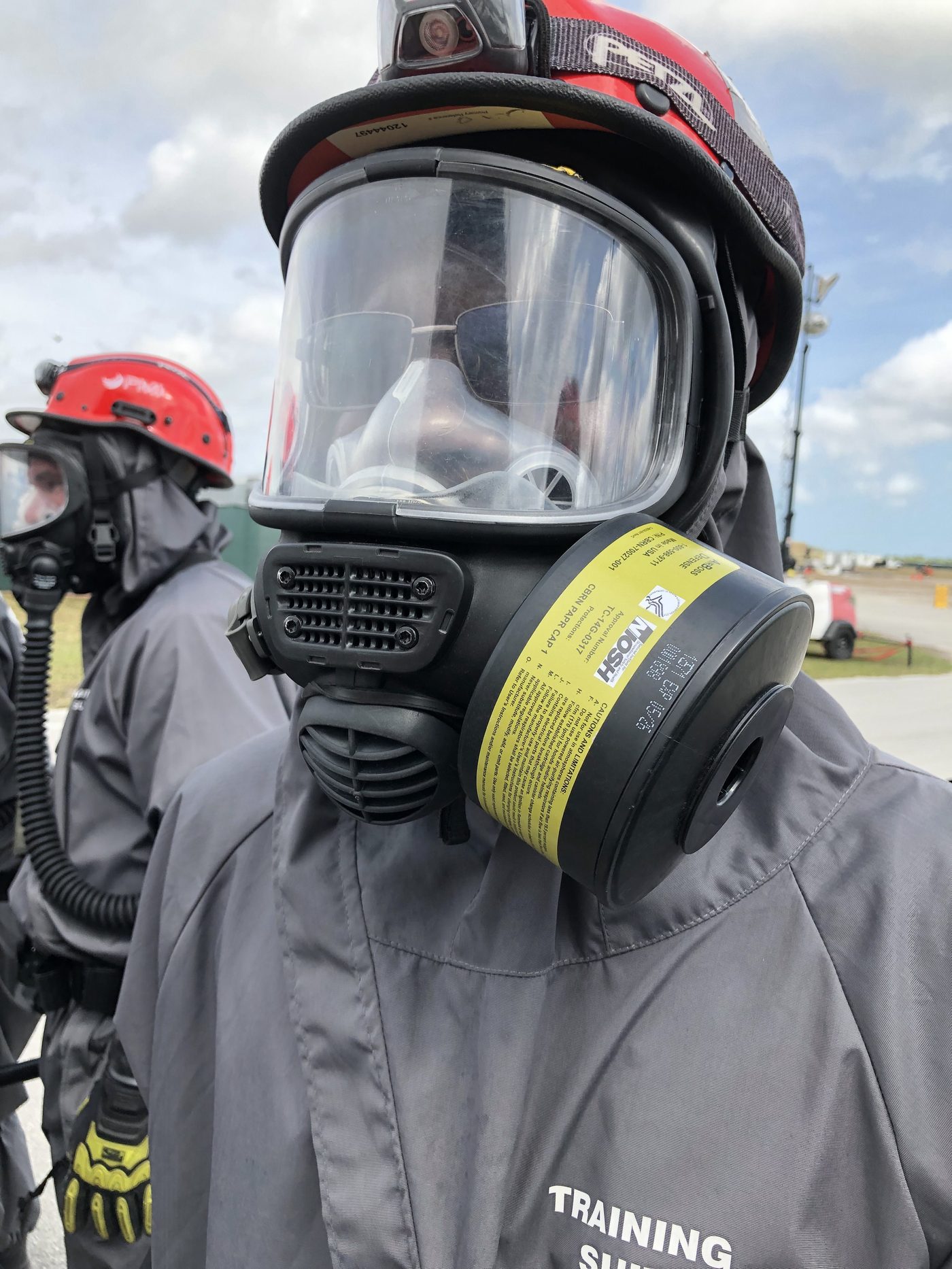
Person wearing powered air-purifying respirator (Source: Wikimedia Commons)
Overalls with long sleeves keep cement off the skin and protect against scratches. Where concrete admixtures, curing compounds or form-release oils are sprayed, chemical-resistant aprons or splash suits are worn as the product's safety data sheet requires.
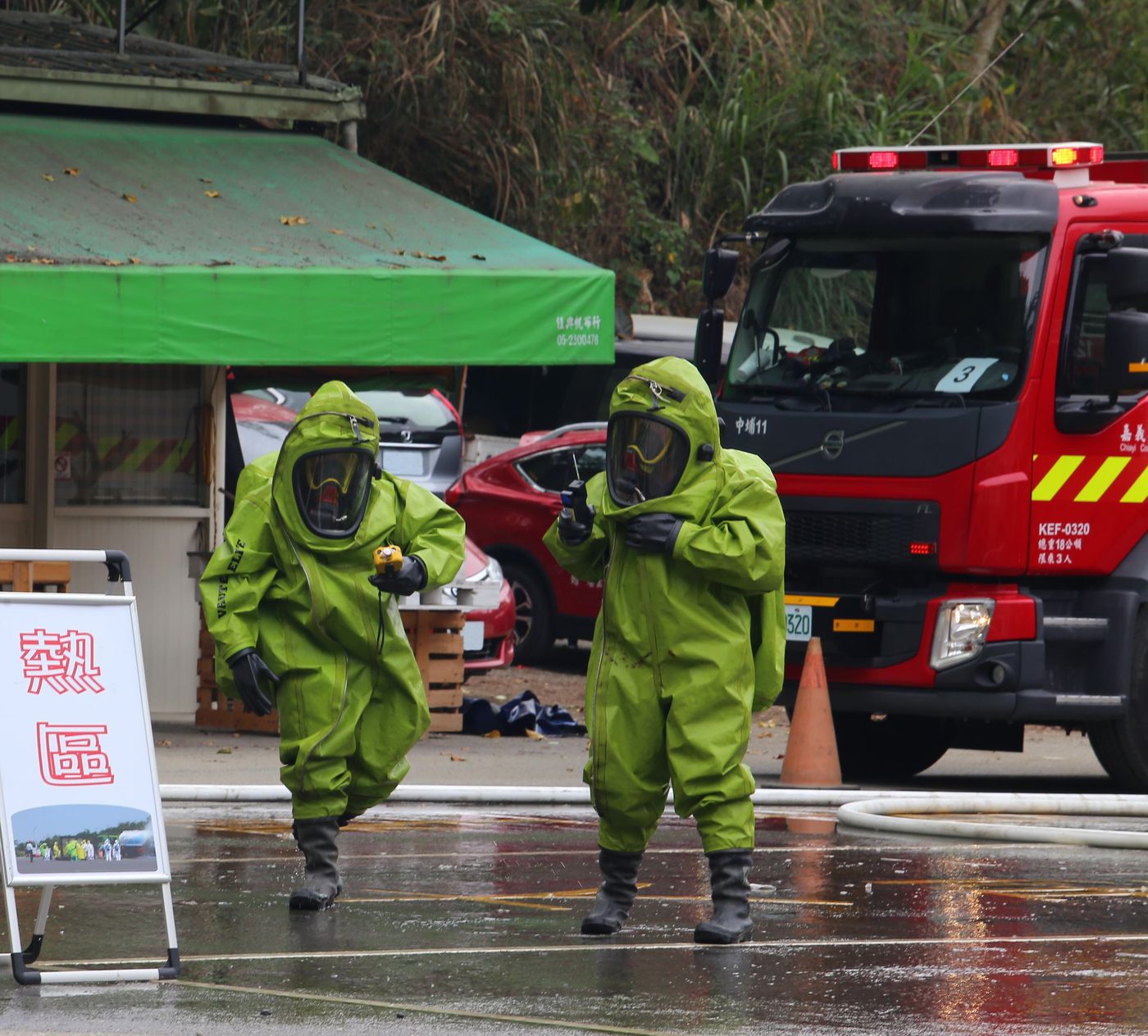
Two people wearing chemical splash suits (Source: Wikimedia Commons)
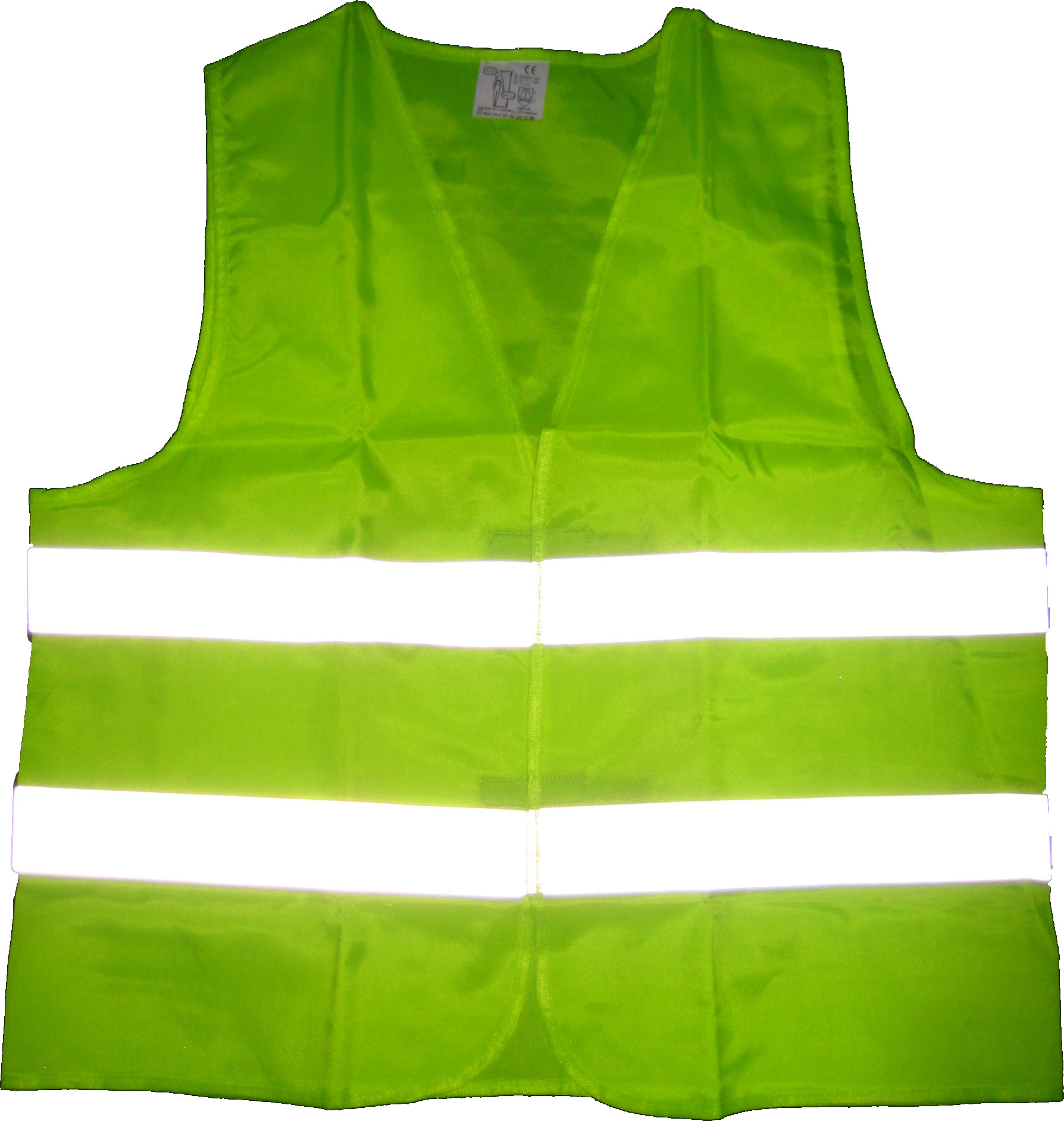
High-visibility safety vest (Source: Wikipedia (High-visibility clothing))
High-visibility vests or jackets make workers visible to tipper, mixer and excavator drivers, especially when concrete is delivered by truck or dumper.
Concrete mixers, poker vibrators, compressors and disc cutters can exceed 85 dB(A). Earplugs or earmuffs are worn by workers operating or standing near this equipment for long periods.
Workers in deep foundation excavations, on the edges of basements or on raised platforms over pile caps can fall. Guardrails and covered edges come first, and a full-body harness with a lanyard attached to a secure anchor is worn where those are not possible.
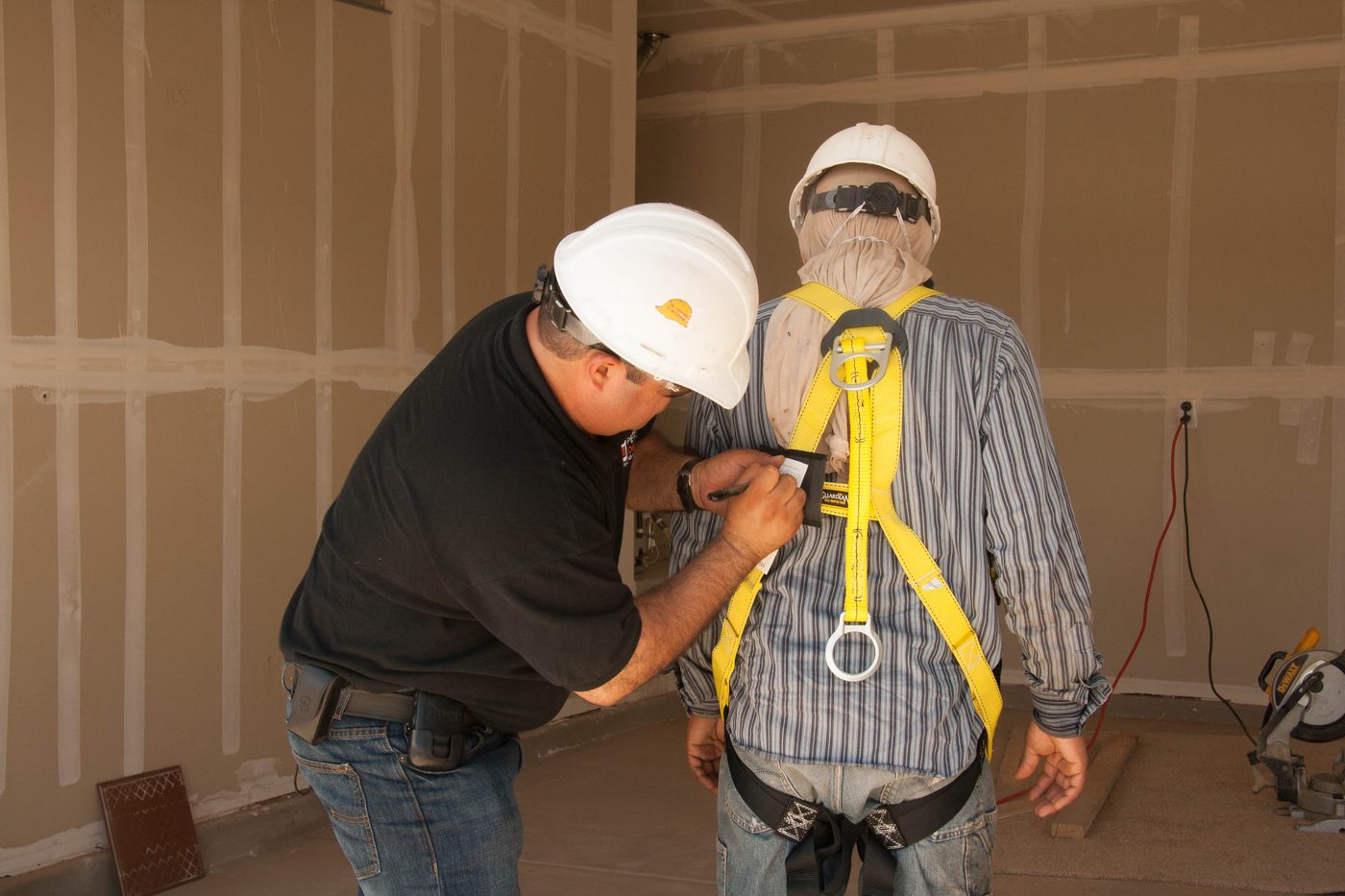
Worker fitting full-body harness on mannequin (Source: Wikimedia Commons)
Create a free account to open more of this chapter.
Free: practical guides, quick cards, workplace scenarios and more.
Create a free accountThis chapter provided a comprehensive overview of laying foundation concrete, starting with the essential personal protective equipment required to ensure safety during the process. It then detailed the various tools and equipment used in concrete works, highlighting their specific roles. The classification of concrete was explained with emphasis on classes 15, 20, 25, and 30, each suited for different structural requirements. The batching of concrete materials covered the accurate measurement and selection of cement, fine aggregates, coarse aggregates, and water, critical for achieving the desired concrete quality. The process of fixing reinforcement bars was discussed to ensure structural strength and stability. Mixing of the batched materials was outlined to achieve a uniform and workable concrete mix. The chapter also described the proper placing of fresh concrete and the importance of thorough compaction to eliminate voids. Finally, curing was emphasized as a vital step to maintain moisture and promote the concrete’s strength development.
Type: Individual
| Tools & Equipment | Materials |
|---|---|
| Tape measure | |
| Spirit level | |
| Concrete mixer | |
| Wheelbarrow | |
| Shovel (Spade) | |
| Trowel | |
| Concrete float (wooden) | |
| Concrete vibrator | |
| Buckets | |
| Safety helmet | |
| Dust coat/Overall | |
| Safety boots | |
| Gloves |
| S/N | Item | Quantity |
|---|---|---|
| 1 | Tape measure | 1 Pc per Candidate |
| 2 | Spirit level | 1 Pc per 2 Candidates |
| 3 | Concrete mixer | 1 Pc per 5 Candidates |
| 4 | Wheelbarrow | 1 Pc per 3 Candidates |
| 5 | Shovel (Spade) | 1 Pc per Candidate |
| 6 | Trowel | 1 Pc per Candidate |
| 7 | Concrete float (wooden) | 1 Pc per Candidate |
| 8 | Concrete vibrator | 1 Pc per 5 Candidates |
| 9 | Buckets | 2 Pcs per Candidate |
| 10 | Wheelbarrow | 1 Pc per 3 Candidates |
| 11 | Safety helmet | 1 Pc per Candidate |
| 12 | Dust coat/Overall | 1 Pc per Candidate |
| 13 | Safety boots | 1 Pair per Candidate |
| 14 | Gloves | 1 Pair per Candidate |
| Items to be Evaluated | Marks Available | Marks Obtained | Comments |
|---|---|---|---|
| TASK 1: Identification of Concrete Works Tools and Equipment | |||
| Wore appropriate PPE: Safety helmet, Dust coat/Overall, Safety boots (Award 1 mark for each correctly worn PPE, total 3 marks) | 3 | ||
| Correctly identified Tape measure (Award 1 mark for correct identification) | 1 | ||
| Correctly identified Spirit level (Award 1 mark for correct identification) | 1 | ||
| Correctly identified Concrete mixer (Award 1 mark for correct identification) | 1 | ||
| Correctly identified Wheelbarrow (Award 1 mark for correct identification) | 1 | ||
| Correctly identified Shovel (Spade) (Award 1 mark for correct identification) | 1 | ||
| Correctly identified Trowel (Award 1 mark for correct identification) | 1 | ||
| Correctly identified Concrete float (wooden) (Award 1 mark for correct identification) | 1 | ||
| Correctly identified Concrete vibrator (Award 1 mark for correct identification) | 1 | ||
| Correctly identified Buckets (Award 1 mark for correct identification) | 1 | ||
| Correctly identified Gloves (Award 1 mark for correct identification) | 1 | ||
| Sub-Total | 13 | ||
| PRODUCT CHECKLIST | |||
| Accuracy in naming all listed concrete works tools and equipment (13 items) (Award 1 mark for each correctly named tool or equipment, total 7 marks) | 7 | ||
| Sub-Total | 7 | ||
| GRAND TOTAL | 20 | ||
Type: Individual
| Tools & Equipment | Materials |
|---|---|
| Calculator | Concrete mix design charts and tables |
| Pen | Site foundation drawing |
| Notebook |
| S/N | Item | Quantity |
|---|---|---|
| 1 | Concrete mix design charts and tables | 1 set per Candidate |
| 2 | Site foundation drawing | 1 sheet per Candidate |
| 3 | Calculator | 1 Pc per Candidate |
| 4 | Pen and notebook | 1 set per Candidate |
| 5 | PPE (Dust coat/Overall, Safety boots, Helmet, Gloves) | 1 set per Candidate |
| Items to be Evaluated | Marks Available | Marks Obtained | Comments |
|---|---|---|---|
| TASK 1: PPE and preparation | |||
| Wore correct PPE (Dust coat/Overall, Safety boots, Helmet) (Award 1 mark for each correctly worn PPE item) | 3 | ||
| Reviewed site foundation drawing correctly (Award 3 marks for correct interpretation of drawing) | 3 | ||
| Assembled necessary tools and charts (Award 1 mark each for Calculator and mix design charts) | 2 | ||
| Identified foundation dimensions from drawing (1200mm width, 600mm depth) (Award 1 mark each for correct dimensions identified) | 2 | ||
| Sub-Total | 10 | ||
| TASK 2: Concrete class selection and justification | |||
| Selected appropriate concrete class (Class 15, 20, 25, or 30) based on foundation load (Award 6 marks for correct class selection according to loading conditions) | 6 | ||
| Justified selection with reference to strength and durability requirements (Award 8 marks for clear, relevant justification including structural considerations) | 8 | ||
| Recorded selection and justification clearly in notebook (Award 4 marks for clear and complete documentation) | 4 | ||
| Sub-Total | 18 | ||
| PRODUCT CHECKLIST | |||
| Correct concrete class selected matching foundation requirements (Award 8 marks for correct and appropriate concrete class selection) | 8 | ||
| Accurate foundation dimensions referenced (1200mm width, 600mm depth) (Award 2 marks each for correct width and depth) | 4 | ||
| Clear and logical justification provided (Award 6 marks for sound reasoning and reference to standards) | 6 | ||
| Sub-Total | 18 | ||
| GRAND TOTAL | 46 | ||
At the start of this chapter we promised you would be able to:
Tick each one you can genuinely do.
So, are you there yet?
You're competent when you can confidently do 50% or more of what this chapter promised.
Sign in to record how you're doing.