
By the end of this chapter, you will be able to:
Mastering these skills ensures you can work safely and effectively, keeping vehicles running smoothly and helping you become a trusted professional in vehicle maintenance.
Vehicle service and maintenance personnel in Kenya must understand the intake-exhaust system as a fundamental component of internal combustion engines found in a range of service vehicles. Whether operating ambulances at county referral hospitals, delivery vans for retail businesses, or transport vehicles for agricultural cooperatives, knowledge of how the intake-exhaust system functions ensures vehicles operate efficiently, comply with environmental standards, and minimize harmful emissions. This chapter explores the functions of the intake-exhaust system, highlighting its critical role in engine performance and environmental compliance in diverse Kenyan professional settings.
The intake-exhaust system is essential to the operation of internal combustion engines, regulating the flow of air and exhaust gases to ensure optimal combustion and engine efficiency. In Kenya, institutions such as county government offices rely on well-maintained vehicles for service delivery; understanding how this system functions contributes to vehicle longevity and reduces costly breakdowns. The intake system is responsible for supplying clean air to the engine, while the exhaust system removes combustion gases, both working in tandem to maintain engine performance, fuel efficiency, and emission control.
The intake system's primary role is to deliver the correct amount of clean air to the engine cylinders for combustion. This process is vital because the air contains oxygen, which reacts with fuel to produce the power needed for vehicle movement. In Nairobi’s county hospitals, ambulances require engines with efficient intake systems to ensure quick, reliable response times during emergencies.
Air Filter: Removes dust, dirt, and debris from incoming air, protecting engine components from abrasion and damage. For example, buses used by educational institutions like universities depend on clean air filters to prevent engine wear during long-distance travel.
Throttle Body: Controls the amount of air entering the engine, adjusting engine power output based on driver demand.
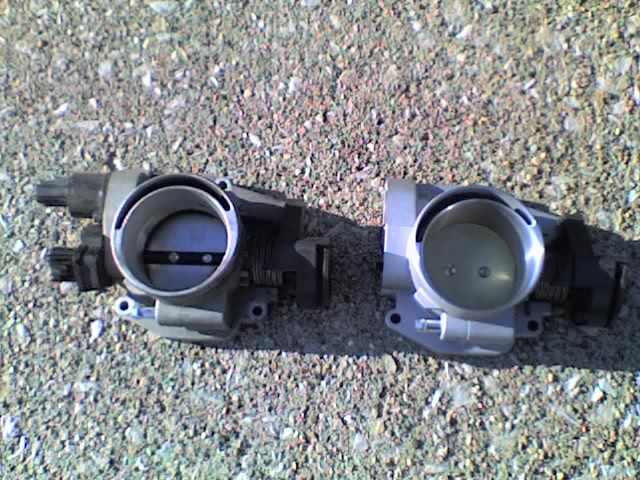
Two automotive throttle bodies side by side (Source: Wikimedia Commons)
Intake Manifold: Distributes the air evenly to each cylinder, ensuring balanced combustion.
Mass Air Flow Sensor (MAF): Measures the volume of air entering the engine, enabling the engine control unit (ECU) to adjust fuel injection precisely.
The intake system must supply air at the right volume and pressure to optimize combustion. Inadequate airflow causes poor engine performance, higher fuel consumption, and increased emissions, which is critical for companies such as SACCOs that manage vehicle fleets and seek cost-effective operations.
The exhaust system removes combustion gases from the engine cylinders and reduces the emission of harmful pollutants. This function is crucial for compliance with Kenya’s environmental regulations enforced by agencies like NEMA, especially for vehicles operating in urban areas such as Nairobi and Mombasa.
A malfunctioning exhaust system leads to increased pollution and poor engine performance, which can cause vehicles at agricultural cooperatives to fail emission tests, risking fines and operational restrictions.
The intake and exhaust systems work in a coordinated manner during the four-stroke combustion cycle: intake, compression, power, and exhaust strokes. Their interaction ensures that fresh air-fuel mixtures enter the cylinders and exhaust gases exit promptly, maintaining engine rhythm and efficiency.
Proper synchronization between intake and exhaust prevents issues such as engine knocking, power loss, and excessive emissions, which is vital for maintaining the operational readiness of vehicles at institutions like county hospitals.
Maintaining the intake-exhaust system is critical to ensuring vehicle reliability, fuel economy, and adherence to environmental regulations. In Kenya’s service sectors, where vehicles support essential functions, neglecting this system can lead to frequent breakdowns and increased operational costs.
Routine inspection and replacement of worn parts in the intake-exhaust system safeguard against unexpected failures, ensuring vehicles remain operational and environmentally responsible.
Create a free account to open more of this chapter.
Free: practical guides, quick cards, workplace scenarios and more.
Create a free accountThis chapter explored the functions of the vehicle intake-exhaust system, highlighting its role in managing air flow and emissions for optimal engine performance. It detailed the main components of the exhaust system, including the catalytic converter, oxygen sensor, muffler, manifold, air filter, tail pipe, turbochargers, and superchargers, explaining their specific purposes in filtering, controlling, and enhancing exhaust gases. Common faults affecting the exhaust system were examined, emphasizing symptoms and causes that impact vehicle efficiency and emissions compliance. The chapter also covered the essential tools, equipment, and materials used in servicing the intake-exhaust system, ensuring proper maintenance procedures. Techniques for diagnosing issues within the system were presented to facilitate accurate identification of problems. Safety measures necessary during intake-exhaust system service were addressed to protect technicians and maintain workplace safety. Instructions for correct installation of system parts were provided to ensure reliable operation and longevity. Finally, the importance of accurate service documentation was underscored as a critical practice for tracking maintenance history and supporting vehicle performance management.
Type: Individual
| Tools & Equipment | Materials |
|---|---|
| Set of combination spanners (8mm to 19mm) | Cleaning cloths |
| Flat and Phillips screwdrivers | Personal protective equipment (overall, safety boots, gloves, goggles) |
| Inspection mirror | |
| Flashlight/torch |
| S/N | Item | Quantity |
|---|---|---|
| 1 | Complete petrol-engine vehicle | 1 Pc per Candidate |
| 2 | Workshop manual for vehicle model | 1 Pc per Candidate |
| 3 | Set of combination spanners (8mm to 19mm) | 1 Set per Candidate |
| 4 | Flat and Phillips screwdrivers | 1 Set per Candidate |
| 5 | Inspection mirror | 1 Pc per Candidate |
| 6 | Flashlight/torch | 1 Pc per Candidate |
| 7 | Cleaning cloths | 200 g per Candidate |
| 8 | Personal protective equipment (overall, safety boots, gloves, goggles) | 1 Set per Candidate |
| Items to be Evaluated | Marks Available | Marks Obtained | Comments |
|---|---|---|---|
| TASK 1: Preparation and PPE | |||
| Wore appropriate personal protective equipment: overall, safety boots, gloves, goggles (Award 1 mark for each PPE worn correctly or zero) | 3 | ||
| Set up the working area by parking the vehicle on a level surface and choked the wheels (Award 2 marks for correct setup or zero) | 2 | ||
| Sub-Total | 5 | ||
| TASK 2: Inspection of Intake System Components | |||
| Identified intake manifold and explained its function (Award 3 marks for correct identification and explanation or zero) | 3 | ||
| Inspected air filter and explained its function (Award 3 marks for correct identification and explanation or zero) | 3 | ||
| Located throttle body and explained its function (Award 3 marks for correct identification and explanation or zero) | 3 | ||
| Sub-Total | 9 | ||
| TASK 3: Inspection of Exhaust System Components | |||
| Identified exhaust manifold and explained its function (Award 3 marks for correct identification and explanation or zero) | 3 | ||
| Located catalytic converter and explained its function (Award 3 marks for correct identification and explanation or zero) | 3 | ||
| Identified muffler and explained its function (Award 3 marks for correct identification and explanation or zero) | 3 | ||
| Sub-Total | 9 | ||
| TASK 4: Demonstration and Explanation | |||
| Demonstrated the airflow path through the intake system components (Award 4 marks for clear and accurate demonstration or zero) | 4 | ||
| Explained the exhaust gases path through exhaust system components (Award 4 marks for clear and accurate explanation or zero) | 4 | ||
| Sub-Total | 8 | ||
| PRODUCT CHECKLIST | |||
| Correct identification and naming of all six key intake and exhaust components (Award 6 marks for all components correctly identified or zero) | 6 | ||
| Accurate explanation of each component’s key function (Award 8 marks for correct and clear functional explanations or zero) | 8 | ||
| Sub-Total | 14 | ||
| GRAND TOTAL | 45 | ||
Type: Individual
| Tools & Equipment | Materials |
|---|---|
| Socket wrench set | Personal protective equipment |
| Adjustable spanner | Cleaning cloths |
| Screwdrivers | |
| Car jack with safety stands | |
| Wire brush | |
| Penetrating oil spray |
| S/N | Item | Quantity |
|---|---|---|
| 1 | Complete vehicle with exhaust system | 1 Pc per Candidate |
| 2 | Socket wrench set (8mm to 19mm) | 1 Set per Candidate |
| 3 | Adjustable spanner | 1 Pc per Candidate |
| 4 | Screwdrivers (flat and Phillips) | 1 Set per Candidate |
| 5 | Car jack with safety stands | 1 Set per 2 Candidates |
| 6 | Wire brush | 1 Pc per Candidate |
| 7 | Penetrating oil spray (e.g. WD-40) | 1 Can per 3 Candidates |
| 8 | Personal protective equipment (overall, gloves, safety boots, goggles, mask) | 1 Set per Candidate |
| 9 | Cleaning cloths | 100g per Candidate |
| Items to be Evaluated | Marks Available | Marks Obtained | Comments |
|---|---|---|---|
| TASK 1: Inspection and Dismantling of Exhaust System | |||
| Wore personal protective equipment (overall, safety boots, gloves, goggles, mask) (Award 1 mark for each worn correctly or zero) | 3 | ||
| Parked the vehicle on a level surface and chocked the wheels (Award 2 marks for correct procedure or zero) | 2 | ||
| Raised the vehicle using car jack and secured with safety stands (Award 2 marks for safe lifting and support or zero) | 2 | ||
| Applied penetrating oil to exhaust fasteners and allowed adequate soaking time (Award 2 marks for correct application or zero) | 2 | ||
| Used appropriate hand tools to loosen and remove clamps, bolts, and hangers securing the muffler and tail pipe (Award 1 mark for each correctly removed fastener or zero) | 4 | ||
| Dismantled muffler and tail pipe carefully without causing damage (Award 3 marks for safe dismantling or zero) | 3 | ||
| Cleaned inspected components using wire brush and cloths to identify defects (Award 2 marks for thorough cleaning or zero) | 2 | ||
| Identified and named major exhaust components (muffler, tail pipe, clamps, hangers) (Award 2 marks for correct identification or zero) | 2 | ||
| Sub-Total | 20 | ||
| PRODUCT CHECKLIST | |||
| Exhaust system components dismantled intact with no damage (Award 5 marks if components intact and clean or zero) | 5 | ||
| All fasteners and clamps removed and accounted for (Award 3 marks if all fasteners removed and presented or zero) | 3 | ||
| Correct identification and labeling of muffler and tail pipe (Award 2 marks for correct labeling or zero) | 2 | ||
| Sub-Total | 10 | ||
| GRAND TOTAL | 30 | ||
At the start of this chapter we promised you would be able to:
Tick each one you can genuinely do.
So, are you there yet?
You're competent when you can confidently do 50% or more of what this chapter promised.
Sign in to record how you're doing.