Performing a feasibility survey for farm structures is a critical initial step in horticultural projects in Kenya. This survey assesses the suitability of the site, environmental conditions, and resource availability to ensure that structures such as greenhouses, irrigation systems, and storage facilities can be effectively and safely constructed. Professionals in horticulture must prioritize safety by using appropriate personal protective equipment (PPE) during surveys, as these activities often involve exposure to physical, chemical, and biological hazards. Understanding the requirements, importance, categories, and care of PPE safeguards workers and enhances the quality and reliability of the feasibility assessment.
1.1 Personal Protective Equipment
Personal Protective Equipment (PPE) is essential for protecting horticulture professionals conducting farm structure feasibility surveys from various occupational hazards. PPE minimizes the risk of injury from sharp tools, chemical exposure, dust, and environmental elements such as sun and rain. In Kenya, adherence to PPE standards is crucial not only for compliance with occupational safety laws but also for maintaining productivity and reducing work-related health issues in agricultural settings.
1.1.1 PPE Requirements
PPE requirements for farm structure feasibility surveys depend on the nature of the tasks and the hazards present at the site. Assessing these requirements ensures that the right equipment is selected to provide effective protection.
Assessment of Hazards
- Physical hazards: Risk of cuts, bruises, or impacts from tools or uneven terrain necessitates gloves, sturdy boots, and helmets.
- Chemical hazards: Handling pesticides or fertilizers during surveys requires chemical-resistant gloves and masks.
- Biological hazards: Exposure to insects or plants causing allergic reactions calls for protective clothing and insect repellents.
- Environmental hazards: Sun exposure and dust require hats, sunglasses, and dust masks.
- Ergonomic hazards: Prolonged bending or lifting demands supportive gear like back braces to prevent musculoskeletal injuries.
Regulatory Compliance
- Kenya’s Occupational Safety and Health Act (OSHA) mandates employers to provide PPE suitable for the hazards encountered.
- PPE must meet standards set by the Kenya Bureau of Standards (KEBS) to ensure quality and effectiveness.
- Employers and workers share responsibility for selecting and using PPE appropriately during feasibility surveys.
Site-Specific Requirements
- Surveys in wet or muddy conditions require waterproof boots and raincoats.
- In areas with high sun intensity, UV-protective clothing and sunscreen are necessary.
- If working near electrical installations for irrigation systems, insulated gloves and boots are mandatory.
Training and Competency
- Survey teams must be trained on identifying hazards and selecting appropriate PPE.
- Proper donning, doffing, and disposal procedures must be understood to maintain PPE effectiveness.
1.1.2 Importance of PPE
The use of PPE during farm structure feasibility surveys is vital for protecting workers and ensuring smooth project execution. Its importance extends beyond individual safety to operational efficiency and legal compliance.
Prevention of Injuries and Illnesses
- PPE reduces the likelihood of cuts, abrasions, and puncture wounds when handling survey tools or navigating rough terrain.
- Respirators and masks protect against inhaling dust, spores, or chemical vapors common in horticultural environments.
- Eye protection prevents injuries from plant debris or chemical splashes during soil and water testing.
Enhancing Worker Confidence and Productivity
- Workers who feel protected are more confident and efficient in performing detailed site assessments.
- Reduced incidence of injuries leads to fewer work interruptions and lower absenteeism.
Compliance with Safety Regulations
- Use of PPE aligns with OSHA requirements, preventing legal penalties for negligence.
- Compliance promotes a safety culture that attracts skilled workers and enhances the reputation of horticultural enterprises.
Environmental Protection
- PPE prevents contamination of workers’ skin and clothing, minimizing the risk of spreading pesticides or pathogens beyond the survey site.
- Proper disposal of used PPE reduces environmental pollution.
Cost Savings
- Preventing accidents reduces medical expenses and compensation claims.
- PPE investment is cost-effective compared to losses from project delays due to injuries.
1.1.3 Categories of PPE
PPE can be categorized based on the type of protection it offers. Understanding these categories helps horticulture professionals select equipment tailored to specific hazards encountered during feasibility surveys.
Head Protection
- Helmets and hard hats protect against falling objects, low-hanging branches, or accidental impacts.
- In some cases, helmets come with face shields to guard against chemical splashes.
Eye and Face Protection
- Safety goggles shield eyes from dust, flying debris, and chemical splashes.
- Face shields provide full-face protection when mixing or applying agrochemicals during site assessments.
Respiratory Protection
- Dust masks or respirators filter airborne particles, spores, and chemical fumes.
- Selection depends on the concentration and type of airborne contaminants.
Hand Protection
- Gloves vary according to hazard: leather gloves for mechanical protection, chemical-resistant gloves for handling pesticides.
- Gloves must fit well to maintain dexterity during precise measurements or sample collection.
Foot Protection
- Safety boots with steel toes protect against heavy objects and provide ankle support on uneven terrain.
- Waterproof boots are essential in wet farm areas to prevent infections.
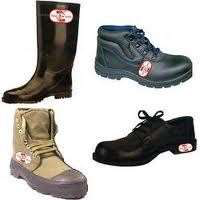
Four types of safety footwear commonly used in construction and engine (Source: PLUMB 5 LEARNING GUIDE-1 (1))
Body Protection
- Protective clothing includes overalls, aprons, and coveralls made from materials resistant to chemicals or physical abrasion.
- High-visibility vests improve safety when working near machinery or roads.
1.1.4 Uses and Care
Proper use and maintenance of PPE maximize its protective function and extend its service life, contributing to safe and cost-effective farm structure surveys.
Correct Use of PPE
- PPE must be worn consistently and correctly throughout the survey; partial use compromises safety.
- Equipment should fit properly to avoid discomfort or impediments to movement.
- Workers must understand the limitations of each PPE type and not rely solely on them when engineering controls are feasible.
Cleaning and Maintenance
- PPE such as gloves, goggles, and boots require regular cleaning to remove contaminants.
- Chemical-resistant gear must be rinsed and dried according to manufacturer instructions to prevent degradation.
- Damaged or worn-out PPE should be repaired or replaced promptly.
Storage
- PPE should be stored in clean, dry, and accessible locations to prevent contamination or damage.
- Exposure to sunlight and extreme temperatures can weaken materials and should be avoided.
Inspection and Replacement
- Regular inspections detect wear, cracks, or defects that reduce PPE effectiveness.
- Replacement schedules depend on usage intensity and manufacturer recommendations.
- Keeping records of PPE issuance and maintenance supports accountability.
Training on PPE Care
- Workers must be trained on cleaning methods and recognizing signs of PPE failure.
- Proper care reduces waste and ensures continuous protection during long survey periods.
Practice Questions
- Explain five hazards encountered during farm structure feasibility surveys that determine the selection of PPE. (10 marks)
- Discuss the importance of PPE in enhancing productivity and legal compliance in horticultural projects. (10 marks)
- Identify and describe five categories of PPE used in horticulture feasibility surveys and their specific protective functions. (15 marks)
- Outline six steps for proper care and maintenance of PPE to ensure its effectiveness during farm surveys. (12 marks)
The rest of this chapter
🔒Create a free account to open more of this chapter.
Free: practical guides, quick cards, workplace scenarios and more.
Create a free account 🔒1.2 Tools, Equipment and Materials
In horticulture farm structure projects, selecting the right tools, equipment, and materials is crucial for efficient construction and long-lasting outcomes. Proper tools enable accurate measurements, effective handling of materials, and quality workmanship. I…
🔒1.3 Conducting Feasibility Survey
Conducting a feasibility survey is a critical step in planning farm structures and road construction within horticultural enterprises in Kenya. This survey assesses the practicality and viability of proposed projects by examining environmental, economic, techn…
🔒1.4 Preparation of Feasibility Study Report
The preparation of the feasibility study report translates the survey data and analysis into a structured document that supports decision-making processes. For horticultural projects in Kenya, such reports must address specific farm needs like irrigation infra…
Chapter Summary
This chapter covered the essential aspects of performing a farm structures feasibility survey. It began with an examination of personal protective equipment, detailing the necessary requirements, the importance of safeguarding workers, the various categories of PPE, and proper usage and maintenance practices. The discussion then shifted to the tools, equipment, and materials vital for the survey process, including the hammer, spirit levels, wheelbarrows, concrete mixers, cement, and ballast, explaining their functions and handling. The core of the chapter focused on the systematic approach to conducting a feasibility survey, emphasizing the collection and analysis of relevant data to assess project viability. Finally, it addressed the preparation of a comprehensive feasibility study report, outlining how to document findings clearly and effectively to support decision-making. Together, these topics provide a thorough framework for evaluating and planning farm structures with safety, accuracy, and professionalism.
Self-Assessment
🔒 PDFDownload this self-assessment, with answers
A. Written Assessment
- What are the primary functions of Personal Protective Equipment (PPE) on a horticultural farm structure site? (3 marks)
- Identify four categories of PPE commonly used during farm structure feasibility surveys. (4 marks)
🔒20 more in this section.
Chapter Examination Questions
🔒 PDFDownload these examination questions, with worked answers
SECTION A (40 Marks) - Answer ALL Questions
- Identify four types of personal protective equipment (PPE) essential for workers conducting a feasibility survey on a horticultural farm. (4 marks)
- Explain why the use of PPE is critical during the construction of farm structures in a flower farm in Naivasha. (4 marks)
🔒18 more in this section.
Chapter Practical Activities
Practical 1: Identification and Correct Use of Personal Protective Equipment for Farm Structure Survey
Horticulture · Level 6
Farm Structures And Road Construction
PRACTICAL ASSESSMENT
TIME: 3 HOURS
⬇ PDFCandidate Instructions (Candidate Tool)
Type: Individual
INSTRUCTIONS TO CANDIDATE:
1. You are required to perform the following task:
i. Identify, select, wear, and demonstrate correct use and maintenance of personal protective equipment for a farm structure feasibility survey.
2. You have been provided with the following resources for the practical task:
| Tools & Equipment | Materials |
|---|
| Measuring tape | Safety helmet |
| Clipboard with survey forms | High visibility vest |
| Pencil and eraser | Protective gloves |
| Cleaning cloth | Safety boots (gumboots) |
| Dust mask |
| Safety goggles |
⬇ PDFResources Required (Cutting List)
| S/N | Item | Quantity |
|---|
| 1 | Safety helmet | 1 Pc per Candidate |
| 2 | High visibility vest | 1 Pc per Candidate |
| 3 | Protective gloves | 1 Pair per Candidate |
| 4 | Safety boots (gumboots) | 1 Pair per Candidate |
| 5 | Dust mask | 1 Pc per Candidate |
| 6 | Safety goggles | 1 Pc per Candidate |
| 7 | Measuring tape | 1 Pc per Candidate |
| 8 | Clipboard with survey forms | 1 Pc per Candidate |
| 9 | Pencil and eraser | 1 Set per Candidate |
| 10 | Cleaning cloth | 1 Pc per Candidate |
⬇ PDFAssessor Guide
| Items to be Evaluated | Marks Available | Marks Obtained | Comments |
|---|
| TASK 1: PPE Identification and Usage |
Identified all required PPE for farm structure survey
(Award 1 mark for each correctly identified PPE or zero) | 3 | | |
Selected appropriate PPE according to task hazards
(Award 3 marks for correct selection or zero) | 3 | | |
Wore PPE correctly following workplace safety procedures
(Award 1 mark each for helmet, vest, gloves, boots, goggles/mask correctly worn) | 5 | | |
Demonstrated correct maintenance of PPE (cleaning, inspection, storage)
(Award 1 mark for each maintenance activity or zero) | 4 | | |
| Sub-Total | 15 | | |
| PRODUCT CHECKLIST |
Correct and complete use of PPE throughout the survey activity
(Award 5 marks for consistent and proper PPE use or zero) | 5 | | |
Demonstrated proper PPE maintenance including cleaning and storage
(Award 5 marks for proper maintenance or zero) | 5 | | |
| Sub-Total | 10 | | |
| GRAND TOTAL | 25 | | |
ASSESSMENT OUTCOME: ☐ Competent ☐ Not Yet Competent (competent if at least 50%)
Practical 2: Use hammer to fix timber frame for farm structure
Horticulture · Level 6
Farm Structures And Road Construction
PRACTICAL ASSESSMENT
TIME: 4 HOURS
⬇ PDFCandidate Instructions (Candidate Tool)
Type: Individual
INSTRUCTIONS TO CANDIDATE:
1. You are required to perform the following task:
i. Assemble and nail a rectangular timber frame 600mm by 400mm using the hammer and nails.
2. You have been provided with the following resources for the practical task:
| Tools & Equipment | Materials |
|---|
| Claw hammer | 3-inch Galvanized nails |
| Measuring tape | Timber pieces 50mm x 100mm x 600mm |
| Marking pencil | |
| Safety gloves | |
| Safety goggles | |
| Dust mask | |
⬇ PDFResources Required (Cutting List)
| S/N | Item | Quantity |
|---|
| 1 | Claw hammer | 1 Pc per Candidate |
| 2 | 3-inch Galvanized nails | 50 Pcs per Candidate |
| 3 | Timber pieces 50mm x 100mm x 600mm | 8 Pcs per Candidate |
| 4 | Measuring tape | 1 Pc per Candidate |
| 5 | Marking pencil | 1 Pc per Candidate |
| 6 | Safety gloves | 1 Pair per Candidate |
| 7 | Safety goggles | 1 Pair per Candidate |
| 8 | Dust mask | 1 Pc per Candidate |
⬇ PDFAssessor Guide
| Items to be Evaluated | Marks Available | Marks Obtained | Comments |
|---|
| TASK 1: PPE and Tool Preparation |
Wore safety gloves, goggles, and dust mask as per workplace safety procedures
(Award 3 marks for correct PPE worn or zero) | 3 | | |
Assembled and identified tools and materials correctly
(Award 2 marks for assembling and identifying all tools/materials or zero) | 2 | | |
| Sub-Total | 5 | | |
| TASK 2: Marking and Measuring Timber |
Measured and marked timber pieces to 600mm length and 400mm width as per drawing
(Award 3 marks for accurate measurement and marking or zero) | 3 | | |
Marked nail positions on timber pieces clearly and evenly spaced
(Award 2 marks for clear, even nail marking or zero) | 2 | | |
| Sub-Total | 5 | | |
| TASK 3: Nailing and Assembly |
Positioned timber pieces correctly to form a rectangular frame 600mm by 400mm
(Award 3 marks for correct timber positioning or zero) | 3 | | |
Hammered 3-inch nails properly without splitting timber; nails driven flush
(Award 5 marks for correct nailing technique or zero) | 5 | | |
Used hammer to strike nails safely and effectively
(Award 2 marks for safe and effective hammer use or zero) | 2 | | |
| Sub-Total | 10 | | |
| TASK 4: Clean-up and Waste Management |
Collected and disposed of waste nails and timber scraps according to NEMA guidelines
(Award 2 marks for proper waste disposal or zero) | 2 | | |
Cleaned and stored tools and equipment properly after completion
(Award 2 marks for cleaning and proper storage or zero) | 2 | | |
| Sub-Total | 4 | | |
| PRODUCT CHECKLIST |
Completed timber frame is rectangular, measures 600mm by 400mm, with nails flush and timber pieces firmly joined
(Award 10 marks for correct dimensions, firm joints, flush nails or zero) | 10 | | |
| Sub-Total | 10 | | |
| GRAND TOTAL | 34 | | |
ASSESSMENT OUTCOME: ☐ Competent ☐ Not Yet Competent (competent if at least 50%)
🔒Use spirit level to set out and level a 3m x 4m farm structure foundationPractical 3
🔒Transport construction materials using a wheelbarrow safelyPractical 4
🔒Operate concrete mixer for 1m³ concrete batch mixingPractical 5
🔒Manual Mixing of Concrete for a 1m³ Farm Structure FoundationPractical 6
🔒Preliminary Site Inspection for Farm Structure FeasibilityPractical 7
🔒Measure and record site dimensions for farm structure feasibility surveyPractical 8
🔒Assess soil and ground conditions for farm structure feasibilityPractical 9
🔒Identify and document site constraints for farm structure constructionPractical 10
🔒Prepare a Feasibility Study Report Layout for Farm StructuresPractical 11
🔒Draw a detailed site plan for farm structure feasibility surveyPractical 12
🔒Calculate Cement and Ballast Quantities for a Farm Storage ShedPractical 13
🔒Demonstrate Safe Handling and Storage of Cement and Ballast on SitePractical 14
