
By the end of this chapter, you will be able to:
These skills will help you handle oil crops efficiently and contribute to a successful and sustainable agricultural business.
Compiled by: Sarah Chebet
Post-harvest practices are critical in the horticulture sector, especially for oil crops such as sunflower, groundnuts, and sesame, which are widely grown across Kenya. Proper handling after harvest ensures the preservation of oil quality, maximizes shelf life, and reduces losses caused by pests, diseases, and poor storage conditions. Given the importance of oil crops in Kenya’s food security and income generation for smallholder farmers, mastering post-harvest techniques is essential for horticulture professionals to enhance value addition and market competitiveness.
Post-harvest practices encompass the range of activities carried out immediately after harvesting oil crops to maintain their quality and prepare them for storage, processing, or sale. These practices are vital in Kenya’s horticultural value chains where infrastructure limitations and climatic conditions often predispose crops to rapid deterioration. Efficient post-harvest management reduces losses, improves oil yield and quality, and increases farmers’ profitability.
Handling and cleaning are the initial steps after harvesting oil seeds and nuts. Their importance lies in removing foreign materials and damaged produce that can affect oil quality and storage longevity. In Kenya, where many smallholder farmers harvest oil crops manually, careful handling reduces mechanical damage that can accelerate spoilage.
Sieving: Pass seeds through sieves of appropriate mesh sizes to separate broken seeds and foreign matter.
Hand Picking: Manually remove stones, twigs, and discolored seeds that may affect oil quality.
Drying is a critical post-harvest practice for oil crops as moisture content directly affects seed storage stability and oil extraction efficiency. In Kenya’s humid regions, failure to reduce moisture adequately results in fungal growth and aflatoxin contamination, especially in groundnuts.
Drying reduces the moisture content to safe levels that inhibit microbial activity and enzymatic degradation. Proper moisture control also prevents seed germination and loss of oil quality during storage.
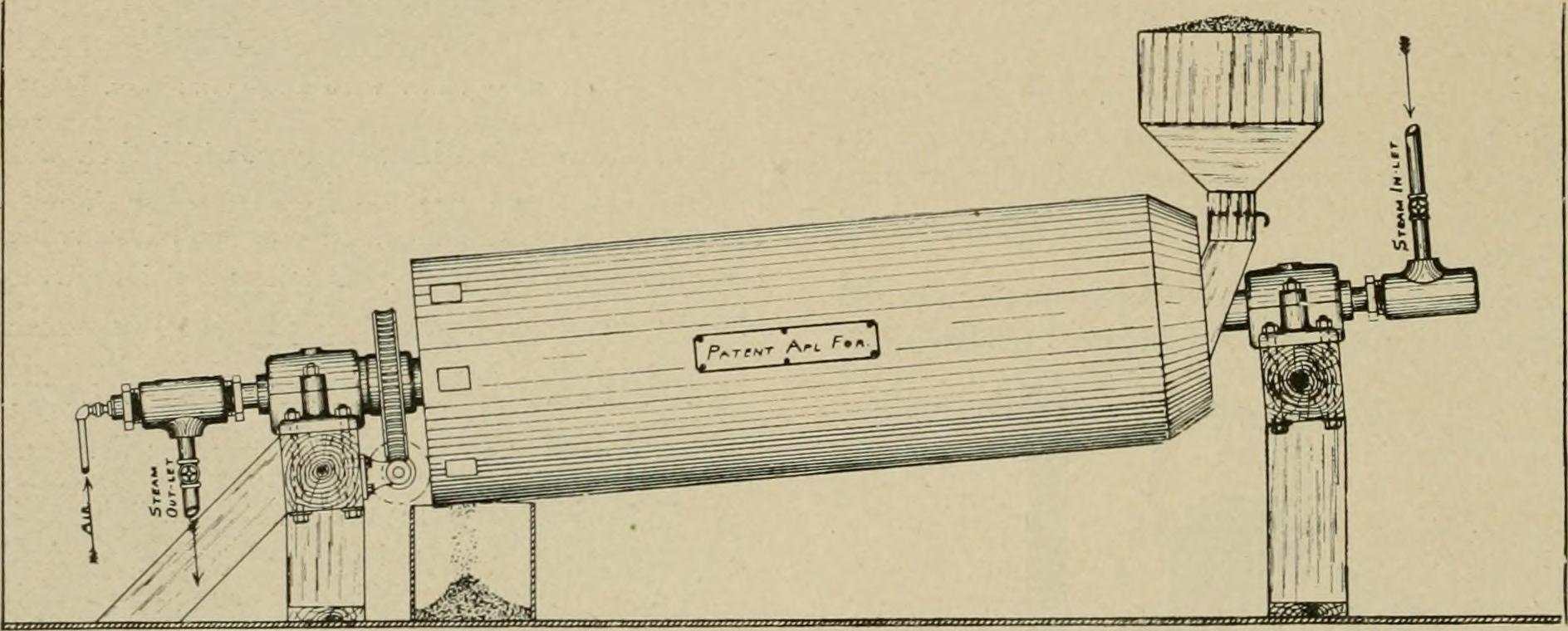
Mechanical dryer for agricultural products (Source: Wikimedia Commons)
Proper storage safeguards the quality and quantity of oil crops post-harvest, protecting them from pests, moisture, and environmental factors. In Kenya, storage challenges such as high humidity and pest infestations are common, requiring integrated management strategies.
Storage conditions directly influence the seed’s oil stability, germination capacity, and market value. Poor storage leads to significant quantitative and qualitative losses, undermining farmers’ incomes.
Post-harvest practices extend to preparing oil crops for processing, which includes shelling, dehulling, and conditioning to enhance oil extraction efficiency and maintain quality. In Kenya, small-scale oil processors rely on proper preparation to produce quality edible oil for local markets.
Maintaining quality during these steps ensures that the final oil product meets safety and nutritional standards, which is critical for consumer acceptance and regulatory compliance.
Explain the importance of drying in the post-harvest handling of oil crops and describe at least four drying methods used in Kenya. (10 marks)
Discuss five critical storage requirements for oil seeds and how they contribute to maintaining oil quality. (10 marks)
Describe the steps involved in handling and cleaning oil crops immediately after harvest and explain why each step is important. (15 marks)
Outline the preparation processes before oil extraction and how they influence the quality of the final oil product. (10 marks)
Create a free account to open more of this chapter.
Free: practical guides, quick cards, workplace scenarios and more.
Create a free accountThis chapter explored the essential post-harvest practices crucial for maintaining the quality and value of oil crops. It detailed specific methods such as cooling, freezing, drying, grading, sorting, packaging, storage, and transportation, each playing a vital role in preserving the crop from harvest to market. The discussion on marketing techniques highlighted modern approaches including online marketing, influencer marketing, and public relations, emphasizing their importance in reaching broader markets. Effective management of waste generated during post-harvest activities was also covered, focusing on sustainable and practical disposal methods. Furthermore, the chapter provided guidance on carrying out post-harvest practices using various appropriate methods to ensure efficiency and quality. Finally, it addressed the management of tools, equipment, and materials required for these practices, underscoring the need for proper handling to support successful oil crop production and marketing.
Type: Individual
| Tools & Equipment | Materials |
|---|---|
| Cooling trays (50 cm x 40 cm) | Freshly harvested sunflower seeds |
| Fan | Clean water |
| Thermometer | Clean cloth |
| Weighing scale | Personal Protective Equipment: Dust coat, Gumboots, Face mask, Gloves |
| Working table |
| S/N | Item | Quantity |
|---|---|---|
| 1 | Freshly harvested sunflower seeds | 2 kg per Candidate |
| 2 | Cooling trays (plastic trays, 50 cm x 40 cm) | 1 pc per Candidate |
| 3 | Fan (electric or manual) | 1 pc per 2 Candidates |
| 4 | Thermometer (digital, range 0-100°C) | 1 pc per Candidate |
| 5 | Weighing scale (capacity 5 kg) | 1 pc per Candidate |
| 6 | Clean water | 5 litres per Candidate |
| 7 | Clean cloth | 1 pc per Candidate |
| 8 | Personal Protective Equipment: Dust coat, Gumboots, Face mask, Gloves | 1 set per Candidate |
| 9 | Working table (1 m x 0.8 m) | 1 per Candidate |
| Items to be Evaluated | Marks Available | Marks Obtained | Comments |
|---|---|---|---|
| TASK 1: COOLING OF HARVESTED SUNFLOWER SEEDS | |||
| Wore all required Personal Protective Equipment (Dust coat, Gumboots, Face mask, Gloves) (Award 0.5 mark each PPE worn correctly or 0) | 2 | ||
| Assembled all required tools and materials before starting the cooling process (Award 2 marks for assembling all items or 0) | 2 | ||
| Cleaned the working table using clean water and cloth (Award 2 marks for thorough cleaning or 0) | 2 | ||
| Weighed exactly 2 kg of freshly harvested sunflower seeds using the weighing scale (Award 3 marks for correct weighing or 0) | 3 | ||
| Spread the seeds evenly on the cooling tray (50 cm x 40 cm) to a uniform thin layer (Award 3 marks for even spreading or 0) | 3 | ||
| Measured and recorded initial seed temperature above 35°C using the thermometer (Award 3 marks for correct measurement or 0) | 3 | ||
| Applied cooling by using the fan to blow air over the seeds for up to 60 minutes (Award 5 marks for proper and continuous cooling or 0) | 5 | ||
| Monitored and recorded seed temperature at 15-minute intervals during cooling (Award 1 mark for each correct interval reading or 0) | 4 | ||
| Ensured seed temperature was reduced to below 25°C within 60 minutes (Award 5 marks for achieving target temperature or 0) | 5 | ||
| Cleaned and stored all tools and materials properly after completion (Award 2 marks for proper cleaning and storage or 0) | 2 | ||
| Disposed of any waste materials as per environmental guidelines (Award 2 marks for correct disposal or 0) | 2 | ||
| Sub-Total | 33 | ||
| PRODUCT CHECKLIST | |||
| Sunflower seeds spread evenly on tray measuring 50 cm x 40 cm (Award 4 marks for correct tray size and evenness or 0) | 4 | ||
| Initial seed temperature recorded above 35°C (Award 3 marks for correct initial temperature or 0) | 3 | ||
| Final seed temperature recorded below 25°C within 60 minutes (Award 5 marks for correct final temperature or 0) | 5 | ||
| Cooling process completed within 60 minutes (Award 3 marks for timely completion or 0) | 3 | ||
| Tools and working area cleaned and waste disposed properly (Award 2 marks for cleanliness and proper waste disposal or 0) | 2 | ||
| Sub-Total | 17 | ||
| GRAND TOTAL | 50 | ||
Type: Individual
| Tools & Equipment | Materials |
|---|---|
| Measuring scale (digital) | Fresh shelled groundnuts |
| Timer or stopwatch | Clean airtight freezer bags |
| Permanent marker pen | Soap solution |
| Clean water | |
| Clean cloth towels | |
| Disposable gloves | |
| Dust coat | |
| Face mask |
| S/N | Item | Quantity |
|---|---|---|
| 1 | Fresh shelled groundnuts | 500 g per Candidate |
| 2 | Freezer unit (capacity 50 liters) | 1 per 5 Candidates |
| 3 | Clean airtight freezer bags (1 liter capacity) | 2 pcs per Candidate |
| 4 | Clean work table | 1 per Candidate |
| 5 | Soap solution (detergent) | 500 ml per Candidate |
| 6 | Clean water | 10 liters per Candidate |
| 7 | Clean cloth towels | 2 pcs per Candidate |
| 8 | Permanent marker pen | 1 pc per Candidate |
| 9 | Disposable gloves | 1 pair per Candidate |
| 10 | Dust coat | 1 pc per Candidate |
| 11 | Face mask | 1 pc per Candidate |
| 12 | Measuring scale (digital) | 1 per 5 Candidates |
| 13 | Timer or stopwatch | 1 per 5 Candidates |
| Items to be Evaluated | Marks Available | Marks Obtained | Comments |
|---|---|---|---|
| TASK 1: PREPARATION AND FREEZING OF OIL CROPS | |||
| Wore all the personal protective equipment (dust coat, face mask, disposable gloves) (Award 1 mark for each PPE correctly worn or 0) | 3 | ||
| Assembled all required tools and materials for freezing procedure (Award 2 marks for assembling all items or 0) | 2 | ||
| Cleaned the working table with soap solution and clean water (Award 2 marks for thorough cleaning or 0) | 2 | ||
| Washed the shelled groundnuts in clean water and drained excess water (Award 4 marks for proper washing and draining or 0) | 4 | ||
| Dried the groundnuts gently using clean cloth towels to remove surface moisture (Award 3 marks for proper drying or 0) | 3 | ||
| Measured and weighed exactly 500 g of groundnuts using a digital scale (Award 3 marks for accurate weighing or 0) | 3 | ||
| Packed the groundnuts into clean airtight freezer bags, leaving appropriate headspace (Award 3 marks for correct packing or 0) | 3 | ||
| Removed air from the bags before sealing to prevent freezer burn (Award 2 marks for effective air removal or 0) | 2 | ||
| Labelled the freezer bags clearly with product name, net weight, and date of packaging (Award 1 mark for each label item correctly written) | 3 | ||
| Placed the packed groundnuts in the freezer unit promptly to initiate freezing (Award 3 marks for timely and proper placement or 0) | 3 | ||
| Set and monitored the freezing time for at least 24 hours using the timer (Award 3 marks for correct timing or 0) | 3 | ||
| Cleaned and stored all tools and materials after completion (Award 2 marks for proper cleaning and storage or 0) | 2 | ||
| Disposed of waste materials according to environmental management guidelines (Award 2 marks for proper disposal or 0) | 2 | ||
| Sub-Total | 35 | ||
| PRODUCT CHECKLIST | |||
| Groundnuts frozen in airtight bags with correct net weight (500 g ± 5 g) (Award 5 marks for correct weight and airtight packaging or 0) | 5 | ||
| Freezing time monitored and maintained for at least 24 hours (Award 5 marks for correct freezing duration or 0) | 5 | ||
| Labels correctly placed with product name, net weight, and date (Award 1 mark for each label item or 0) | 3 | ||
| No visible moisture or ice crystals inside the freezer bags (Award 2 marks for absence of moisture or ice crystals or 0) | 2 | ||
| Groundnuts retain original appearance and are free from contamination (Award 5 marks for good appearance and cleanliness or 0) | 5 | ||
| Sub-Total | 20 | ||
| GRAND TOTAL | 55 | ||
At the start of this chapter we promised you would be able to:
Tick each one you can genuinely do.
So, are you there yet?
You're competent when you can confidently do 50% or more of what this chapter promised.
Sign in to record how you're doing.