Protected environment vegetable production is an advanced horticultural practice that allows Kenyan growers to control climatic factors, improving crop yield and quality throughout the year. With increasing demand for off-season vegetables in urban markets like Nairobi and Mombasa, protected structures such as greenhouses and shade nets have become essential. This chapter explores the types of production structures used in protected environment cultivation and the occupational safety and health measures critical for sustainable and safe operations in Kenyan horticultural enterprises.
1.1 Production Structures Protected
Production structures in protected environment farming provide physical barriers that regulate temperature, humidity, light intensity, and pest ingress, enabling optimal growth conditions for vegetables. Kenyan horticulturists utilize various structures depending on crop requirements, investment capacity, and environmental conditions. Understanding the characteristics and management of these structures is vital for maximizing crop productivity and minimizing losses.
1.1.1 Greenhouse Environment
The greenhouse environment is a fully enclosed structure designed to create a controlled microclimate for vegetable production. It allows for manipulation of temperature, humidity, ventilation, and light, making it possible to grow high-value crops such as tomatoes, peppers, and cucumbers year-round in Kenya. The structure typically consists of a frame covered with transparent materials like polyethylene film or glass.
Structural Components of Greenhouses
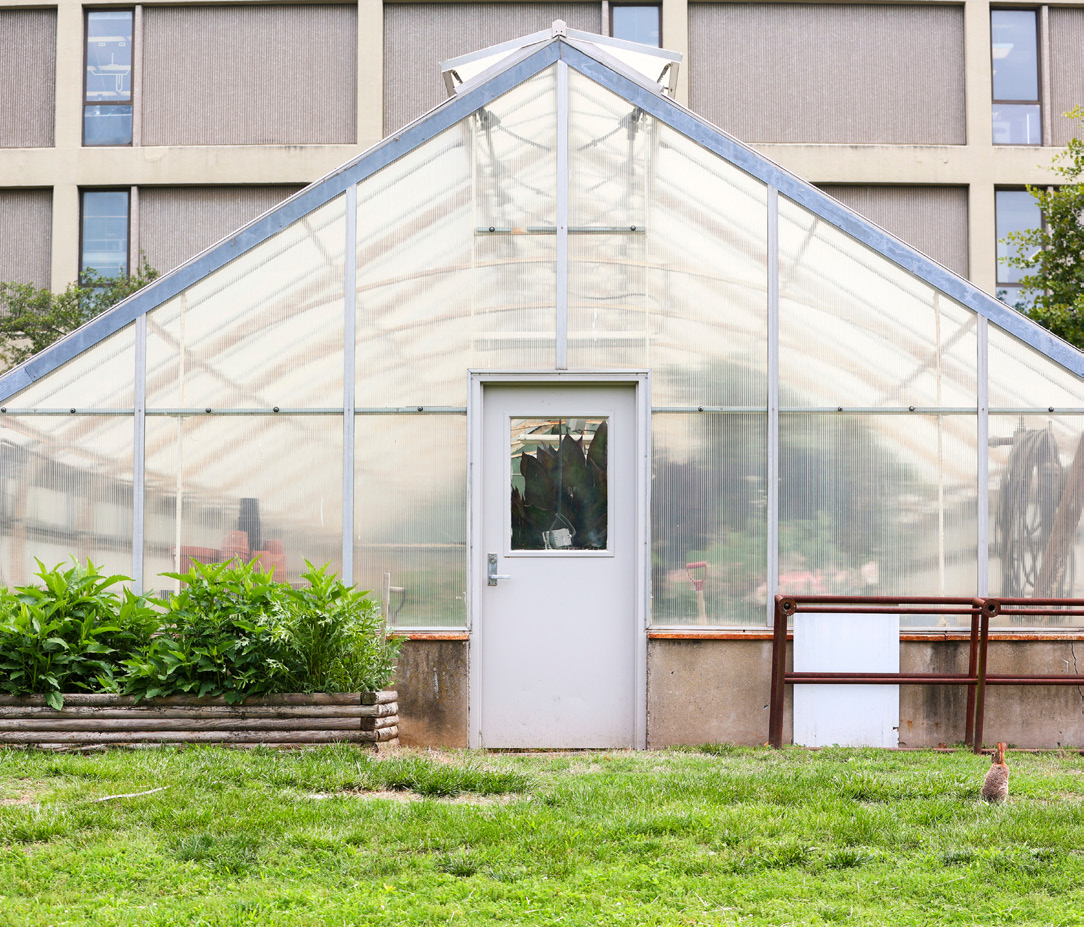
A greenhouse structure (Source: 020e157420c00b60)
- Frame material: Usually steel, aluminum, or treated wood, providing the skeleton for the greenhouse. Steel frames are preferred for durability and resistance to Kenya's varying weather conditions.
- Covering material: Transparent polyethylene sheets are common due to affordability and ease of replacement; glass provides better light transmission but is costly.
-
Ventilation systems: Roof vents, side vents, and exhaust fans regulate airflow to prevent overheating and maintain optimal humidity.
-
Irrigation systems: Drip irrigation is widely used for water efficiency and precise nutrient delivery.
- Environmental control devices: Thermostats, shade nets, and humidifiers help maintain consistent conditions.
Climate Control in Greenhouses
Managing the internal climate is critical for vegetable health and productivity. Kenyan greenhouse operators monitor and adjust:
- Temperature: Ideal daytime temperatures range between 20°C and 28°C to promote photosynthesis without heat stress.
- Humidity: Relative humidity between 60% and 70% reduces disease incidence while supporting transpiration.
- Light intensity: Supplemental lighting may be required during short rainy seasons to maintain photosynthetic rates.
- CO2 concentration: Elevated CO2 can enhance growth but requires monitoring to avoid imbalances.
Benefits of Greenhouse Production
- Extended growing seasons: Enables off-season production to meet market demand.
- Pest and disease control: Physical barriers reduce pesticide use and crop losses.
- Water conservation: Controlled irrigation reduces wastage compared to open field farming.
- Higher yields: Optimized environment promotes vigorous plant growth and fruiting.
- Crop diversification: Permits cultivation of exotic and high-value vegetables not suited to open fields.
Challenges in Greenhouse Management
- High initial investment: Construction and equipment costs can be prohibitive for small-scale farmers.
- Technical expertise: Requires skilled personnel to operate environmental controls effectively.
- Energy costs: Heating and cooling may increase operational expenses during extreme weather.
- Maintenance demands: Regular repairs and cleaning are essential to prevent structural and biological damage.
- Pest outbreaks: If not managed well, enclosed environments can facilitate rapid pest multiplication.
1.1.2 Shed Nets
Shed nets, also called shade nets or net houses, are simpler protective structures used widely in Kenya for vegetable production. These consist of a frame covered with woven or knitted synthetic netting that filters sunlight and provides physical protection against pests and harsh weather.
Types of Shed Nets
- Shade nets: Reduce sunlight intensity by 30% to 70%, protecting crops from heat stress and sunburn.
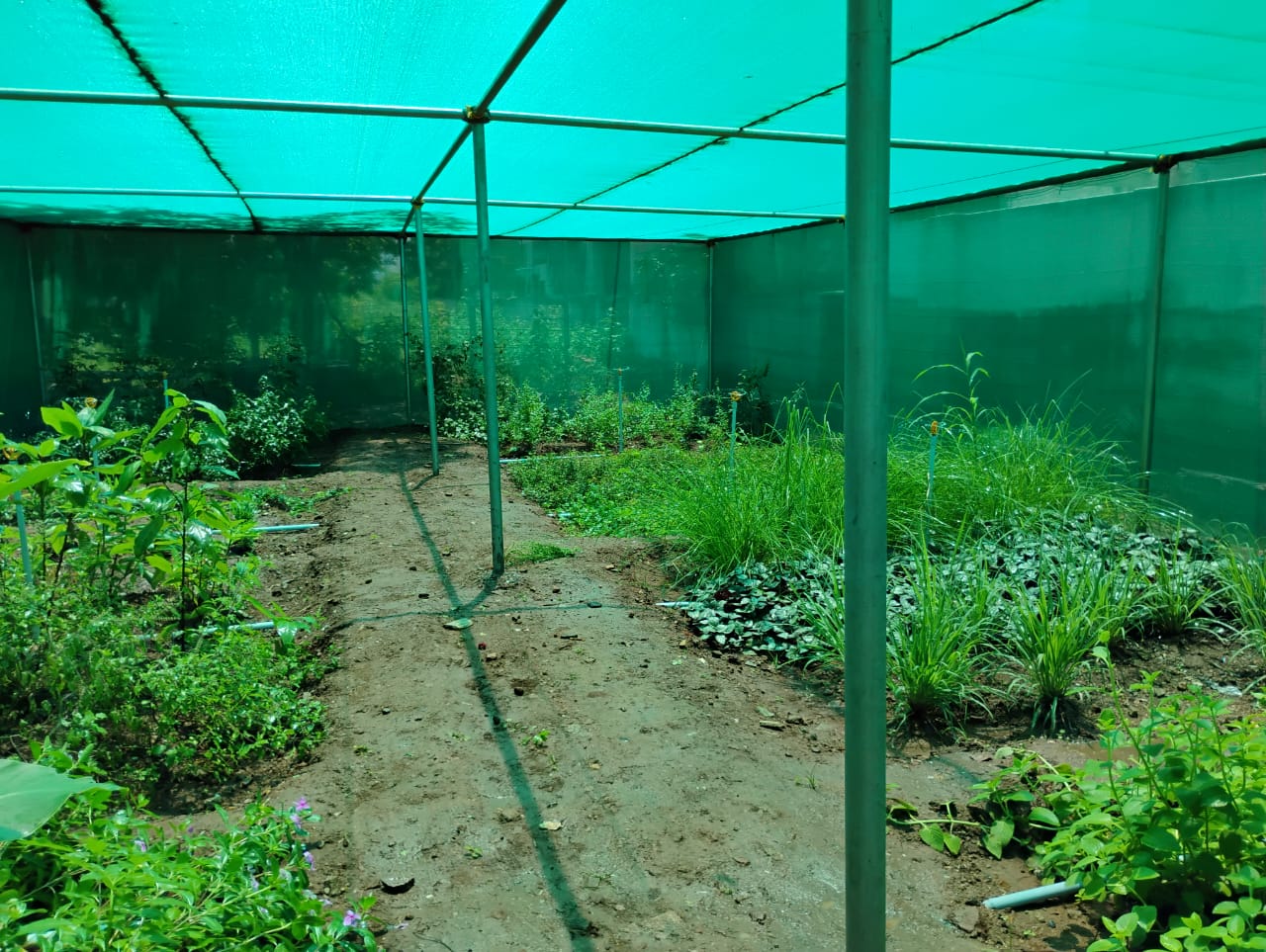
Shade nets covering a garden area (Source: Wikimedia Commons)
- Insect-proof nets: Fine mesh nets that exclude insect pests while allowing air circulation.
- Bird-proof nets: Coarser mesh designed to prevent bird damage to fruits and leaves.
- Anti-hail nets: Protect crops from physical damage caused by hailstorms common in some Kenyan highlands.
- Windbreak nets: Used to reduce wind speed and prevent lodging of tall vegetable crops.
Advantages of Using Shed Nets
- Cost-effectiveness: Lower initial and maintenance costs compared to greenhouses.
- Improved microclimate: Moderates temperature and humidity, enhancing plant growth.
- Pest exclusion: Reduces need for chemical pest control, promoting organic production.
- Versatility: Easily installed over beds, raised platforms or existing structures.
- Lightweight and portable: Allows relocation or seasonal adjustments.
Limitations of Shed Nets
- Limited climate control: Cannot fully regulate temperature or humidity.
- Durability issues: Nets degrade under UV exposure and require periodic replacement.
- Pest penetration risk: Smaller pests and pathogens may still enter through mesh.
- Water management: Rainfall passes through, requiring additional irrigation scheduling.
- Crop selection constraints: Best suited for shade-tolerant and moderately sensitive crops.
Practical Applications in Kenya
Smallholder farmers around Naivasha and Thika use shed nets extensively for leafy vegetables such as spinach, kale, and lettuce. These structures protect crops from midday heat and insect damage, improving marketable yields and reducing pesticide expenses. County governments have also supported shed net adoption through subsidies to boost vegetable production in arid and semi-arid lands.
Practice Questions
- Explain five structural components of a greenhouse and their importance in vegetable production. (10 marks)
- Compare the advantages and limitations of shed nets in Kenyan vegetable farming. (10 marks)
- Discuss how climate control in greenhouses can influence vegetable crop yields. (10 marks)
The rest of this chapter
🔒Create a free account to open more of this chapter.
Free: practical guides, quick cards, workplace scenarios and more.
Create a free account 🔒1.2 Procedures for Occupational Safety and Health
Occupational safety and health (OSH) procedures are essential in protected environment vegetable production to safeguard workers from hazards associated with infrastructure, chemicals, and machinery. Kenyan horticulture enterprises must comply with OSH regulat…
🔒1.3 Planting Materials
In protected environment horticulture, selecting appropriate planting materials is critical for achieving high yields and quality vegetable crops. In Kenya, where climatic conditions can vary widely, the choice and preparation of planting materials influence c…
🔒1.4 Tools, equipment, supplies and materials
In the production of vegetable crops within protected environments in Kenya, the selection and management of tools, equipment, supplies, and materials are crucial for ensuring optimal crop growth and yield. These resources enable horticulturists to create cont…
🔒1.5 Types of Propagation Media
In protected environment vegetable production in Kenya, selecting the right propagation media is crucial to ensure healthy seedling development and crop success. Propagation media serve as the substrate supporting seed germination and young plant growth, provi…
🔒1.6 Propagating Media Preparation
In Kenyan horticultural operations, especially for vegetable crops grown under protected environments such as greenhouses and shade nets, the quality of propagating media plays a crucial role in seedling establishment and overall crop performance. Propagating…
🔒1.7 Potting the Media
Potting the media is a critical step in establishing vegetable crops under protected environments, providing the right physical setting for seed placement or transplanting seedlings. In Kenya, successful potting practices contribute to uniform growth and highe…
🔒1.8 Sowing the Seeds
Sowing seeds in a protected environment is a critical step in vegetable crop production that determines the success of the entire growing cycle. In Kenya, horticulture professionals working in greenhouses, shade nets, or screen houses must adopt precise sowing…
🔒1.9 Nursery Management Practices
Nursery management is a critical phase in vegetable crop production within protected environments in Kenya. It involves creating optimal conditions for seed germination and seedling development before transplanting into greenhouses or tunnels. Proper nursery p…
🔒1.10 Record Keeping
Maintaining accurate and detailed records in protected environment vegetable production is essential for effective management and decision-making. In Kenya, horticulture professionals rely heavily on systematic record keeping to track crop performance, input u…
🔒1.11 Waste Management Practices
Waste management is a critical component of sustainable vegetable production in protected environments. Proper disposal and recycling of plant residues, packaging materials, and agrochemical containers are necessary to minimize environmental pollution and redu…
🔒1.12 Emerging Trends
In Kenya's horticultural sector, the production of vegetable crops within protected environments is evolving rapidly. Driven by climate variability, urbanization, and market demands, horticulturists increasingly adopt innovative technologies and sustainable pr…
Chapter Summary
This chapter explored the various production structures used in protected vegetable crop cultivation, focusing on greenhouse environments and shed nets as key methods. It emphasized the importance of adhering to occupational safety and health procedures to ensure a safe working environment. The discussion then covered the selection and preparation of planting materials, detailing different types and their sources. Identification, sourcing, use, maintenance, and storage of tools, equipment, supplies, and materials were thoroughly examined to support efficient production. Various types of propagation media were introduced, including soil and soilless options such as peatmoss, cocopeat, vermiculite, and rock wool, followed by guidance on preparing and potting these media. The chapter also addressed sowing techniques, highlighting types of seedling trays and best nursery management practices such as weeding, irrigation methods, pricking out, pest and disease control, and hardening off seedlings. The importance of accurate record keeping and effective waste management practices was underscored, concluding with a look at emerging trends in protected environment vegetable production.
Self-Assessment
🔒 PDFDownload this self-assessment, with answers
A. Written Assessment
- What are the primary differences between a greenhouse environment and shed nets in protected vegetable production? (3 marks)
- List five safety procedures essential for occupational safety and health in protected environment horticulture. (5 marks)
🔒20 more in this section.
Chapter Examination Questions
🔒 PDFDownload these examination questions, with worked answers
SECTION A (40 Marks) - Answer ALL Questions
- Describe the main environmental factors controlled within a greenhouse used for vegetable production in Kenya. (4 marks)
- Explain how shed nets contribute to vegetable crop protection in Kenyan horticultural farms. (4 marks)
🔒18 more in this section.
Chapter Practical Activities
Practical 1: Identify and Set Up a Greenhouse Production Structure
Horticulture · Level 6
Production Of Vegetable Crops In Protected Environment
PRACTICAL ASSESSMENT
TIME: 5 HOURS
⬇ PDFCandidate Instructions (Candidate Tool)
Type: Individual
INSTRUCTIONS TO CANDIDATE:
1. You are required to perform the following task:
i. Set up a greenhouse production structure measuring 4m width x 6m length x 2.5m height.
2. You have been provided with the following resources for the practical task:
| Tools & Equipment | Materials |
|---|
| Measuring tape | Wooden posts |
| Hammer | Timber rafters |
| Hand saw | Nails |
| Panga machete | Polythene sheet |
| Insect netting |
| Rope |
⬇ PDFResources Required (Cutting List)
| S/N | Item | Quantity |
|---|
| 1 | Dust coat | 1 Pc per Candidate |
| 2 | Safety boots | 1 Pair per Candidate |
| 3 | Hand gloves | 1 Pair per Candidate |
| 4 | Measuring tape | 1 Pc per Candidate |
| 5 | Hammer | 1 Pc per Candidate |
| 6 | Hand saw | 1 Pc per Candidate |
| 7 | Panga machete | 1 Pc per Candidate |
| 8 | Wooden posts (2.5m length) | 6 Pcs per Candidate |
| 9 | Timber rafters (3.0m length) | 4 Pcs per Candidate |
| 10 | Nails (3 inch) | 1 Box per 5 Candidates |
| 11 | Polythene sheet (4m x 6m) | 1 Pc per Candidate |
| 12 | Insect netting (4m x 6m) | 1 Pc per Candidate |
| 13 | Rope (50 m roll) | 1 Roll per 5 Candidates |
⬇ PDFAssessor Guide
| Items to be Evaluated | Marks Available | Marks Obtained | Comments |
|---|
| TASK 1: Setting up the greenhouse structure |
PPE worn (Dust coat, safety boots, hand gloves, mask)
(Award 1 mark for each PPE item worn correctly) | 4 | | |
Selected and cleared the site accurately according to the 4m x 6m layout
(Award marks for correct site selection and clearing) | 3 | | |
Measured and marked positions for wooden posts at correct intervals
(Award marks for accurate measuring and marking) | 4 | | |
Prepared holes for wooden posts to a depth of at least 0.6m
(Award marks for correct hole depth and preparation) | 3 | | |
Erected and secured wooden posts vertically (plumb) at correct positions
(Award marks for correct erection and plumbness) | 5 | | |
Fixed timber rafters horizontally across posts at 2.5m height using nails
(Award marks for proper fixing and alignment) | 5 | | |
Covered the frame with polythene sheet tightly on roof and sides
(Award marks for neat and secure covering) | 6 | | |
Installed insect netting on two sides ensuring tight fitting
(Award marks for proper netting installation) | 4 | | |
Leveled the ground inside the greenhouse structure
(Award marks for proper leveling) | 3 | | |
Cleared working area and stored tools properly after completion
(Award marks for proper cleanup and tool storage) | 3 | | |
| Sub-Total | 40 | | |
| PRODUCT CHECKLIST |
Greenhouse structure dimensions verified at 4m width x 6m length x 2.5m height ± 50mm tolerance
(Award marks for meeting specified dimensions within tolerance) | 6 | | |
Posts erected plumb and firmly fixed (no wobble)
(Award marks for vertical alignment and stability) | 4 | | |
Timber rafters fixed at correct height and evenly spaced
(Award marks for correct height and spacing) | 4 | | |
Polythene sheet and insect netting installed tautly without tears or sagging
(Award marks for neat and secure covering) | 6 | | |
Ground inside greenhouse leveled evenly
(Award marks for proper leveling) | 4 | | |
| Sub-Total | 24 | | |
| GRAND TOTAL | 64 | | |
ASSESSMENT OUTCOME: ☐ Competent ☐ Not Yet Competent (competent if at least 50%)
Practical 2: Implement Occupational Safety and Health Procedures in a Protected Environment
Horticulture · Level 6
Production Of Vegetable Crops In Protected Environment
PRACTICAL ASSESSMENT
TIME: 4 HOURS
⬇ PDFCandidate Instructions (Candidate Tool)
Type: Individual
INSTRUCTIONS TO CANDIDATE:
1. You are required to perform the following task:
i. Demonstrate correct occupational safety and health procedures in a protected environment during vegetable crop production preparation.
2. You have been provided with the following resources for the practical task:
| Tools & Equipment | Materials |
|---|
| Dust coat | Safety instruction manual |
| Safety boots | Waste disposal bags |
| Hand gloves | |
| Face mask | |
| Fire extinguisher | |
| First aid kit | |
| Warning signs | |
| Broom and dustpan | |
| Spray bottle with disinfectant | |
⬇ PDFResources Required (Cutting List)
| S/N | Item | Quantity |
|---|
| 1 | Dust coat | 1 Pc per Candidate |
| 2 | Safety boots | 1 Pair per Candidate |
| 3 | Hand gloves | 1 Pair per Candidate |
| 4 | Face mask | 1 Pc per Candidate |
| 5 | Fire extinguisher (dry powder type) | 1 Pc per 5 Candidates |
| 6 | First aid kit | 1 Pc per 5 Candidates |
| 7 | Warning signs (e.g. 'No Smoking', 'Wear PPE') | 2 Pcs per Candidate |
| 8 | Safety instruction manual | 1 Pc per Candidate |
| 9 | Broom and dustpan | 1 Set per Candidate |
| 10 | Waste disposal bags | 3 Bags per Candidate |
| 11 | Spray bottle with disinfectant | 1 Pc per Candidate |
⬇ PDFAssessor Guide
| Items to be Evaluated | Marks Available | Marks Obtained | Comments |
|---|
| TASK 1: Demonstrate proper use of Personal Protective Equipment (PPE) |
Wears dust coat correctly
(Award 1 mark if worn properly, zero if not) | 1 | | |
Wears safety boots correctly
(Award 1 mark if worn properly, zero if not) | 1 | | |
Wears hand gloves correctly
(Award 1 mark if worn properly, zero if not) | 1 | | |
Wears face mask correctly
(Award 1 mark if worn properly, zero if not) | 1 | | |
| Sub-Total | 4 | | |
| TASK 2: Prepare and organize the protected environment safely |
Displays warning signs correctly at entry points
(Award 1 mark if signs are visible and correctly placed) | 1 | | |
Inspects and places fire extinguisher accessibly
(Award 1 mark if extinguisher is accessible and checked) | 1 | | |
Checks and prepares first aid kit
(Award 1 mark if first aid kit is complete and accessible) | 1 | | |
Cleans working area using broom and dustpan
(Award 1 mark if area is clean and tidy) | 1 | | |
Disinfects surfaces using spray bottle with disinfectant
(Award 1 mark if disinfection is done properly) | 1 | | |
Properly disposes of waste into disposal bags
(Award 1 mark if waste is collected and disposed correctly) | 1 | | |
| Sub-Total | 6 | | |
| TASK 3: Follow safety procedures during work |
Demonstrates safe handling of tools and materials
(Award 1 mark for correct handling and storage) | 1 | | |
Maintains clear and safe walkways
(Award 1 mark if walkways are unobstructed and safe) | 1 | | |
Follows safety instruction manual guidelines
(Award 1 mark if candidate refers to and follows instructions) | 1 | | |
| Sub-Total | 3 | | |
| PRODUCT CHECKLIST |
Protected environment prepared with all safety measures in place and no hazards visible
(Award up to 5 marks based on completeness and safety compliance) | 5 | | |
| Sub-Total | 5 | | |
| GRAND TOTAL | 18 | | |
ASSESSMENT OUTCOME: ☐ Competent ☐ Not Yet Competent (competent if at least 50%)
🔒Select and prepare planting materials for protected environment vegetable crop propagationPractical 3
🔒Identify, source, use, maintain and store tools and equipment for protected environment vegetable productionPractical 4
🔒Prepare different types of propagation media for plantingPractical 5
🔒Potting and sowing seeds in prepared propagation mediaPractical 6
🔒Select and Use Appropriate Seedling Trays for Vegetable PropagationPractical 7
🔒Perform nursery management practices including weeding, watering, and pricking out seedlingsPractical 8
🔒Control pests and diseases in a protected vegetable nurseryPractical 9
🔒Harden off vegetable seedlings in a protected environmentPractical 10
🔒Maintain accurate records of nursery activities for tomato seedlings in a protected environmentPractical 11
🔒Implement Waste Management Practices in a NurseryPractical 12
🔒Identify and Explain Emerging Trends in Protected Environment Vegetable Crop ProductionPractical 13
🔒Set up drip irrigation system for protected environment vegetable nursery bedPractical 14
🔒Layout and marking out of a greenhouse structurePractical 15
