Horticulture professionals operating in Kenya’s open environment face numerous challenges and opportunities when growing vegetable crops. Mastery of occupational safety and health procedures is essential to protect workers from hazards common in the field. Equally important is the correct identification, sourcing, use, maintenance, and storage of tools, equipment, supplies, and materials that ensure efficient and sustainable vegetable production. This chapter equips horticulturists with practical knowledge to optimize productivity while safeguarding health and resources.
3.1 Procedures for Occupational Safety and Health
Occupational safety and health (OSH) in vegetable production is critical to prevent injuries, illnesses, and fatalities in the workplace. In Kenya, adherence to OSH protocols aligns with the Occupational Safety and Health Act (OSHA) 2007, which mandates employers to provide safe working conditions. Vegetable farms, being open and exposed to physical, chemical, and biological hazards, require stringent safety procedures to protect workers, especially those using agrochemicals or operating machinery. Implementing comprehensive OSH procedures not only ensures compliance but also enhances worker morale and productivity.
3.1.1 Identification of Occupational Hazards in Vegetable Production
Identifying hazards in vegetable farming involves recognizing all potential sources of harm that workers might encounter. Kenyan vegetable farms typically expose workers to hazards such as:
- Physical hazards: These include sharp tools like knives and machetes, machinery such as tillers, and uneven terrain that can cause slips or falls.
- Chemical hazards: Exposure to pesticides, herbicides, and fertilizers can cause skin irritation, respiratory problems, or poisoning if mishandled.
- Biological hazards: Contact with soil-borne pathogens, insect bites, or zoonotic diseases from farm animals can threaten health.
- Ergonomic hazards: Repetitive motions such as planting, weeding, or harvesting can lead to musculoskeletal disorders.
- Environmental hazards: Extreme weather conditions like intense sun, heavy rains, or cold can affect worker safety and productivity.
Recognizing these hazards is the first step in developing targeted risk mitigation strategies.
3.1.2 Risk Assessment and Control Measures
Risk assessment involves evaluating the likelihood and severity of harm from identified hazards and then implementing control measures to reduce risks. In Kenyan vegetable farms, this process includes:
- Hazard identification: Documenting all potential risks present on the farm.
- Risk analysis: Determining how often and how severe an incident could be.
- Risk evaluation: Prioritizing hazards based on their impact.
- Control implementation: Applying appropriate measures such as engineering controls (e.g., guards on machinery), administrative controls (e.g., work rotation), and personal protective equipment (PPE).
- Monitoring and review: Continuously checking the effectiveness of controls and updating them as necessary.
3.1.3 Personal Protective Equipment (PPE) and Its Proper Use
Personal protective equipment is essential to minimize exposure to hazards during vegetable production. Common PPE in the Kenyan horticulture sector includes gloves, masks, boots, overalls, and eye protection.

clear safety glasses for eye protection (Source: Wikimedia Commons)
Proper use requires correct selection based on the task, ensuring a good fit, regular cleaning, and timely replacement. Training workers on PPE use is vital; for example, a SACCO farming group in Kisumu improved harvest quality and reduced skin ailments after implementing PPE training.
3.1.4 Emergency Procedures and First Aid in Vegetable Farms
Effective emergency preparedness and first aid response are crucial for minimizing the impact of accidents and illnesses on vegetable farms. Kenyan farms should establish clear protocols including:
- Emergency communication: Designating responsible persons and communication channels for rapid response.
- First aid kits: Stocking kits with essentials such as bandages, antiseptics, eye wash solutions, and burn creams.
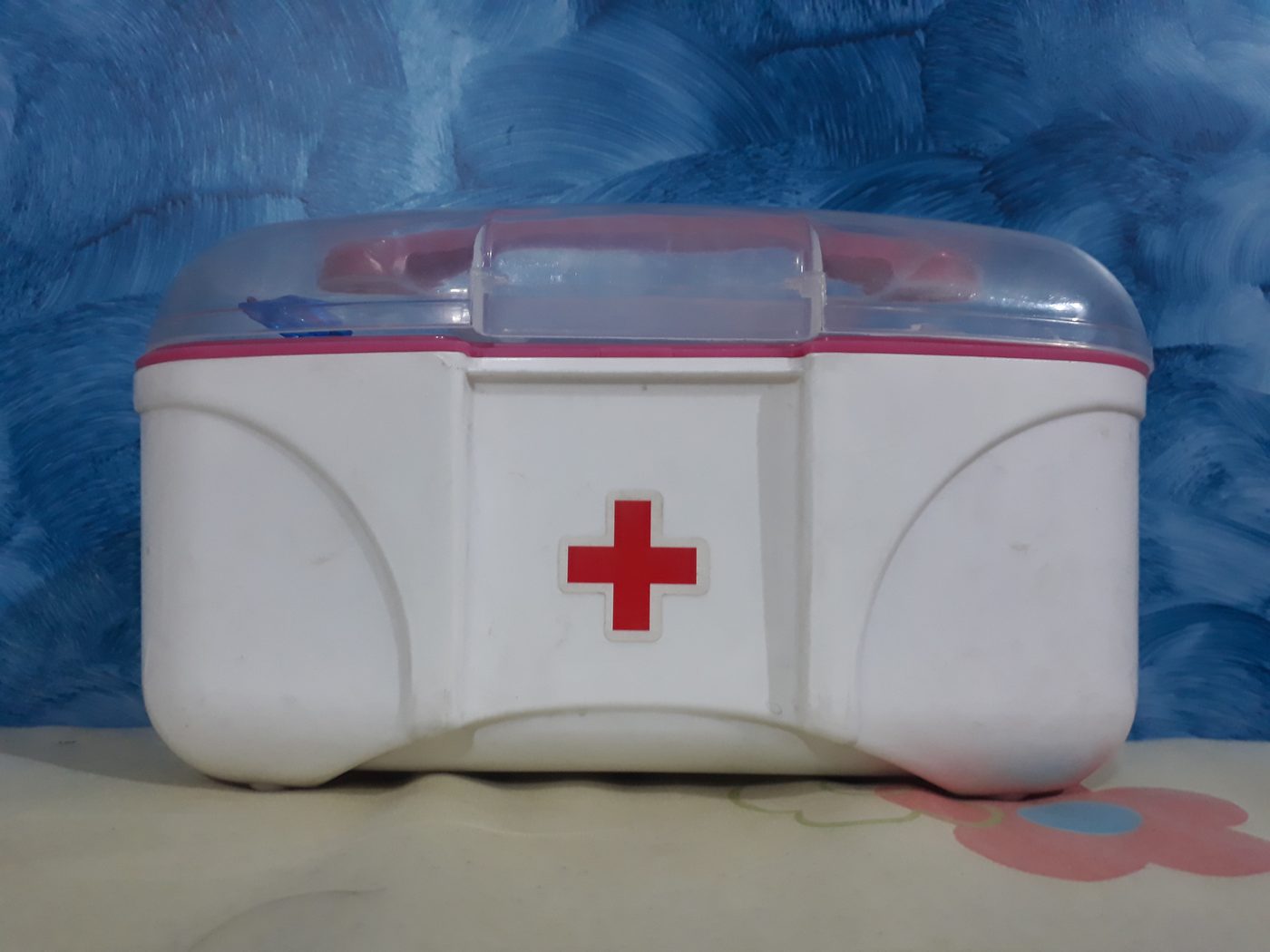
Plastic first aid kit box with red cross (Source: Wikimedia Commons)
- Training: Ensuring workers know how to administer basic first aid and respond to common emergencies like pesticide poisoning or injuries.
- Evacuation plans: Preparing routes and procedures for quick evacuation in case of fire or severe injury.
- Reporting: Documenting incidents to improve future safety measures.
Practice Questions
- Explain five common occupational hazards found in vegetable production and describe how each can affect workers. (10 marks)
- Outline the steps involved in conducting a risk assessment on a vegetable farm. (12 marks)
- Discuss the importance of personal protective equipment in vegetable farming and list five types commonly used. (10 marks)
- Describe the essential components of an effective emergency procedure plan for a vegetable farm. (8 marks)
The rest of this chapter
🔒Create a free account to open more of this chapter.
Free: practical guides, quick cards, workplace scenarios and more.
Create a free account 🔒3.2 Tools, Equipment, Supplies and Materials
Vegetable production depends heavily on appropriate tools, equipment, supplies, and materials to ensure efficiency and quality. Kenyan horticulture professionals must be skilled in identifying the right implements, sourcing them cost-effectively, using them sa…
🔒3.3 Planting/Transplanting Procedure
Planting and transplanting are critical operations in vegetable crop production that influence crop establishment, growth, and yield. In Kenya's open-field horticulture, careful attention to these procedures ensures optimal plant survival and maximizes product…
🔒3.4 Field Agronomic Practices
Field agronomic practices are critical for optimizing vegetable crop production in Kenya’s open environments. These practices influence plant health, yield, and quality by managing the growing conditions effectively. In Kenyan horticulture, where climatic vari…
🔒3.5 Weeding
In vegetable crop production within Kenya's open environments, weeding is an essential cultural practice that directly influences crop health, yield, and quality. The tropical climate and fertile soils in regions such as Central Kenya and Rift Valley favour ra…
🔒3.6 Crop Protection
Crop protection is a critical aspect of vegetable crop production in Kenya's open environments, where pests and diseases significantly reduce yield and quality. Effective crop protection safeguards farmers’ investments, ensures food security, and supports the…
🔒3.7 Crop Nutrition
Crop nutrition is fundamental to vegetable production in Kenya’s open field environments, where soil fertility often limits yield potential. Understanding how to supply essential nutrients through fertilizers enables horticulturists to optimize growth, improve…
🔒3.8 Food Safety Measures
In Kenya's horticultural sector, ensuring food safety in vegetable production is vital to protect consumer health and maintain market access both locally and internationally. Open environment cultivation exposes crops to various hazards including microbial con…
🔒3.9 Record Keeping
Effective record keeping is an integral part of vegetable crop production, supporting farm management, food safety compliance, and decision-making. For Kenyan horticulture professionals, maintaining accurate and timely records facilitates traceability, cost co…
🔒3.10 Wastes management practices
In vegetable crop production under open environments in Kenya, effective waste management is critical to sustaining soil health, protecting the environment, and ensuring compliance with environmental regulations such as those enforced by NEMA. Agricultural act…
Chapter Summary
This chapter covers the essential procedures for occupational safety and health that ensure a safe working environment during vegetable crop production. It details the identification, sourcing, use, maintenance, and storage of tools, equipment, supplies, and materials necessary for efficient farming operations. The chapter explains the proper planting and transplanting procedures that support strong crop establishment. It further explores critical field agronomic practices such as spacing, watering, gapping, thinning, mulching-pruning, training, crop rotation, and intercropping, which collectively enhance crop growth and yield. Weeding is addressed with emphasis on its importance and the various methods employed to control unwanted plants. Crop protection is examined through the identification of pests and diseases, control methods, integrated pest and disease management, and the efficient use of crop protection products. Nutritional needs of crops are discussed by outlining types of fertilizers, application methods, and strategies for efficient fertilizer use. The chapter concludes with food safety measures, the importance of accurate record keeping, and waste management practices including the principles of reduce, reuse, and recycle.
Self-Assessment
🔒 PDFDownload this self-assessment, with answers
A. Written Assessment
- What is the importance of wearing personal protective equipment (PPE) when applying crop protection products? (2 marks)
- Identify five common tools used in vegetable crop production and briefly describe their primary use. (5 marks)
🔒20 more in this section.
Chapter Examination Questions
🔒 PDFDownload these examination questions, with worked answers
SECTION A (40 Marks) - Answer ALL Questions
- Outline four key procedures for occupational safety and health that a horticulture worker must follow when growing vegetable crops in an open environment. (4 marks)
- Identify five common tools and equipment used in vegetable crop production and briefly state their primary use. (4 marks)
🔒18 more in this section.
Chapter Practical Activities
Practical 1: Identify and source tools and materials for open environment vegetable crop production
Horticulture · Level 6
Production Of Vegetable Crops In Open Environment
PRACTICAL ASSESSMENT
TIME: 4 HOURS
⬇ PDFCandidate Instructions (Candidate Tool)
Type: Individual
INSTRUCTIONS TO CANDIDATE:
1. You are required to perform the following task:
i. Identify and source all necessary tools, equipment, and materials required to prepare and plant a 2m x 3m open environment vegetable crop bed as per crop production guidelines.
2. You have been provided with the following resources for the practical task:
| Tools & Equipment | Materials |
|---|
| Hand hoe | Peat moss or farmyard manure |
| Rake | DAP fertilizer |
| Garden fork (Jembe) | Protective gloves |
| Watering can (10 Litres capacity) | Dust coat |
| Measuring tape (5 m) | Gumboots |
| Sisal garden line (20 m) | Face mask |
| Pegging stakes | Hair net |
⬇ PDFResources Required (Cutting List)
| S/N | Item | Quantity |
|---|
| 1 | Hand hoe | 1 Pc per Candidate |
| 2 | Rake | 1 Pc per Candidate |
| 3 | Garden fork (Jembe) | 1 Pc per Candidate |
| 4 | Watering can (10 Litres capacity) | 1 Pc per Candidate |
| 5 | Measuring tape (5 m) | 1 Pc per Candidate |
| 6 | Sisal garden line (20 m) | 1 Roll per 5 Candidates |
| 7 | Peat moss or farmyard manure (10 kg) | 10 kg per Candidate |
| 8 | DAP fertilizer (2 kg) | 2 kg per Candidate |
| 9 | Pegging stakes | 4 Pcs per Candidate |
| 10 | Protective gloves | 1 Pair per Candidate |
| 11 | Dust coat | 1 Pc per Candidate |
| 12 | Gumboots | 1 Pair per Candidate |
| 13 | Face mask | 1 Pc per Candidate |
| 14 | Hair net | 1 Pc per Candidate |
⬇ PDFAssessor Guide
| Items to be Evaluated | Marks Available | Marks Obtained | Comments |
|---|
| TASK 1: Identification and Sourcing of Tools and Materials |
Wore all appropriate PPEs correctly (dust coat, gumboots, gloves, face mask, hair net)
(Award 1 mark for each PPE worn correctly or zero) | 5 | | |
Identified all required tools according to crop production manual
(Award 3 marks if all tools identified correctly or zero) | 3 | | |
Identified all required materials and supplies according to crop production manual
(Award 3 marks if all materials identified correctly or zero) | 3 | | |
Sourced tools and materials correctly from the store or supplier
(Award 3 marks if tools and materials sourced properly or zero) | 3 | | |
Assembled all tools and materials ready for use
(Award 2 marks if assembly is complete and orderly or zero) | 2 | | |
| Sub-Total | 16 | | |
| PRODUCT CHECKLIST |
Complete and correct set of tools and materials assembled matching the cutting list
(Award 4 marks if all tools and materials match cutting list exactly or zero) | 4 | | |
| Sub-Total | 4 | | |
| GRAND TOTAL | 20 | | |
ASSESSMENT OUTCOME: ☐ Competent ☐ Not Yet Competent (competent if at least 50%)
Practical 2: Use, Maintenance and Storage of Tools for Vegetable Crop Production
Horticulture · Level 6
Production Of Vegetable Crops In Open Environment
PRACTICAL ASSESSMENT
TIME: 4 HOURS
⬇ PDFCandidate Instructions (Candidate Tool)
Type: Individual
INSTRUCTIONS TO CANDIDATE:
1. You are required to perform the following task:
i. Demonstrate proper use, cleaning, maintenance, and storage of hand hoe, garden fork, and pruning shears used in vegetable crop production.
2. You have been provided with the following resources for the practical task:
| Tools & Equipment | Materials |
|---|
| Hand hoe | Lubricating oil (100 ml bottle) |
| Garden fork | Clean cloth |
| Pruning shears | Soap bar |
| Wire brush | |
| Water hose with nozzle | |
| Water bucket | |
| Storage rack for tools | |
⬇ PDFResources Required (Cutting List)
| S/N | Item | Quantity |
|---|
| 1 | Hand hoe | 1 Pc per Candidate |
| 2 | Garden fork | 1 Pc per Candidate |
| 3 | Pruning shears | 1 Pc per Candidate |
| 4 | Water hose with nozzle | 1 Pc per Candidate |
| 5 | Wire brush | 1 Pc per Candidate |
| 6 | Clean cloth | 2 Pcs per Candidate |
| 7 | Lubricating oil (100 ml bottle) | 1 Bottle per Candidate |
| 8 | Water bucket | 1 Pc per Candidate |
| 9 | Soap bar | 1 Pc per Candidate |
| 10 | Storage rack for tools | 1 Pc per Candidate |
| 11 | Dust coat | 1 Pc per Candidate |
| 12 | Gumboots | 1 Pair per Candidate |
| 13 | Gloves | 1 Pair per Candidate |
| 14 | Face mask | 1 Pc per Candidate |
| 15 | Hair net | 1 Pc per Candidate |
⬇ PDFAssessor Guide
| Items to be Evaluated | Marks Available | Marks Obtained | Comments |
|---|
| TASK 1: PPE and Tool Assembly |
Wore PPE correctly including dust coat, gumboots, gloves, face mask, and hair net
(Award 1 mark for each PPE worn correctly or zero) | 5 | | |
Assembled all tools and materials as per workplace procedure
(Award 2 marks for correct assembly or zero) | 2 | | |
| Sub-Total | 7 | | |
| TASK 2: Tool Use and Cleaning |
Demonstrated correct use of hand hoe, garden fork, and pruning shears for vegetable crop production tasks
(Award 2 marks for each tool used properly or zero) | 6 | | |
Cleaned tools using water, soap, wire brush and cloth after use
(Award 4 marks for thorough cleaning or zero) | 4 | | |
| Sub-Total | 10 | | |
| TASK 3: Tool Maintenance and Storage |
Applied lubricating oil to pruning shears and moving parts of tools
(Award 3 marks for proper lubrication or zero) | 3 | | |
Stored tools correctly on storage rack in designated positions
(Award 3 marks for proper storage or zero) | 3 | | |
| Sub-Total | 6 | | |
| PRODUCT CHECKLIST |
All tools are clean, lubricated, functional, and stored properly on the rack
(Award 7 marks for fully meeting all product criteria or zero) | 7 | | |
| Sub-Total | 7 | | |
| GRAND TOTAL | 30 | | |
ASSESSMENT OUTCOME: ☐ Competent ☐ Not Yet Competent (competent if at least 50%)
🔒Apply Occupational Safety and Health Procedures during Vegetable Crop ProductionPractical 3
🔒Plant and transplant tomato seedlings at recommended spacingPractical 4
🔒Carry out gapping and thinning of a vegetable crop bed 2m x 1mPractical 5
🔒Apply mulching, pruning and training techniques on tomato cropPractical 6
🔒Implement Crop Rotation and Intercropping on a 10m x 5m Vegetable PlotPractical 7
🔒Weeding of Vegetable Crop Plot and Explanation of Its ImportancePractical 8
🔒Identify common pests and diseases on vegetable crops and demonstrate control methodsPractical 9
🔒Apply integrated pest and disease management on a 3m x 2m vegetable plotPractical 10
🔒Apply fertilizer to a 3m x 4m vegetable crop plotPractical 11
🔒Implement Food Safety Measures in Tomato Crop ProductionPractical 12
🔒Record Keeping for Vegetable Crop Production ActivitiesPractical 13
🔒Manage vegetable crop production wastes using 3Rs principlesPractical 14
