
Compiled by: David Sang
Managing a sub-tropical fruits orchard requires knowledge of specialized equipment and tools that support efficient orchard operations in Kenya’s diverse climatic zones. Proper selection, use, and maintenance of orchard machinery and hand tools are essential for maximizing productivity and ensuring sustainable fruit production. This chapter focuses on the key equipment and tools used in routine management of sub-tropical fruit orchards, emphasizing their specifications, functions, and best practices for use in Kenyan horticultural contexts.
Effective orchard management depends heavily on having the right equipment and tools to carry out tasks such as soil preparation, planting-pruning, pest control, irrigation, and harvesting. In Kenya, sub-tropical fruits like avocados, mangoes, guavas, and passion fruits require specific implements tailored to their growing conditions. The choice of machinery and hand tools impacts labour efficiency, fruit quality, and operational costs.
Orchard machinery refers to motorized and mechanized equipment designed to perform large-scale or repetitive tasks in fruit production. In sub-tropical orchards, these machines reduce manual labour and improve the timeliness of operations, which is critical given the sensitivity of fruit trees to environmental stresses.
| Name | Specification | Use |
|---|---|---|
| Rotary tiller | 8-12 HP, adjustable depth, 4-stroke engine | Soil cultivation and preparation before planting |
| Backpack sprayer | 15-20 litre capacity, adjustable nozzle | Applying pesticides, fungicides, and foliar feeds |
| Water pump (electric or petrol) | 1-3 HP, flow rate 2000-4000 L/hr | Irrigation water delivery to drip or sprinkler systems |
| Pruning saw (motorized) | 12-16 inch blade, petrol engine | Cutting thick branches during pruning |
| Mulching machine | 5-8 HP, chipper attachment | Processing pruning waste into mulch |
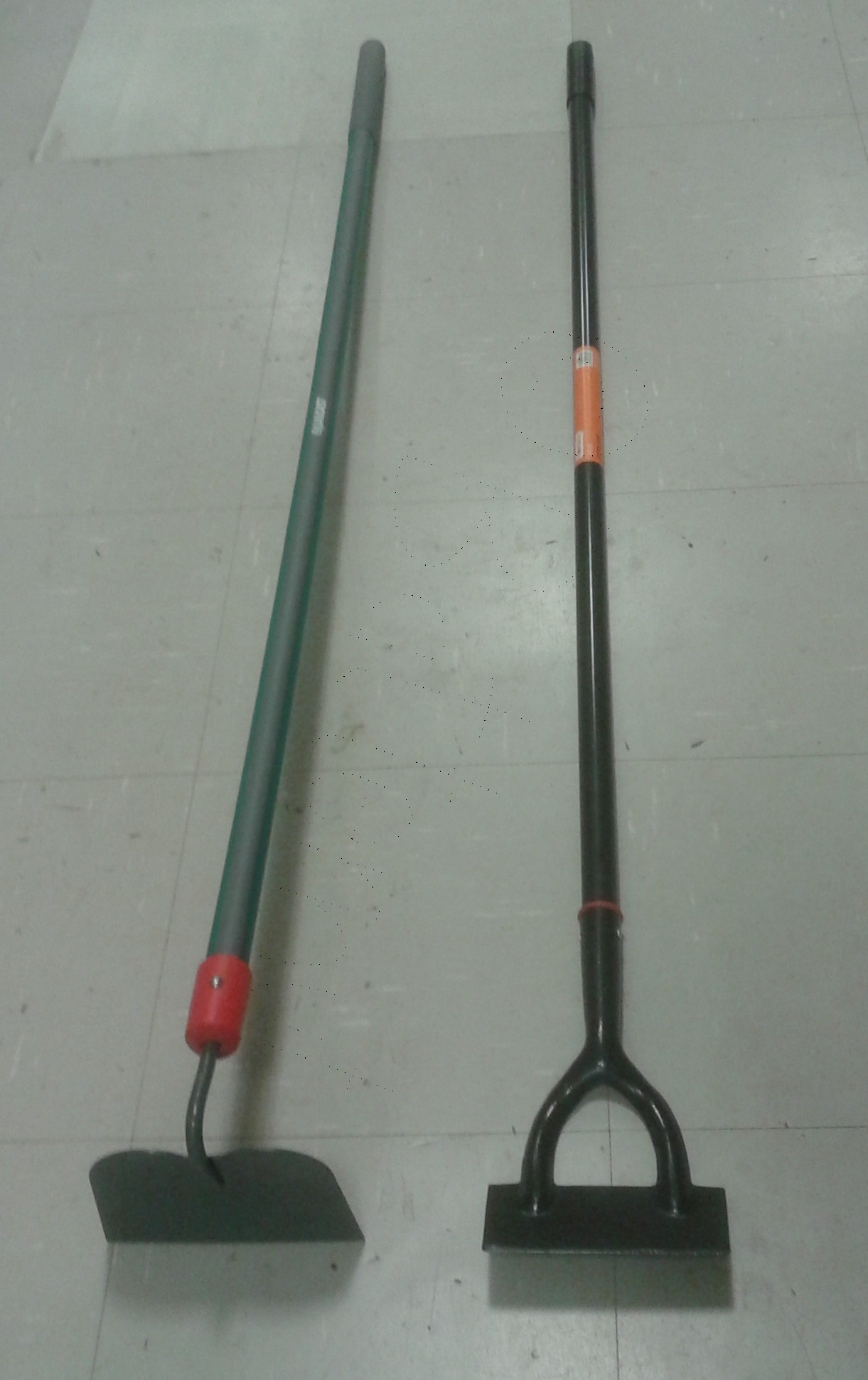
Two garden hoes with long handles (Source: Wikimedia Commons)
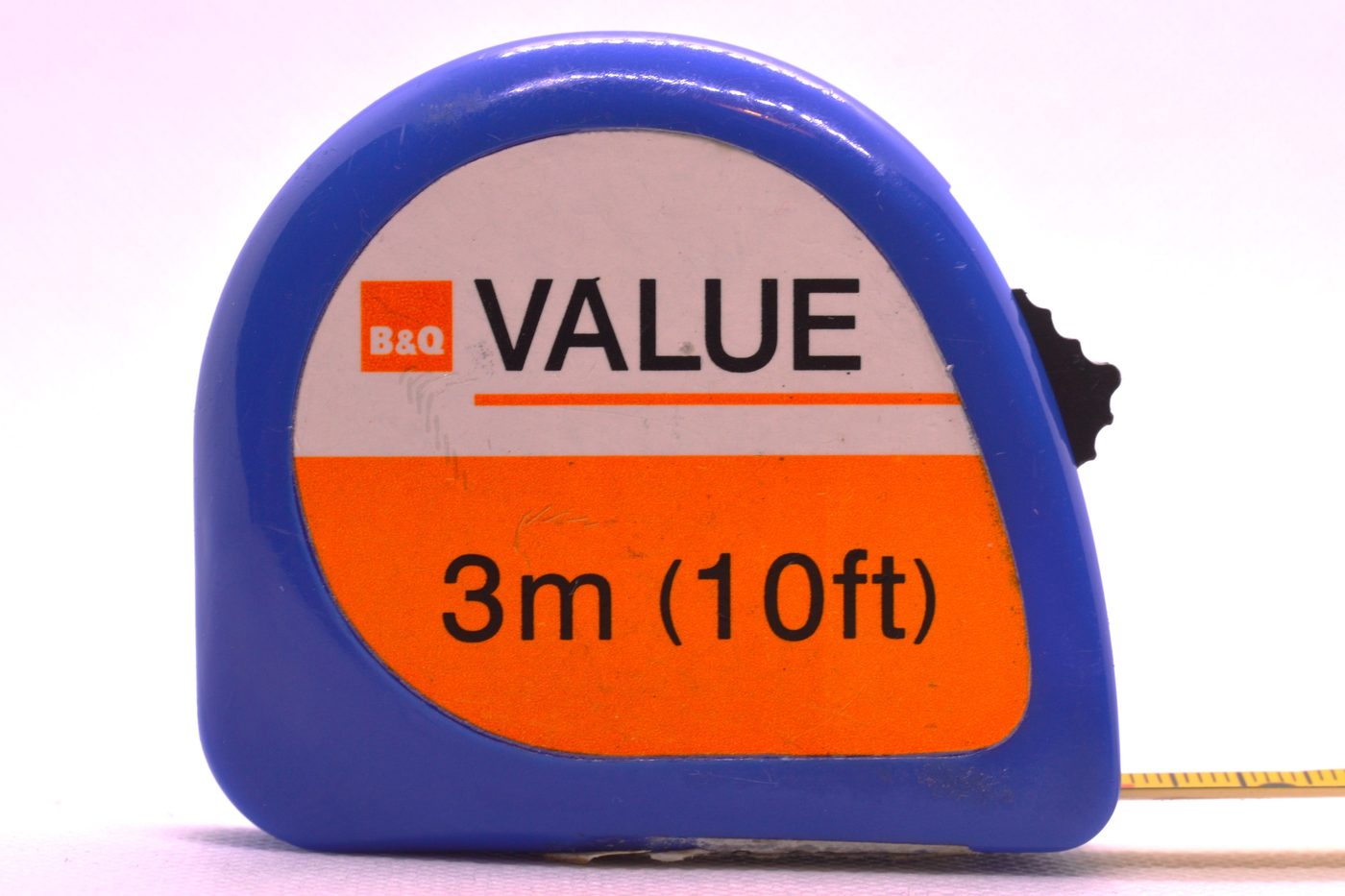
A measuring tape with metric and imperial units (Source: Wikimedia Commons)
These tools require regular sharpening and cleaning to maintain effectiveness and prevent disease transmission between trees. For instance-pruning shears at a county government fruit nursery in Kisumu are disinfected after each use to avoid spreading fungal infections.
Correct operation and upkeep of orchard equipment and tools extend their lifespan, reduce downtime, and ensure safety for workers. In Kenya, where smallholder farmers often share machinery, adherence to maintenance schedules is crucial.
At a cooperative mango farm in Thika, a maintenance log is kept for all shared equipment, detailing servicing dates and issues encountered, which has helped reduce equipment failure during peak seasons.
Choosing the right tools and machinery depends on several factors, including orchard size, terrain, crop type, and budget constraints faced by Kenyan horticulturists. Selecting appropriate equipment ensures efficient operations and cost-effectiveness.
Describe five types of machinery commonly used in sub-tropical fruit orchard management and explain their primary uses. (10 marks)
Explain the importance of proper maintenance of hand tools in a sub-tropical fruit orchard and outline five maintenance practices. (10 marks)
Discuss six factors that should be considered when selecting orchard equipment and tools for a small-scale sub-tropical fruit farm. (12 marks)
Outline the steps involved in the safe operation of a backpack sprayer during pest control in a guava orchard. (8 marks)
Create a free account to open more of this chapter.
Free: practical guides, quick cards, workplace scenarios and more.
Create a free accountThis chapter provided a comprehensive overview of managing a sub-tropical fruits orchard, starting with the essential equipment and tools required for routine orchard management. It outlined key management practices necessary to maintain healthy fruit production, emphasizing the importance of proper training and pruning techniques to shape trees and improve yield. Crop protection was addressed through detailed discussions on pest, disease, and weed control methods tailored for sub-tropical fruit crops. The chapter also examined physiological disorders affecting fruit trees and strategies to manage them effectively. Fertilizer application and mulching were explored as vital practices to enhance soil fertility and moisture retention. Watering techniques were explained to ensure adequate hydration for optimal growth, while fruit and flower induction methods were introduced to stimulate production. Finally, the chapter covered harvesting tools and equipment, alongside waste management regulations critical for sustainable orchard operation.
Type: Individual
| Tools & Equipment | Materials |
|---|---|
| Pruning shears | Water |
| Hand sprayer 5 litres | Soap bar |
| Loppers | Protective gloves |
| Hoe | Dustcoat |
| Rake | Gumboots |
| Wheelbarrow | Face mask |
| Water hose with nozzle | |
| Bucket 10 litres | |
| Cleaning cloth |
| S/N | Item | Quantity |
|---|---|---|
| 1 | Pruning shears | 1 Pc per Candidate |
| 2 | Hand sprayer 5 litres | 1 Pc per Candidate |
| 3 | Loppers | 1 Pc per Candidate |
| 4 | Hoe | 1 Pc per Candidate |
| 5 | Rake | 1 Pc per Candidate |
| 6 | Wheelbarrow | 1 Pc per 2 Candidates |
| 7 | Water hose with nozzle | 1 Pc per Candidate |
| 8 | Protective gloves | 1 Pair per Candidate |
| 9 | Dustcoat | 1 Pc per Candidate |
| 10 | Gumboots | 1 Pair per Candidate |
| 11 | Face mask | 1 Pc per Candidate |
| 12 | Bucket 10 litres | 1 Pc per Candidate |
| 13 | Water | 10 Litres per Candidate |
| 14 | Soap bar | 1 Pc per Candidate |
| 15 | Cleaning cloth | 1 Pc per Candidate |
| Items to be Evaluated | Marks Available | Marks Obtained | Comments |
|---|---|---|---|
| TASK 1: Preparation and Inspection of Orchard Management Equipment | |||
| Wore appropriate PPE including gloves, gumboots, dustcoat, and face mask (Award 1 mark for each PPE worn or zero) | 4 | ||
| Assembled all orchard management tools and equipment at the working site (Award 3 marks for assembling all tools and equipment or zero) | 3 | ||
| Inspected pruning shears and loppers for sharpness, rust, and damage (Award 3 marks for thorough inspection or zero) | 3 | ||
| Cleaned pruning shears, loppers, hoe, rake, and hand sprayer using soap and water (Award 4 marks for proper cleaning of all tools or zero) | 4 | ||
| Checked hand sprayer for leaks and tested nozzle functionality (Award 3 marks for proper testing or zero) | 3 | ||
| Filled the hand sprayer with 5 litres of water and tested spray pattern (Award 4 marks for correct filling and testing or zero) | 4 | ||
| Prepared wheelbarrow by checking wheel condition and cleaning the tray (Award 3 marks for preparation or zero) | 3 | ||
| Cleaned water hose and nozzle and checked for blockages (Award 3 marks for cleaning and inspection or zero) | 3 | ||
| Cleaned and arranged all tools and equipment ready for use (Award 3 marks for neat arrangement or zero) | 3 | ||
| Sub-Total | 30 | ||
| PRODUCT CHECKLIST | |||
| All orchard management equipment are clean, functional, and free from defects (Award 5 marks if all tools meet the specified condition or zero) | 5 | ||
| Hand sprayer filled with correct volume of water and sprays evenly (Award 3 marks for correct filling and spray test or zero) | 3 | ||
| PPE worn correctly and consistently during the preparation process (Award 2 marks for correct PPE use or zero) | 2 | ||
| Sub-Total | 10 | ||
| GRAND TOTAL | 40 | ||
Type: Individual
| Tools & Equipment | Materials |
|---|---|
| Pruning shears | Organic fertilizer (well decomposed manure) |
| Hand lens (10x magnification) | Plastic waste bags |
| Rake | Notebook and pen |
| Wheelbarrow | Orchard map layout |
| Measuring tape (30 m) | |
| Water sprayer (5 litres capacity) |
| S/N | Item | Quantity |
|---|---|---|
| 1 | Protective gloves | 1 pair per Candidate |
| 2 | Dustcoat overall | 1 pc per Candidate |
| 3 | Gumboots | 1 pair per Candidate |
| 4 | Pruning shears | 1 pc per Candidate |
| 5 | Hand lens (10x magnification) | 1 pc per Candidate |
| 6 | Rake | 1 pc per Candidate |
| 7 | Wheelbarrow | 1 pc per 3 Candidates |
| 8 | Plastic waste bags | 2 pcs per Candidate |
| 9 | Measuring tape (30 m) | 1 pc per Candidate |
| 10 | Notebook and pen | 1 set per Candidate |
| 11 | Water sprayer (5 litres capacity) | 1 pc per Candidate |
| 12 | Organic fertilizer (well decomposed manure) | 5 kg per Candidate |
| 13 | Orchard map layout | 1 pc per Candidate |
| Items to be Evaluated | Marks Available | Marks Obtained | Comments |
|---|---|---|---|
| TASK 1: Prepare for Orchard Management | |||
| Wore appropriate PPE: gloves, dustcoat, gumboots (Award 1 mark each for gloves, dustcoat, gumboots or zero) | 3 | ||
| Assembled all required tools and materials close to the orchard block (Award 2 marks for complete assembly or zero) | 2 | ||
| Reviewed orchard map layout and identified the 10 m x 10 m block (Award 2 marks for correct identification or zero) | 2 | ||
| Sub-Total | 7 | ||
| TASK 2: Monitor Tree Health and Prune | |||
| Inspected trees using hand lens for pests, diseases, and nutrient deficiencies (Award 4 marks for thorough inspection or zero) | 4 | ||
| Removed dead, diseased, and damaged branches using pruning shears (Award 5 marks for correct pruning technique or zero) | 5 | ||
| Collected pruned material and placed into plastic waste bags (Award 3 marks for proper collection or zero) | 3 | ||
| Sub-Total | 12 | ||
| TASK 3: Apply Organic Fertilizer and Maintain Hygiene | |||
| Measured and applied 5 kg of well decomposed manure evenly around tree bases (Award 4 marks for correct measurement and application or zero) | 4 | ||
| Watered fertilized areas using water sprayer to aid nutrient absorption (Award 3 marks for adequate watering or zero) | 3 | ||
| Raked fallen leaves and debris within the orchard block (Award 3 marks for thorough raking or zero) | 3 | ||
| Disposed of collected waste at designated compost area using wheelbarrow (Award 3 marks for proper disposal or zero) | 3 | ||
| Sub-Total | 13 | ||
| TASK 4: Record Keeping and Cleanup | |||
| Recorded observations and actions taken in notebook accurately (Award 3 marks for complete and legible records or zero) | 3 | ||
| Cleaned and stored all tools and equipment properly after use (Award 2 marks for cleaning and correct storage or zero) | 2 | ||
| Sub-Total | 5 | ||
| PRODUCT CHECKLIST | |||
| Trees are pruned with no damaged or diseased branches remaining (Award 5 marks for correct pruning outcome or zero) | 5 | ||
| Organic fertilizer applied evenly around tree bases as per specification (Award 4 marks for correct application or zero) | 4 | ||
| Orchard block is clean with no debris or pruned material left (Award 4 marks for cleanliness or zero) | 4 | ||
| Accurate and complete management records maintained (Award 4 marks for proper record keeping or zero) | 4 | ||
| Sub-Total | 17 | ||
| GRAND TOTAL | 54 | ||