
By the end of this chapter, you will be able to:
These skills will help you confidently set up effective irrigation and drainage systems that keep farms productive and sustainable.
Compiled by: Everlyne Auma
Farm irrigation and drainage systems are fundamental for maintaining optimal soil moisture and preventing waterlogging in horticultural enterprises across Kenya. Effective installation of these systems enhances crop productivity, supports sustainable water use, and mitigates risks associated with erratic rainfall patterns common in many Kenyan regions. This chapter focuses on the practical aspects of installing, types of, and testing irrigation and drainage systems tailored for horticultural farms, preparing professionals to execute these tasks with precision and efficiency.
Installation of irrigation and drainage systems demands a thorough understanding of both the farm’s water needs and the characteristics of the soil and terrain. In Kenya’s horticultural sector, where crops like tomatoes, flowers, and vegetables require precise water management, correct installation maximizes water use efficiency and crop yield. This topic explores the importance of these systems and the various types adapted to horticultural farms.
Farm irrigation and drainage systems are vital for managing water supply and soil conditions, directly influencing crop health and productivity. Their importance is multifaceted:
Selecting the appropriate irrigation and drainage system depends on crop type, soil texture, topography, and water availability. Kenyan horticulturalists utilize diverse systems to match these conditions.
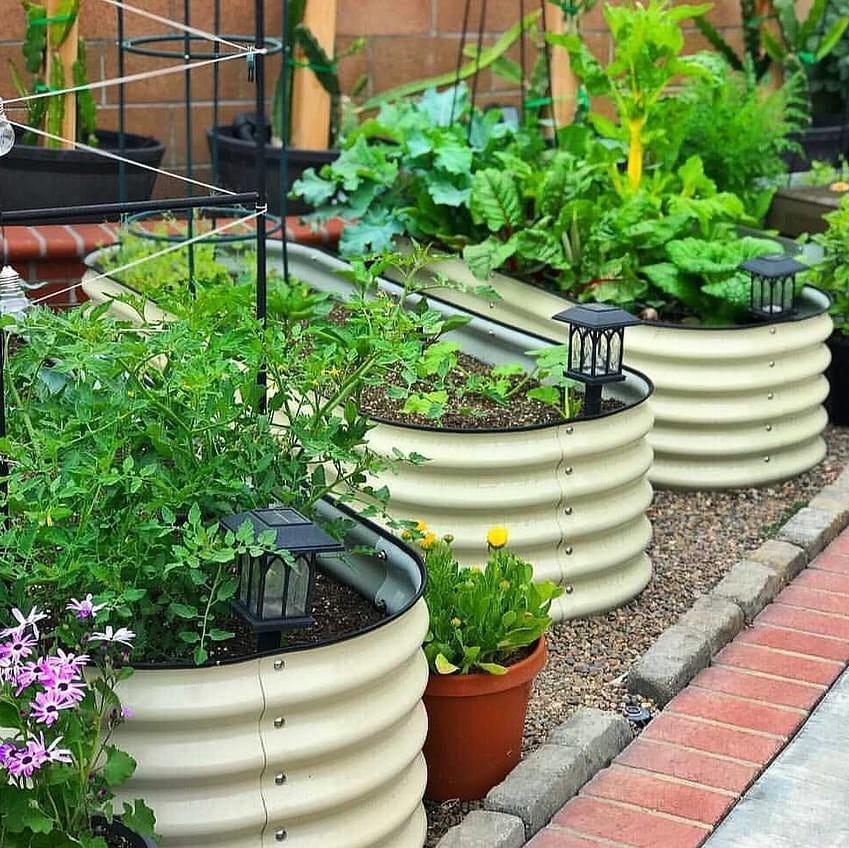
Metal raised garden beds with plants (Source: Wikimedia Commons)
Create a free account to open more of this chapter.
Free: practical guides, quick cards, workplace scenarios and more.
Create a free accountThis chapter covered the installation of farm irrigation and drainage systems, highlighting their critical role in enhancing crop productivity and managing water resources effectively. Various types of irrigation and drainage components were examined, including drip kits, pipes, fittings, water meters, flow meters, and pumps, each essential for efficient system operation. The process of testing these systems was emphasized to ensure proper functionality and water distribution. Maintenance practices for irrigation and drainage tools and equipment were discussed to prolong their service life and optimize performance. Detailed procedures for installing the tools and equipment were outlined to guarantee correct setup and operation. Testing of the installed tools and equipment was also explored to verify their readiness for use. Finally, the chapter addressed ongoing maintenance activities necessary to sustain system efficiency and prevent breakdowns, ensuring reliable farm water management.
Type: Individual
| Tools & Equipment | Materials |
|---|---|
| Polyethylene tubing cutter | Drip irrigation mainline pipe (16mm diameter) |
| Punch tool for drip tubing | Drip laterals (10mm diameter) |
| Measuring tape | Drip emitters (4 litres/hour) |
| Hose connectors and end caps | Filter unit with 120 mesh screen |
| Pressure regulator (1.0 bar) |
| S/N | Item | Quantity |
|---|---|---|
| 1 | Drip irrigation mainline pipe (16mm diameter) | 25 metres per Candidate |
| 2 | Drip laterals (10mm diameter) | 20 metres per Candidate |
| 3 | Drip emitters (4 litres/hour) | 50 pcs per Candidate |
| 4 | Filter unit with 120 mesh screen | 1 pc per Candidate |
| 5 | Pressure regulator (1.0 bar) | 1 pc per Candidate |
| 6 | Polyethylene tubing cutter | 1 pc per Candidate |
| 7 | Punch tool for drip tubing | 1 pc per Candidate |
| 8 | Hose connectors and end caps | 10 pcs per Candidate |
| 9 | Measuring tape | 1 pc per Candidate |
| 10 | Hand gloves | 1 pair per Candidate |
| 11 | Overall/dustcoat | 1 pc per Candidate |
| 12 | Gumboots | 1 pair per Candidate |
| 13 | Face mask | 1 pc per Candidate |
| 14 | Water source access (tap or tank) | Sufficient for task per Candidate |
| Items to be Evaluated | Marks Available | Marks Obtained | Comments |
|---|---|---|---|
| TASK 1: PRE-INSTALLATION PREPARATION | |||
| Wore Personal Protective Equipment (Gumboots, Hand gloves, Overall/dustcoat, Face mask) (Award 1 mark for each PPE donned correctly or zero) | 4 | ||
| Assembled all required tools, equipment and materials at the site (Award 2 marks for assembling all items or zero) | 2 | ||
| Measured and marked the 5m x 5m plot accurately using measuring tape (Award 3 marks for correct measurement and marking or zero) | 3 | ||
| Checked the water source and connected filter unit and pressure regulator correctly (Award 3 marks for proper connection or zero) | 3 | ||
| Sub-Total | 12 | ||
| TASK 2: INSTALLATION OF DRIP IRRIGATION SYSTEM | |||
| Laid out 16mm mainline pipe around the plot boundary as per layout (Award 4 marks for correct layout and positioning or zero) | 4 | ||
| Cut and installed 10mm drip laterals perpendicular to mainline, spaced at 50 cm apart (Award 5 marks for correct spacing and installation or zero) | 5 | ||
| Punched holes and inserted 4 l/hr drip emitters at 30 cm spacing along laterals (Award 6 marks for correct emitter spacing and insertion or zero) | 6 | ||
| Fitted end caps securely on all drip laterals to prevent water loss (Award 3 marks for correct fitting or zero) | 3 | ||
| Tested the system by turning on water and checked for leaks and uniform water flow (Award 4 marks for proper testing and leak-free installation or zero) | 4 | ||
| Sub-Total | 22 | ||
| PRODUCT CHECKLIST | |||
| Installed drip irrigation system covers 5m x 5m plot accurately as per layout (Award 6 marks for correct dimensions and coverage or zero) | 6 | ||
| Drip laterals spaced at 50 cm apart with emitters spaced at 30 cm along laterals (Award 6 marks for correct spacing or zero) | 6 | ||
| System is leak-free and functioning with uniform water discharge from all emitters (Award 6 marks for leak-free and uniform flow or zero) | 6 | ||
| Sub-Total | 18 | ||
| GRAND TOTAL | 52 | ||
Type: Individual
| Tools & Equipment | Materials |
|---|---|
| Measuring tape | Drip irrigation mainline pipe 25mm diameter |
| Sharp knife or pipe cutter | Drip irrigation lateral pipes 16mm diameter |
| Pipe connectors (tees, elbows, couplers) | Drip emitters 4 liters per hour |
| Filter | End caps for pipes 16mm and 25mm |
| Pressure regulator | |
| Water source tap adapter |
| S/N | Item | Quantity |
|---|---|---|
| 1 | Drip irrigation mainline pipe 25mm diameter | 20 meters per Candidate |
| 2 | Drip irrigation lateral pipes 16mm diameter | 40 meters per Candidate |
| 3 | Drip emitters 4 liters per hour | 50 pcs per Candidate |
| 4 | Pipe connectors (tees, elbows, couplers) 16mm and 25mm | 10 pcs per Candidate |
| 5 | End caps for pipes 16mm and 25mm | 4 pcs per Candidate |
| 6 | Filter for irrigation system | 1 pc per Candidate |
| 7 | Pressure regulator | 1 pc per Candidate |
| 8 | Water source tap adapter | 1 pc per Candidate |
| 9 | Measuring tape | 1 pc per Candidate |
| 10 | Sharp knife or pipe cutter | 1 pc per Candidate |
| 11 | Hand gloves | 1 pair per Candidate |
| 12 | Gumboots | 1 pair per Candidate |
| 13 | Overall/dustcoat | 1 pc per Candidate |
| 14 | Face mask | 1 pc per Candidate |
| Items to be Evaluated | Marks Available | Marks Obtained | Comments |
|---|---|---|---|
| TASK 1: PPE and Preparation | |||
| Wore PPEs: Gumboots, Overall/Dustcoat, Face mask, Hand gloves (Award 1 mark for each PPE correctly worn) | 4 | ||
| Assembled all required tools and materials at the worksite (Award 2 marks for assembling all or zero) | 2 | ||
| Measured and marked pipe layout according to the system design (total 60 meters) (Award 3 marks for accurate measurement and marking) | 3 | ||
| Cut pipes cleanly using pipe cutter or sharp knife (Award 3 marks for neat and accurate cutting) | 3 | ||
| Sub-Total | 12 | ||
| TASK 2: Laying and Connecting Pipes | |||
| Connected 25mm mainline pipe securely with tap adapter, filter, and pressure regulator (Award 4 marks for correct and tight connections) | 4 | ||
| Laid 25mm mainline pipe along marked layout without kinks (Award 3 marks for proper laying and alignment) | 3 | ||
| Fitted 16mm lateral pipes to mainline using appropriate connectors (tees/elbows) (Award 4 marks for correct fittings and secure joints) | 4 | ||
| Installed drip emitters spaced evenly along lateral pipes (Award 4 marks for correct spacing and installation) | 4 | ||
| Sealed pipe ends with end caps properly (Award 3 marks for secure and leak-proof sealing) | 3 | ||
| Checked system for leaks and corrected any faulty joints (Award 4 marks for thorough inspection and correction) | 4 | ||
| Sub-Total | 22 | ||
| TASK 3: Finalization and Clean Up | |||
| Flushed the irrigation system to ensure clean water flow (Award 3 marks for effective flushing) | 3 | ||
| Cleaned tools and equipment after use (Award 2 marks for proper cleaning) | 2 | ||
| Disposed of waste materials appropriately (Award 2 marks for safe disposal) | 2 | ||
| Sub-Total | 7 | ||
| PRODUCT CHECKLIST | |||
| Irrigation system laid as per design with 25mm mainline and 16mm lateral pipes totaling 60 meters (Award 5 marks for correct total length and layout) | 5 | ||
| Pipes connected securely with no leaks at joints or fittings (Award 5 marks for leak-free connections) | 5 | ||
| Drip emitters installed at uniform spacing and functioning correctly (Award 5 marks for correct emitter spacing and operation) | 5 | ||
| System components (filter, pressure regulator, tap adapter) installed correctly (Award 5 marks for correct placement and installation) | 5 | ||
| Sub-Total | 20 | ||
| GRAND TOTAL | 61 | ||
At the start of this chapter we promised you would be able to:
Tick each one you can genuinely do.
So, are you there yet?
You're competent when you can confidently do 50% or more of what this chapter promised.
Sign in to record how you're doing.