Undertaking marketing activities for herbs and spices grown in protected environments demands a comprehensive understanding of occupational safety and health procedures. In Kenya, horticulture professionals must navigate not only market dynamics but also ensure that their work environments comply with safety regulations to protect workers from hazards associated with handling plants, chemicals, and equipment. This chapter section focuses on the critical procedures that safeguard health and promote safe working conditions in herb and spice production facilities such as greenhouses and shade houses.
6.1 Procedures for Occupational Safety and Health
Occupational safety and health (OSH) in horticulture production environments is vital for protecting workers from physical, chemical, and biological hazards. In Kenya, adherence to OSH procedures is governed by the Occupational Safety and Health Act, 2007, which mandates employers to provide safe workplaces. For herb and spice production in protected environments, this involves managing risks related to pesticide use, machinery operation, and ergonomic factors, ensuring compliance not only to protect workers but also to maintain productivity and product quality.
6.1.1 Identification and Assessment of Workplace Hazards
Effective OSH procedures begin with identifying and assessing potential hazards in the production environment. This process helps in prioritizing risks and implementing controls to prevent accidents and illnesses.
Hazard Identification
- Physical Hazards: These include risks from machinery such as pruning tools, irrigation systems, and greenhouse structures that may cause cuts, falls, or entanglement.
- Chemical Hazards: Exposure to pesticides, fertilizers, and cleaning agents can lead to poisoning, skin irritation, or respiratory problems if not handled properly.
- Biological Hazards: Workers may encounter harmful microorganisms, fungi, or plant allergens that can cause infections or allergic reactions.
- Ergonomic Hazards: Repetitive motions, awkward postures, and manual handling of heavy materials can cause musculoskeletal disorders.
- Environmental Hazards: Factors like poor ventilation, extreme temperatures within greenhouses, and inadequate lighting affect worker comfort and safety.
Hazard Assessment
- Risk Evaluation: Assess the likelihood and severity of harm from identified hazards to prioritize safety measures.
- Workplace Inspections: Regular systematic checks to detect unsafe conditions or practices.
- Employee Feedback: Incorporating workers’ experiences and observations to identify less obvious hazards.
- Documentation and Reporting: Maintaining records of hazards and incidents to monitor trends and effectiveness of interventions.
- Use of Risk Matrices: Applying tools such as risk matrices to quantify and visualize hazards for better decision-making.
6.1.2 Implementation of Safety Controls and Protective Measures
After hazards are identified and assessed, appropriate safety controls must be implemented to minimize or eliminate risks to workers in herb and spice production.
Engineering Controls
- Machine Guards: Installing protective barriers on cutting and pruning equipment to prevent accidental contact.
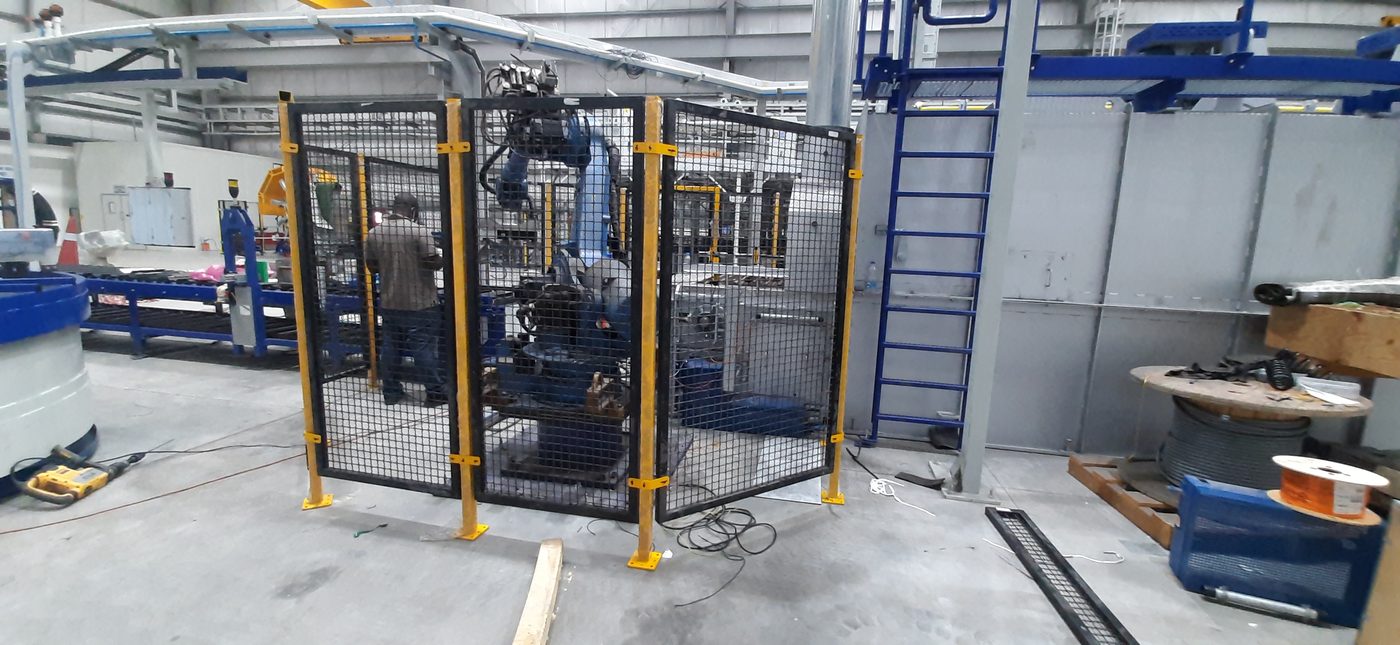
Industrial machine guard enclosing equipment (Source: Wikipedia (Machine guarding))
- Ventilation Systems: Ensuring proper airflow in greenhouses to reduce exposure to chemical fumes and maintain optimum temperature.
- Ergonomic Workstations: Designing planting and harvesting areas to minimize awkward postures and repetitive strain.
- Safe Storage Facilities: Dedicated, secure areas for pesticides and fertilizers to prevent accidental spills or unauthorized access.
- Automatic Irrigation Systems: Reducing manual handling of water and chemicals to limit worker exposure to hazards.
Administrative Controls
- Work Schedules: Rotating tasks to reduce repetitive strain and exposure duration to hazardous substances.
- Training Programs: Educating workers on safe handling of chemicals, equipment operation, and emergency procedures.
- Safety Signage: Posting clear warning signs and instructions in local languages around hazardous zones.
- Standard Operating Procedures (SOPs): Documented guidelines for safe work practices tailored to herb and spice production activities.
- Incident Reporting Systems: Encouraging prompt reporting of near misses and accidents to facilitate timely interventions.
Personal Protective Equipment (PPE)
-
Gloves: Protecting hands from cuts, chemical exposure, and plant irritants.
-
Respirators and Masks: Preventing inhalation of dust, spores, and chemical vapors.
- Protective Clothing: Coveralls and aprons to shield skin from pesticides and sharp plant parts.
- Eye Protection: Safety goggles to guard against chemical splashes and debris.

clear safety glasses for eye protection (Source: Wikimedia Commons)
- Footwear: Durable boots with anti-slip soles to prevent injuries and falls in wet or uneven greenhouse floors.
6.1.3 Emergency Preparedness and Response Procedures
Preparedness for emergencies is a critical component of occupational safety in horticulture production facilities. Having clear procedures reduces the impact of incidents such as chemical spills, fires, or injuries.
Emergency Planning
- Risk Scenarios: Identifying potential emergencies like pesticide spills, fires, or structural collapse within protected environments.
- Emergency Contacts: Maintaining updated lists of medical facilities, fire services, and OSH authorities accessible to all workers.
- Evacuation Routes: Clearly marked and unobstructed exits within greenhouses and storage areas.
- Emergency Equipment: Availability of fire extinguishers, spill kits, first aid supplies, and eye wash stations.
- Communication Systems: Reliable means for alerting workers and emergency responders promptly.
Training and Drills
- First Aid Training: Equipping staff with skills to manage injuries and chemical exposures before professional help arrives.
- Fire Drills: Regular practice of evacuation procedures to ensure swift and orderly exits.
- Spill Response Training: Procedures for containing and cleaning hazardous chemical leaks safely.
- Incident Command System: Assigning roles and responsibilities to personnel during emergencies.
- Review and Improvement: Post-incident evaluation to identify gaps and update emergency plans.
6.1.4 Health Monitoring and Record Keeping
Ongoing health monitoring and accurate record keeping are essential for maintaining a safe working environment and complying with Kenyan OSH regulations.
Worker Health Surveillance
- Pre-employment Medical Checks: Assessing baseline health status to determine fitness for work involving chemical and physical hazards.
- Periodic Health Assessments: Monitoring for symptoms related to pesticide exposure, respiratory issues, or musculoskeletal disorders.
- Vaccinations: Providing immunization against relevant diseases such as tetanus.
- Reporting Illnesses: Encouraging workers to report any health concerns promptly for early intervention.
- Confidentiality and Support: Ensuring medical information is handled sensitively and affected workers receive appropriate care.
Documentation and Compliance
- Accident and Incident Logs: Detailed records of workplace injuries, exposures, and near misses.
- Chemical Inventory and Usage Logs: Tracking hazardous substances to prevent misuse and enable traceability.
- Training Records: Documentation of safety training sessions and attendance.
- Inspection Reports: Keeping records of safety audits and corrective actions taken.
- Compliance with NEMA and OSHA: Ensuring all documentation meets requirements for regulatory inspections and audits.
Practice Questions
-
Explain the steps involved in identifying and assessing workplace hazards in a protected environment used for herb and spice production. (10 marks)
-
Discuss five engineering controls that can be implemented to enhance occupational safety in greenhouse operations. (10 marks)
-
Describe the key components of an effective emergency response plan for herb and spice production facilities. (10 marks)
-
Outline the importance of health monitoring and record keeping in ensuring occupational safety and health compliance. (10 marks)
The rest of this chapter
🔒Create a free account to open more of this chapter.
Free: practical guides, quick cards, workplace scenarios and more.
Create a free account 🔒6.2 Market Survey Techniques
Market surveys are essential tools in horticultural enterprises, especially for herbs and spices grown in protected environments where production costs can be high and market preferences rapidly change. In Kenya, understanding consumer demand, price trends, an…
🔒6.3 Pricing techniques
Pricing techniques are critical in the marketing of herbs and spices grown in protected environments in Kenya. The competitiveness of the horticultural sector, along with varying consumer preferences and production costs, requires producers to adopt pricing st…
🔒6.4 The 4Ps in marketing
The 4Ps (product, place, price and promotion) are the four tools a producer controls to turn greenhouse herbs and spices into sales. Together they form the marketing mix. For a grower of basil, coriander, parsley, mint, rosemary or chillies under protected cul…
🔒6.5 Waste management practice
In the horticultural production of herbs and spices within protected environments such as greenhouses and shade nets, effective waste management is essential for sustainability, cost control, and environmental compliance. In Kenya, where agricultural waste can…
🔒6.6 Record Keeping
Record keeping is a fundamental aspect of marketing activities in the production of herbs and spices within protected environments. In Kenya's horticultural sector, accurate and timely records enable producers to monitor sales performance, track customer prefe…
🔒6.7 Emerging trends
The horticulture sector in Kenya is rapidly evolving with new consumer preferences and technological advancements shaping the demand for herbs and spices produced under protected environments. Understanding emerging trends in products allows horticulture profe…
Chapter Summary
This chapter explored essential procedures for maintaining occupational safety and health within the production of herbs and spices in protected environments, emphasizing the importance of a safe working environment. It then examined various market survey techniques that help producers understand consumer needs and market demands effectively. Pricing techniques were discussed to ensure competitive and profitable product pricing strategies. The chapter also covered the 4Ps of marketing with a focus on promotion, highlighting ways to communicate product benefits to target customers. Effective waste management practices were outlined to encourage sustainable production and environmental protection. The importance of accurate record keeping was stressed as a tool for monitoring business performance and compliance. Finally, the chapter introduced emerging trends in herb and spice products, encouraging adaptation to evolving market preferences. Practical work and instructor-led facilitation reinforced these concepts for applied learning.
Self-Assessment
🔒 PDFDownload this self-assessment, with answers
A. Written Assessment
- What are the key components of occupational safety and health procedures in a protected horticulture environment? (3 marks)
- Identify three market survey techniques commonly used in the herbs and spices sector. (3 marks)
🔒20 more in this section.
Chapter Examination Questions
🔒 PDFDownload these examination questions, with worked answers
SECTION A (40 Marks) - Answer ALL Questions
- Explain the key procedures for occupational safety and health when handling herb and spice production in a greenhouse environment. (4 marks)
- Describe three effective market survey techniques that a horticulturalist can use to assess demand for herbs in Nairobi markets. (4 marks)
🔒18 more in this section.
Chapter Practical Activities
Practical 1: Conduct a Market Survey for Herbs and Spices
Horticulture · Level 5
Production Of Herbs And Spices In Protected Environment
PRACTICAL ASSESSMENT
TIME: 4 HOURS
⬇ PDFCandidate Instructions (Candidate Tool)
Type: Individual
INSTRUCTIONS TO CANDIDATE:
1. You are required to perform the following task:
i. Design and administer a market survey questionnaire for herbs and spices buyers and analyze results to produce a summary report of at least 3 pages.
2. You have been provided with the following resources for the practical task:
| Tools & Equipment | Materials |
|---|
| Pen | Questionnaire forms |
| Clipboard | Market map or layout plan |
| Calculator | Data analysis sheets |
| Measuring tape (5m) | |
| Digital voice recorder | |
| Face mask | |
| Hand sanitizer | |
⬇ PDFResources Required (Cutting List)
| S/N | Item | Quantity |
|---|
| 1 | Questionnaire forms | 5 pcs per Candidate |
| 2 | Pen | 1 pc per Candidate |
| 3 | Clipboard | 1 pc per Candidate |
| 4 | Calculator | 1 pc per Candidate |
| 5 | Measuring tape (5m) | 1 pc per Candidate |
| 6 | Face mask | 1 pc per Candidate |
| 7 | Hand sanitizer (100 ml) | 1 bottle per Candidate |
| 8 | Digital voice recorder | 1 pc per 5 Candidates |
| 9 | Market map or layout plan | 1 pc per Candidate |
| 10 | Data analysis sheets (spreadsheet printouts) | 1 set per Candidate |
⬇ PDFAssessor Guide
| Items to be Evaluated | Marks Available | Marks Obtained | Comments |
|---|
| TASK 1: PREPARE AND ADMINISTER QUESTIONNAIRE |
Wore PPEs (Face mask and used hand sanitizer as per workplace procedures)
(Award 1 mark each or zero) | 2 | | |
Assembled all required tools and materials for the survey
(Award 2 marks for assembling all or zero) | 2 | | |
Designed a clear and relevant questionnaire with at least 10 questions targeting herbs and spices buyers
(Award 1 mark per relevant question up to 6 marks) | 6 | | |
Administered questionnaires correctly to at least 5 potential buyers using appropriate interview techniques
(Award 1.2 marks per completed questionnaire up to 6 marks) | 6 | | |
Recorded responses accurately and maintained confidentiality
(Award 2 marks or zero) | 2 | | |
| Sub-Total | 18 | | |
| TASK 2: ANALYZE AND REPORT SURVEY FINDINGS |
Entered questionnaire data correctly into analysis sheets or spreadsheet
(Award 4 marks or zero) | 4 | | |
Analyzed data to identify at least three key findings on buyer preferences and demand
(Award 2 marks per key finding up to 6 marks) | 6 | | |
Prepared a clear, concise summary report of at least 3 pages including charts or tables
(Award 2 marks for content, 2 marks for clarity, 2 marks for presentation) | 6 | | |
Maintained proper hygiene and cleaned work area after task completion
(Award 2 marks or zero) | 2 | | |
| Sub-Total | 18 | | |
| PRODUCT CHECKLIST |
Completed questionnaire with at least 10 relevant questions
(Award 4 marks for completeness and relevance or zero) | 4 | | |
At least 5 questionnaires properly filled and legible
(Award 4 marks or zero) | 4 | | |
Accurate data entry and correct analysis of survey data
(Award 6 marks for accuracy or zero) | 6 | | |
Summary report of at least 3 pages with clear findings and presentation
(Award 8 marks for quality and completeness or zero) | 8 | | |
| Sub-Total | 22 | | |
| GRAND TOTAL | 58 | | |
ASSESSMENT OUTCOME: ☐ Competent ☐ Not Yet Competent (competent if at least 50%)
Practical 2: Apply Pricing Techniques for Herbs and Spices
Horticulture · Level 5
Production Of Herbs And Spices In Protected Environment
PRACTICAL ASSESSMENT
TIME: 4 HOURS
⬇ PDFCandidate Instructions (Candidate Tool)
Type: Individual
INSTRUCTIONS TO CANDIDATE:
1. You are required to perform the following task:
i. Calculate and set the selling price per kilogram for coriander and basil herbs based on cost analysis, competitor pricing, and demand factors.
2. You have been provided with the following resources for the practical task:
| Tools & Equipment | Materials |
|---|
| Calculator | Market price data printout for coriander and basil |
| Notebook | Cost analysis worksheet template |
| Pen | Sample harvested herbs and spices data (weight, cost inputs) |
⬇ PDFResources Required (Cutting List)
| S/N | Item | Quantity |
|---|
| 1 | Calculator | 1 Pc per Candidate |
| 2 | Notebook | 1 Pc per Candidate |
| 3 | Pen | 1 Pc per Candidate |
| 4 | Market price data printout for coriander and basil | 1 Set per Candidate |
| 5 | Cost analysis worksheet template | 1 Sheet per Candidate |
| 6 | Sample harvested herbs and spices data (weight, cost inputs) | 1 Set per Candidate |
⬇ PDFAssessor Guide
| Items to be Evaluated | Marks Available | Marks Obtained | Comments |
|---|
| TASK 1: APPLY PRICING TECHNIQUES |
Wore appropriate PPE as per workplace procedures
(Award 0.5 mark for each PPE worn: gumboots, dustcoat, gloves, face mask) | 2 | | |
Assembled all required materials and tools before starting the task
(Award 2 marks for assembling all tools and materials or zero) | 2 | | |
Correctly calculated total production cost per kilogram of coriander and basil
(Award 3 marks for each herb/spice calculation done accurately) | 6 | | |
Analyzed competitor pricing data and incorporated it into pricing decision
(Award 6 marks for accurate comparison and justified price adjustment) | 6 | | |
Considered demand factors and adjusted price accordingly
(Award 4 marks for correct analysis and justified price setting) | 4 | | |
Documented final selling prices clearly in the worksheet and notebook
(Award 2 marks for each herb/spice price documented clearly) | 4 | | |
Cleaned and organized workspace and returned materials appropriately
(Award 2 marks for proper cleaning and organization or zero) | 2 | | |
| Sub-Total | 26 | | |
| PRODUCT CHECKLIST |
Selling price per kilogram for coriander matches cost, competition, and demand analysis (expected range KSh 250-350)
(Award 7 marks for correct price setting within realistic margins or zero) | 7 | | |
Selling price per kilogram for basil matches cost, competition, and demand analysis (expected range KSh 300-400)
(Award 7 marks for correct price setting within realistic margins or zero) | 7 | | |
| Sub-Total | 14 | | |
| GRAND TOTAL | 40 | | |
ASSESSMENT OUTCOME: ☐ Competent ☐ Not Yet Competent (competent if at least 50%)
🔒Implement Promotion Strategies for Herbs and Spices MarketingPractical 3
🔒Maintaining Marketing Records for Herbs and SpicesPractical 4
🔒Applying Occupational Safety and Health Procedures in Marketing of Herbs and SpicesPractical 5
🔒Managing wastes generated from marketing and packaging of herbs and spicesPractical 6
🔒Identify and Present Emerging Trends and Products in Herb and Spice MarketingPractical 7
🔒Design and Set Up Promotional Display for Herbs and Spices ProductsPractical 8
🔒Develop a Pricing Strategy Plan for Herbs and SpicesPractical 9
🔒Recording and Analyzing Marketing Feedback Data for Protected Herbs and SpicesPractical 10
