Horticulture  ·  Level 5
Production Of Herbs And Spices In Open Environment
Chapter 2: Prepare land for growing herbs and spices
📚 8 Topics
⚑ What you will be able to do

By the end of this chapter, you will be able to:

  • Follow all necessary work safety measures to maintain a safe and healthy working environment.
  • Dispose of waste properly in line with EMCA 2015 requirements to protect the environment.
  • Prepare land for herbs and spices using the latest technologies and emerging trends.
  • Correctly assemble all tools, equipment, and materials needed for land preparation.
  • Carry out land tillage following proper agronomic requirements for healthy crop growth.
  • Perform soil testing accurately using the correct procedures.
  • Clear land safely and effectively according to agronomic standards.
  • Apply soil amendments correctly based on your soil analysis report.
  • Make planting furrows properly, tailored to the specific herbs and spices you are growing.
  • Maintain tools and equipment correctly according to their type for long-lasting use.
  • Accurately document all farm activity costs as required for your tasks.

Mastering these skills will help you prepare land efficiently and professionally, setting you up for success in the herbs and spices industry!

Compiled by: Samuel Maina

Preparation of land for growing herbs and spices in an open environment is a critical phase in horticultural production that directly influences crop health, yield, and quality. In Kenya, where smallholder and commercial herb and spice farming contributes significantly to the agricultural sector, ensuring safe and effective land preparation is vital to sustainable production. Proper occupational safety and health (OSH) procedures protect workers from injuries and long-term health risks, promoting productivity and compliance with national regulations such as the Occupational Safety and Health Act (OSHA) of Kenya. This section addresses essential OSH procedures that horticulture professionals must observe during land preparation to safeguard their wellbeing and optimize operational efficiency.

2.1 Procedures for Occupational Safety and Health

Occupational safety and health procedures are designed to minimize hazards and risks associated with agricultural activities, including land preparation for herbs and spices. In Kenya, adherence to these procedures not only protects workers but also aligns with legal requirements enforced by the Directorate of Occupational Safety and Health Services (DOSHS). This ensures that farms operate within safe environments, reducing accidents, illnesses, and associated financial losses. The following subtopics delve into key aspects of OSH procedures relevant to land preparation.

2.1.1 Identification and Assessment of Hazards in Land Preparation

Identifying and assessing hazards is the foundational step in managing occupational safety risks during land preparation. Hazards in this context include physical, chemical, biological, and ergonomic risks that workers may encounter when preparing land for herb or spice cultivation. For instance, during clearing and tilling, workers may face sharp tools, heavy machinery, or exposure to agrochemicals.

Identification of Hazards

  • Physical Hazards: These include risks from equipment such as machetes, hoes, tractors, and tillers which can cause cuts, bruises, or crush injuries if mishandled. Uneven terrain and weather conditions also pose slip, trip, and fall risks.
  • Chemical Hazards: Use of herbicides or soil amendments may expose workers to harmful substances that can cause skin irritation, respiratory problems, or poisoning if proper handling and protective measures are not observed.
  • Biological Hazards: Contact with soil-borne pathogens, insects, snakes, or poisonous plants presents infection or bite risks during land clearing.
  • Ergonomic Hazards: Repetitive motions, awkward postures, and heavy lifting during manual land preparation can lead to musculoskeletal disorders.
  • Environmental Hazards: Exposure to extreme temperatures, UV radiation, and dust can cause heat stress, dehydration, or respiratory issues.

Assessment of Hazards

  • Risk Analysis: Evaluate the likelihood and severity of each hazard to prioritize control measures. For example, the risk of injury from tractor operation is high and requires stringent controls.
  • Workplace Inspection: Regularly inspect the land and equipment to identify new or evolving hazards such as damaged tools or unstable ground.
  • Worker Consultation: Engage farm workers to gather insights about hazards they face, which may not be obvious during inspections.
  • Documentation: Maintain records of identified hazards and risk assessments to guide safety planning and compliance audits.
  • Continuous Monitoring: Update hazard assessments periodically, especially when introducing new machinery or chemicals.

2.1.2 Use and Maintenance of Personal Protective Equipment (PPE)

Personal protective equipment is a critical barrier between workers and occupational hazards encountered during land preparation. Proper selection, use, and maintenance of PPE reduce exposure to harmful agents and prevent injuries.

Selection of PPE

  • Gloves: Protect hands from cuts, abrasions, and chemical exposure. For example, nitrile gloves are suitable when handling herbicides.

Pair of yellow work gloves used in carpentry
Pair of yellow work gloves used in carpentry (Source: Wikimedia Commons)
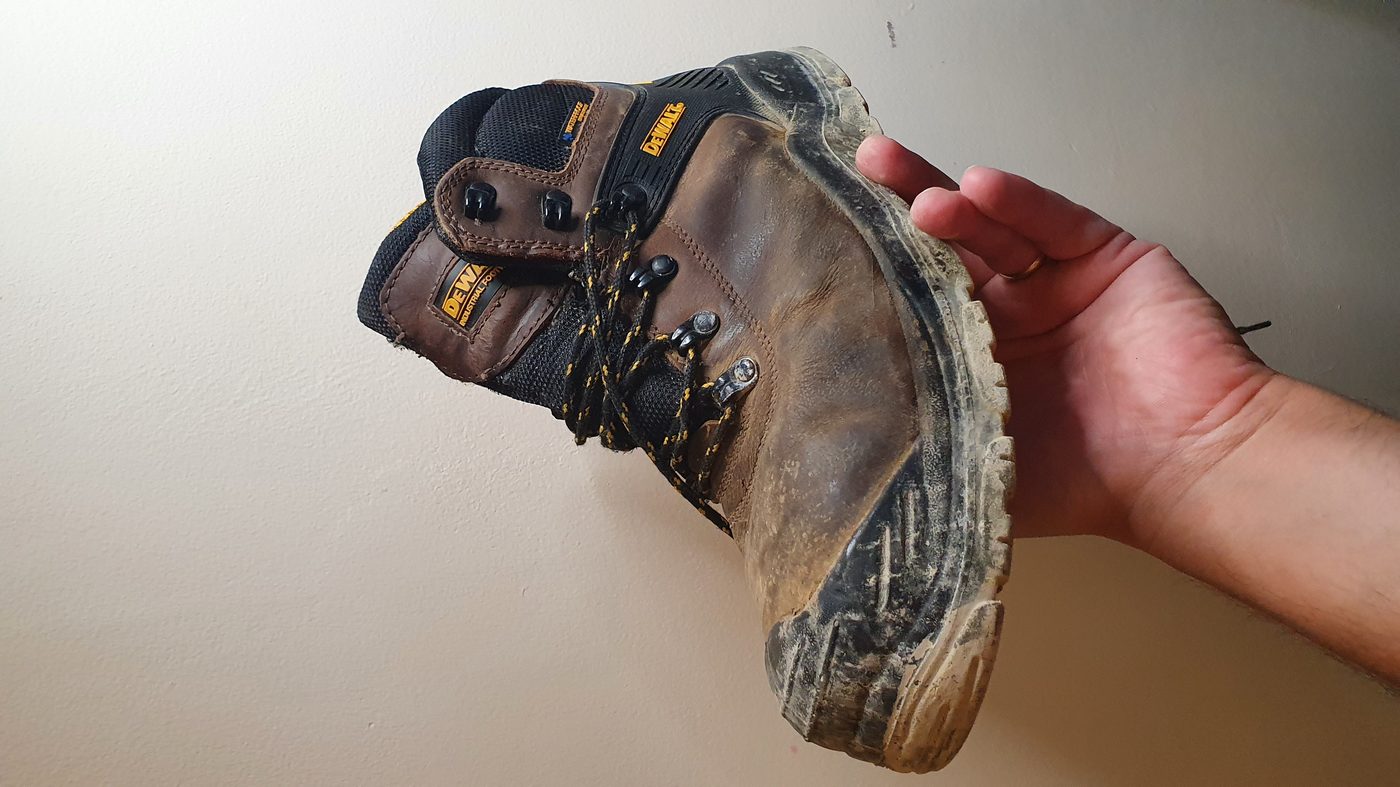
  • Safety Boots: Provide foot protection against sharp objects, heavy equipment, and slippery surfaces. Steel-toed boots are recommended on rocky or machine-operated farms.

A single safety boot for industrial use
A single safety boot for industrial use (Source: Wikimedia Commons)

  • Protective Clothing: Long-sleeved shirts and trousers reduce skin exposure to chemicals and sunburn.
  • Eye Protection: Safety goggles shield eyes from soil particles, chemical splashes, or flying debris during tilling.
  • Respiratory Protection: Masks or respirators help prevent inhalation of dust, chemical fumes, or allergens.

Proper Use of PPE

  • Train workers on correct donning and doffing procedures to avoid contamination.
  • Ensure PPE fits well to provide adequate protection and comfort, encouraging consistent use.
  • Enforce PPE usage policies during all hazardous land preparation activities.

Maintenance of PPE

  • Clean reusable PPE after each use to remove dirt and chemical residues.
  • Inspect PPE regularly for damage such as tears, cracks, or worn-out straps and replace as necessary.
  • Store PPE in clean, dry environments to extend usability.
  • Keep an inventory to ensure availability of appropriate PPE for all workers.

2.1.3 Safe Handling and Operation of Tools and Machinery

Efficient land preparation often involves the use of various hand tools and machinery that, if mishandled, can cause serious injuries. Safe handling and operation protocols are essential to prevent accidents in herb and spice farms.

Safe Handling of Hand Tools

  • Use tools appropriate for the task to minimize effort and injury risk, for example, using a sharp hoe for tilling rather than a blunt one.
  • Inspect tools before use to ensure they are in good condition, with secure handles and sharp blades.
  • Store tools safely when not in use to prevent accidental injuries.
  • Train workers on proper techniques such as gripping tools firmly and maintaining balance during use.
  • Avoid carrying tools in unsafe manners, such as pointing sharp edges towards others.

Operation of Machinery

  • Conduct pre-operation checks on machinery like rotavators or tractors, verifying brakes, steering, and safety guards.
  • Only trained and authorized personnel should operate machinery, following manufacturer’s instructions.
  • Maintain safe distances between operators and bystanders during machinery use.
  • Shut down machinery and remove keys before servicing or clearing blockages.
  • Use appropriate signals and communication to coordinate machinery movement in the field.

2.1.4 Emergency Preparedness and First Aid Measures

Despite preventive measures, accidents may occur during land preparation activities. Having clear emergency preparedness plans and first aid readiness is crucial to mitigate injury severity and promote quick recovery.

Emergency Preparedness

  • Develop and communicate emergency response plans tailored to the farm’s specific hazards, including evacuation routes and emergency contacts.
  • Equip the farm with accessible firefighting equipment, spill kits for chemical leaks, and communication devices such as mobile phones or radios.
  • Train workers on emergency procedures such as fire drills, chemical spill containment, and snakebite response.
  • Coordinate with local health facilities and emergency services to ensure rapid assistance when needed.
  • Maintain clear signage indicating hazards and emergency exits around the farm.

First Aid Measures

  • Stock first aid kits with supplies relevant to common land preparation injuries, including bandages, antiseptics, splints, and burn creams.
  • Train designated personnel in first aid skills, including CPR and treatment of wounds, fractures, and chemical exposures.
  • Encourage prompt reporting and treatment of injuries to prevent complications.
  • Document all incidents and treatments administered to inform safety reviews and improve procedures.
  • Promote hygiene practices among workers to reduce infection risk following injuries.

Practice Questions

  1. Explain five types of hazards that workers may encounter during land preparation for herbs and spices and how these hazards can affect worker safety. (10 marks)
  2. Describe the key considerations when selecting personal protective equipment for herb and spice farm workers during land preparation. (8 marks)
  3. Outline six steps for safely operating machinery used in land preparation on a horticultural farm. (12 marks)
  4. Discuss the essential components of an emergency preparedness plan for a herb farm and the role of first aid in ensuring worker safety. (10 marks)
The rest of this chapter
🔒

Create a free account to open more of this chapter.

Free: practical guides, quick cards, workplace scenarios and more.

Create a free account
🔒2.2 Tools, Equipment, Supplies and Materials

Preparing land for the cultivation of herbs and spices in Kenya demands the appropriate selection and use of tools, equipment, supplies, and materials. These inputs directly influence the efficiency of land preparation, soil health, and ultimately crop yield.…

🔒2.3 Soil testing

Soil testing is a fundamental step in preparing land for growing herbs and spices in open environments. In Kenya, where soil types vary widely from the fertile volcanic soils of the Rift Valley to the more arid soils of Eastern Kenya, understanding the nutrien…

🔒2.4 Soil conservation measures

Soil conservation is a critical practice in Kenyan horticulture, especially for the sustainable production of herbs and spices in open environments. The country’s varied topography and climatic conditions, including areas prone to erosion and nutrient depletio…

🔒2.5 Land Preparation

Land preparation is a fundamental stage in the successful cultivation of herbs and spices in Kenya's open environment. Properly prepared land ensures optimal soil conditions, facilitates healthy root development, and enhances water retention, which are critica…

🔒2.6 Soil amendments

Soil amendments are essential to optimize the soil environment for growing herbs and spices in open fields. In Kenya, where soil types vary widely from the volcanic soils of the Rift Valley to sandy soils along the coast, appropriate amendments enhance soil st…

🔒2.7 Seedbed Preparation

Seedbed preparation is a critical phase in the production of herbs and spices under open field conditions in Kenya. It sets the foundation for germination, seedling establishment, and ultimately influences the yield and quality of the crops. Proper seedbed pre…

🔒2.8 Wastes Management Practices

Proper management of wastes in herb and spice production is essential to maintain soil health, prevent environmental pollution, and ensure sustainable farming practices. In Kenya, horticulture professionals face unique challenges such as limited disposal infra…

Chapter Summary

This chapter detailed essential procedures for maintaining occupational safety and health during the preparation of land for growing herbs and spices, emphasizing the importance of protective measures and hazard awareness. It described the various tools, equipment, supplies, and materials required for effective land preparation, highlighting their proper use and maintenance. The chapter examined soil testing methods to determine soil fertility and suitability, which guide appropriate soil management decisions. Soil conservation measures were explored to prevent erosion and degradation, ensuring sustainable land use. Comprehensive land preparation techniques were discussed, including clearing, ploughing, and leveling to create optimal conditions for planting. The role of soil amendments in improving soil structure and nutrient content was explained, along with the procedures for preparing seedbeds that promote healthy seed germination and growth. Finally, the chapter addressed waste management practices that minimize environmental impact and support sustainable herb and spice production.

Self-Assessment

🔒 PDFDownload this self-assessment, with answers

A. Written Assessment

  1. What is the primary purpose of conducting a soil test before planting herbs and spices? (2 marks)
  2. Identify three occupational safety measures to observe when preparing land for herb cultivation. (3 marks)
🔒20 more in this section.

Chapter Examination Questions

🔒 PDFDownload these examination questions, with worked answers

SECTION A (40 Marks) - Answer ALL Questions

  1. Describe four important occupational safety and health procedures that a horticulture worker must follow when preparing land for growing herbs and spices. (4 marks)
  2. Identify and explain four types of tools and equipment commonly used in land preparation for herb and spice production. (4 marks)
🔒18 more in this section.

Chapter Practical Activities

Practical 1: Implement Occupational Safety and Health Procedures during Land Preparation for Herbs and Spices

Horticulture · Level 5
Production Of Herbs And Spices In Open Environment
PRACTICAL ASSESSMENT
TIME: 4 HOURS
⬇ PDFCandidate Instructions (Candidate Tool)

Type: Individual

INSTRUCTIONS TO CANDIDATE:
1.  You are required to perform the following task:
i.  Prepare a 1m x 2m land plot for planting herbs and spices applying occupational safety and health procedures.
2.  You have been provided with the following resources for the practical task:
Tools & EquipmentMaterials
Tape measureGumboots
Hoe/JembeDust coat/Overall
PangaHand gloves
Sisal stringNose/face mask
Watering canWell decomposed farmyard manure
Marker penDAP fertilizer
Water
Labeling material (30 cm by 30 cm plywood)
Soap
⬇ PDFResources Required (Cutting List)
S/NItemQuantity
1Gumboots1 Pair per Candidate
2Dust coat/Overall1 Pc per Candidate
3Hand gloves1 Pair per Candidate
4Nose/face mask1 Pc per Candidate
5Tape measure1 Pc per Candidate
6Hoe/Jembe1 Pc per Candidate
7Panga1 Pc per Candidate
8Sisal string2 Meters per Candidate
9Well decomposed farmyard manureHalf a Debe per Candidate
10DAP fertilizer100 Grams per Candidate
11Water20 Litres per Candidate
12Labeling material (30 cm by 30 cm plywood)1 Pc per Candidate
13Marker pen1 Pc per Candidate
14Soap1 Pc per Candidate
15Watering can1 Pc per Candidate
⬇ PDFAssessor Guide
Items to be EvaluatedMarks AvailableMarks ObtainedComments
TASK 1: Implement Occupational Safety and Health Procedures during Land Preparation
Wore PPEs (Gumboots, Dust coat/Overall, Hand gloves, Nose/face mask) as per workplace procedures
(Award 1 mark for each PPE worn or zero)
4
Assembled all tools and materials required for land preparation
(Award 2 marks for assembling all required tools and materials or zero)
2
Measured and marked out a 1m by 2m land plot correctly using tape measure and sisal string
(Award 3 marks for correct measurement and marking or zero)
3
Cleared the marked plot of all debris and weeds using panga and hoe
(Award 3 marks for thorough clearing or zero)
3
Dug the plot to appropriate depth ensuring soil is loosened and weed roots removed
(Award 5 marks for correct digging technique and depth or zero)
5
Incorporated well decomposed farmyard manure and DAP fertilizer uniformly into the soil
(Award 4 marks for correct application and mixing or zero)
4
Mixed the soil and manure/fertilizer thoroughly to obtain a fine tilth
(Award 3 marks for thorough mixing or zero)
3
Watered the prepared plot evenly using watering can
(Award 2 marks for even watering or zero)
2
Cleaned all used tools and washed hands with soap and water after land preparation
(Award 2 marks for cleaning tools and washing hands or zero)
2
Disposed of any waste materials safely at designated disposal points
(Award 2 marks for proper waste disposal or zero)
2
Sub-Total30
PRODUCT CHECKLIST
Land plot correctly measured (1m x 2m), cleared, dug, and mixed with manure and fertilizer evenly
(Award 5 marks for correct dimensions and quality of land preparation or zero)
5
Plot watered evenly without waterlogging or dry spots
(Award 3 marks for proper watering or zero)
3
Tools cleaned and PPE removed properly after task completion
(Award 2 marks for proper cleaning and PPE removal or zero)
2
Sub-Total10
GRAND TOTAL40
ASSESSMENT OUTCOME:   ☐ Competent    ☐ Not Yet Competent (competent if at least 50%)

Practical 2: Select, inspect, and demonstrate proper use and maintenance of land preparation tools and equipment

Horticulture · Level 5
Production Of Herbs And Spices In Open Environment
PRACTICAL ASSESSMENT
TIME: 4 HOURS
⬇ PDFCandidate Instructions (Candidate Tool)

Type: Individual

INSTRUCTIONS TO CANDIDATE:
1.  You are required to perform the following task:
i.  Select, inspect, and demonstrate proper use and maintenance of land preparation tools including a hoe and fork jembe for a 1m x 2m coriander herb plot.
2.  You have been provided with the following resources for the practical task:
Tools & EquipmentMaterials
Hoe/JembeWater
Fork JembeLabeling Material (Plywood 30 cm x 30 cm)
Tape Measure
Sisal String
Watering Can
Hand Gloves
Dust Coat/Overall
Gumboots
Cleaning Brush
Marker Pen
⬇ PDFResources Required (Cutting List)
S/NItemQuantity
1Hoe/Jembe1 Pc per Candidate
2Fork Jembe1 Pc per Candidate
3Tape Measure (5m)1 Pc per Candidate
4Sisal String (20 m roll)1 Roll per 5 Candidates
5Watering Can (5 litre capacity)1 Pc per Candidate
6Hand Gloves1 Pair per Candidate
7Dust Coat/Overall1 Pc per Candidate
8Gumboots1 Pair per Candidate
9Cleaning Brush1 Pc per Candidate
10Water (for cleaning and moistening soil)10 Litres per Candidate
11Labeling Material (Plywood 30 cm x 30 cm)1 Pc per Candidate
12Marker Pen1 Pc per Candidate
⬇ PDFAssessor Guide
Items to be EvaluatedMarks AvailableMarks ObtainedComments
TASK 1: Selection and Inspection of Tools
Wore PPEs: Gumboots, Dust Coat/Overall, Hand Gloves as per workplace procedures
(Award 1 mark for each PPE donned or zero)
3
Selected appropriate tools for land preparation: hoe/jembe, fork jembe, tape measure, sisal string
(Award 3 marks for selecting all required tools or zero)
3
Inspected tools for defects: checked handle integrity, blade sharpness, rust, and cleanliness
(Award marks for thorough inspection and identification of defects)
4
Demonstrated proper handling and use of hoe/jembe and fork jembe safely
(Award marks for correct use and handling technique)
5
Demonstrated cleaning and maintenance of tools after use: cleaned blades and handles, removed soil, stored properly
(Award marks for thorough cleaning and proper storage demonstration)
3
Sub-Total18
TASK 2: Demonstration of Land Preparation
Measured and marked a 1m x 2m plot using tape measure and sisal string
(Award 3 marks for accurate measurement and marking or zero)
3
Used hoe/jembe to clear the plot of weeds and debris
(Award 3 marks for thorough clearing or zero)
3
Dug and loosened the soil to a depth of at least 20 cm using fork jembe
(Award 4 marks for correct depth and loosening technique)
4
Leveled and smoothed the soil surface
(Award 2 marks for proper leveling or zero)
2
Watered the prepared plot lightly using watering can
(Award 2 marks for appropriate watering or zero)
2
Labeled the plot with variety, date, and candidate name using plywood and marker pen
(Award 3 marks for clear and accurate labeling or zero)
3
Sub-Total17
PRODUCT CHECKLIST
Plot measured accurately at 1m x 2m as per task instruction
(Award 4 marks for correct dimensions or zero)
4
Soil well cleared, dug to correct depth, loosened and leveled
(Award 6 marks for soil preparation quality matching standards or zero)
6
Tools cleaned and maintained properly after use
(Award 3 marks for clean, rust-free, and stored tools or zero)
3
Plot labeled correctly with all required information
(Award 2 marks for clear and durable labeling or zero)
2
Sub-Total15
GRAND TOTAL50
ASSESSMENT OUTCOME:   ☐ Competent    ☐ Not Yet Competent (competent if at least 50%)
🔒

Free: practical guides, quick cards, workplace scenarios and more.

Create a free account
🔒Conduct Soil Testing to Determine Soil Properties for Herb and Spice CultivationPractical 3
🔒Implement soil conservation by constructing contour ridges on a 5m x 5m plotPractical 4
🔒Prepare Land for Planting Herbs and SpicesPractical 5
🔒Incorporate soil amendments into a 2m x 1m herb garden plotPractical 6
🔒Manage agricultural wastes generated during land preparation for herbs and spicesPractical 7
🔒Perform soil testing and apply soil amendments for herb and spice land preparationPractical 8
Flashcards 20 cards Study deck ▾
Question
1

↻ Tap card to reveal answer
🔒

18 more in this section.

Create a free account
Test Yourself 19 questions Start quiz ▾
0%
0 / 2
🔒

17 more in this section.

Create a free account
Am I competent?

At the start of this chapter we promised you would be able to:

  • Follow all necessary work safety measures to maintain a safe and healthy working environment.
  • Dispose of waste properly in line with EMCA 2015 requirements to protect the environment.
  • Prepare land for herbs and spices using the latest technologies and emerging trends.
  • Correctly assemble all tools, equipment, and materials needed for land preparation.
  • Carry out land tillage following proper agronomic requirements for healthy crop growth.
  • Perform soil testing accurately using the correct procedures.
  • Clear land safely and effectively according to agronomic standards.
  • Apply soil amendments correctly based on your soil analysis report.
  • Make planting furrows properly, tailored to the specific herbs and spices you are growing.
  • Maintain tools and equipment correctly according to their type for long-lasting use.
  • Accurately document all farm activity costs as required for your tasks.

Tick each one you can genuinely do.

So, are you there yet?

You're competent when you can confidently do 50% or more of what this chapter promised.

Sign in to record how you're doing.