
By the end of this chapter, you will be able to:
Mastering these skills will help you build safe, efficient poultry structures that support healthy birds and successful farm operations.
Compiled by: Fredrick Okoth
Constructing poultry structures is a fundamental skill for animal production professionals in Kenya, as proper housing directly affects bird health, productivity, and biosecurity. This chapter explores the essential tools, equipment, and materials required for building durable, efficient, and climate-appropriate poultry houses. Understanding these components ensures that poultry farmers can optimize their investments and provide safe environments for their flocks, whether in rural farms or peri-urban commercial setups.
Building a poultry house needs three kinds of resources: hand tools that a worker holds, larger equipment that is often powered, and the materials that become the house itself. They are chosen by what is available, what they cost, how long they last and how well they suit the local climate and the size of the flock. A smallholder building a 200-bird deep litter house may use only hand tools and bought materials, while a commercial layer unit building a long house for thousands of birds hires machinery for site work and lifting.
Tools are handheld devices used for manual tasks during construction. Using the right tool for each task gives accurate work, protects the worker and saves time. The table lists the tools a poultry house builder needs and what each one does.
| Name | Specification | Use |
|---|---|---|
| Hammer | Claw hammer with a steel head and a firmly fitted handle | Driving and pulling out nails when fixing timber frames, nesting-box frames and roofing battens |
| Screw drivers | Flat-head and cross-head (Phillips) types in several tip sizes | Fastening and removing screws in timber, hinges and door fittings |
| Tape measures | Steel blade tape, commonly 3 m to 8 m long, with a locking button | Measuring lengths, widths and heights for the layout and for cutting materials |
| Level | Spirit level with liquid vials, about 600 mm to 1.2 m long | Checking that floors, walls and roof members are horizontal or vertical |
| Saw | Handsaw for timber; circular saw where power is available | Cutting timber, plywood and poles to size |
| Drill | Hand drill or power drill with a set of bits | Making holes for bolts, screws and wiring |
| Pliers | Combination pliers with insulated handles | Gripping, bending and cutting wire and small fittings |
| Chisel | Wood chisel with a hardened, sharp edge | Cutting joints, notches and housings in timber |
The hammer drives nails into timber and pulls out bent ones with its claw. For a poultry house it is used on wall framing, roof battens, door frames and nest-box frames. A hammer with a comfortable grip and a tight head reduces fatigue over a long day and lowers the risk of the head flying off. Strike the nail squarely with the face of the hammer and keep your eyes on the nail head, not the hammer.
Screw drivers turn screws into timber and metal. Flat-head and cross-head (Phillips) tips are both needed, and the tip must match the screw head or it will slip and damage the head. Screws hold timber joints, hinges and drinker brackets more firmly than nails and can be removed without breaking the wood, which is useful when equipment fixed to a wall must later be moved or repaired.

Red-handled screwdriver on rock outdoors (Source: Wikimedia Commons)
A tape measure gives the accurate lengths, widths and heights that a poultry house plan depends on. Floor area decides how many birds the house can hold, so an error in measuring the length of a wall changes the stocking capacity as well as the fit of the roof. Pull the tape straight, read it at eye level and measure twice before cutting any material.

A 3m (10ft) measuring tape (Source: Wikimedia Commons)
A spirit level shows whether a surface is horizontal or a post is vertical by the position of an air bubble in a liquid-filled vial. It is used on foundations, floors, wall courses and roof beams. A floor that is not level leaves puddles, and a wall that leans weakens the whole structure and leaves gaps for draughts and predators. A long level laid on a straight board gives a reliable reading over a longer distance.
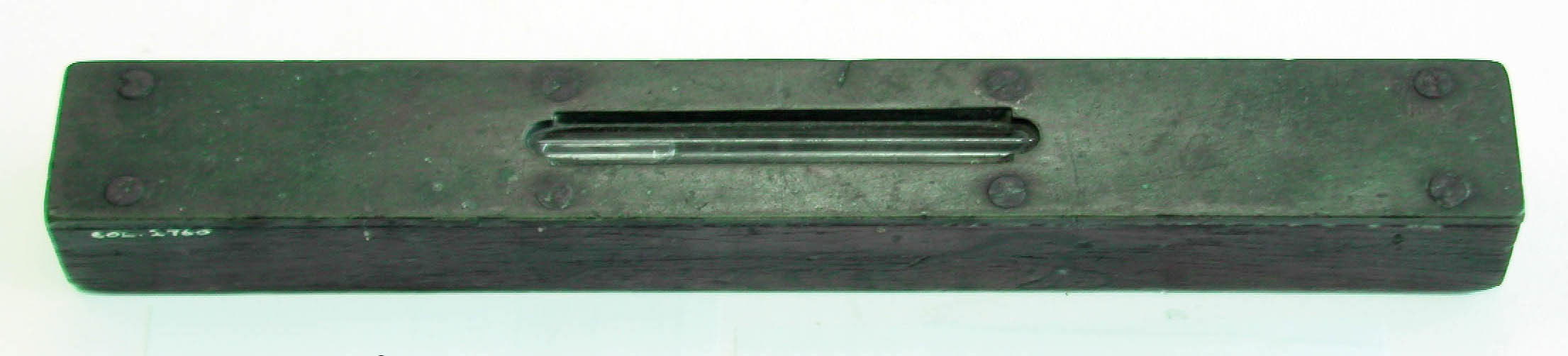
A traditional spirit level tool (Source: Wikimedia Commons)
A handsaw cuts timber, plywood and poles to the lengths in the plan. Its teeth cut on the push stroke, so start with short, light strokes along a pencil line and let the weight of the saw do the work. A sharp blade and a firm handle improve accuracy and reduce strain. Where electric power is available, a circular saw with a blade guard, usually 7 to 10 inches in diameter, cuts large timber sections and plywood sheets faster, but it needs eye protection, a steady stance and a sharp, undamaged blade.
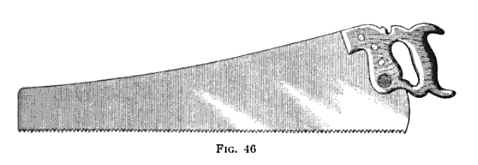
Traditional handsaw with wooden handle (Source: Wikimedia Commons)
A drill makes holes for bolts, screws, hinges and cable runs. A hand drill suits a small job, while a corded or cordless power drill with variable speed drives screws and bores holes in timber and metal much faster. Choose a bit that suits the material (a wood bit for timber, a masonry bit for blocks) and replace bits when they become dull. Check that the battery is charged or that the cable is undamaged before starting.
Pliers grip, bend, twist and cut wire and small fittings. In poultry house construction they are used to tie binding wire on reinforcement, twist wire mesh onto frames and fix clips on cage and nest-box fittings. Pliers with insulated handles give some protection when working near wiring, but they are never a substitute for switching the power off.
A chisel shapes timber, cuts joints and removes waste wood with precision. It is used for the notches that let a rafter sit on a wall plate and for the housing of a door hinge. Keep the cutting edge sharp, cut away from your body, and clamp the timber rather than holding it in your hand.
Equipment means the larger, often powered machines that do heavy work on a construction site. A smallholder may build with hand tools and hire a machine for a day when a job is too heavy, while a commercial farm may use equipment throughout. A hired machine is run by a trained operator, and the farmer's job is to prepare the site, show the operator the layout and keep everyone else clear of the working area.
| Name | Specification | Use |
|---|---|---|
| Bulldozer | Tracked machine with a front blade, driven by a trained operator | Clearing bush and stumps and levelling a house platform on a large site |
| Cranes | Truck-mounted or mobile crane with a rated lifting capacity | Lifting steel roof trusses, prefabricated frames or tanks into position on large houses |
| Dump trucks | Tipping body, loaded by volume or by mass | Hauling sand, ballast, hardcore, quarry dust and murram to the site, and carting away spoil |
| Mixer | Drum concrete mixer, commonly 100 to 200 litres, petrol, diesel or electric | Mixing cement, sand, ballast and water for foundations and floors |
| Forklifts | Diesel or electric truck with forks for pallets | Moving pallets of blocks, cement and roofing sheets on site, and later pallets of feed in the store |
A bulldozer pushes soil with its front blade. On a sloping or bushy site it clears vegetation, removes stumps and cuts a level platform so that the house floor sits above the surrounding ground and rainwater drains away. Working only on the footprint the plan shows, rather than clearing more land than needed, saves cost and leaves trees that give shade and windbreak.
A crane lifts heavy or awkward loads that workers cannot raise by hand. On large steel-framed houses it places trusses and roof sheets, and it can set feed bins or water tanks on their stands. The load must stay within the crane's rated capacity, the ground under it must be firm, and nobody may stand under a raised load.
A dump truck carries bulk materials such as sand, ballast, hardcore and quarry dust to the site and tips them where they are needed. It also removes surplus soil. Order materials by the volume the job needs so that heaps are not left to wash away or to block the working area.
A concrete mixer turns a drum that blends cement, sand, ballast and water into a uniform mix much faster and more evenly than turning the mix by hand with a shovel. Measure the materials by volume with the same container each time. A commonly taught nominal mix for ordinary floor concrete is 1 part cement, 2 parts sand and 4 parts ballast by volume, but the mix on the drawing always takes priority. Wash the drum out immediately after the last batch, because hardened cement inside the drum ruins it.
A forklift lifts and moves loads on pallets. On a building site it moves stacks of blocks, bags of cement and bundles of roofing sheets from the delivery point to where they are needed. A building contractor on a large layer or broiler site may use one, and the same machine later handles pallets of bagged feed in the store. Only trained operators drive it, and loads must be balanced on the forks and carried low.
Materials form the physical body of the poultry house. They are chosen for durability, cost and suitability to the climate, and the right choice makes the house more comfortable for the birds, cheaper to maintain and easier to keep free of disease. Smooth, hard surfaces can be washed and disinfected, while rough or porous ones hold dirt and pathogens.
Cement is the binder in concrete, mortar and plaster. Ordinary Portland cement is bought in 50 kg bags. It hardens when mixed with water, so bags must be stored in a dry shed, raised off the floor on pallets, and used in the order they were delivered. A bag that has lumped into hard balls is no longer usable for structural work. Concrete made with cement forms the foundation and the washable floor of the house.
Sand is the fine aggregate in concrete and mortar. It should be clean, sharp and free of clay, silt, salts and plant matter, which weaken the mix and cause cracks. Building sand fills the gaps between the coarser ballast and gives the mortar its body. Buy sand by the volume needed, and keep it covered or on a hard standing so rain and soil do not contaminate it.
Blocks are the walling units. Concrete blocks and machine-cut stone blocks give strong, permanent walls that resist termites, rodents and fire, and a plastered or smooth surface washes easily. Hollow blocks are lighter and cheaper than solid ones, and sizes differ by manufacturer, so the plan should state the size used. Lay blocks in staggered courses with full mortar joints and check each course with a level. Where walls must be open for ventilation, the lower part is built in blocks and the upper part is left open with wire mesh.
Quarry dust is the fine crushed-rock by-product of stone quarries. It is used with or in place of part of the sand in block making, floor screeds and as a compacted bed under floors, and it is usually cheaper than river sand. It holds water, so it is mixed with care, and it should be kept clean of soil and organic matter. Using quarry dust rather than sand dug from riverbeds also reduces damage to rivers.
Create a free account to open more of this chapter.
Free: practical guides, quick cards, workplace scenarios and more.
Create a free accountThis chapter covered the essential tools, equipment, and materials needed for constructing poultry structures, emphasizing their roles and proper use in the building process. It then explored the criteria for selecting an appropriate site, considering factors such as drainage, ventilation, and accessibility to ensure optimal poultry health and productivity. The design of poultry structures was examined with attention to layout, space requirements, and environmental control to support bird welfare. Detailed steps for constructing poultry houses were outlined, highlighting best practices for durability and functionality. The importance of maintaining accurate records related to construction and upkeep was discussed to facilitate effective management and future repairs. Waste management strategies were introduced to promote hygiene and environmental sustainability within poultry operations. The chapter also identified key poultry house equipment and materials, followed by guidance on their correct installation to support efficient poultry production. Finally, the development and use of poultry production manuals were addressed as vital tools for standardizing procedures and enhancing operational consistency.
At the start of this chapter we promised you would be able to:
Tick each one you can genuinely do.
So, are you there yet?
You're competent when you can confidently do 50% or more of what this chapter promised.
Sign in to record how you're doing.