Improving soil fertility is essential for sustainable animal production in Kenya, as healthy soils support the growth of nutritious fodder crops and pastures. Effective soil management ensures that livestock have access to quality feed, which directly influences their productivity and health. However, enhancing soil fertility often involves handling fertilizers, soil amendments, and agrochemicals that may pose risks to workers if proper safety measures are not observed. This chapter begins by focusing on the personal protective equipment (PPE) necessary for safely conducting soil fertility improvement activities on farms and related animal production environments.
3.1 Personal protective equipment
The use of personal protective equipment is critical in animal production settings when applying fertilizers, pesticides, or engaging in soil amendment activities to improve soil fertility. In Kenya, where many smallholder farmers and agricultural workers may lack formal training, PPE serves as a vital barrier against chemical exposure, physical injury, and contamination. Understanding the types, proper use, and maintenance of PPE protects workers’ health, ensures compliance with safety regulations, and promotes sustainable farming practices.

Personal protective equipment (PPE) (Source: 5f700936fcc590f8)
3.1.1 Types of personal protective equipment used in soil fertility improvement
Personal protective equipment in soil fertility management encompasses a variety of gear designed to shield workers from chemical, physical, and biological hazards encountered during soil treatment activities. The main types of PPE include protective clothing, respiratory protection, hand protection, eye protection, and foot protection. Each type corresponds to specific risks posed by different fertilizers and soil conditioners used in animal production.
Protective Clothing
- Coveralls or overalls: These garments prevent skin contact with fertilizers and agrochemicals, reducing the risk of irritation and absorption of harmful substances. For example, workers at a dairy cooperative applying lime to acidic soils wear coveralls to avoid direct skin exposure.
- Aprons: Used during mixing or loading of chemical fertilizers, aprons protect the torso and legs from spills and splashes.
- Long-sleeved shirts and trousers: These reduce skin exposure during manual soil amendment, especially when working in hot climates such as those in Rift Valley farms.
Respiratory Protection
- Dust masks and respirators: These are essential when handling powdered fertilizers like ammonium nitrate or lime, which can produce harmful dust. Respirators with appropriate filters protect workers from inhaling airborne particles, as seen in mushroom farms around Nairobi using organic fertilizers.
- Gas masks: Occasionally required when fumigating soils or applying volatile soil fumigants, though less common in typical animal production settings.
Hand Protection
- Chemical-resistant gloves: Made from materials such as nitrile or neoprene, these gloves protect hands from corrosive fertilizers and pesticides. For instance, workers at a poultry farm handling concentrated fertilizer solutions use gloves to prevent burns and dermatitis.
- Heavy-duty leather gloves: Used for mechanical tasks like spreading manure or moving soil amendments to prevent cuts and abrasions.
Eye Protection
- Safety goggles: These prevent splashes of liquid fertilizers or dust particles from entering the eyes. Employees at a county government agricultural extension office often use goggles during fertilizer demonstration sessions.

Clear safety goggles for eye protection (Source: Wikimedia Commons)
- Face shields: Provide full-face protection during high-risk operations such as mixing concentrated chemicals.
Foot Protection
-
Rubber boots: Impervious to chemicals and mud, these boots protect feet from wet and contaminated soils, common in feedlot environments in Western Kenya.
-
Steel-toe boots: Used where there is a risk of heavy objects falling or machinery hazards during soil preparation.
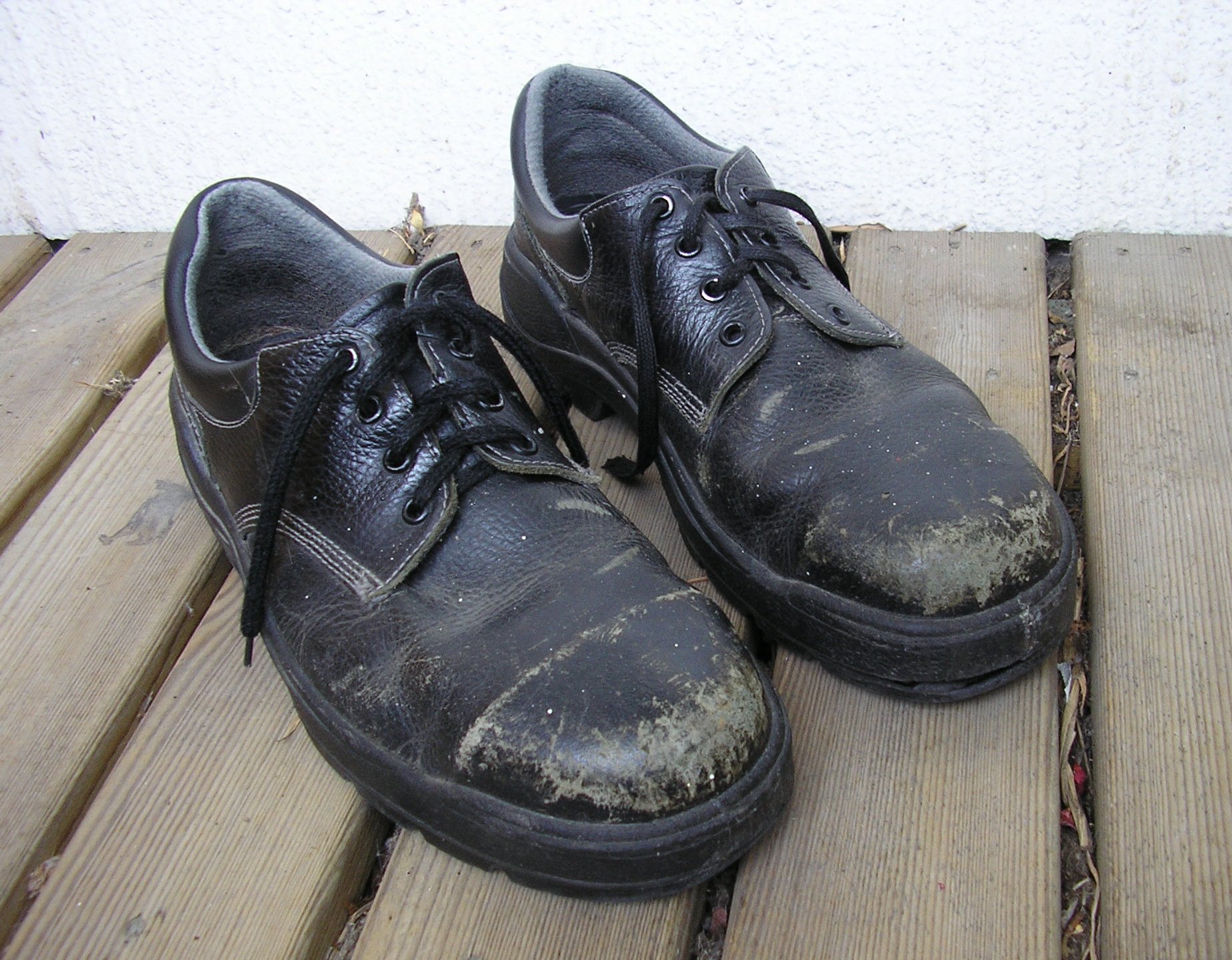
Worn black steel-toe boots on wooden floor (Source: Wikipedia (Steel-toe boot))
3.1.2 Proper use of personal protective equipment in soil fertility activities
Correct use of PPE is as important as having the right equipment. Improper use can lead to exposure despite wearing protective gear, undermining safety efforts. Training and supervision are key in ensuring PPE effectiveness during soil fertility improvement tasks.
- Selection according to hazard: Workers must choose PPE that matches the specific chemical or physical risk involved. For example, handling nitrogen fertilizers requires gloves and dust masks, while spreading manure may only require gloves and boots.
- Correct fitting and adjustment: PPE must fit well to prevent gaps where contaminants can enter. Masks should form a tight seal on the face, and gloves must cover wrists fully. Agricultural workers at a tea cooperative in Kericho are trained to adjust their masks correctly before fieldwork.
- Wearing PPE consistently: PPE should be worn throughout the exposure period, including during mixing, application, and cleanup activities. Partial use can result in skin or respiratory exposure.
- Avoiding contamination transfer: PPE should not be worn outside the work area to prevent carrying contaminants home, protecting families from exposure.
- Removal and disposal: Used disposable PPE must be removed carefully to avoid contact with contaminants and disposed of according to environmental guidelines. Reusable PPE should be cleaned immediately after use.
3.1.3 Maintenance and storage of personal protective equipment
Proper maintenance and storage extend the life of PPE and ensure its continued protective function. In rural Kenyan farms, where resources are limited, maintaining PPE in good condition is crucial for cost-effectiveness and safety.
- Regular cleaning: Reusable PPE such as gloves, boots, and goggles must be washed with clean water and mild detergent after each use to remove residues. For example, workers at a dairy farm regularly clean their rubber boots to prevent fungal growth.
- Inspection for damage: Before use, PPE should be checked for tears, cracks, or worn areas that compromise protection. A torn glove or cracked mask filter offers little defense against chemicals.
- Proper drying and storage: After cleaning, PPE should be dried thoroughly in a clean, shaded area to prevent degradation from sunlight and moisture. Storage should be in a dry, dust-free location away from direct sunlight.
- Replacement schedules: PPE has a limited lifespan; gloves and masks may need replacement after a few uses, depending on exposure intensity. Extension officers advise farmers to keep records of PPE use to track replacement needs.
- Avoiding cross-contamination during storage: Clean PPE must be stored separately from contaminated gear to prevent accidental exposure.
3.1.4 Challenges in PPE use and ways to overcome them in animal production settings
Despite the availability of PPE, challenges such as discomfort, cost, and lack of awareness hinder consistent use among soil fertility workers in Kenya’s animal production sector. Addressing these barriers is essential for effective safety management.
Challenges
- Heat and discomfort: PPE can be hot and restrictive, discouraging its use during long hours of outdoor work in hot regions like Eastern Kenya.
- High cost and limited availability: Smallholder farmers may find it expensive to acquire quality PPE, leading to reliance on inadequate substitutes.
- Lack of training: Many workers do not understand the importance of PPE or how to use it properly, increasing risk of exposure.
- Cultural attitudes: Some workers perceive PPE as unnecessary or a sign of weakness, reducing compliance.
- Maintenance difficulties: Inadequate facilities for cleaning and storing PPE may lead to rapid deterioration or contamination.
Ways to Overcome Challenges
- Promoting appropriate PPE selection: Choosing lightweight, breathable materials suited for hot climates can enhance comfort and compliance. For example, cotton coveralls with chemical-resistant coatings are used in Machakos farms.
- Subsidies and bulk purchasing: Farmer cooperatives can negotiate bulk purchases of PPE at reduced costs, making them more affordable.
- Training and awareness campaigns: Agricultural extension officers can conduct demonstrations and workshops emphasizing PPE benefits in preventing health issues.
- Incorporating PPE use into farm policies: Formalizing PPE requirements in workplace safety guidelines reinforces expectations.
- Providing proper maintenance facilities: Establishing designated PPE cleaning and storage areas on farms increases equipment longevity and safety.
Practice Questions
- Explain why personal protective equipment is critical when applying fertilizers in animal production. (6 marks)
- Identify and describe five types of personal protective equipment used during soil fertility improvement activities. (10 marks)
- Outline six steps for the correct use of PPE when handling soil amendments. (12 marks)
- Discuss four common challenges faced in the use of PPE in Kenyan animal production settings and propose solutions for each. (12 marks)
The rest of this chapter
🔒Create a free account to open more of this chapter.
Free: practical guides, quick cards, workplace scenarios and more.
Create a free account 🔒3.2 Soil fertility
Soil fertility is the soil's capacity to supply essential nutrients and water in adequate amounts and proper balance for plant growth. It covers both the chemical and the physical properties of the soil that influence plant development, especially forage crops…
🔒3.3 Fertilizers
Fertilizers play a critical role in improving soil fertility, especially in the context of animal production where healthy forage and fodder crops depend on nutrient-rich soils. In Kenya, where many livestock farmers rely on pasture and fodder production, the…
🔒3.4 Soil amendments
Soil amendments are critical in animal production systems to enhance soil fertility, structure, and water retention. Farms intensively used for fodder production or pasture improvement often face challenges such as nutrient depletion, soil acidity, sodicity an…
🔒3.5 Soil Conservation Measures
Soil conservation is critical in animal production systems within Kenya where soil degradation threatens pasture productivity and forage quality. Effective conservation practices help maintain soil structure, fertility, and moisture, ensuring sustainable forag…
Chapter Summary
Improving soil fertility requires careful attention to safety, starting with the use of personal protective equipment to prevent exposure to harmful substances during soil management activities. Understanding soil fertility involves recognizing the essential nutrients and conditions that enable healthy plant growth. Fertilizers play a crucial role by supplying these nutrients in forms that plants can readily absorb, thereby enhancing productivity. In addition to fertilizers, soil amendments help improve soil structure, pH balance, and nutrient retention, creating a more favorable environment for crops. Implementing effective soil conservation measures is vital to prevent erosion, nutrient loss, and degradation, ensuring long-term sustainability. Together, these components form an integrated approach to maintaining and enhancing soil health for agricultural success.
Self-Assessment
🔒 PDFDownload this self-assessment, with answers
A. Written Assessment
-
Which of the following is NOT considered personal protective equipment (PPE) when handling soil amendments? (2 marks)
a) Gloves
b) Safety boots
c) Sunglasses
d) Respirator mask
-
Explain why wearing PPE is essential when applying fertilizers on a dairy farm. (3 marks)
🔒20 more in this section.
Chapter Examination Questions
🔒 PDFDownload these examination questions, with worked answers
SECTION A (40 Marks) - Answer ALL Questions
- Identify five types of personal protective equipment (PPE) used when handling fertilizers on a dairy farm and explain their importance. (4 marks)
- Explain how soil organic matter influences soil fertility in pasture lands. (4 marks)
🔒18 more in this section.
