Operating tillage machinery is a fundamental skill for animal production professionals involved in preparing land for fodder crops, pasture establishment, or other agricultural activities that support livestock. Proper use of tillage equipment improves soil structure, enhances water infiltration, and creates a suitable seedbed, which directly influences the quality and quantity of forage production. In Kenya, where smallholder and commercial farms alike depend on efficient land preparation to maximize productivity, mastery of tillage machinery operation is essential for sustainable animal production. This chapter focuses on the personal protective equipment required and the operation of key tillage machinery such as ploughs and tillers.
2.1 Personal Protective Equipment
Personal protective equipment (PPE) plays a critical role in safeguarding operators of tillage machinery against hazards such as dust, flying debris, noise, and mechanical injuries. In the Kenyan agricultural context, where many farms are family-run or involve hired casual labor, ensuring proper PPE use reduces accident rates and maintains workforce health. PPE also helps comply with occupational safety regulations enforced by bodies like the Directorate of Occupational Safety and Health Services (DOSHS).
2.1.1 Types of Personal Protective Equipment for Tillage Machinery Operators
Operators require specific PPE tailored to the risks posed by tillage machinery. The main types include:
- Safety Helmets: Protect the head from falling objects or accidental contact with parts of the machinery during operation or maintenance.

Man wearing a safety helmet (Source: Wikimedia Commons)
- Protective Eyewear: Shields the eyes from dust, soil particles, and flying debris generated during tillage activities.

Clear protective eyewear for safety (Source: Wikimedia Commons)
- Ear Protection: Ear muffs or plugs reduce exposure to high noise levels from engines and mechanical parts, preventing hearing loss.

Green ear protection earmuffs (Source: Wikimedia Commons)
- Hand Gloves: Durable gloves protect hands from cuts, abrasions, and contact with hot or moving parts.
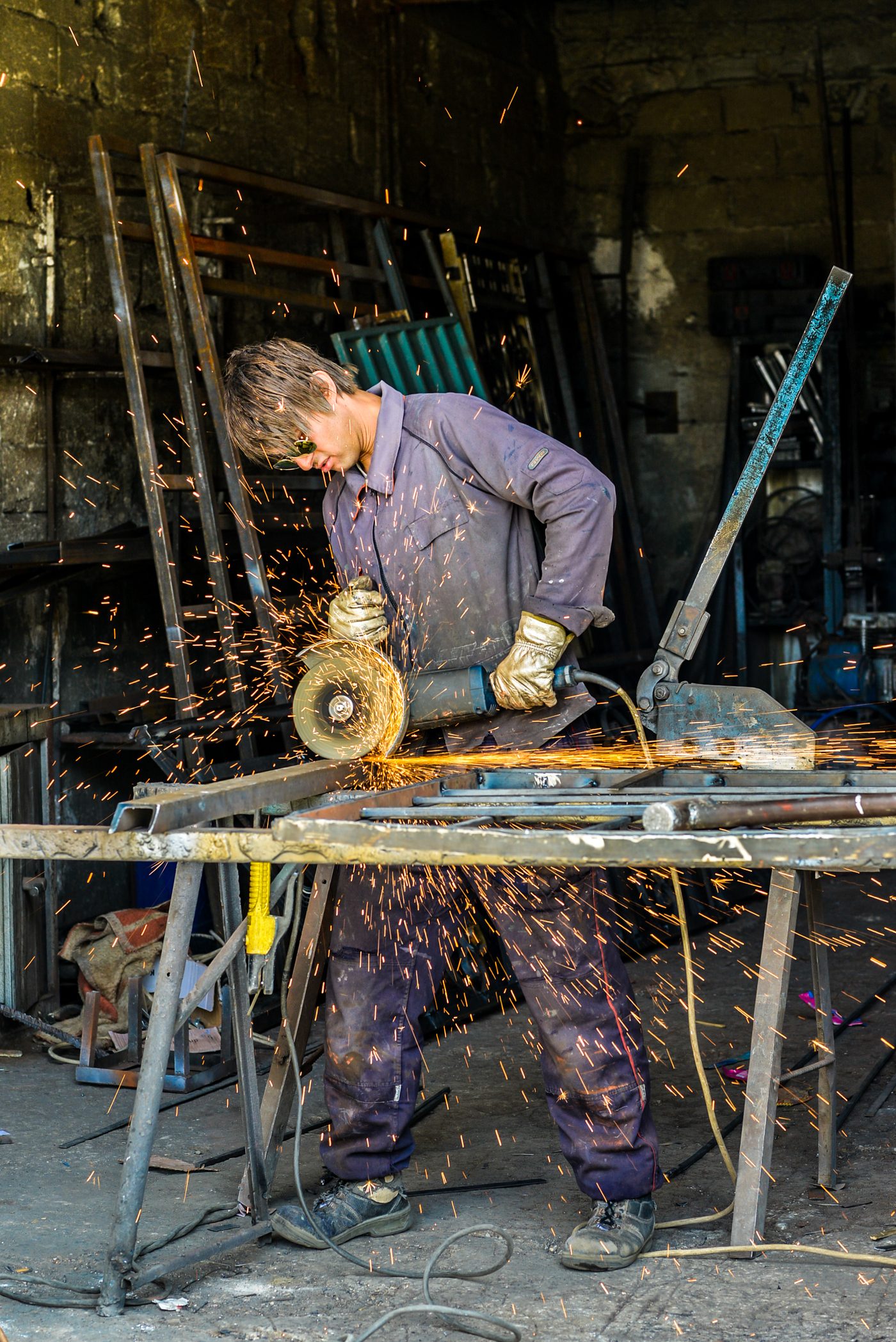
Worker wearing hand gloves using grinder (Source: Wikimedia Commons)
- Safety Boots: Steel-toed boots safeguard feet from heavy equipment impacts and provide grip on uneven or slippery terrain.
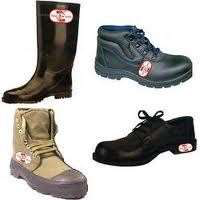
Four types of safety footwear commonly used in construction and engine (Source: PLUMB 5 LEARNING GUIDE-1 (1))
2.1.2 Importance of PPE Compliance in Farm Machinery Operation
Adherence to PPE protocols is vital to prevent injuries and ensure continuous farm operations. The significance includes:
- Reducing Injury Risks: PPE minimizes exposure to mechanical hazards, reducing incidents such as cuts, bruises, or fractures that could incapacitate operators.
- Protecting Against Environmental Hazards: PPE guards against dust inhalation and eye irritation, common in dry, dusty Kenyan farms during ploughing seasons.
- Enhancing Operator Confidence: Knowing they are protected encourages operators to focus on machinery control, improving efficiency and safety.
- Legal Compliance: Observing PPE use aligns with Kenyan labor laws and safety standards, protecting farm owners from legal liabilities.
- Promoting a Safety Culture: Consistent PPE use sets a positive example for other farm workers, embedding safety as a core value.
2.1.3 Inspection and Maintenance of Personal Protective Equipment
Effective PPE use requires regular inspection and upkeep to ensure functionality. Key maintenance practices include:
- Visual Inspection Before Use: Checking helmets for cracks, gloves for tears, and boots for sole wear to avoid compromised protection.
- Cleaning After Use: Removing dust and soil from eyewear and gloves to maintain visibility and hygiene.
- Storage in Dry Conditions: Keeping PPE in a clean, dry place prevents material degradation caused by moisture or sunlight.
- Replacing Damaged PPE Promptly: Discarding worn-out or broken items and acquiring replacements to maintain safety standards.
- Training Operators on PPE Care: Educating farm workers on proper PPE handling extends its lifespan and ensures readiness.
2.1.4 Challenges in PPE Adoption and How to Address Them
Despite clear benefits, PPE adoption faces obstacles on Kenyan farms. The challenges and mitigation strategies are:
Challenges in PPE Adoption
- Cost Constraints: Small-scale farmers may find PPE procurement expensive, leading to inadequate or no use.
- Comfort Issues: Some operators avoid PPE due to discomfort or heat, especially under Kenya's tropical climate.
- Lack of Awareness: Insufficient knowledge about PPE importance results in negligence or misuse.
- Cultural Attitudes: Traditional beliefs or casual attitudes may downplay the need for protective gear.
- Availability of Quality PPE: Access to durable and certified PPE can be limited in rural areas.
How to Address PPE Challenges
- Subsidies and Group Purchasing: Farmer cooperatives can bulk-buy PPE at lower prices, making it affordable for members.
- Designing Climate-Appropriate PPE: Selecting lightweight, breathable materials improves comfort for operators working in hot conditions.
- Continuous Safety Training: Regular education sessions increase awareness and reinforce the importance of PPE.
- Leadership by Example: Farm managers and supervisors consistently using PPE encourage workers to follow suit.
- Improving Supply Chains: Encouraging local businesses to stock quality PPE facilitates access for rural farmers.
Practice Questions
- List five types of personal protective equipment essential for tillage machinery operators and explain the purpose of each. (10 marks)
- Explain why compliance with PPE use is crucial on farms operating tillage machinery in Kenya. (10 marks)
- Describe key maintenance practices necessary to ensure the effectiveness of PPE used during tillage operations. (10 marks)
- Discuss three challenges faced by farmers in adopting PPE for tillage machinery operation and suggest practical solutions for each. (10 marks)
The rest of this chapter
🔒Create a free account to open more of this chapter.
Free: practical guides, quick cards, workplace scenarios and more.
Create a free account 🔒2.2 Operation of Tillage Machinery
Operating tillage machinery effectively requires understanding the characteristics, functions, and safe handling of different implements used to prepare soil for animal feed production. In Kenya, where mixed crop-livestock systems dominate, mastering ploughs a…
🔒2.3 Maintenance of tillage machinery
Maintenance of tillage machinery is critical for animal production farms in Kenya, where soil preparation directly impacts forage quality and pasture productivity. Proper upkeep ensures equipment reliability, reduces downtime during peak planting seasons, and…
🔒2.4 Storage of tillage machinery
Proper storage of tillage machinery protects equipment from environmental damage and theft, especially important for animal production enterprises in Kenya where machinery investment is significant. Storage conditions influence the longevity and readiness of e…
Chapter Summary
This chapter covered the essential aspects of operating tillage machinery with a focus on safety, efficiency, and equipment care. It began by emphasizing the importance of personal protective equipment to safeguard operators from potential hazards during machinery use. The operation of tillage machinery was explored in detail, highlighting the specific functions and handling of ploughs and tillers for effective soil preparation. Proper maintenance practices were outlined to ensure the longevity and reliable performance of tillage equipment. The chapter concluded with guidance on the appropriate storage methods to protect machinery from damage and deterioration when not in use. Together, these topics provide a comprehensive understanding necessary for proficient and safe tillage machinery operation on the farm.
Self-Assessment
🔒 PDFDownload this self-assessment, with answers
A. Written Assessment
- What is the primary purpose of using personal protective equipment (PPE) when operating tillage machinery? (2 marks)
- Identify three types of personal protective equipment essential for operating a plough. (3 marks)
🔒20 more in this section.
Chapter Examination Questions
🔒 PDFDownload these examination questions, with worked answers
SECTION A (40 Marks) - Answer ALL Questions
- Identify five types of personal protective equipment (PPE) essential when operating tillage machinery on a dairy farm in Nakuru County. (4 marks)
- Explain the main safety precautions to observe when using a mouldboard plough in a livestock farm setting. (4 marks)
🔒18 more in this section.
