
By the end of this chapter, you will be able to:
Mastering these skills helps you work safely and effectively, setting a strong foundation for successful crop production in real farming.
Compiled by: Harun Kimani
Preparing planting materials is a fundamental step in annual crop production, directly influencing crop establishment and yield quality. In the Kenyan agricultural context, where smallholder farmers and extension officers play a vital role, understanding the preparation and selection of planting materials ensures sustainable productivity and resource efficiency. This chapter focuses on defining key terms related to planting materials, assembling the necessary land preparation tools and equipment, and understanding their uses. Practical competence in these areas supports effective crop establishment in diverse Kenyan agro-ecological zones.
Understanding the terminology associated with planting materials is essential for agriculture and extension professionals to communicate effectively and implement best practices. The following terms are commonly used within Kenyan crop production systems:
Seed refers to the mature fertilized ovule of a plant that contains the embryo and is capable of developing into a new plant. In Kenya, certified seeds from institutions such as Kenya Seed Company are preferred for higher germination rates and disease resistance.
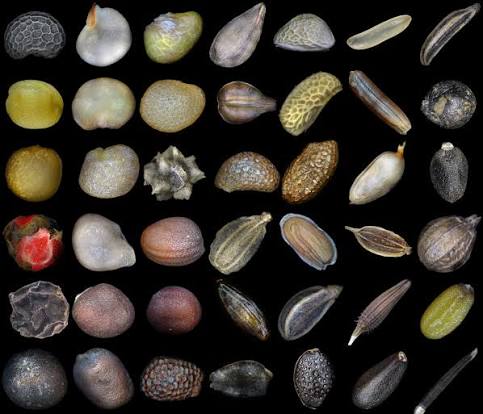
Figure: examples of what seeds looks alike.
A seedling is a young plant that has emerged from a seed and is in its early growth stage. Seedlings are often raised in nurseries before transplanting to the field, especially for crops like tomatoes and cabbages in Kenyan horticulture.
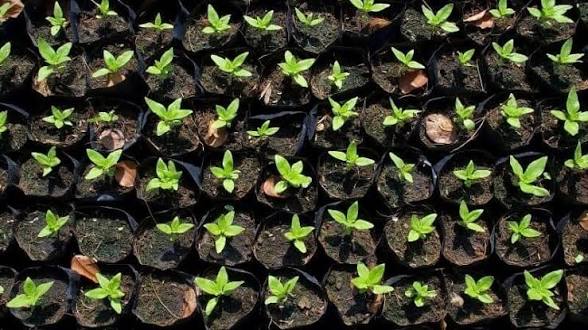
Figure: image of sleeved seedlings.
A propagule is any plant material used to propagate a new plant, including seeds, cuttings, tubers, bulbs, or grafts. For example, sweet potato vine cuttings serve as propagules in Kenyan farming systems.
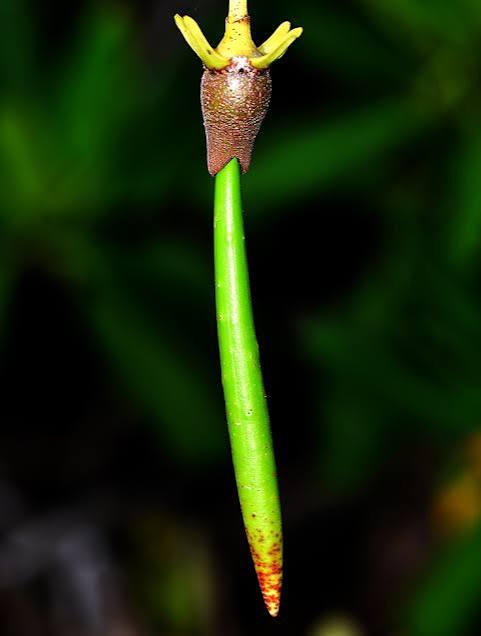
Figure: propagule as a planting material.
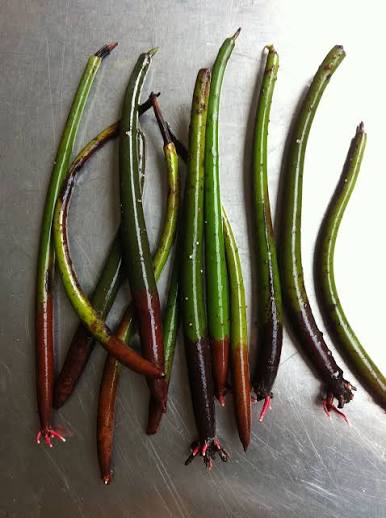
Figure(example2): propagule planting materials.
Germination is the process by which a seed develops into a seedling, involving the emergence of the radicle and plumule. Factors affecting germination include moisture, temperature, and seed viability, critical considerations during planting in regions such as Central Kenya.
Viability refers to the ability of a seed or propagule to germinate and develop into a healthy plant. Seed viability testing is often conducted by extension officers to ensure planting materials meet quality standards before distribution.
Planting material encompasses any biological material used for crop establishment, including seeds, seedlings, cuttings, tubers, or bulbs. Selection of appropriate planting material impacts crop performance and pest and disease management.
Certified seed is seed that has been officially inspected and meets prescribed standards of purity, germination, and health. Use of certified seed is promoted by the Kenya Plant Health Inspectorate Service (KEPHIS) to improve crop yields and food security.
Seed treatment involves applying chemicals or biological agents to seeds before planting to protect against pests and diseases. For instance, maize seeds may be treated with fungicides to prevent soil-borne diseases common in Rift Valley farms.
A nursery is a controlled environment where seedlings are raised before transplanting to the field. Nurseries are essential in Kenyan horticulture, enabling farmers to produce healthy seedlings for crops such as onions and peppers.
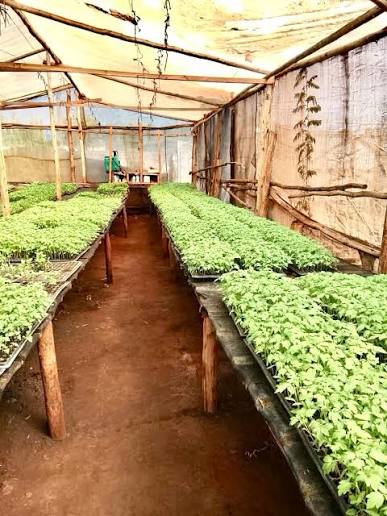
Figure: This is an outlook of a nursery structure.
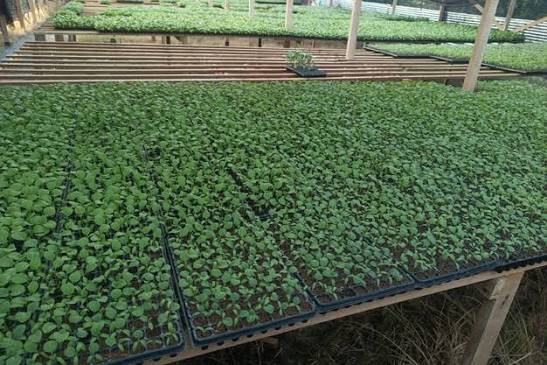
Figure: vegetable nursery.
Cuttings are sections of stems, roots, or leaves used as vegetative planting material to propagate plants. For example, cassava farmers in Western Kenya use stem cuttings as planting material for rapid multiplication.
Efficient land preparation requires assembling the correct tools and equipment suited to the scale and type of crop production. In Kenya, extension officers advise farmers on tool selection based on soil type, farm size, and mechanization level.
Land preparation puts the soil in a fit state to receive planting material. It aims to:
Assembling is gathering every tool, implement and machine needed for the operation, and confirming each one is complete, clean, sharp and working before work begins. It matters because:
Pre-assembly checks: inspect each tool for damage, cracked or loose handles, blunt edges, rust, soil and plant residues, missing bolts, and for machinery, oil and fuel levels, tyre pressure and greasing points.
| Function | Tools and equipment |
|---|---|
| Clearing vegetation | Axe, panga, slasher, sickle, mower |
| Primary tillage | Mouldboard plough, disc plough, fork jembe, jembe, mattock |
| Secondary tillage | Disc harrow, spike harrow, rotavator, rake, hoe |
| Shaping the land | Ridger, hoe, spade |
| Transport | Wheelbarrow, tractor and trailer |
Primary tillage is the first, deep working of the soil, which cuts, lifts and inverts it and buries residues. Secondary tillage is the lighter working that follows, breaking clods and levelling the surface to leave a fine seedbed.
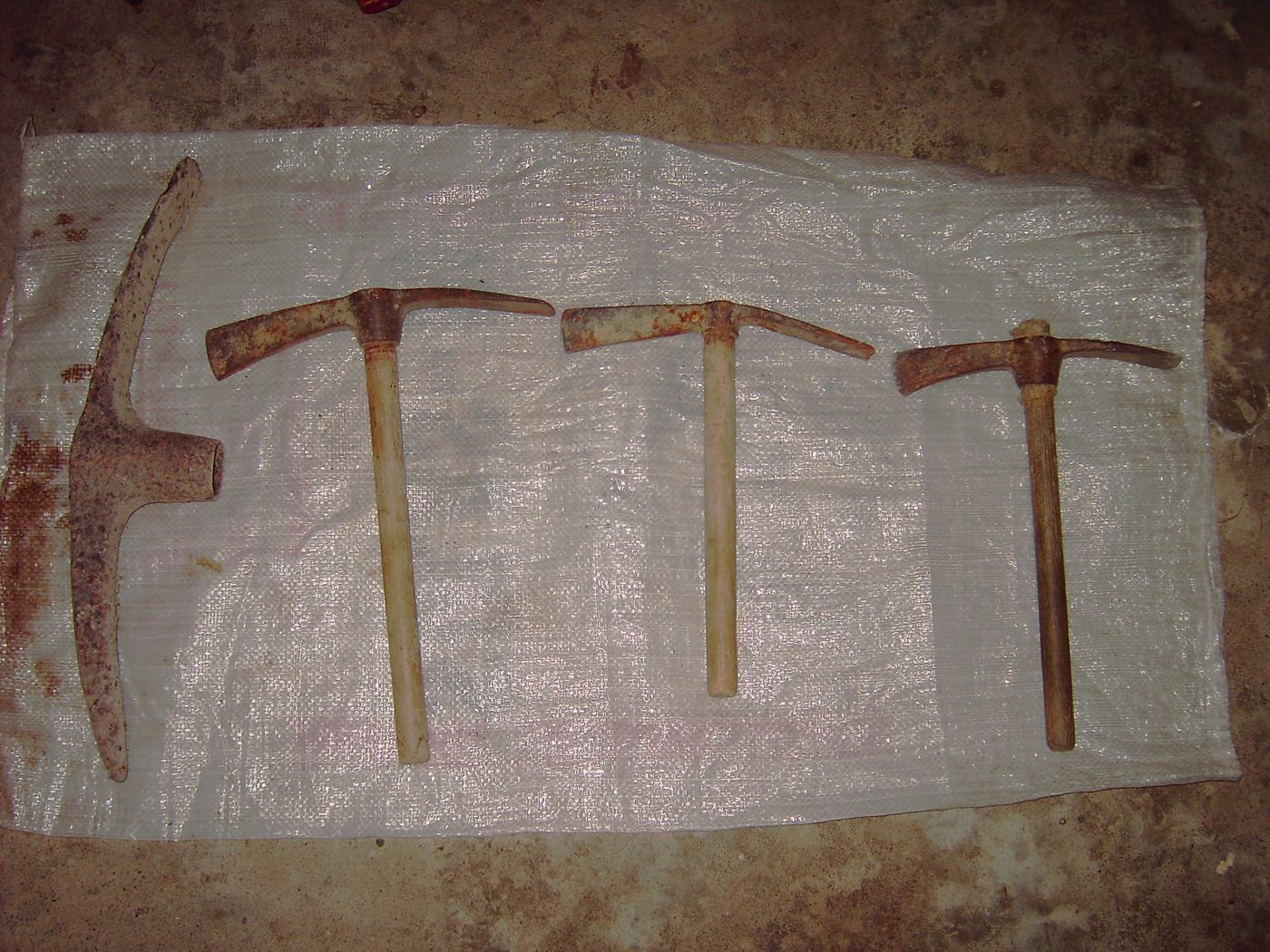
Four mattocks laid out on a white sheet (Source: Wikimedia Commons)
In regions with larger farms or where mechanization is limited, animal-drawn implements improve efficiency. These include:
Mechanical tools are increasingly adopted by commercial farmers and cooperative groups in Kenya for timely land preparation. These include:
Gathering tools before land preparation ensures workflow efficiency. Tools should be inspected for:
Proper assembly also involves organizing tools at the farm site for easy access during land preparation activities.
Personal protective equipment (PPE) is vital for farmers and extension workers during land preparation. This includes:
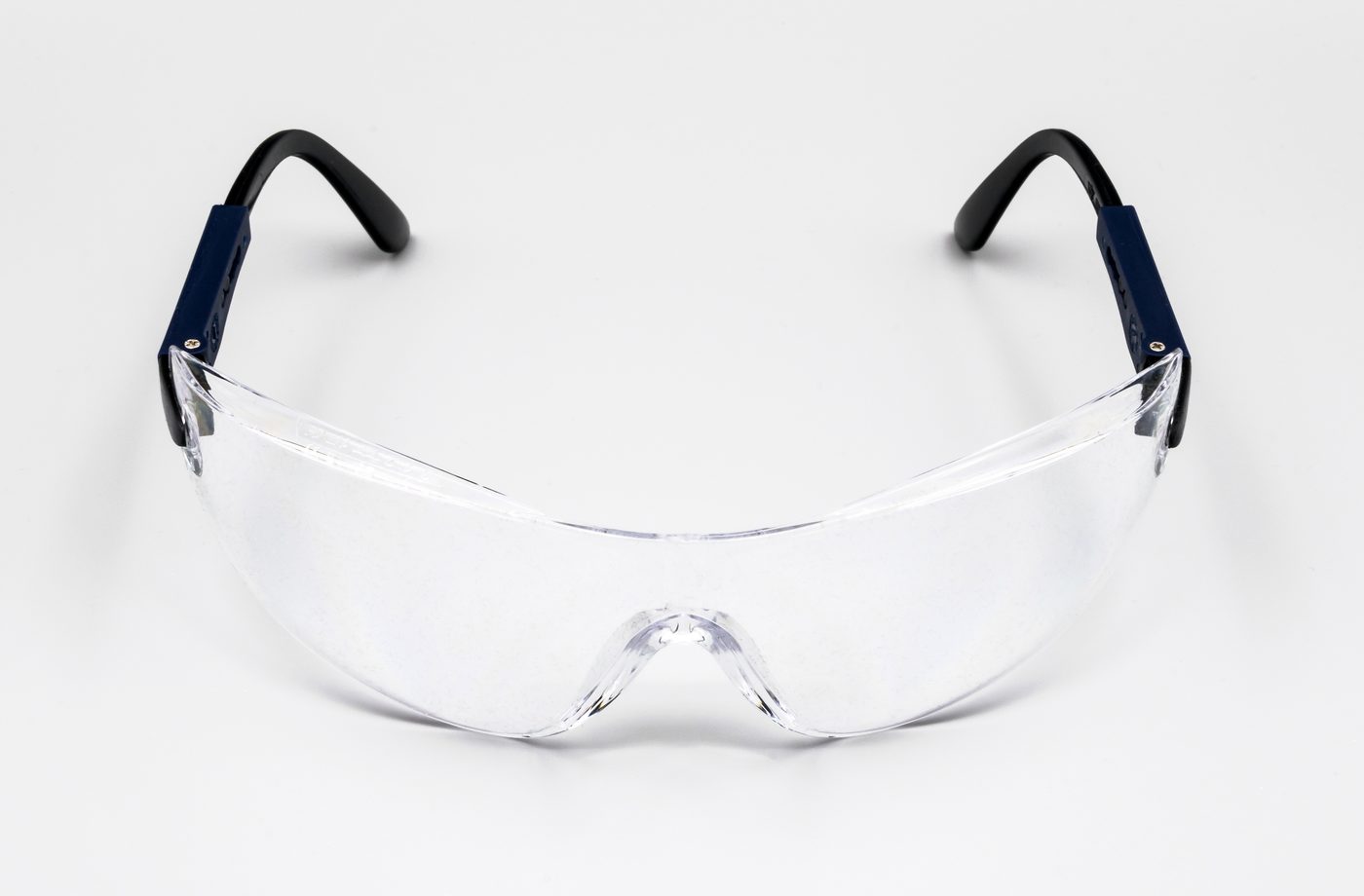
clear safety glasses for eye protection (Source: Wikimedia Commons)
Kenyan agricultural extension services emphasize PPE use to reduce occupational hazards during farm operations.
Define the following terms: seed, propagule, and certified seed. (6 marks)
Explain the importance of assembling land preparation tools before starting fieldwork. (5 marks)
Describe three types of land preparation equipment used by Kenyan smallholder farmers and their primary uses. (9 marks)
Discuss safety precautions farmers should take when using land preparation tools. (5 marks)
Create a free account to open more of this chapter.
Free: practical guides, quick cards, workplace scenarios and more.
Create a free accountThis chapter focused on the preparation of planting materials essential for successful annual crop production. It began with defining key terms related to planting material preparation and proceeded to detail the various land preparation tools and equipment, including axes, pangas, rakes, slashers, and machinery such as tractors and rotavators. The chapter explained the specific uses of each tool and equipment in preparing the land for planting and emphasized the importance of their proper maintenance to ensure longevity and efficiency. It then described the different types of planting materials, ranging from seeds and seedlings to cuttings, slips, and tubers, highlighting their roles in crop establishment. The discussion extended to critical field management practices such as mulching, gapping, thinning, training, fertilizer application-pruning, and trellising, which support crop growth and yield. Finally, the chapter underscored the integration of these practices in carrying out effective field management for annual crops.
Type: Individual
| Tools & Equipment | Materials |
|---|---|
| Cutting tools | Fresh healthy seeds |
| Measuring cylinder | Clean water |
| Sieve | Planting trays or seedbeds |
| Pen | Labels |
| Clean cloth or paper towels |
| S/N | Item | Quantity |
|---|---|---|
| 1 | Fresh healthy seeds (maize, beans, or similar) | 200 g per Candidate |
| 2 | Cutting tools (sharp knife or secateurs) | 1 Pc per Candidate |
| 3 | Clean water | Enough for all Candidates |
| 4 | Planting trays or seedbeds | 1 Pc per Candidate |
| 5 | Labels | 2 Pcs per Candidate |
| 6 | Pen | 1 Pc per Candidate |
| 7 | Measuring cylinder (100 ml capacity) | 1 Pc per 5 Candidates |
| 8 | Personal protective equipment (gloves, dustcoat, gumboots) | 1 Set per Candidate |
| 9 | Sieve for seed cleaning | 1 Pc per 5 Candidates |
| 10 | Clean cloth or paper towels | 2 Pcs per Candidate |
| Items to be Evaluated | Marks Available | Marks Obtained | Comments |
|---|---|---|---|
| TASK 1: Identification and Definition of Planting Material Terms | |||
| Wore personal protective equipment (gloves, dustcoat, gumboots) (Award 1 mark for each correctly worn PPE or zero) | 2 | ||
| Assembled required tools and materials (cutting tools, seeds, water, measuring cylinder, sieve, labels, pen) (Award 0.5 marks each for correct identification or zero 0.5x6) | 3 | ||
| Correctly identified and defined five planting material terms (e.g., seed, cutting, graft, tuber, seedling) (Award 1 mark per correctly defined term or zero) | 5 | ||
| Sub-Total | 10 | ||
| TASK 2: Preparation of Planting Materials | |||
| Sorted seeds to remove damaged or immature seeds (Award 2 marks for proper sorting or zero) | 2 | ||
| Cleaned seeds using sieve and removed debris (Award 2 marks for thorough cleaning or zero) | 2 | ||
| Measured 200g of seeds accurately using weighing scale or estimation (Award 2 marks for correct quantity or zero) | 2 | ||
| Prepared seedbed/tray of size approximately 1m x 0.5m and moistened with measured water (approx. 100ml) (Award 3 marks for correct seedbed preparation and watering or zero) | 3 | ||
| Planted seeds uniformly in seedbed/tray (Award 3 marks for uniform seed placement or zero) | 3 | ||
| Labeled the seedbed with correct identification details (Award 2 marks for clear and accurate labeling or zero) | 2 | ||
| Maintained cleanliness and good housekeeping during and after preparation (Award 2 marks for good housekeeping or zero) | 2 | ||
| Sub-Total | 16 | ||
| PRODUCT CHECKLIST | |||
| Prepared seedbed/tray approximately 1m x 0.5m in size (Award 3 marks for correct dimensions or zero) | 3 | ||
| Seed quantity approximately 200g and uniformly placed in seedbed (Award 3 marks for correct quantity and uniformity or zero) | 3 | ||
| Labels correctly attached with clear identification (Award 2 marks for properly attached and legible labels or zero) | 2 | ||
| Clean and organized work area after completion (Award 2 marks for cleanliness and organization or zero) | 2 | ||
| Sub-Total | 10 | ||
| GRAND TOTAL | 36 | ||
Type: Individual
| Tools & Equipment | Materials |
|---|---|
| Panga | Work Gloves |
| Axe | Gumboots |
| Rake | Dustcoat/Overall |
| Slasher | Face Mask |
| Measuring Tape 5m | |
| Sisal Twine 20m |
| S/N | Item | Quantity |
|---|---|---|
| 1 | Panga | 1 Pc per Candidate |
| 2 | Axe | 1 Pc per Candidate |
| 3 | Rake | 1 Pc per Candidate |
| 4 | Slasher | 1 Pc per Candidate |
| 5 | Measuring Tape 5m | 1 Pc per 5 Candidates |
| 6 | Sisal Twine 20m | 1 Roll per 10 Candidates |
| 7 | Work Gloves | 1 Pair per Candidate |
| 8 | Gumboots | 1 Pair per Candidate |
| 9 | Dustcoat/Overall | 1 Pc per Candidate |
| 10 | Face Mask | 1 Pc per Candidate |
| Items to be Evaluated | Marks Available | Marks Obtained | Comments |
|---|---|---|---|
| TASK 1: Assemble Hand Tools for Land Preparation | |||
| Worn all required PPE correctly (Gumboots, Dustcoat/Overall, Work Gloves, Face Mask) (Award 1 mark each for Gumboots, Dustcoat/Overall, Gloves, Face Mask; max 3 marks) | 3 | ||
| Identified and selected the correct hand tools: Panga, Axe, Rake, Slasher (Award 1 mark per tool correctly identified and selected x4) | 4 | ||
| Checked tools for serviceability (sharpness, handle condition, no damage) (Award 3 marks for checking all tools or zero) | 3 | ||
| Measured and marked a 5m x 5m plot using measuring tape and sisal twine (Award 2 marks for correct measurement, 2 marks for proper pegging and marking with twine) | 4 | ||
| Arranged the tools neatly and safely ready for use (Award 2 marks for neat and safe arrangement or zero) | 2 | ||
| Sub-Total | 16 | ||
| PRODUCT CHECKLIST | |||
| All four hand tools assembled and ready for use with no visible defects (Award 4 marks if all tools are assembled and serviceable or zero) | 4 | ||
| The 5m x 5m plot is accurately measured and correctly pegged with sisal twine (Award 5 marks if plot dimensions are accurate within 5cm tolerance and properly marked or zero) | 5 | ||
| Sub-Total | 9 | ||
| GRAND TOTAL | 25 | ||
At the start of this chapter we promised you would be able to:
Tick each one you can genuinely do.
So, are you there yet?
You're competent when you can confidently do 50% or more of what this chapter promised.
Sign in to record how you're doing.