Electrical machine control systems require precise assembly using specialized tools, equipment, and materials to ensure optimal performance and safety. This chapter addresses the fundamental components and instruments necessary for assembling and maintaining electrical machines, focusing on the practical realities faced by electronics engineers in Kenya. Proper identification and use of these tools and materials reduce faults, enhance reliability, and comply with industry standards. The discussion integrates examples from sectors such as hospitals, universities, banks, and county government offices where electrical machine control systems are critical.
3.1 Identification of Tools and Materials
In electronics engineering, especially when dealing with electrical machine controls, identifying the correct tools and materials is essential to achieving accuracy, safety, and efficiency. The diverse nature of electrical systems demands a wide range of instruments, from cutting tools to conduits, each selected according to the specific task and environment. Kenyan electronics engineers working in institutions like Nairobi Hospital or the University of Nairobi must be familiar with these tools to handle installations, repairs, and upgrades effectively.
3.1.1 Cutting Tools
Cutting tools are essential for shaping, trimming, and preparing materials such as wires, cables, and conduit pipes. Precise cutting ensures clean edges that facilitate better electrical connections and reduce risks of short circuits or mechanical failure.
Types of Cutting Tools Used in Electrical Work
- Wire Strippers: Designed to remove insulation from electrical wires without damaging the conductor. Their calibrated notches fit different wire gauges, essential for tasks like preparing cables at a SACCO office.
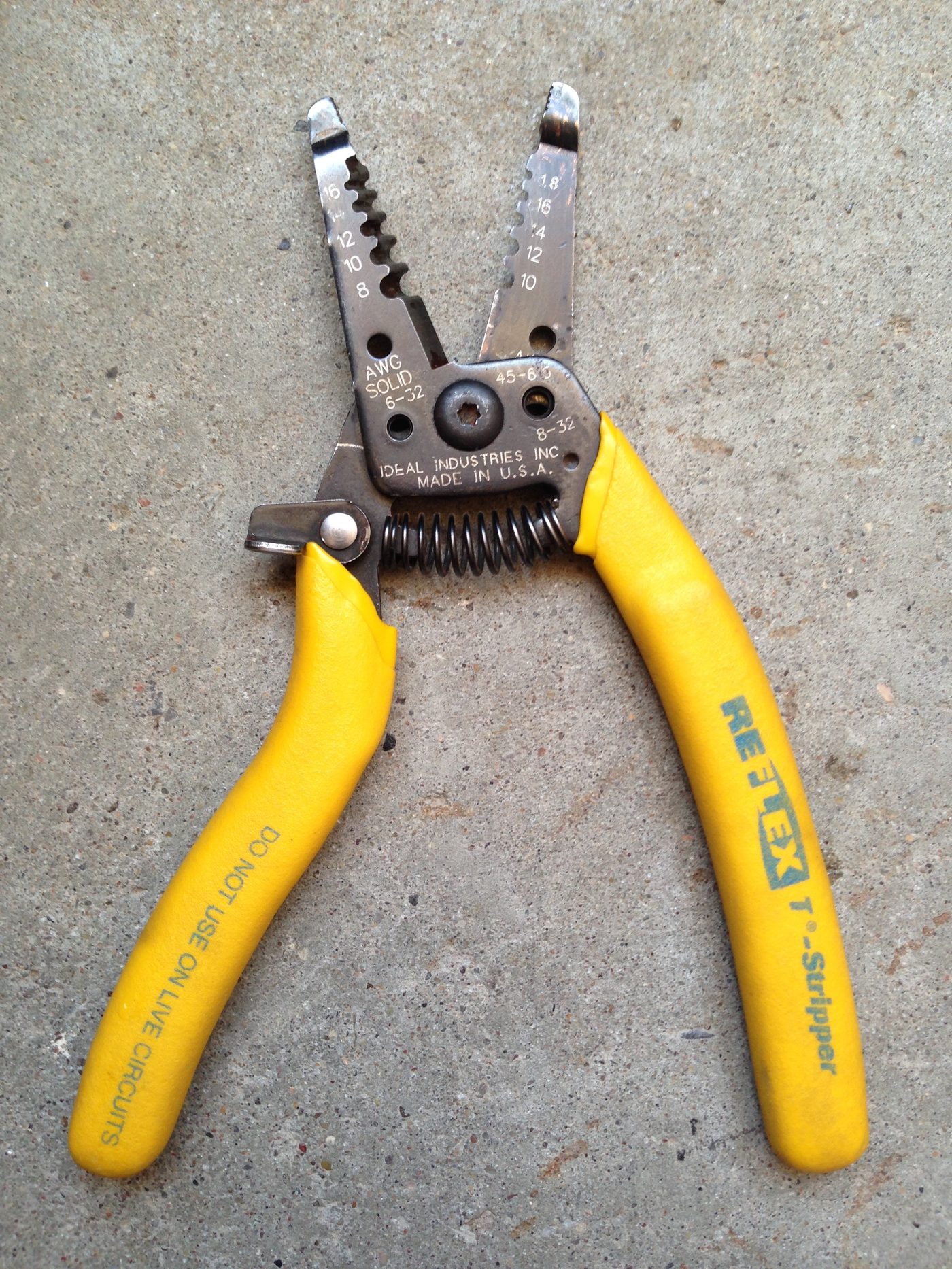
Manual wire strippers with yellow handles (Source: Wikimedia Commons)
- Diagonal Cutters: Also known as side cutters, these tools cut wires flush to surfaces, useful in tight spaces such as control panel assemblies in county government offices.
- Cable Cutters: Larger and more robust, cable cutters are used for thicker electrical cables, for example, during installations in power backup systems at hotels.
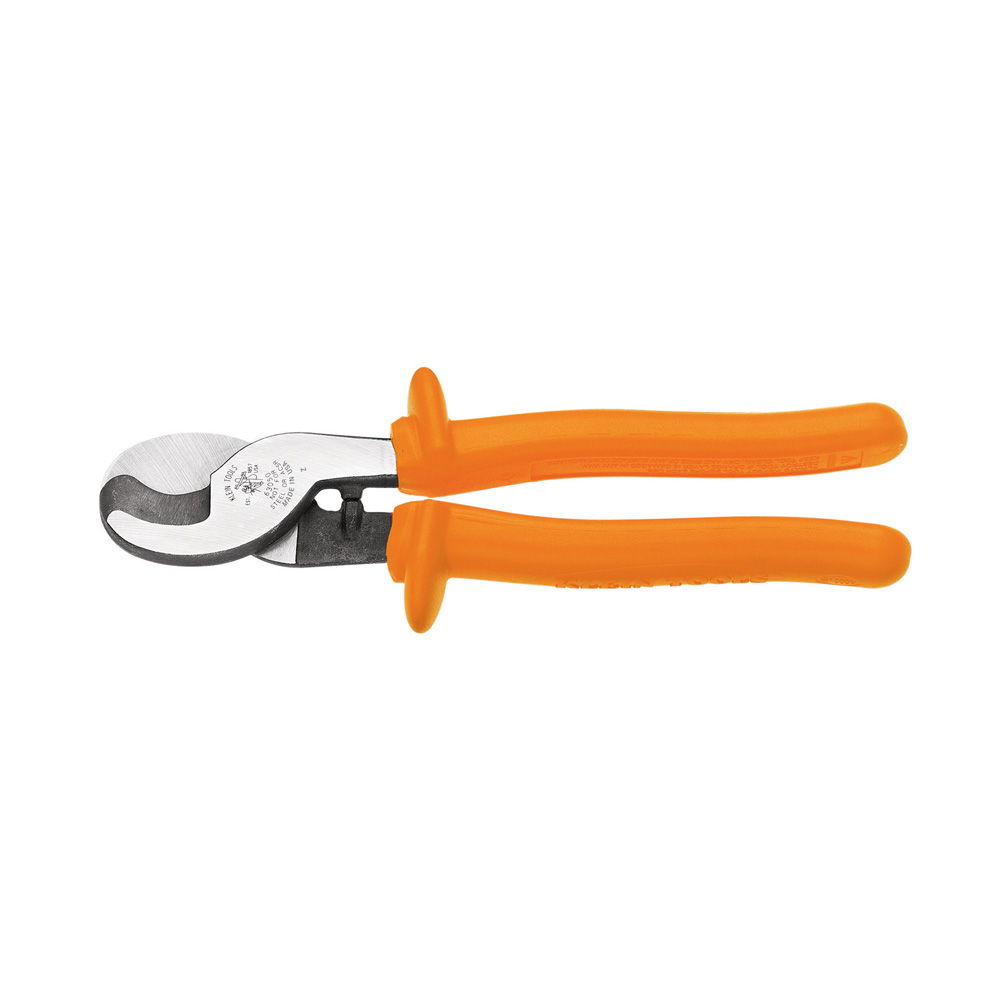
orange-handled cable cutters tool (Source: Wikimedia Commons)
- Hacksaws: Used to cut metal conduits and trunking to length. Their fine teeth provide smooth cuts essential for neat installations in educational institutions.
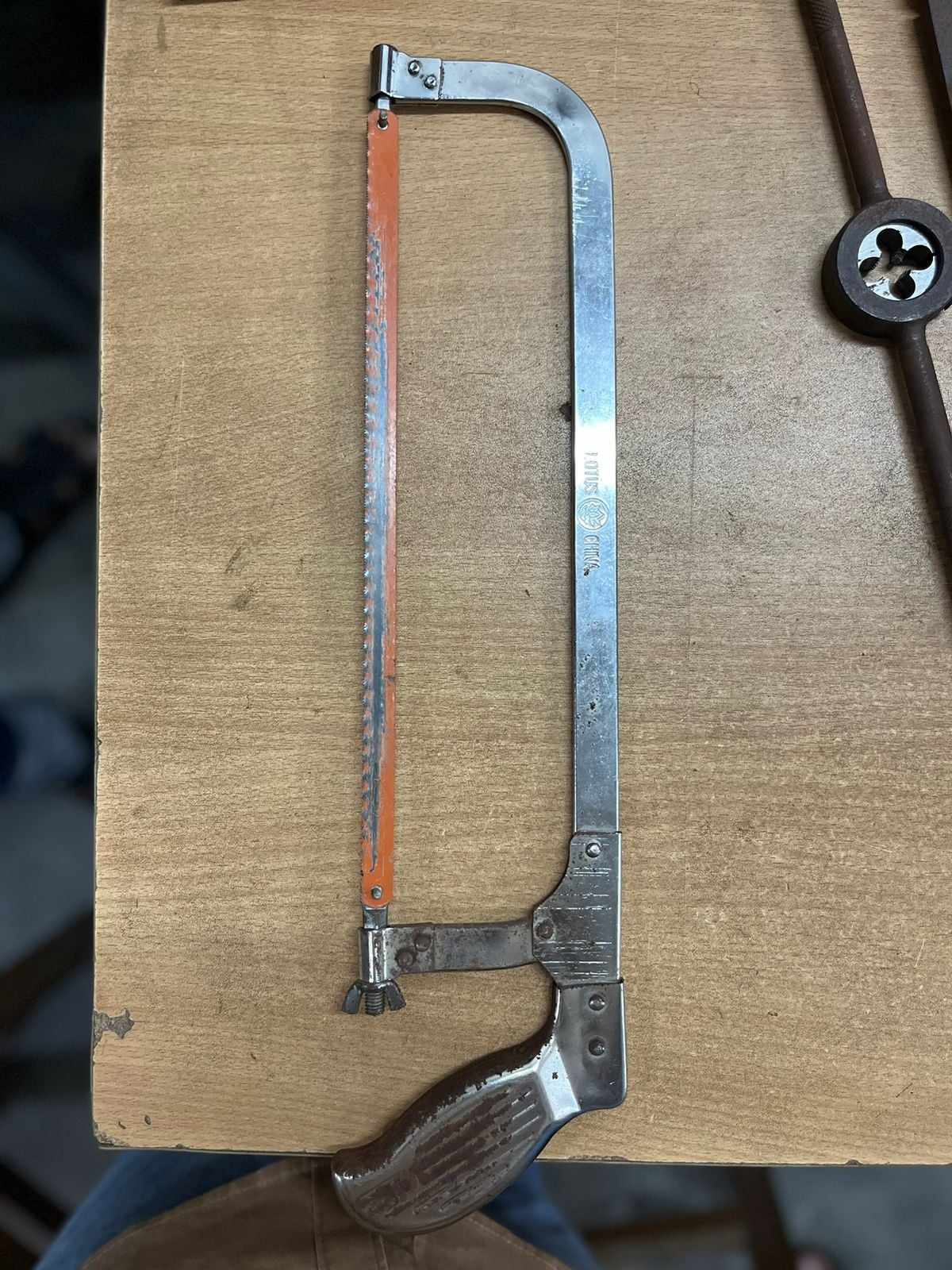
A metal hacksaw with an orange blade (Source: Wikimedia Commons)
- Utility Knives: Employed for trimming insulation and sheathing on cables, particularly useful when dealing with multi-core cables in hospital equipment setups.
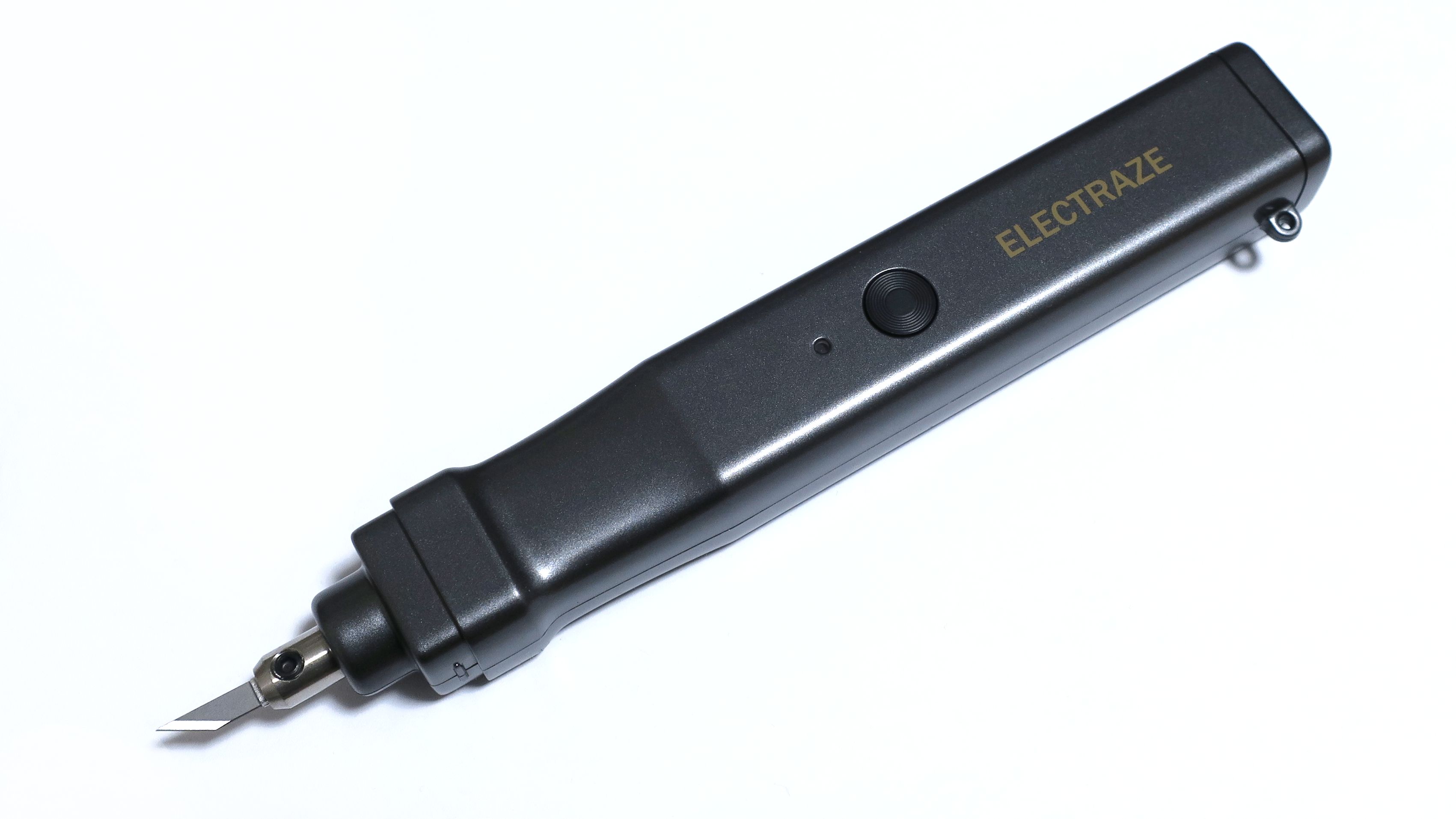
Electric utility knife with blade exposed (Source: Wikimedia Commons)
Material Compatibility and Cutting Efficiency
- Cutting tools must be selected based on the material type, copper, aluminum, or plastic insulation, to avoid damage.
- For example, using a hacksaw on plastic conduit requires a blade suited for plastics to prevent cracks.
- Proper maintenance, such as blade sharpening and cleaning, enhances cutting precision and tool lifespan.
- Ergonomic handles reduce operator fatigue during repetitive cutting tasks in large installations like university labs.
- Kenyan engineers at county offices often face environmental challenges; rust-resistant cutting tools are preferred for durability.
Safety Considerations When Using Cutting Tools
- Always wear protective gloves and safety glasses to prevent injuries from wire fragments or sharp edges.
- Tools should be inspected for damage before use; a dull blade increases the risk of slipping.
- Cutting should be performed on stable surfaces to maintain control and accuracy.
- Proper disposal of cut-off pieces prevents workplace hazards, especially in busy hospital maintenance workshops.
- Training on correct cutting angles and force application reduces tool damage and operator strain.
Maintenance and Storage of Cutting Tools
- Regular cleaning removes debris that can cause rust or impair function.
- Lubrication of moving parts in tools like wire strippers prolongs smooth operation.
- Tools should be stored in dry, organized toolboxes to prevent damage and loss.
- Labeling and inventory management in institutions like banks ensure tools are available and accounted for.
- Periodic sharpening of blades maintains efficiency, reducing the time spent on each cutting task.
3.1.2 Measuring Tools
Measuring tools enable electronics engineers to ensure components and assemblies meet required specifications, critical for system reliability and performance. Accurate measurement affects everything from cable length to control panel dimensions.
Types of Measuring Tools in Electrical Machine Control
- Tape Measures: Flexible and retractable, ideal for measuring lengths of conduit runs or cable trays in county government buildings.
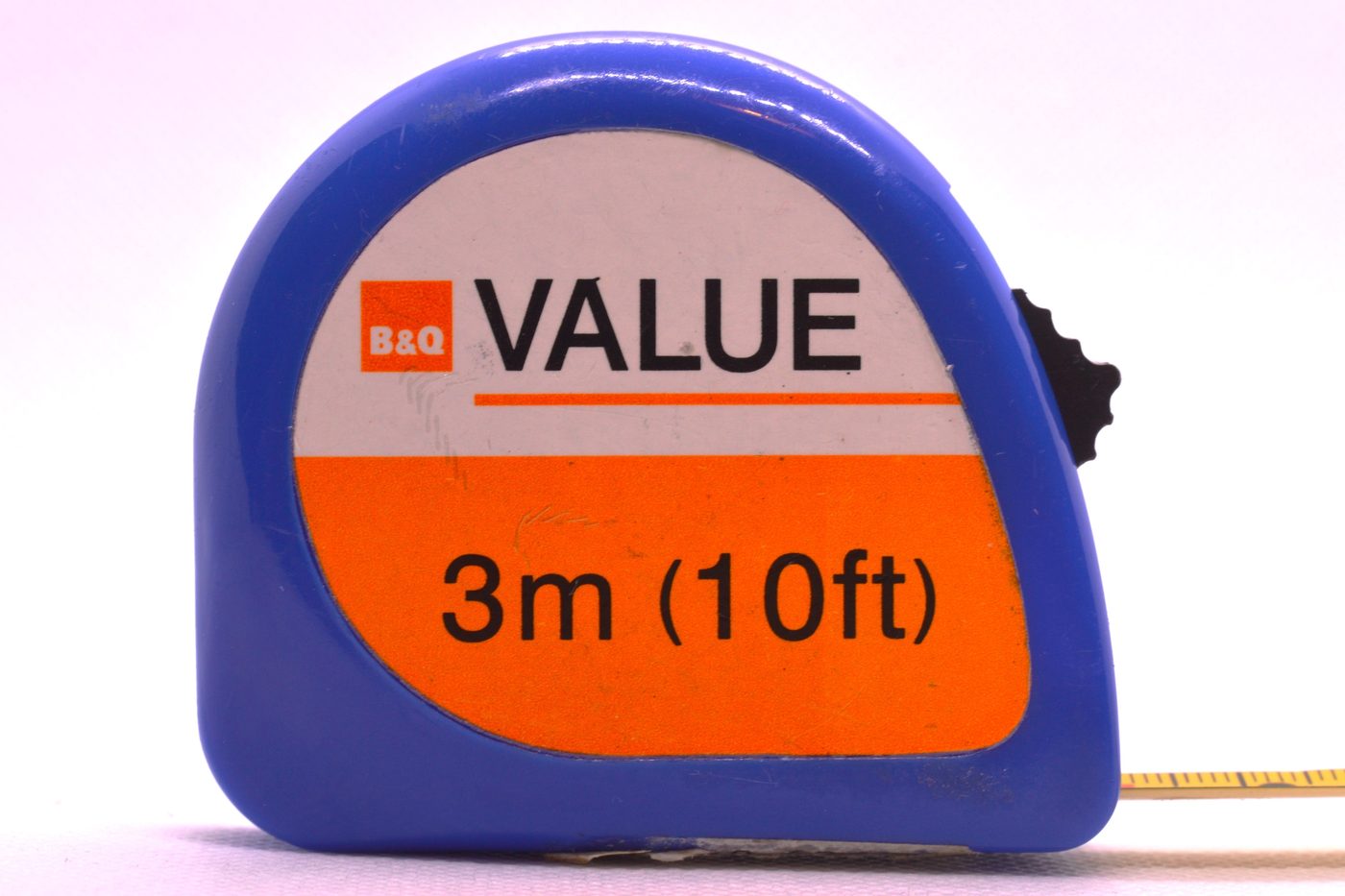
Blue and orange 3m tape measure (Source: Wikimedia Commons)
- Vernier Calipers: Provide precise measurements of small components like terminal screws or sensor housings, essential in laboratory setups.
- Rulers and Scales: Used for quick, less precise measurements during preliminary layout work in retail business electrical installations.
- Feeler Gauges: Measure small gaps or clearances in mechanical parts of electrical machines, useful in maintenance at cooperative societies.
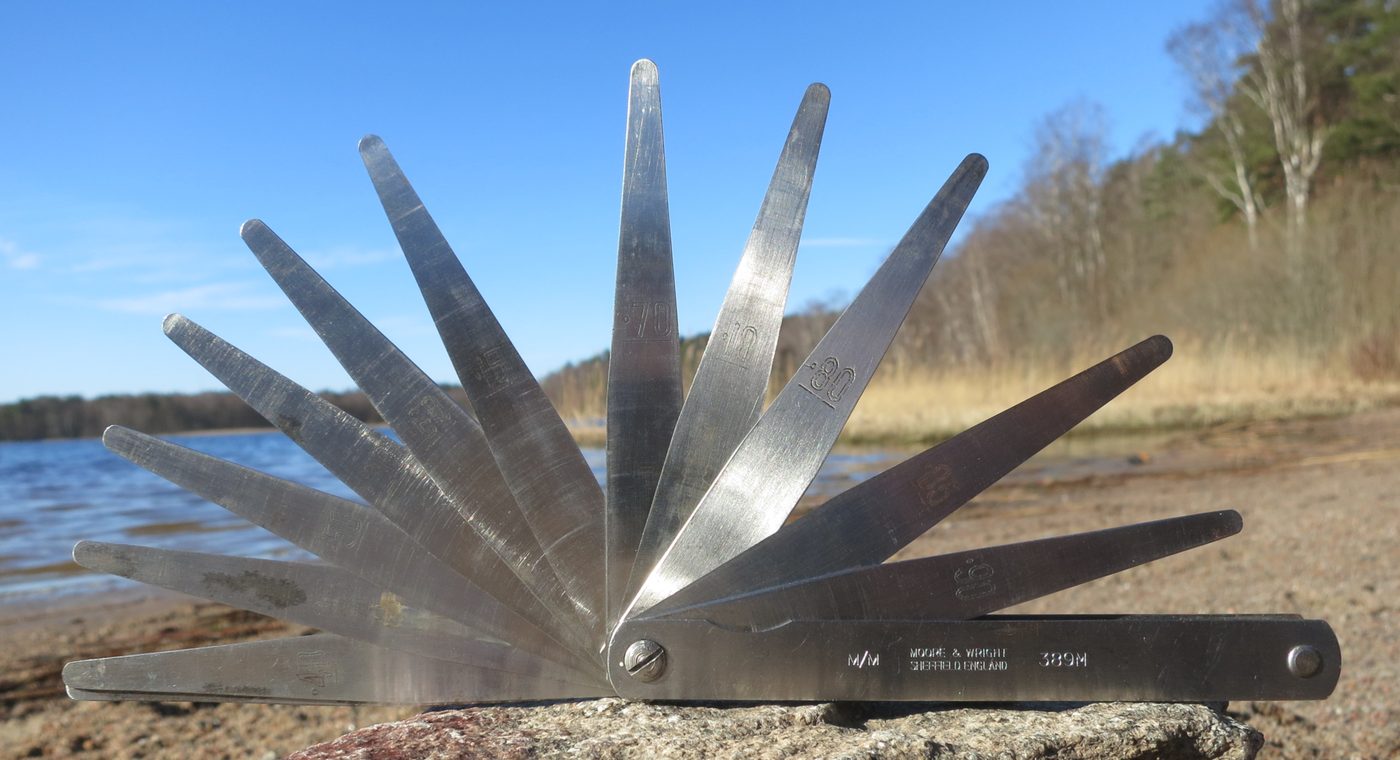
Set of feeler gauges fanned open (Source: Wikimedia Commons)
- Multimeters (for measurement of electrical parameters): While primarily electrical measuring devices, they also measure voltage, current, and resistance, supporting dimensional checks indirectly by verifying circuit integrity.
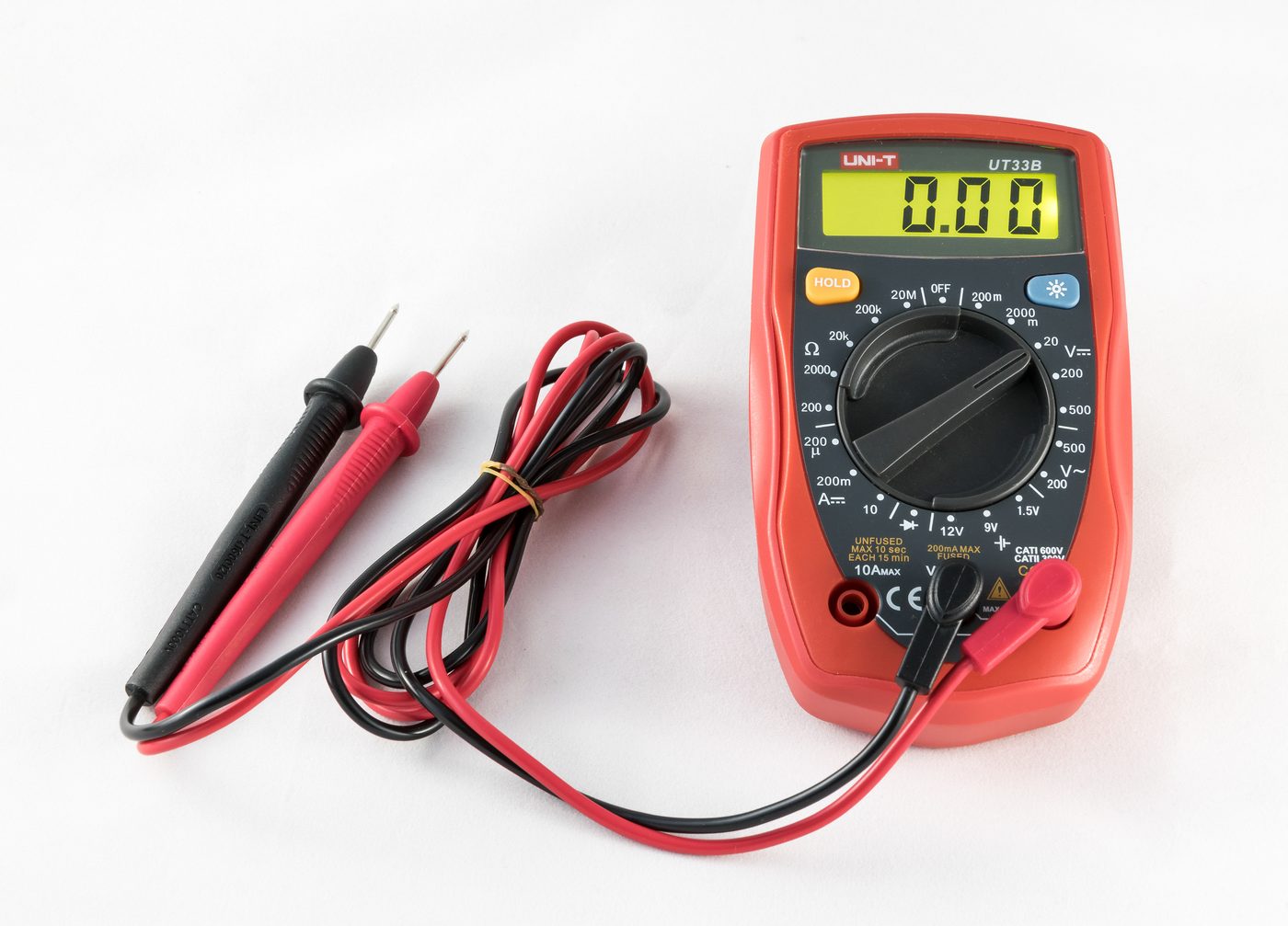
Digital multimeter with probes (Source: Wikimedia Commons)
Accuracy and Calibration of Measuring Tools
- Calibration against known standards ensures measurement accuracy, a requirement in regulated environments like NHIF offices.
- Vernier calipers should be zeroed before each use to avoid systematic errors.
- Tape measures may stretch or become damaged, requiring periodic checks.
- Environmental factors such as temperature can affect material dimensions and measuring tool accuracy.
- Maintaining calibration records is part of quality control in institutions such as universities.
Application of Measuring Tools in Assembly and Maintenance
- Measuring conduit lengths before cutting reduces material waste in hotel electrical setups.
- Feeler gauges check alignment and clearances in motor shaft couplings at manufacturing plants.
- Tape measures set out distances for cable runs in hospitals to comply with safety codes.
- Vernier calipers verify the thickness of insulation materials used in control panels.
- Rulers assist in marking drill points on mounting plates in bank ATM installations.
Care and Handling of Measuring Tools
- Store tools in protective cases to prevent damage to sensitive parts like caliper jaws.
- Avoid dropping or rough handling which can misalign measuring scales.
- Clean tools after use to remove dirt or conductive dust that could affect readings.
- Retract tape measures fully to avoid bending or kinks.
- Use tools only for their intended purpose to prolong lifespan.
3.1.3 Measuring Equipment
Measuring equipment refers to advanced instruments that provide electrical and mechanical parameter readings necessary for diagnosing and verifying electrical machine performance. These devices are indispensable in troubleshooting and commissioning in Kenyan electronics engineering environments.
Common Measuring Equipment in Electrical Machine Controls
| Name |
Specification |
Use |
| Digital Multimeter |
Measures voltage, current, resistance |
Verifying circuit continuity and voltage levels in control panels |
| Clamp Meter |
Measures current without disconnecting circuit |
Monitoring load currents in hospital power systems |
| Insulation Tester |
Tests insulation resistance up to several gigaohms |
Ensuring insulation integrity in cable installations at universities |
| Oscilloscope |
Visualizes signal waveforms up to GHz range |
Diagnosing signal and control circuit issues in automated systems |
| Tachometer |
Measures rotational speed in RPM |
Checking motor speeds in industrial automation |
Selection Criteria for Measuring Equipment
- Accuracy and resolution suitable for the expected measurement range.
- Portability for field use in locations such as county government workshops.
- Durability to withstand harsh environments, including dust and moisture in agricultural processing plants.
- Compliance with Kenyan safety standards and certifications.
- Ease of use and availability of calibration services locally.
Practical Applications in Field and Workshop
- Using an insulation tester before energizing a control panel installation in a bank reduces the risk of electrical faults.
- Oscilloscopes help technicians at a university’s engineering lab to analyze control signals in real-time.
- Clamp meters allow quick current measurements on live circuits without shutdown, crucial in hospital critical care units.
- Digital multimeters provide essential diagnostics during preventive maintenance at retail businesses.
- Tachometers verify motor speed settings during commissioning of automated conveyor belts in cooperatives.
Maintenance and Calibration of Measuring Equipment
- Regular calibration ensures measurement accuracy and compliance with Kenya Bureau of Standards (KEBS) requirements.
- Equipment should be stored in protective cases to prevent mechanical damage.
- Battery checks and replacements prevent erroneous readings during field operations.
- Cleaning connectors and probes maintains good contact and reliability.
- Documentation of calibration and maintenance schedules supports audit and quality assurance processes.
3.1.4 Cables and Conductors
Types of Cables Commonly Used
- Twin and Earth Cable: Widely used for general power wiring in offices and residential buildings.
- Armored Cable: Provides mechanical protection, suitable for installations in industrial environments like manufacturing plants.
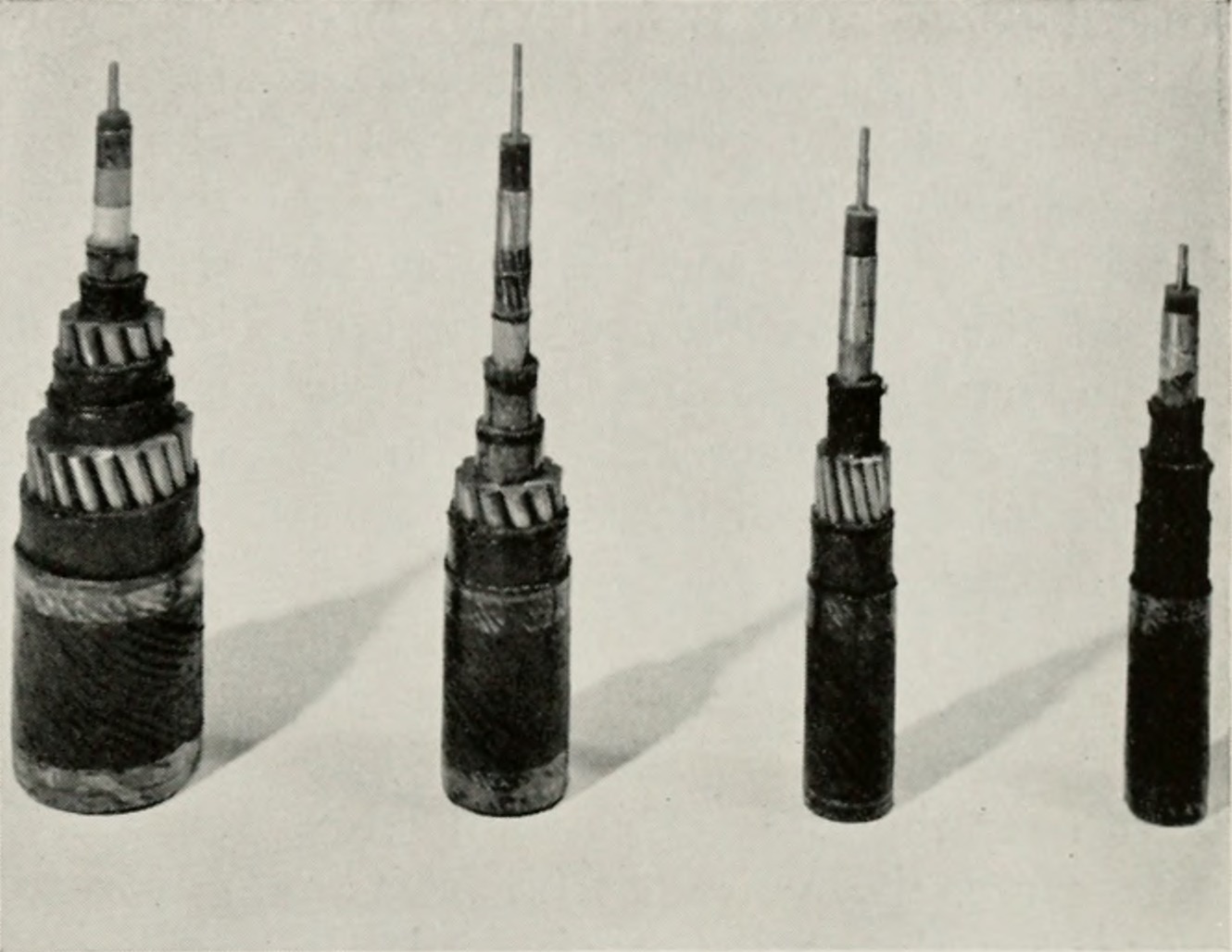
Various types of armored cable (Source: Wikimedia Commons)
-
Coaxial Cable: Used for signal transmission in communication systems within hospitals.
-
Control Cable: Designed for control circuits, often shielded to prevent interference, essential in automation setups at universities.
- Flexible Cable: Used where frequent movement or vibration occurs, such as in portable medical equipment.
Electrical and Mechanical Characteristics
- Conductors are primarily copper or aluminum; copper offers better conductivity but at higher cost.
- Insulation materials vary (PVC, XLPE) affecting temperature rating and flexibility.
- Cable cross-sectional area determines current-carrying capacity and voltage drop.
- Mechanical strength and armoring protect cables from physical damage in harsh environments like farms.
- Shielding reduces electromagnetic interference, improving signal integrity in sensitive control circuits.
Installation Considerations and Standards
- Cables must be sized according to load and length to prevent overheating, as per the Kenya Power and Lighting Company (KPLC) guidelines.
- Proper routing avoids sharp bends and mechanical stress, extending cable life in county government offices.
- Segregation of power and control cables reduces noise interference, vital in hospital environments.
- Compliance with the Energy Act and National Electrical Code ensures legal installation practices.
- Use of cable trays and conduits protects cables and facilitates maintenance.
Inspection and Testing of Cables
- Visual inspection for cuts, abrasions, or insulation damage before installation.
- Continuity tests verify conductor integrity post-installation in university labs.
- Insulation resistance testing detects moisture ingress or insulation breakdown in bank security systems.
- Regular thermal imaging identifies hotspots in cable runs at retail business premises.
- Documentation of test results supports maintenance records and fault diagnosis.
3.1.5 Crimping Tool
Crimping tools are specialized devices used to attach connectors to cables, ensuring secure, low-resistance electrical connections. Proper crimping is crucial in control systems to maintain signal integrity and mechanical stability.
| Name |
Specification |
Use |
| Ratchet Crimping Tool |
Interchangeable dies for various terminal sizes |
Creating reliable crimps on cable lugs and terminals |
| Hydraulic Crimping Tool |
High force for large cable terminals |
Used in heavy-duty cable terminations in industrial settings |
| Manual Crimping Tool |
Hand-operated, suitable for small gauge wires |
Common in maintenance tasks at county offices |
Types and Features of Crimping Tools
- Ratchet mechanism ensures full compression before release, improving crimp quality.
- Die sets must match terminal types (ring, spade, butt connectors) and wire gauges.
- Hydraulic tools provide uniform pressure, essential for large cables in hospital emergency power systems.
- Manual tools offer portability and precision for small-scale tasks.
- Insulated handles improve operator safety during use.
Crimping Process and Best Practices
- Select the correct die size for the cable and connector to avoid loose or damaged crimps.
- Strip insulation to the appropriate length before inserting the conductor into the terminal.
- Position the connector correctly in the crimping tool jaws.
- Apply steady pressure until the ratchet releases or the tool indicates completion.
- Inspect the crimp visually and with a pull test to ensure mechanical strength.
Maintenance and Storage of Crimping Tools
- Clean dies regularly to prevent buildup that can affect crimp quality.
- Lubricate moving parts to maintain smooth operation.
- Store tools in protective cases to avoid damage and contamination.
- Periodic calibration checks ensure consistent crimping force.
- Training users on correct tool handling reduces damage and improves connection reliability.
3.1.6 Conduits
Conduits are protective tubes that house electrical cables, shielding them from physical damage and environmental hazards. Their use is mandated in many Kenyan installations to enhance safety and system longevity.
Types of Conduits and Their Applications
-
PVC Conduits: Lightweight and corrosion-resistant, suitable for indoor installations in schools and offices.
-
Metallic Conduits (EMT, Rigid): Provide robust mechanical protection, preferred in industrial and outdoor settings such as farms.
-
Flexible Conduits: Allow bending around obstacles, used in areas requiring frequent access like hospital equipment rooms.
- Liquid-tight Conduits: Protect cables from moisture, essential in wet environments like food processing plants.
- Surface and Embedded Conduits: Installation method affects choice; surface-mounted conduits are common in rented buildings.
Selection Criteria for Conduits
- Environmental exposure including moisture, chemicals, and mechanical stress.
- Compliance with local regulations such as the Energy Act and National Electrical Code.
- Compatibility with cable types and installation methods.
- Cost-effectiveness balanced with durability requirements.
- Ease of installation and future maintenance access.
Installation Practices and Safety
- Conduits must be securely fastened at regular intervals to prevent sagging, important in large county government offices.
- Bends should be smooth to avoid cable damage during pulling.
- Joints and fittings must maintain mechanical and environmental protection.
- Earth continuity must be maintained in metallic conduit installations.
- Proper sealing prevents ingress of dust and moisture, critical in hospital environments.
3.1.7 Trunking
Trunking systems organize and protect electrical wiring in commercial and institutional buildings. They offer a neat and accessible solution for cable management, especially in complex control systems.
Types of Trunking Systems
- PVC Trunking: Non-conductive and corrosion-resistant, suitable for indoor use in banks and schools.
- Metal Trunking: Offers electromagnetic shielding and mechanical protection, used in data centers and hospitals.
- Surface-Mounted Trunking: Easily accessible for maintenance and upgrades in office buildings.
- Flush-Mounted Trunking: Concealed installation for aesthetic purposes in hotels and luxury retail outlets.
- Modular Trunking: Allows customization and expansion, ideal for evolving systems in universities.
Benefits of Using Trunking
- Organized cable routing reduces clutter and improves safety.
- Provides physical protection against impact and abrasion.
- Facilitates easy identification and access for maintenance.
- Supports segregation of power and data cables to minimize interference.
- Enhances overall system aesthetics and professional appearance.
Installation Considerations
- Proper sizing to accommodate current and future cable volumes.
- Secure fixing to walls or ceilings to prevent movement.
- Use of appropriate accessories such as bends, tees, and couplers.
- Compliance with fire safety regulations including use of fire-retardant materials.
- Planning for cable segregation and grounding where required.
3.1.8 Consumables
Consumables refer to materials used up during installation and maintenance, including connectors, tapes, and adhesives. Their quality directly impacts system reliability and safety.
Common Consumables in Electrical Assembly
- Insulation Tape: Used for insulating and bundling wires; must be rated for voltage and temperature.
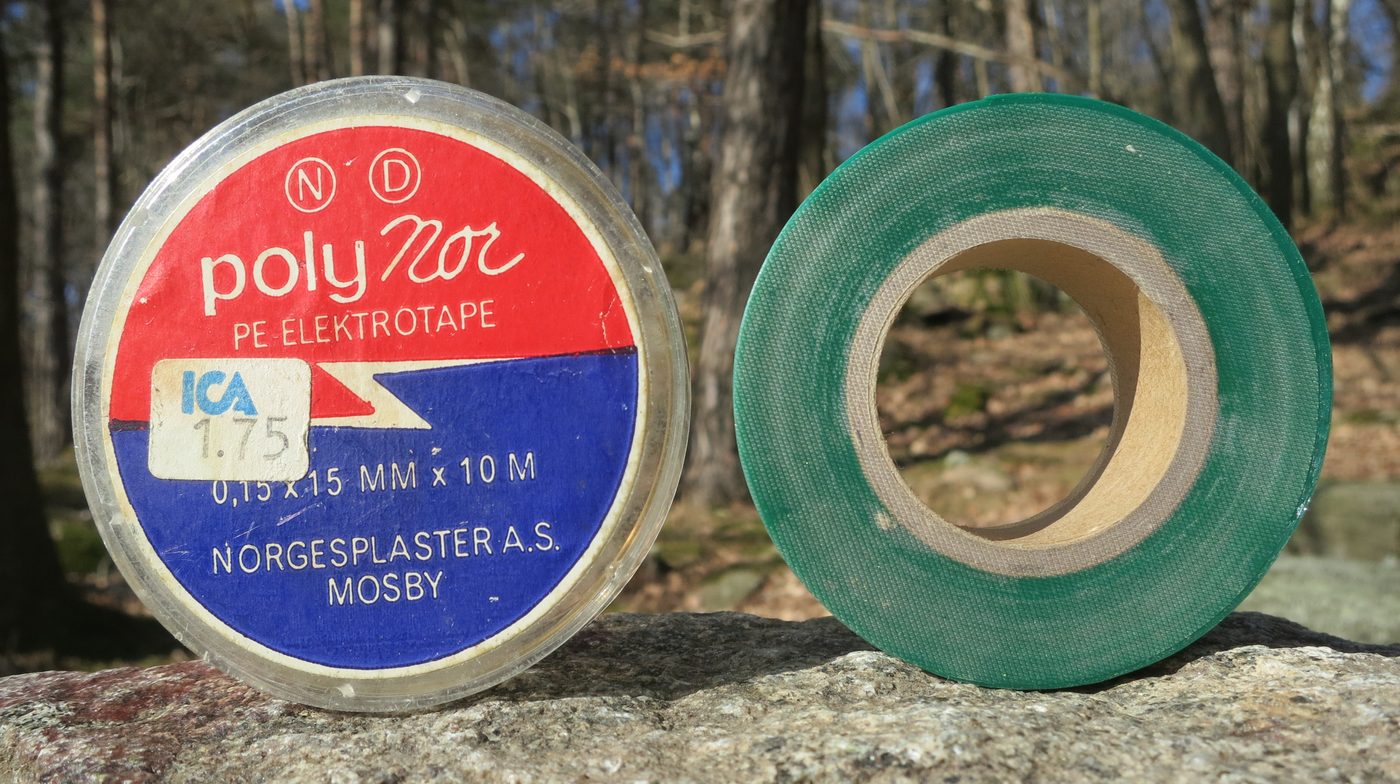
Rolls of insulation tape for electrical use (Source: Wikimedia Commons)
- Cable Ties: Secure cables in place, preventing movement and strain.
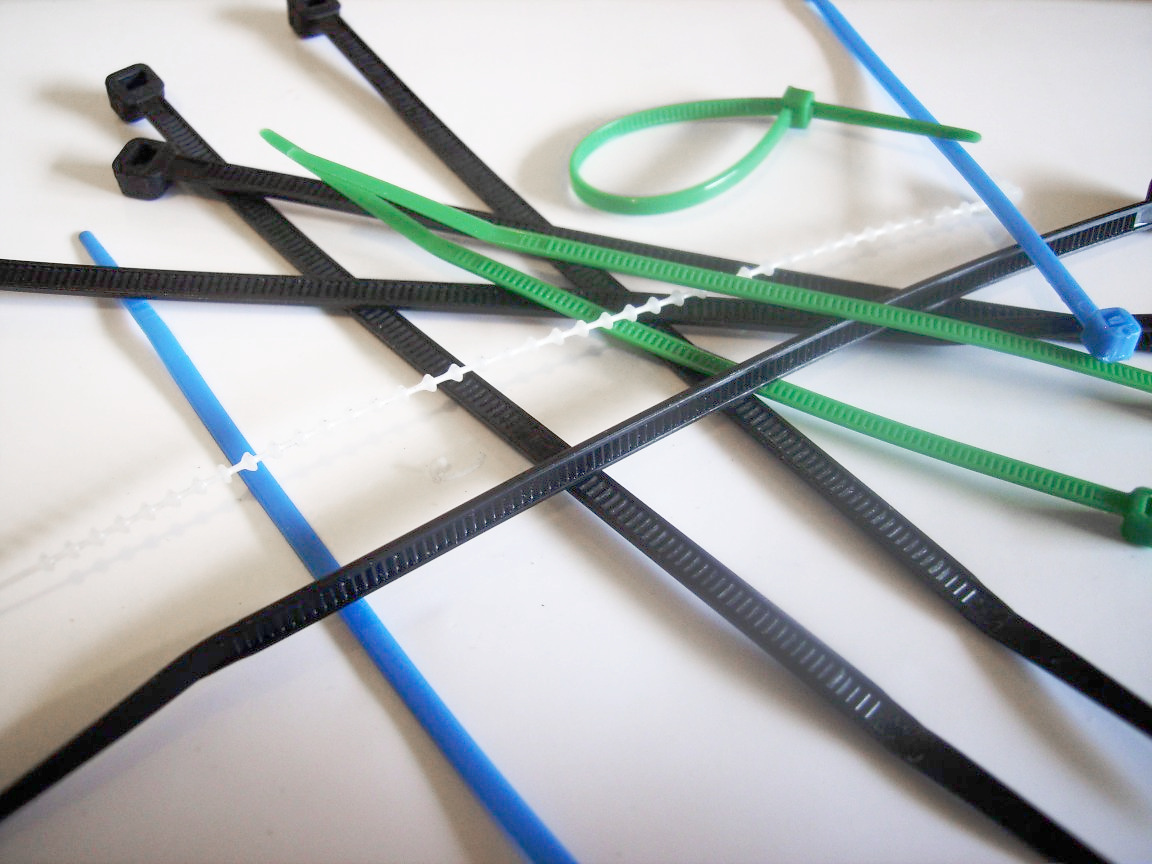
Various colored cable ties on white surface (Source: Wikimedia Commons)
- Heat Shrink Tubing: Provides insulation and environmental protection for splices and terminals.
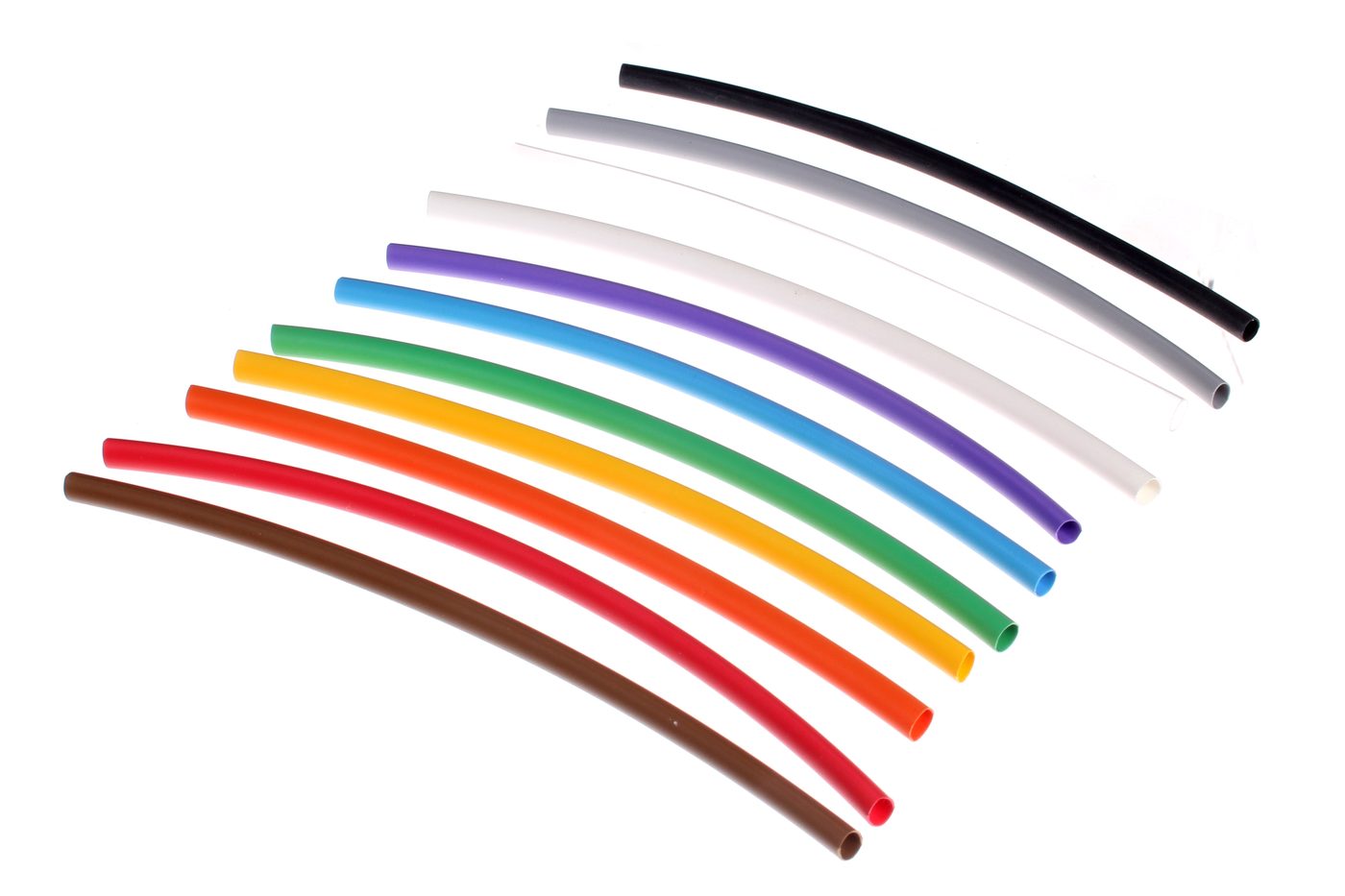
Various colored heat shrink tubing pieces (Source: Wikimedia Commons)
- Connectors and Terminals: Facilitate secure electrical connections; must match cable sizes and types.
- Solder and Flux: Used in circuit assembly for permanent electrical joints.
Importance of Quality Consumables
- High-quality insulation tape prevents electrical shorts and fire hazards in hospital control panels.
- Durable cable ties maintain cable organization under vibration in agricultural machinery.
- Heat shrink tubing protects against moisture ingress, extending the life of connections in coastal county offices.
- Correctly rated connectors ensure low resistance and mechanical stability in bank security systems.
- Using appropriate solder and flux prevents cold joints, essential in precision electronics labs.
Storage and Handling of Consumables
- Store consumables in dry, dust-free environments to maintain effectiveness.
- Avoid exposure of solder to moisture which can degrade flux performance.
- Insulation tapes should be kept in sealed packaging to retain adhesive properties.
- Organize consumables by type and size for quick retrieval during maintenance.
- Monitor stock levels to prevent shortages during critical repair work.
Environmental and Safety Considerations
- Dispose of used solder and flux residues according to environmental regulations.
- Use non-toxic, flame-retardant tapes and materials to comply with safety standards.
- Avoid over-tightening cable ties which can damage insulation and conductors.
- Select consumables that comply with Kenyan Bureau of Standards (KEBS) for electrical safety.
- Train staff on proper usage and disposal to minimize workplace hazards.
Practice Questions
- Explain five different types of cutting tools used in electrical machine control systems and discuss their specific applications. (10 marks)
- Describe the importance of calibration for measuring tools and list five factors that can affect measurement accuracy in the field. (10 marks)
- Compare and contrast three types of conduits used in electrical installations, focusing on their material properties and typical use cases. (10 marks)
- Outline six steps involved in the crimping process when attaching connectors to cables. (12 marks)
- Discuss the role of consumables in electrical assembly and maintenance, highlighting why quality is critical. (8 marks)
The rest of this chapter
🔒Create a free account to open more of this chapter.
Free: practical guides, quick cards, workplace scenarios and more.
Create a free account 🔒3.2 Assemble Tools, Equipment and Materials
In the context of Electronics Engineering in Kenya, assembling the correct tools, equipment, and materials is fundamental for the successful installation, maintenance, and repair of electrical machine control systems. Precision and reliability in selecting and…
🔒3.3 Inventory Management
Effective inventory management is crucial for Electronics Engineering professionals working with electrical machine control systems in Kenya. Managing stocks of tools, equipment, and materials ensures availability, reduces waste, and controls costs in settings…
Chapter Summary
This chapter focused on the identification of essential tools and materials required for electrical machine control systems, beginning with cutting tools used for shaping and preparing components. It then covered measuring tools and equipment vital for ensuring precision and accuracy during assembly. The discussion included various types of cables and conductors, highlighting their roles in electrical connections. The chapter also examined the function and importance of the crimping tool in securing cable terminations. Conduits and trunking were described as protective enclosures for cables, ensuring safety and organization. Attention was given to consumables, which are indispensable for completing electrical installations. Finally, the chapter addressed the procedures for assembling these tools, equipment, and materials effectively, alongside strategies for efficient inventory management to maintain readiness and minimize downtime.
Self-Assessment
🔒 PDFDownload this self-assessment, with answers
A. Written Assessment
- Identify three cutting tools commonly used in assembling electrical machine control systems and explain their specific purposes. (6 marks)
- What is the difference between measuring tools and measuring equipment in the context of electrical installations? Provide two examples of each. (5 marks)
🔒28 more in this section.
Chapter Examination Questions
🔒 PDFDownload these examination questions, with worked answers
SECTION A (40 Marks) - Answer ALL Questions
- Identify four different cutting tools used in assembling electrical machine control systems and explain their specific applications in electronics engineering projects. (4 marks)
- Describe how a vernier caliper is used to measure the diameter of a copper conductor and state why accuracy is important in this context. (4 marks)
🔒18 more in this section.
Chapter Practical Activities
Practical 1: Identify and Select Tools and Materials for Electrical Machine Control Systems
Electronics Engineering · Level 6
Electrical Machine Control Systems
PRACTICAL ASSESSMENT
TIME: 3 HOURS
⬇ PDFCandidate Instructions (Candidate Tool)
Type: Individual
INSTRUCTIONS TO CANDIDATE:
1. You are required to perform the following task:
i. Identify and select the correct tools and materials for assembling an electrical motor control panel as per the provided list.
2. You have been provided with the following resources for the practical task:
| Tools & Equipment | Materials |
|---|
| Insulated Screwdrivers | Electrical Tape |
| Wire Strippers | Control Cables (1.5 mm², Red, Blue, Black) |
| Multimeter | Cable Lugs |
| Crimping Pliers | Terminal Blocks |
| Label Tags |
| Gloves (Electrical Insulated) |
⬇ PDFResources Required (Cutting List)
| S/N | Item | Quantity |
|---|
| 1 | Insulated Screwdrivers | 2 Pcs per Candidate |
| 2 | Wire Strippers | 1 Pc per Candidate |
| 3 | Multimeter | 1 Pc per 3 Candidates |
| 4 | Crimping Pliers | 1 Pc per Candidate |
| 5 | Electrical Tape | 1 Roll per Candidate |
| 6 | Control Cables (1.5 mm², Red, Blue, Black) | 5 m per Candidate |
| 7 | Cable Lugs | 10 Pcs per Candidate |
| 8 | Terminal Blocks | 5 Pcs per Candidate |
| 9 | Label Tags | 10 Pcs per Candidate |
| 10 | Gloves (Electrical Insulated) | 1 Pair per Candidate |
⬇ PDFAssessor Guide
| Items to be Evaluated | Marks Available | Marks Obtained | Comments |
|---|
| TASK 1: Identification and Selection |
Wore personal protective equipment (gloves and overall)
(Award 2 marks for correct PPE worn, 0 if not) | 2 | | |
Correctly identified insulated screwdrivers
(Award 2 marks for correct tool identification, 0 if incorrect) | 2 | | |
Correctly identified wire strippers
(Award 2 marks for correct tool identification, 0 if incorrect) | 2 | | |
Correctly identified multimeter and explained its use
(Award 3 marks for correct identification and explanation, 0 if incorrect) | 3 | | |
Correctly identified crimping pliers
(Award 2 marks for correct tool identification, 0 if incorrect) | 2 | | |
Correctly identified electrical tape
(Award 1 mark for correct material identification, 0 if incorrect) | 1 | | |
Correctly identified control cables by color and size
(Award 3 marks for correct cable identification, 0 if incorrect) | 3 | | |
Correctly identified cable lugs
(Award 1 mark for correct material identification, 0 if incorrect) | 1 | | |
Correctly identified terminal blocks
(Award 1 mark for correct material identification, 0 if incorrect) | 1 | | |
Correctly identified label tags and explained their use
(Award 2 marks for identification and explanation, 0 if incorrect) | 2 | | |
| Sub-Total | 19 | | |
| PRODUCT CHECKLIST |
All tools and materials correctly selected and arranged for assembly
(Award 6 marks for complete and accurate selection, 0 if incomplete or incorrect) | 6 | | |
| Sub-Total | 6 | | |
| GRAND TOTAL | 25 | | |
ASSESSMENT OUTCOME: ☐ Competent ☐ Not Yet Competent (competent if at least 50%)
Practical 2: Cut cables, conductors and conduits to specified lengths using appropriate cutting tools
Electronics Engineering · Level 6
Electrical Machine Control Systems
PRACTICAL ASSESSMENT
TIME: 4 HOURS
⬇ PDFCandidate Instructions (Candidate Tool)
Type: Individual
INSTRUCTIONS TO CANDIDATE:
1. You are required to perform the following task:
i. Cut PVC insulated copper cables and flexible conduits to the specified lengths: cables of 2.5 mm² to 900 mm and 700 mm, cables of 4 mm² to 1400 mm and 1100 mm, and flexible conduits of 1000 mm and 800 mm.
2. You have been provided with the following resources for the practical task:
| Tools & Equipment | Materials |
|---|
| Conduit cutter | PVC insulated copper conductor cable 2.5 mm² |
| Cable cutters | PVC insulated copper conductor cable 4 mm² |
| Wire strippers | Flexible conduit 20 mm diameter |
| Measuring tape | |
| Marker pen | |
⬇ PDFResources Required (Cutting List)
| S/N | Item | Quantity |
|---|
| 1 | PVC insulated copper conductor cable 2.5 mm² | 3 lengths per Candidate (each 1000 mm long) |
| 2 | PVC insulated copper conductor cable 4 mm² | 2 lengths per Candidate (each 1500 mm long) |
| 3 | Flexible conduit 20 mm diameter | 2 lengths per Candidate (each 1200 mm long) |
| 4 | Conduit cutter | 1 per Candidate |
| 5 | Cable cutters | 1 per Candidate |
| 6 | Wire strippers | 1 per Candidate |
| 7 | Measuring tape | 1 per Candidate |
| 8 | Marker pen | 1 per Candidate |
⬇ PDFAssessor Guide
| Items to be Evaluated | Marks Available | Marks Obtained | Comments |
|---|
| TASK 1: Cutting and Preparation |
Wore Personal Protective Equipment (dust coat/overall, gloves, safety boots)
(Award 1 mark each for dust coat and gloves/safety boots) | 2 | | |
Measured and marked cables and conduits accurately according to specified lengths
(Award 1 mark each for correct marking of cables 2.5 mm², cables 4 mm², and conduits) | 3 | | |
Used cable cutters correctly to cut cables without damaging conductors
(Award 1 mark each for neat cuts on all cable pieces) | 3 | | |
Used conduit cutter correctly to cut conduits cleanly without deformation
(Award 1 mark each for neat cuts on both conduit pieces) | 2 | | |
Stripped cable ends to expose conductors without nicking or damaging them
(Award 1 mark each for proper stripping on all cable pieces) | 3 | | |
Applied good housekeeping by clearing scraps and debris after cutting
(Award 1 mark for good housekeeping) | 1 | | |
| Sub-Total | 14 | | |
| PRODUCT CHECKLIST |
Cut cable lengths: 2.5 mm² cables cut to 900 mm and 700 mm ± 5 mm tolerance
(Award 1 mark each for correct lengths) | 2 | | |
Cut cable lengths: 4 mm² cables cut to 1400 mm and 1100 mm ± 5 mm tolerance
(Award 1 mark each for correct lengths) | 2 | | |
Cut conduit lengths: 1000 mm and 800 mm ± 5 mm tolerance
(Award 1 mark each for correct lengths) | 2 | | |
Cable ends stripped neatly exposing 15 mm of conductor without damage
(Award 1 mark each for each cable piece properly stripped) | 3 | | |
Cuts on cables and conduits are clean, straight, and free of deformation
(Award 1 mark each for neat cuts on cables and conduits) | 3 | | |
| Sub-Total | 12 | | |
| GRAND TOTAL | 26 | | |
ASSESSMENT OUTCOME: ☐ Competent ☐ Not Yet Competent (competent if at least 50%)
🔒Measure cables and conduits accurately for electrical installationPractical 3
🔒Crimp cable ends using crimping tool for secure electrical connectionsPractical 4
🔒Installation of PVC trunking system for electrical cable managementPractical 5
🔒Select and apply consumables for electrical machine assemblyPractical 6
🔒Assemble Tools and Equipment for Electrical Machine Control System SetupPractical 7
🔒Prepare and Lay Out Electrical Conduit Runs for InstallationPractical 8
🔒Inventory Counting and Organization of Electrical Machine Control Tools and MaterialsPractical 9
🔒Measure and mark trunking installation points for electrical wiringPractical 10
🔒Cut and Prepare Electrical Cables for ConnectionPractical 11
