Electrical machine control systems require precise planning before installation and operation. Conducting a thorough site survey ensures that the environment can support the equipment’s operational requirements and safety standards. In Kenya, electronics engineers must consider available utilities such as water, electricity, and communication infrastructure to optimize system performance and maintenance. This chapter explores how to assess these utilities effectively during a site survey to facilitate successful control system deployment.
1.1 Utilities Available
The availability and quality of utilities form a critical foundation for any electrical machine control system. Understanding water, electricity, and communication resources at the site enables engineers to design systems that are reliable and maintainable. Kenyan industrial parks, county offices, and large institutions often face challenges with intermittent utilities, making this assessment indispensable for sustainability.
1.1.1 Water
Water is essential in many electrical machine control systems for cooling, cleaning, and safety mechanisms. Its availability and quality can directly affect equipment lifespan and operational safety, especially in environments like hospitals or manufacturing plants where machines generate significant heat.
Availability of Water Supply
- Source Identification: Determine whether water is supplied by municipal authorities, boreholes, or rainwater harvesting systems. For instance, a county hospital may rely on municipal water but have boreholes as backup.
- Continuity of Supply: Assess if water supply is continuous or intermittent. Frequent water outages can compromise cooling systems, leading to overheating and equipment failure.
- Quantity Assessment: Calculate if the volume of water available meets the expected demand of the control systems, especially for cooling towers or humidifiers in control rooms.
- Accessibility at Site: Check if water points are located conveniently near machinery and control panels to facilitate maintenance without disrupting operations.
- Water Quality: Evaluate water purity, as high mineral content or contaminants can cause corrosion or scaling in equipment cooling circuits.
Impact of Water Quality on Equipment
- Corrosion Risks: Hard water with high calcium and magnesium levels accelerates corrosion in metal components, reducing control system reliability.
- Scaling and Blockage: Minerals can deposit inside pipes and cooling channels, restricting flow and causing overheating.
- Electrical Safety: Contaminated water may conduct electricity more readily, increasing the risk of short circuits in water-cooled systems.
- Maintenance Frequency: Poor water quality demands more frequent cleaning and replacement of filters, raising operational costs.
- Health and Safety Compliance: Using clean water in systems near human operators, such as hospitals, ensures compliance with occupational safety standards.
Water Storage and Backup Solutions
- Storage Tanks: Assess availability of water storage tanks that can sustain operations during supply interruptions, common in many Kenyan industrial zones.
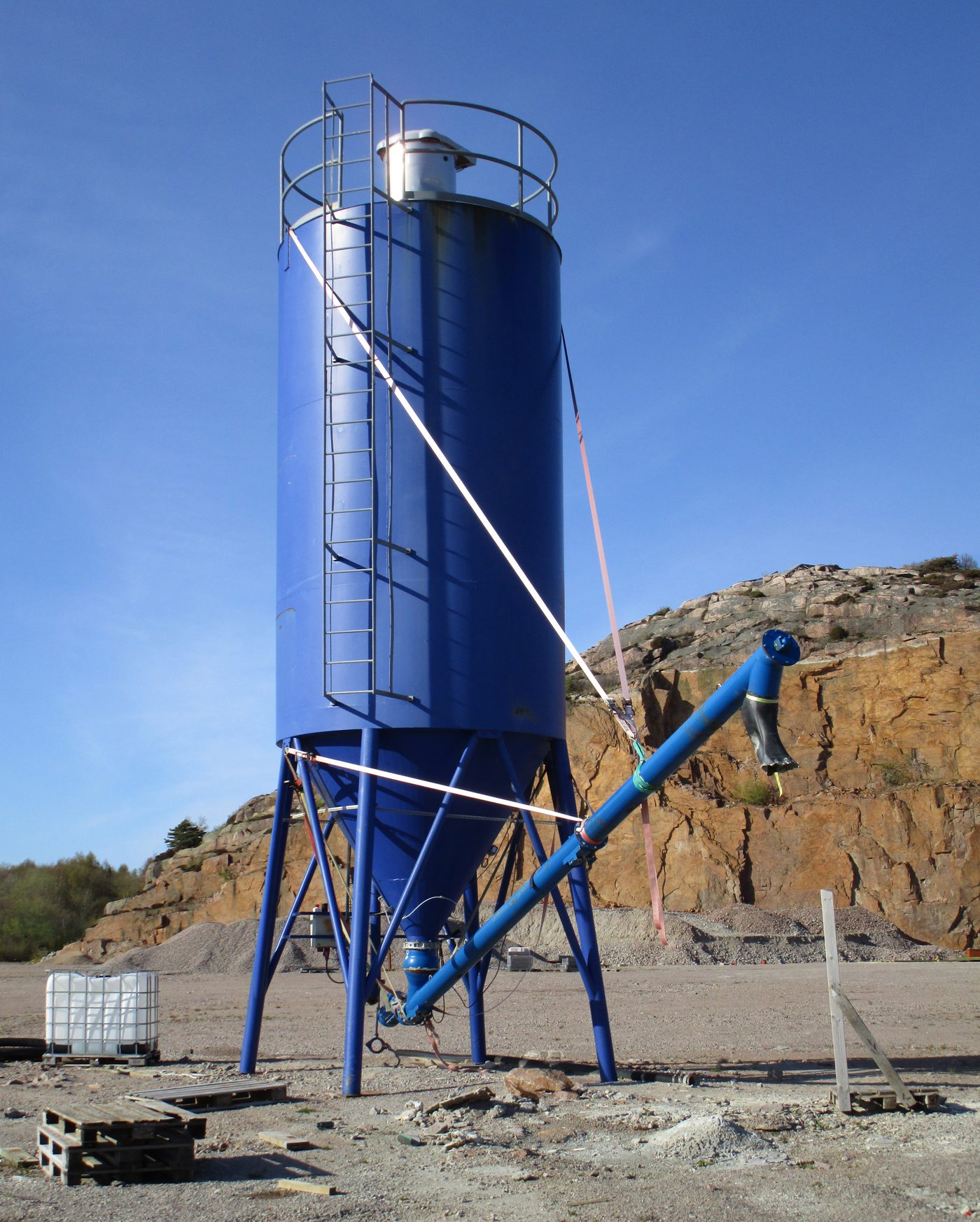
Large blue storage tank outdoors (Source: Wikimedia Commons)
- Pump Systems: Verify if pumps are in place to maintain adequate water pressure for machine cooling or cleaning.
- Emergency Reserves: Identify alternative water sources such as boreholes or water bowsers to mitigate prolonged outages.
- Automation Integration: Modern control systems can include sensors to monitor water levels and automate switching to backup supplies.
- Cost Implications: Factor in the expenses related to installing and maintaining backup water solutions when planning site utilities.
Water Conservation Practices
- Recycling Systems: Incorporate water recycling technologies that reuse cooling water to minimize wastage.
- Leak Detection: Implement sensors in piping to detect leaks early, preventing water loss and potential equipment damage.
- Usage Monitoring: Track water consumption to optimize operational efficiency and reduce utility bills.
- Staff Training: Educate maintenance personnel on best practices for water conservation in control system upkeep.
- Regulatory Compliance: Ensure adherence to Kenyan water use regulations, especially in water-scarce regions.
1.1.2 Electricity
Electricity is the lifeblood of electrical machine control systems, powering sensors, actuators, and control units. Its availability, quality, and reliability at the site directly influence system uptime and safety.
Power Supply Availability and Reliability
- Source of Electricity: Identify whether the site is connected to the national grid, solar power, or diesel generators, common in remote Kenyan locations.
- Supply Stability: Evaluate the frequency and duration of power outages, which can disrupt control system functions and data logging.
- Voltage Levels: Confirm the nominal voltage supplied and its adherence to standards to avoid damage to sensitive electronics.
- Load Capacity: Assess if the existing electrical infrastructure can handle the additional load imposed by the control systems.
- Backup Power Systems: Check for availability of Uninterruptible Power Supplies (UPS) or generators to maintain continuous operation during outages.
Quality of Electrical Power
- Voltage Fluctuations: Measure variations in voltage that may cause malfunctions or reduce equipment lifespan.
- Harmonic Distortion: Identify presence of electrical noise or harmonics that can interfere with control signals.
- Frequency Stability: Ensure the frequency remains stable at 50 Hz, the Kenyan standard, to maintain synchronization of control devices.
- Grounding and Earthing: Verify proper earthing systems to protect equipment and personnel from electrical faults.
- Power Factor: Evaluate power factor levels to optimize energy consumption and reduce utility costs.
Electrical Distribution Infrastructure
- Wiring and Cabling: Inspect the condition and adequacy of wiring to handle control system demands safely.
- Switchgear and Protection Devices: Confirm presence of circuit breakers, fuses, and surge protectors to safeguard equipment.
- Panel Accessibility: Ensure control panels are located in accessible, secure, and ventilated areas for maintenance.
- Lighting and Signage: Check for adequate lighting and safety signage around electrical installations.
- Compliance with Standards: Verify adherence to KEBS and IEC standards relevant to electrical installations in Kenya.
Energy Efficiency and Sustainability
- Use of Energy-Efficient Devices: Promote installation of energy-saving sensors and actuators within control systems.
- Renewable Energy Integration: Explore opportunities to incorporate solar or wind power to reduce dependence on grid electricity.
- Load Management: Implement control strategies that reduce peak demand and balance energy consumption.
- Monitoring Systems: Deploy energy monitoring tools to track usage and identify waste.
- Cost-Benefit Analysis: Evaluate long-term savings from energy-efficient upgrades versus initial installation costs.
1.1.3 Communication
Communication infrastructure supports remote monitoring, control, and data transmission in electrical machine control systems. In Kenya's growing digital economy, robust communication links enhance system responsiveness and operational efficiency.
Types of Communication Networks
- Wired Networks: Assess availability of Ethernet or fiber optic cables for high-speed, stable communication in industrial settings.
- Wireless Networks: Identify presence of Wi-Fi, cellular (3G/4G/5G), or radio frequency networks that enable flexible installations.
- Satellite Communication: Consider satellite links for remote or off-grid sites with limited terrestrial connectivity.
- Private vs Public Networks: Evaluate security and reliability differences between private leased lines and public internet connections.
- Hybrid Communication Systems: Explore combinations of wired and wireless networks to optimize coverage and redundancy.
Communication Infrastructure Availability
- Network Coverage: Verify signal strength and bandwidth availability at the site, crucial for real-time control and data acquisition.
- Latency and Throughput: Measure delays and data transfer rates to ensure they meet control system requirements.
- Network Redundancy: Check for backup communication channels to maintain connectivity during failures.
- Physical Infrastructure: Inspect condition of cables, routers, switches, and antennas supporting communication.
- Service Providers: Identify local ISPs and mobile network operators offering reliable services in the area.
Security and Data Integrity
- Encryption Protocols: Ensure communication channels use robust encryption to protect sensitive control data.
- Access Controls: Implement authentication mechanisms to restrict network access to authorized personnel.
- Network Monitoring: Deploy tools to detect intrusions, anomalies, or faults in communication systems.
- Data Backup: Establish regular backup procedures for control system data to prevent loss.
- Compliance with Data Protection Laws: Align communication practices with Kenya’s Data Protection Act to safeguard privacy.
Integration with Control Systems
- Protocol Compatibility: Confirm that communication protocols (e.g., Modbus, Profibus, TCP/IP) are supported by control devices.
- Scalability: Design communication infrastructure that can accommodate future expansions or upgrades.
- Latency Sensitivity: Match communication methods to the real-time requirements of control processes.
- Remote Access: Enable secure remote monitoring and troubleshooting capabilities.
- Maintenance and Support: Plan for ongoing technical support to address communication failures or upgrades.
Practice Questions
- Explain how water quality affects the maintenance requirements of electrical machine control systems in Kenyan industrial settings. (6 marks)
- Describe the key considerations when assessing the reliability of electrical power supply for control systems in a county hospital. (8 marks)
- Compare the advantages and disadvantages of wired and wireless communication networks for remote monitoring of control systems in agricultural cooperatives. (10 marks)
- List and explain five security measures necessary to protect communication infrastructure used in electrical machine control systems. (10 marks)
The rest of this chapter
🔒Create a free account to open more of this chapter.
Free: practical guides, quick cards, workplace scenarios and more.
Create a free account 🔒1.2 Installation Conditions
In the design and deployment of electrical machine control systems, understanding the installation conditions is critical to ensure system reliability and longevity. In Kenya, diverse climatic zones and environmental factors such as temperature variations, hum…
🔒1.3 Taking Measurements on Site
In electronics engineering projects, especially those involving electrical machine control systems, precise site measurements are crucial for successful installation and operation. In Kenya, where site conditions vary widely from urban centers like Nairobi and…
🔒1.4 Types of Industrial Layouts
Industrial layouts are critical in the design and organization of workplaces, especially in electronics engineering where efficient workflow and space utilization directly affect productivity and safety. In Kenya, electronics manufacturing firms, maintenance w…
🔒1.5 Site Survey Report Preparation
The preparation of a site survey report is a critical phase in electrical machine control systems projects, particularly for electronics engineers operating in Kenya. This document consolidates all observations, measurements, and assessments made during the si…
Chapter Summary
This chapter examined the critical aspects of conducting a site survey for electrical machine control systems. It began by outlining the essential utilities available at the site, including water, electricity, and communication, which are fundamental for operational support. The chapter then explored installation conditions such as temperature, humidity, and dust, emphasizing their impact on equipment performance and longevity. Accurate measurement techniques for length, total area, and temperature were discussed to ensure precise planning and installation. Various types of industrial layouts were analyzed, including process, product, hybrid, and fixed position layouts, highlighting their suitability for different operational needs. Finally, the chapter covered the preparation of a comprehensive site survey report, which consolidates all gathered data to inform design and implementation decisions. This holistic approach ensures that electrical machine control systems are installed efficiently and reliably within the specific site environment.
Self-Assessment
🔒 PDFDownload this self-assessment, with answers
A. Written Assessment
- Which utility is most critical to consider when installing electrical machine control systems in a hospital setting and why? (3 marks)
- Describe how humidity levels on a site can affect the performance of electronic control equipment. (3 marks)
🔒20 more in this section.
Chapter Examination Questions
🔒 PDFDownload these examination questions, with worked answers
SECTION A (40 Marks) - Answer ALL Questions
- Explain the importance of verifying the availability of water supply during a site survey for an electronics manufacturing plant in Nairobi. (4 marks)
- Describe how electrical power supply variations at a site can affect the installation of electrical machine control systems. (4 marks)
🔒18 more in this section.
Chapter Practical Activities
Practical 1: Identify and Assess Utilities Available on Site
Electronics Engineering · Level 6
Electrical Machine Control Systems
PRACTICAL ASSESSMENT
TIME: 4 HOURS
⬇ PDFCandidate Instructions (Candidate Tool)
Type: Individual
INSTRUCTIONS TO CANDIDATE:
1. You are required to perform the following task:
i. Inspect and document the availability and condition of water, electrical, and communication utilities at the site, including measurements of main water pipe diameter, electrical supply voltage, and communication outlet types.
2. You have been provided with the following resources for the practical task:
| Tools & Equipment | Materials |
|---|
| Digital multimeter | Personal Protective Equipment (PPE): Dust coat/overall, safety boots, gloves |
| Tape measure | |
| Inspection flashlight | |
| Notepad and pen | |
| Camera or smartphone | |
⬇ PDFResources Required (Cutting List)
| S/N | Item | Quantity |
|---|
| 1 | Digital multimeter | 1 Pc per Candidate |
| 2 | Tape measure | 1 Pc per Candidate |
| 3 | Inspection flashlight | 1 Pc per Candidate |
| 4 | Notepad and pen | 1 set per Candidate |
| 5 | Camera or smartphone for photo documentation | 1 Pc per Candidate |
| 6 | Personal Protective Equipment (PPE): Dust coat/overall, safety boots, gloves | 1 set per Candidate |
⬇ PDFAssessor Guide
| Items to be Evaluated | Marks Available | Marks Obtained | Comments |
|---|
| TASK 1: Safety and Preparation |
Wore dust coat/overall
(Award 1 mark for wearing dust coat/overall, else 0) | 1 | | |
Wore safety boots or closed shoes
(Award 1 mark for wearing safety boots or closed shoes, else 0) | 1 | | |
Wore gloves during electrical inspection
(Award 1 mark for wearing gloves when inspecting electrical utilities, else 0) | 1 | | |
Applied good housekeeping and site safety practice
(Award 1 mark for maintaining good housekeeping and safety during inspection, else 0) | 1 | | |
| Sub-Total | 4 | | |
| TASK 2: Utilities Identification and Measurement |
Measured and recorded main water pipe diameter
(Award 2 marks for correct measurement and recording, else 0) | 2 | | |
Checked and recorded water utility condition (leaks, pressure observation)
(Award 2 marks for thorough condition assessment and documentation, else 0) | 2 | | |
Measured and recorded electrical supply voltage using digital multimeter
(Award 3 marks for correct voltage measurement and documentation, else 0) | 3 | | |
Inspected electrical supply condition (cables, panels, connections)
(Award 2 marks for detailed inspection and documentation, else 0) | 2 | | |
Identified and recorded communication utilities available (telephone, internet outlets)
(Award 2 marks for correct identification and documentation, else 0) | 2 | | |
Photographed key utility points for evidence
(Award 1 mark for clear photographic documentation, else 0) | 1 | | |
| Sub-Total | 12 | | |
| TASK 3: Documentation |
Prepared a clear, organized report of utilities availability and condition
(Award 3 marks for completeness, clarity, and accuracy of report, else 0) | 3 | | |
Included measurements, observations, and photographic evidence in the report
(Award 3 marks for inclusion of all relevant data and evidence, else 0) | 3 | | |
| Sub-Total | 6 | | |
| PRODUCT CHECKLIST |
Report includes accurate water pipe diameter measurement (e.g. 50mm or 75mm) with condition notes
(Award 3 marks for correct and clear water utility documentation, else 0) | 3 | | |
Report includes electrical supply voltage measurement (e.g. 230V single phase or 415V three phase) and condition notes
(Award 4 marks for correct and clear electrical utility documentation, else 0) | 4 | | |
Report includes detailed communication utilities available with types and condition
(Award 3 marks for complete and clear communication utility documentation, else 0) | 3 | | |
Photographic evidence supports the findings and is clearly labeled
(Award 2 marks for clear, relevant, and labeled photographs, else 0) | 2 | | |
| Sub-Total | 12 | | |
| GRAND TOTAL | 34 | | |
ASSESSMENT OUTCOME: ☐ Competent ☐ Not Yet Competent (competent if at least 50%)
Practical 2: Evaluate Installation Conditions for Electrical Equipment Regarding Temperature and Humidity
Electronics Engineering · Level 6
Electrical Machine Control Systems
PRACTICAL ASSESSMENT
TIME: 4 HOURS
⬇ PDFCandidate Instructions (Candidate Tool)
Type: Individual
INSTRUCTIONS TO CANDIDATE:
1. You are required to perform the following task:
i. Measure and record temperature (°C) and relative humidity (%) at three different points within the installation site, and evaluate the site’s suitability for electrical machine control systems installation.
2. You have been provided with the following resources for the practical task:
| Tools & Equipment | Materials |
|---|
| Digital Temperature and Humidity Meter | Data Recording Sheet (A4 size) |
| Thermometer | Personal Protective Equipment (Dustcoat/Overall, Safety Boots) |
| Hygrometer | |
| Measuring Tape 5m | |
| Pen | |
⬇ PDFResources Required (Cutting List)
| S/N | Item | Quantity |
|---|
| 1 | Digital Temperature and Humidity Meter | 1 Pc per Candidate |
| 2 | Thermometer (Mercury or Digital) | 1 Pc per Candidate |
| 3 | Hygrometer | 1 Pc per Candidate |
| 4 | Data Recording Sheet (A4 size) | 3 Sheets per Candidate |
| 5 | Pen | 1 Pc per Candidate |
| 6 | Measuring Tape 5m | 1 Pc per Candidate |
| 7 | Personal Protective Equipment (Dustcoat/Overall, Safety Boots) | 1 Set per Candidate |
⬇ PDFAssessor Guide
| Items to be Evaluated | Marks Available | Marks Obtained | Comments |
|---|
| TASK 1: Site Preparation and Safety |
Wore dustcoat/overall correctly
(Award 1 mark for correct use or 0) | 1 | | |
Wore safety boots or closed shoes
(Award 1 mark for correct use or 0) | 1 | | |
| Sub-Total | 2 | | |
| TASK 2: Equipment Identification and Use |
Selected correct temperature and humidity measuring instruments
(Award 1 mark each for correct selection of thermometer and hygrometer) | 2 | | |
Calibrated or checked instruments before use
(Award 1 mark if instruments checked or calibrated) | 1 | | |
Used measuring tape to identify measurement points at suitable heights (e.g. 1.5m above floor)
(Award 1 mark for correct positioning) | 1 | | |
Recorded temperature readings at three different site points
(Award 1 mark per correct reading recorded) | 3 | | |
Recorded relative humidity readings at the same three points
(Award 1 mark per correct reading recorded) | 3 | | |
| Sub-Total | 10 | | |
| TASK 3: Data Evaluation and Reporting |
Compared measured temperature and humidity values with recommended installation limits (e.g. temperature 0-40°C, humidity < 80%)
(Award 2 marks for correct comparison and identification of suitability) | 2 | | |
Provided clear written evaluation on site suitability for electrical machine control systems installation
(Award 2 marks for clarity and correctness of evaluation) | 2 | | |
Maintained good housekeeping during and after measurements
(Award 1 mark for clean and organized work area) | 1 | | |
| Sub-Total | 5 | | |
| PRODUCT CHECKLIST |
All temperature and humidity readings are accurately recorded on data sheets
(Award 1 mark per correctly recorded reading, total 4 marks) | 4 | | |
Data recording sheets are neat, legible and correctly labeled with site locations
(Award 2 marks for neatness and correct labeling) | 2 | | |
Written evaluation correctly states suitability of site based on measured data
(Award 3 marks for correct and complete evaluation) | 3 | | |
| Sub-Total | 9 | | |
| GRAND TOTAL | 26 | | |
ASSESSMENT OUTCOME: ☐ Competent ☐ Not Yet Competent (competent if at least 50%)
🔒Assessment of Dust and Environmental Cleanliness at Installation SitePractical 3
🔒Measure linear distances for electrical machine installation site surveyPractical 4
🔒Measure and Calculate Total Area of Electrical Machine Installation SitePractical 5
🔒Measure Site Temperature at Multiple Points Using Temperature InstrumentsPractical 6
🔒Identify and Explain Types of Industrial LayoutsPractical 7
🔒Prepare a Process Layout Drawing for Electrical Machine Control System InstallationPractical 8
🔒Prepare a product layout drawing illustrating sequential arrangement of machinesPractical 9
🔒Prepare a Hybrid Layout Drawing for Electrical Machine Control SystemsPractical 10
🔒Prepare Fixed Position Layout Drawing for Electrical Machine InstallationPractical 11
🔒Conduct Comprehensive Site Survey Measurements for Electrical Machine InstallationPractical 12
🔒Compile and Prepare a Detailed Site Survey Report for Electrical Machine Control System InstallationPractical 13
🔒Assess Electrical Utility Installation Conditions at a SitePractical 14
🔒Assess Communication Utility Installation Conditions on SitePractical 15
