Plumbing  ·  Level 5
Workshop Technology Skills
Chapter 1: Demonstrate workshop safety awareness
📚 6 Topics
⚑ What you will be able to do

By the end of this chapter, you will be able to:

  • Identify the correct personal protective equipment (PPE) needed for different workshop tasks.
  • Wear the appropriate PPE safely and correctly according to job requirements.
  • Understand why using PPE is important for your safety and health in the workshop.

Mastering these skills helps keep you safe and confident while working with tools and equipment in any trade environment.

Compiled by: Millicent Akoth

Workshop safety forms the foundation of professional plumbing practice in Kenya, where adherence to safety protocols protects workers from injuries and ensures compliance with national regulations. Plumbing professionals frequently engage with sharp tools, hazardous materials, and electrical connections, making personal safety awareness essential. This chapter focuses on equipping plumbing students with knowledge about personal protective equipment and safety rules that minimize risks in workshop environments. Understanding and applying these safety measures helps maintain a safe workplace and promotes a culture of responsibility.

1.1 Personal Protective Equipment

Personal Protective Equipment (PPE) is critical for plumbing professionals to safeguard against physical hazards encountered during workshop tasks. Proper use of PPE reduces exposure to risks such as chemical splashes, sharp objects, and noise pollution. In Kenya, the Occupational Safety and Health Act (OSHA) mandates employers to provide PPE and ensure workers are trained in its correct use. Plumbing workshops in institutions like technical training centres and county government maintenance units routinely enforce PPE protocols to prevent accidents.

Purpose of Personal Protective Equipment

The primary purpose of PPE is to act as a barrier between the worker and workplace hazards that cannot be eliminated through engineering controls or administrative measures. PPE protects various body parts depending on the task, such as eyes, hands, respiratory system, and feet. For instance, plumbers handling corrosive chemicals use gloves and goggles to prevent skin and eye injuries. Additionally, PPE mitigates the severity of accidents, reducing downtime and medical costs.

A construction worker wearing personal protective equipment (PPE)
A construction worker wearing personal protective equipment (PPE) (Source: INSTALL WATER STORAGE)

  • Hazard Isolation: PPE physically separates the user from harmful substances or impacts, such as gloves preventing chemical burns.
  • Injury Prevention: Helmets and safety boots reduce the risk of injuries from falling objects or sharp debris on workshop floors.
  • Health Protection: Respirators filter out dust and fumes common in soldering and pipe cutting operations.
  • Compliance Assurance: Using PPE ensures conformity with OSHA requirements, avoiding legal penalties for institutions.
  • Enhancement of Worker Confidence: Knowing that protective gear is available and used correctly boosts morale and encourages safe work habits.

Selecting PPE for plumbing work

Plumbing work involves specific hazards that require tailored PPE. Selecting the correct type of protective gear depends on the job, materials handled, and the environment.

Name Specification Use
Dust coat or overall Durable cotton or poly-cotton, long sleeves, close-fitting cuffs Protects body and clothing from dirt, chemicals and sparks
Safety boots Steel or composite toe cap, slip-resistant and oil-resistant sole Protects feet from falling objects, sharp items and slippery floors
Helmet Hard hat with adjustable harness and chin strap Protects the head from falling objects and knocks
Safety gloves Leather, rubber, nitrile or cut-resistant types Protects hands from cuts, heat and chemicals
Safety goggles Impact-resistant lenses, side shields, anti-fog Protects eyes from particles, splashes and glare
Reflector jacket High-visibility fluorescent fabric with reflective strips Makes workers visible to vehicles and machinery
Ear muffs Padded cups with adjustable headband and noise reduction rating Protects hearing from loud tools and machines
Face mask Dust mask or respirator with suitable filters Protects lungs from dust, fumes and vapours

1.1.1 Dust coat/overall

A dust coat is a long protective coat worn over clothing, while an overall is a one-piece garment that covers the whole body from neck to ankles. Both protect the skin and personal clothing from dirt, grease, sewage, adhesives, chemicals and sparks, and help prevent the spread of contamination from the workshop to homes. Example: trainees at a technical training institute put on overalls before cutting and jointing pipes, so solvent cement and pipe dust do not soil their uniforms.

Features of a good dust coat or overall

  • Durable fabric: Strong cotton or poly-cotton resists tearing and wear.
  • Correct fit: Close-fitting enough not to catch in machines, but loose enough to move freely.
  • Long sleeves with cuffs: Protect arms and prevent sleeves catching on tools.
  • Secure fastenings: Zips or press studs that close fully.
  • Pockets with flaps: Hold small items safely without them falling out.
  • Flame-resistant option: Needed where soldering, brazing or welding is done.

Care of dust coats and overalls

  • Wash regularly: Clean after contact with sewage, chemicals or heavy dirt.
  • Wash separately: Keep contaminated workwear away from household laundry.
  • Repair damage: Mend tears and replace broken fastenings promptly.
  • Store properly: Hang in a clean, dry place.
  • Replace when worn: Discard garments that are thin, badly torn or soaked with chemicals.

1.1.2 Safety boots

Safety boots are strong protective footwear with reinforced toe caps and slip-resistant soles. They protect the feet from falling pipes and tools, sharp objects on the floor, hot materials and wet, slippery surfaces common in plumbing work. Example: a plumber installing drainage at a housing estate wears steel-toed boots, which protect his foot when a length of cast iron pipe slips from the trench edge.

  • Protective Footwear: Steel-toed boots prevent injuries from heavy objects dropped on feet and provide slip resistance on wet workshop floors.

Four types of safety footwear commonly used in construction and engine
Four types of safety footwear commonly used in construction and engine (Source: PLUMB 5 LEARNING GUIDE-1 (1))

Features of safety boots

  • Toe protection: Steel or composite toe caps resist crushing.
  • Slip-resistant sole: Grips wet, oily and muddy surfaces.
  • Puncture-resistant midsole: Stops nails and sharp objects piercing the sole.
  • Water resistance: Keeps feet dry in trenches and wet areas.
  • Ankle support: High-cut designs reduce sprains on uneven ground.
  • Chemical and oil resistance: Soles that withstand oils and solvents.

1.1.3 Helmet

A safety helmet, or hard hat, protects the head from falling objects, bumps against pipes and beams, and minor electrical contact. It is essential when working in trenches, under suspended pipework, on construction sites or where materials are lifted overhead. Example: plumbers installing water mains for a county water company wear helmets because excavated soil and fittings can fall into the trench while they work.

Features of a safety helmet

  • Hard outer shell: Resists impact and penetration.
  • Suspension harness: Absorbs shock and keeps the shell away from the head.
  • Adjustable headband: Fits different head sizes securely.
  • Chin strap: Keeps the helmet in place when bending or climbing.
  • Electrical insulation: Some helmets protect against low-voltage contact.
  • Ventilation and visibility: Vents for comfort and bright colours for visibility.

Use and care of helmets

  • Adjust before use: Tighten the headband so the helmet sits firmly.
  • Inspect daily: Check for cracks, dents and worn harness straps.
  • Avoid damage: Do not paint, drill or store helmets in direct sunlight.
  • Replace after impact: Replace any helmet that has taken a heavy blow.
  • Follow expiry dates: Replace helmets at the end of their service life.

1.1.4 Safety gloves

Safety gloves protect the hands, the parts of the body most at risk in plumbing work, from cuts, abrasions, burns, chemicals and contact with sewage. Different gloves suit different tasks, so plumbers must choose the right type for the job.
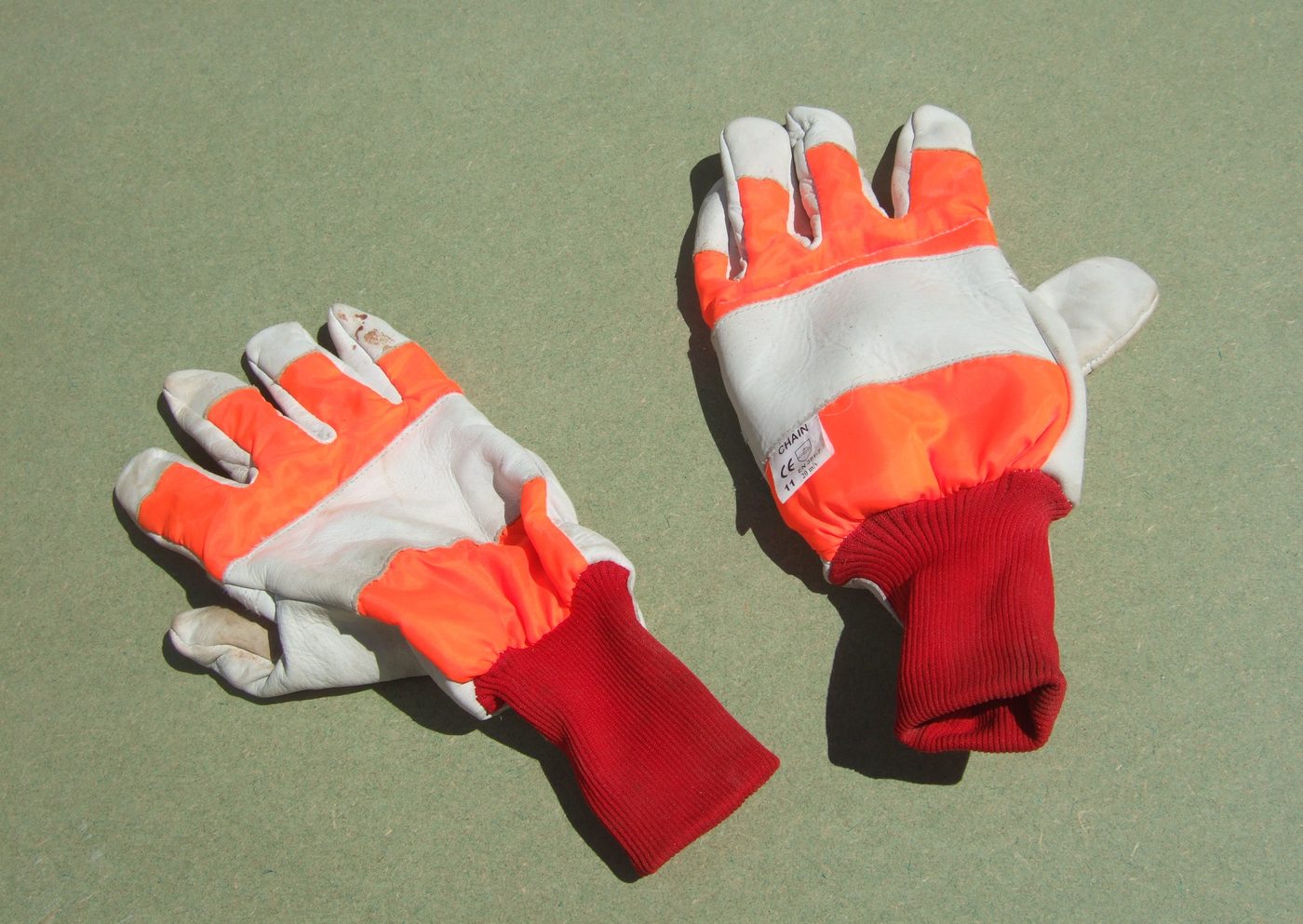
  • Safety Gloves: Protect hands from cuts, abrasions, and chemical exposure when handling pipes, adhesives, or solvents.

Pair of safety gloves for protection
Pair of safety gloves for protection (Source: Wikimedia Commons)

Types of safety gloves

Glove type Protects against Typical plumbing task
Leather gloves Cuts, abrasions, heat Handling metal pipes, threading, carrying materials
Nitrile gloves Oils, solvents, chemicals Applying solvent cement, using drain cleaners
Rubber gloves Water, sewage, mild chemicals Clearing blockages and drain repairs
Cut-resistant gloves Sharp edges Cutting sheet metal and handling broken pipes
Heat-resistant gloves High temperatures Soldering, brazing and heat bending

1.1.5 Safety goggles

Safety goggles are close-fitting eye protection that shield the eyes from flying particles, chemical splashes and bright light. Eye injuries can cause permanent loss of sight, so goggles must be worn whenever there is a risk to the eyes.

  • Safety Goggles: Shield eyes from flying particles, splashes of chemicals, and intense light during welding or soldering.

A pair of clear safety goggles designed to protect the eyes during con
A pair of clear safety goggles designed to protect the eyes during con (Source: PLUMB 5 LEARNING GUIDE-1 (1))

Tasks requiring safety goggles

  • Cutting and grinding pipes: Protects from metal and plastic chips.
  • Drilling walls: Protects from masonry dust and fragments.
  • Using chemicals: Protects from splashes of drain cleaners and solvents.
  • Clearing blockages: Protects from sewage splashes.
  • Soldering and brazing: Tinted goggles protect from glare and hot spatter.

Features of good safety goggles

  • Impact-resistant lenses: Made from polycarbonate or similar tough material.
  • Side protection: Seal around the eyes to stop particles entering from the side.
  • Anti-fog coating: Keeps vision clear in warm, humid conditions.
  • Adjustable strap: Holds goggles securely.
  • Fits over spectacles: Some models fit over prescription glasses.

1.1.6 Reflector jackets

A reflector jacket, also called a high-visibility vest, is a brightly coloured garment with reflective strips that makes the wearer easy to see. It protects plumbers working near roads, vehicles, plant and moving machinery, especially in poor light, rain or at night. Example: plumbers repairing a burst water main along a busy road wear reflector jackets so that matatu and lorry drivers see them in time.

Features of reflector jackets

  • Fluorescent colour: Bright yellow or orange fabric stands out in daylight.
  • Reflective strips: Reflect vehicle headlights at night.
  • Lightweight fabric: Comfortable over other clothing.
  • Secure fastenings: Velcro or zips keep the jacket closed.
  • Correct size: Should not hang loosely where it may catch on machinery.

Situations requiring reflector jackets

  • Roadside work: Working on mains, valves and manholes near traffic.
  • Construction sites: Where excavators, lorries and forklifts operate.
  • Night work: Emergency repairs in the dark.
  • Poor visibility: Rain, dust or fog.
  • Large sites: Where supervisors need to identify workers quickly.

1.1.7 Hear muffs

Ear muffs are hearing protectors with padded cups that cover the ears and reduce the noise reaching them. Plumbing work often involves loud power tools, drain machines, compressors and generators, and long exposure to loud noise causes permanent hearing loss. Ear muffs must be worn whenever noise is high enough that people must shout to be heard at arm's length.

  • Ear Protection: Earplugs or earmuffs reduce noise exposure from power tools, preventing long-term hearing loss.

A pair of black and red over-ear hearing protection earmuffs used in c
A pair of black and red over-ear hearing protection earmuffs used in c (Source: PLUMB 5 LEARNING GUIDE-1 (1))

Use and care of ear muffs

  • Choose the right rating: Select muffs with a noise reduction rating suitable for the task.
  • Ensure a good seal: Cups must cover the ears fully without hair or glasses breaking the seal.
  • Wear for the whole task: Removing muffs even briefly greatly reduces protection.
  • Clean cushions: Wipe ear cushions regularly to keep them hygienic.
  • Replace worn cushions: Hardened or cracked cushions no longer seal properly.

Worked example: noise reaching the ear

Noise at the ear ≈ noise level − noise reduction provided

A power saw produces 98 dB(A), and the ear muffs reduce noise by about 22 dB in use.

Noise at the ear ≈ 98 − 22

Noise at the ear ≈ 76 dB(A), below the 85 dB(A) workplace action level

1.1.8 Face musk

A face mask protects the nose, mouth and lungs from harmful dust, fumes, vapours and germs. Plumbers are exposed to cement and masonry dust when chasing walls, fumes from solvents and soldering, and bacteria from sewage, so the correct mask must be chosen for each hazard.

  • Respirators: Filter harmful dust and fumes produced when cutting pipes or using adhesives with volatile organic compounds.

Types of face masks

Type Protects against Typical plumbing task
Disposable dust mask Coarse dust Light sanding and sweeping
FFP2 or N95 respirator Fine dust and some germs Cutting and drilling masonry, drain work
Half-face respirator with filters Dust, fumes and vapours Using solvents, adhesives and chemicals
Full-face respirator Fumes and splashes to face and lungs Heavy chemical use and confined spaces

Use and care of face masks

  • Fit check: Ensure the mask seals around the nose and chin.
  • Correct filter: Use filters designed for the specific hazard.
  • Replace disposables: Discard disposable masks after use or when damp.
  • Change filters: Replace cartridges when breathing becomes difficult or as recommended.
  • Clean reusable respirators: Wash and store them in a clean, sealed bag.

1.1.9 Proper use and maintenance of personal protective equipment

The effectiveness of PPE depends not only on availability but also on correct usage and upkeep. Improper use can render protective equipment useless or even increase risk. Plumbing professionals must be trained to wear PPE correctly and inspect it regularly for damage.

Guidelines for PPE Use and Maintenance

  • Correct Fitting: PPE must fit well to provide maximum protection; gloves too loose can catch on tools, while respirators must seal properly to the face.
  • Regular Inspection: Before and after use, check PPE for tears, cracks, or contamination that compromise safety.
  • Cleaning Procedures: Some PPE, like goggles and respirators, require routine cleaning with appropriate solutions to maintain hygiene and visibility.
  • Storage Conditions: PPE should be stored in clean, dry places away from direct sunlight and chemicals to prevent deterioration.
  • Replacement Protocols: Damaged or expired PPE must be replaced promptly to ensure continuous protection.

Worked example: cost of PPE kits for a class

Total cost = number of trainees × cost per kit

A plumbing class of 25 trainees each needs an overall (Ksh 1,800), safety boots (Ksh 3,200), gloves (Ksh 400), goggles (Ksh 350) and a dust mask pack (Ksh 250).

Cost per kit = 1,800 + 3,200 + 400 + 350 + 250 = Ksh 6,000

Total cost = 25 × 6,000 = Ksh 150,000

1.1.10 Legal and institutional requirements for PPE in Kenya

Kenyan law under OSHA stipulates that employers provide necessary PPE at no cost and ensure its proper use. Institutions and training centres must integrate PPE policies into their safety management systems. Failure to comply can lead to penalties and increased workplace accidents.

Key Legal and Institutional Aspects

  • Employer Obligations: Provision of PPE and training on its correct use.
  • Employee Responsibilities: Use PPE as instructed and report defects.
  • Safety Training: Regular workshops to reinforce PPE importance and correct usage.
  • Record Keeping: Document PPE issuance and maintenance records.
  • Enforcement Mechanisms: Safety officers conduct periodic inspections to verify compliance.
The rest of this chapter
🔒

Create a free account to open more of this chapter.

Free: practical guides, quick cards, workplace scenarios and more.

Create a free account
🔒1.2 Personal Safety Rules and Regulations

Personal safety rules and regulations establish behavioural standards and operational protocols to prevent accidents and injuries in plumbing workshops. These rules are vital in Kenyan plumbing contexts, where improper handling of tools or neglect of safety pr…

🔒1.3 Workshop machine, tools and equipment safety procedures

In plumbing workshops across Kenya, the use of machines, tools, and equipment is essential for efficient and precise work. However, these tools also pose significant safety risks if not properly handled. Understanding and implementing safety procedures for wor…

🔒1.4 Workplace safety practices

Maintaining safety in plumbing workplaces extends beyond machines and tools to include broader practices that protect workers, clients, and property. Kenyan plumbing professionals must adhere to workplace safety standards that cover environmental cleanliness,…

🔒1.5 Appropriate fire extinguishers

In plumbing workshops across Kenya, the risk of fire arises from the use of flammable materials such as solvents, adhesives, and hot work involving welding or soldering. Understanding the correct types of fire extinguishers and their appropriate application is…

🔒1.6 First aid

First aid refers to the immediate assistance provided to an injured or ill person before professional medical help arrives. It aims to preserve life, prevent the condition from worsening, and promote recovery. - Preserve life: Prevent death by maintaining airw…

Chapter Summary

This chapter covered the essential personal protective equipment necessary for workshop safety, including dust coats, safety boots, helmets, gloves, goggles, reflector jackets, hear muffs, and face masks, each designed to protect different parts of the body from specific hazards. It emphasized the importance of adhering to personal safety rules and regulations to prevent accidents and maintain a safe working environment. Detailed procedures for the safe use of workshop machines, tools, and equipment were discussed to minimize risks associated with mechanical operations. The chapter also addressed general workplace safety practices that promote a culture of caution and responsibility among workers. Knowledge of appropriate fire extinguishers and their correct application was outlined to prepare for potential fire emergencies. Finally, the chapter highlighted the importance of first aid readiness to provide immediate care in case of injuries, ensuring prompt and effective response to workplace incidents.

Self-Assessment

🔒 PDFDownload this self-assessment, with answers

A. Written Assessment

  1. Which type of personal protective equipment is most suitable for protecting a plumber’s eyes from flying debris during grinding? (2 marks)
  2. Explain why wearing safety boots is critical in a plumbing workshop. (3 marks)
🔒20 more in this section.

Chapter Examination Questions

🔒 PDFDownload these examination questions, with worked answers

SECTION A (40 Marks) - Answer ALL Questions

  1. Identify four types of personal protective equipment commonly used by plumbing professionals and explain the primary safety function of each. (4 marks)
  2. Describe the importance of wearing safety boots in a plumbing workshop environment. (4 marks)
🔒18 more in this section.
Flashcards 20 cards Study deck ▾
Question
1

↻ Tap card to reveal answer
🔒

18 more in this section.

Create a free account
Test Yourself 18 questions Start quiz ▾
0%
0 / 2
🔒

16 more in this section.

Create a free account
Am I competent?

At the start of this chapter we promised you would be able to:

  • Identify the correct personal protective equipment (PPE) needed for different workshop tasks.
  • Wear the appropriate PPE safely and correctly according to job requirements.
  • Understand why using PPE is important for your safety and health in the workshop.

Tick each one you can genuinely do.

So, are you there yet?

You're competent when you can confidently do 50% or more of what this chapter promised.

Sign in to record how you're doing.